
My mother-in-law turned off the air conditioning in my home office during an important meeting,
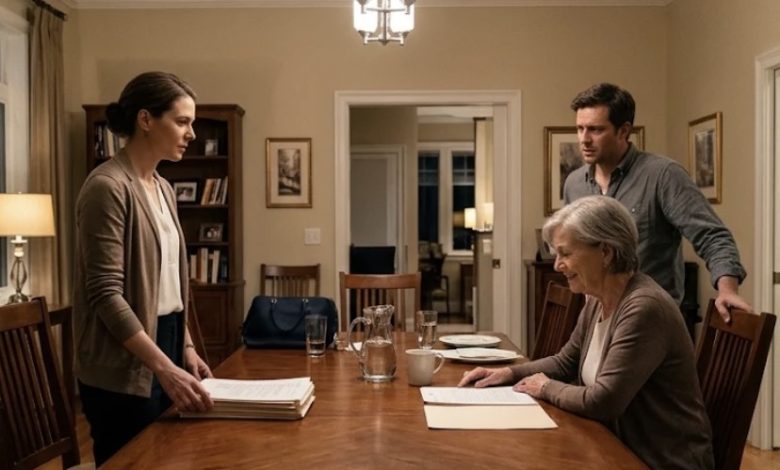
My mother-in-law turned off the air conditioning in my home office during an important meeting, shouting, “Stop wasting my son’s money! This is HIS house!” I begged her to turn it back on, but she refused. When I told my husband, he defended her and accused me of disrespecting his mother. I’d spent two years putting up with her insults, but this time I’d had enough. That night, I calmly handed them a document. My mother-in-law laughed at first, until she saw what was written on it.
Skip to content
“It’s a written notice outlining the conditions under which you can continue staying here.”
Her smile faded slightly.
“You’re handing me rules in my son’s own house?”
I pulled out a chair and sat down.
“Please read it.”
She picked up the document with two fingers.
The first section stated that Dorothy was staying at the property with my permission and that her continued occupancy depended on respecting household boundaries.
It spelled out clear expectations: asking before inviting guests, staying out of my office during work hours, and never interfering with the heating or air conditioning.
Then her eyes reached the official Mecklenburg County property record attached behind the first page.
She stopped reading.
I watched her expression shift.
“Meredith,” she said slowly, “why is your name listed here?”
Trevor stared down at the table.
I folded my hands.
“Because I own the house.”
Dorothy stared at me in shock.
“What?”
“This house belongs solely to me, Dorothy. My father left it to me six years ago.”
She turned sharply toward Trevor.
“That’s not true.”
He didn’t answer.
“Trevor,” she demanded, “tell her to stop this nonsense.”
He let out a long sigh.
“Mom, she’s telling the truth.”
Dorothy’s mouth fell open.
“You told me this was your house!”
Trevor rubbed the back of his neck awkwardly.
“I said we lived here.”
“You let me believe you bought it!”
He looked away.
I watched the two of them, hardly knowing whether to laugh or cry.
For almost two years, Dorothy had lectured me on how to behave in a house she believed her son owned.
And Trevor had knowingly allowed her to believe it.
I turned toward him.
“You knew she thought this was your house?”
He looked uncomfortable.
“I didn’t think it mattered.”
“It mattered every time she accused me of wasting your money.”
He said nothing.
“It mattered every time she told me I had no right to make decisions here.”
Dorothy was still examining the county deed record.
“Your father gave you this entire property?”
“Yes.”
“Well, Trevor pays the mortgage.”
“There is no mortgage.”
She looked up sharply.
“What do you mean?”
“My father paid it off before he passed away.”
Dorothy turned back toward her son in disbelief.
Trevor kept his eyes fixed on his plate.
For the first time since moving in, she seemed genuinely speechless.
Then she pushed the document away.
“So now you’re using your father’s money to humiliate us?”
I shook my head.
“No. I want you to respect my home and my work.”
Trevor leaned back in his chair.
“Meredith, this is getting out of hand.”
I looked at him.
“What’s getting out of hand?”
“You’re threatening to throw my mother out over a thermostat.”
“No, Trevor. I’m setting boundaries after two years of being ignored.”
Dorothy interrupted indignantly.
“I’ve never been so insulted in my life.”
I took a slow breath.
“Dorothy, you can continue staying here while we work out a reasonable arrangement. But you cannot keep treating me like a guest in my own home.”
She stood up abruptly.
“Well, perhaps I should just leave!”
I looked at her calmly.
“That’s your decision.”
She clearly hadn’t anticipated that response.
Trevor stood too.
“Meredith, apologize to Mom.”
I stared at him.
“For what?”
“For embarrassing her.”
I felt a familiar frustration rising in my chest.
This time, however, I didn’t cave in.
“I’m not apologizing for telling the truth.”
I gathered my papers and walked upstairs.
Twenty minutes later, Trevor appeared in my office.
He closed the door behind him.
“Are you really trying to force my mother out?”
“I’m asking her to respect basic boundaries.”
“She’s an older woman, Meredith.”
“She’s perfectly capable of understanding that she can’t interfere with my job.”
Trevor paced across the room.
“You made her feel like she doesn’t belong here.”
I turned in my chair.
“Do you know how many times she’s made me feel that exact way?”
He stopped.
I continued.
“She calls me lazy because I work from home. She tells people you’re paying for everything. She invades my workspace, invites guests without asking, and today she nearly ruined a major client contract.”
“She doesn’t understand your job.”
“Then why didn’t you ever explain it to her?”
He looked away.
I waited.
Finally, he admitted, “Mom grew up believing the husband should provide for the family.”
I stared at him.
“So you let her believe you provided everything?”
“That’s not what I said.”
“Then why didn’t you correct her?”
He rubbed his forehead.
“Because she was proud of me.”
I sat completely still.
For two years, Trevor had told me not to take Dorothy’s remarks personally.
Now I was finally seeing why he had never defended me.
Correcting his mother would have meant admitting that his wife owned the house outright and contributed substantially more to the household.
I opened my laptop.
“There’s something else we need to discuss.”
Trevor looked uneasy.
“What now?”
“I was reviewing our household expenses earlier this afternoon.”
He froze.
I clicked open the joint checking account we’d used for years to pay bills.
“There are recurring transfers here I don’t recognize.”
Trevor stared at the screen.
I pointed to the transactions.
“Three thousand dollars every month.”
He didn’t answer.
“Trevor, where is this money going?”
He glanced toward the door.
“It’s complicated.”
“Then explain it.”
He sat down slowly.
“I’ve been helping Mom.”
I frowned.
“Helping her how?”
“With expenses.”
“She’s been living here without paying a dime in rent for almost two years.”
He looked down at the floor.
“She had some debts.”
I scrolled further back through the account history.
The transfers had started eighteen months earlier.
Three thousand dollars every single month.
I tallied the numbers twice because I couldn’t believe what I was seeing.
“Trevor, you’ve transferred fifty-four thousand dollars out of our joint account.”
He closed his eyes.
“I know.”
“To your mother?”
“Yes.”
I stared at him.
“Without telling me?”
“I was going to explain.”
“When?”
He didn’t answer.
I leaned back.
For eighteen months, Dorothy had accused me of wasting electricity while Trevor secretly funneled thousands of dollars to her.
I’d been carefully managing our household budget, setting aside money for home repairs, and discussing major purchases with my husband.
Meanwhile, he had been making these transfers behind my back.
“Where did all that money go?” I asked.
He hesitated.
“Some of it paid off her credit cards.”
“And the rest?”
He rubbed his hands together nervously.
“She invested in a business.”
I stared at him.
“What kind of business?”
“A wellness company.”
I couldn’t believe what I was hearing.
Dorothy had spent months raving about a woman from her social club who was supposedly making a fortune selling health supplements.
I’d warned her to be careful.
She’d accused me of being negative.
“How much did she invest?”
Trevor looked miserable.
“About twenty-three thousand.”
“And how much is left?”
He swallowed.
“I think around eleven thousand.”
I stood and walked toward the window.
Outside, the backyard garden was quiet.
I’d spent countless weekends tending those flower beds while Dorothy complained that I should hire a landscaper instead of making the yard look untidy.
Now I was discovering she’d been draining money from our joint account while telling everyone I was financially dependent on Trevor.
I turned back toward him.
“Why didn’t you tell me?”
He looked up.
“Because I knew you’d say no.”
I stared at him.
He’d admitted it so plainly.
He hadn’t forgotten to mention the transfers.
He hadn’t been confused about whether I needed to know.
He’d deliberately hidden them because he knew I would object.
I sat down again.
“Do you understand what you’ve done?”
“I was trying to help my mother.”
“You could have helped her from your own personal funds after discussing our shared obligations. Instead, you secretly used the account we both contribute to.”
He looked frustrated.
“She’s my mother, Meredith. I couldn’t just let her struggle.”
“And I’m your wife.”
He said nothing.
I looked at him for a long moment.
“Why does helping your mother always seem to mean keeping secrets from me?”
That night, Trevor slept in the upstairs guest room.
Dorothy remained in her downstairs suite.
I lay awake until nearly four in the morning, replaying all the times I’d trusted my husband to handle things fairly.
The following morning, I found them arguing in the kitchen.
Dorothy stopped speaking the moment I walked in.
Trevor looked exhausted.
“Good morning,” I said.
Neither answered.
I poured a cup of coffee and sat at the table.
Dorothy folded her arms.
“Trevor told me you’ve been digging through his financial records.”
“Our joint account,” I corrected.
“He was helping his mother.”
“With money I helped earn.”
She looked offended.
“You make everything sound so selfish.”
I studied her.
“Then return the money.”
Her expression shifted.
“What?”
“The money Trevor transferred to you. If it wasn’t a problem, return it.”
She looked away.
“I don’t have it.”
“Then perhaps you can understand why I’m upset.”
Dorothy stood up.
“I refuse to be interrogated in my own home.”
I looked at her steadily.
She stopped.
Then she corrected herself.
“In the home where my son lives.”
I didn’t respond.
Trevor leaned forward.
“Meredith, can we please talk about this calmly?”
“I am completely calm.”
He sighed.
“Then what do you want?”
I looked at both of them.
“I want the truth. And I want control over my own finances.”
Over the next several days, I rerouted my direct deposit and separated my personal savings from our joint account.
I also arranged a consultation with an attorney in Charlotte to understand my legal rights regarding the house and Dorothy’s living arrangement.
I wasn’t planning to file for divorce immediately.
But I needed to know how to protect myself.
Trevor suddenly became unusually attentive.
He made breakfast, brought coffee up to my office, and started asking about my client meetings.
He even told Dorothy not to interrupt me during work hours.
At first, I wanted to feel relieved.
Then I realized how effortlessly he was doing things I’d been asking him to do for years.
He’d always been capable of standing up to his mother.
He simply hadn’t considered it necessary until our marriage was on the line.
On Thursday evening, I came downstairs and found two suitcases sitting beside the front door.
Dorothy stood in the hallway, folding a cardigan into her tote bag.
Trevor was helping her carry a box out to the porch.
“What’s going on?” I asked.
Dorothy lifted her chin.
“I’m leaving.”
I looked at Trevor.
He avoided my eyes.
“Mom’s going to stay with Aunt Brenda in Concord for a while.”
I nodded.
“All right.”
Dorothy looked irritated.
“That’s all you have to say?”
I wasn’t sure what she expected.
I hadn’t asked her to leave that evening.
But I wasn’t going to beg her to stay either.
“I hope you settle in comfortably,” I said.
She shook her head.
“After everything I’ve done for you, I never thought you’d treat me like this.”
I looked at her.
“Dorothy, I wanted you to feel welcome here. But I also wanted you to respect me.”
She picked up her purse.
“You’ve changed Trevor.”
I glanced at my husband.
“No. I’ve finally asked him to take responsibility for his choices.”
Dorothy turned toward him.
“Are you coming with me?”
Trevor looked surprised.
“Coming where?”
“To your aunt’s. At least for tonight.”
He hesitated.
Then he shook his head.
“Mom, I need to stay here and talk to my wife.”
Dorothy stared at him.
“You’d choose her over me?”
Trevor looked exhausted.
“I’m not choosing between you. I’m trying to fix my marriage.”
Her eyes filled with tears.
She picked up her handbag and walked outside.
Trevor carried her suitcases out to her car.
A few minutes later, she drove away.
I stood in the hallway, listening to the quiet.
For the first time in almost two years, I didn’t hear Dorothy moving around downstairs or calling for someone to help her.
Trevor returned and closed the front door.
“She’s gone.”
I nodded.
He looked around.
“The house feels strange.”
“It feels peaceful,” I said.
He sat beside me on the sofa.
“Meredith, I know I made huge mistakes.”
I waited.
He took a deep breath.
“I want to fix this.”
Part of me wanted to believe him.
But there was still one more thing I couldn’t ignore.
Earlier that day, while organizing our tax and financial records, I’d found statements for an account Trevor had never mentioned.
I looked at him.
“Then there’s something else you need to explain.”
His expression changed immediately.
“What?”
“Your savings account at Piedmont Federal Credit Union.”
He went completely still.
I watched his face.
“How much money is in it?”
He looked away.
“Meredith…”
“How much?”
After a long pause, he answered quietly.
“Thirty-eight thousand.”
I felt my stomach drop.
Trevor had been secretly transferring money from our joint account to his mother while setting his own savings aside.
I stared at him.
“So while I was helping cover our household expenses, you were quietly building a private nest egg?”
He looked deeply ashamed.
“I needed something that was just mine.”
I couldn’t believe what I was hearing.
“You had a debt-free home. You had a wife who trusted you. What exactly did you think you were missing?”
He looked around the living room.
Then he said something I never expected.
“I never felt like any of this was really mine.”
I sat quietly.
He rubbed his face.
“When we got married, you already had a thriving career. Then your father left you the house, and you kept getting promoted.”
I waited.
“I was proud of you, Meredith. But sometimes I felt like I wasn’t contributing enough.”
I frowned.
“So you let your mother believe you owned everything?”
He nodded slowly.
“She was so proud of me. She’d brag to people about the beautiful home I’d provided for my family.”
“And you never corrected her.”
“No.”
I looked at him.
“You let her think I was living off your income because it made you feel successful.”
He lowered his eyes.
“I’m ashamed of it now.”
I felt tears gathering.
For two years, I’d assumed Trevor simply didn’t realize how hurtful his mother’s comments were.
Now I knew he’d understood far more than he’d ever admitted.
He’d allowed me to be belittled because correcting the misunderstanding would have punctured the image he wanted his mother to have of him.
“Did you ever stop to think about what that was doing to me?” I asked.
He shook his head.
“Not enough.”
I wiped my eyes.
“You were supposed to be the one person who respected me, Trevor.”
He began crying.
“I’m so sorry.”
I’d heard him apologize before.
Usually, it came wrapped in excuses about his mother’s intentions or requests for me to be more understanding.
This time, he didn’t defend anyone.
He simply sat there, looking at the floor.
I wanted to reach out and comfort him.
But I stopped myself.
He needed to sit with what he’d done without expecting me to make the conversation easier.
After a while, he asked what I wanted him to do.
I thought carefully before answering.
“I don’t want to spend the rest of our marriage auditing your bank accounts. I don’t want to wonder whether you’re telling me the truth every time I ask a question.”
He nodded.
“I understand.”
“I want us to see a marriage counselor. I want separate personal accounts and a shared household account with an agreed budget.”
“Okay.”
“And no more major transfers without discussing them first.”
“Of course.”
I looked at him firmly.
“Your mother can’t move back in.”
He hesitated.
Only for a split second.
But I noticed.
“She’s going to need somewhere permanent,” he said.
“Then help her find an apartment.”
“She can’t afford much on her own.”
“You can contribute toward her rent from your personal account.”
He looked down.
I waited.
Eventually, he nodded.
“You’re right.”
I wasn’t sure whether we could save our marriage.
But for the first time, Trevor seemed genuinely willing to face the problems he’d helped create.
The following month was hard.
Dorothy found a small one-bedroom apartment in Cornelius, about fifteen minutes away.
Trevor agreed to help cover part of her rent using his own money rather than our shared account.
Dorothy complained that the apartment was cramped and that the neighbors were noisy.
She also hated having to pay her own electric bill.
Trevor listened patiently to her complaints, yet he stopped asking me to fix them.
Meanwhile, we started seeing a marriage counselor.
During our second session, the counselor asked Trevor why he’d allowed his mother to believe that he owned the house.
He sat silent for a long time.
Then he admitted he’d felt insecure about how successful I’d become.
He said he loved me deeply, yet he had let his pride dictate how he handled his mother.
The counselor asked whether making himself look more successful had been worth allowing his wife to feel disrespected in her own home.
Trevor looked at me.
“No,” he said quietly.
I could see how difficult it was for him to say that out loud.
At the same time, I knew an apology alone wouldn’t be enough.
Trust would have to be rebuilt through steady actions.
Over the next several months, Trevor began doing things differently.
He stopped blaming me whenever his mother was disappointed.
He started discussing financial decisions openly before making them.
He also transferred his hidden savings into our shared account to begin repaying the money he’d sent his mother without telling me.
We agreed that both of us would maintain independent personal savings going forward, while keeping complete transparency around our shared household budget.
It wasn’t easy.
Sometimes we still argued.
Sometimes I struggled to trust him completely even when he was telling the truth.
Yet we kept showing up to counseling, and gradually our conversations grew more honest.
Dorothy also began changing, though at a much slower pace.
One Saturday afternoon, she called to ask if she could stop by for a visit.
It caught me by surprise.
She had never once asked permission before.
When she arrived, she was carrying a warm casserole dish and a small bouquet of flowers.
“I thought you two might enjoy dinner tonight,” she said somewhat awkwardly.
I invited her in.
She glanced around the kitchen.
Everything sat in the exact spot I wanted it.
For a moment, I braced myself for a comment about how I organized the cabinets.
Instead, she asked politely where she should set the dish down.
I pointed toward the stove.
“Right over there is great.”
She nodded.
We sat at the kitchen table with two cups of coffee.
For several minutes, we chatted about everyday things.
Then Dorothy looked toward the staircase.
“Trevor mentioned your firm landed that big hospital network contract.”
I smiled slightly.
“We did.”
She paused, tracing the rim of her mug.
“Was that the meeting I interrupted?”
I nodded.
“Yes.”
She looked down.
“I didn’t realize how important it was.”
I took a steady breath.
“Dorothy, I told you that morning it was important.”
She stared down into her coffee.
“I know.”
I waited quietly.
Then she admitted something I never expected to hear from her.
“I didn’t believe you.”
I looked at her in surprise.
She continued slowly.
“I always assumed Trevor was the one carrying the real career pressure. I figured you had a casual little job you could step away from whenever you felt like it.”
A familiar ache settled in my chest.
“Why?”
She gave a small, awkward shrug.
“That’s just how things worked when I was younger. My husband earned the living, and I managed the household.”
I nodded slowly.
“And because you thought Trevor owned the house, you assumed I should defer to him.”
She hesitated briefly.
“And to me,” I added softly.
Her cheeks flushed slightly.
“Yes.”
It wasn’t an easy admission to hear.
Still, I appreciated that she was finally being honest.
She glanced toward the hallway thermostat.
“I shouldn’t have touched your air conditioning.”
“No, you shouldn’t have.”
“And I shouldn’t have barged in while you were working.”
I nodded.
She let out a quiet sigh.
“I’m truly sorry, Meredith.”
I studied her expression.
One apology couldn’t erase two years of constant criticism.
Still, I was glad she was finally acknowledging what she’d done.
“Thank you,” I said.
When Trevor walked through the front door twenty minutes later, he looked startled to find us sitting together at the kitchen table.
“What’s going on here?”
Dorothy rolled her eyes good-naturedly.
“Don’t look so terrified. I’m not here to start another argument.”
I laughed despite myself.
Trevor smiled in relief.
It was the first genuinely relaxed moment the three of us had shared in years.
Over the next several months, the tension between us steadily eased.
Dorothy still complained on occasion, yet she began calling ahead before visiting and never again interfered with my workday.
Trevor also grew much firmer about stepping in whenever she started overstepping.
One weekend, Dorothy called to ask if she could stay with us for a few days while plumbing repairs were being finished in her apartment building.
Trevor explained gently that we’d happily cover a hotel room for her until the work was done.
She grumbled on the phone.
He listened calmly without giving in.
He never once asked me to change my mind.
After he hung up, I looked over at him.
“Was she upset?”
He nodded.
“Pretty upset.”
I waited.
Then he smiled faintly.
“She’ll be fine.”
For once, he didn’t make me responsible for keeping his mother happy.
A year after that sweltering afternoon in July, I received wonderful news.
My firm approved my promotion to senior director.
The hospital project I’d fought through the heat to pitch had become one of our division’s most successful accounts, and our vice president had recommended me for the role.
When I told Trevor, he wrapped me in a tight hug.
“I’m so proud of you.”
That evening, he brought home flowers and arranged a small celebration.
Dorothy arrived carrying a homemade pound cake.
She gave me a slightly awkward hug in the entryway.
“Congratulations, Meredith. Trevor told me how hard you’ve worked for this.”
I smiled.
“Thank you.”
She glanced playfully toward the hallway thermostat.
Then she looked back at me.
“And I promise not to touch the air conditioning.”
I laughed.
For the first time, the joke didn’t sting at all.
We had dinner together, talking about work, family, and Dorothy’s new neighbors.
There were no arguments.
Nobody accused anyone of being ungrateful.
It felt remarkably comfortable.
Later that night, after Dorothy had driven back to Cornelius, Trevor and I sat together in the living room.
He reached over for my hand.
“Do you ever think back on what happened last year?”
“Sometimes.”
He looked down.
“I still can’t believe I let things get that bad.”
I studied his face.
“Neither can I.”
He nodded slowly.
“I was afraid of disappointing my mother.”
“I know.”
“And I ended up hurting you instead.”
I squeezed his hand.
“We still have things to work through.”
He smiled sadly.
“I know that too.”
I glanced around the living room.
This was the exact same house where I’d once felt powerless.
The same house where Dorothy had told me to remember whose roof I was living under.
The same house where Trevor had allowed his mother to believe I depended on him financially.
Yet something fundamental had shifted.
I no longer felt afraid to speak up for myself.
A few weeks later, we invited several friends over for dinner.
Dorothy came too.
This time, she called before arriving and asked if she should bring anything.
She even insisted on helping load the dishwasher afterward.
During dinner, one of Trevor’s friends admired the house.
“This place is gorgeous, Trevor. You’ve done really well for yourself.”
I glanced across the table at my husband.
A year earlier, he might have smiled and accepted the praise.
Instead, he looked warmly toward me.
“Actually, you should thank Meredith. Her father left her this house, and she’s the one who’s made it such a wonderful home.”
Our friend turned toward me.
“Really? That’s fantastic.”
I smiled.
“Thank you.”
Across the table, Dorothy shifted slightly in her chair.
For a brief moment, I wondered whether she would say anything.
Instead, she simply nodded.
“Meredith has taken wonderful care of it.”
I looked at her.
She offered me a small, sincere smile.
It wasn’t a theatrical moment.
Nobody stood up or delivered a grand speech.
Yet hearing my husband and mother-in-law acknowledge the truth so naturally meant more to me than either of them probably realized.
After everyone went home, I walked upstairs to straighten up my office.
Trevor followed a few minutes later.
The room was cool and comfortable.
My desk was stacked neatly with project notes, and a framed photo of my father stood beside the window.
Trevor glanced toward the thermostat.
“Seventy-two degrees okay?”
I laughed.
“Perfect.”
He smiled and walked down the hall toward our bedroom.
I stayed behind for one quiet moment, looking around the room where everything had finally come to a head.
I’d once believed that being a good wife meant keeping everyone happy, even when it made me miserable.
I’d spent two years avoiding arguments because I thought silence was the best way to protect my marriage.
Instead, silence had only allowed resentment to grow.
The document I’d laid on the dinner table that night hadn’t fixed everything overnight.
It hadn’t instantly restored the missing money or repaired the trust Trevor had damaged.
Those things had taken months of uncomfortable conversations, hard decisions, and genuine effort.
What it did, however, was force us to finally confront the truth we’d been avoiding.
My home was mine, and I had every right to be respected inside it.
Even more importantly, I deserved a marriage where my husband treated me as an equal partner, not someone whose feelings could be pushed aside whenever his mother was unhappy.
I turned off my desk lamp and walked toward the bedroom.
Trevor was waiting for me, reading beside the window.
He looked up with a warm smile when I walked in.
“Everything okay?”
I smiled back.
“Yes.”
And this time, when I said it, I meant it completely.