My Sister Was Fighting for Her Life in the ICU. Then I Found Two Tickets in Her Hospital Bag.
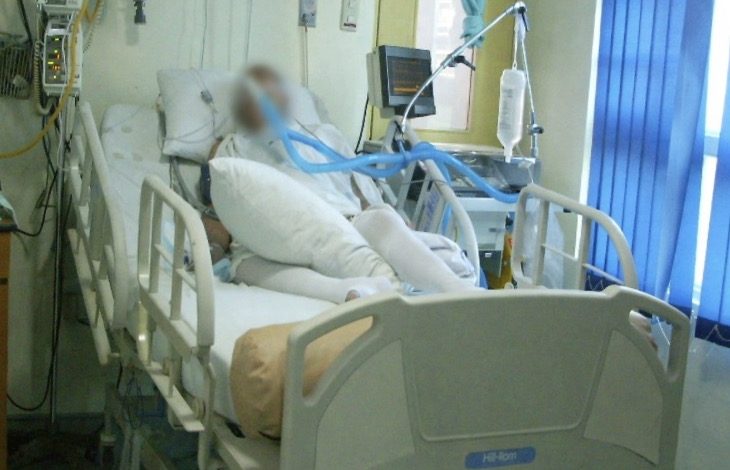
The first thing I notice is that somebody has washed my sister’s hair.
It sounds stupid, considering everything happening around her. But yesterday it was tangled against her pillow, and now it’s brushed away from her forehead. Someone has taken the time.
I want to thank that person. I don’t even know who to ask.
My name is Caroline. I’m thirty-eight, and my younger sister, Megan, is lying in an intensive care bed in a hospital outside Columbus, Ohio.
She’s thirty-three.
Three days ago, she calls me complaining about a headache and a fever. She says she’s probably coming down with something.
Now she has a breathing tube, three monitors, and a doctor who keeps choosing his words very carefully.
They tell us it’s a severe infection. Her body is struggling to fight it.
I keep staring at the blue tubing beside her bed. Every few seconds, the ventilator makes a soft mechanical sound.
I hate that sound.
I hate it because I’ve started listening for it.
There’s a plastic grocery bag underneath my chair. Inside is a cardigan I brought from home, a packet of crackers crushed into powder, and a hospital parking ticket that’s gotten damp from my water bottle.
My phone lights up.
It’s my supervisor.
“Just checking whether you’ll be able to come in Thursday.”
I read the message twice and put the phone facedown.
Thursday. Like Thursday is a real thing that still exists.
A nurse named Denise comes in to check Megan’s medications. She asks whether I’ve eaten.
I tell her yes.
I haven’t.
There’s a paper cup of chicken soup on the windowsill, with a thick yellow layer forming on top. I bought it six hours ago because I thought I should do something normal.
Denise pulls the blanket higher around Megan’s shoulders.
“She’s being watched very closely,” she says.
I know she means to comfort me.
But I want her to say my sister is going to wake up.
Our mother calls around nine.
I step into the hallway because I can’t stand the thought of Megan hearing me sound frightened.
“Any change?”
“Not yet, Mom.”
She goes quiet.
Then she asks if I’ve remembered to pay Megan’s electricity bill. It came in yesterday.
I almost laugh.
My sister could be dying, and somehow the electricity bill is still due.
I tell her I’ll handle it.
When I return, I search Megan’s bag for her phone charger.
Instead, I find a small envelope with my name written across it.
Inside are two movie tickets, already paid for, for next Saturday.
There’s a sticky note attached.
“Carrie, no excuses this time. We’re having a sisters’ day. Love you.”
I sit down so quickly the chair scrapes the floor.
We’ve canceled our last three plans together. I’ve been working too much. She’s been helping Mom. There was always another weekend.
I hold those tickets against my knee and look at her face.
For the first time in three days, I tell her I’m scared.
Not that she’ll hear me. Not that I know.
I just need to say it.
And sitting there brings back the words I never thought I’d understand until now: those days when my sister is fighting between life and death are marking me in a way I’ll carry for the rest of my life.
Even if she comes home, I know I won’t come home as quite the same person.
At 2:14 in the morning, Denise comes back into the room with another nurse. She checks the monitor, then asks me to move my chair closer to the door.
A few minutes later, the doctor arrives.
And this time, he doesn’t begin by talking about the infection.
The doctor pulls his chair close enough that our knees nearly touch.
His name is Dr. Patel. He’s been looking after Megan since she was transferred to intensive care, and until tonight, I’ve only seen him standing beside the machines.
Now he’s sitting down.
That frightens me more than anything he’s said.
“Caroline, I want to talk about what we’re seeing in her blood work.”
I look toward my sister.
The breathing machine continues its steady rhythm.
“Her kidneys aren’t responding the way we’d hoped,” he says. “We’re also concerned about her blood pressure. We’re giving her everything we can, but I need you to understand how seriously ill she is.”
I ask him whether she’s dying.
He doesn’t say yes.
He doesn’t say no.
He tells me the next twenty-four hours are important.
I keep waiting for another sentence. Something that will make all the others easier to hear.
It doesn’t come.
After he leaves, Denise stands beside me for a moment.
“Do you want me to call your mother?”
I shake my head.
I need five minutes before I have to say those words out loud.
The hospital corridor is almost empty. Somebody has left a cleaning cart near the elevators, and I can smell disinfectant mixed with the burnt coffee from the waiting room.
I call Mom at 2:41.
She answers before the second ring.
I tell her exactly what the doctor said.
Not better. Not worse.
Exactly.
She says she’s coming.
I remind her she shouldn’t drive at this hour because her eyesight is terrible after dark.
She says she’ll call our neighbor.
For once, I don’t argue.
Back in the room, I take Megan’s hand.
It’s warmer than mine.
That surprises me.
I have spent three days looking at monitors and numbers, forgetting that beneath the hospital blankets is the same woman who stole my favorite sweater in high school and denied it for eleven years.
The same sister who brings her own tea bags to restaurants.
Who remembers everybody’s birthday but never remembers where she parks.
I tell her about the movie tickets.
“Meg, I found them.”
My voice sounds scratchy.
“You know I would’ve gone with you.”
Then I stop.
Because that’s not completely true.
I might have canceled again.
Something at work would have come up, or I’d have been tired, or I would’ve said we’d go the following weekend.
I hate admitting that now.
Mom arrives shortly after four with her coat buttoned wrong. She’s holding Megan’s childhood photograph from her bedside table, the one where she’s missing both front teeth.
I don’t ask why she brought it.
We sit on opposite sides of the bed.
For hours, we barely speak.
At seven, a respiratory therapist adjusts the ventilator. Around eight, another nurse changes Megan’s position and checks her skin.
The hospital continues working around us.
I had always imagined that moments like this would feel dramatic. That there would be some unmistakable dividing line between ordinary life and the worst day of your life.
Instead, everything happens while somebody fills out paperwork.
While an elevator opens.
While my mother searches her purse for tissues.
By late afternoon, Megan’s blood pressure begins responding a little better to the medication.
Not enough for anybody to celebrate.
But enough for Dr. Patel to say, “This is encouraging.”
I write those three words on the back of the parking ticket.
I don’t want to forget them.
The next day brings another small improvement.
Then a setback.
Then another long conversation beside the bed.
It isn’t the kind of recovery people describe in movies.
Nobody rushes through the doors shouting that everything is fine.
Megan stays on the ventilator for several more days. Her kidneys need temporary support. She has tests, medications, and a team of people whose names I slowly learn.
Eventually, her infection begins to come under control.
When the doctors reduce her sedation, she opens her eyes for a few seconds.
I lean forward so fast I bump the bed rail.
“Hey, Meg. It’s Carrie.”
Her eyes move toward me.
I don’t know how much she understands.
But she’s looking at me.
And for that moment, it is enough.
Weeks pass before she can leave the hospital.
She needs help walking. Her voice is weak at first, and some days she gets frustrated when she can’t do things she used to do without thinking.
Recovery turns out to be a lot of little things.
Getting dressed.
Standing long enough to make breakfast.
Sleeping through the night without waking frightened.
One afternoon, we’re sitting in her kitchen when she notices the movie tickets stuck beneath a magnet on her refrigerator.
“Those expired,” she says.
“I know.”
“We should’ve gone.”
I tell her we’ll buy new ones when she’s ready.
She looks at me for a moment.
Then she says, “You stayed?”
I nod.
“The whole time?”
“Pretty much.”
She reaches across the table and squeezes my wrist.
We don’t say anything else about it.
I still have that parking ticket with Dr. Patel’s three words written across the back. The ink is fading now.
Sometimes I find it while looking for something else, and I can feel that hospital chair beneath me again. I can hear the ventilator and remember how afraid I was to close my eyes.
My sister is here. She’s recovering. We have ordinary afternoons together again.
But those days when I watched her struggle between life and death have stayed with me permanently.
I used to think getting through something meant eventually leaving it behind.
Now I think some experiences come home with you.
They sit quietly inside the life you get to keep.