
Missing 23 Minutes Before the Wedding: A Story of Silent Grief and Family First
Twenty-three minutes before my daughter was supposed to marry the man she loved, she squeezed my wrist so hard it hurt and whispered, “Dad, don’t react, but Sam is missing.”
I was still smiling. That’s the strange part.
There was a photographer standing maybe fifteen feet away from us, telling me to move closer to Lydia and telling Lydia to hold her flowers a little higher. Behind us sat the old white wedding car we had borrowed from my friend Earl, the one with the bright red vinyl seats that looked like something straight out of a 1970s family photo.
Lydia looked beautiful. She had a simple white dress, a little silver tiara she almost decided not to wear, and a bouquet full of sunflowers because her mother used to grow them along the back fence every summer.
People were already going into the church. My sister Denise was somewhere inside arguing with somebody about the seating chart. Matt’s cousins were unloading coolers behind the fellowship hall. The caterer had brought enough pulled pork, baked beans, and potato salad to feed half of Shelbyville, Tennessee.
It was supposed to be one of those weddings people remembered because everything felt comfortable and familiar. The kind of wedding my wife, Laura, would have loved.
Laura had been gone almost four years. Lydia had saved a seat for her in the front row with a single sunflower placed on it. I had already told myself at least fifty times that morning that I was not going to look at that chair when I walked Lydia down the aisle.
Then Lydia whispered those words.
The Letter and the Sudden Discovery
My smile disappeared the second the photographer lowered his camera.
Sam was seventeen. He was supposed to be wearing a gray suit, complaining about the tie Lydia picked out for him, and doing a short reading during the ceremony.
Lydia opened her little white purse and pulled out a folded piece of notebook paper she had found in her room ten minutes earlier. I unfolded it to find two short sentences:
“I’m sorry, Lydia. Please don’t let me ruin your wedding. Don’t come looking for me.”
Her hand closed over mine. “Dad, his bike is gone too. And his old black sneakers.”
That details changed everything. It meant Sam hadn’t just stormed out in a moment of teenage frustration—he had planned to leave.
Postponing the Ceremony: A Decision Without Hesitation
I pulled the car keys from my pocket just as Matt, the groom, came down the church steps in his tuxedo.
When Lydia handed him the note, his face changed immediately. There was no annoyance or frustration about the schedule—only genuine fear for Sam.
“I’m coming with you,” Matt said.
“No,” Lydia replied through the window. “There are a hundred and forty people in there. Somebody has to tell them something.”
“What am I supposed to tell them?”
Lydia looked at him for a second. “The truth.”
That was the moment I knew she was marrying the right man. Matt didn’t ask about the deposit or express embarrassment. He just nodded, kissed her through the window, and said, “Bring him home.”
The Search: Where Do Teenagers Go When They Hurt?
We checked our house first. It was empty, but Sam’s blue backpack was gone.
I called the sheriff’s department. When the dispatcher heard about the note, she didn’t dismiss us. She asked for his description and then posed a question that stopped me cold: “Are there places he normally goes when he’s upset?”
As his father, that question hurt. Over the past year, most of my conversations with Sam had been practical: Did you finish your homework? Did you put gas in the mower? What time will you be home? I knew his shoe size and his grades, but I wasn’t sure where he went when he was hurting.
Lydia knew immediately: The old Riverside baseball field.
EDITORIAL INSIGHT: ADOLESCENT GRIEF
Psychological research indicates that teenagers process grief very differently than adults.
Major family milestones—such as weddings, graduations, or holidays—often trigger sudden,
intense waves of grief and feelings of isolation in young adults who have lost a parent.
The Confrontation: Real Memories Over Perfect Stories
We drove toward the river. The old field sat behind a closed elementary school where Sam had played Little League from ages six to twelve. Laura had never missed a game.
When we reached the field, we saw his bicycle leaning near the fence. Lydia ran across the grass in her wedding dress, calling his name.
We found him sitting against the right-field fence, his knees pulled to his chest, his tie gone, and his white dress shirt dirty. When he looked up, his face was covered in tears.
Lydia dropped her bouquet in the grass and wrapped both arms around him.
“I couldn’t do it,” Sam whispered. “Sit there… near Mom’s chair.”
Understanding Sam’s Perspective
Grief Overload: Everyone had spent weeks talking about how much Mom would have loved the wedding, turning the event into a loud reminder of her absence.
Fear of Abandonment: To Sam, Lydia getting married meant losing the only person left in the house who talked about their mother in a normal, everyday way.
The Pressure of Idealization: He felt overwhelmed by everyone painting his late mother as a flawless saint instead of the real person he missed.
Sitting in the dirt in our formal clothes, we stopped telling polished stories about “Saint Laura.” Instead, we started remembering the real Laura—the woman who burned toast, cheated at Monopoly, and once locked me out of the house on Thanksgiving for saying her mother’s turkey was better.
Laughter mixed with tears, and the emotional wall between us broke down.
An Imperfect, Perfect Wedding Day
We returned to the church over an hour late. Not a single guest had left. My sister had turned the delay into an impromptu social hour with lemonade, and Matt was waiting on the steps.
Lydia refused to clean the grass stains off her dress or replace the bent sunflower in her bouquet.
How the Wedding Unfolded:
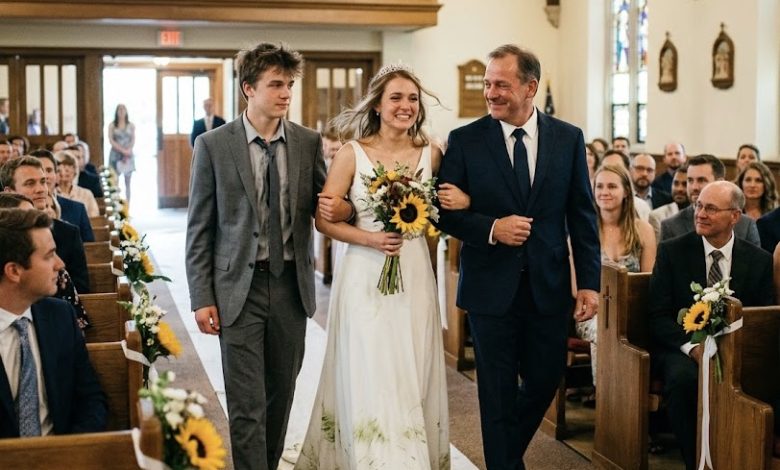
1. The Walk Down the Aisle: Instead of a traditional walk, Lydia walked down the aisle with me on her right and Sam on her left.
2. The Tribute: Before taking her place, Lydia placed her bent sunflower next to the one on her mother’s empty chair.
3. The Father-of-the-Bride Speech: I threw out my prepared remarks and spoke honestly about Laura’s imperfections—and the importance of noticing when the people we love are hurting.
Key Takeaways for Families Navigating Loss
A year and a half has passed since that day. The framed photograph from that afternoon sits in my hallway. Visitors see a happy father and daughter beside a vintage car, but I see the exact moment Lydia told me her brother was missing. It’s my favorite picture because it captures the moment my daughter put her brother’s well-being above her own wedding day.
What This Story Teaches Us:
Watch for Silent Cry for Help: Teenagers often hide profound grief behind quietness or routine behavior until major events push them over the edge.
Embrace Authentic Memories: Idealizing loved ones who have passed can make survivors feel isolated. Sharing real, humorous, and flawed memories promotes true healing.
Prioritize People Over Perfection: No event, no matter how carefully planned, is more valuable than supporting a struggling family member.