We Were Celebrating My Niece’s Arrival Until the Nurse Noticed Something That Needed Immediate Attention.
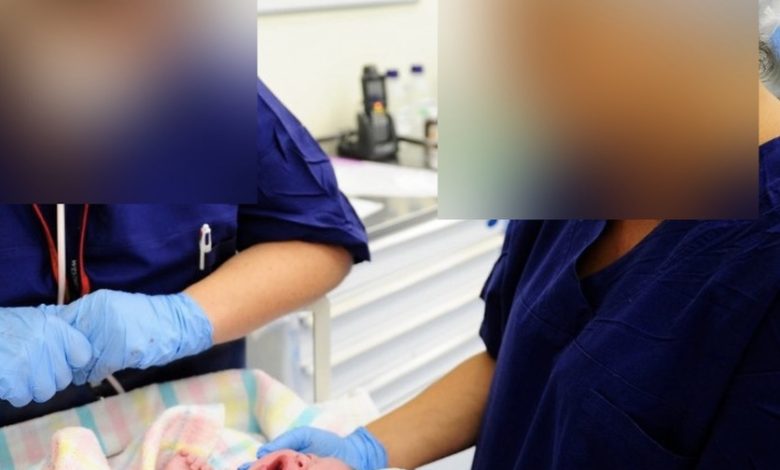
My sister Lauren is still smiling when the nurse asks her to come closer.
She gave birth twenty-six minutes ago. Her daughter is lying beneath a warm blanket, making those tiny squeaking noises newborns make, and Lauren keeps asking whether she has my nose.
Then the nurse says, “Can I speak to you for a second?”
I know something is wrong before Lauren does.
The nurse’s name is Denise. She’s been kind all morning, joking about the baby’s impressive lungs and bringing Lauren a fresh cup of ice water.
Now she isn’t joking.
“There’s something about your daughter’s examination that we need to check,” she says. “I don’t want you to panic.”
Which, of course, is exactly when Lauren panics.
“What do you mean?”
Denise looks at the baby, then back at my sister.
“She’s having a little difficulty maintaining her oxygen levels. The pediatric team needs to take another look.”
Lauren reaches for the edge of the bassinet.
“Is she breathing?”
“Yes, sweetheart. She’s breathing. We’re watching her very closely.”
I stand beside the hospital bed holding a paper bag from the cafeteria. Inside is a blueberry muffin I bought three hours ago and haven’t touched. The bottom of the bag has turned slightly greasy.
I don’t know why I remember that.
I remember almost nothing else about those first seconds.
Lauren starts crying before anyone moves the baby. Not loud crying. Just tears running down her cheeks while she keeps saying, “But she was fine. You said she was fine.”
The nurse explains that newborns sometimes need extra monitoring after delivery. She says they’re acting early because that’s the safest thing.
But my sister hears only one thing.
They’re taking her daughter away.
The baby’s name is Maisie.
Lauren chose it when she was six months pregnant, while we were sitting in a grocery store parking lot eating French fries because she’d suddenly decided she couldn’t go another minute without them.
Her husband, Eric, is at work when she goes into labor. He makes it to the hospital just before the delivery, but an urgent call sends him downstairs to move his truck from the emergency entrance.
His phone is still charging beside Lauren’s bed.
There are four unread messages from his mother asking for pictures.
Lauren hasn’t answered any of them.
When the pediatric nurse comes, she explains everything again. Maisie needs oxygen support and tests to understand why her levels keep dropping.
Nobody promises anything.
That’s the worst part.
I want someone to say she’ll be fine.
Instead, they’re careful with every word.
My sister tries to get out of bed.
“Lauren, you can’t stand up yet.”
“She’s going somewhere without me.”
I put my hand on her shoulder. Her hospital gown is damp near the collar, and she’s trembling so hard I can feel it through my fingers.
“You aren’t leaving her,” I tell her. “They’re helping her.”
She looks straight at me.
“Then why does it feel like I’m already losing her?”
I have absolutely no answer.
Denise kneels beside her bed and says something I’ll remember for the rest of my life.
“Your little girl has people looking after her every second. Right now, that’s what she needs most.”
Then the bassinet disappears through the doorway.
Lauren stares at the empty space.
A few minutes later, Eric returns and stops halfway inside the room.
He looks at the empty bassinet, then at Lauren.
“Where’s Maisie?”
My sister opens her mouth, but nothing comes out.
And I realize I’m going to have to explain the one thing I barely understand myself.
I’d always imagined the first hour after my niece’s birth would be photographs, little fingers, and my sister laughing with her husband. Instead, all I can think about is how quickly happiness can turn into fear when a nurse tells you something isn’t right with your baby.
I keep looking at Lauren’s empty arms. She spent nine months waiting to hold her daughter, and now she’s sitting in a hospital bed wondering when she’ll get to hold her again. I wish I could give her an answer. I really do.
Eric doesn’t ask the question again.
He just stands beside the empty bassinet, looking at the small folded blanket left at the bottom.
Lauren starts explaining, but she’s crying too hard to finish.
I tell him what the nurse told us.
Maisie’s oxygen levels are dropping. The pediatric team has taken her for monitoring. They’re doing tests.
Eric nods slowly.
Then he asks, “But she’s alive, right?”
I hate that he has to ask.
“Yes. She’s alive.”
He sits beside Lauren and takes her hand.
For a while, neither of them speaks.
The room still looks exactly the way it did before Maisie was taken away. There’s a plastic pitcher of water on the bedside table. Lauren’s slippers are underneath the chair. A little pink hat is sitting on top of her overnight bag.
Everything is ready for a baby who isn’t there.
About forty minutes later, a pediatrician named Dr. Patel comes into the room.
He pulls up a chair rather than standing over my sister.
That makes me nervous.
He explains that Maisie is receiving additional oxygen and that her breathing has improved with support. But the team has also heard a heart murmur during her examination.
Lauren squeezes Eric’s hand.
“What does that mean?”
“Sometimes newborns have murmurs that resolve as their circulation adjusts after birth,” the doctor says. “But because Maisie has also needed oxygen, we’re going to examine her heart more carefully.”
“Is something wrong with her heart?”
“We don’t know yet. An ultrasound will help us understand what’s happening.”
My sister looks down at her hands.
She has a tiny spot of dried blood near her wrist where the IV was placed earlier.
“Did I do something?”
The doctor shakes his head.
“There’s nothing you’ve told us that suggests you caused this.”
But I can tell she’s already going backward through her pregnancy, remembering everything she ate, every appointment, every night she couldn’t sleep.
Eric asks when they can see Maisie.
The doctor says he’ll arrange for them to visit as soon as the neonatal team is ready.
That’s when Lauren finally begins to breathe normally again.
Not because she has answers.
Because someone has given her something she can do.
An hour later, a nurse brings a wheelchair.
I help Lauren into it.
She insists on carrying the little pink hat.
The neonatal unit is quieter than I expect. There are monitors, soft alarms, and nurses moving between the bassinets.
Maisie is lying in a warmed cot with a small oxygen tube beneath her nose.
She’s wearing only a diaper.
Her tiny chest moves up and down.
Lauren puts her hand over her mouth.
“Oh, baby.”
Eric stands behind the wheelchair.
I’ve never seen him look so frightened.
The nurse explains what each wire and monitor does. She shows Lauren where she can place her hand without disturbing the equipment.
My sister reaches toward her daughter’s foot.
Maisie’s toes curl against her finger.
And Lauren cries again.
But this time she smiles a little.
“Hi, sweetheart. Mommy’s here.”
We stay until a nurse gently reminds Lauren that she needs to rest.
Back in the room, Eric goes downstairs to call their parents.
I remain beside my sister.
She keeps looking at the photograph I took during the few minutes before Maisie was moved.
In the picture, the baby has her eyes closed and one fist pressed against her cheek.
Lauren asks me to zoom in.
Then she asks me to zoom in again.
I don’t ask why.
Late that afternoon, Dr. Patel returns with the first results.
The ultrasound hasn’t shown a major structural heart problem. The murmur may be related to the normal changes happening in Maisie’s circulation after birth.
The doctors believe she may have retained fluid in her lungs, something that can cause breathing difficulties in newborns.
They still want to watch her closely and complete additional tests.
Lauren asks whether her daughter can come back that night.
“Not yet,” he says. “But she’s responding well.”
It’s the first piece of good news we’ve heard all day.
Over the next two days, Maisie slowly improves.
She needs less oxygen.
Her breathing becomes steadier.
Her remaining tests are reassuring.
On the third morning, the nurse calls Lauren while she’s eating breakfast.
“Your little girl’s ready for a cuddle.”
My sister drops her spoon.
When we reach the neonatal unit, Maisie is already wrapped in a soft white blanket.
Lauren sits in the chair beside her.
The nurse carefully places the baby against her chest.
For several seconds, my sister doesn’t move.
Then she closes her eyes and rests her cheek against Maisie’s head.
Eric takes a picture.
It’s blurry because his hands are shaking.
Nobody asks him to take another one.
A day later, Maisie is discharged with follow-up instructions and a plan for her pediatrician to monitor the murmur.
Lauren puts her into the car seat while I stand beside her holding the diaper bag.
She checks the straps twice.
Then she looks at me.
“I thought I was never going to get to do this.”
I want to tell her she doesn’t need to be scared anymore.
But I know it wouldn’t be fair.
Instead, I help her carry everything to the car.
Six weeks later, I visit them on a Sunday afternoon.
Maisie is sleeping on Lauren’s shoulder. There’s a basket of unfolded laundry on the couch and a cold cup of tea on the kitchen counter.
Her follow-up appointments have been reassuring, and she’s gaining weight.
Lauren looks tired.
Really tired.
But when Maisie makes a little squeaking noise, my sister smiles.
“Remember when I kept asking whether she was breathing?”
I nod.
“Sometimes I still check.”
I sit beside her.
“After everything that happened, I can understand why.”
She looks down at her daughter.
“I used to think becoming a mother would make me feel brave.”
Then she gently kisses Maisie’s forehead.
“Turns out I can be terrified and still take care of her.”
And that’s the part I carry home with me.
Not the machines or the hospital hallway.
Just my sister, sitting on her couch with her daughter against her chest, finally getting to experience the ordinary afternoon she’d been waiting for.