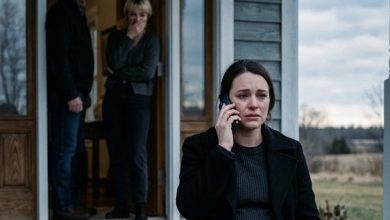
Christmas was supposed to be the easiest day of the year
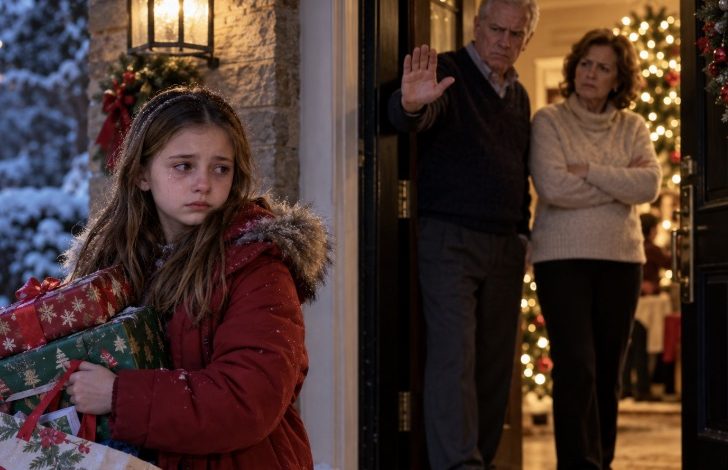
At least that was what I kept telling myself that morning.
My eleven-year-old daughter, Emma, had been talking about Christmas at my parents’ house for weeks. She had wrapped every gift herself, using far too much tape and writing everyone’s name in glittery silver marker.
She had bought my father a ridiculous pair of socks covered in tiny fishing boats because he loved spending summer weekends at the lake.
For my mother, she had made a small photo album filled with pictures of the two of them baking cookies, planting flowers, and celebrating birthdays.
She had even used some of her own allowance to buy chocolates for my younger brother, Daniel.
Emma loved Christmas more than anyone I knew.
That morning, however, I had to work.
I manage a small medical supply company, and one of our drivers had called in sick. A shipment needed to reach a nearby clinic before noon, and I was the only person who could handle it.
My parents lived less than a mile away.
So the plan seemed simple.
Emma would walk to their house around ten. I would finish work by lunchtime and meet everyone there.
She had walked that route dozens of times before.
Before leaving, she stood in the hallway wearing her red coat, struggling to balance a large reusable shopping bag full of presents.
“Do you think Grandma will cry when she sees the album?” she asked.
“Definitely,” I said.
Emma smiled.
“I hope it’s a good cry.”
I kissed her forehead and watched her walk toward the end of our street.
Then I grabbed my keys and went to work.
For the next three hours, I barely looked at my phone.
That mistake still bothers me.
Around 12:45, I finally finished everything and called my mother.
She didn’t answer.
I called my father.
Nothing.
That seemed strange.
Christmas at their house was usually loud enough to hear from the sidewalk. Someone was always cooking, music was playing, and my father usually kept his phone nearby because relatives called throughout the day.
I tried Emma.
Her phone rang from somewhere inside my own house.
My stomach tightened.
She had forgotten it.
I drove toward my parents’ neighborhood.
Their driveway was packed with cars.
Daniel’s truck was there.
My aunt’s car was there.
Even my cousin Sarah, who lived almost two hours away, had apparently arrived.
Everyone was there.
Except Emma.
I parked quickly and walked toward the front door.
Before I reached it, my mother opened the door.
She looked surprised to see me.
“Where is Emma?” I asked.
The expression on her face changed.
“She went home.”
For a moment, I thought I had misunderstood her.
“What do you mean she went home?”
My mother crossed her arms.
“She came here earlier. Your father and I told her today wasn’t a good day.”
I stared at her.
Behind my mother I could see the Christmas tree glowing in the living room.
The dining table was covered with food.
People were talking and laughing.
“Not a good day?” I repeated.
My father appeared behind her.
“We didn’t want drama today,” he said.
I felt something cold settle in my chest.
“What drama could an eleven-year-old possibly create?”
Neither of them answered immediately.
Finally my father said, “We thought it would be better if she spent Christmas with you.”
“With me?”
I pointed toward my car.
“I was working.”
My mother looked uncomfortable.
“We assumed you would be home soon.”
I could barely believe what I was hearing.
“She walked here carrying gifts for all of you.”
My mother looked down.
“She took them with her.”
That was the moment everything became quiet in my head.
I didn’t argue.
I didn’t yell.
I didn’t demand explanations.
I simply turned around and walked back to my car.
My father called my name from the doorway.
I ignored him.
When I reached my house, the front door was unlocked.
I stepped inside.
“Emma?”
No answer.
I walked through the living room.
Then I saw the shopping bag beside the stairs.
Every gift was still inside.
Emma was sitting on the floor of her bedroom.
She had taken off her coat but was still wearing her boots.
She was holding the photo album she had made for my mother.
When she saw me, she quickly wiped her face.
“Mom, I’m okay.”
That sentence hurt more than anything my parents had said.
I sat beside her.
“What happened?”
She looked at the floor.
“Grandpa opened the door.”
She explained everything slowly.
When she arrived, my father had stepped outside and pulled the door partly closed behind him.
Emma could hear people inside.
She told him she had brought Christmas presents.
He said there had been a “change of plans.”
Then my mother came to the door.
Emma asked whether she had done something wrong.
My mother said no.
Then she told Emma she should go home.
“So I did,” Emma whispered.
“You walked all the way back?”
She nodded.
“With all those presents?”
Another nod.
Then she said something that I still remember word for word.
“I didn’t want to leave the presents there if they didn’t want me there.”
I hugged her for a long time.
Eventually she asked whether we could still have Christmas dinner.
“Absolutely,” I said.
We made grilled cheese sandwiches because almost everything in our kitchen had been bought for meals we were supposed to eat at my parents’ house.
We watched an old Christmas movie.
Emma opened the presents I had bought her.
For about an hour, I concentrated entirely on making the afternoon feel normal.
But there was something she had said that I could not stop thinking about.
My father had said they didn’t want “drama.”
That word bothered me.
Because there hadn’t been any drama.
At least not that I knew about.
Something else was happening.
And I intended to find out what it was.
At around two thirty, after Emma settled on the sofa with a blanket and her new headphones, I went into my office.
I started making phone calls.
The first call was to my brother Daniel.
He answered almost immediately.
“Where are you?” he asked.
“At home.”
There was a pause.
“With Emma?”
“Yes.”
Another pause.
Then I asked him directly.
“Why did Mom and Dad send her away?”
Daniel sighed.
“You really don’t know?”
My heart started beating faster.
“Know what?”
He became quiet.
Finally he said, “You need to ask Dad about the house.”
I looked around my office.
“What house?”
“Their house.”
I almost laughed.
“What does their house have to do with Emma?”
Daniel lowered his voice.
“Everything.”
What he told me next completely changed the situation.
Three years earlier, my parents had nearly lost their house.
My father’s business had failed after a bad investment, and they had accumulated debts they never told anyone about.
At the time, they came to me asking for help.
They told me they needed a temporary loan.
I agreed.
But the situation turned out to be much worse than they admitted.
Eventually, following advice from an attorney, I purchased the property from the lender and allowed my parents to continue living there.
They paid a small monthly amount toward expenses.
I covered the rest.
It was never discussed publicly because my father was embarrassed.
As far as most relatives knew, my parents still owned the house.
But Daniel knew.
And apparently something had changed.
Earlier that month, my father had told several relatives that he planned to “take control of the property again.”
I asked Daniel what that meant.
He hesitated.
Then he told me.
My father had been telling people that I had agreed to transfer the house back to him after Christmas.
I had agreed to no such thing.
That afternoon, according to Daniel, my father had invited several relatives over because he wanted to announce that the house was “officially his again.”
There was only one problem.
Emma knew the truth.
Months earlier, she had overheard me talking with my accountant about property taxes.
She knew the house belonged to me.
Apparently my father was afraid she might casually mention it in front of everyone.
So he sent her away.
My eleven-year-old daughter had been turned away on Christmas because my father was afraid she might ruin a lie.
Suddenly his comment about avoiding “drama” made sense.
I thanked Daniel and ended the call.
Then I opened the folder containing every document connected to the property.
I called my attorney.
After that, I called my accountant.
Then I called the property management company that handled maintenance and utility payments.
I did not try to throw my parents out.
I did not change the locks.
I did not shut off electricity or water.
I simply stopped protecting their secret.
For three years, I had paid most of their housing expenses while allowing them to tell relatives that everything was fine.
That ended that afternoon.
I sent one message to our family group.
It was short.
“Merry Christmas. Since there appears to be confusion regarding Mom and Dad’s house, I want to clarify something. I purchased the property three years ago after their financial problems. They have been living there under an agreement with me. No transfer of ownership has been discussed or promised. I’m sharing this only because inaccurate information appears to have been given to several family members.”
Then I put my phone down.
Within three minutes, it started ringing.
I ignored it.
Messages arrived from cousins.
Then my aunt.
Then my parents.
Then people I had not spoken to in months.
Apparently my father had borrowed money from two relatives while claiming the house would soon be his again.
One cousin had agreed to help finance renovations.
My aunt had loaned him thousands of dollars for what he described as a temporary business opportunity secured by the property.
None of them knew he didn’t own it.
By four in the afternoon, the Christmas gathering at my parents’ house had collapsed.
People were demanding explanations.
My father was trying to defend himself.
My mother was crying.
Daniel texted me once.
“You opened a very big door.”
I replied, “I told the truth.”
But the biggest surprise came around six that evening.
Someone knocked on my front door.
I expected my father.
Instead, it was my mother.
She was alone.
Her eyes were red.
Emma was upstairs playing a game, so I stepped onto the porch and closed the door behind me.
My mother held something in her hands.
The little photo album Emma had made.
For a second I thought Emma must have left it outside their house.
Then I remembered seeing it in her bedroom.
I stared at my mother.
“Where did you get that?”
She looked down at the album.
“This isn’t Emma’s.”
She opened it.
Inside were old photographs.
Photographs of me as a baby.
Photographs of my parents when they were young.
Photographs of another woman I didn’t recognize.
On the final page was a letter.
My mother handed it to me.
“I should have told you years ago,” she said.
I looked at her.
“Told me what?”
She sat down on the porch step.
Then she said something I never expected to hear.
My father was not my biological father.
The woman in the photographs was my biological father’s sister.
My biological father had died when I was two years old.
He had left me a small inheritance.
My mother had kept the truth hidden after marrying the man I had always known as Dad.
Over the years, that inheritance had grown.
And almost twenty years earlier, my mother and stepfather had used part of it to help purchase the very house they now lived in.
Years later, when financial problems forced the house into foreclosure, I had unknowingly bought back a home that had originally been partially purchased with money that belonged to me.
I sat there staring at the photographs.
Suddenly Christmas, the house, my father’s desperation to claim ownership, and my mother’s silence were all connected.
“He was afraid you would eventually find out,” my mother said.
“About the inheritance?”
She nodded.
“And about your real father.”
I didn’t know what to say.
For hours, I had believed the biggest betrayal of the day was what had happened to Emma.
It wasn’t.
That had simply been the loose thread.
When my parents turned my daughter away from their door, they were trying to protect one lie.
Instead, they pulled apart a secret that had lasted most of my life.
My mother asked whether she could speak to Emma.
I told her not that night.
Emma had already experienced enough.
Before leaving, my mother placed the album in my hands.
“I’m sorry,” she said.
I believed she meant it.
But some apologies arrive after too many choices have already been made.
The following months were complicated.
My parents eventually moved out of the house voluntarily.
My father repaid the relatives who had loaned him money after selling several business assets.
My mother and I slowly began speaking again.
My relationship with the man I had always called Dad became distant.
Not because of biology.
Biology was never the problem.
The problem was that he had spent years treating truth like something dangerous.
Emma, however, recovered faster than the adults did.
A few weeks after Christmas, I asked whether she wanted me to return the gifts she had bought for my parents.
She shook her head.
“No.”
“What do you want to do with them?”
She thought for a moment.
Then she smiled.
We donated most of them to a local community center.
She kept the ridiculous fishing socks.
I asked her why.
“Maybe someday Grandpa will be ready for them,” she said.
That answer surprised me.
Children sometimes understand something adults spend years trying to learn.
Forgiveness does not mean pretending something never happened.
And telling the truth does not always mean destroying a family.
Sometimes the truth simply shows you which parts of the family were real.
That Christmas began with my daughter standing outside a closed door carrying a bag of presents.
By the end of the night, I had learned that the house behind that door contained secrets stretching back decades.
My parents thought sending Emma away would keep everything hidden.
Instead, it did the opposite.
Because the person they considered most likely to accidentally reveal the truth turned out to be the person whose kindness finally forced all of us to face it.