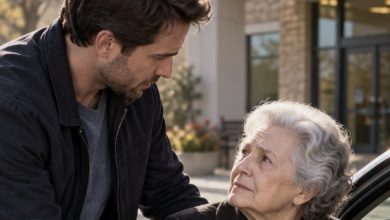
My 10-Year-Old Daughter Collapsed at School — What Doctors Discovered Changed Everything
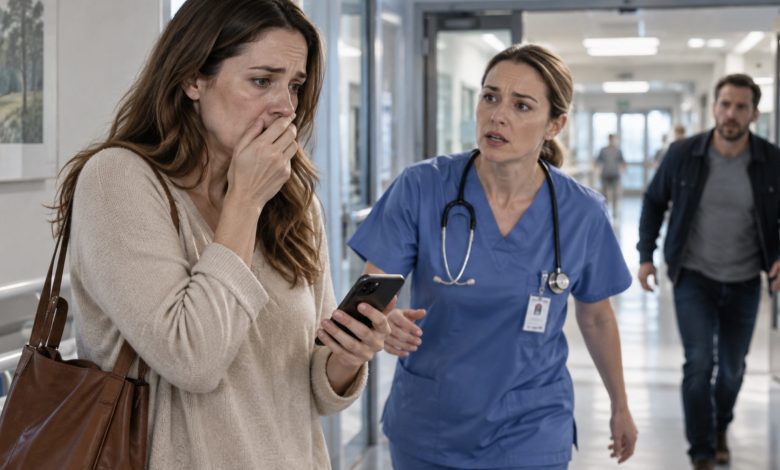
My 10-year-old daughter suddenly collapsed at school, and I rushed her to the hospital alone. Then a pale nurse ran toward me and said, “Call your husband right now.” When he arrived and the doctors told us the truth, neither of us could speak.
That morning had started like any other Tuesday.
I woke Emma at 6:45, opened the curtains in her room, and reminded her that she had exactly twenty minutes before breakfast.
She groaned, pulled the blanket over her head, and said, “Five more minutes.”
I laughed because she said the same thing every school day.
Emma was ten years old, full of questions, and usually moving from the second she woke up until the moment she fell asleep. She loved drawing, hated cleaning her room, and believed every problem in life could be improved with hot chocolate.
There was nothing about that morning that made me think I was about to live through the most frightening day of my life.
Still, looking back, there had been signs.
Small ones.
Easy ones to ignore.
For about a month, Emma had been more tired than usual.
At first, I blamed school.
She had extra homework, a science project, and a math test coming up. She was also rehearsing for a class presentation and had been staying up later than I liked.
Then she started complaining that she sometimes felt dizzy when she stood up too quickly.
“Probably because you’re not drinking enough water,” I told her.
I started putting an extra bottle in her backpack.
A week later, she told me her heart sometimes felt like it was “running.”
I asked what she meant.
“Like I’m running, even when I’m sitting down.”
That caught my attention.
But the feeling always disappeared quickly, and she never complained of pain.
I told myself children were bad at describing strange sensations.
My husband, Daniel, was less worried than I was.
“She’s growing,” he said one evening while Emma was upstairs doing homework. “Kids get tired.”
Daniel was the calm one in our marriage.
I was the one who checked the stove twice before leaving the house and worried if someone didn’t answer a text within fifteen minutes.
He balanced me.
Usually, I loved that about him.
That Tuesday morning, Emma ate half a piece of toast and pushed the rest away.
“You need more than that,” I said.
“I’m not hungry.”
“You’ll be hungry by ten.”
She rolled her eyes.
“Mom.”
I packed a banana in her lunch anyway.
Before she left, she stood in front of the hallway mirror and tied her hair into a ponytail.
Then she paused.
“Do I look pale?”
I looked at her.
“A little tired.”
“I told Mia yesterday I look like a ghost.”
“You do not look like a ghost.”
She smiled.
“Maybe a cute ghost.”
“A very dramatic ghost.”
She laughed, grabbed her backpack, and ran outside.
That was the last normal moment of the day.
At 1:38 p.m., my phone rang.
I was working from home and almost ignored it because I didn’t recognize the number.
Something made me answer.
“Mrs. Carter?”
“Yes?”
“This is the school office. Emma fainted during class.”
For a second, my mind refused to understand the sentence.
“What do you mean, fainted?”
“She lost consciousness for a short time. She’s awake now, but we think you should come immediately.”
My chair hit the wall as I stood up.
“I’m on my way.”
The drive to the school should have taken twelve minutes.
It felt like an hour.
When I entered the nurse’s office, Emma was lying on a small bed with a blanket pulled over her legs.
Her teacher was sitting beside her.
Emma looked at me and tried to smile.
“Hi, Mom.”
Her voice was weak.
I touched her face.
It was cool.
“What happened?”
“I don’t know.”
Her teacher stood up.
“She was answering a question. Then she stopped talking, held onto the desk, and collapsed.”
My stomach turned.
The school nurse checked Emma’s pulse again.
“It’s still fast,” she said quietly.
“How fast?”
She looked at me.
“Fast enough that I think you should take her to the emergency room.”
I didn’t argue.
I called Daniel on the way to the car.
No answer.
I tried again.
Still nothing.
He had told me that morning he would be in meetings until mid-afternoon, so I sent him a message.
Emma fainted at school. I’m taking her to the hospital. Call me as soon as you see this.
Emma leaned her head against the passenger window.
“Mom?”
“Yes?”
“Am I in trouble?”
The question broke my heart.
“No, sweetheart. Of course not.”
“Did I do something wrong?”
“No.”
I reached over and held her hand at a red light.
“We’re just going to make sure you’re okay.”
At the hospital, things happened quickly.
A nurse took Emma’s temperature, blood pressure, oxygen level, and pulse.
Then another nurse came in with a machine for an electrocardiogram.
Emma looked nervous when they placed the small sticky pads on her chest.
“Does it hurt?” she asked.
“No,” the nurse said. “You just have to lie still.”
I stood beside the bed and watched the screen.
I didn’t understand what I was seeing, but I noticed the nurse’s expression change.
Only slightly.
But enough.
She printed the results and left the room.
A few minutes later, a doctor came in.
He introduced himself as Dr. Reeves and asked Emma several questions.
Had she fainted before?
No.
Had she ever had chest pain?
No.
Did she get dizzy during exercise?
Sometimes.
Did her heart ever beat unusually fast?
Emma looked at me.
“Yes.”
Dr. Reeves nodded.
Then he turned to me.
“Any family history of heart rhythm problems? Sudden fainting? Unexplained deaths at a young age?”
I shook my head.
“Not on my side.”
“What about her father?”
“I don’t know.”
He paused.
“You don’t know?”
“Daniel’s father died when Daniel was young. I think he was thirty-nine.”
“What happened?”
I searched my memory.
“Daniel always said it was sudden. His father collapsed at work.”
The doctor looked down at Emma’s chart.
Something about the silence made me uncomfortable.
“Why?”
“I’d like to repeat the ECG and run some blood tests.”
“What are you looking for?”
“I don’t want to jump ahead before we have enough information.”
That answer did not make me feel better.
For the next hour, Emma had blood drawn and another ECG performed.
Daniel still wasn’t answering.
I called three more times.
Nothing.
Then, around 4:20, Emma said she needed the bathroom.
A nurse helped her stand.
She took two steps.
Suddenly, she grabbed the side of the bed.
“I feel weird.”
The monitor beside her started beeping.
Everything changed.
The nurse guided Emma back onto the bed while another nurse entered the room.
Then Dr. Reeves came in almost immediately.
They spoke in short sentences I couldn’t follow.
Emma was awake, but frightened.
“What’s happening?” I asked.
No one answered right away.
Then one of the nurses looked at me.
“Her heart rhythm changed briefly. It’s stable now.”
I felt the blood drain from my face.
“What does that mean?”
Dr. Reeves stepped closer.
“It means we need to take this seriously.”
Before he could explain further, another nurse came quickly through the doorway.
She was holding a printed page.
Her face was pale.
She looked at the doctor, then at me.
“Mrs. Carter, call your husband right now.”
I stared at her.
“I’ve been calling him.”
“Keep calling.”
My heart started pounding.
“Why?”
She hesitated.
Dr. Reeves answered for her.
“Because what we’re seeing may have a hereditary component. We need to ask him some questions, and depending on his history, we may want him evaluated too.”
I called Daniel again.
This time he answered.
“Hey, I just got out of—”
“Come to the hospital.”
My voice sounded strange even to me.
“What?”
“Daniel, come now.”
“Is Emma okay?”
“I don’t know.”
Silence.
Then he said, “I’m leaving.”
He arrived forty minutes later.
The second Daniel walked into the room, Emma looked relieved.
“Dad.”
He crossed the room and hugged her carefully.
“What happened?”
I explained as much as I could.
When I mentioned his father, Daniel’s expression changed.
“What about my dad?”
Dr. Reeves entered before I could answer.
He pulled a chair closer and sat across from us.
“I have some preliminary results,” he said.
I took Daniel’s hand.
The doctor explained that Emma’s ECG showed a pattern that could be consistent with an inherited electrical problem in the heart.
He used the words “long QT syndrome.”
I had never heard them before.
Daniel had.
I felt his fingers tighten around mine.
The doctor noticed.
“Have you heard of it?”
Daniel looked down at the floor.
“My father.”
I turned toward him.
“What?”
He swallowed.
“My mother told me years ago that there was something strange about his heart. I don’t remember the name. I was a kid.”
“You never told me that.”
“I didn’t think it mattered.”
Dr. Reeves stayed calm.
“Did anyone else in your father’s family have fainting episodes or sudden heart problems?”
Daniel sat completely still.
“My uncle died when he was twenty-seven.”
My mouth went dry.
“You told me it was an accident.”
“That’s what everyone called it.”
“What happened?”
“He collapsed while swimming.”
The room went silent.
Dr. Reeves asked Daniel a few more questions.
Had he ever fainted?
Once, as a teenager.
Heart racing?
Sometimes.
Dizziness?
Occasionally.
Daniel had always assumed it was stress.
Just like I had explained away Emma’s tiredness.
The doctor ordered an ECG for Daniel.
Less than thirty minutes later, we had another shock.
His tracing also showed signs that needed further investigation.
That did not mean he definitely had the same condition, the doctor explained. More testing would be required.
But the possibility was real.
Emma’s collapse had uncovered something none of us knew we might be carrying through our family.
I looked at my daughter lying in the hospital bed.
Then I looked at my husband.
Neither of us spoke.
For years, Daniel had believed his father’s death was simply one of those terrible events families sometimes never fully understand.
Now there was a chance it had an explanation.
And there was a chance that explanation had been passed to our daughter.
I expected to feel angry at Daniel for not knowing more.
Instead, I felt something different.
Relief.
Not because Emma was sick.
Not because Daniel might have the same problem.
But because we had found a possible answer before something worse happened.
Dr. Reeves must have seen the fear on our faces.
“There are treatment options,” he said. “The important thing is that Emma is here, she’s stable, and now we know what we need to investigate.”
Those words changed the atmosphere in the room.
Not completely.
We were still scared.
But fear is different when it comes with a plan.
Emma was admitted overnight for monitoring.
Daniel stayed beside her while I called family members and tried to understand everything the cardiology team explained.
Over the next few days, there were more tests, more questions, and eventually a referral to a specialist.
We learned that inherited heart rhythm conditions can sometimes remain unnoticed for years.
Some people have obvious symptoms.
Others have almost none.
That was why family history mattered so much.
I kept replaying the previous month in my head.
The tiredness.
The dizziness.
The racing heartbeat.
All the little things I had explained away.
I wanted to blame myself.
But one of the doctors told me something I still remember.
“You brought her in when she collapsed. You listened when the school called. You did exactly what you needed to do.”
A week later, Emma was back home.
She wasn’t allowed to return to her normal routine immediately, and we had several follow-up appointments ahead of us.
But she was still Emma.
She complained about homework.
She left socks on the floor.
She argued that vegetables should not be required at dinner.
And she still asked for hot chocolate whenever she had a bad day.
Daniel also began his own medical evaluation.
For the first time in years, he called his mother and asked detailed questions about his father’s death.
That conversation answered some things and opened many more.
Our family had changed.
Not in the dramatic way I first feared when the hospital monitor started beeping.
It changed because we understood something about ourselves that we had never known before.
Sometimes the most frightening truth is not the one that destroys your life.
Sometimes it is the one that gives you a chance to protect it.
I still think about that pale nurse running toward me and telling me to call my husband.
At the time, I thought those words meant something terrible had already happened.
Instead, they became the beginning of an answer.
And for our family, that answer may have arrived exactly when we needed it most.