My husband left me for a younger woman and took the whole family overseas
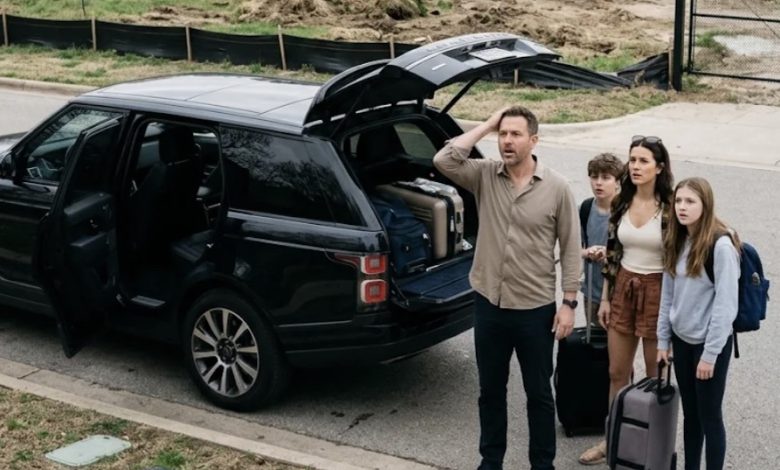
My husband left me for a younger woman and took the whole family overseas for his wedding. At 2:13 a.m., he sent me a text: “Disappear before we get back. I hate old things. I deserve a new life.” But when they returned, laughing, all they found was an empty lot where our house used to stand… and the color drained from their faces!!
PART 2
I. The Dismantling
The first truck arrived on a Tuesday, at six in the morning.
The sun hadn’t yet risen over Oak Brook.
The automatic sprinklers were still running on the immaculate lawns of the subdivision.
Alexandra stood on the front step, a cup of coffee in her hands, when the crew chief climbed down from the cab.
His name was Tomás Herrera.
Fifty years old, a gray beard, hands as broad as shovels, and a calm voice that never rose.
He looked at the house for a long time.
Then he looked at her.
“You’re sure, Ms. Reed?”
It was the first time in nineteen years that anyone had called her by her maiden name.
She felt something straighten in her chest.
“I’m sure.”
He nodded.
“Then we start with the inside. Furniture, personal belongings, everything that matters. Then the partition walls. Then the roof. The modules go last.”
“How long?”
“If the weather stays dry, nine days.”
Richard’s return flight landed in Chicago in eleven days.
Alexandra had read the itinerary so many times she knew it by heart.
Flight UA 1734, Honolulu to O’Hare.
Scheduled arrival 2:20 p.m., on a Sunday.
Two days of margin.
That would be enough.
Tomás’s men worked like watchmakers.
They wrapped the dishes in bubble wrap.
They took apart the kids’ beds screw by screw, labeling every piece.
They took down the family photos one by one.
Alexandra watched them from the kitchen.
She had saved one thing for last: the small pencil marks on the pantry door frame.
Dylan’s height and Chloe’s, year after year.
Dylan, 3.
Chloe, 2.
Dylan, 10.
Chloe, 8.
The last line dated from the previous summer.
Dylan, 16.
Chloe, 13.
“That one,” Tomás said gently, “we cut out and keep separate.”
She couldn’t answer.
She only nodded.
II. The Neighbors
On the third day, the neighbors started coming out.
First, curtains twitching.
Then silhouettes on the driveways, pretending to walk their dogs.
Then, finally, Mrs. Whitcombe, president of the homeowners’ association, who crossed the street with a determined stride, in a white tennis outfit, a pink binder clutched to her chest.
“Alexandra! What on earth is this circus?”
“Good morning, Margaret.”
“There are three trucks on the street. A crane. Workers everywhere. Do you have a permit? The association bylaws are very clear about construction lasting more than seventy-two hours.”
Alexandra took an envelope out of her cardigan pocket.
She handed it to her.
Permit for demolition and relocation of a prefabricated structure, issued by the Village of Oak Brook.
Notice to the homeowners’ association, sent by certified mail fifteen days earlier.
Signed return receipt.
Signed by Margaret Whitcombe herself.
Mrs. Whitcombe read the paper twice.
She blushed to the tips of her ears.
“I… I hadn’t opened that mail.”
“I know,” Alexandra said. “Nobody ever opens my mail.”
Mrs. Whitcombe looked at the half-emptied house.
Then she lowered her voice.
“Alex. Where’s Richard?”
“In Maui.”
“In Maui? With the children?”
“With the children, his parents, his cousins, and his new wife. They got married Saturday.”
Mrs. Whitcombe was silent for a long moment.
Then, to Alexandra’s surprise, she put a hand on her arm.
“My first husband left me for his secretary in 1994,” she said. “He kept the house. I kept the cat.”
She looked at the crane.
“I wish I’d had your courage.”
Then she walked back across the street.
The next morning, she returned with a tray of blueberry muffins for Tomás’s crew.
III. What Gloria Found
On the fifth day, Gloria Miller called.
Her voice, usually so composed, had something taut in it.
“Alexandra. Are you sitting down?”
“I’m standing in the middle of a living room with no walls.”
“Then sit down on something.”
Alexandra sat down on a crate of books.
“I had a full title search done on the land,” Gloria said. “Just a precaution, before the divorce. And I found something. Six weeks ago, a mortgage loan application was filed against your property. A private loan. Four hundred thousand dollars. From a financing company in Schaumburg called Lakeview Capital.”
Alexandra felt the floor drop out from under her.
“I never applied for a loan.”
“I know. But your signature is on the application. And on the power of attorney that came with it. A notarized power of attorney giving Richard Stone the right to mortgage the land in your name.”
“I never signed a power of attorney.”
“I know that, too. The notary’s seal is fake. I checked. The commission number doesn’t exist in the Illinois registry.”
Alexandra closed her eyes.
Four hundred thousand dollars.
“Was the loan approved?”
“The funds were disbursed five weeks ago. Into an account in Richard’s name alone.”
“Five weeks.”
“Right before he announced his wedding to you.”
Alexandra did the math.
The wedding in Maui.
The plane tickets for fourteen people.
The oceanfront hotel.
Valerie’s dress.
The ring.
“He paid for his wedding with my land,” she murmured.
“That’s what I believe,” Gloria said. “And that’s not all. I spoke with a real estate agent in Hinsdale. Richard contacted her two months ago. He wanted to know what the land would be worth once the house was demolished. He was planning to sell, Alexandra. He was counting on you to disappear, and then he would have sold the land with a forged power of attorney and paid off the loan with the proceeds.”
The silence lasted a long time.
In the empty living room, a worker dropped a wrench.
The sound echoed off the bare walls.
“I hate old things,” Alexandra breathed.
“Pardon?”
“Nothing. He wrote to me that he hated old things.”
She stood up.
“What do we do, Gloria?”
“We file a criminal complaint for forgery. We notify Lakeview Capital that their collateral is fraudulent. And we let Richard come home from vacation.”
“And the house?”
Gloria let out a short, dry laugh.
“The house was bought with your father’s life insurance. I have the bank statements from 2008. Every dollar is traceable. It’s separate property, Alexandra. It’s yours as much as the land is. You have every right to take it wherever you want.”
IV. Dylan
On the seventh day, at two in the morning, Alexandra’s phone buzzed.
She flinched.
For one terrible second, she saw the screen light up at 2:13 again, three weeks earlier.
But it wasn’t Richard.
It was Dylan.
Mom, are you asleep?
She called him immediately.
He picked up on the first ring.
He was whispering.
She could hear waves behind him.
“Mom.”
“Sweetheart. Are you okay?”
A long silence.
“No.”
She tightened her grip on the phone.
“Tell me.”
“Chloe cried all night. Valerie told her she was too fat for the bridesmaid dress. In front of everybody. At the rehearsal dinner. And Dad laughed.”
Alexandra closed her eyes.
“And you?”
“I didn’t say anything. Like always.”
He took a deep breath.
“Mom, I saw the message. The one he sent you. He showed it to Valerie by the pool. They laughed. She said it was the sexiest thing she’d ever heard.”
Alexandra said nothing.
She couldn’t say anything.
“I’m sorry,” Dylan murmured. “I’m sorry I didn’t stay with you. He said if we didn’t come, he wouldn’t pay for college.”
“Dylan. Listen to me. You didn’t do anything wrong. Nothing. Do you hear me?”
“Mom… there’s something else.”
“What?”
“Last night he was drunk. He was talking to Uncle Greg. He said when he got back he was going to get the house and the land appraised. He said you’d sign whatever he wanted, because you always sign everything. And that with the money he’d buy an apartment in Chicago for him and Valerie. With a view of the lake.”
Alexandra looked around her.
She was sitting on a mattress on the floor, in the only room of the house still standing.
Around her there was nothing left but boxes, steel beams, and the orange light of a streetlamp coming through a curtainless window.
“Dylan,” she said softly. “When you get home Sunday, I want you to hold your sister’s hand. Okay? And whatever happens, whatever your father says, you come straight to me.”
“Why? What’s going to happen?”
She smiled in the dark.
“Your father is about to find out what old things are worth.”
V. The Empty Lot
On the ninth day, the last module of the house left Oak Brook on a lowboy truck, escorted by two pilot cars with orange flashing lights.
The neighbors came out onto their lawns to watch it pass.
Some filmed it.
Mrs. Whitcombe applauded.
On the tenth day, an excavator leveled the foundations.
On the eleventh day, a landscaping crew covered the lot with fresh soil, black and perfectly smooth.
Nothing was left.
Not a wall.
Not a step.
Not a nail.
Just a rectangle of bare earth in the middle of the perfect lawns, between the Patels’ house and the Whitcombes’.
In the middle, Alexandra had one thing planted.
A small wooden sign, painted white.
PRIVATE PROPERTY — ALEXANDRA REED.
And right next to it, the old wrought-iron mailbox her father had made with his own hands thirty years earlier, on which you could still read, half worn away, the name REED.
In the mailbox, she placed a large manila envelope.
Addressed to Richard Stone.
Then she went and sat in her car across the street, in front of Mrs. Whitcombe’s house.
Gloria was in the passenger seat, a file on her lap.
It was 3:47 p.m., Sunday.
Richard’s flight had landed at 2:20.
At 4:03, two black limousines turned the corner.
VI. The Return
The windows of the first limousine were down.
You could hear music.
Laughter.
Champagne corks.
Richard sat in the back, shirt open, tanned, a Hawaiian lei still around his neck.
Valerie was nestled against him, with her long blond hair and sunglasses pushed up on her head.
In the second limousine were Richard’s parents, his cousins, his brother Greg.
And Dylan and Chloe, sitting side by side, in silence.
Dylan was holding his sister’s hand.
The first limousine slowed in front of 14 Willow Crest Lane.
Then it stopped.
The music went on for one more second.
Then someone cut it off.
Richard leaned out the window.
He looked at the lot.
He looked at the Patels’ house on the left.
The Whitcombes’ house on the right.
Then, again, the lot.
He took off his sunglasses.
“What the…”
He got out of the car.
He took three steps onto the sidewalk.
He stopped at the edge of the black earth.
He stood there, motionless, the lei crooked on his chest.
Valerie got out too.
“Honey? Did we get the wrong street?”
Richard didn’t answer.
He was staring at the little white sign.
PRIVATE PROPERTY — ALEXANDRA REED.
The doors of the second limousine opened.
Richard’s mother got out first.
She put a hand to her mouth.
“My God. Richard. Where’s the house?”
“I don’t know,” Richard said.
His voice was strange.
High-pitched.
Like a child’s.
“I don’t know. It was here. It was right here.”
Greg came closer.
He looked at the lot.
Then he burst out laughing.
A nervous, incredulous laugh.
“She made the house disappear, Rick. She literally made the house disappear.”
“It’s not funny!”
Richard whirled around, red with fury.
And that was when he saw Alexandra’s car across the street.
She got out.
Calmly.
She was wearing jeans, a gray sweater, white sneakers.
Her hair was pulled back.
She wore no makeup.
She looked rested for the first time in years.
Gloria got out behind her, her file in hand.
Alexandra crossed the street.
She didn’t stop in front of Richard.
She walked past him as if he didn’t exist.
She went straight to the second limousine.
Dylan and Chloe had already gotten out.
Chloe ran.
She threw herself into her mother’s arms with such force that they nearly fell over together.
Dylan followed more slowly.
He was sixteen.
He was trying not to cry in front of everyone.
He lost.
Alexandra opened one arm.
He came and nestled against her, he who was now a head taller than she was.
She held her two children against her, in the middle of the sidewalk, for a very long time.
Behind her, she heard Richard yell.
“Alexandra! Where’s my house?”
She turned around slowly.
She kept her children against her.
“Your house?”
“Our house! Our house, dammit! What did you do?”
Alexandra looked at him.
The lei.
The tan.
The open shirt.
The young blond woman behind him, who wasn’t smiling at all anymore.
“You told me to disappear before you got back,” she said. “So I disappeared. And I took my things with me.”
“The house isn’t your things!”
“Yes. It is.”
Gloria stepped forward.
“Mr. Stone. I’m Gloria Miller, Ms. Reed’s attorney. The house was purchased in 2008 with life insurance proceeds from the late Arthur Reed, deposited exclusively into an account in his daughter’s name. The land is an inheritance from Mr. Reed, also in his daughter’s name alone. Both are Ms. Reed’s separate property under Illinois law. She had every right to move it, sell it, or paint it purple if she wished.”
Richard opened his mouth.
Gloria didn’t give him time to speak.
“The house is currently located on another property belonging to Ms. Reed, whose address we will not be sharing with you. Your personal belongings are in a storage unit in Downers Grove. The keys and access code are in the envelope waiting for you in the mailbox. Along with the divorce petition.”
Richard looked at the old wrought-iron mailbox.
REED.
He approached slowly.
He opened it.
He took out the manila envelope.
He opened it right there on the sidewalk, in front of his whole family.
He read the first page.
Then the second.
Then he got to the third.
And all the color drained from his face.
VII. The Third Page
The third page was a copy of a complaint filed with the DuPage County State’s Attorney’s Office.
Forgery.
Uttering a forged document.
Mortgage fraud.
Identity theft.
Stapled behind it was a copy of the forged power of attorney.
With Alexandra’s fake signature.
And the fake notary seal.
And at the bottom of the page, a handwritten note from Gloria:
Notary commission number 7743291 does not exist.
Lakeview Capital was informed at 9 a.m. this morning that its mortgage collateral is fraudulent.
They would like to speak with you.
Richard looked up.
He was white as a sheet.
“Alex,” he said, and his voice shook. “Alex, I can explain.”
“Go ahead. Explain.”
“It was… it was a temporary loan. I was going to pay it back. I just… the wedding cost more than expected, and the agency is going through a rough patch, and I…”
He stopped.
He looked around him.
His parents.
His brother.
His cousins.
Valerie.
Everyone was looking at him.
No one was laughing anymore.
“You forged my signature,” Alexandra said. “To mortgage my father’s land. To pay for your wedding to another woman.”
Valerie took a step back.
“What?”
She turned to Richard.
“You told me the wedding was paid for with a bonus from the agency. You told me the agency had the best year in its history.”
Richard didn’t answer.
Valerie looked at the empty lot.
Then the sign.
Then Richard.
And Alexandra saw, with perfect clarity, the moment the young woman understood that she hadn’t married a rich man.
She had married a man who lived in another woman’s house.
“You lied to me,” Valerie said slowly.
“Baby, listen…”
“You told me it was your house. You told me you built it. You showed me photos and said, ‘Soon all of this will be ours.’”
She yanked her sunglasses out of her hair.
“You have nothing, Richard. You never had anything.”
She climbed back into the limousine.
She slammed the door.
The driver looked at Richard in the rearview mirror, waiting for instructions.
Richard gave none.
He stood rooted at the edge of the empty lot, the manila envelope in his hand, the wilted Hawaiian lei around his neck.
VIII. Richard’s Mother
It wasn’t Alexandra who spoke next.
It was Dorothy Stone.
Richard’s mother.
Seventy-eight years old.
A small, wiry woman with silver hair, who had never been very fond of her daughter-in-law, whom she’d found too plain, too quiet, too much “a carpenter’s daughter.”
She walked up to her son.
She stopped in front of him.
And she slapped him.
Not hard.
But hard enough for everyone to hear.
“Your father and I paid for your education,” she said in a trembling voice. “We helped you open your agency. We mortgaged our own house in 2009 to save you from bankruptcy. And you forge the signature of the mother of your children?”
“Mom…”
“Be quiet.”
She turned to Alexandra.
She hesitated.
Then she said something Alexandra would never have believed she’d hear from her mouth.
“I’m sorry, Alexandra. I’m sorry I never stood up for you.”
She looked at Dylan and Chloe, still clinging to their mother.
“And I’m sorry I took them there. I knew it was wrong. I said nothing.”
Alexandra didn’t know how to answer.
So she simply nodded.
Richard’s father, a silent old man who hadn’t said a word the entire trip, took his wife’s arm.
They climbed back into the second limousine.
Greg followed them, after one last look at his brother.
Then the cousins.
The limousines drove off.
All that remained on the sidewalk was Richard, his suitcase, and the manila envelope.
He looked at Alexandra.
“Where am I supposed to sleep tonight?”
She thought of all the nights she’d waited for him at the kitchen window.
All the plates she’d kept warm.
All the times he’d come home at midnight without a word, and she’d pretended to be asleep so she wouldn’t cry in front of him.
“I don’t know, Richard,” she said. “It’s not my problem anymore.”
She took Chloe’s hand.
Dylan took his sister’s suitcase.
And the three of them walked to the car on the other side of the street, without looking back.
IX. The Lake
The house was waiting for them two hours away, on the shore of a lake in Wisconsin.
It was Arthur Reed’s second secret.
A small wooded lot of seven acres on the north shore of Lake Geneva, which he’d bought in the eighties for almost nothing, when it was still just a forest of pines and birches.
He used to go there to fish on Sundays.
He’d built a cabin there with his own hands.
He’d taken Alexandra there when she was six, to teach her to swim.
Before he died, he’d left it to her, along with the Oak Brook house.
She hadn’t been back in nineteen years.
Richard thought the place was too far, too rustic, too “hick.”
“We don’t need a piece of forest in the middle of nowhere,” he used to say.
He had even forgotten the property existed.
Tomás and his crew had reassembled the house in nine more days.
On a new concrete foundation.
Facing the water.
Between two tall pines.
When the car stopped in the gravel driveway, Chloe pressed her face to the window.
“Mom. That’s our house.”
“Yes, sweetheart.”
“But it’s on a lake.”
“Yes.”
Dylan got out first.
He looked at the house.
The same walls.
The same roof.
The same windows.
But facing the water, this time.
Facing the light.
He went inside.
Alexandra followed him.
Everything was in its place.
The furniture.
The photos.
The dishes.
The kids’ beds, reassembled exactly as before.
And in the kitchen, on the frame of the new pantry door, carefully installed by Tomás himself, the small piece of wood that had been cut out.
With all the pencil marks.
Dylan, 3.
Chloe, 2.
Dylan, 16.
Chloe, 13.
Dylan looked at it for a long time.
Then he took a pencil out of his jacket pocket.
“Mom. Measure me.”
She laughed.
“You haven’t grown in two weeks.”
“Measure me anyway.”
He stood against the door frame.
She drew a small line above his head.
Then she wrote beside it, in tiny letters:
Dylan. The day we came home.
X. The Months That Followed
The divorce was finalized in March.
The judge confirmed that the house and both parcels of land were Alexandra’s separate property.
He awarded Alexandra primary custody of the children, with visitation for Richard every other weekend.
Dylan and Chloe asked not to go for the first few months.
The judge respected their wishes.
Lakeview Capital sued Richard for the four hundred thousand dollars.
The DuPage County State’s Attorney charged him with forgery and mortgage fraud.
He pleaded guilty.
He was sentenced to two years of probation, three hundred hours of community service, and full repayment of the loan.
To pay, he had to sell his advertising agency.
The very one where he’d met Valerie.
Valerie, for her part, had filed for annulment three weeks after returning from Maui.
The marriage had never been registered in Illinois.
The divorce from Alexandra hadn’t been finalized on the day of the ceremony.
The marriage was void.
Richard had paid four hundred thousand dollars, with another person’s money, for a wedding that had never existed.
When Greg heard the news, he called Alexandra.
He was still laughing.
“You know what he said to me the night we got back from Maui? He was sleeping on my couch. Staring at the ceiling. And he said, ‘She was always smarter than me. I knew it. That’s why I wanted her to disappear.’”
Alexandra didn’t answer.
She hung up gently.
Then she walked out onto the deck, facing the lake, and looked at the water for a long time.
XI. The Tin Box
The first weekend at the lake, Alexandra walked down to her father’s old cabin.
It was still there, at the end of a little path carpeted with pine needles.
The roof had sagged on one side.
The door no longer closed.
Inside, everything smelled of damp wood and dust.
An old chair.
A wobbly table.
Rusty fishing rods hanging on the wall.
And on the shelf, behind a box of hooks, a small tin box, the kind people used to keep cookies in.
Alexandra recognized it right away.
She had been six the last time she saw it.
Her father used to keep his fishing flies in it.
She opened it.
There were no flies.
There was a yellowed envelope.
On the envelope, in Arthur Reed’s slanting, careful handwriting, was a single word.
Alex.
Her hands began to shake.
She sat down on the old chair.
She opened the envelope.
My dearest,
If you’re reading this letter, it means you’ve finally come back to the lake. And if you’ve come back after so many years, I imagine it isn’t to fish.
I never told you what I thought of Richard. You loved him, and it wasn’t my place to choose. But I saw how he looked at our house the day you introduced him to us. He wasn’t looking at you. He was looking at the walls. He was counting the windows.
That’s why I put everything in your name. Not out of distrust of you. Out of love.
A house can be taken apart. A marriage too, sometimes. But the land stays. The land waits. It doesn’t judge. It doesn’t ask forgiveness. It’s simply there when you need a place to put your feet.
If you’re here, it’s because you needed that place. So stay as long as you need to. Teach my grandchildren to swim. And never again let anyone tell you that you’re worth nothing because you don’t make noise.
I’m proud of you. I always have been.
Dad.
Alexandra read the letter three times.
Then she pressed it against her chest and cried.
Not the way she’d cried in the bathroom, with the shower running so no one would hear.
She cried loudly.
Freely.
Like a child finding her father again after a long absence.
When she walked back up toward the house, Chloe was waiting on the dock, her feet in the cold water.
“Mom, were you crying?”
“A little.”
“Why?”
Alexandra sat down beside her.
She took off her shoes.
She dipped her feet into the lake, next to her daughter’s.
The water was freezing.
She laughed.
“Because your grandfather wrote me a letter,” she said. “And he was right about everything.”
Chloe laid her head on her shoulder.
“Will you teach me to swim here this summer?”
“Yes, sweetheart. That’s exactly what he wanted.”
XII. The Oak
In the spring, Alexandra went back to Oak Brook one last time.
The lot was still there.
The rectangle of black earth had turned green.
Wild grasses had grown in.
Dandelions.
A few poppies.
The neighbors had left it as it was.
Mrs. Whitcombe had even convinced the homeowners’ association not to demand that it be mowed.
“It reminds us of something important,” she’d told the general meeting.
No one had dared ask her what.
Developers had called Alexandra.
Several times.
They offered enormous sums for the land.
She had refused.
She had come that day with Dylan, Chloe, and a young oak in a large plastic pot.
Dylan dug the hole.
Chloe poured the water.
Alexandra set the tree at the exact center of the lot.
At the precise spot where the kitchen table used to stand.
Where she had served thousands of dinners.
Where she had waited for Richard so many nights.
Where he had told her he was going to “start over from zero.”
They packed the soil around the roots.
Then the three of them stood looking at the little tree.
It didn’t even reach Chloe’s shoulders.
“How long will it take to get big?” Chloe asked.
“Fifty years,” Alexandra said. “Maybe a hundred.”
“We’ll be old.”
“Yes.”
Chloe thought about it.
“Dad hates old things.”
Alexandra smiled.
She laid a hand on the thin, smooth bark of the young oak.
“I know. But your grandfather used to say old things are the only ones with roots.”
She looked at her children.
Dylan, almost a man.
Chloe, who no longer cried at night.
“Houses can be taken apart,” she said. “They can be moved. They can be rebuilt somewhere else. But you never give your land to someone who confuses love with obedience.”
XIII. 2:13
One year to the day after the first message, Alexandra’s phone buzzed in the middle of the night.
She was asleep in the bedroom that looked out on the lake.
The window was cracked open.
You could hear the water lapping against the dock.
She reached toward the nightstand.
The screen read 2:13.
A message from Richard.
The first in months.
I’m sorry. For everything. I didn’t understand what I had until all that was left was dirt. Can we talk?
Alexandra read the message once.
Just once.
Then she set the phone back on the nightstand, screen against the wood.
She didn’t reply.
Not out of anger.
Not out of revenge.
Simply because there was nothing left to say.
She got up.
She walked to the window.
Above the lake, the moon was full.
It laid a long silver path across the black water, all the way to the wooden dock Arthur Reed had built with his own hands, forty years earlier.
The dock was old.
The planks were gray and worn.
Some of them creaked underfoot.
But it still held.
It would hold for a long time yet.
Alexandra smiled in the dark.
Then she went back to bed and slept straight through until morning.
For the first time in twenty years, no one had asked her to disappear.
She was exactly where she was meant to be.
At home.
On her land.
With her roots.
THE END
Disclaimer: This story is fictional and created for entertainment purposes only. Any names, characters, places, or events are fictitious or used fictitiously. No real person or organization is intended to be portrayed.