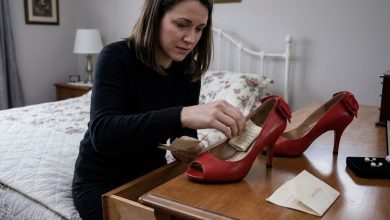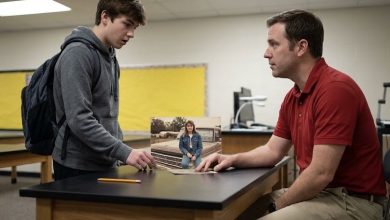
Before my wedding, my mother forced me to put my $5 million Manhattan apartment in her name
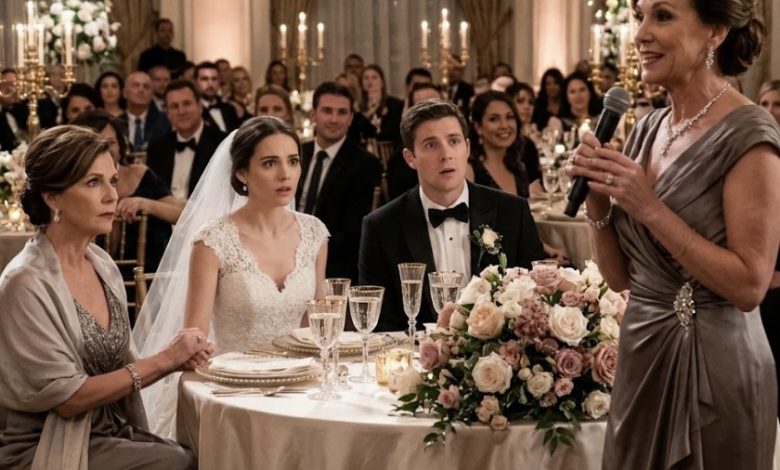
Before my wedding, my mother forced me to put my $5 million Manhattan apartment in her name. She told me, “Don’t say a word to Mark or his family.” I thought she was losing her mind. Until the moment my mother-in-law took the microphone in front of 200 guests and announced that my Tribeca apartment would become her home for her golden years.!!
PART 2
I. The Microphone
For three seconds, no one moved.
Two hundred guests.
A string quartet frozen, bows in the air.
A waiter standing motionless in the middle of the dance floor, a tray of champagne flutes in his hand.
And Diane, standing there in her gold dress, mouth slightly open, her hand still stretched toward the microphone my mother had just taken from her.
Mark let go of my waist.
All at once.
As if my dress had burned him.
“Excuse me?” Diane said.
Without the microphone, her voice suddenly seemed very small.
My mother didn’t answer right away.
She handed the microphone to the DJ, politely, the way you return something you’ve borrowed.
Then she turned to Diane.
Margaret Ellis.
Sixty-one years old.
A pearl-gray suit.
A simple strand of pearls.
And that look I’d known since childhood, the one she had when I lied to her about my homework and she already knew.
“You heard me correctly, Diane,” she said in a perfectly calm voice. “The Tribeca apartment is in my name. It has been for three months. My daughter never had the right to offer it to you. And she never did.”
Diane turned her head toward Mark.
Not toward me.
Toward Mark.
And that look told me everything.
It was the look of a business partner discovering that the deal had just fallen through.
“Mark,” she hissed. “You told me…”
“Mom. Not here.”
He was still smiling.
For the cameras.
For the raised phones of my college friends.
But his hand was shaking.
The DJ, a young man who had probably worked plenty of weddings but never one like this, had the smartest reflex of the evening.
He started the music.
Loud.
An old Motown song.
A few guests, relieved, rushed onto the dance floor to pretend nothing had happened.
My mother took the cake knife out of my hands.
She set it down gently on the table.
“Come on, sweetheart,” she murmured. “Let’s get some air.”
II. The Hallway
I didn’t get far.
Mark caught up with me in the hallway leading to the bridal suite.
He grabbed my wrist.
Not violently.
But firmly.
“Sophie. Wait.”
I turned around.
My mother stopped a few steps away.
She didn’t intervene.
She just crossed her arms and waited.
“You put the apartment in your mother’s name?” Mark said. “Behind my back? Three months before our wedding?”
I looked at him.
I couldn’t believe what I was hearing.
“Behind your back? Mark. Your mother just announced in front of two hundred people that she was moving into my home. And you knew.”
“It’s not what you think.”
“Then tell me what I’m supposed to think.”
He ran a hand through his hair.
“She brought it up once, okay? Once. Just as an idea. She’s been alone since Dad died. She’s getting older. I figured we’d talk about it, you and me, later. Calmly. Like a family.”
“You told me not to make a scene.”
“Because you were making one!”
He lowered his voice.
“Sophie, you’re my wife now. What’s yours is ours. That’s how marriage works. You can’t hide things from your husband.”
That was when my mother spoke.
Softly.
Without moving.
“Mark. When did you lose your job at Whitmore Capital?”
He froze.
Completely.
Like a man who has just stepped onto a patch of ice.
“What?”
“Your job. At Whitmore. You were fired in May. Four months ago. You still leave the house every morning in a suit. You told my daughter you’d gotten a promotion.”
I turned to him.
“Mark?”
He said nothing.
His face had changed color.
“And your mother,” my mother continued, “sold her house in Greenwich in July. To pay off part of her debts. She signed the sale on the fourteenth. She has to be out by October first. Three weeks from now.”
She took a step toward him.
“She wasn’t talking about an idea, Mark. She has nowhere to go.”
III. The Bridal Suite
Mark walked back toward the reception hall without a word.
He didn’t try to stop me.
My mother closed the door of the bridal suite behind us.
She turned the key.
Exactly like three months earlier, in her bedroom.
I sat down on the edge of the bed in my wedding dress.
My hands were shaking so hard I couldn’t take off my earrings.
My mother knelt in front of me.
She took them off for me.
One by one.
“How did you know?” I asked.
She set the earrings on the nightstand.
Then she took a manila envelope out of her large bag.
“Four months ago, Diane came to your building. On a Tuesday afternoon. You were at work. She told the doorman, Mr. Russo, that she was your future mother-in-law and wanted to see the apartment to plan a surprise.”
“He let her in?”
“No. He knows the rules. But he talked to her in the lobby for twenty minutes. She asked very specific questions. The square footage. The fees. The estimated value. Whether the building accepted elderly residents. Whether there was an elevator that could accommodate wheelchairs.”
My mother looked at me.
“Mr. Russo called me that same evening. He’s worked in that building for twenty-two years. He said, ‘Mrs. Ellis, I’ve seen a lot of mothers-in-law. That one wasn’t visiting. She was measuring.’”
She opened the envelope.
“So I hired someone. A private investigator. A former NYPD detective.”
She spread the documents across the white bedspread.
Bank statements.
Foreclosure notices.
A termination letter from Whitmore Capital, dated May ninth.
The sale deed for the Greenwich house.
And a stack of printed pages that I didn’t understand right away.
“What is this?”
“A private loan application. Three hundred thousand dollars. From a financing company on Long Island. Submitted by Mark in June.”
She placed her finger on a line of the form.
Section: Applicant’s Assets.
Primary residence as of September: loft, 4th floor, Franklin Street, Tribeca. Estimated value: $5.2 million. Jointly owned with spouse.
I stared at that line for a long time.
Jointly owned with spouse.
“He never asked me to put his name on the deed,” I murmured.
“Not yet,” my mother said. “He planned to do it after the wedding. My investigator spoke to his old college roommate. Six months ago, over a few too many drinks at dinner, Mark told him: ‘Once we’re married, she’ll put me on the deed. She’s a romantic. She’ll do it as a wedding gift.’”
I closed my eyes.
He was right.
I would have done it.
I would have done it without hesitating.
I would have given him half my life with a red ribbon around it.
IV. The Experiment
“Why didn’t you tell me anything?” I asked. “Why did you just make me sign, without explaining?”
My mother sat down next to me on the bed.
She looked at her hands for a long moment.
“Because you loved him,” she said. “And when you love someone, you don’t believe the evidence. You believe the excuses. If I’d shown you these papers three months ago, you would have gone straight to him with them. He would have explained. He would have cried. He would have told you I never liked him. And you would have believed him.”
She sighed.
“And I would have lost you.”
“Mom…”
“Let me finish.”
She turned her head toward the window.
Outside, the Hamptons sea was black under the moon.
“You know your father isn’t my first husband.”
I nodded.
It was a subject we never talked about.
All I knew was that she’d been married very young, before she met Dad.
“My name was Margaret Doyle then. I was twenty-six. I had bought a little house in Queens. Two bedrooms. A backyard the size of a handkerchief. I paid for it with my grandmother’s inheritance and six years of savings from my secretary’s salary.”
She smiled sadly.
“Six months after the wedding, his mother came to live with us. Just for a few weeks, while she looked for an apartment. Then his brother. Then his brother’s wife. Then my husband convinced me to put the house in both our names. ‘Like a real family,’ he said.”
She shook her head.
“Two years later, he left with another woman. The judge split the house in half. We sold it. His mother bought an apartment in Florida with half of my inheritance. And I ended up in a furnished room in Astoria, with a suitcase and a typewriter.”
I looked at her.
I had never known any of this.
Nothing.
“That’s why I did what I did,” she murmured. “A woman doesn’t lose her home because she’s stupid. She loses it because she trusts too much.”
She took my hand.
Her fingers were cold.
Exactly like three months earlier.
“I never intended to sell your apartment, Sophie. I only wanted it out of their reach on the day they came for it. And they came. Exactly as I’d expected. They didn’t even wait until the cake was finished.”
V. The Wedding Night
I didn’t spend my wedding night with my husband.
I spent it in my parents’ hotel room, curled up on the couch, my wedding dress thrown over a chair like an abandoned flag.
My father sat in the armchair by the window all night.
He didn’t sleep.
He barely said anything.
At one point, around three in the morning, he got up.
He pulled the blanket up over my shoulders.
And he murmured:
“Your mother was right. She’s always right. That’s the most annoying thing about her.”
I laughed.
For the first time that evening.
Then I cried.
My phone didn’t stop buzzing.
Mark.
Twenty-three messages.
First, anger.
Where are you?
You’re humiliating me in front of everyone.
Your mother is crazy. You know it.
Then panic.
Sophie, please answer.
We can fix this.
I never meant to hurt you.
Then, around four in the morning, tenderness.
I love you. I’ve always loved you. My mother put enormous pressure on me. I didn’t know how to say no to her. You know how she is.
And finally, at 5:12, the last message.
We’re married, Sophie. Legally. Whether your mother likes it or not. And in New York, when you’re married, you share everything.
I read that message three times.
Then I showed it to my mother.
She read it.
She let out a short, dry laugh.
“That one didn’t go to law school.”
VI. The Cousin
On Monday morning, I got a text from a number I didn’t recognize.
Hi Sophie. It’s Jenna. Mark’s cousin. We met at the rehearsal dinner. I was wearing the green dress. I need to talk to you. It’s important. I can’t do it over the phone.
I vaguely remembered her.
A discreet twenty-five-year-old who had spent the rehearsal dinner filming the toasts on her phone for the family’s Instagram account.
I met her at a café on Hudson Street.
She had dark circles under her eyes.
She held her phone with both hands, like something dangerous.
“I didn’t want to do anything,” she said right away. “I don’t want to get involved. Diane is my godmother. But after what happened Saturday… after what she said into that microphone… I can’t sleep anymore.”
She set the phone down on the table.
“At the rehearsal dinner, Friday night, I was filming the speeches. Remember? After Uncle Robert’s toast, I forgot to stop recording. I put the phone down on the table, next to the bread basket. It kept recording for twenty minutes. I didn’t realize until the next day.”
She pressed play.
The image was blurry.
Mostly you could see a corner of white tablecloth and the stem of a wineglass.
But the sound was perfect.
You could hear the laughter.
The silverware.
The music in the distance.
Then Diane’s voice, very close to the phone.
Low.
Sharp.
“Are you sure she’s going to sign?”
And Mark’s voice.
“Mom. Relax. She’s completely crazy about me. I’m taking her to Paris for our one-month anniversary. The night we get back, I’ll bring up the deed. She’ll sign before she even unpacks her suitcase.”
“And her mother?”
“Her mother won’t know anything. Sophie never tells her anything.”
“I need that apartment before October, Mark. You know that. I don’t have a house anymore. The movers come on the first.”
“You’ll get it. Once I’m on the deed, you move in. She’d never dare put my mother out. She’s too nice. And if it ever goes south, half of five million solves all our problems.”
A silence.
Then Diane, again.
“I’ll say something at the wedding. In front of everyone. So she can’t back out.”
“Mom, no. It’s too soon.”
“On the contrary. In front of two hundred people, she’ll never say no. She doesn’t have the nerve.”
Jenna stopped the video.
She was looking at me, eyes full of tears.
“I’m sorry, Sophie. I’m so sorry.”
I said nothing.
I couldn’t say anything.
I was thinking about Paris.
About the weekend he’d announced, down on one knee, three days before the wedding.
“For our first month, my love. Just the two of us.”
I was thinking about how I’d cried with joy.
“Can I have a copy of that video?” I asked.
Jenna nodded.
“I already sent it to you. And to your lawyer, too. Your mother gave me her address.”
I stared at her, stunned.
“My mother?”
Jenna gave a small, sad smile.
“She called me Sunday morning. She said, ‘Jenna, I think you’ve seen some things. I think you’re a good person. And I think you know what’s right.’ Then she hung up.”
VII. The Lawyer
My mother’s lawyer was named Ruth Abrams.
Sixty-eight years old.
White hair cut very short.
An office on the thirty-first floor of a Midtown tower, with a view of Central Park that she never looked at.
She watched Jenna’s video twice.
Then she took off her glasses.
“Mrs. Grayson…”
“Ellis,” I said. “I haven’t changed my name yet.”
She smiled.
“Even better. Ms. Ellis. There’s something you need to understand. The Tribeca apartment was never marital property. It was transferred to your mother three months before the wedding, by a properly executed deed. There is no legal way for your husband or his mother to touch it. None.”
I felt my shoulders relax for the first time since Saturday.
“But that’s not all,” Ms. Abrams continued. “Your husband wrote to you that in New York, when you’re married, you share everything. He’s wrong about the law. But he’s right about one thing: you are married. And a divorce, even with no shared assets, can take months. Even years, if he decides to fight out of sheer spite.”
“So what do I do?”
She tapped her phone, where Jenna’s video was still open.
“You don’t divorce. You seek an annulment.”
I looked at her without understanding.
“New York allows a marriage to be annulled when one spouse was deceived about something essential. When consent was obtained through fraud. Your husband hid the loss of his job from you. He hid his family’s debts. He declared your apartment as jointly owned to a lending company before he’d even married you. And he was recorded planning, with his mother, how to get you to hand over half of your property.”
She put her glasses back on.
“This isn’t a marriage, Ms. Ellis. It’s a real estate deal with a cake. No judge will let it stand.”
VIII. The Movers
On October first, at nine in the morning, a moving truck pulled up in front of my building on Franklin Street.
I wasn’t there.
I found out from Mr. Russo, who called me at 9:04.
“Miss Sophie? I think you should come. And maybe call your mother, too.”
When I arrived twenty minutes later, the scene was exactly as he’d described it.
The truck.
Three tired movers sitting on the bumper, smoking while they waited.
A dozen boxes stacked on the sidewalk.
A Louis XV armchair.
An oil portrait of the late Mr. Grayson in a large gilded frame.
And Diane, standing in the lobby in a mink coat, screaming at Mr. Russo.
“I’m telling you, I’m family! My daughter-in-law lives here! My son is her husband! I have the right to go in!”
Mr. Russo, sixty years old, his cap perfectly straight, didn’t budge an inch.
“Ma’am, I’m sorry. Your name isn’t on the list of residents. It’s not on the list of authorized visitors either. I can’t let you go up.”
“Call Sophie! Call her right now!”
“No need,” my voice said behind her. “I’m here.”
Diane turned around.
She looked at me.
For a moment, I thought she was going to slap me.
Then her face transformed.
The tears came all at once, like a faucet being turned on.
“Sophie. Sweetheart. My daughter-in-law. You’re not going to leave an old woman on the street? Not you. You’re so kind. Everyone says so.”
I looked at her.
Her mink coat.
Her rings.
The gilded portrait on the sidewalk.
And I heard her voice, on Jenna’s video.
She doesn’t have the nerve.
“Diane,” I said. “You were right about one thing. I am kind.”
She gave a small smile of relief.
“But you were wrong about the other.”
I turned to Mr. Russo.
“Mr. Russo, if Mrs. Grayson comes back, you have my permission to call the police.”
“With pleasure, Miss Sophie.”
Diane opened her mouth.
Nothing came out.
I stepped closer to her.
I lowered my voice so the movers wouldn’t hear.
“The rehearsal dinner, Diane. Friday night. Jenna forgot to stop her phone. It was sitting next to the bread basket.”
I watched her understand.
Slowly.
Word by word.
All the color drained from her face, beneath her makeup.
“My lawyer has the video. The judge will have it soon, too.”
I straightened up.
“I suggest you call your movers back. And give them a different address.”
IX. Mark
Mark came to see me that same evening.
Not at my place.
At my parents’ place, on the Upper West Side.
He knew he’d never get past Mr. Russo.
My mother opened the door for him.
She let him in.
She had him sit in the living room.
She even brought him a glass of water.
Then she sat down in the armchair across from him and waited, hands folded in her lap, like a judge.
I came down from my room.
Mark stood up when he saw me.
He looked terrible.
Unshaven.
Red-eyed.
His suit rumpled.
The suit he still put on every morning to go to a job that no longer existed.
“Sophie. I’m begging you. Just listen to me for five minutes.”
I sat down on the arm of the couch.
“I’m listening.”
He took a deep breath.
“I was a coward. I admit it. I lost my job and I didn’t have the courage to tell you. I was ashamed. And my mother… my mother was losing everything. Dad’s house. Her savings. She cried on the phone every night. She told me I was all she had left. That it was up to me to save her.”
He had tears in his eyes.
“I didn’t want to rob you, Sophie. I just wanted to… save my mother. Do you understand that? You’d do the same for yours.”
I looked at my mother in her armchair.
She said nothing.
She didn’t need to say anything.
“Yes, Mark,” I said. “I’d do anything for my mother.”
He gave a small, hopeful smile.
“But I would never have offered her someone else’s house.”
The smile disappeared.
“I saw the video, Mark. I heard you. ‘She’s completely crazy about me.’ ‘She’ll sign before she even unpacks her suitcase.’ ‘Half of five million solves all our problems.’”
He closed his eyes.
“You didn’t marry a woman. You married a property deed. And you walked me down the aisle so you could sign it.”
“Sophie…”
“The weekend in Paris. How did you pay for it?”
He didn’t answer.
“With the Long Island loan. The one where you listed my apartment as collateral.”
The silence was total.
My mother stood up.
She took the glass of water out of Mark’s hands.
She set it on the coffee table.
“Mark,” she said, “I think you should go home. Your mother needs you. She has nowhere to sleep tonight.”
He looked at her.
Then he looked at me.
He understood that there was nothing left to say.
At the door, he turned around one last time.
“I loved you, Sophie. In my own way.”
I looked at him for a long time.
“I know, Mark. That’s the problem. Your way.”
X. The Hearing
The annulment hearing took place six weeks later, before the New York State Supreme Court, New York County.
Mark had a public defender.
He could no longer afford any other lawyer.
Diane wasn’t there.
Ms. Abrams presented the case for forty minutes.
The termination letter.
The lies about the promotion.
The sale of the Greenwich house.
The loan application listing my apartment as jointly owned with a wife he hadn’t yet married.
Then she asked permission to play a video.
The judge, a sixty-year-old woman with round glasses, nodded.
Jenna’s video was projected onto the courtroom screen.
The white tablecloth.
The stem of the wineglass.
And Mark’s voice.
She’s completely crazy about me.
She’ll sign before she even unpacks her suitcase.
She’d never dare put my mother out.
She’s too nice.
When the video ended, the judge took off her glasses.
She looked at Mark for a long time.
“Mr. Grayson. Do you have anything to add?”
The public defender leaned over to whisper something to him.
Mark shook his head.
“No, Your Honor.”
The judge put her glasses back on.
“The court finds that Ms. Ellis’s consent to the marriage was obtained through deliberate fraud concerning essential elements of the union, notably the defendant’s employment and financial situation, as well as his true intentions regarding the plaintiff’s property. The marriage is declared null and void.”
She struck her gavel.
One sharp blow.
And I stopped being Mrs. Grayson.
Officially, legally, I had never been.
In the courthouse hallway, Mark walked past me.
He didn’t look at me.
He went out into the November rain, alone, his coat collar turned up.
I never saw him again.
I learned later that he’d found a job at a small insurance agency in Hartford.
And that Diane now lived in a two-room apartment above a pharmacy in Stamford.
The gilded portrait of Mr. Grayson was too big for the walls.
She’d had to leave it in storage.
XI. The Deed
A week after the hearing, my mother invited me to lunch.
At the little Italian restaurant on 72nd Street where she used to take me as a child, after my piano lessons.
She ordered two glasses of white wine.
Then she took a manila envelope out of her purse.
The same envelope.
The one she’d tucked into her bag on the way out of the law firm, three months before the wedding, like a loaded weapon.
She placed it in front of me.
Inside was a new property deed.
Signed.
Notarized.
Recorded.
Owner: Sophie Ellis.
“I had it done yesterday,” my mother said. “The apartment is yours. It always was. I just kept it for you through the storm.”
I looked at the paper.
Then I looked at my mother.
Margaret Ellis.
Formerly Margaret Doyle.
The twenty-six-year-old woman who had lost everything in a little house in Queens.
The woman who had spent thirty-five years rebuilding what had been taken from her.
The woman who had seen the storm coming three months before anyone else.
“Mom. Why did you never tell me about your first house?”
She shrugged.
“Because I was ashamed. For a long time, I believed it was my fault. That I’d been stupid. Naive. That a smart woman would never have let it happen.”
She smiled.
“It took me years to understand that I hadn’t been stupid. I’d been in love. It’s not the same thing. But sometimes the result is.”
She laid her hand on mine.
“I didn’t want you to learn it the way I did. In a furnished room in Astoria, with a suitcase and a typewriter.”
I squeezed her hand.
Her fingers were no longer cold.
They were warm.
“Thank you, Mom.”
“Don’t thank me. Just promise me one thing.”
“What?”
“The next time you love someone… and there will be a next time, sweetheart, I promise you… love him with your whole heart. Without reservation. Without calculation.”
She tapped the manila envelope.
“But keep the deed in your name.”
I burst out laughing.
So did she.
The customers at the next table turned around.
We didn’t care.
XII. Sunday Morning
On the first Sunday in December, I woke up alone in my loft on Franklin Street.
The winter light poured in through the tall floor-to-ceiling windows.
The hardwood floors gleamed.
It was snowing softly over Tribeca.
I made myself a coffee.
I sat on the windowsill in my pajamas, a blanket around my shoulders.
It was exactly the Sunday I had imagined.
The coffee.
The pajamas.
The silence.
Only the man beside me was missing.
And the baby crawling across the floor.
For a moment, it hurt.
Then I looked around.
The walls I’d paid for with eighty-hour weeks.
The windows I’d chosen.
The floor where, one day maybe, a child would really crawl.
Someone’s child, someone who would love me for who I am.
Not for what I own.
My phone buzzed.
A message from Mr. Russo.
Good morning, Miss Sophie. Your mother is downstairs. She brought croissants. Shall I send her up?
I smiled.
Yes, Mr. Russo. Send her up.
Then I added:
And thank you. For everything.
He answered after a few seconds.
Twenty-two years I’ve kept this door, miss. I know the ones who come to visit and the ones who come to measure.
A few minutes later, the door of the private elevator opened.
My mother walked in, snow on her shoulders, a paper bag full of warm croissants in her arms.
She looked at the loft.
She looked at me, in my pajamas, with my coffee.
She smiled.
“So,” she said. “How does it feel, being home?”
I thought about it.
“Like a woman who trusted too much,” I said. “And who had a mother who trusted no one.”
She laughed.
She set the croissants down on the kitchen counter.
Then she came and sat beside me on the windowsill.
We watched the snow fall over Tribeca, in silence.
She took my hand.
And I understood something I hadn’t understood three months earlier, in her locked bedroom.
My mother hadn’t asked me to give her my apartment.
She had asked me to entrust her with my home.
For as long as it took me to find out who really wanted to come in.
THE END
Disclaimer: This story is fictional and created for entertainment purposes only. Any names, characters, places, or events are fictitious or used fictitiously. No real person or organization is intended to be portrayed.