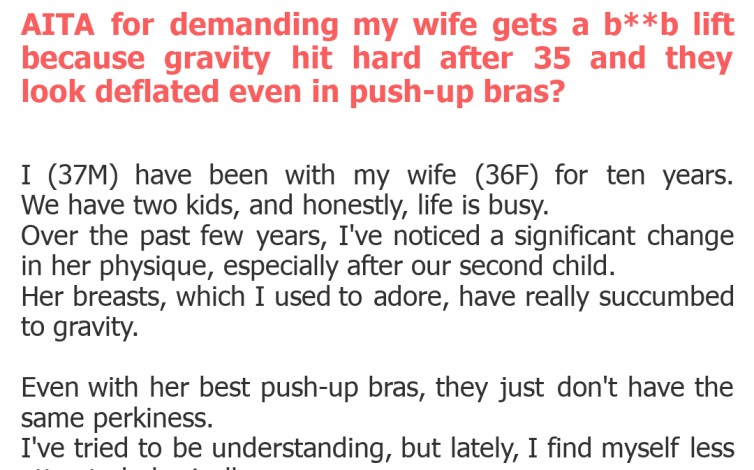
AITA for demanding my wife gets a b**b lift because gravity hit hard after 35 and they look deflated even in push-up bras?
Today, we're dissecting a truly thorny situation that brings up uncomfortable truths about body image, expectations within relationships, and the delicate art of communication. It's easy to judge from the outside, but when personal appearance becomes a point of contention, the emotional stakes skyrocket for everyone involved, often leaving deep wounds.
Our contributor's story is a stark reminder that what one partner perceives as a 'helpful suggestion' can be devastatingly hurtful to the other. Navigating these conversations requires immense empathy and a focus on mutual respect, rather than making demands. Let's explore the nuances of this challenging scenario.

"AITA for demanding my wife gets a b**b lift because gravity hit hard after 35 and they look deflated even in push-up bras?"
I (37M) have been with my wife (36F) for ten years. We have two kids, and honestly, life is busy. Over the past few years, I've noticed a significant change in her physique, especially after our second child. Her breasts, which I used to adore, have really succumbed to gravity. Even with her best push-up bras, they just don't have the same perkiness. I've tried to be understanding, but lately, I find myself less attracted physically. I miss how things used to be.
I felt it was important to be honest with her. I believe open communication is key in a healthy relationship. So, I decided to sit her down and express my feelings. I told her, as gently as I could, that I'd noticed the changes and that it was impacting my physical attraction. I suggested that a b**b lift might be a good idea, not just for me, but for her own confidence too. I even said I'd pay for the whole procedure. Her reaction, however, was not what I expected. She completely shut down, her eyes welling up with tears. She accused me of being superficial and of body-shaming her. Now she's barely speaking to me.
I truly thought I was being helpful and direct. I mean, it's a fixable issue, right? And I'm willing to support her through it. I don't understand why she's so upset. I just want her to feel good about herself again, and for us to have that spark we used to. Am I really the villain here for being honest about my preferences and offering a solution? It feels like she's overreacting to what I considered a practical suggestion for our mutual happiness and her well-being.
This story opens a Pandora's Box of relationship complexities. On one hand, the desire for honesty in a relationship is commendable. Partners should ideally feel they can discuss anything, including physical attraction. However, there's a vast difference between expressing feelings and making demands, especially concerning a partner's body. The phrasing and intent behind such a 'suggestion' are paramount to its reception and impact.
The wife's reaction, while intensely emotional, is entirely understandable. Her body has undergone natural changes, likely due to childbirth and aging, which are often sources of vulnerability for women. To have a partner point out these changes as a reason for decreased attraction, and then 'demand' or 'suggest' surgery, can feel like a profound betrayal and an attack on her self-worth and autonomy.
From the husband's perspective, he might genuinely believe he's offering a solution for mutual benefit, perhaps even seeing it as a way to boost her confidence. He's also framing it as an 'honest' expression of his feelings. However, 'honesty' doesn't always equate to kindness or consideration. The timing, the bluntness, and the implied conditionality of his attraction likely overshadowed any good intentions he might have had.
Ultimately, this scenario highlights a massive communication failure and a lack of empathy. A partner's body is their own, and any decision about surgical alteration must come from their own desires, not from a partner's demands or conditional affection. Rebuilding trust and intimacy will require a deep dive into respectful communication, active listening, and acknowledging each other's feelings without judgment.
The internet weighs in: Is 'honesty' always the best policy, or is this a bridge too far?
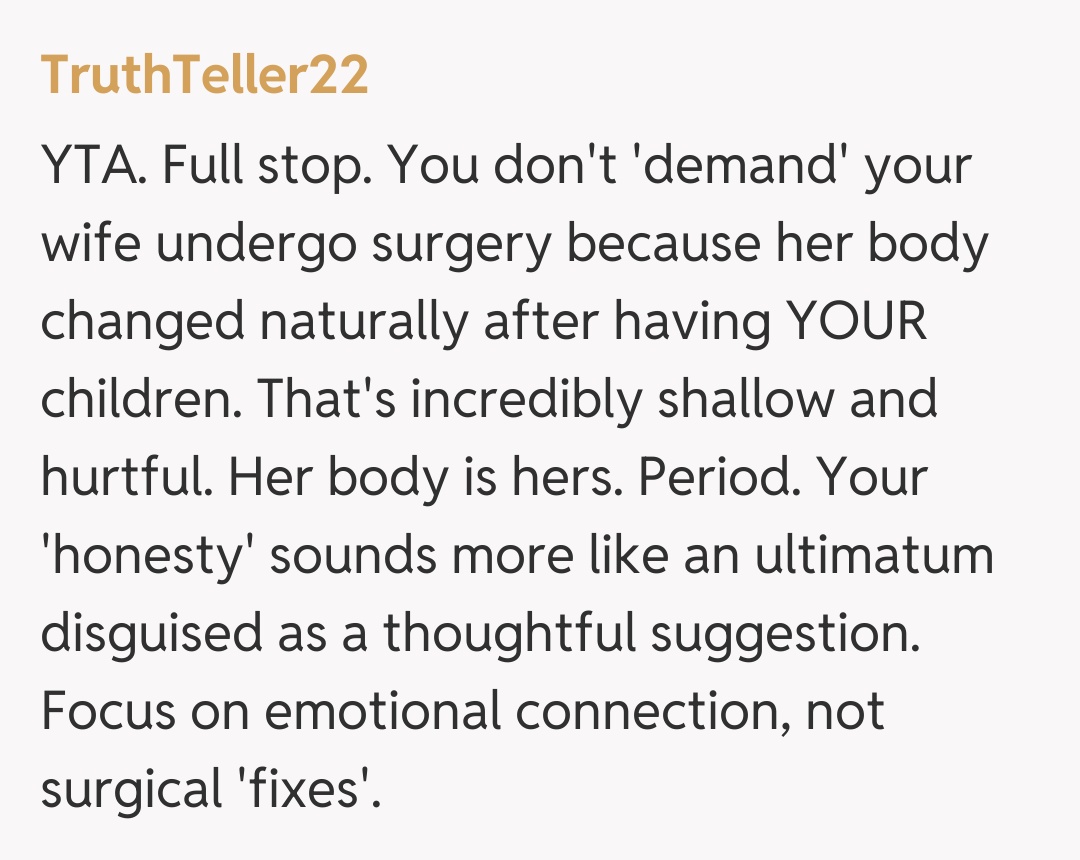
The comments section for this one was, predictably, a fiery debate! Many users immediately jumped to the defense of the wife, expressing profound empathy for her position. The overwhelming sentiment was that a person's body is their own domain, and a partner demanding a surgical procedure, regardless of 'good intentions,' crosses a significant line into body-shaming and control. The concept of physical changes after childbirth was frequently highlighted.
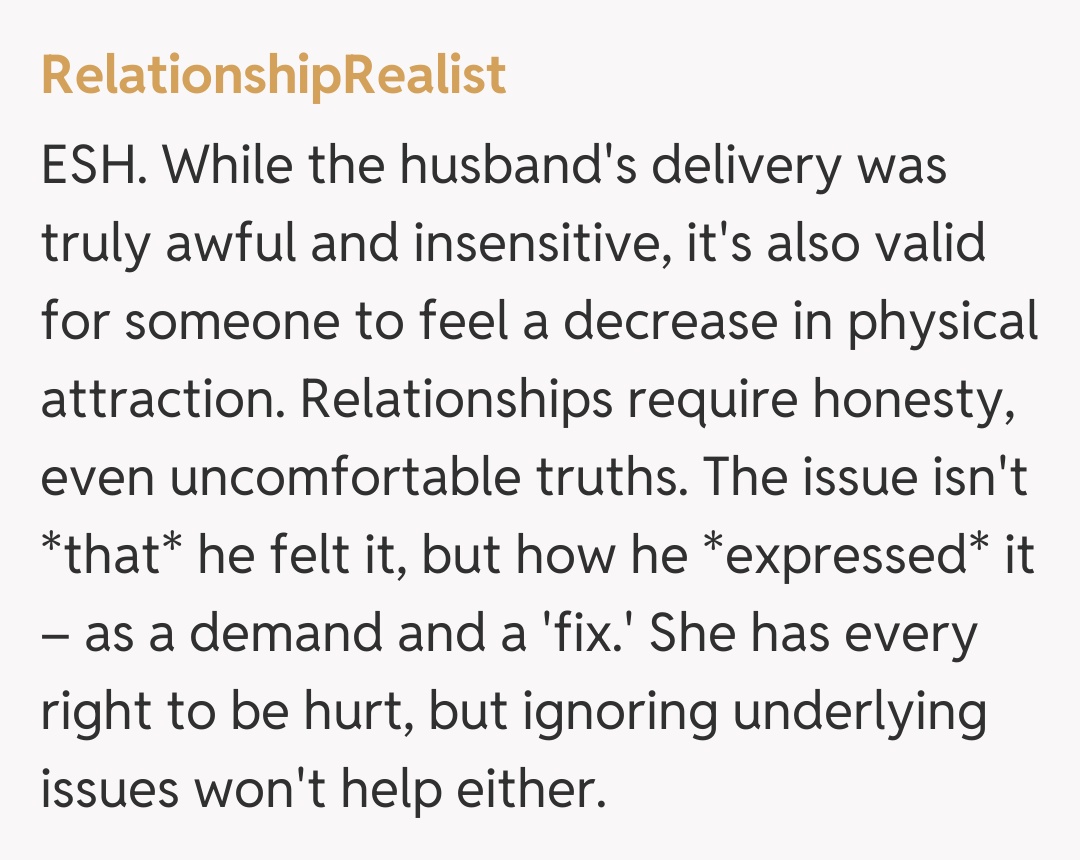
However, a smaller contingent tried to see the husband's side, suggesting that open communication about declining attraction, while difficult, isn't inherently wrong. They argued that if both partners are to be truly honest, then his feelings, however uncomfortable, should also be heard. Yet, even these comments often stipulated that the *delivery* and the *demand* were the critical missteps, not necessarily the underlying feeling.
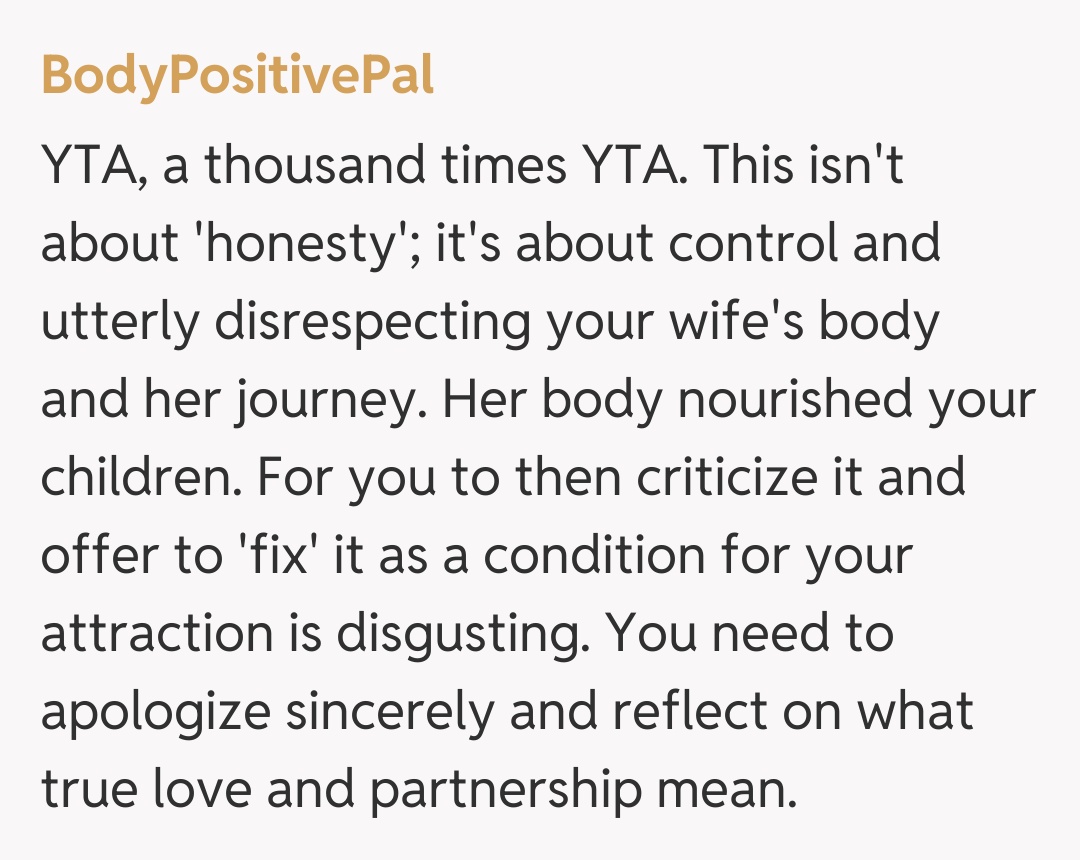
This difficult story serves as a potent reminder that while honesty is crucial in relationships, it must always be tempered with empathy, respect, and a deep understanding of bodily autonomy. Making demands about a partner's physical appearance, especially after significant life events like childbirth, can cause irreparable damage to trust and intimacy. True partnership means supporting each other through changes, not dictating them. The path forward for this couple will involve profound apologies, active listening, and a recommitment to valuing each other for more than just physical attributes.