AITA for telling my husband I won $50k in the lottery when I actually won $5M, and putting the rest in a secret account just in case we divorce?

Welcome back, dear readers, to another thrilling dive into the complexities of human relationships and ethical dilemmas! Today, we're tackling a scenario that combines marital trust, personal finance, and a life-changing windfall. Our anonymous poster, let's call her "Lucky Penny," has found herself in a truly enviable yet morally challenging situation, questioning the boundaries of honesty within a marriage.
Imagine winning big – truly, life-alteringly big – in the lottery. Now, imagine having to decide how much of that good fortune to share with your spouse. Lucky Penny's story explores the difficult decision to conceal a significant portion of her winnings, not out of malice, but from a place of self-preservation. It raises crucial questions about financial independence and trust in long-term partnerships.

"AITA for telling my husband I won $50k in the lottery when I actually won $5M, and putting the rest in a secret account just in case we divorce?"
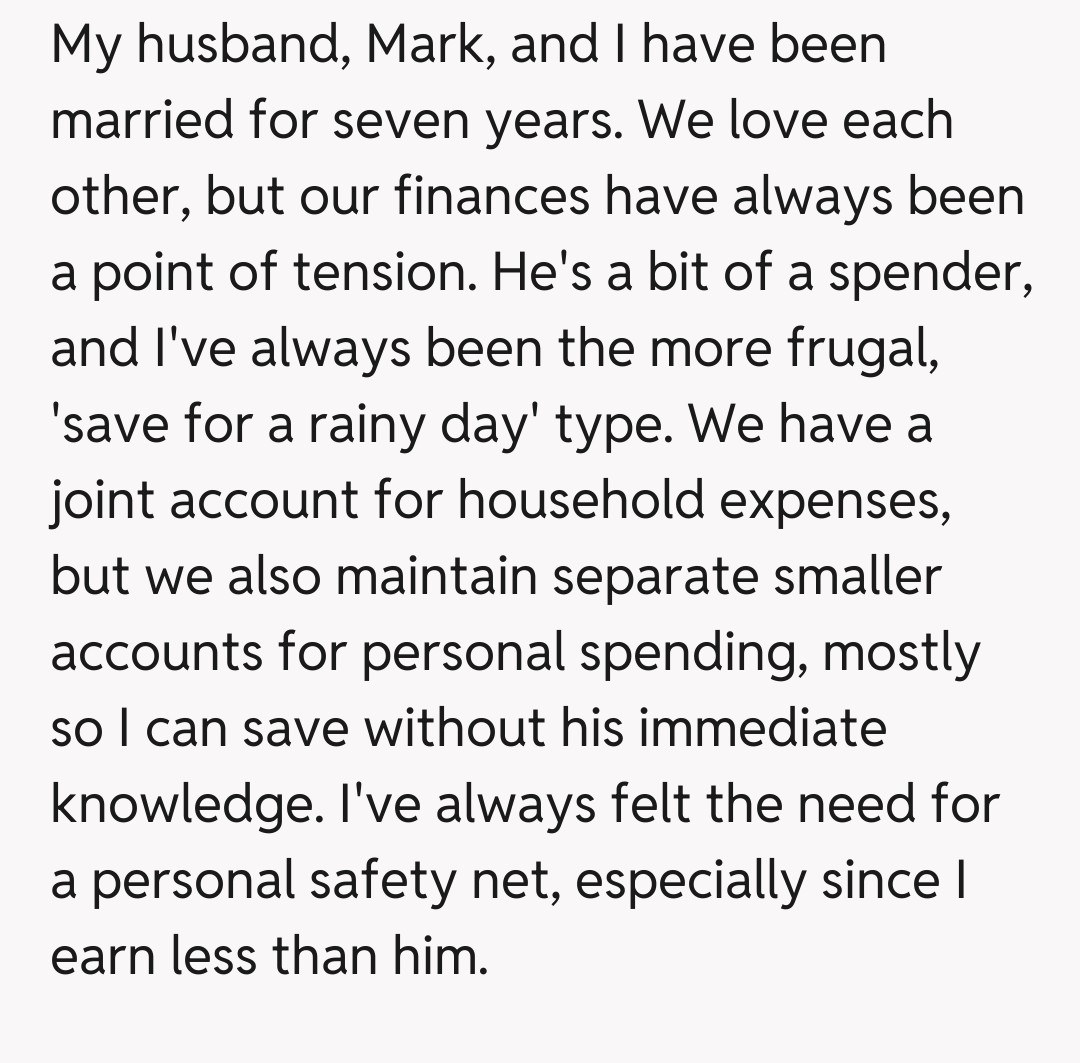
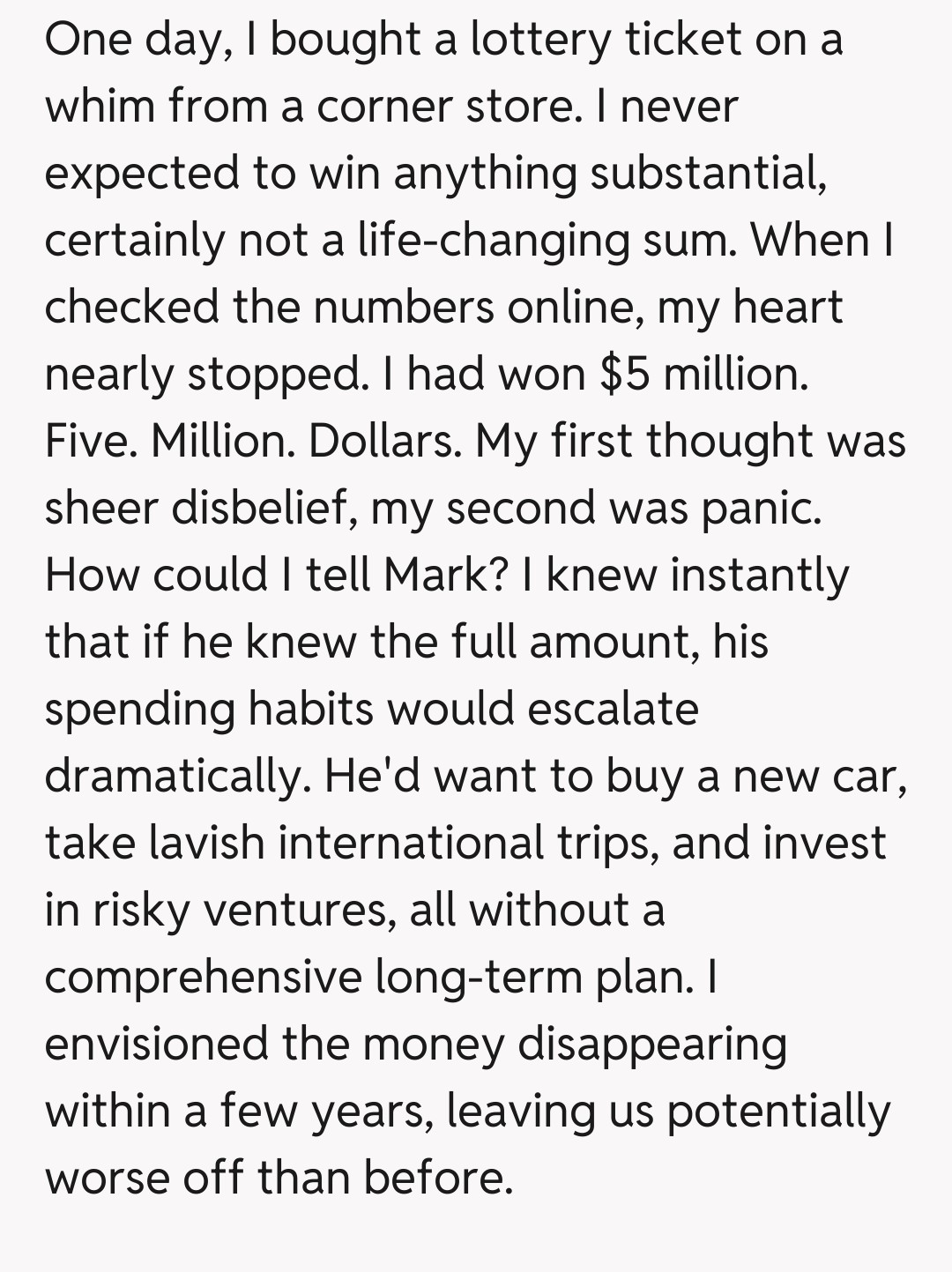
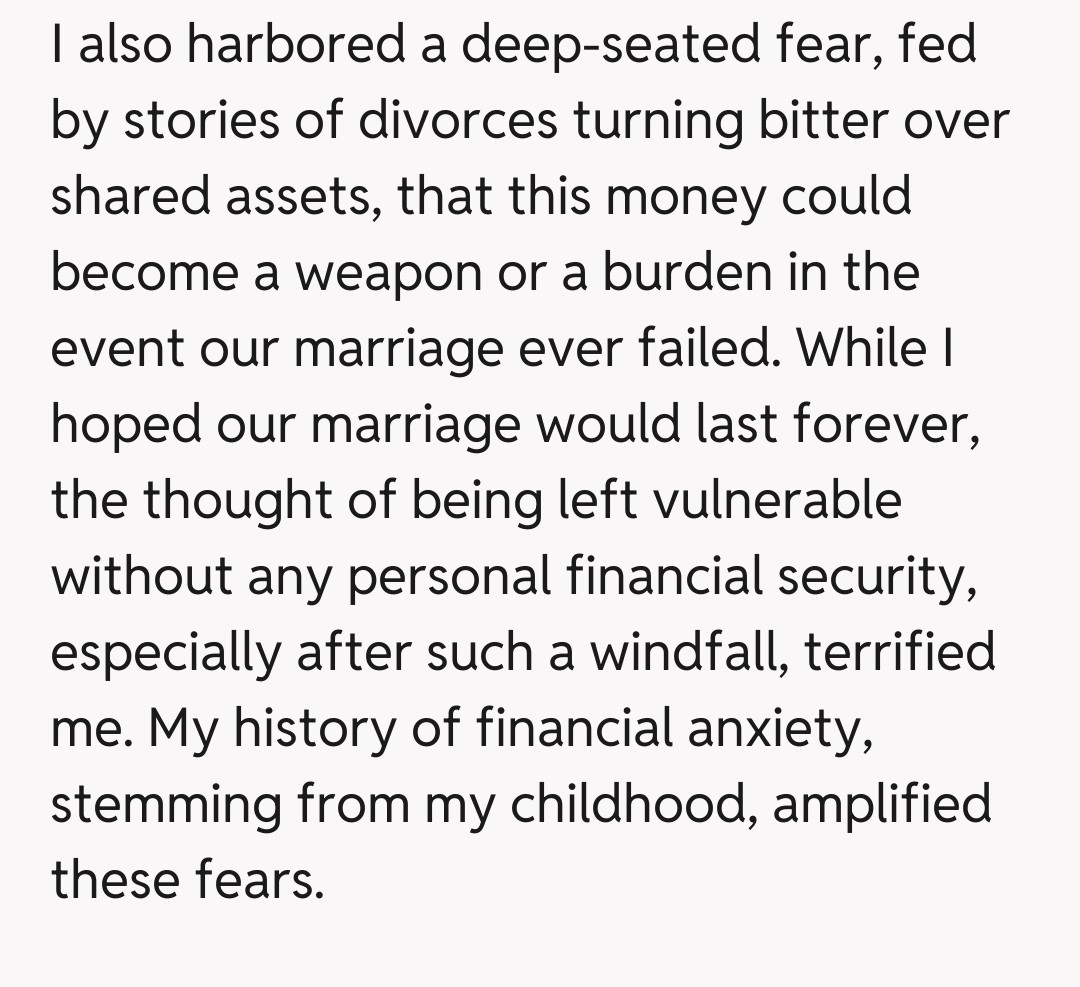
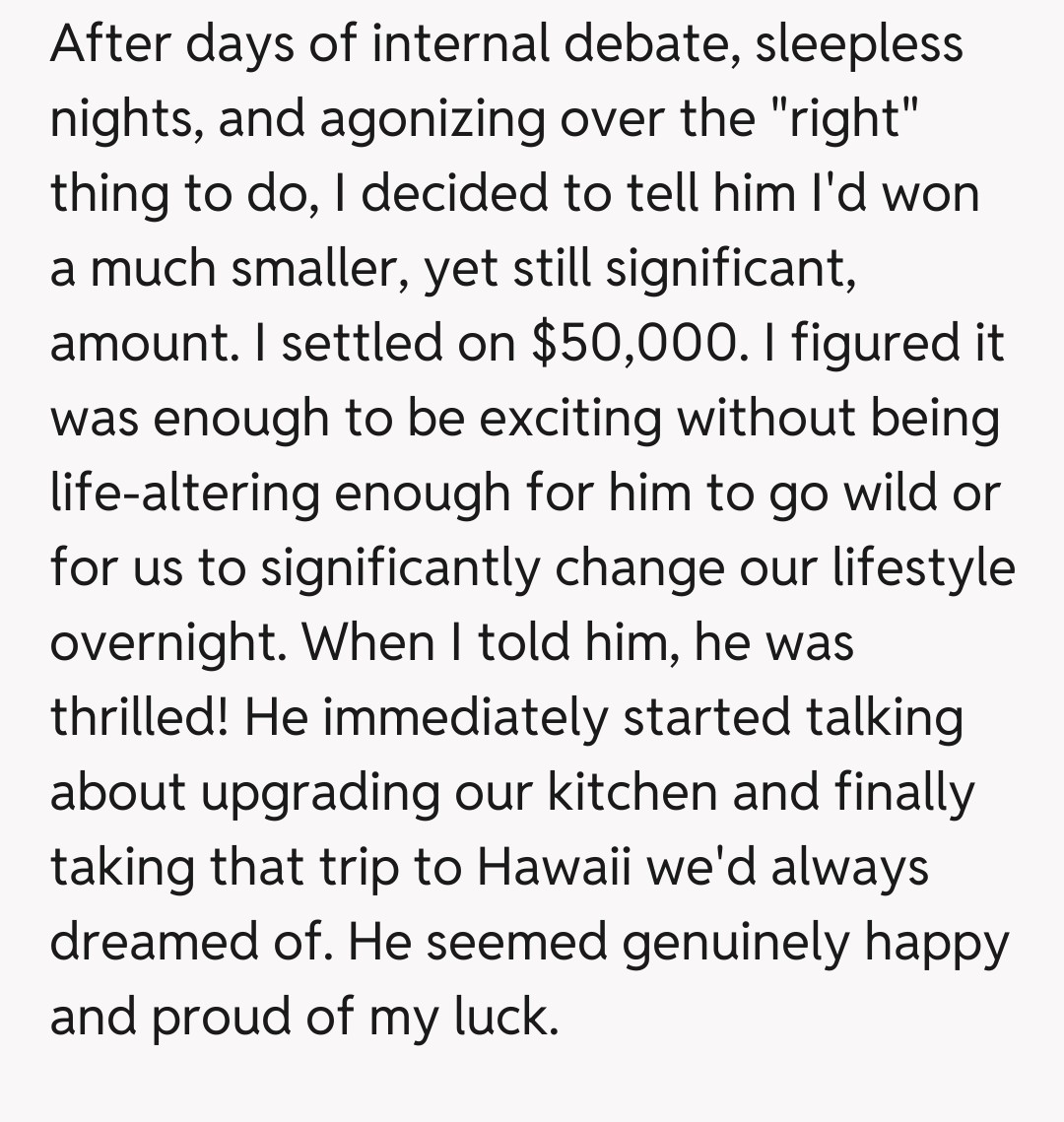
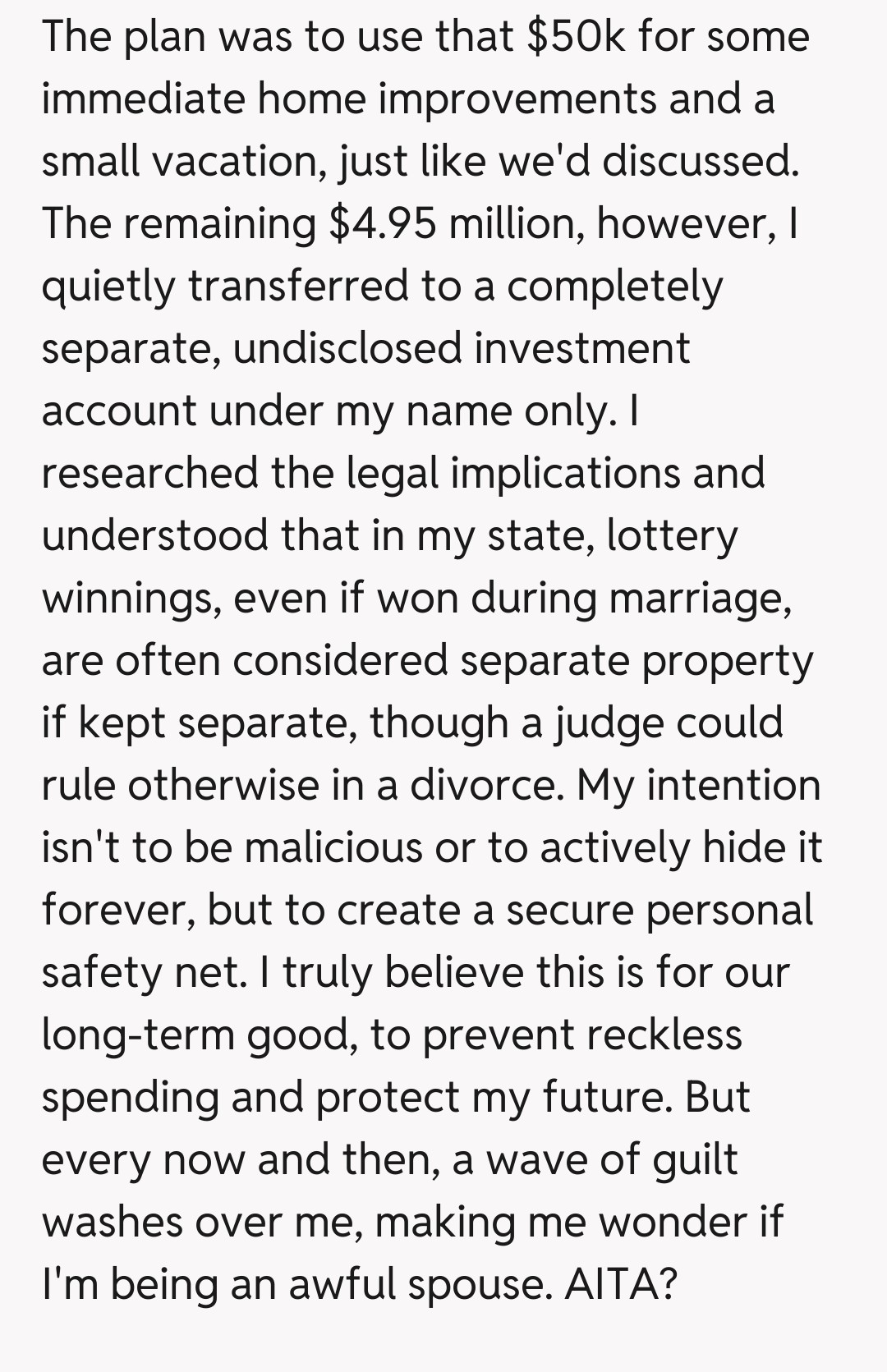
This situation immediately highlights the delicate balance of trust and individual financial autonomy within a marriage. On one hand, the institution of marriage often implies shared resources and complete transparency, especially regarding significant financial windfalls. The principle of full disclosure is often seen as foundational to a healthy partnership, and withholding such a monumental win could be perceived as a profound breach of that trust.
However, the poster's rationale for her actions stems from legitimate concerns about her husband's spending habits and her own desire for long-term security. Her fear of reckless spending potentially jeopardizing their future, and the pragmatic consideration of protecting herself in case of divorce, are not uncommon anxieties, especially for individuals with a history of financial insecurity or those who manage household budgets more conservatively.
Legally speaking, the landscape around lottery winnings in a marriage can be complex and varies significantly by jurisdiction. In some places, winnings obtained during a marriage are considered marital property subject to division. In others, if the winnings are kept strictly separate from joint assets and are not commingled, they might remain the sole property of the winner. The poster's attempt to keep the bulk of the money in a separate account suggests she's aware of these nuances, however imperfectly.
Ultimately, the moral quandary lies in whether the intention to protect oneself justifies deception within a spousal relationship. While her motives might be rooted in self-preservation, the act of deliberate concealment could severely damage the marital bond if discovered. This isn't just about the money; it's about the erosion of trust that such a secret could cause, potentially leading to irreparable harm to the relationship itself.
The Internet Weighs In: Trust, Tactics, and Ten Million Dollars (well, $5M really!)
The comment section for Lucky Penny's post was, as expected, a whirlwind of opinions, sharply divided between those who empathized with her need for financial security and those who condemned her for a profound breach of marital trust. Many users focused on the foundational aspect of honesty in marriage, arguing that such a significant secret is a ticking time bomb, destined to cause catastrophic damage if it ever comes to light. They questioned the very definition of a partnership if such vital information is withheld.
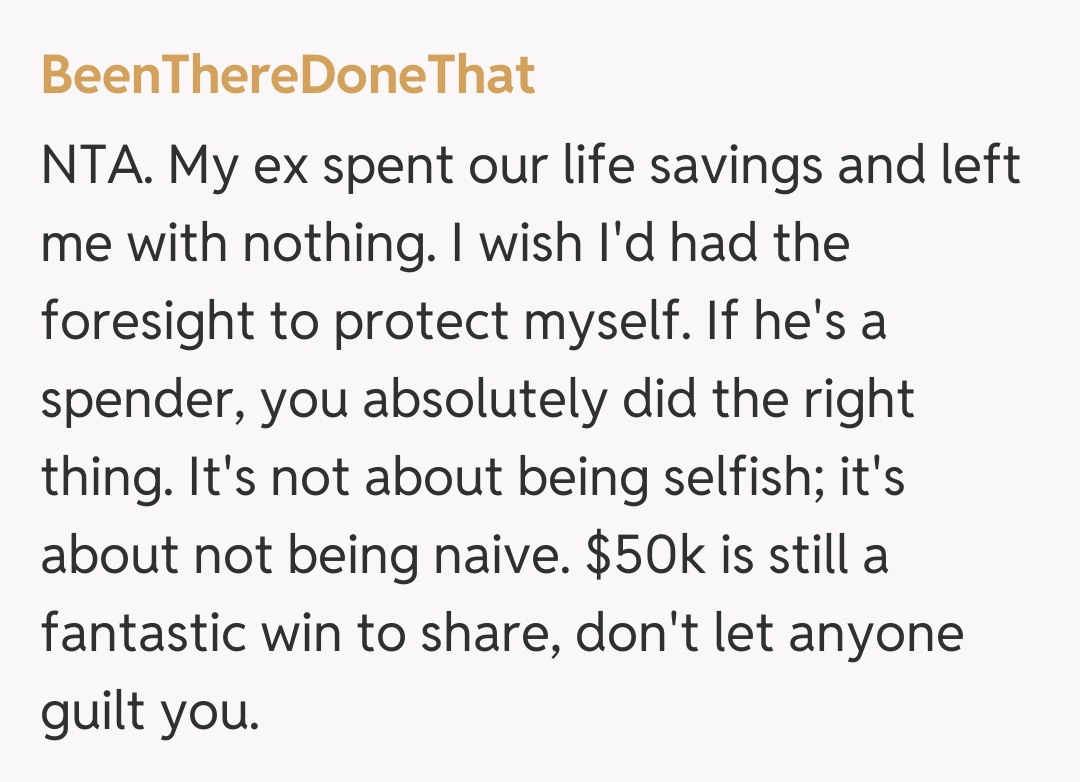
Conversely, a significant number of commenters sided with Lucky Penny, citing her husband's alleged spending habits as a valid reason for caution. These users often shared their own experiences of financial struggles due to a spouse's irresponsibility or highlighted the practical need for a personal safety net in case of divorce, regardless of current marital happiness. The prevailing sentiment among this group was that self-preservation, especially for women, sometimes necessitates unconventional measures in a world where financial vulnerability can be very real.
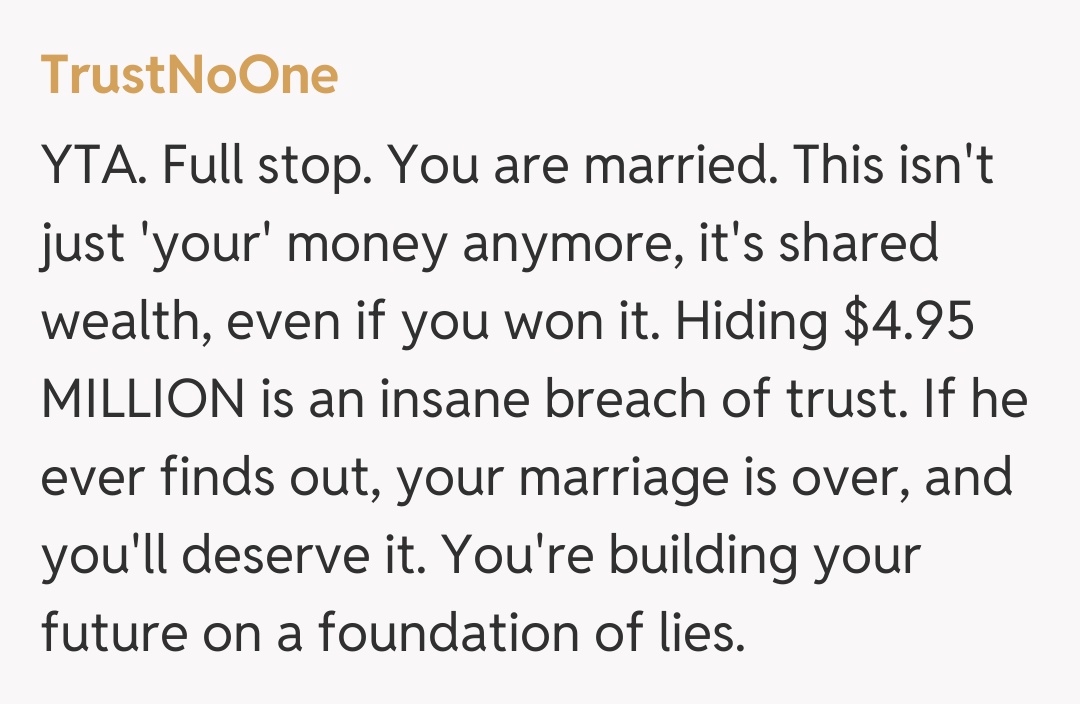
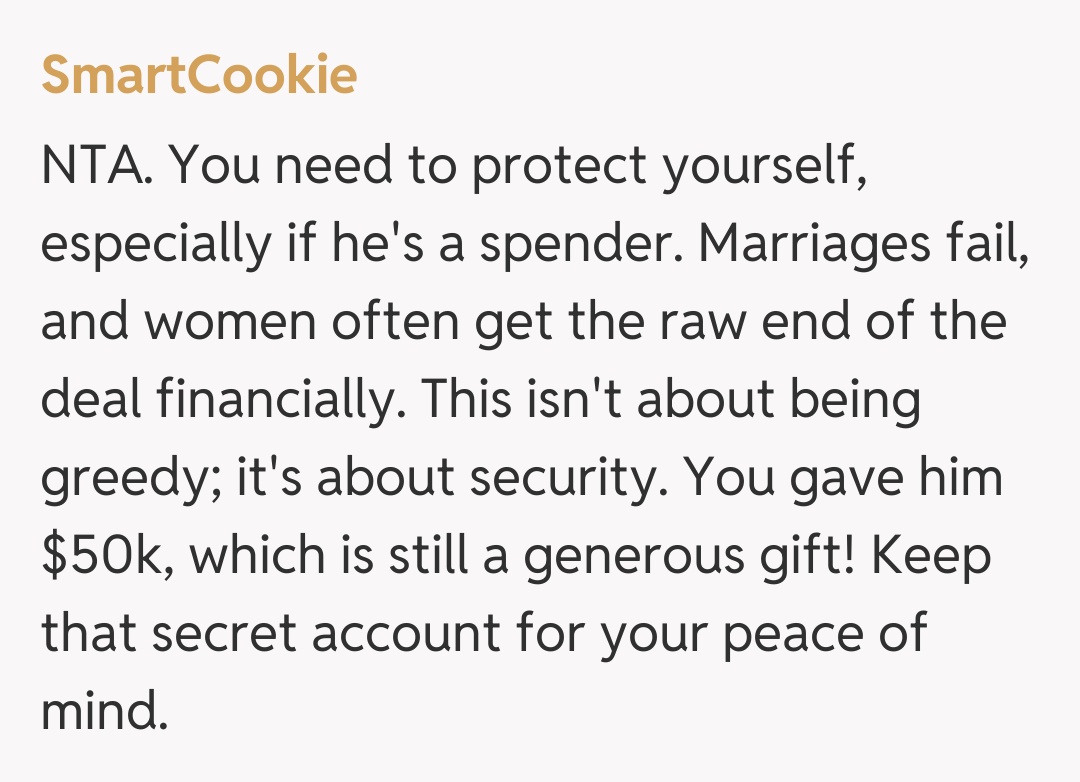
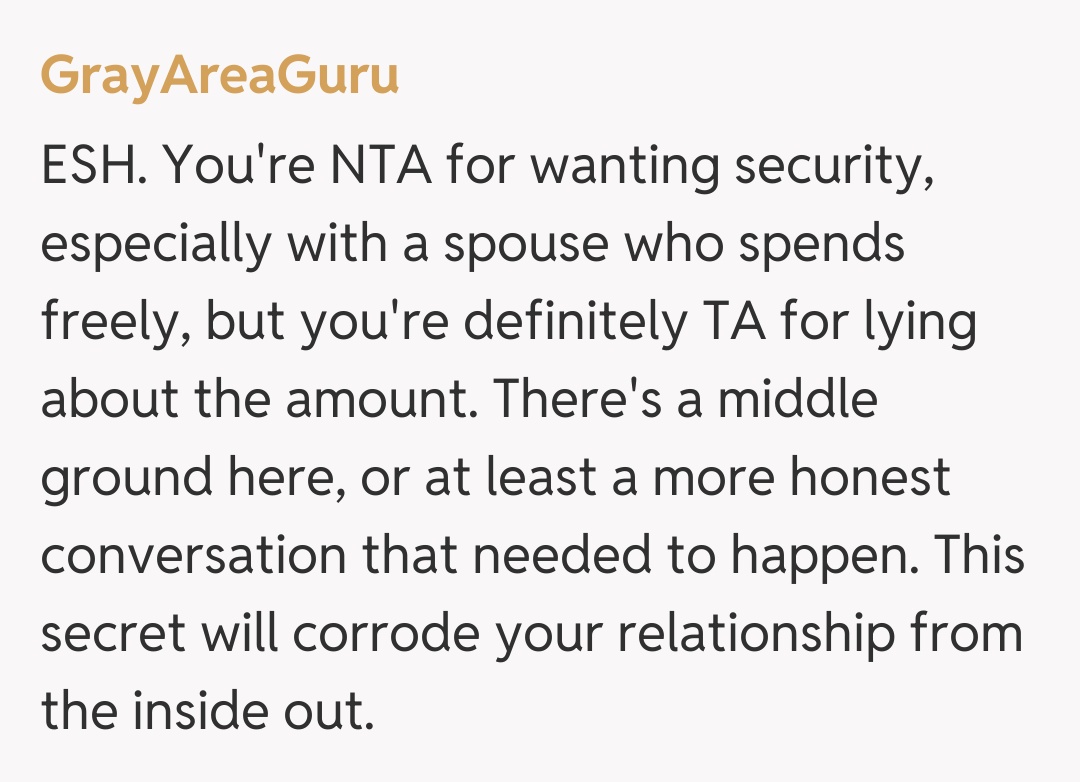
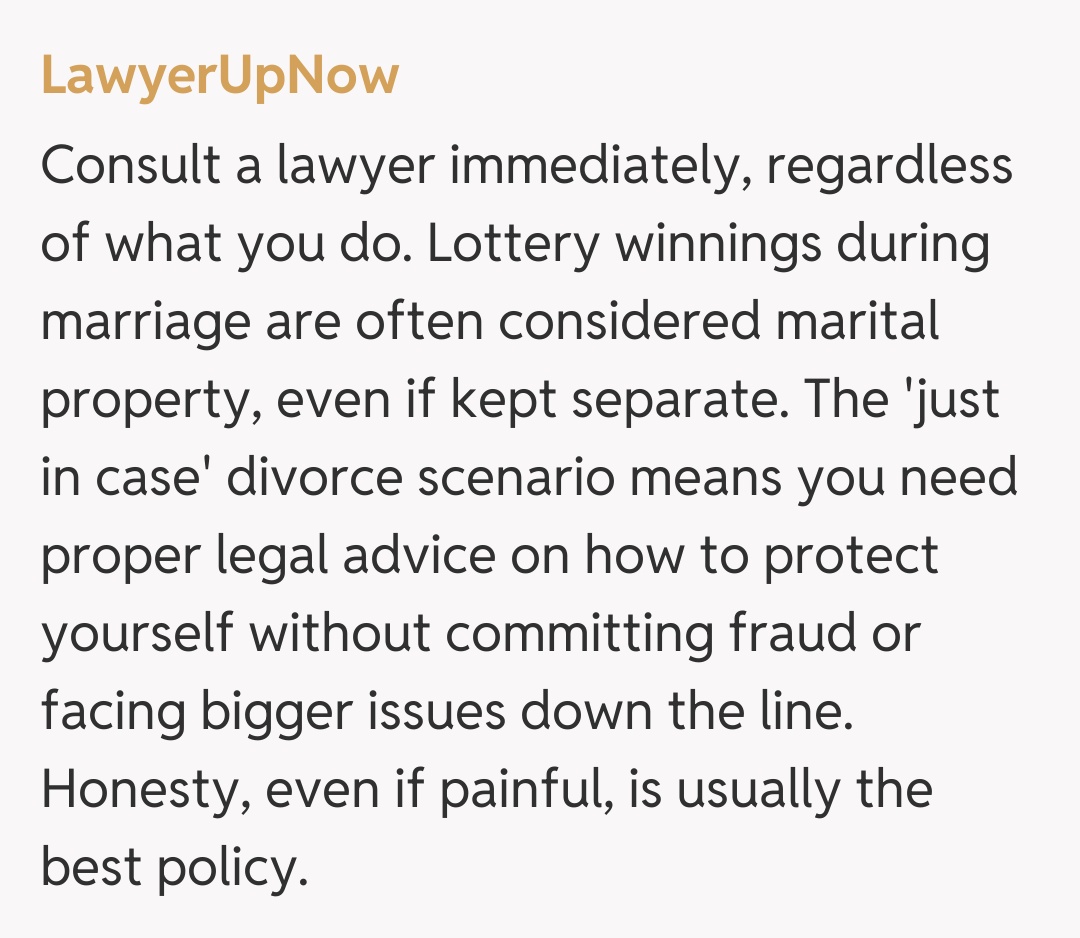
Lucky Penny's dilemma is a potent reminder that while money can solve many problems, it can also introduce profound ethical and relational challenges. The core conflict between transparency and self-preservation leaves no easy answers, especially when deep-seated fears about financial vulnerability come into play. Regardless of whether her actions are deemed 'right' or 'wrong,' this story powerfully illustrates the intricate dance of trust, independence, and shared futures that defines modern marriage. It serves as a stark reminder for all couples to openly discuss finances and expectations, long before a $5 million lottery ticket enters the picture.