AITA for telling my wife that our marriage feels like a punishment because she stopped trying to look good after we had kids?
Oh, the complexities of marriage, especially when children enter the picture! Today, we're diving into a post that has sparked a significant debate, touching upon sensitive subjects like physical appearance, spousal expectations, and the monumental shifts that parenthood brings. It’s a raw, honest look into what happens when one partner feels left behind in the whirlwind of baby bottles and sleepless nights.
This isn't just about 'looking good'; it's about perceived effort, connection, and the evolving dynamics of intimacy. Our poster, David, articulates a feeling that many might privately share but few dare to voice. It’s a tough conversation that highlights the often-unspoken pressures on both mothers and fathers to maintain their individual identities and their marital bond amidst profound life changes. Let's unpack this emotional minefield.

"AITA for telling my wife that our marriage feels like a punishment because she stopped trying to look good after we had kids?"
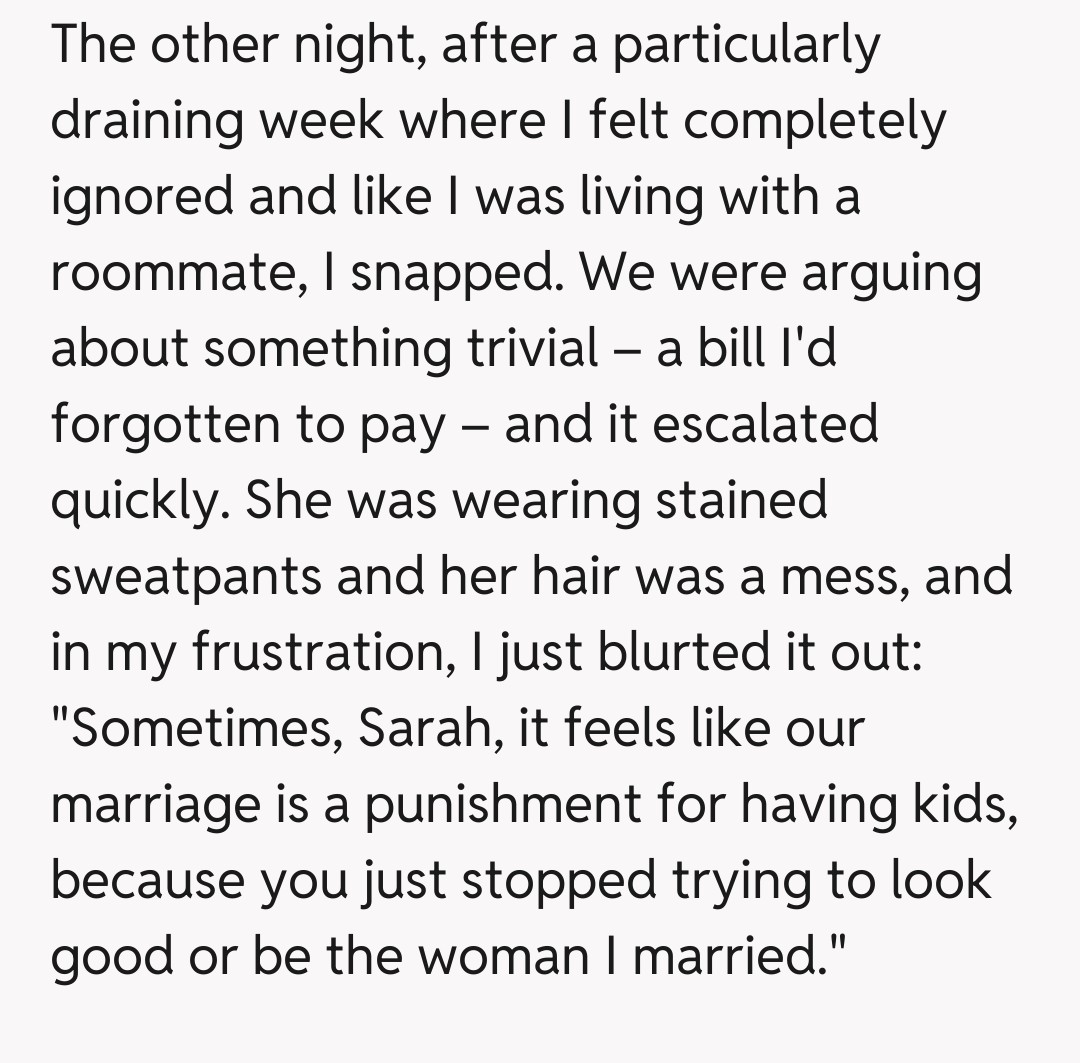
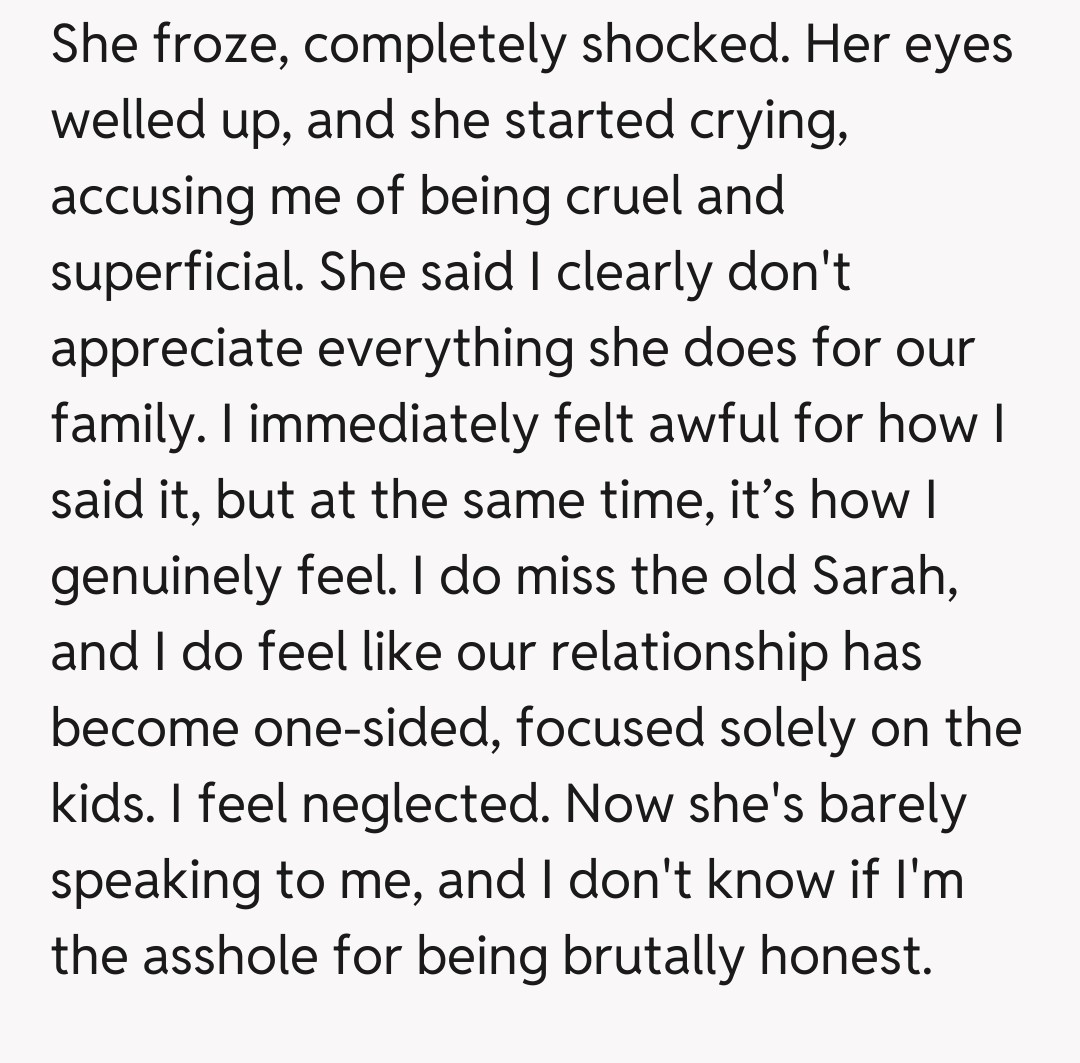
This post touches on a raw nerve for many couples navigating the turbulent waters of parenthood. On one hand, David's feelings of neglect and the desire for his partner to invest in their relationship, including personal appearance, are not inherently wrong. Attraction is a vital component of many romantic partnerships, and feeling that a partner has 'let themselves go' can be a genuine source of marital strain and emotional distance.
However, the phrasing of his complaint—calling their marriage a 'punishment' and stating she 'stopped trying to look good'—is undeniably harsh and likely deeply hurtful. New mothers, especially with two young children, often face immense physical, emotional, and psychological demands. They are frequently sleep-deprived, struggling with body image changes, and often pouring every ounce of energy into their children, leaving little for themselves or their partners.
It's crucial to acknowledge the incredible pressure society places on women to 'bounce back' after childbirth, both physically and emotionally, while simultaneously being the primary caregiver. Sarah might be feeling overwhelmed and unappreciated for her tireless efforts in raising their children. David's comment, no matter how he feels, could easily be interpreted as a dismissal of her sacrifices and struggles, making her feel even more isolated and judged.
Ultimately, while David's underlying feelings of wanting to reconnect and rediscover the spark are valid, his delivery was likely counterproductive. This situation highlights a profound communication breakdown, where both partners feel unheard and unvalidated. A more empathetic and constructive approach might involve discussing shared responsibilities, carving out time for each other, and perhaps seeking professional guidance to bridge this growing emotional chasm.
The Verdict Is In: Did He Cross the Line?
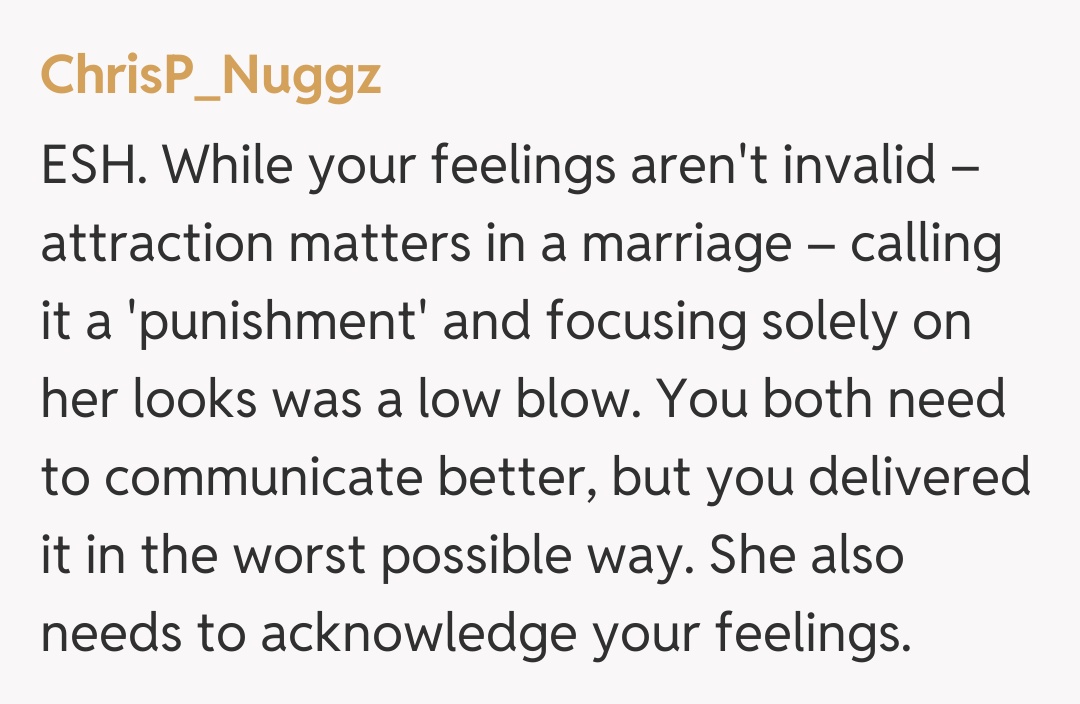
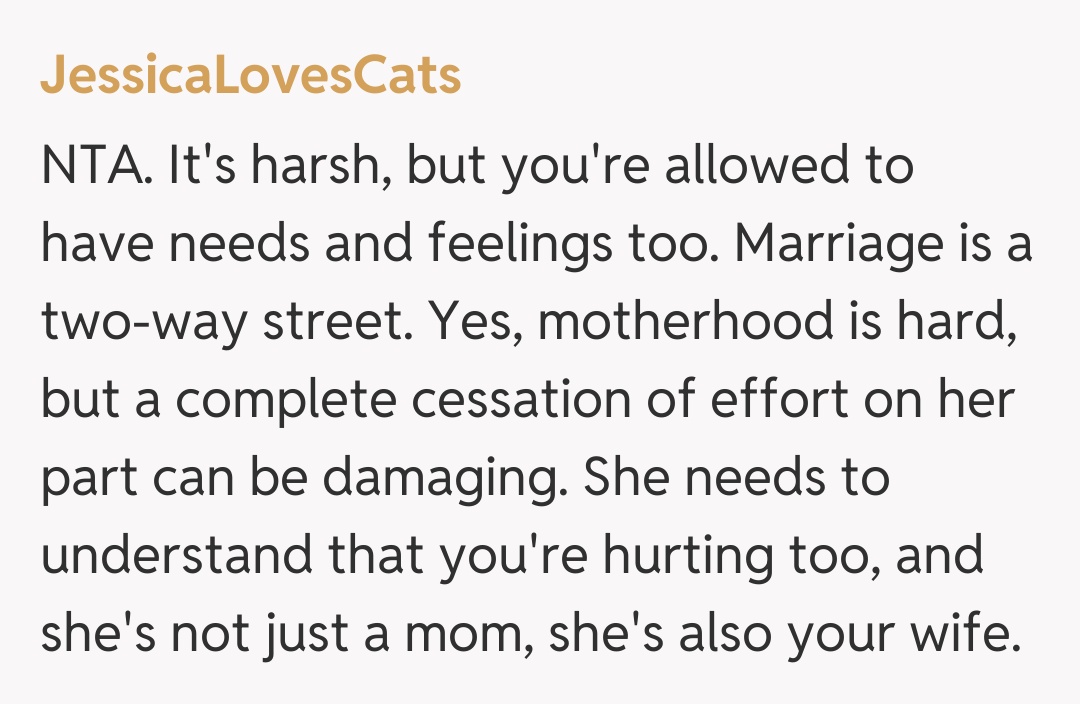
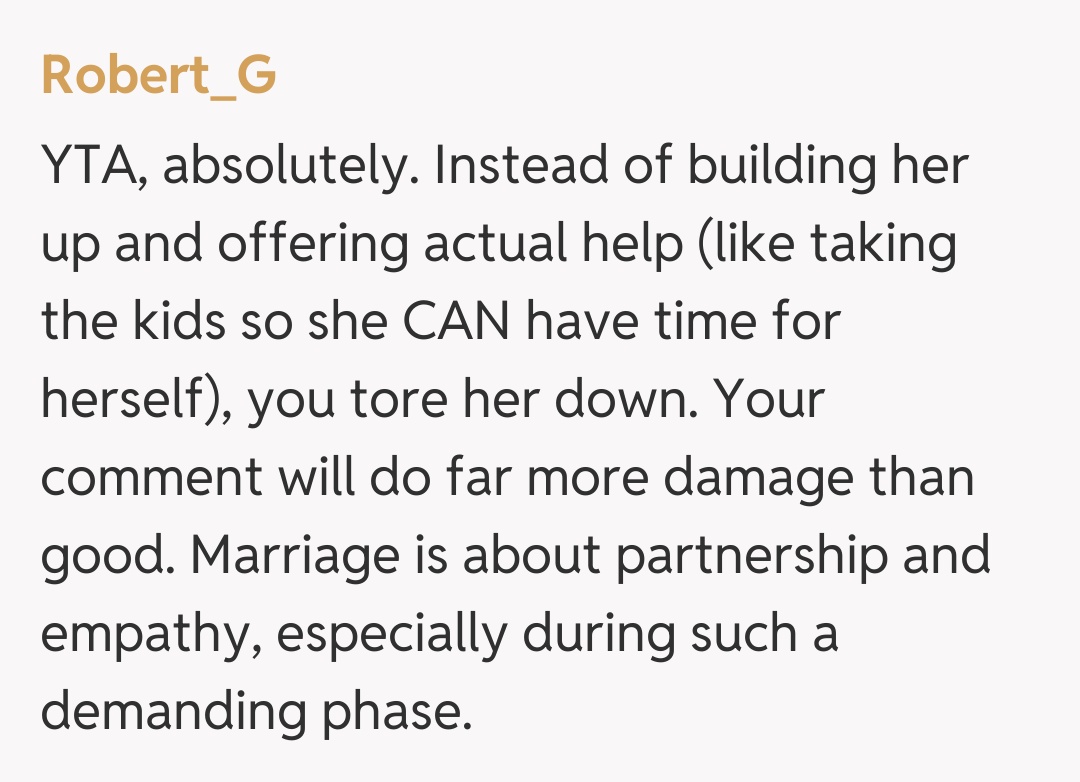
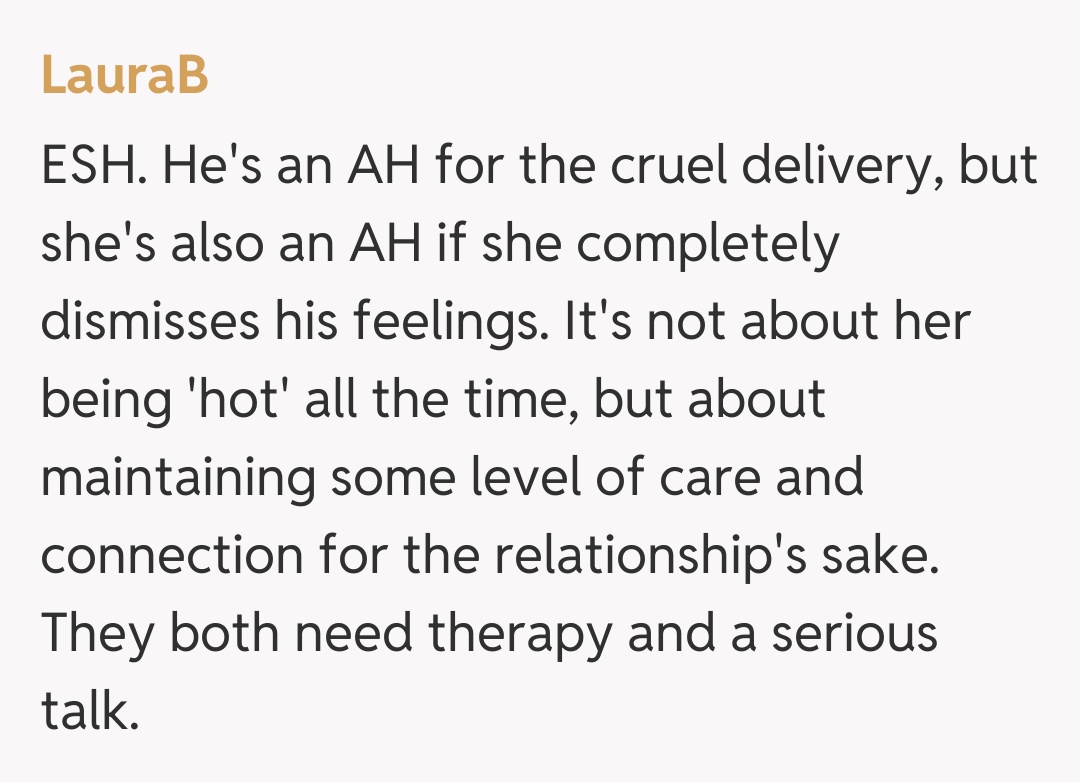
The comment section for this post was, as expected, a whirlwind of opinions. Many users immediately jumped to the defense of Sarah, emphasizing the monumental challenges of motherhood, especially with two young children. They pointed out that exhaustion, hormonal changes, and the relentless demands of childcare often leave mothers with no energy or time for personal grooming, let alone feeling attractive.
However, there was also a significant contingent who empathized with David, acknowledging that his feelings of neglect and the desire for attraction in a marriage are valid. These commenters stressed that a relationship requires effort from both sides, and that 'letting yourself go' entirely can indeed impact a partner's feelings, irrespective of the reasons. The overall consensus leaned towards David being the asshole for his harsh delivery, but many also recognized that the underlying issues in their marriage are complex and require addressing.

This AITA story serves as a poignant reminder that marriage is a dynamic entity, constantly evolving, especially after significant life events like parenthood. While it's vital for both partners to feel seen, desired, and appreciated, the way these feelings are communicated can make all the difference. Empathy, open dialogue, and a willingness to understand each other's struggles are paramount. For David and Sarah, the path forward likely involves more constructive communication, shared responsibilities, and perhaps professional support to navigate this challenging but common marital chapter.