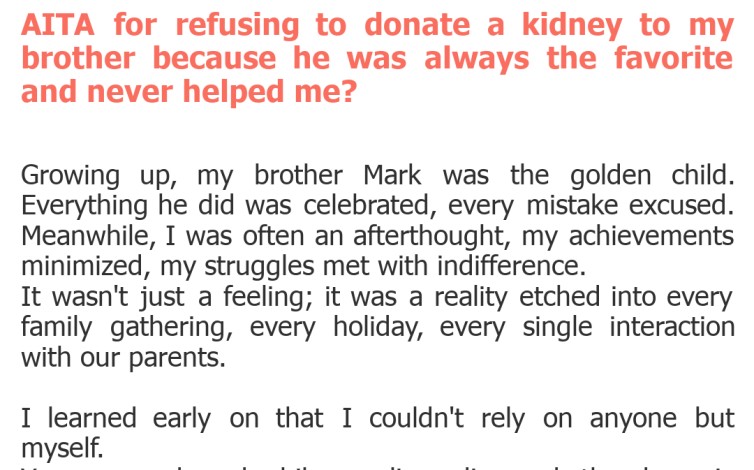
AITA for refusing to donate a kidney to my brother because he was always the favorite and never helped me?
Oh, family drama. It's a tale as old as time, isn't it? But what happens when the ties that bind become a suffocating rope, and then a life-or-death decision lands squarely on your shoulders? Today, we're diving into a Reddit thread that tackles precisely this thorny dilemma, questioning the very definition of family obligation and the weight of past hurts. This isn't just about a medical choice; it's about a lifetime of perceived injustice.
This particular AITA post has sparked a fiery debate across the internet, forcing us all to consider where the line is drawn between blood relation and personal autonomy. Is it ever okay to prioritize your own emotional well-being over a sibling's dire need, especially when that sibling has benefited from years of favoritism and a perceived lack of reciprocal support? Get ready, because this one is going to hit close to home for many.

"AITA for refusing to donate a kidney to my brother because he was always the favorite and never helped me?"
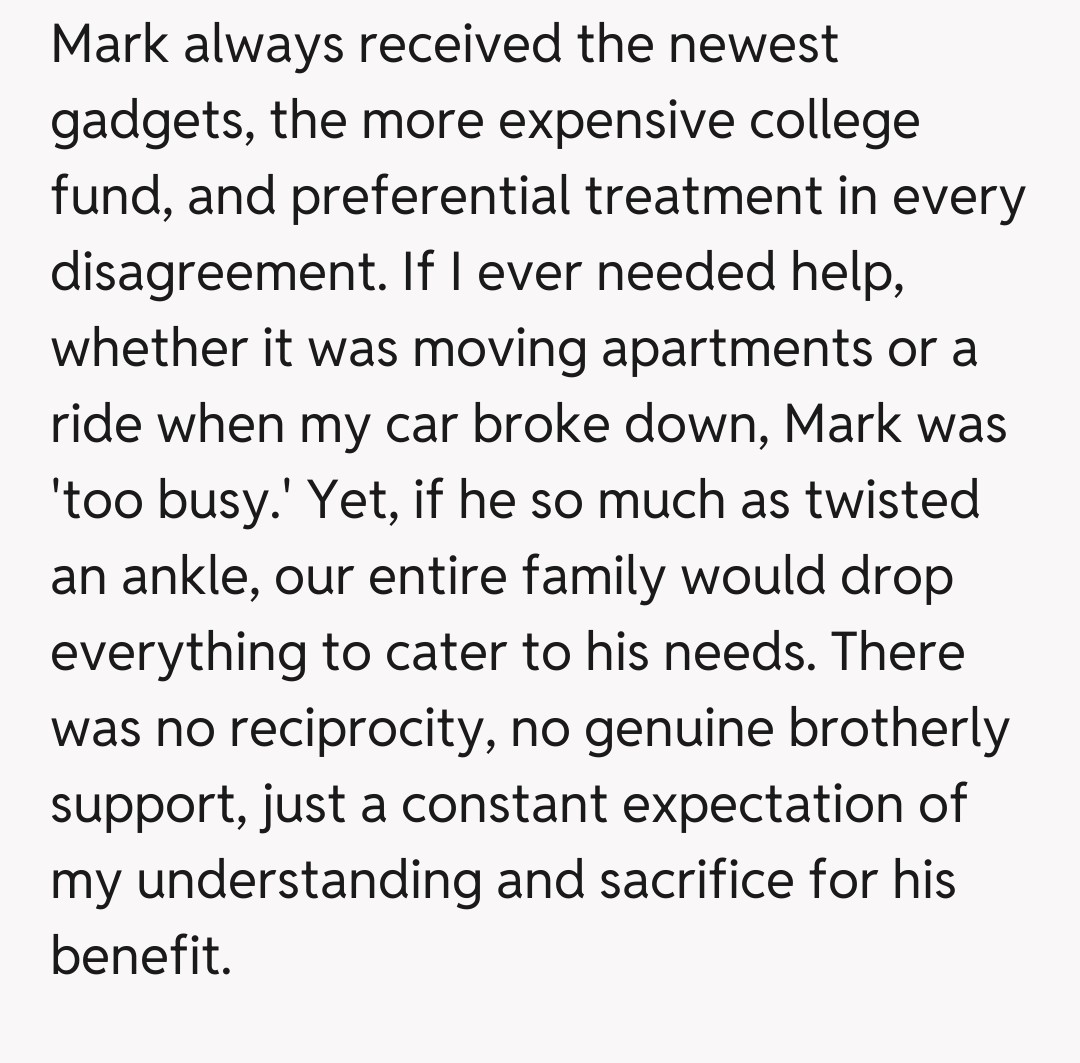
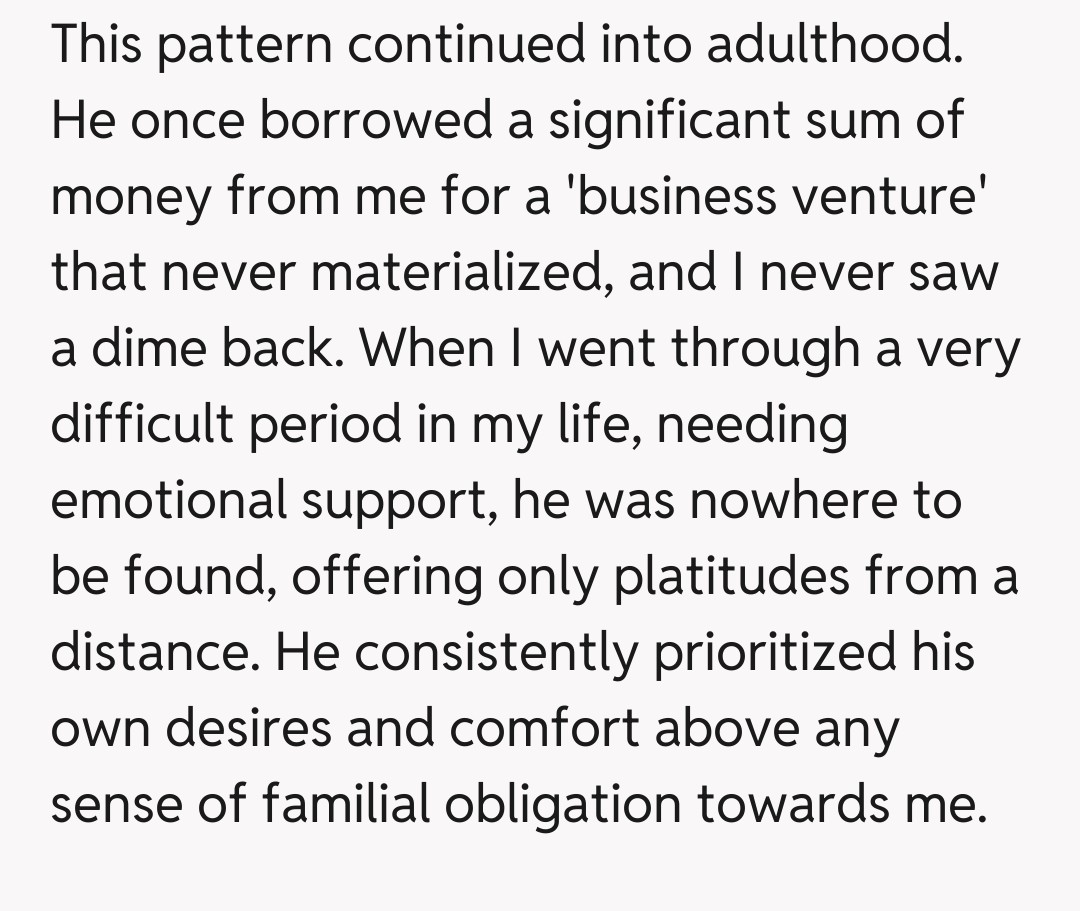
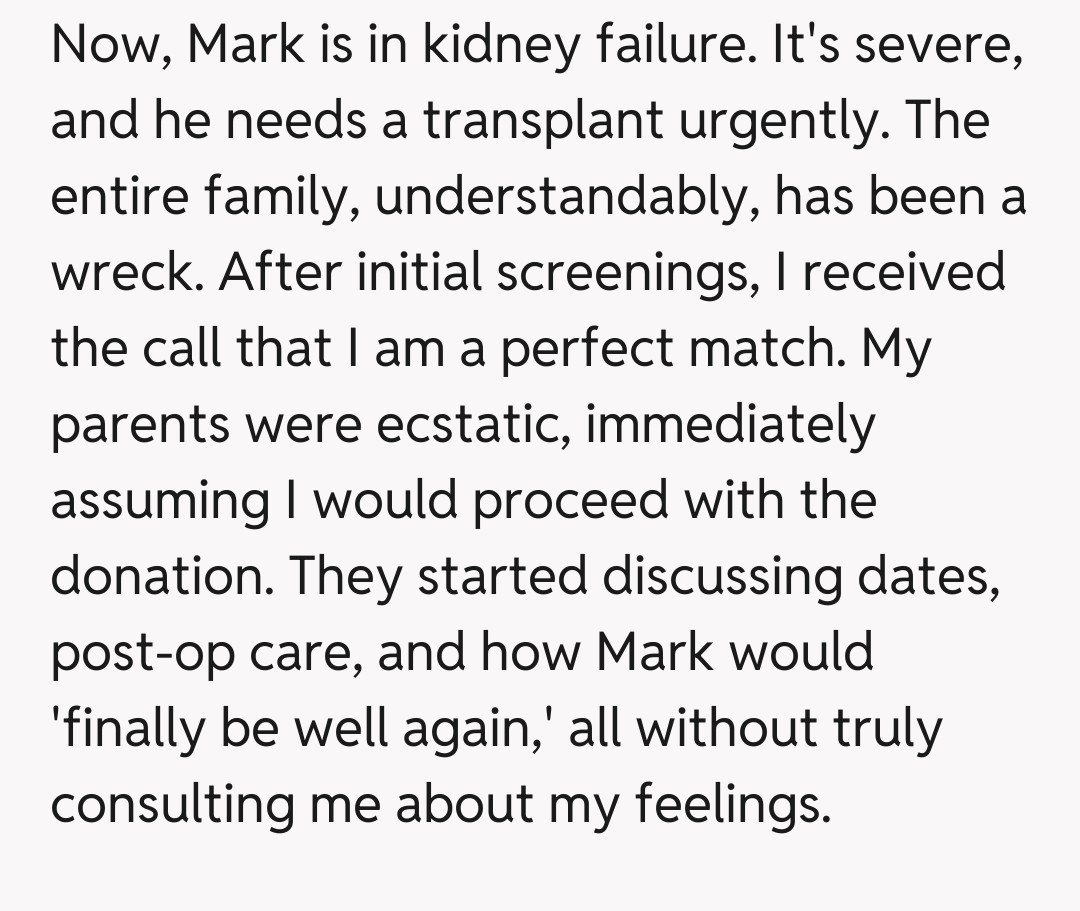
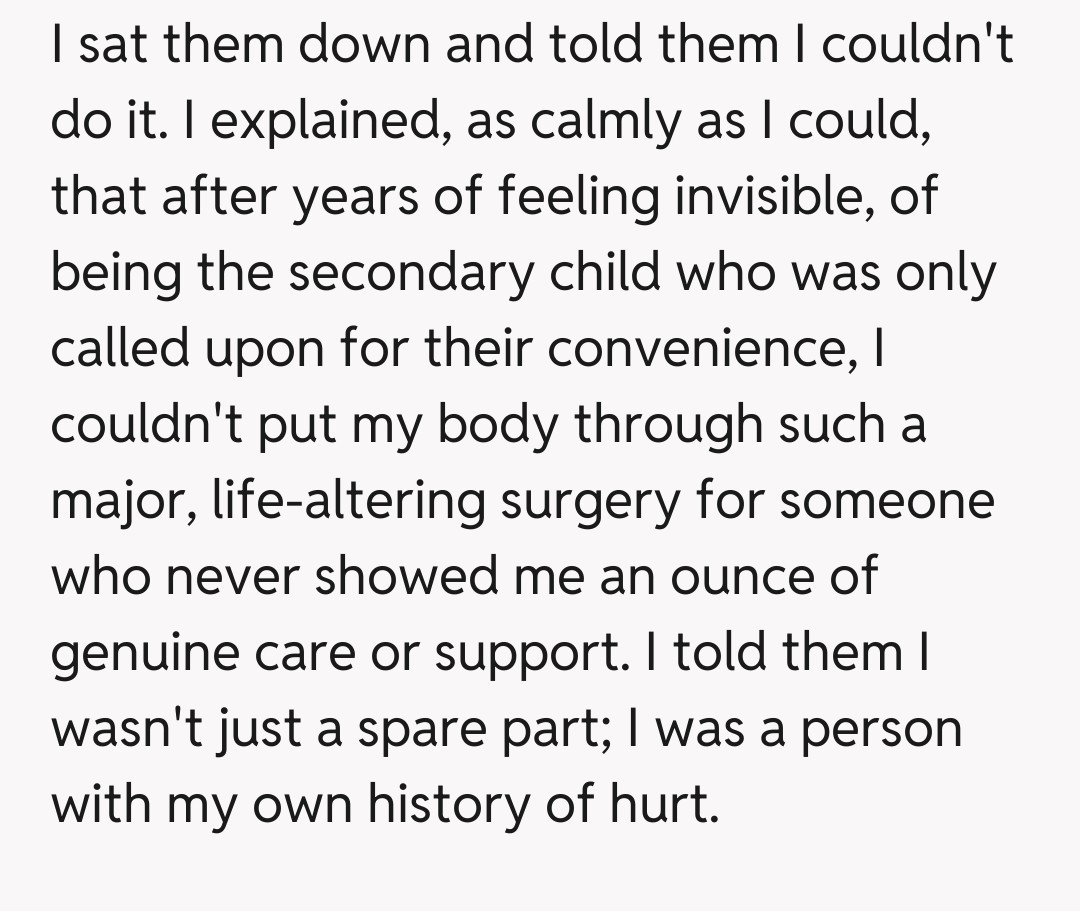
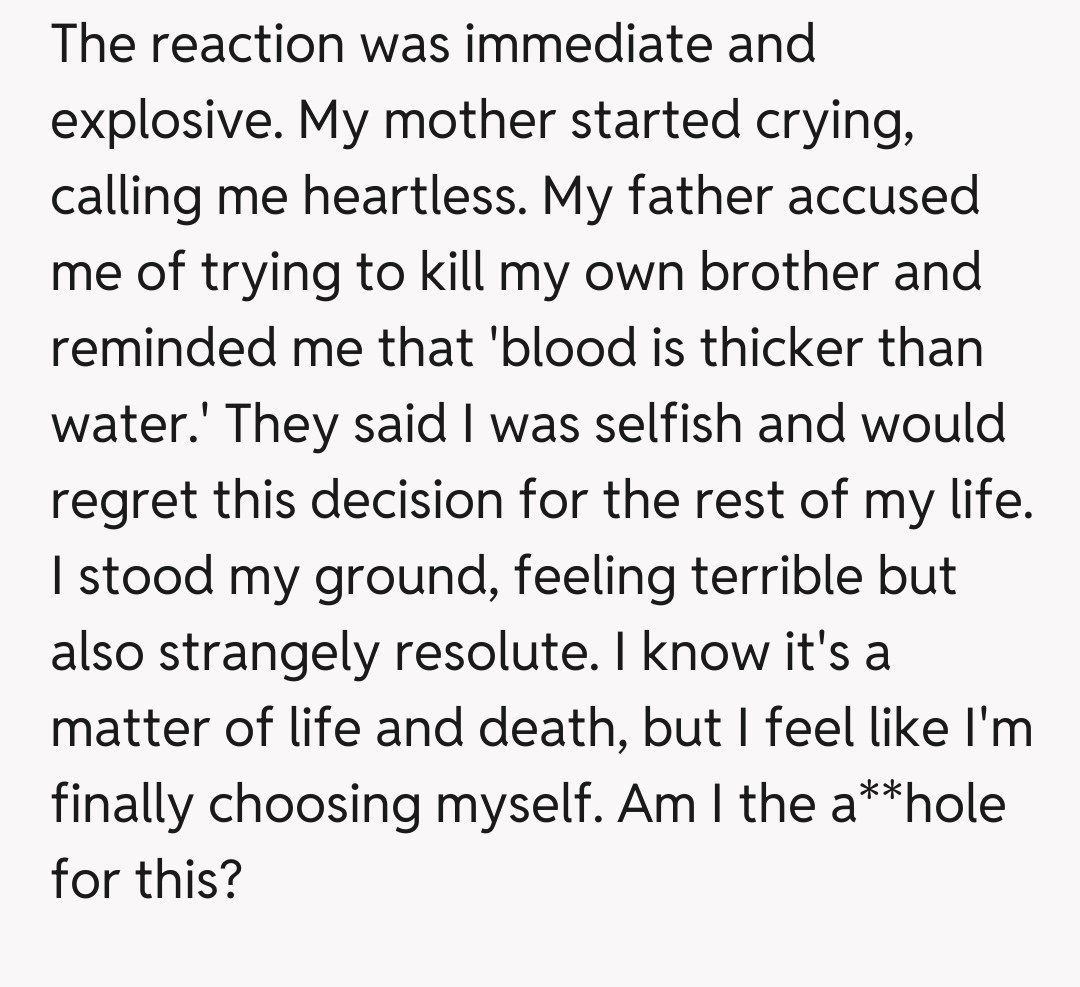
This is undoubtedly one of the most agonizing ethical dilemmas a person can face. On one hand, the moral imperative to save a life, especially that of a sibling, weighs heavily. The family's desperation is palpable, and their immediate emotional reaction to the refusal is understandable, albeit deeply unfair to the OP. This situation forces us to confront the true cost of familial duty.
The core of this conflict rests on the principle of bodily autonomy. No one, not even a parent or a sibling, can compel another person to undergo a significant medical procedure, especially one with inherent risks. While donating a kidney is an incredible act of altruism, it is always, unequivocally, a choice. The OP has every right to decline, regardless of the recipient's identity or relation.
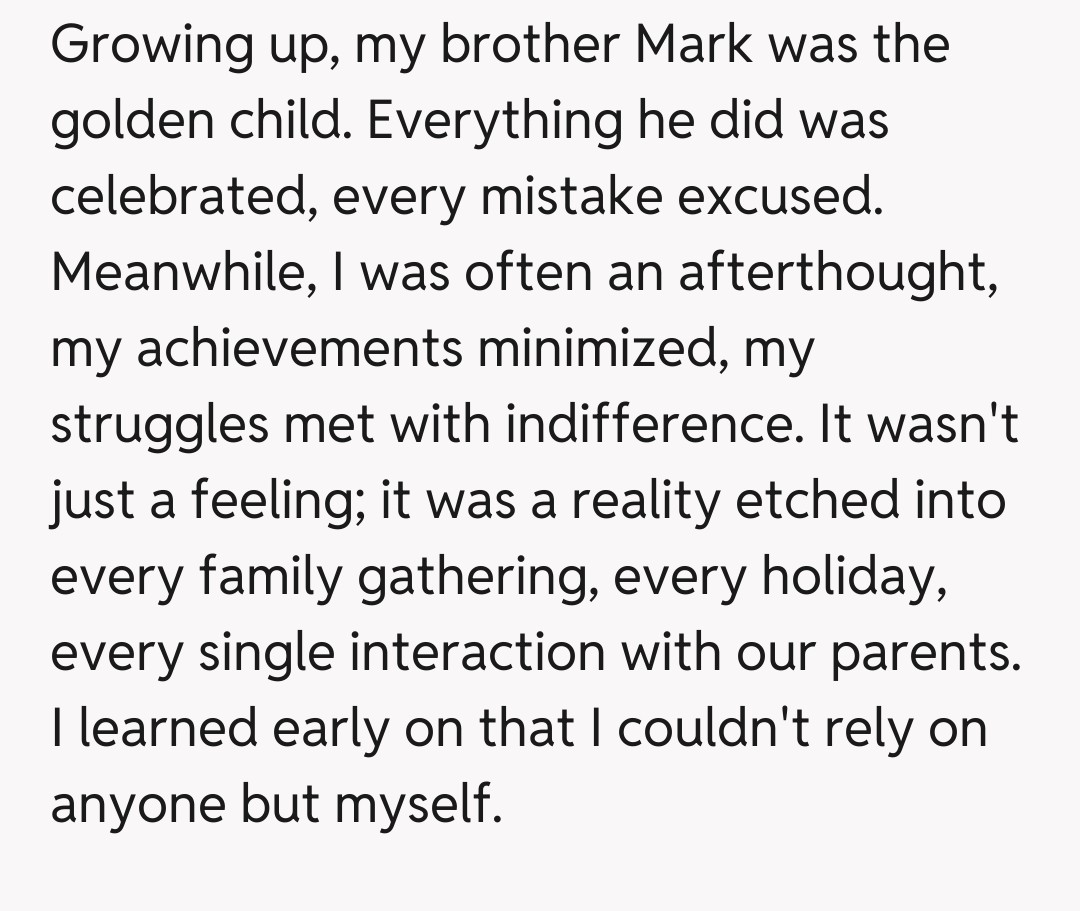
However, the OP's decision is clearly fueled by a deep-seated history of perceived favoritism and neglect. These past hurts, while not directly related to the medical necessity, form the emotional context for the refusal. It's not just about the kidney; it's about years of feeling undervalued and taken for granted. To expect the OP to sacrifice for someone who never reciprocated care is a huge ask.
The family's reaction highlights a common issue in dynamics where one child is favored. The parents, having fostered this imbalance, are likely blind to the OP's pain and the years of resentment that have accumulated. They see only the immediate crisis and the perceived solution, overlooking their own role in creating a fractured relationship where such a refusal could even be contemplated.
The internet weighs in: Is blood thicker than water, or is resentment too deep to overcome?
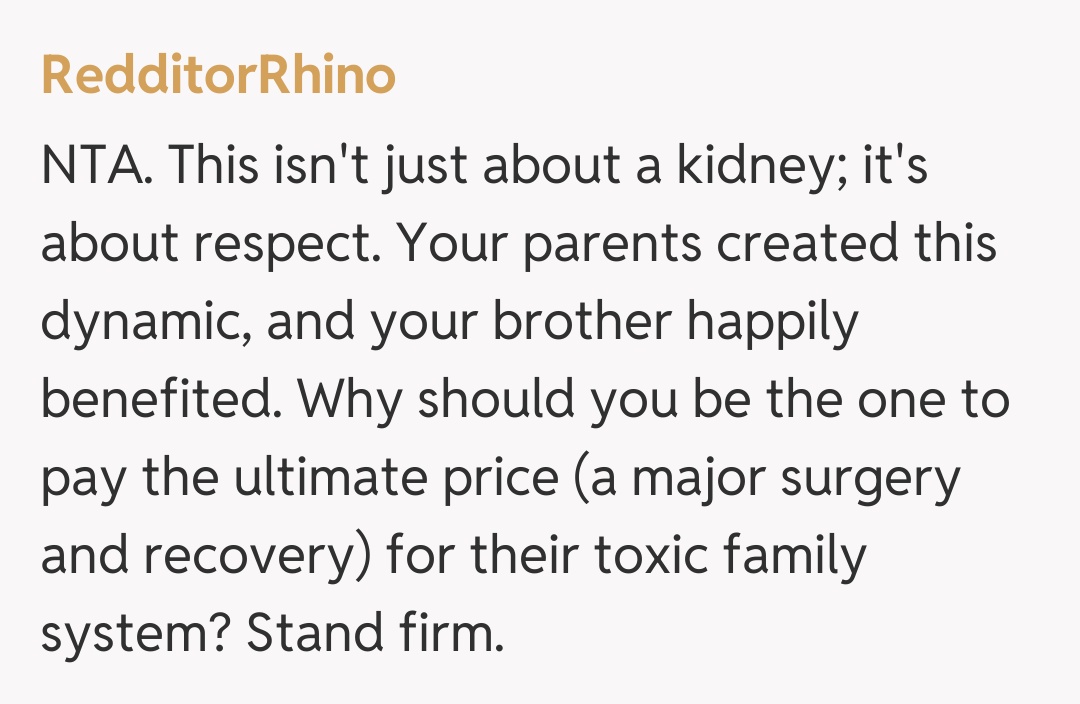
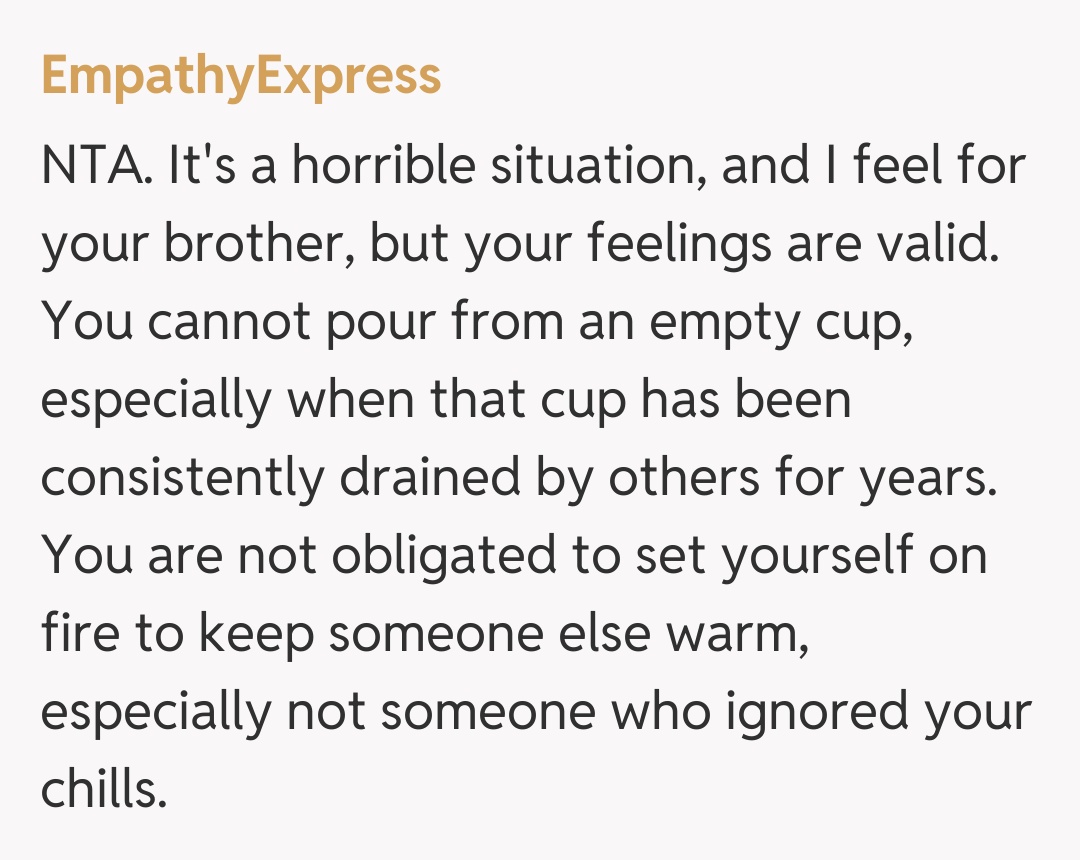
The comments section for this story, as expected, was a whirlwind of emotions and strong opinions. A vast majority of users leaned towards NTA, championing the concept of bodily autonomy above all else. Many commenters empathized with the OP's lifelong struggle against favoritism, pointing out that a life-saving request doesn't erase years of neglect and one-sided relationships. The common sentiment was that the brother (and parents) reaped what they sowed.
However, there were nuanced voices too. Some users, while acknowledging the OP's right to refuse, encouraged a dialogue, suggesting that this might be an opportunity for the family to confront their past behaviors and for genuine apologies to be made. Yet, even these comments rarely suggested that the OP was obligated to donate. The overall takeaway highlighted that family doesn't automatically equate to unconditional sacrifice, especially when the relationship has been so fundamentally imbalanced.
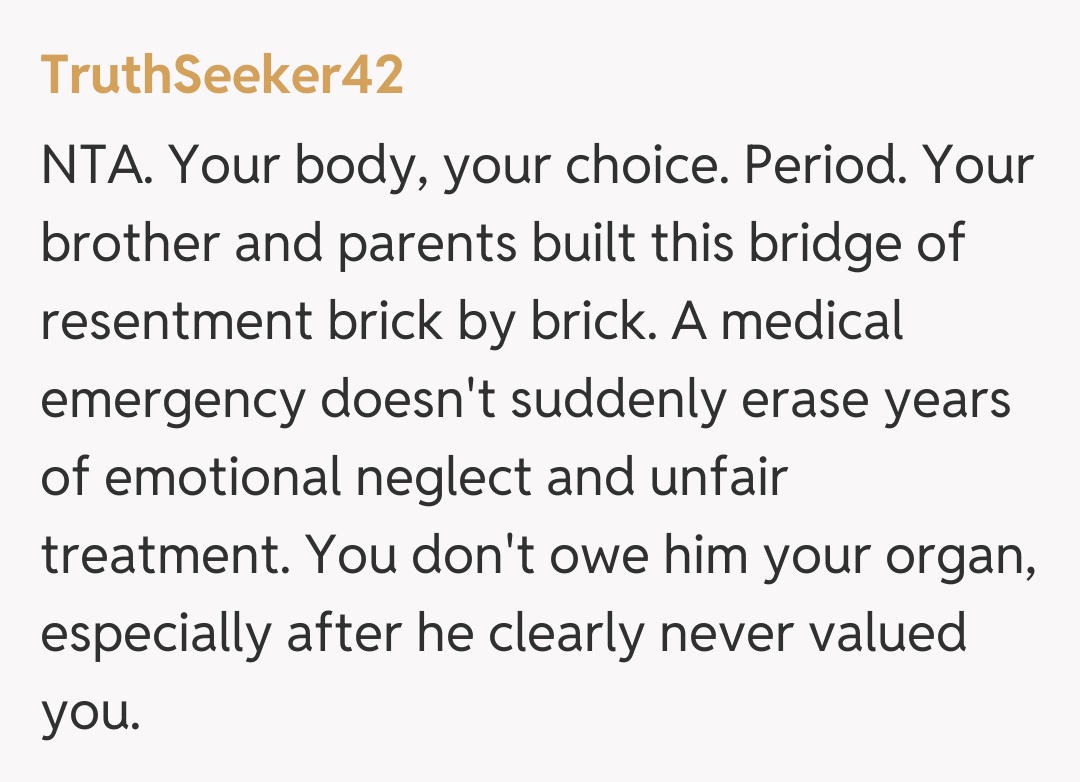
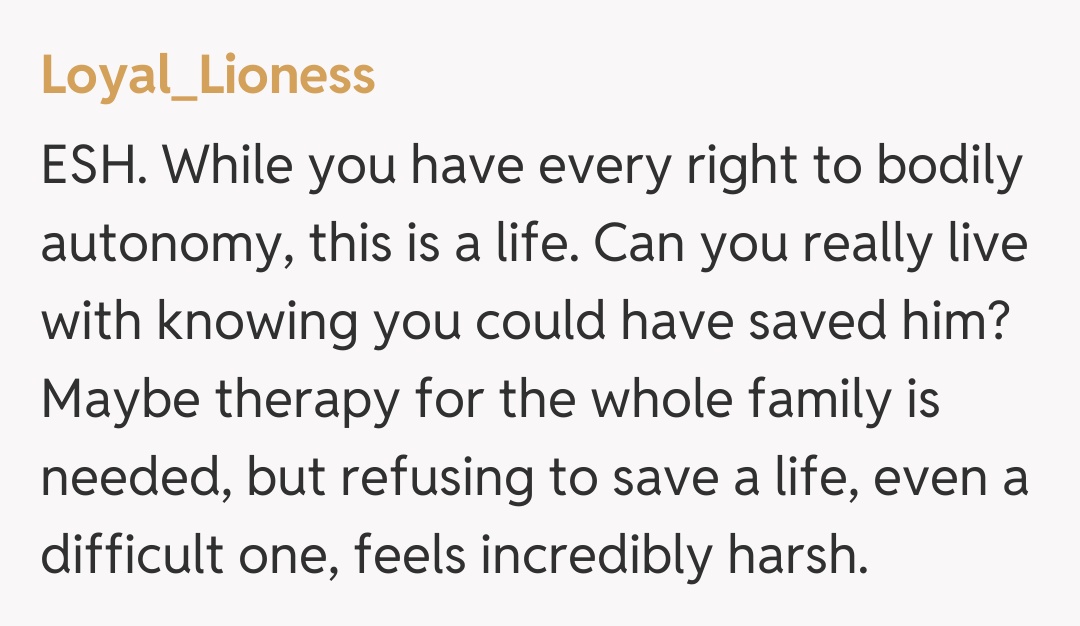
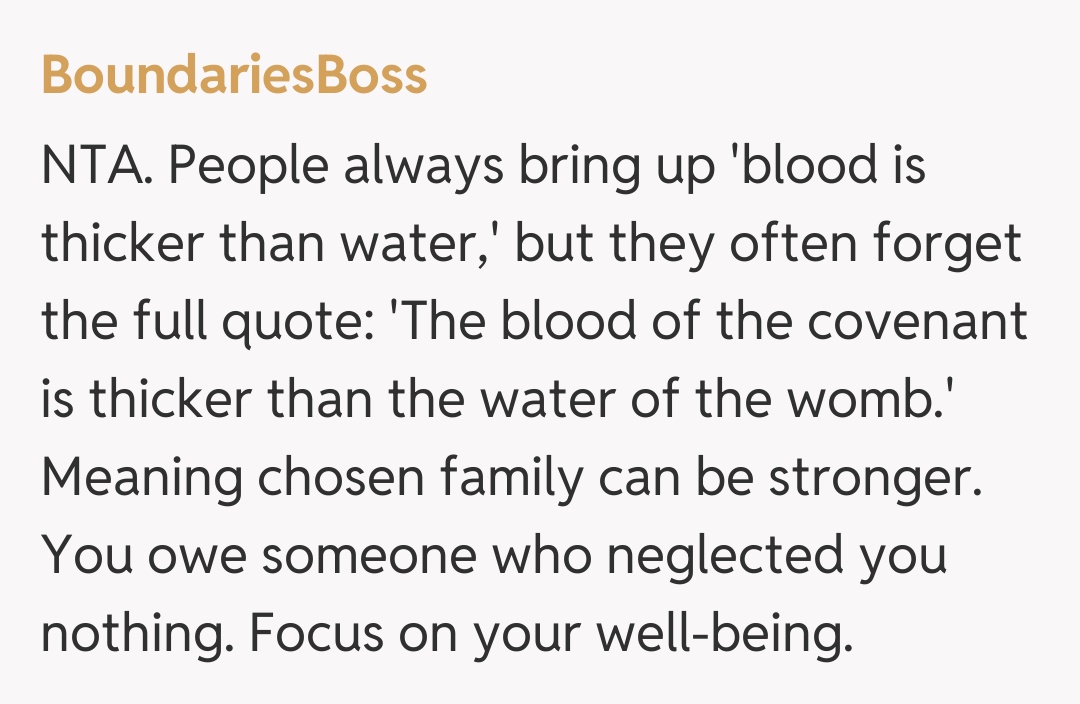
This AITA story serves as a powerful reminder that family relationships are complex and deeply impacted by past dynamics. While the idea of saving a sibling's life is inherently noble, it cannot override an individual's right to bodily autonomy or invalidate years of emotional pain. The OP's decision, though heartbreaking, is ultimately their own to make. It forces all of us to consider the true meaning of obligation and forgiveness, especially when one-sided sacrifices are expected. There's no easy answer, only deeply personal choices.