AITA for refusing to let my girlfriend keep her dead fiancé’s ashes on our nightstand?
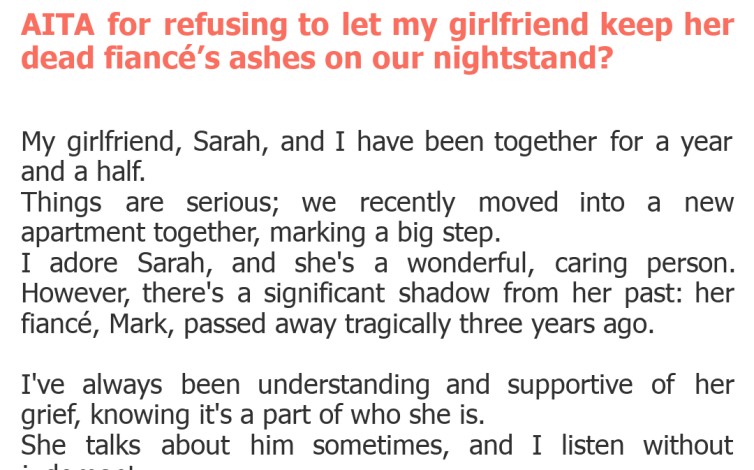
Today's AITA delves into a deeply sensitive area: navigating grief within a new relationship. It's a tale that challenges the boundaries of empathy and personal comfort, asking us to consider how much space we should make for a partner's past, especially when that past is embodied in a physical object within our shared sanctuary. This isn't just about an object; it's about emotional real estate.\nThis particular scenario involves a reader grappling with his girlfriend's desire to keep her late fiancé's ashes on their nightstand. It's a decision fraught with emotional complexities for both parties, and it raises crucial questions about respect, boundaries, and the timeline of healing. When two lives merge, so do their histories, but how much history should occupy the present? Let's unpack this difficult situation.

"AITA for refusing to let my girlfriend keep her dead fiancé’s ashes on our nightstand?"

This situation is incredibly delicate and there's no easy answer, as it touches upon profound aspects of human emotion: grief, love, comfort, and the establishment of new relationships. On one hand, the girlfriend's enduring grief for her deceased fiancé is completely valid. Her desire to keep his ashes close, especially in a place that brings her comfort, is a natural response to loss, and her feelings should be acknowledged with deep empathy.\nHowever, the original poster's feelings of discomfort are equally valid. A shared bedroom, particularly a nightstand, is often considered a highly intimate and personal space for a couple. Having the physical remains of a previous partner in such a prominent spot can understandably create a sense of intrusion, making it difficult for the new partner to feel fully present and emotionally secure in their shared sanctuary.\nThe core conflict here lies in the clash of two valid needs: her need for proximity to her past and his need for an unencumbered shared intimate space for their present and future. Neither person is inherently 'wrong' for their feelings. The problem arises when these needs are not communicated effectively or when one person's comfort is prioritized completely over the other's, especially in a space that inherently belongs to both.\nUltimately, this isn't about disrespecting the deceased or being jealous. It's about establishing boundaries in a new relationship while respecting previous ones. Compromise and open, empathetic communication are absolutely essential. They need to find a solution that honors her grief without diminishing his ability to feel comfortable and secure in their shared home.
The Internet Weighs In: Urns, Empathy, and Shared Spaces
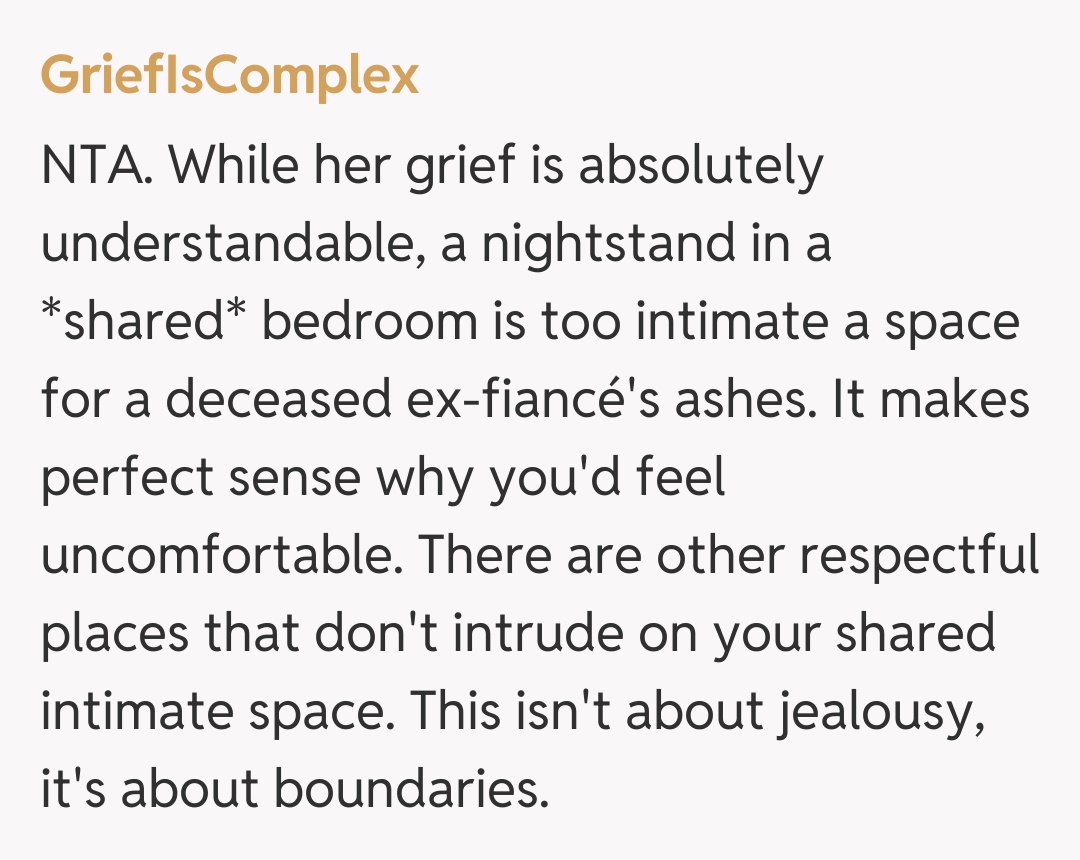
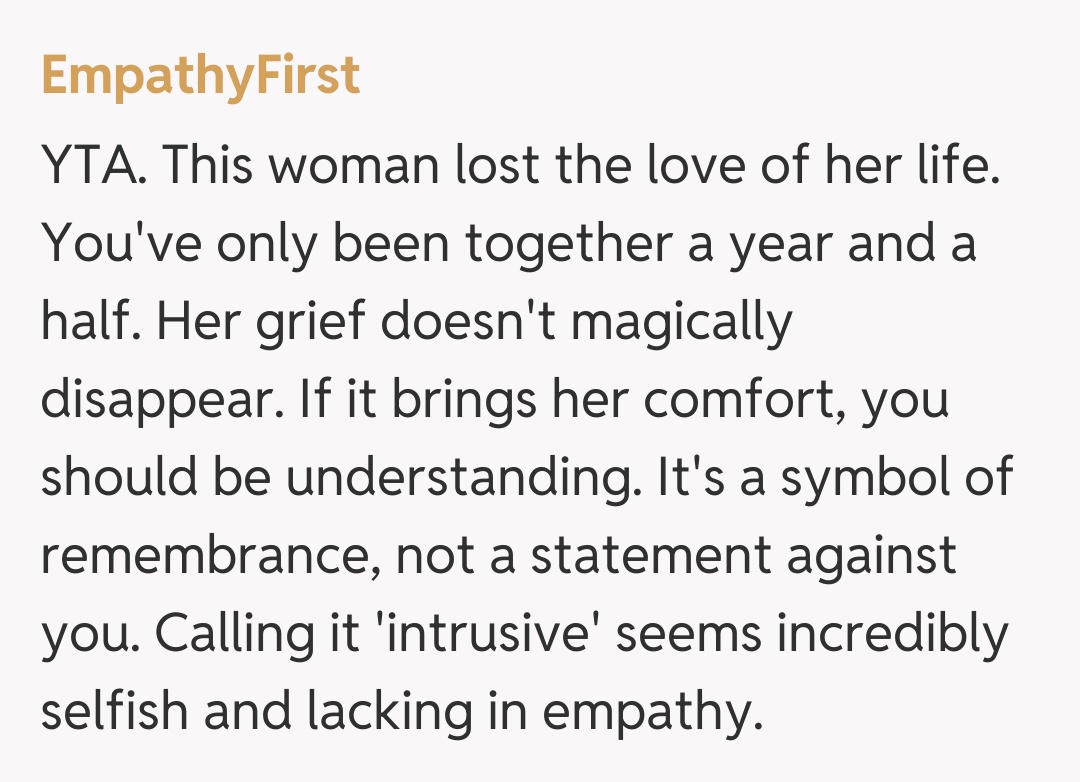
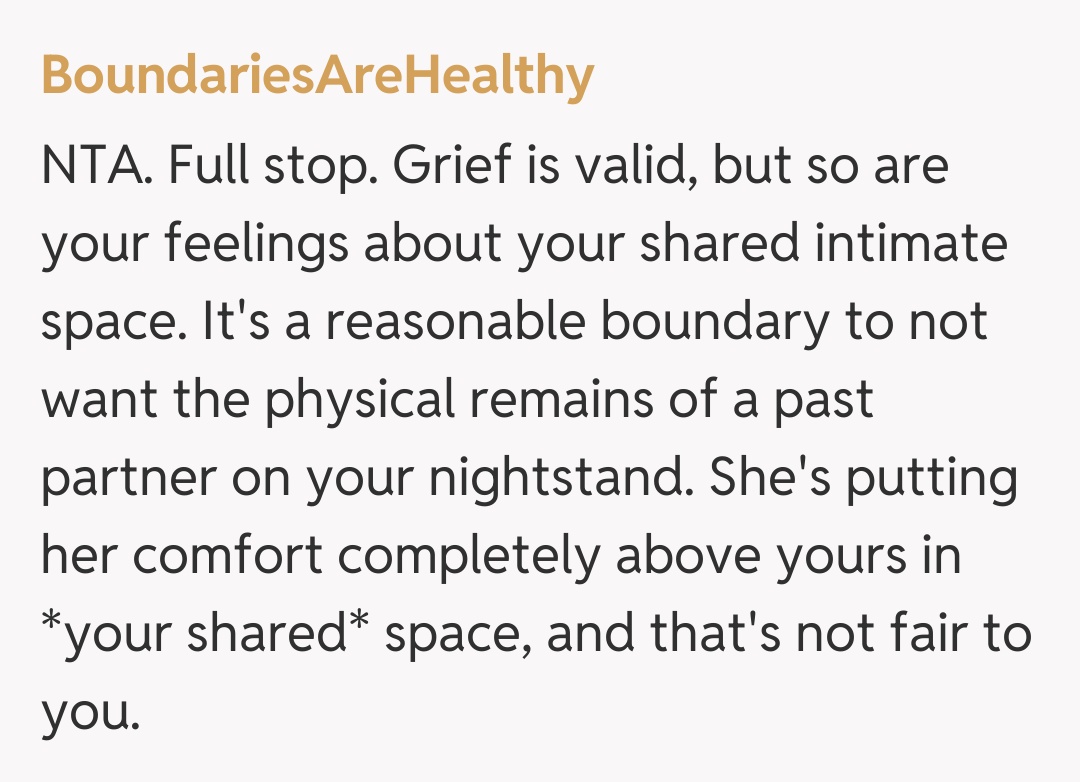
The comments section for this story was, as expected, a whirlwind of nuanced opinions, reflecting the deeply personal nature of grief and relationships. Many users sided with the OP, emphasizing the importance of setting boundaries in a shared intimate space. They argued that while grief is valid, it shouldn't infringe upon a current partner's comfort or ability to fully establish their relationship in their own home.\nConversely, a significant number of commenters expressed profound sympathy for the girlfriend, highlighting the enduring nature of grief and the idea that the deceased fiancé isn't a threat. They suggested the OP needed more empathy and understanding, and that asking her to move the urn felt cold or demanding. The debate truly showcased the difficulty in balancing individual needs with the demands of a partnership.
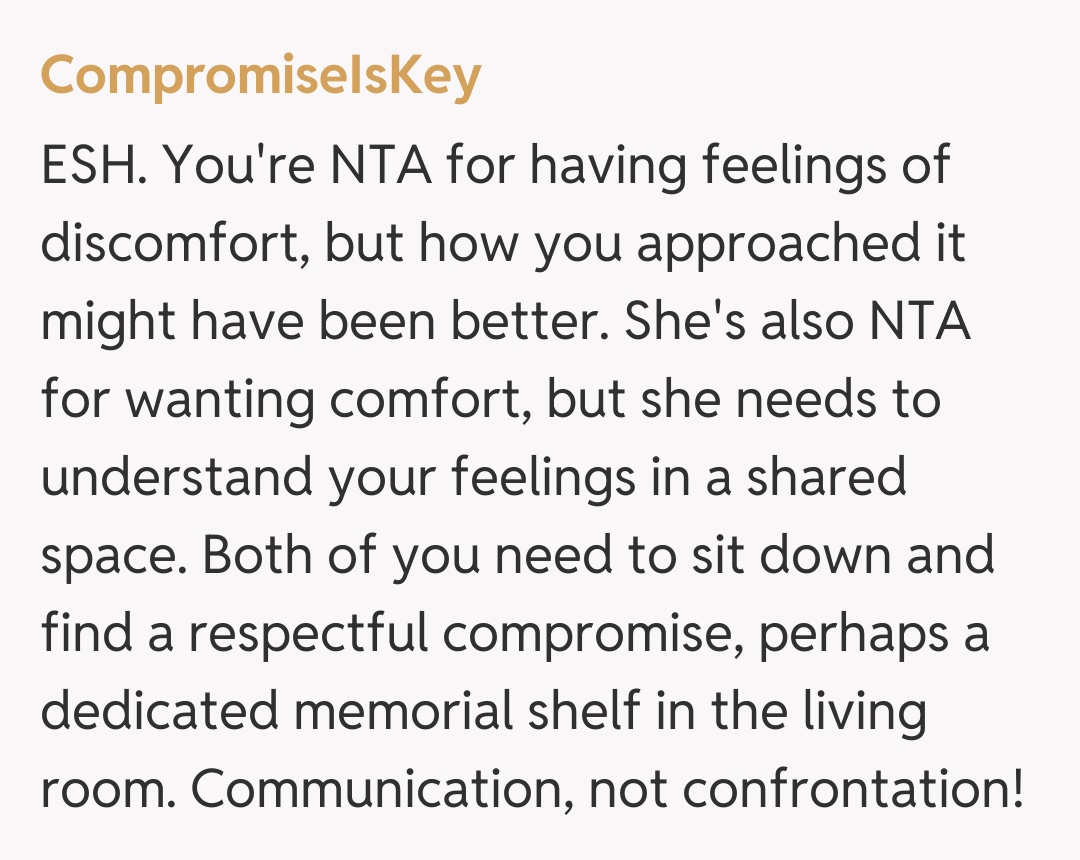
This story serves as a poignant reminder that relationships are built on continuous negotiation and empathy, especially when past wounds are involved. There's no single right answer, but rather a spectrum of understanding and compromise. For this couple, the path forward undoubtedly involves deep, open communication, acknowledging both parties' feelings as valid. True partnership means finding a way to heal together, even when healing looks different for each person and honoring the sacredness of their shared life.