AITA for refusing to let my husband’s kid from a previous marriage come on our “family vacation” because we can only afford tickets for our “real family”?

Oh boy, do we have a doozy for you today! The complexities of blended families can be truly mind-boggling, and when you throw in finances and the highly emotional topic of 'family vacations,' things can quickly spiral. Our latest AITA submission dives headfirst into this tricky territory, sparking debates about inclusion, financial responsibility, and the very definition of what makes a family a 'real' family.\nThis story is bound to ignite some strong opinions. It's a classic case of navigating different expectations and priorities within a household that includes children from previous relationships. When money is tight, tough choices often need to be made, but where do we draw the line when it comes to who gets included in cherished family moments? Let's unpack this emotional rollercoaster together.

"AITA for refusing to let my husband’s kid from a previous marriage come on our "family vacation" because we can only afford tickets for our "real family"?"


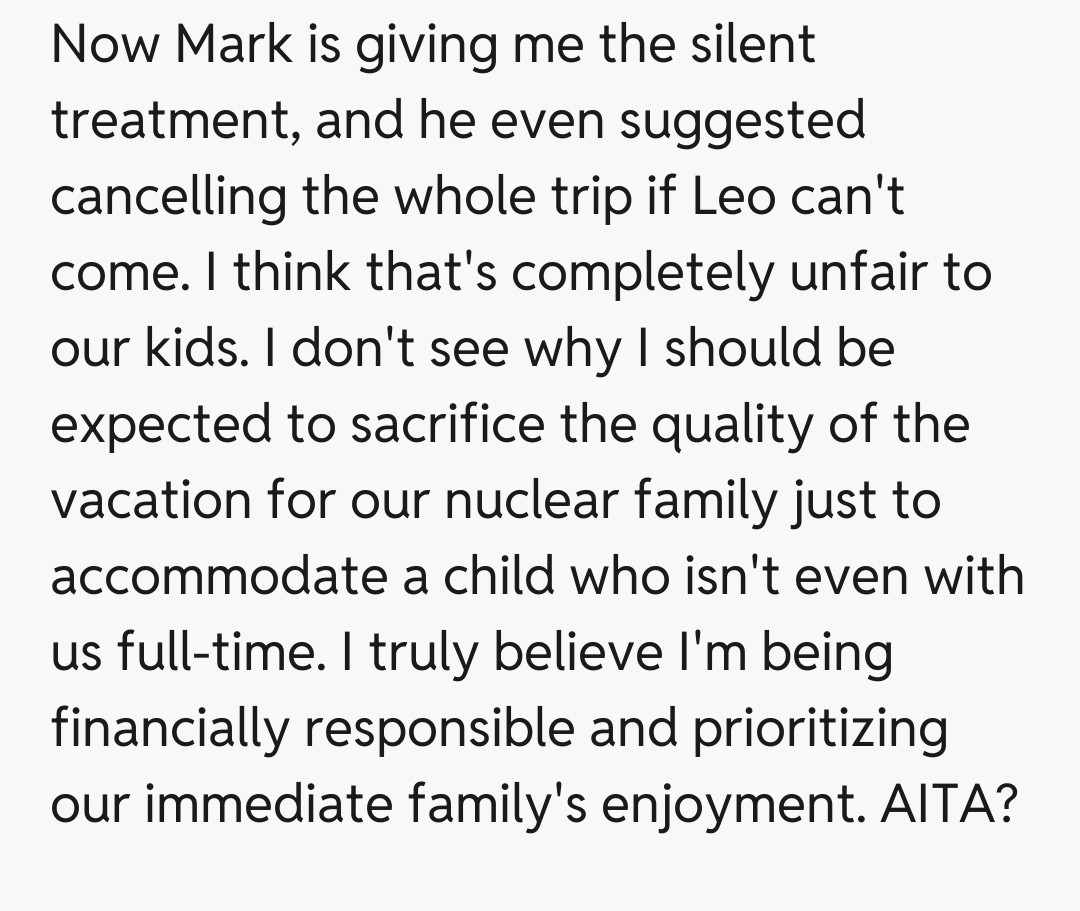
This post immediately throws us into the deep end of blended family dynamics and financial planning. The OP's use of the phrase 'our real family' versus including her husband's son, Leo, is where a lot of the conflict stems from. While financial constraints are certainly a valid concern, the language used can deeply hurt and alienate a child, especially an 11-year-old who is already navigating a complex family structure.\nIt's understandable to want a special trip for your immediate household, but in a blended family, the definition of 'immediate' becomes less clear. For the husband, Mark, Leo is unequivocally his son and part of his family, regardless of custody arrangements. Excluding a child from a major family event like a vacation, especially with the stated reason, sends a very strong and potentially damaging message about their place within the family unit.\nFinancially, there are always difficult choices. However, the question becomes: how were these decisions made? Was it a joint discussion with the husband about the budget and who would be included, or was it a unilateral decision by the OP? If the husband feels strongly about Leo's inclusion, perhaps alternative budgeting or even a more modest vacation could have been explored to ensure all children felt equally valued and included.\nThe emotional impact on Leo cannot be overstated. An 11-year-old is old enough to understand being excluded and to feel the sting of being deemed not part of the 'real family.' This kind of exclusion can foster resentment and create long-lasting damage to the relationship between the stepmother and stepson, and potentially strain the marriage itself. Open communication and empathy are crucial in these sensitive situations.
The Internet Weighs In: Family, Finances, and Feelings!
The comments section for this one was, predictably, a whirlwind! Many readers immediately honed in on the phrase 'our real family,' pointing out how incredibly hurtful and exclusionary that would sound to an 11-year-old child. The consensus leaned heavily towards the idea that if a child has a parent in the household, they are part of the family, regardless of where they sleep on other nights.\nHowever, there was also a significant discussion around financial realities. Some commenters acknowledged that budgets are real and tight, and tough choices sometimes need to be made. Yet, even those sympathizing with financial woes often suggested that the *wording* was the bigger issue, or that the husband should have contributed more, or a smaller trip should have been planned to include everyone. The core message: communication and valuing all children is paramount.
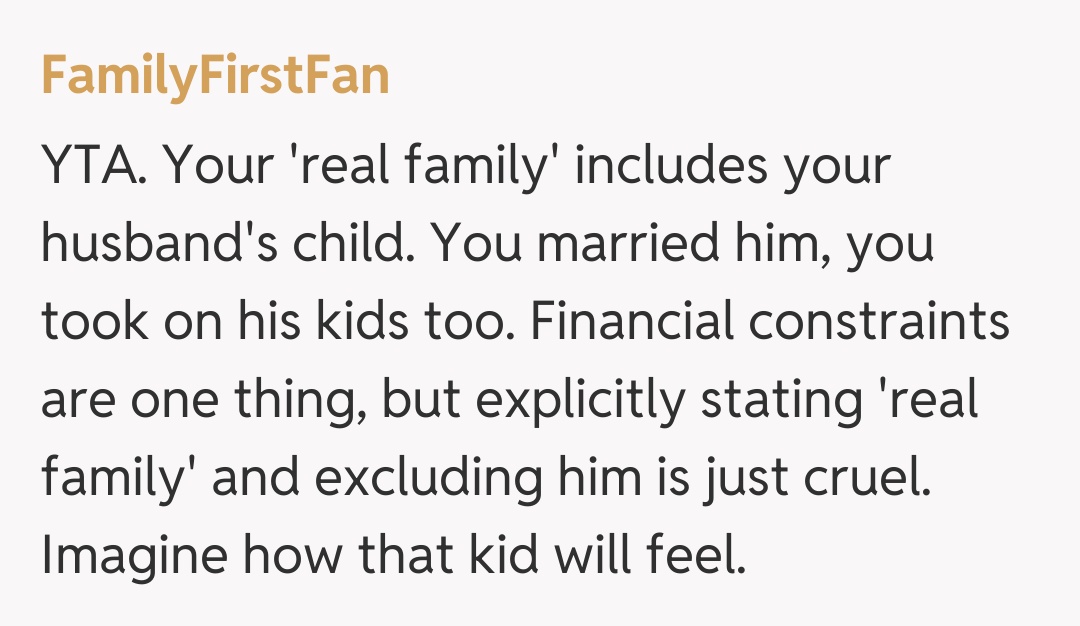

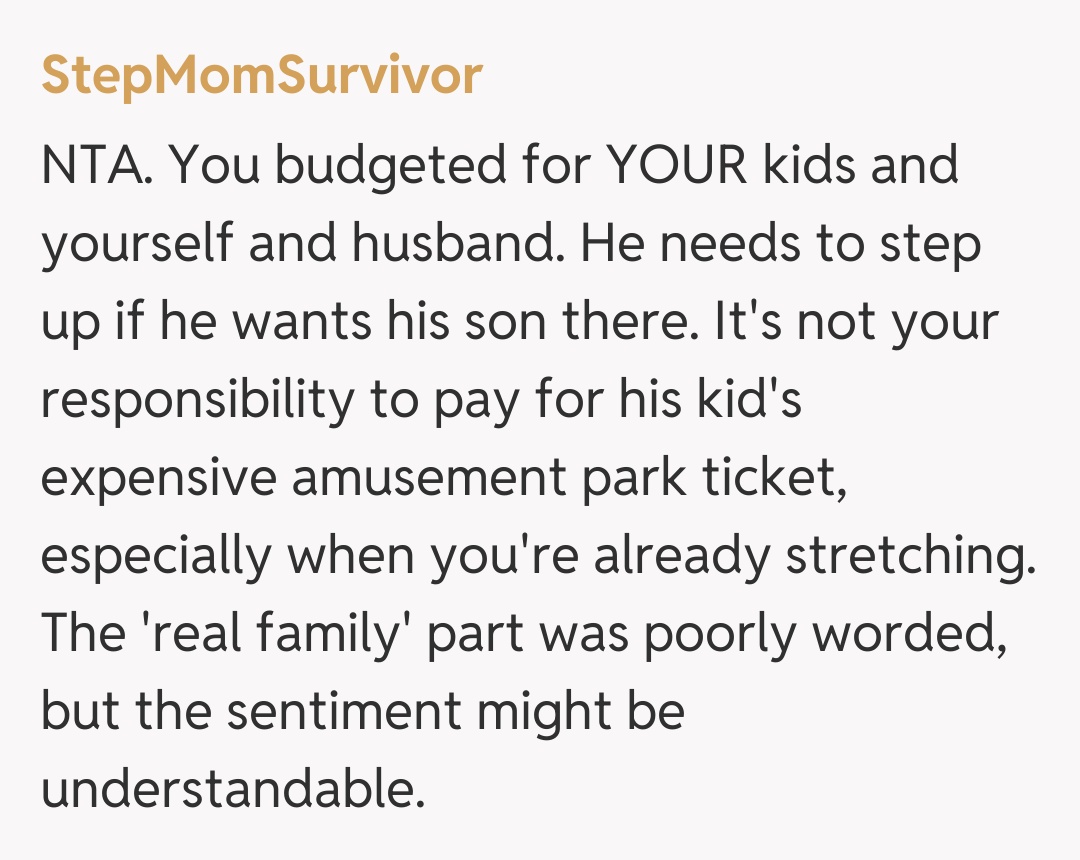
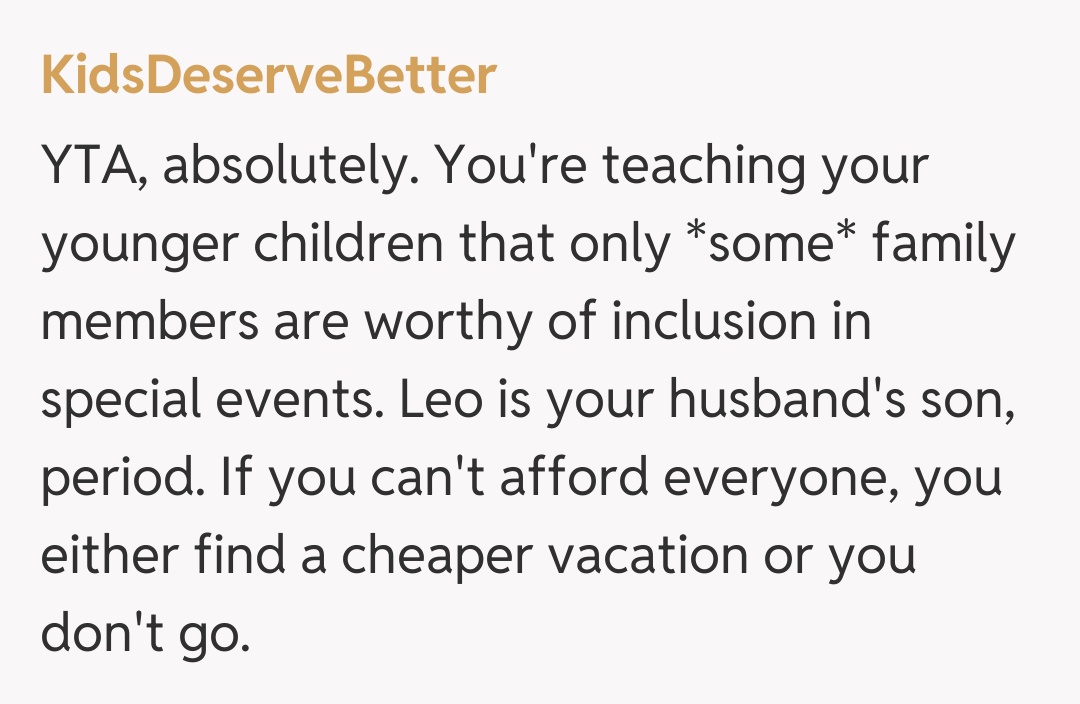
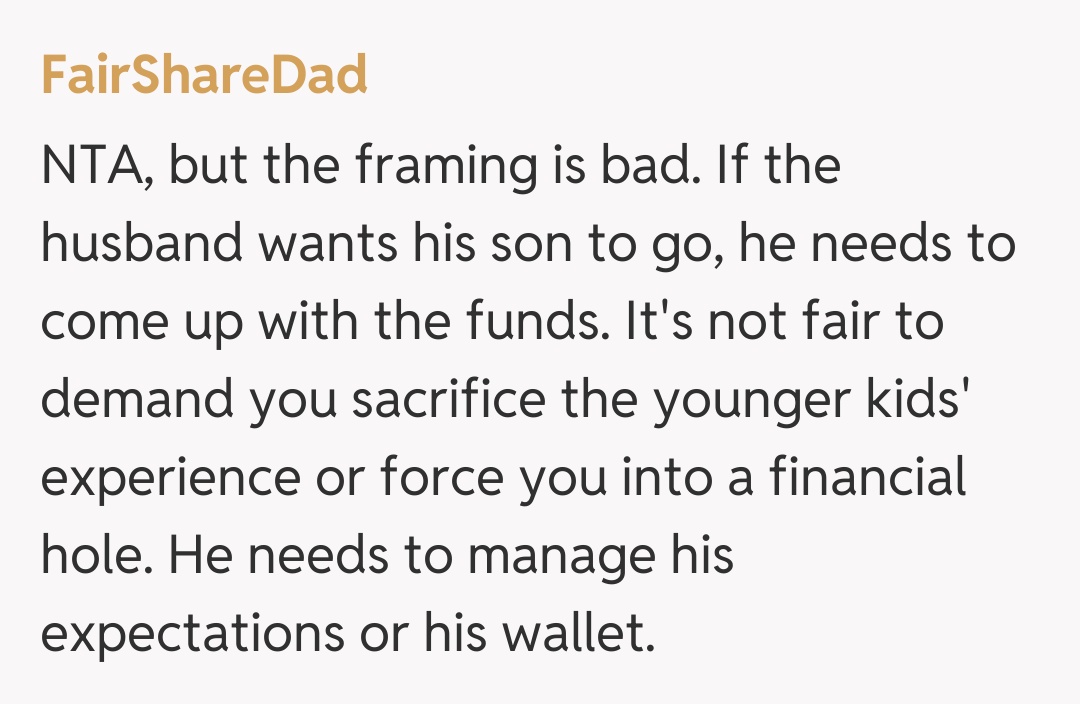
This AITA really hit home for many, highlighting the ongoing struggles within blended families. While financial realities are undeniable, the emotional cost of exclusion, especially with such pointed language, can far outweigh any monetary savings. The overarching lesson here seems to be about communication, empathy, and working as a united front with your partner to ensure all children feel equally loved and valued. Ultimately, a family vacation should be about making memories together, not creating lasting rifts. What would you have done in this situation?