AITA for telling my wife I’m tired of hearing “I have a headache” as her go-to excuse at least 5 nights a week?
Welcome back to another edition of 'Am I the A**hole?' where we dissect relationship dilemmas that make us all wonder about boundaries and communication. Tonight's story dives deep into the often-unspoken frustrations that can simmer in long-term partnerships, especially when one partner feels consistently dismissed or neglected. It’s a classic scenario, but one that always sparks intense debate about empathy versus personal needs.
Our storyteller presents a situation many might find relatable: the repetitive excuse. When intimacy and connection take a backseat to a recurring ailment, it’s understandable how one partner might reach a breaking point. We’re talking about the delicate balance between showing compassion for a partner’s discomfort and the need to feel desired and acknowledged within the relationship. Let’s unravel this tale and see where the community lands.

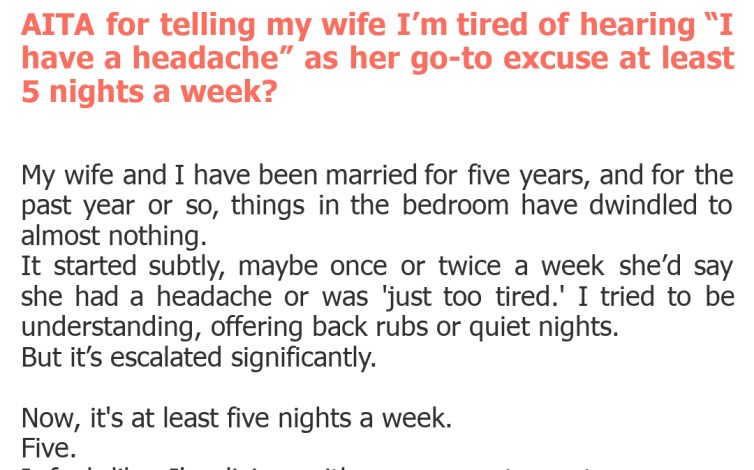
"AITA for telling my wife I’m tired of hearing “I have a headache” as her go-to excuse at least 5 nights a week?"
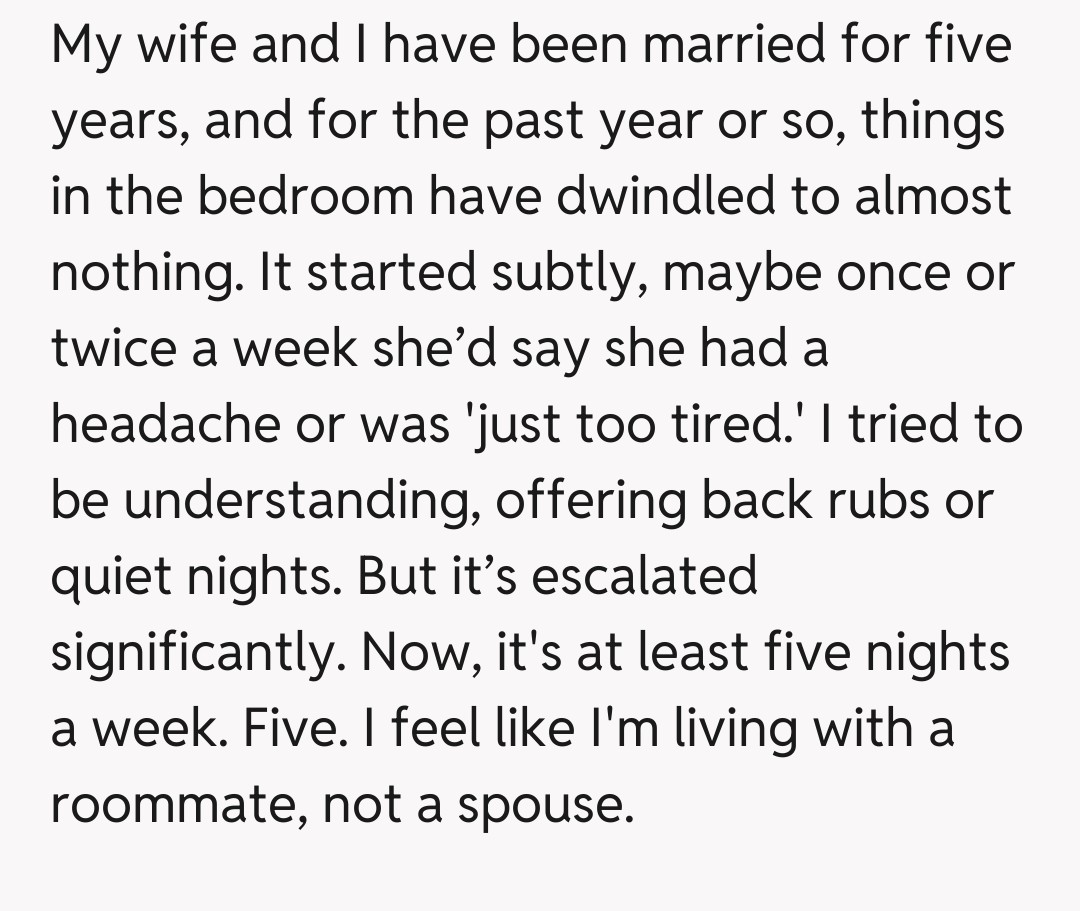
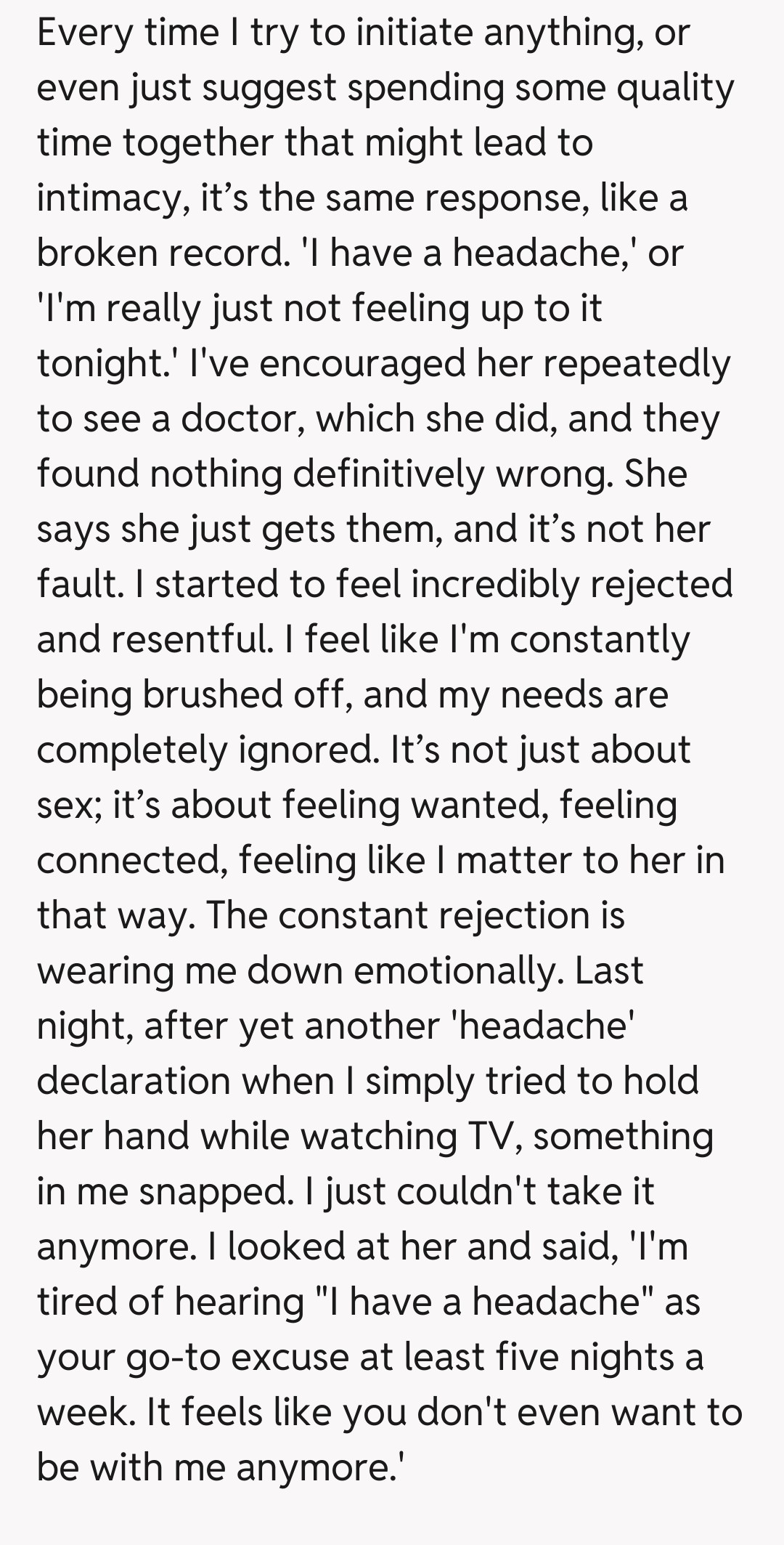
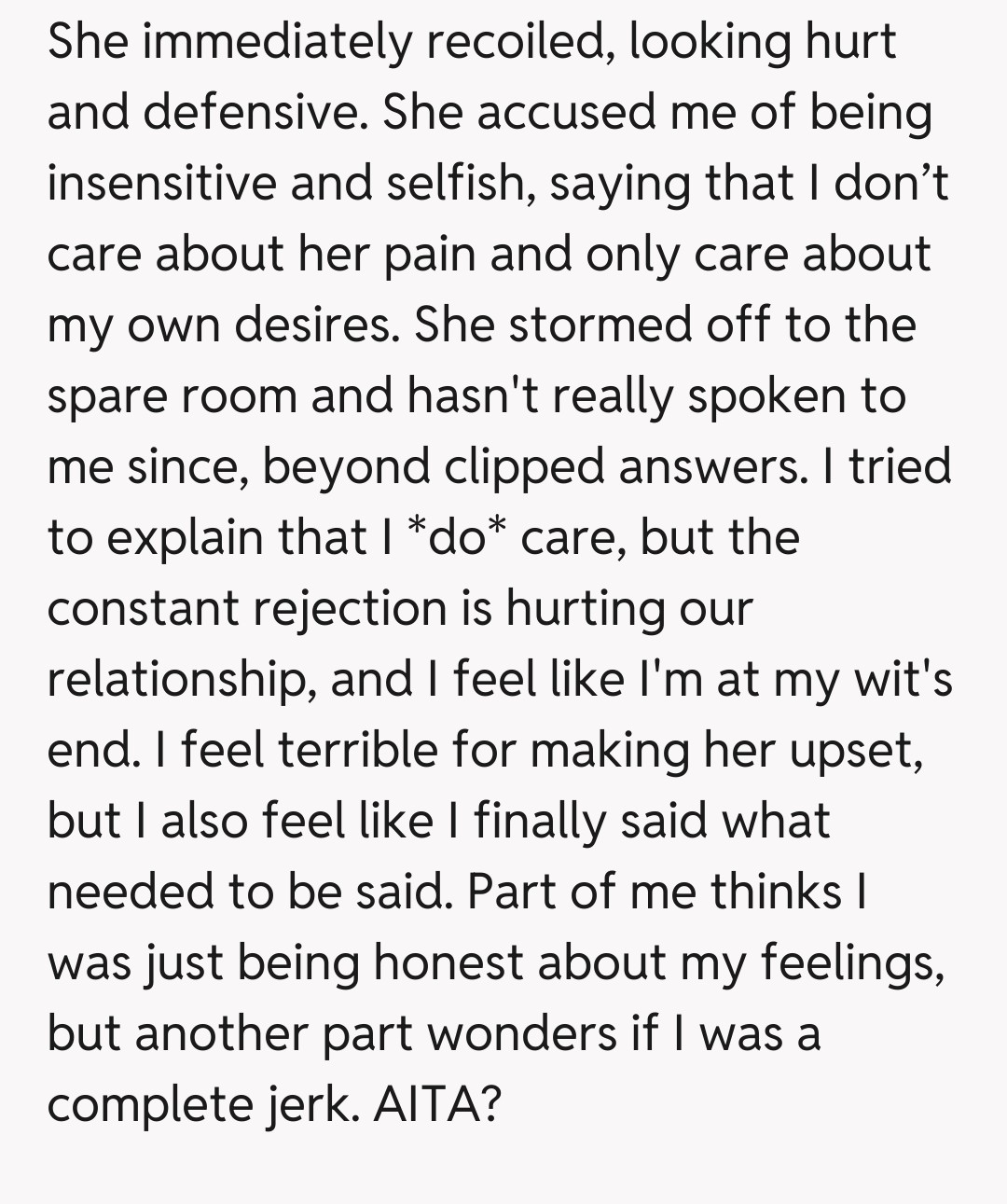
Our storyteller's frustration is palpable and, dare we say, understandable. In any intimate relationship, a sustained lack of physical and emotional connection can lead to feelings of rejection, loneliness, and resentment. The desire for intimacy, in its various forms, is a fundamental human need, and when it’s consistently unmet, it’s natural for questions and frustrations to arise. His attempt to address the issue, albeit perhaps clumsily, stems from a place of deep hurt and a yearning for connection.
On the other hand, we must consider the wife's perspective. Chronic headaches, even without a clear medical diagnosis, can be debilitating. They can severely impact a person's energy levels, mood, and overall capacity for engaging in daily life, let alone intimacy. Her feelings of being accused or disbelieved about her pain would undoubtedly be valid, and being told her pain is an 'excuse' could feel incredibly dismissive and hurtful. Her storming off indicates deep emotional pain.
The core issue here appears to be a breakdown in communication and understanding. While the husband is right to voice his needs, the way he delivered the message may have been counterproductive. Framing her condition as an 'excuse' rather than a potential barrier to intimacy can put her on the defensive, making it harder to have a productive conversation. Both partners need to feel heard and validated in their experiences and feelings.
Moving forward, a more empathetic and collaborative approach is crucial. Instead of focusing on blame, they should explore the underlying reasons for the frequent headaches – stress, diet, or even psychological factors – and discuss how they can both work together to find solutions. Couples therapy could offer a safe space to discuss these sensitive issues without resorting to accusations, helping them reconnect on a deeper, more understanding level.
The Headache vs. The Heartache: What Redditors Had to Say!
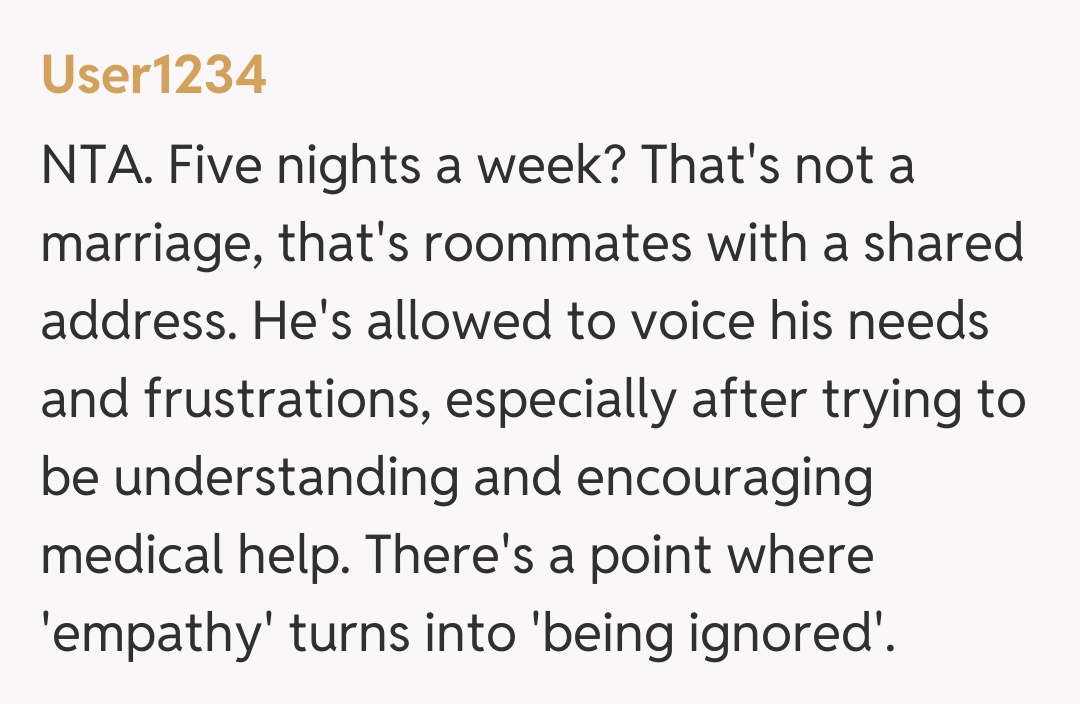
The comments section on this one was, as expected, a lively debate! Many users leaned towards 'NTA,' sympathizing with the husband's long-standing frustration and the fundamental need for intimacy and connection in a marriage. They argued that while the wife's headaches are valid, her inability or unwillingness to find solutions or engage in alternative forms of intimacy points to a deeper issue that needs addressing.
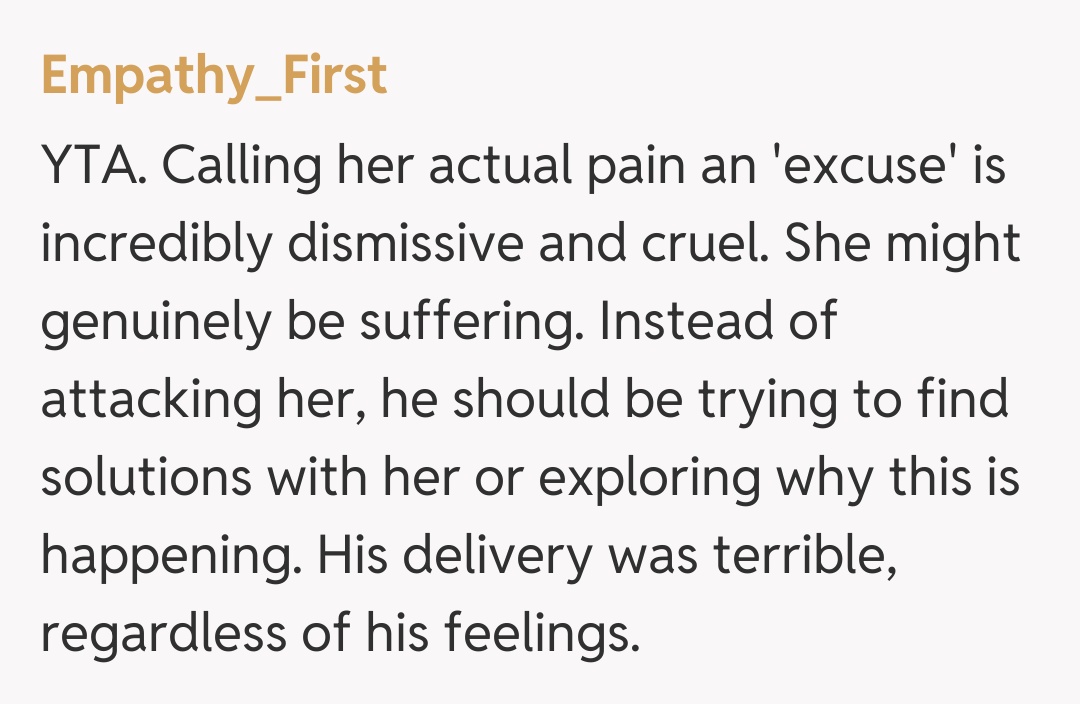
Conversely, a significant portion argued 'YTA,' or at least 'ESH.' These commenters focused on the insensitive way the husband delivered his feelings, suggesting that calling her pain an 'excuse' was dismissive and lacked empathy. They highlighted the importance of supporting a partner through chronic pain and exploring non-sexual ways to connect, rather than making demands when she's feeling unwell. The consensus, though, was that communication is key.
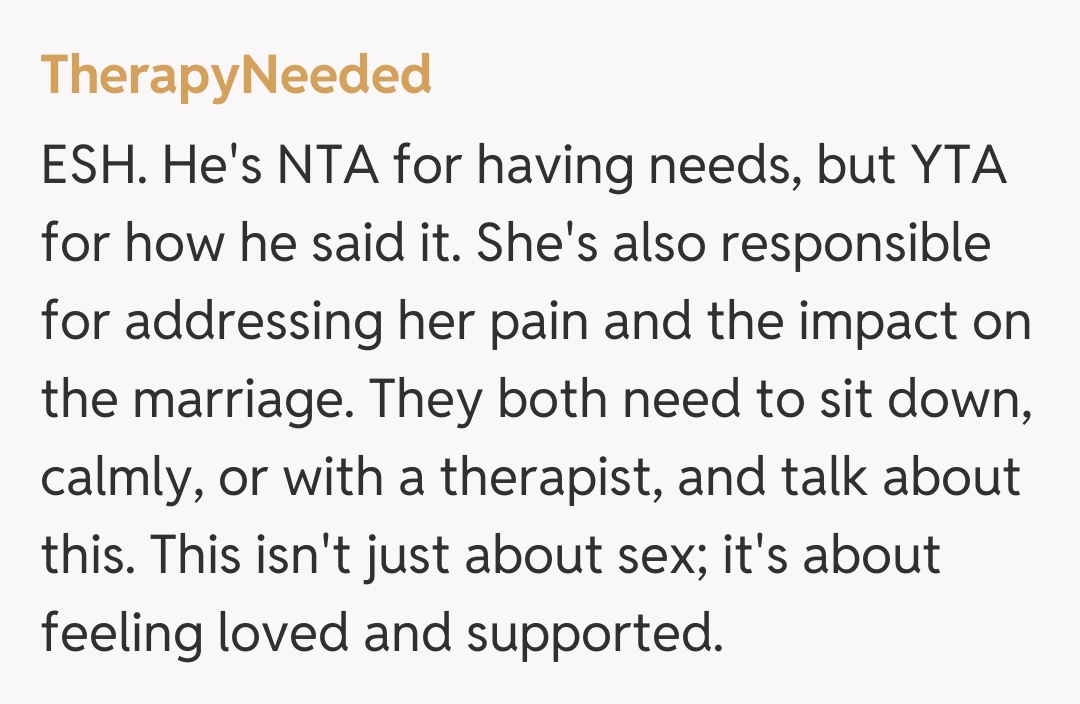
This story serves as a stark reminder of how easily unspoken resentments can fester in a relationship. While both partners have valid points, the immediate aftermath highlights the deep hurt that can come from feeling unheard or accused. The path forward for this couple, and for any navigating similar waters, must involve open, honest, and empathetic communication. It's about finding a way to express needs without invalidating a partner's experience, and collaboratively seeking solutions that honor both individuals and the relationship they share. Perhaps professional guidance could help bridge this painful gap.