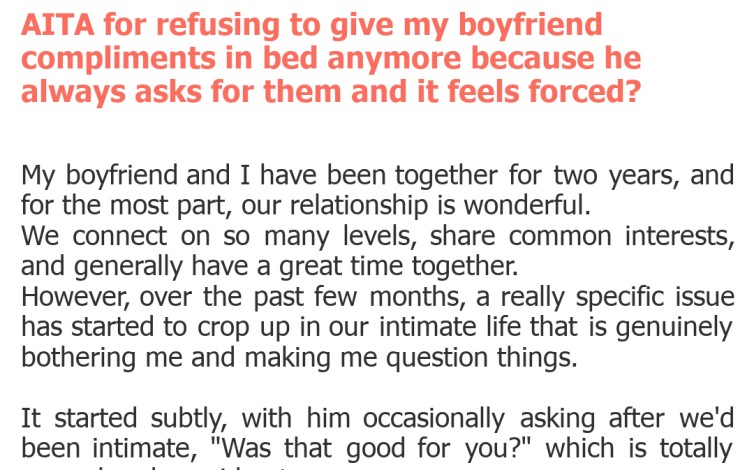
AITA for refusing to give my boyfriend compliments in bed anymore because he always asks for them and it feels forced?
Welcome back, dear readers, to another dive into the complex world of relationships! Today's story explores a truly sensitive area: intimacy and the delicate dance of communication within it. We all crave connection and affirmation from our partners, but what happens when the very act of seeking that affirmation starts to feel forced and unnatural?
This AITA post brings to light a common, yet rarely discussed, challenge. How do we balance a partner's need for reassurance with our own desire for authenticity? When compliments become a demand rather than a spontaneous expression of affection, the line between genuine intimacy and an awkward performance can blur, leaving both parties feeling misunderstood and unsatisfied. Let's unpack this.

"AITA for refusing to give my boyfriend compliments in bed anymore because he always asks for them and it feels forced?"
My boyfriend and I have been together for two years, and for the most part, our relationship is wonderful. We connect on so many levels, share common interests, and generally have a great time together. However, over the past few months, a really specific issue has started to crop up in our intimate life that is genuinely bothering me and making me question things.
It started subtly, with him occasionally asking after we'd been intimate, "Was that good for you?" which is totally normal and considerate. But then it evolved. It became more like, "Did I do well?" or "Am I good?" and eventually, almost every single time, he'd turn to me right after and say, "Tell me something you liked." It went from a question to a direct request, almost a demand for a performance review. I initially tried to come up with genuine things, but as it became a regular occurrence, the pressure began to mount.
I felt like I had to conjure up a compliment on cue, and frankly, it started to feel incredibly forced and inauthentic. Sometimes, in the heat of the moment, you don't always have eloquent words, or sometimes you just want to cuddle or revel in the afterglow. Having to perform verbal affirmation immediately after sex completely killed the spontaneity and made me dread that moment.
I tried to hint at it a few times, saying things like, "You don't need to ask, you know I love being with you," or trying to redirect. But he didn't seem to get it. So, a few nights ago, after another intimate moment and his usual request for a compliment, I just sighed. He asked what was wrong, and I decided to be honest. I told him, "Look, I really care about you, and I love our intimacy, but when you ask me to give you compliments like that every time, it feels forced and it makes me feel like I'm performing. It actually makes it harder for me to genuinely express myself." I explained that real compliments come from a genuine place, not because they're requested.
He immediately got defensive and really hurt. He said I was being cold and unappreciative, and that he just wanted to know if he was pleasing me. He accused me of being selfish and making him feel insecure. He said I was effectively refusing to make him feel good. I tried to explain that it's the *asking* that's the problem, not the sentiment itself, but he just shut down. He's barely spoken to me since, and our intimate life has completely stalled. Now I feel terrible, wondering if I handled it badly or if I'm being unreasonable. AITA?
This is a truly classic relationship dilemma, highlighting the fine line between seeking reassurance and demanding validation. On one hand, the boyfriend's desire for compliments likely stems from a place of insecurity. He wants to know he's performing well and pleasing his partner, which is a very human need. This isn't necessarily a malicious act, but rather a potentially misguided attempt to connect and feel affirmed in a vulnerable moment.
However, the poster's feelings are equally valid. Intimacy is, by definition, meant to be spontaneous and authentic. When an act of affection, like giving a compliment, becomes a requested obligation, its very essence is undermined. The pressure to produce specific words on demand can transform a moment of connection into a performance review, which is detrimental to emotional intimacy and can breed resentment.
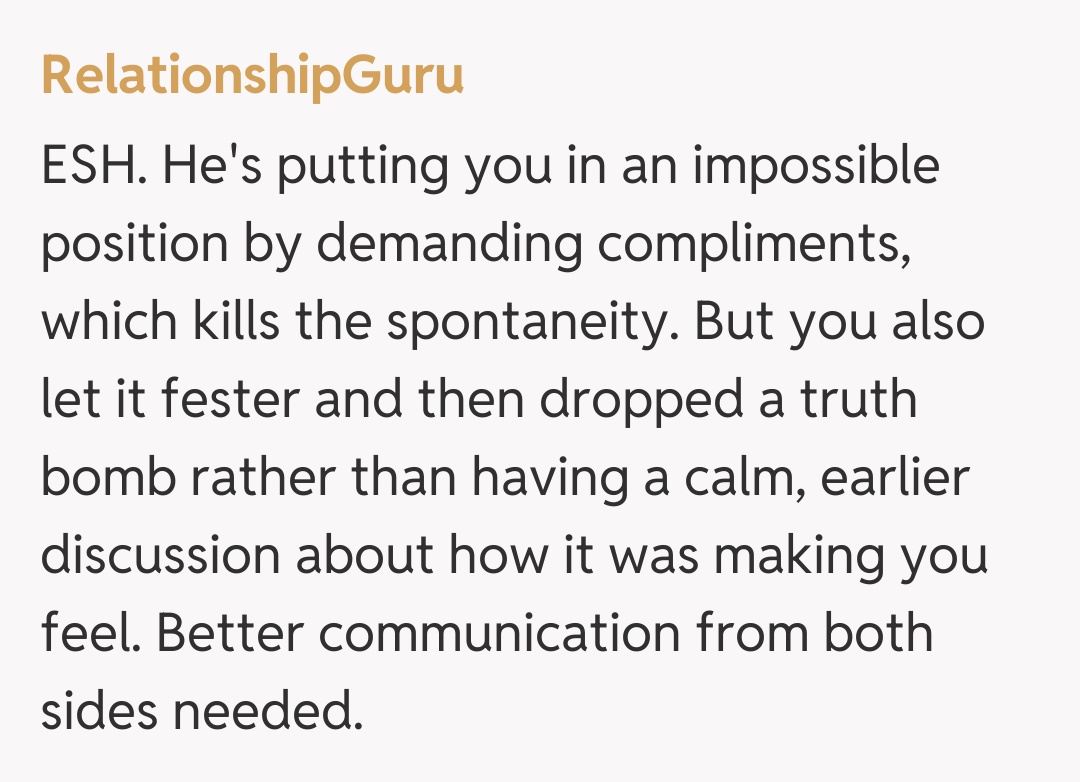
The core issue here seems to be a breakdown in communication, compounded by differing expectations regarding emotional expression post-intimacy. The poster tried to hint at her discomfort, but hints are often not enough for sensitive topics. The boyfriend, in turn, reacted with hurt rather than understanding, possibly because her honesty touched a deep nerve of insecurity he carries.
Ultimately, both individuals have valid emotional responses. The boyfriend feels unappreciated and insecure, while the poster feels pressured and inauthentic. The situation isn't about one person being entirely right or wrong, but rather about a conflict between a need for external validation and a need for internal authenticity. It's a delicate balance that requires empathy and open dialogue.
The internet weighs in: Is 'demanded appreciation' still appreciation?
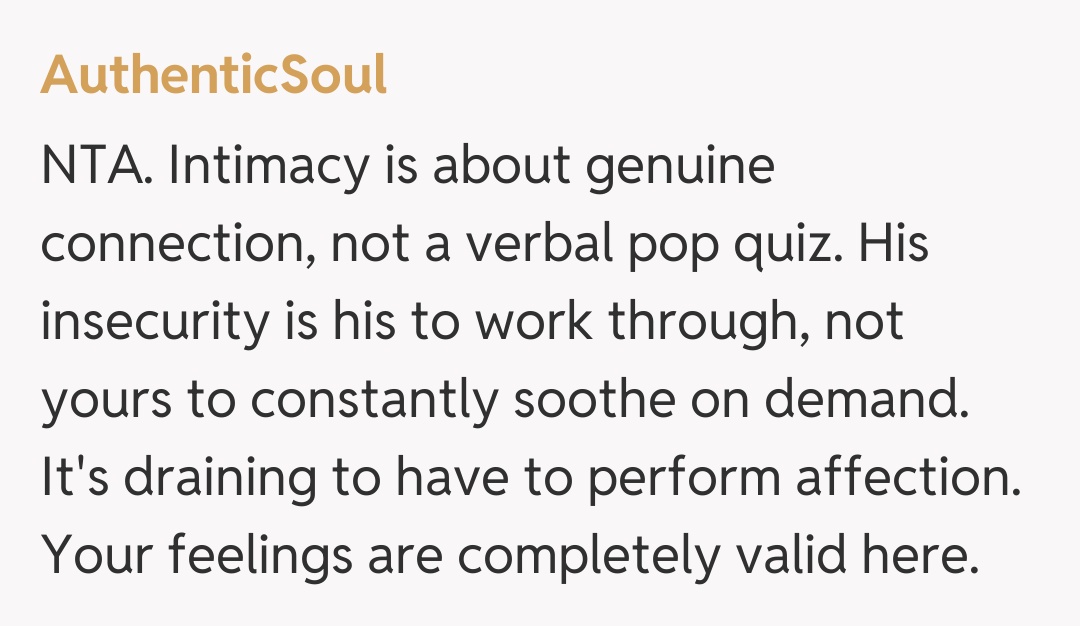
The comments section for this one was, as expected, a lively debate! Many users strongly sided with the original poster, emphasizing that compliments, especially in such a vulnerable context, must be genuine. They highlighted that being forced to provide affirmation can quickly erode the very intimacy it's meant to foster, turning affection into a transactional exercise rather than an emotional exchange.
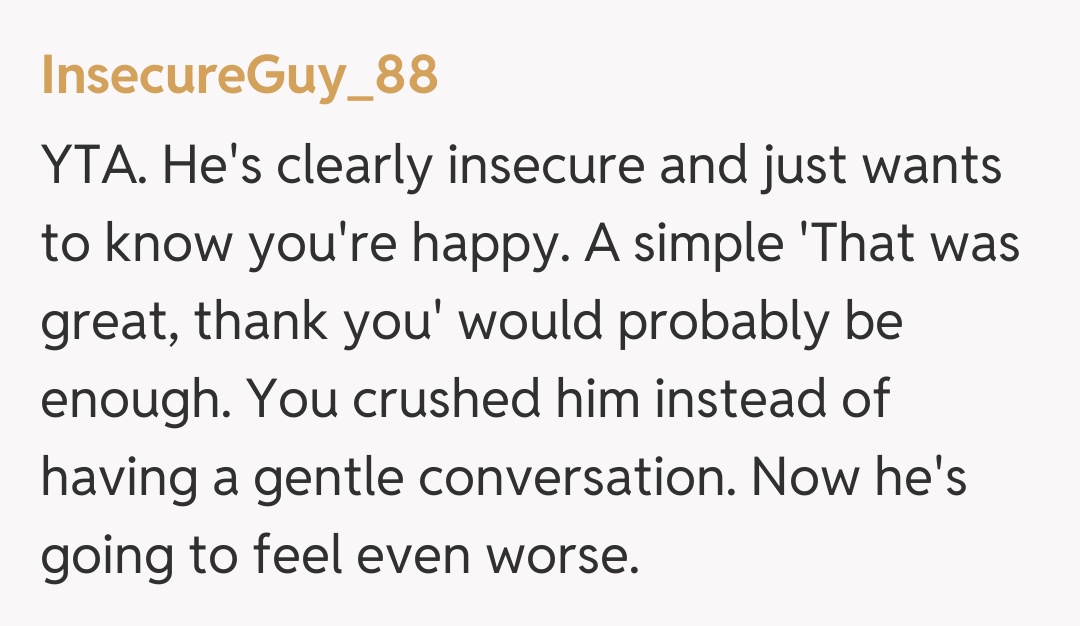
Conversely, a significant portion of commenters expressed sympathy for the boyfriend. They pointed out that his constant requests likely stem from deep-seated insecurity and a genuine need for reassurance. These users suggested that while the poster's feelings are valid, her delivery might have been too blunt, potentially exacerbating his insecurities rather than helping him understand her perspective.
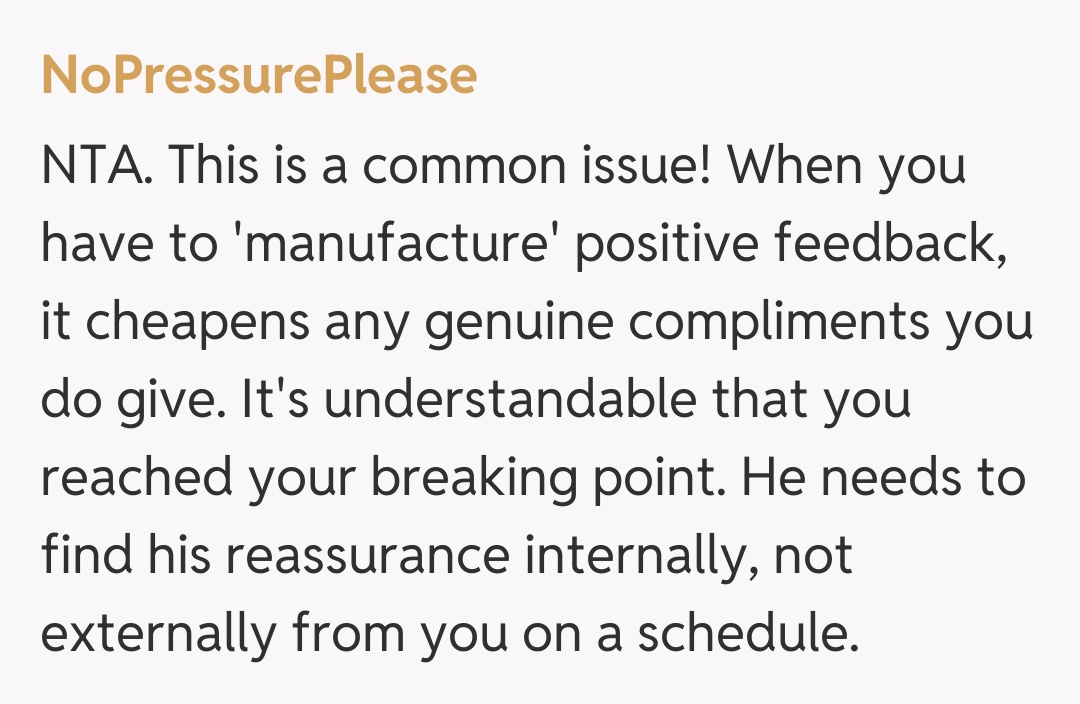
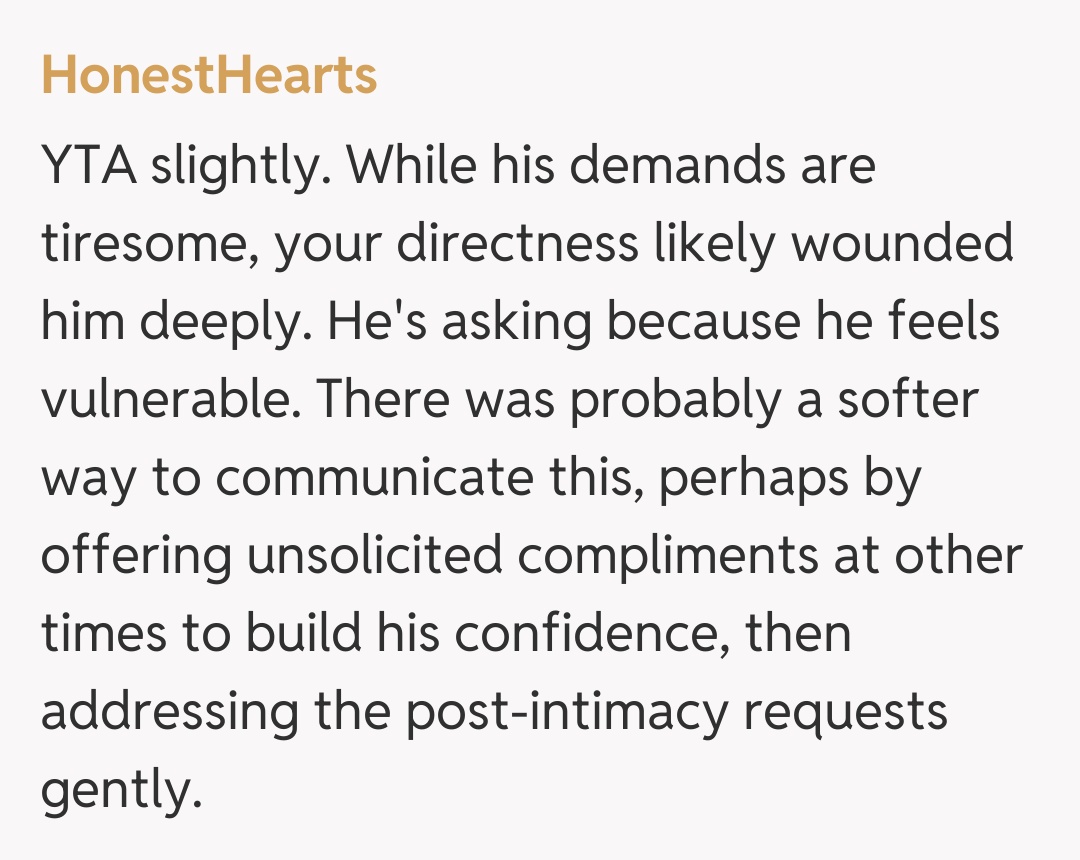
This story serves as a powerful reminder that while reassurance is vital in a relationship, it loses its meaning when it becomes an obligation. Both partners need to feel secure and appreciated, but the pathway to achieving that should be through genuine connection and open, empathetic communication. Finding a balance where affirmation flows naturally, without being prompted or demanded, is key to fostering truly intimate and fulfilling relationships. Sometimes, the hardest conversations lead to the deepest understandings.