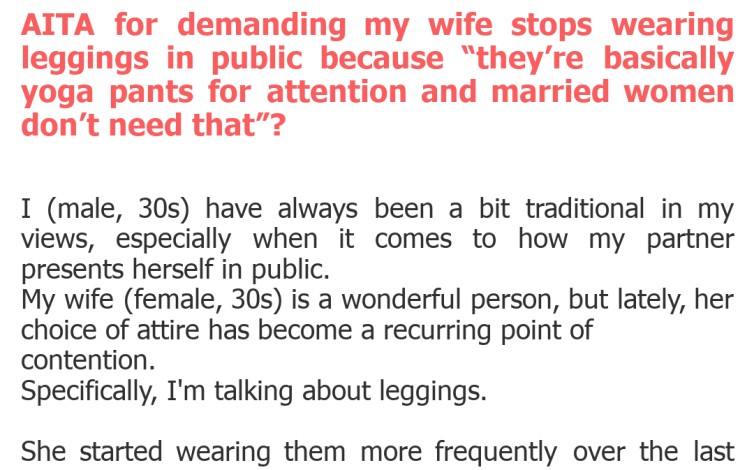
AITA for demanding my wife stops wearing leggings in public because “they’re basically yoga pants for attention and married women don’t need that”?
Oh boy, do we have a doozy for you today! The age-old debate about personal style versus a partner's comfort is back, but with a particularly charged twist. We're diving into a Reddit post that has certainly stirred the pot, igniting discussions about control, body image, and what it truly means to respect your partner's autonomy in a relationship. Get ready to unpack a whole lot of unspoken expectations and deeply held beliefs about attire.
It's fascinating how certain pieces of clothing can become symbols of much larger underlying issues. This story isn't just about fabric; it's about boundaries, trust, and the delicate balance of individual freedom within a partnership. Our original poster has laid out his case, and the internet, as always, has opinions. Let's peel back the layers and see if he's being a protective partner or stepping over a serious line.

"AITA for demanding my wife stops wearing leggings in public because “they’re basically yoga pants for attention and married women don’t need that”?"
I (male, 30s) have always been a bit traditional in my views, especially when it comes to how my partner presents herself in public. My wife (female, 30s) is a wonderful person, but lately, her choice of attire has become a recurring point of contention. Specifically, I'm talking about leggings. She started wearing them more frequently over the last year, claiming they're comfortable and convenient for running errands or casual outings.
Initially, I didn't say much beyond a few subtle comments, hoping she'd pick up on my discomfort. I just don't think they're appropriate for public wear outside of a gym or exercise context. To me, they're too revealing, essentially showing every curve, and frankly, they attract a certain kind of unwanted gaze. I've tried to explain that I feel uneasy when she wears them, especially when we're out together, because it feels like she's inviting attention that married individuals shouldn't be seeking. This has led to several arguments, with her insisting it's her body and her choice.
Things came to a head last weekend when we were planning to go to a casual brunch with friends, and she came out wearing a pair of dark leggings with a long top. I looked at her and, after a deep breath, told her I couldn't go out with her dressed like that. I then directly told her that I think she needs to stop wearing leggings in public because “they’re basically yoga pants for attention and married women don’t need that.” I explained that my expectation is for her to dress in a way that respects our commitment and doesn't invite unnecessary scrutiny from others.
She was furious. She accused me of trying to control her, of being insecure, and of not trusting her. She said her comfort and personal style are her own business, and that I have no right to dictate what she wears. She also pointed out that I don't comment on other women wearing similar attire, only her, which she finds hypocritical. I tried to argue that it's different because she's *my* wife, and it affects *me* differently.
The argument ended with her changing into jeans, but she was visibly upset and barely spoke to me the rest of the day. Our brunch was awkward and strained. Now, a few days later, she's still cold towards me, and I'm wondering if I really overstepped. I thought I was expressing a reasonable concern for our relationship and her public image. Am I the a**hole for demanding this?
This post highlights a deeply rooted conflict often seen in relationships: the tension between personal autonomy and a partner's expectations. While it's natural for partners to have preferences and communicate them, the line between expressing a preference and making a demand is crucial. The original poster feels uncomfortable with his wife's choice of attire, believing it draws unwanted attention and doesn't align with his perception of a married woman's presentation.
From the wife's perspective, this situation is likely perceived as a direct attack on her freedom and self-expression. Her body, her choice. Comfort and personal style are often integral to an individual's sense of self. Being told what she can or cannot wear, especially based on what her partner believes others might think, can feel incredibly infantilizing and controlling, eroding trust and respect within the relationship.
Addressing the claim that leggings are 'for attention,' this often stems from insecurity or a possessive mindset rather than an objective truth about the garment itself. Clothing choices are highly personal, and projecting one's discomfort with external gazes onto a partner's intentions can be problematic. The focus shifts from the wife's comfort and preference to the husband's fear of external perception, which is an unfair burden to place on her.
Ultimately, healthy relationships thrive on mutual respect and open communication, not demands. While the poster is entitled to his feelings, demanding his wife change her wardrobe crosses a significant boundary. This isn't just about leggings; it's about who gets to decide what a person wears and if one partner's discomfort outweighs the other's autonomy. It's a conversation that needs to prioritize respect over control.
The Public Has Spoken: Is Comfort or Control the Real Issue Here?
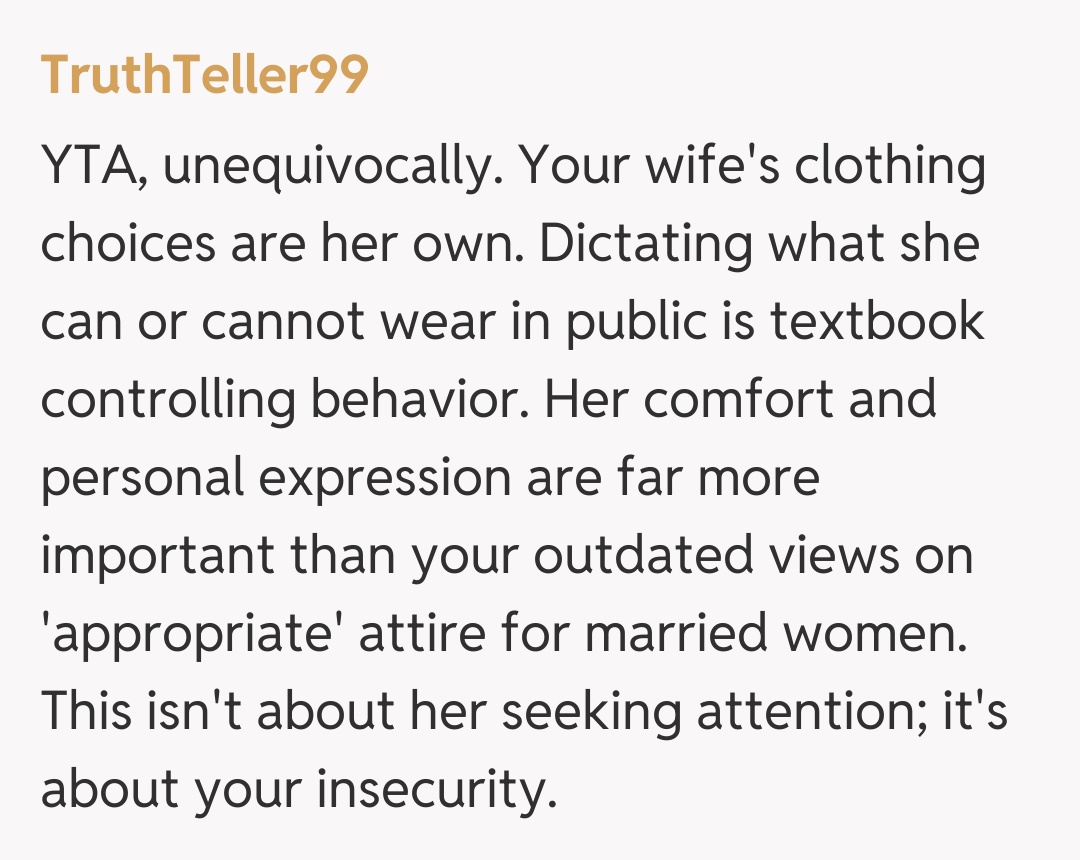
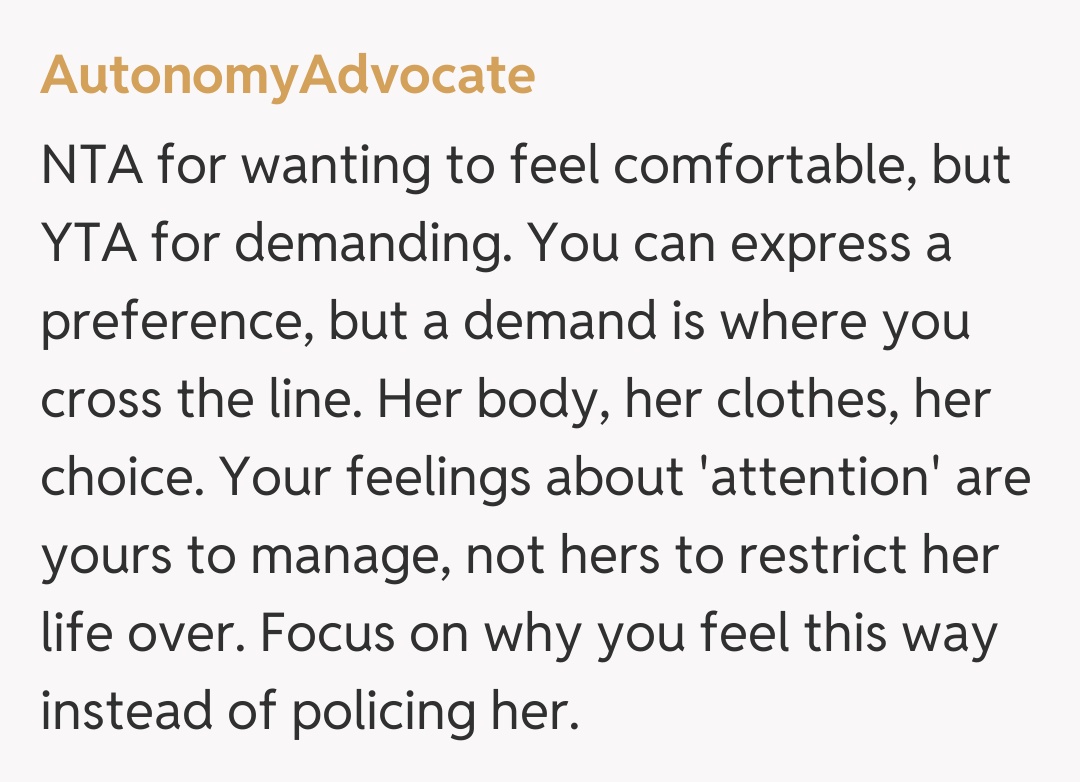
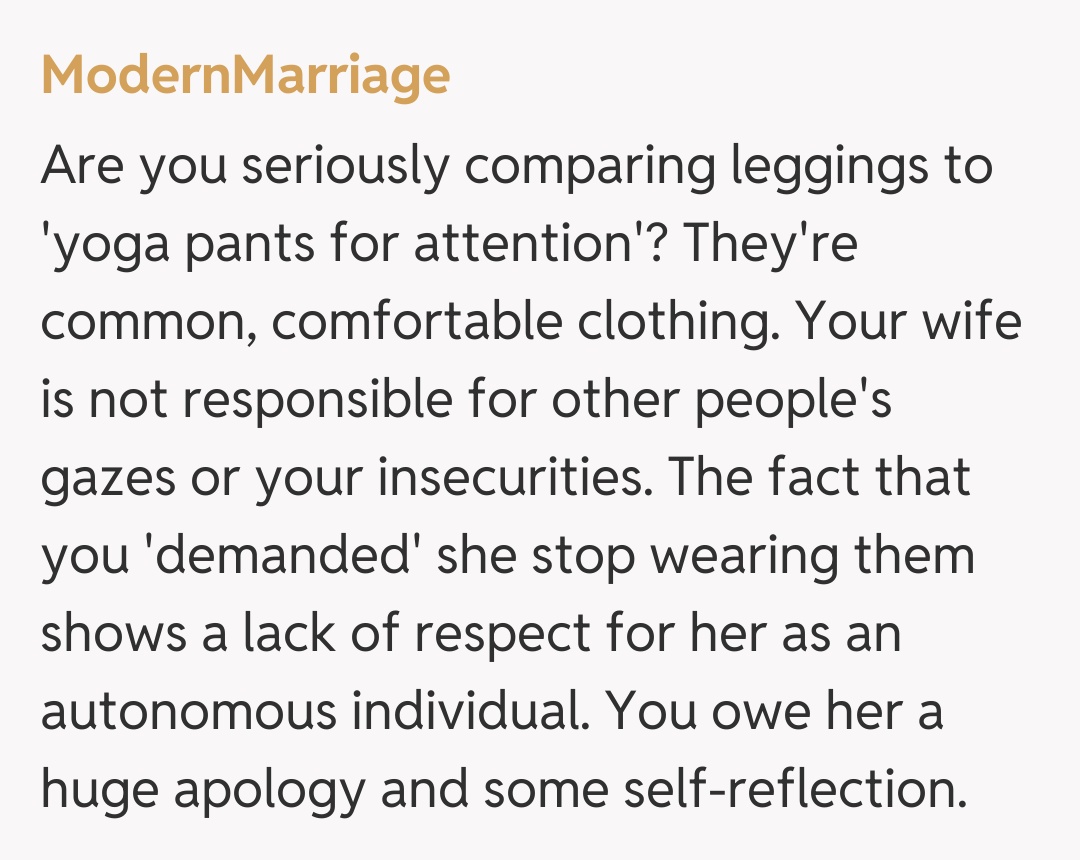
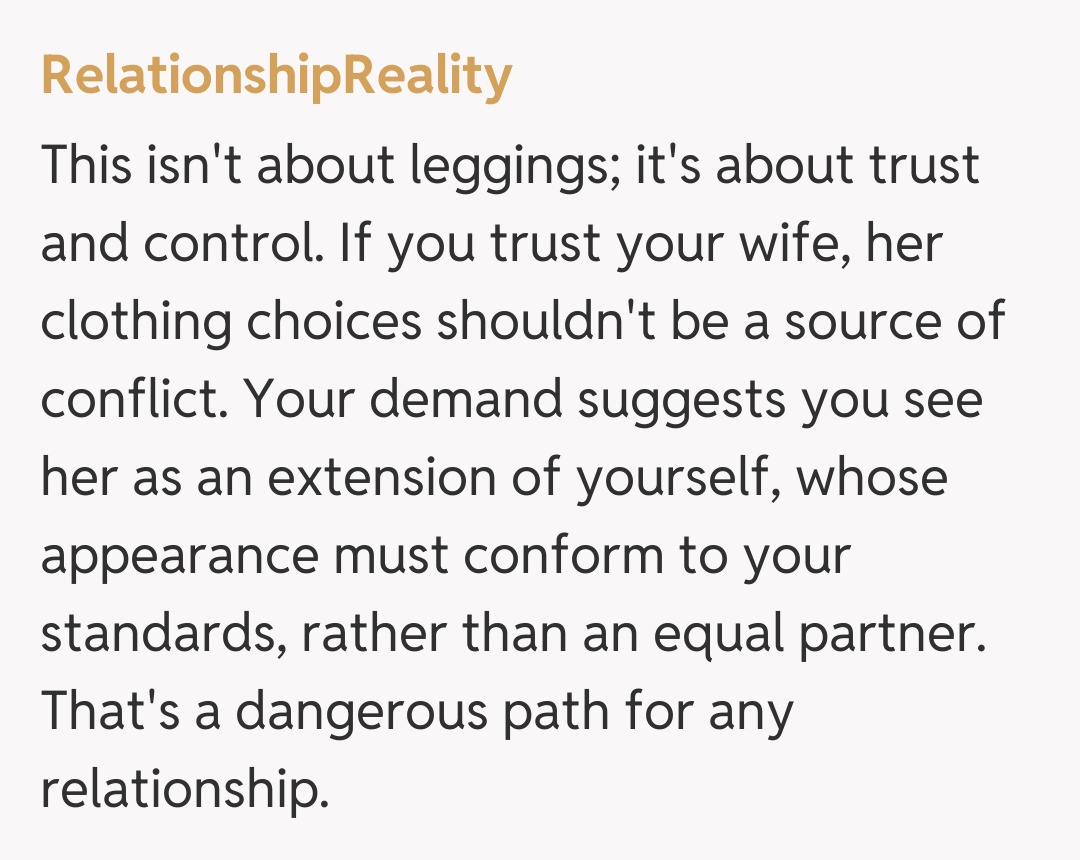
The internet has weighed in, and the consensus is overwhelmingly clear. Many commenters highlighted the core issue of control and the problematic nature of dictating a partner's clothing choices. They pointed out that an individual's attire is a personal decision and that discomfort stemming from perceived 'attention' often reflects the partner's own insecurity rather than any fault in the wearer. The overwhelming sentiment suggests the poster deeply overstepped.
Several users empathized with the wife's position, underscoring the importance of autonomy and respect within a marriage. They emphasized that a healthy relationship is built on trust, not on attempts to police a partner's appearance or dictate their choices to assuage one's own anxieties. The comments frequently advised the original poster to reflect on his own insecurities rather than imposing them on his wife.
This AITA post serves as a stark reminder that in any partnership, respect for individual autonomy is paramount. While open communication about feelings and preferences is healthy, demanding a partner adhere to your personal standards, especially regarding appearance, can be deeply damaging. Relationships thrive on trust and mutual respect, not on control or insecurity projected onto another. Let's hope the original poster takes the overwhelming feedback to heart and focuses on introspection rather than enforcing outdated expectations.