AITA for demanding my wife stops dyeing her hair because the grey roots are showing and it makes her look old and unattractive to me?
It's a tale as old as time, or at least as old as hair dye: the societal pressure on women to maintain a youthful appearance, often in stark contrast to the perceived 'distinguished' look of grey-haired men. This dynamic often plays out in relationships, where personal choices about aging and aesthetics become a point of contention. Today's AITA story throws a harsh spotlight on this very issue, pitting a husband's preferences against his wife's autonomy.
Our Original Poster (OP) has sparked a firestorm by not just *suggesting* but 'demanding' his wife alter her hair routine because her visible grey roots make her look 'old and unattractive' to him. Such a blunt declaration raises immediate questions about respect, control, and the emotional toll such comments can inflict. Let's dive into the story and see if OP truly is the a*shole, or if he's merely expressing an uncomfortable truth.

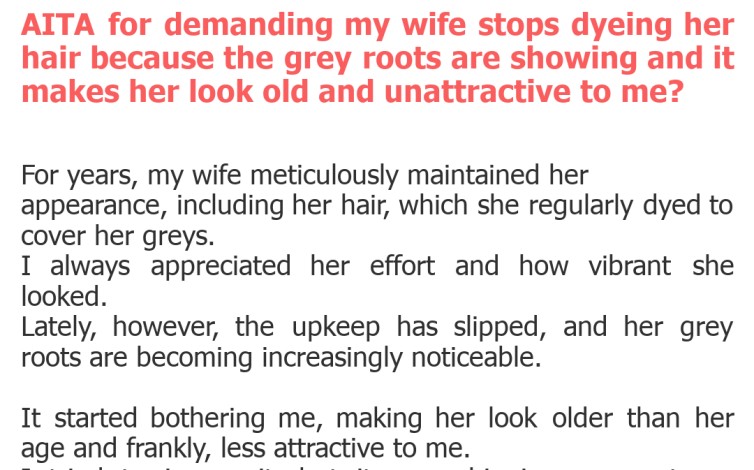
"AITA for demanding my wife stops dyeing her hair because the grey roots are showing and it makes her look old and unattractive to me?"
My wife has always been very careful about her appearance, and I've always admired that about her. For as long as I've known her, she's dyed her hair to cover any grey, and she's always done a fantastic job of keeping it looking fresh and vibrant.
Lately, though, things have changed. I've noticed that her grey roots are showing much more frequently and for longer periods. It's not just a little bit; it's quite prominent. And, to be honest, it's really starting to bother me. I feel like it makes her look significantly older than she is, and I've found myself feeling less attracted to her because of it.
I tried to ignore it for a while, telling myself it's just hair, but the feeling lingered and grew. Eventually, I decided I needed to be honest with her. I sat her down and explained that while I love her, her visible grey roots were making her look old and, frankly, unattractive to me.
I suggested that she either commit to regular touch-ups, like she used to, or stop dyeing it altogether and embrace her natural grey. My point was that the 'in-between' stage, with obvious roots, was the problem, not necessarily the grey itself. I thought I was being direct and offering a solution.
Her reaction was not at all what I expected. She became very upset, almost tearful. She accused me of being superficial, controlling, and making her feel insecure and inadequate. She said her body, and her hair, are her own and I have no right to 'demand' anything about her appearance. She called me an a*shole and walked away.
Now she's barely speaking to me, and I'm genuinely confused. I feel like I was just expressing my honest feelings and preferences as her husband, which I believe is important for intimacy and attraction in a marriage. AITA for telling her how I feel?
On one hand, the core principle of open communication in a marriage cannot be overstated. Partners are often encouraged to share their feelings, even uncomfortable ones, to foster mutual understanding and growth. From OP's perspective, he might genuinely feel a shift in attraction due to a change in his wife's appearance and believes expressing this directly is the honest, albeit difficult, approach, rather than letting unspoken resentment simmer. He might see it as communicating a personal preference.
However, the line between expressing a preference and making a "demand" is a crucial one, especially when it concerns a partner's deeply personal appearance. OP's phrasing, specifically calling his wife 'old and unattractive,' can be profoundly damaging to her self-esteem and sense of worth. Such language often feels less like a loving concern and more like criticism or an attempt to exert control, which can erode trust and intimacy within the relationship.
Furthermore, we must consider the immense societal pressure women already face to maintain a youthful image, often with little acknowledgement of the effort, time, and financial cost involved. Dealing with grey hair is a personal journey, and OP's wife might be struggling with the upkeep, or simply feeling tired of the constant expectation. His blunt comments only serve to amplify this burden, adding insecurity to an already sensitive area of her life.
Ultimately, a healthy relationship thrives on mutual respect and appreciation that extends far beyond superficial physical attributes. While physical attraction is a component, reducing a partner's value or attractiveness to something as specific as visible hair roots can be incredibly alienating. It risks making the wife feel objectified, as if her primary role is to maintain an aesthetic for her husband's pleasure, rather than being cherished for who she is entirely.
The Root of the Problem: Readers Weigh In on Hair Dye Demands!
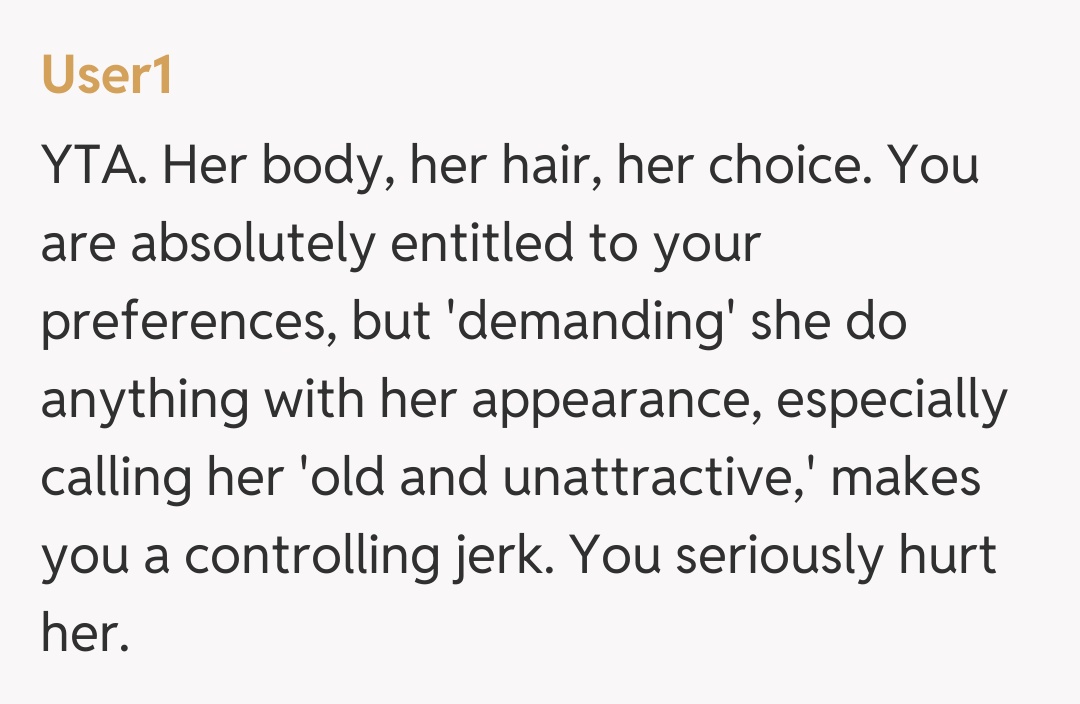
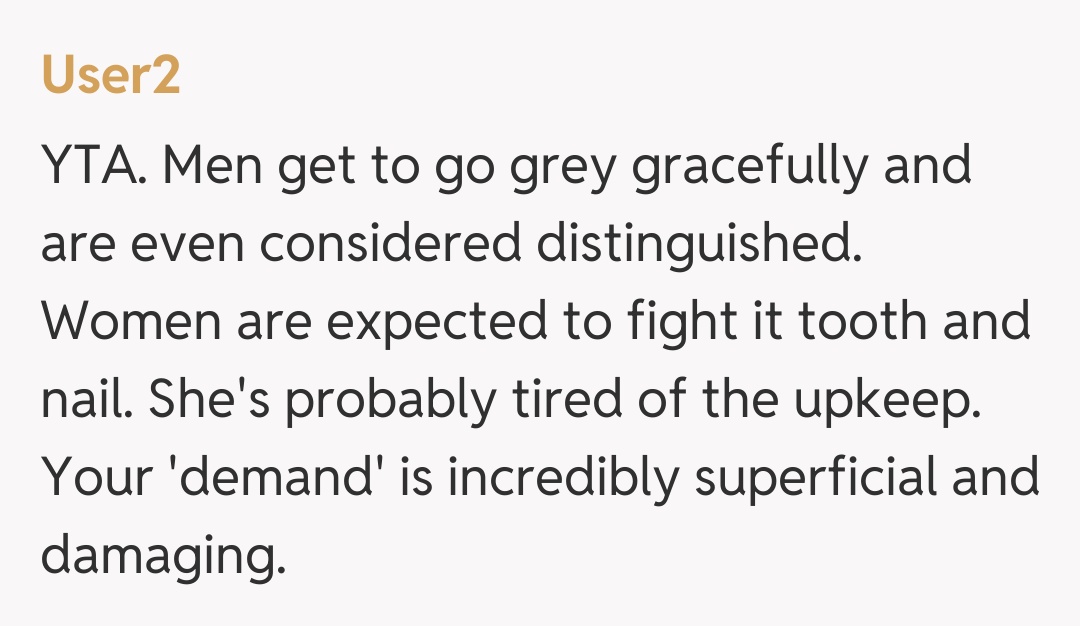
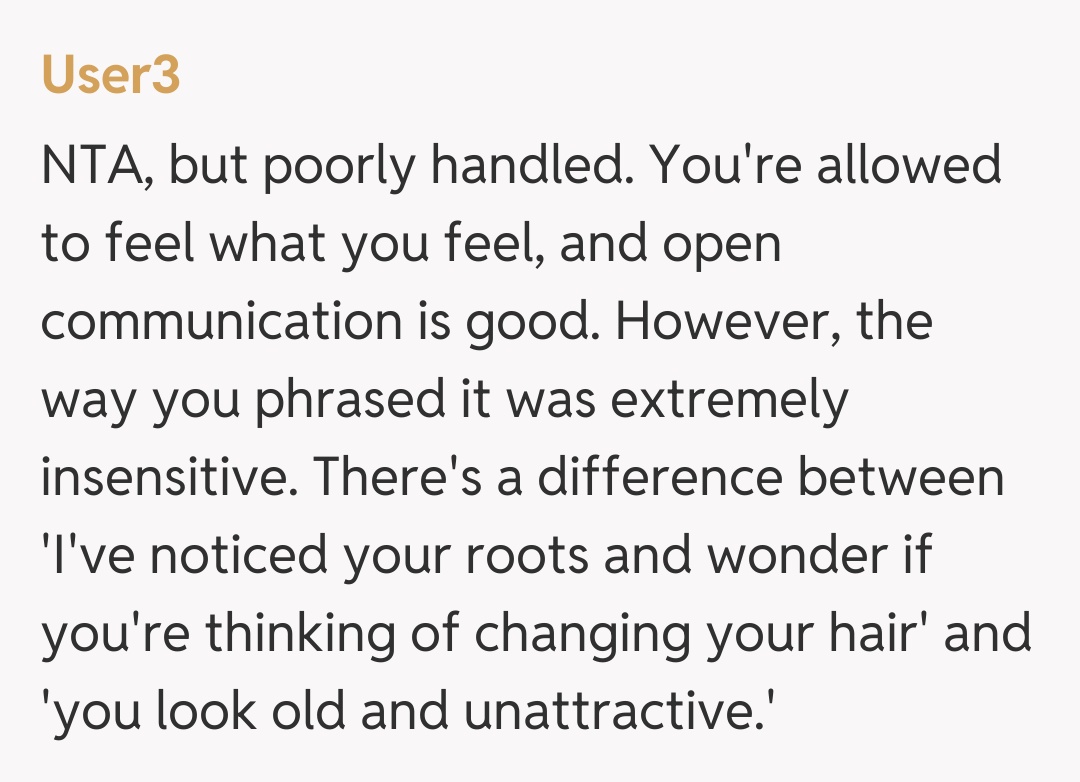
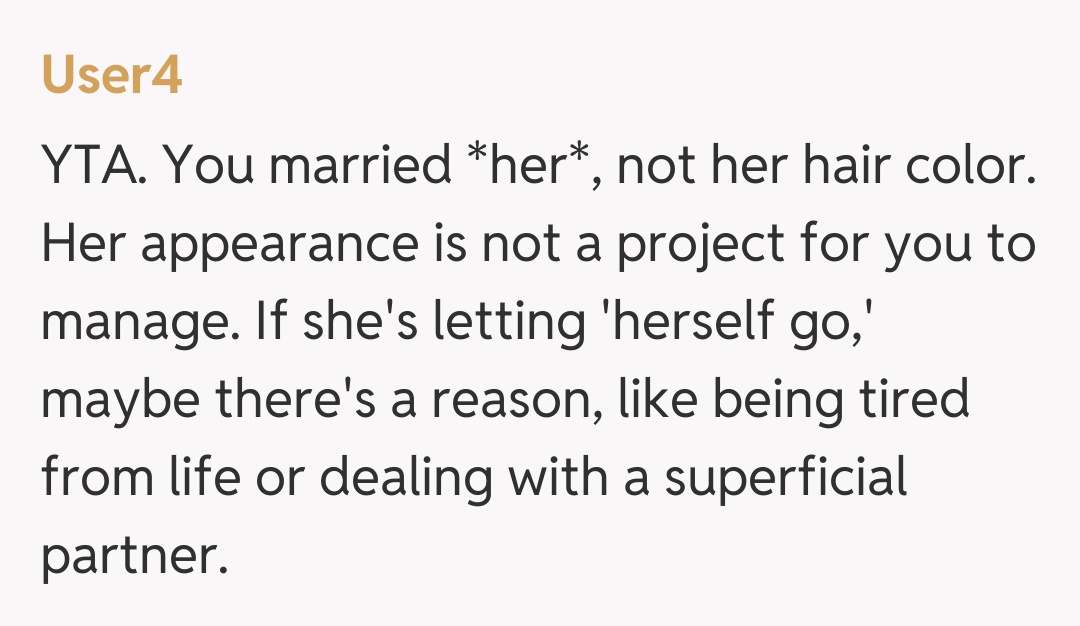
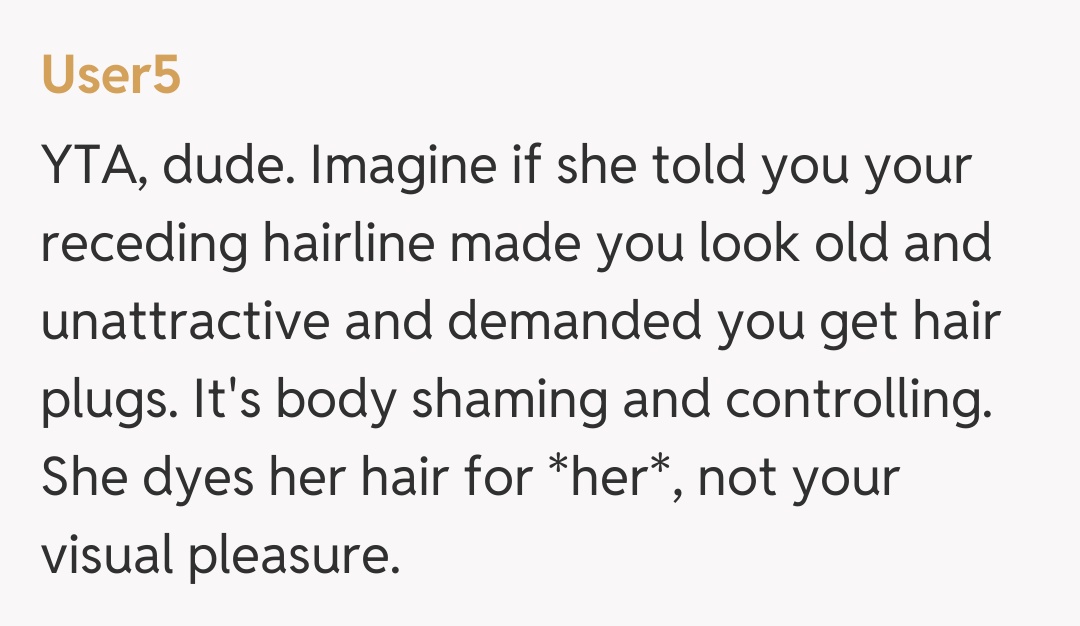
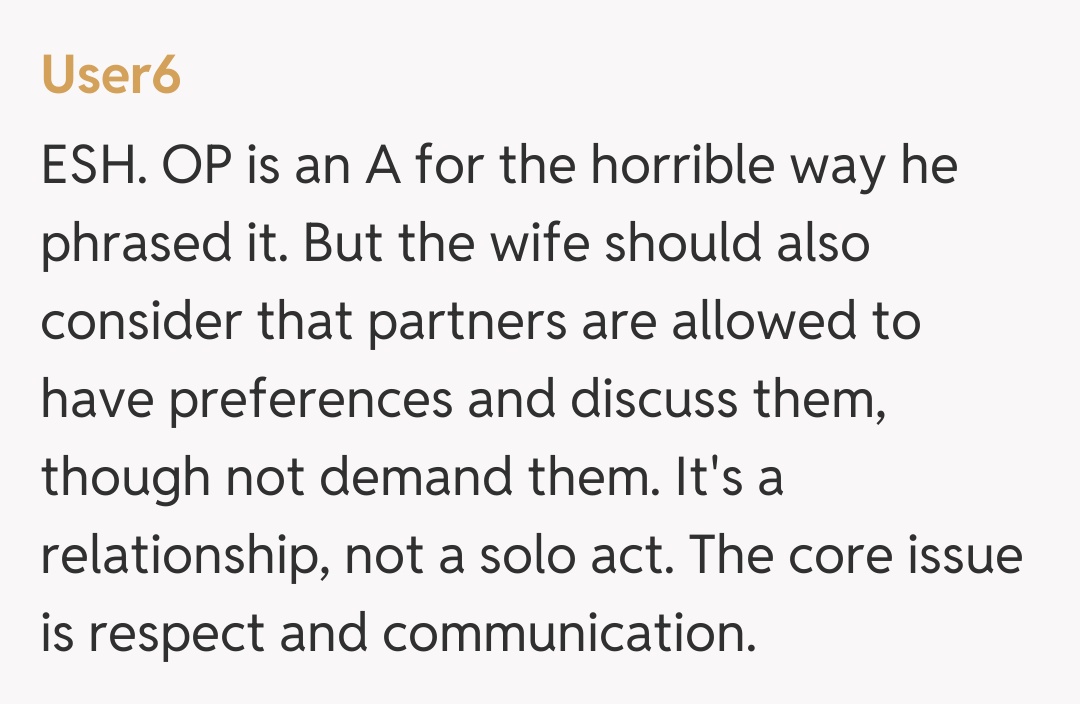
The comment section exploded with passionate responses, with an overwhelming consensus that OP is firmly in the wrong. Readers highlighted the pervasive double standard women endure regarding aging and beauty, starkly contrasting it with how grey hair is often celebrated or simply accepted on men. The general sentiment strongly condemned OP's 'demanding' tone and the deeply hurtful language he used to describe his wife's appearance.
A consistent theme running through the comments was the devastating impact such a conversation could have on the wife's self-esteem and the inherently controlling nature of OP's request. Many users underscored the importance of body autonomy, stressing that a partner's personal choices about their appearance should always be respected, even if they don't align with a spouse's preferences. Sympathy for the wife was palpable across the board.
This story serves as a stark reminder of the delicate balance between expressing personal preferences and upholding a partner's autonomy and self-worth. While physical attraction is undoubtedly a valid component of any relationship, the method and tone of communication are paramount. Ultimately, genuine love and respect must extend beyond superficial appearances, cultivating an environment where both partners feel cherished, secure, and free to navigate their personal journey of aging and self-expression, grey roots and all.