AITA for confessing to my fiancé that I’ve been saving money in a secret account in case he turns out to be “another disappointment like my ex”?
Oh, the complexities of love and money! This week's AITA story dives deep into the thorny issue of financial transparency, or lack thereof, in a committed relationship. It's a topic that can make or break a partnership, especially when past heartbreaks cast long shadows over present happiness. Our original poster (OP) brings a tale that many can relate to, where self-preservation clashes with the ideals of trust and openness.
We all carry baggage from previous relationships, and sometimes, that baggage includes painful lessons about vulnerability. When those lessons involve financial betrayal, it's natural to build walls, even with someone new who seems perfectly trustworthy. This story asks us to weigh the OP's understandable need for a safety net against the potential damage that secrecy can inflict on a burgeoning marriage. Get ready for a deeply nuanced discussion.

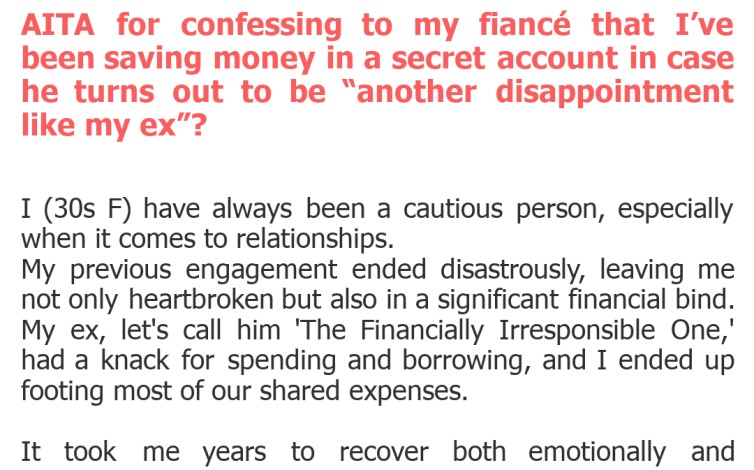
"AITA for confessing to my fiancé that I’ve been saving money in a secret account in case he turns out to be “another disappointment like my ex”?"
I (30s F) have always been a cautious person, especially when it comes to relationships. My previous engagement ended disastrously, leaving me not only heartbroken but also in a significant financial bind. My ex, let's call him 'The Financially Irresponsible One,' had a knack for spending and borrowing, and I ended up footing most of our shared expenses. It took me years to recover both emotionally and financially from that ordeal. When I met my current partner (30s M), I was head over heels, but a tiny, cautious part of me remained guarded. We've been together for three years and engaged for six months, planning our wedding for next spring.
He's wonderful, kind, stable, and everything I ever wanted. However, the ghost of my past still haunts me. About a year into our relationship, I started a separate, secret savings account. It was small at first, just a little emergency fund, a 'just in case' pot. I told myself it was for peace of mind, a safety net should history repeat itself. I diligently contributed to it, a small amount from each paycheck, never impacting our shared financial goals or joint savings for the wedding or a future home. This account grew to a significant sum, enough to provide a cushion for me for several months if things went south. The plan was never to use it unless absolutely necessary. But as our wedding date loomed closer, the guilt started to eat at me. I love him deeply, and the secrecy felt like a betrayal. I decided it was time to come clean, to be fully transparent before we tied the knot. I sat him down last night, heart pounding, and confessed everything.
I explained my past, the trauma I endured, and how this account was purely a self-preservation mechanism, not a reflection of a lack of trust in him personally. I stressed that I truly believe he's different, but my past experiences made me instinctively guard myself. I apologized profusely for the secrecy, emphasizing that telling him now, before our marriage, was proof of my commitment to honesty.
His reaction was devastating. He looked utterly crushed. He said he understood my past, but that keeping such a significant secret, and essentially planning for our potential failure, felt like a deep betrayal. He felt compared to my ex, pre-judged as someone who would inevitably disappoint me. He asked how he could trust me after this, questioning if I truly see him as his own person or just another potential 'ex'. He feels deeply hurt, and now our wedding plans are on hold. He says he needs time to think if he can truly marry someone who prepared for their relationship to fail. AITA?
The original poster (OP) has certainly found herself in a challenging ethical quandary, and it's easy to see both sides of this coin. On one hand, her past experience with financial hardship and betrayal is incredibly valid. It’s a powerful motivator for self-protection, and creating a safety net after such a trauma can be a natural, almost instinctual response to prevent future pain. Her desire for financial independence and security is commendable, especially for anyone who has been left vulnerable by a previous partner.
However, the crucial element here is the secrecy. While having individual accounts is perfectly healthy in a relationship, especially with pre-nuptial agreements becoming more common, keeping a *secret* account specifically as an escape fund introduces a layer of distrust. It implies a lack of faith in the current partner, essentially planning for the worst-case scenario before the best-case has even had a chance to fully develop. This preemptive exit strategy, even if born of fear, fundamentally undermines the foundation of mutual trust and commitment required for marriage.
From the fiancé's perspective, this revelation must feel like a profound blow. He's being measured against the standard of a previous, disappointing partner, and the secret fund suggests he's already failed a test he didn't even know he was taking. This isn't just about money; it's about being seen as a potential repeat of someone else's mistakes. It's difficult to move forward with wedding plans when one partner has been secretly preparing for the relationship's dissolution.
Ultimately, while OP's motivations stem from a place of understandable fear and self-preservation, the method chosen has created a significant breach of trust. Confessing now, before marriage, was the right step, but it doesn't erase the hurt or the implicit message of doubt. This situation highlights the critical importance of open communication about finances and past traumas early in a serious relationship, to avoid such devastating revelations down the line.
The Internet Weighs In: Trust, Trauma, and Tangled Finances!
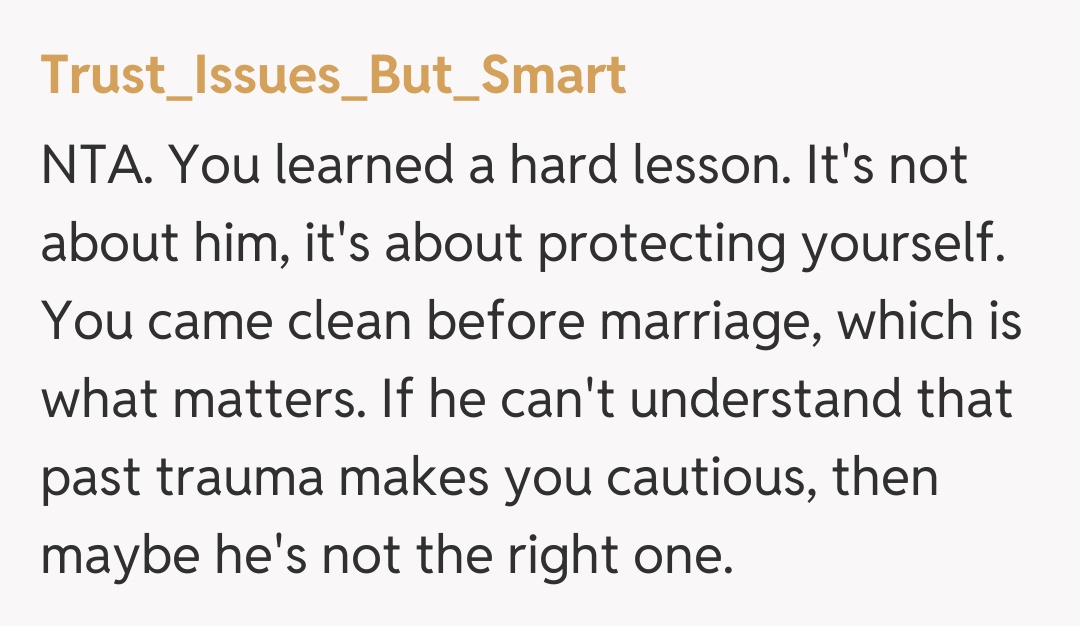
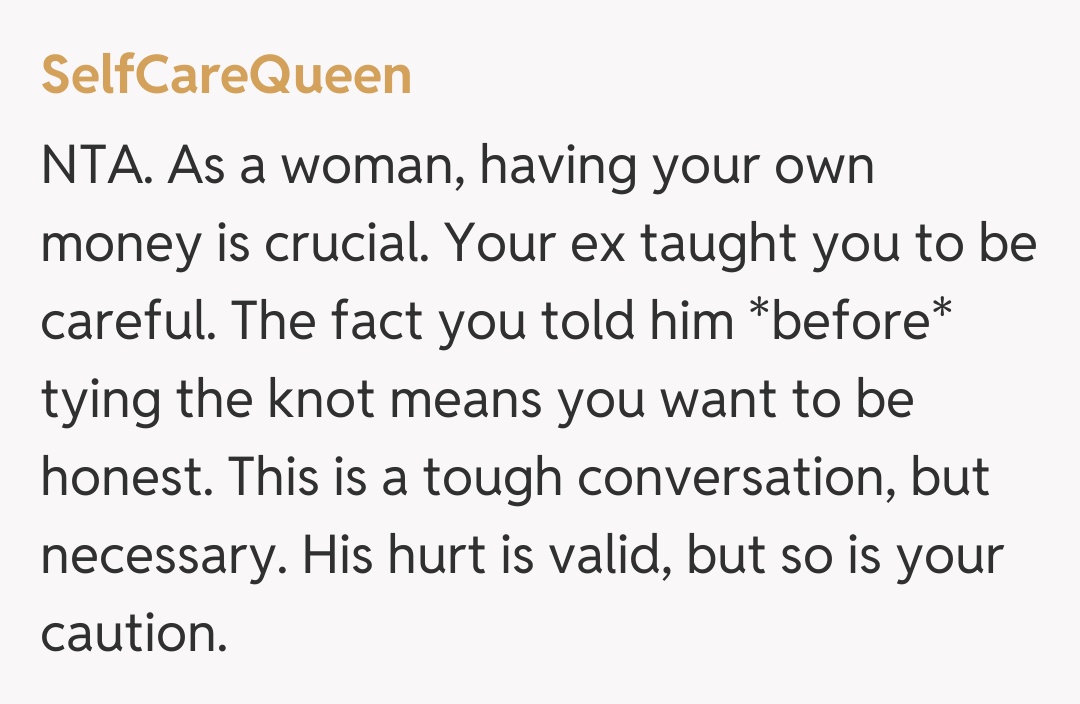
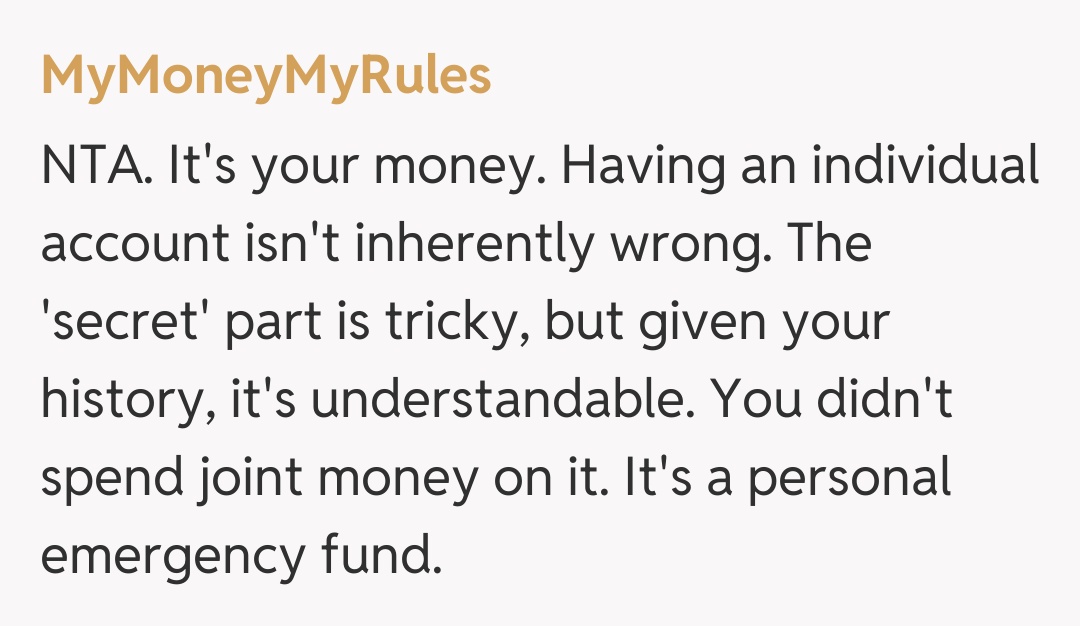
The comments section on this story was, as expected, a whirlwind of strong opinions! Many users empathized deeply with OP's past trauma, arguing that anyone who's been financially burned has a right to protect themselves. They highlighted the importance of women having independent financial security, especially in relationships where they might otherwise be vulnerable. Several pointed out that OP's intention wasn't to deceive, but to safeguard her future, which they saw as a smart, albeit painful, move.
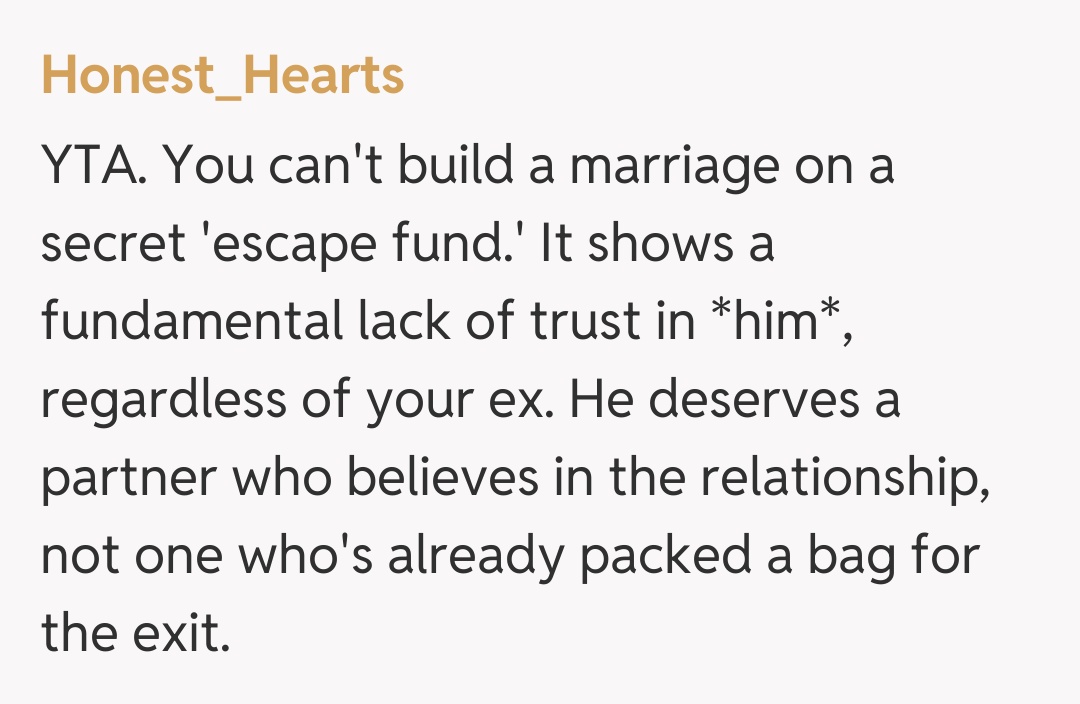
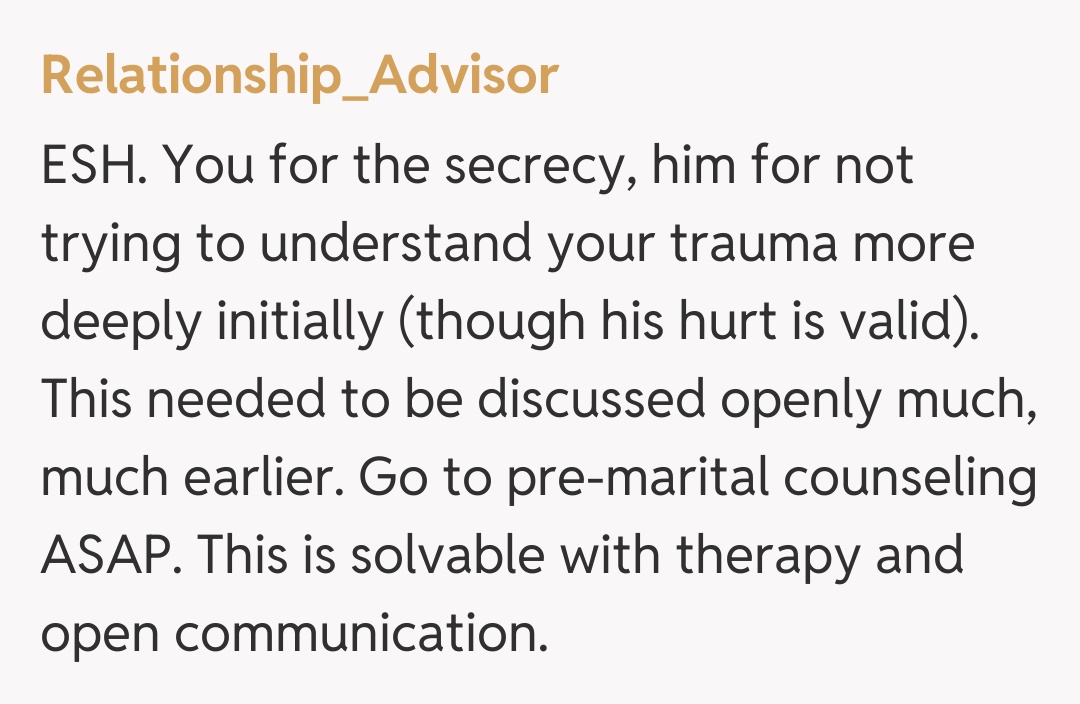
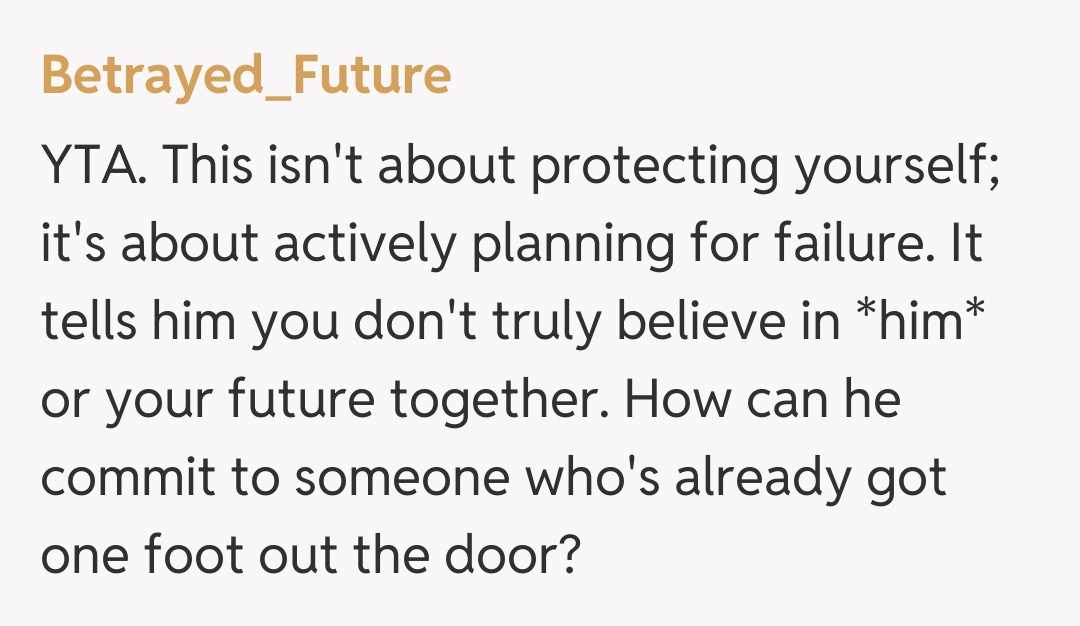
On the flip side, a significant portion of the community sided with the fiancé, emphasizing that secrecy fundamentally erodes trust. They argued that while OP's fears are valid, the execution of her 'safety net' was deeply unfair to her current partner, who is being unjustly compared to an ex. The consensus among these commenters was that marriage requires complete transparency, and this secret, even with good intentions, put a giant question mark over the entire relationship. Many suggested couples therapy as a crucial next step.
This AITA story is a stark reminder that while past experiences shape us, how we integrate those lessons into new relationships is critical. The painful confession, while perhaps necessary, has undeniably shaken the foundation of trust. Moving forward, the OP and her fiancé face a significant hurdle requiring immense honesty, empathy, and potentially professional guidance to navigate. Rebuilding trust will not be easy, but open communication about fears and expectations, alongside a genuine commitment to their future, will be essential if they hope to overcome this challenge and build a truly transparent and secure partnership.