AITA for breaking up with my fiancé because he wants to keep his last name hyphenated and ‘that makes him look weak’?
Welcome back, drama lovers! Today we're diving into a thorny issue that touches on identity, tradition, and perhaps, a dash of ego. What's in a name? Apparently, everything, when it comes to marriage and family expectations. This story features a couple whose engagement hits the rocks over something seemingly trivial but deeply symbolic: a hyphen.\nOur poster is grappling with a breakup initiated by her, all because her fiancé insisted on keeping his last name hyphenated after marriage. She felt this made him "look weak," a statement that undoubtedly stung. Was her reaction justified, or did she let traditional views sabotage a perfectly good relationship? Let's unpack this!

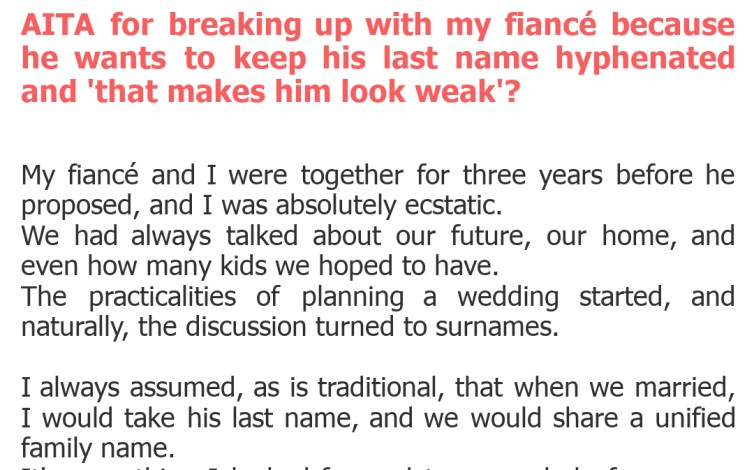
"AITA for breaking up with my fiancé because he wants to keep his last name hyphenated and 'that makes him look weak'?"
My fiancé and I were together for three years before he proposed, and I was absolutely ecstatic. We had always talked about our future, our home, and even how many kids we hoped to have. The practicalities of planning a wedding started, and naturally, the discussion turned to surnames. I always assumed, as is traditional, that when we married, I would take his last name, and we would share a unified family name. It's something I looked forward to, a symbol of our new beginning and shared identity.\nHowever, when I brought it up, he casually mentioned that he planned to keep his last name hyphenated, adding his mother's maiden name to his father's surname. I was completely blindsided. We'd never discussed this before. I asked him why, and he explained it was important to him to honor his mother's side of the family, and that he'd always felt a connection to her lineage. He thought it was a modern, inclusive way to approach things. My heart sank. I tried to explain my discomfort, saying that a long, hyphenated name felt… cumbersome. But deeper than that, I felt it projected an image I wasn't comfortable with. To me, it didn't feel like a strong, unified family identity. I expressed that it made him seem a little indecisive, perhaps even weak.\nThat word, "weak," changed everything. He became visibly upset, saying I was judging his heritage and questioning his masculinity. I tried to backtrack, explaining it wasn't about him personally, but about the societal perception and the image of our future family. I envisioned a solid, singular surname for us and our children, a clear statement of our union. He argued that his choice *was* a clear statement – a statement of pride in his full identity. He pointed out that many people hyphenate, and it's perfectly normal.\nThe argument escalated quickly. He said he wouldn't compromise on something so personal and fundamental to his identity. I, feeling strongly that this was a deal-breaker for my vision of our family, gave him an ultimatum: either he drops the hyphenation, or we couldn't get married. He refused, saying he wouldn't be bullied into giving up part of himself. So, I broke off the engagement. Now, I'm left wondering if I overreacted. Was my demand unreasonable? Did I ruin a good thing over a name, or was this a fundamental incompatibility I needed to address?
The debate over surnames in marriage is a classic, but this situation adds a fiery twist with the "weak" accusation. Names are profoundly personal; they carry history, identity, and future aspirations. For some, a shared, singular surname symbolizes unity and tradition, while for others, a hyphenated name can represent a rich tapestry of heritage and modern egalitarianism.\nOur poster's desire for a traditional, unified family name is understandable. Many envision marriage as a melding of two lives into one, and a single surname often serves as a powerful emblem of that new entity. Her discomfort with hyphenation from a practical standpoint is also valid, as long names can sometimes be inconvenient. However, labeling her fiancé's personal choice as "weak" is where the situation takes a sharp turn.\nOn the other side, her fiancé's wish to honor both sides of his lineage through hyphenation is equally valid and increasingly common. It speaks to a pride in his roots and a desire to acknowledge his mother's family, which often gets erased in traditional naming conventions. His choice is not about weakness, but about a robust sense of self and respect for his heritage.\nThe crux of the conflict lies in a fundamental clash of values and perceptions rather than just a name. The "weakness" comment, regardless of intent, likely struck a deep chord, transforming a discussion about tradition into an attack on his character. It highlights a significant communication breakdown and differing expectations about personal identity within a marital union. Is it fair to demand someone discard a part of their identity for a traditional ideal?
The Name Game: Is Breaking Up Over a Hyphen Justified?
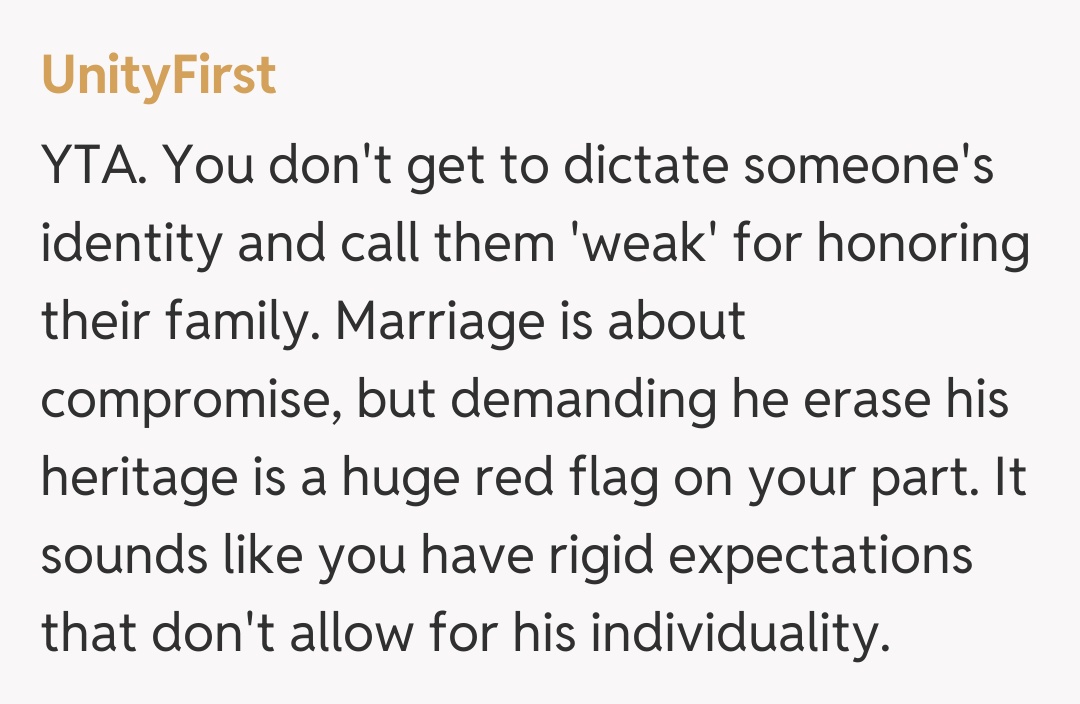
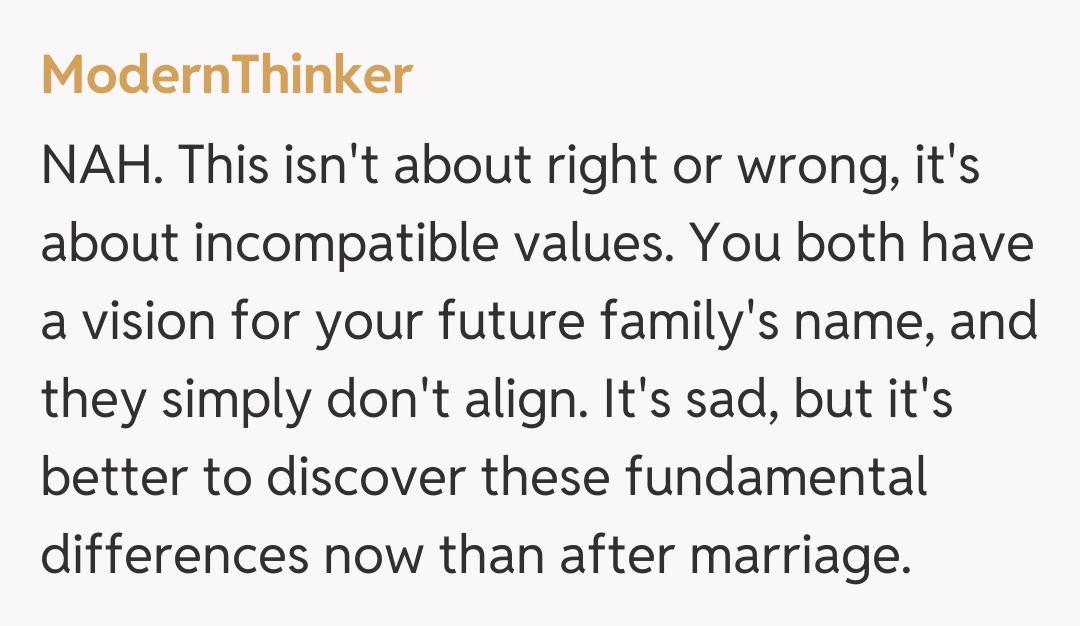
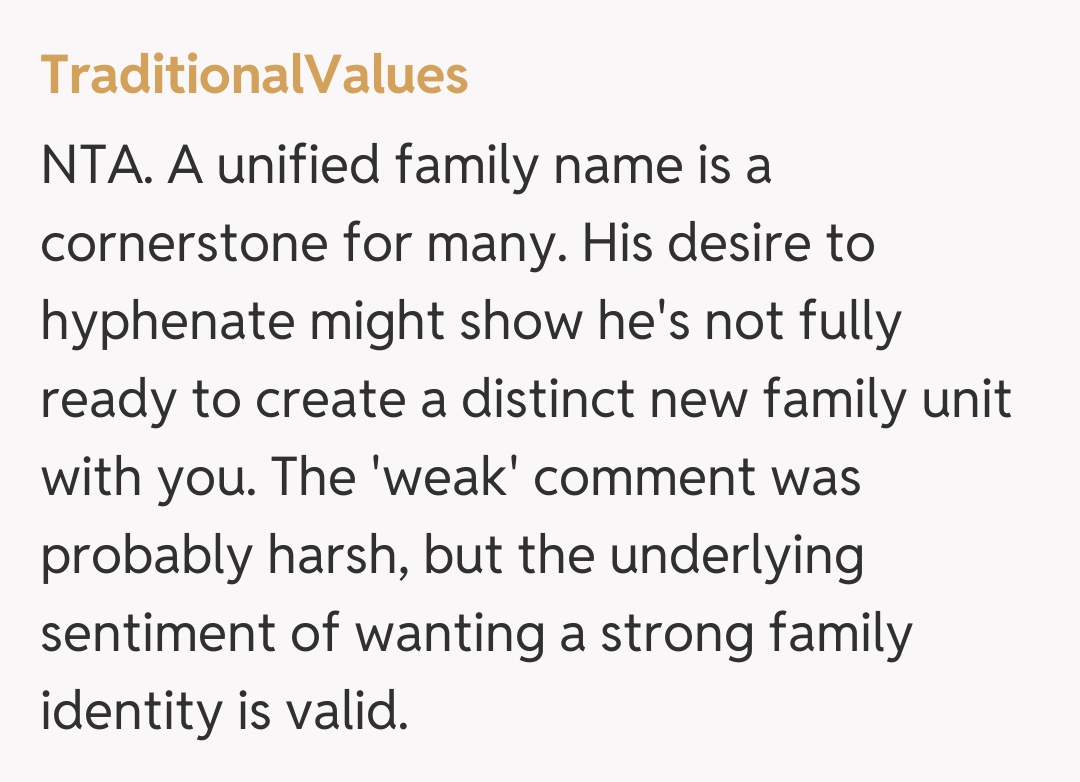
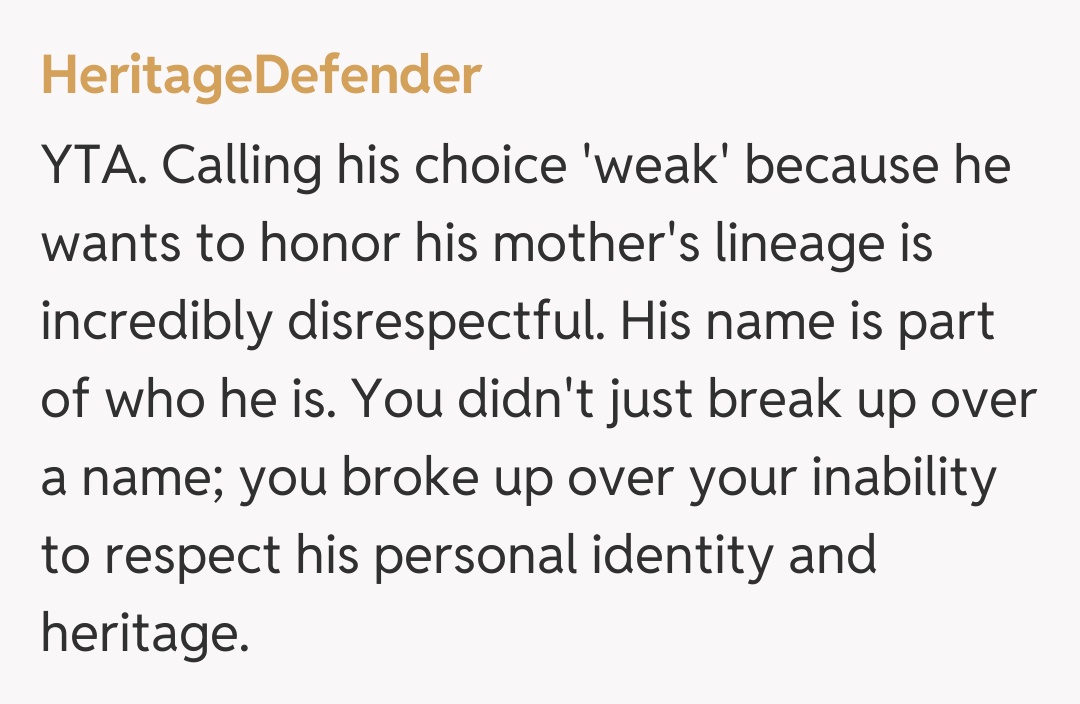
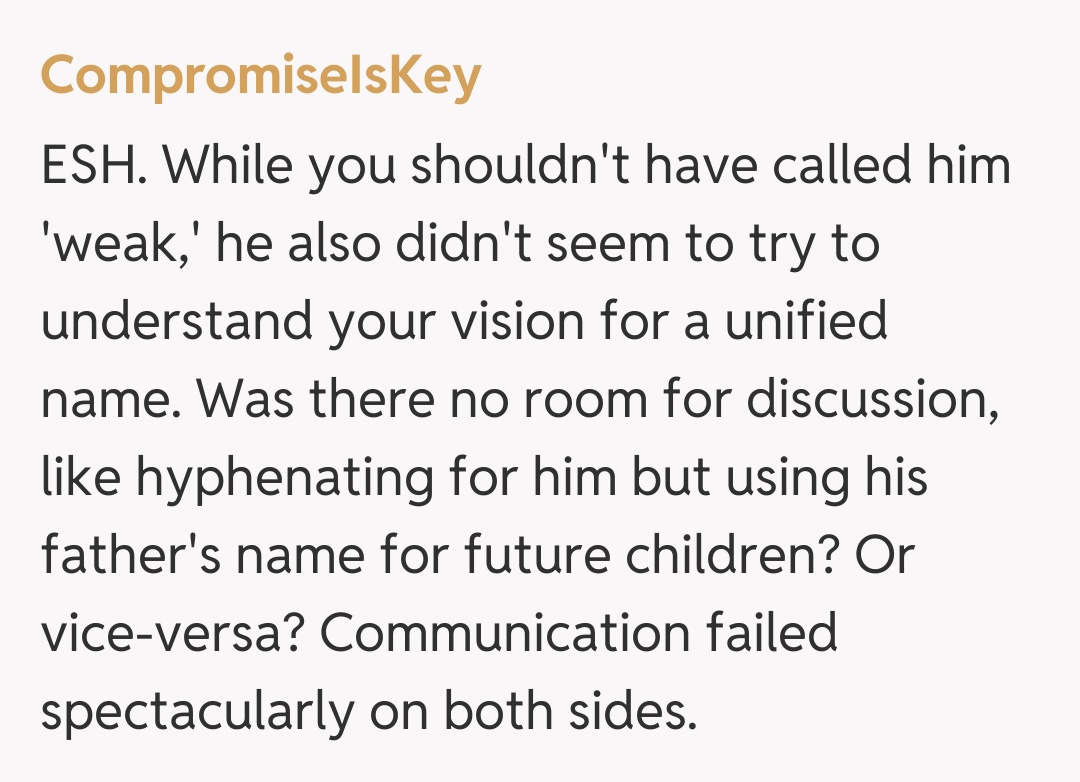
The comments section on this one was absolutely buzzing! It's clear that the 'name game' touches a nerve for many, with strong opinions on both sides. Many readers quickly called out the poster for her use of the word "weak," viewing it as a harsh and unfair judgment of her fiancé's personal identity and heritage. They felt it indicated a deeper issue of control or traditional gender roles.\nHowever, a significant number of commenters sympathized with the poster, agreeing that a unified family name is crucial for their vision of marriage. Some saw the fiancé's insistence as potentially signaling a lack of commitment to forming a distinct new family unit. This story definitely sparked a debate between those valuing tradition and those embracing modern, individualized approaches to family identity.
This AITA story serves as a stark reminder that even seemingly small details can unravel an entire relationship when deeply held values are involved. The emotional weight attached to names, heritage, and identity is immense. While the "weakness" comment undoubtedly caused irreparable damage, it's clear there was a profound disconnect in their visions for a shared future. Ultimately, this isn't just about a hyphen; it's about what that hyphen represents to each person, and whether two people can truly bridge such a significant gap in their fundamental perspectives on family and self.