AITA for telling my wife that her cooking is so bad I’d rather eat out every night, and that’s why I’m never home for dinner?
Oh boy, do we have a spicy one for you today! This AITA post dives headfirst into one of the most common domestic disagreements: food. But it's not just about a picky eater or a bad recipe; this story takes a direct, brutal approach to marital communication, or lack thereof. Our poster, let's call him 'The Diner-Outer,' laid it all on the table, leaving his partner reeling.
It's a classic tale of unspoken resentments boiling over, mixed with a dash of culinary criticism. Was 'The Diner-Outer' justified in his harsh honesty, or did he cross a line into cruel territory? We're about to unpack a situation that many couples might find themselves in, albeit usually with a bit more tact. Grab your popcorn, because this one's going to spark some serious debate!

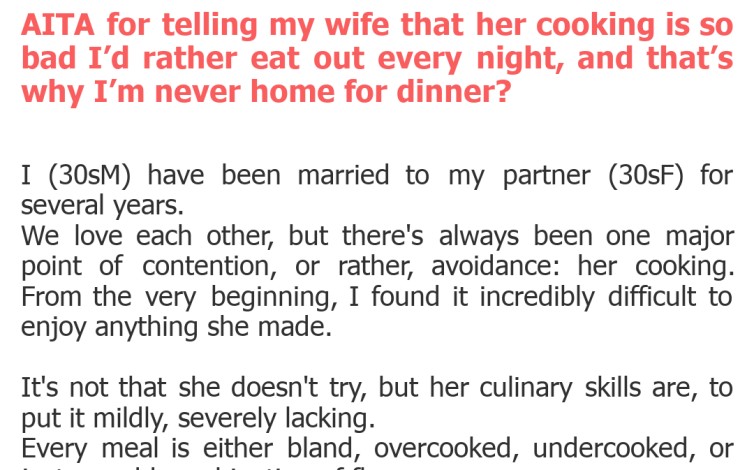
"AITA for telling my wife that her cooking is so bad I’d rather eat out every night, and that’s why I’m never home for dinner?"
I (30sM) have been married to my partner (30sF) for several years. We love each other, but there's always been one major point of contention, or rather, avoidance: her cooking. From the very beginning, I found it incredibly difficult to enjoy anything she made. It's not that she doesn't try, but her culinary skills are, to put it mildly, severely lacking. Every meal is either bland, overcooked, undercooked, or just an odd combination of flavors.
For a long time, I've avoided dinner at home. I started working late, meeting friends for a quick bite, or just grabbing something on my way back. My partner would ask why I wasn't home for dinner, and I'd always give vague excuses about work or needing to decompress. This went on for months, maybe even a couple of years. She occasionally expressed sadness that we never ate together, and I felt guilty, but not enough to endure another one of her meals.
The breaking point came last week when she confronted me directly, saying she felt neglected and wanted to know the real reason I avoided dinner. She was genuinely upset, saying she missed our evenings together. I knew I couldn't keep lying. So, I took a deep breath and told her. I said, "Look, I love you, but your cooking is genuinely bad. So bad that I honestly would rather eat out every single night than have another one of your home-cooked meals. That's why I'm never home for dinner."
Her face just crumpled. She got quiet, then her eyes welled up. She accused me of being cruel and insensitive, saying I could have said it differently, or better yet, offered to cook myself or help her learn. She pointed out all the times she tried to make my favorite dishes and how much effort she put in, despite her struggles. She ended up storming off, and now she's barely speaking to me, sleeping in the guest room. She says I've deeply hurt her and that I'm a complete jerk for how I handled it. AITA?
Let's be honest, this is a tricky situation because while the original poster's feelings about the food might be valid, the delivery was definitely lacking. Avoiding the issue for years and then dropping such a harsh truth bomb, especially when his partner was vulnerable and seeking connection, wasn't the most empathetic approach. Relationships thrive on communication, and withholding the actual reason for his absence created a deeper problem than just bad cooking.
On one hand, the poster has a right to enjoy his meals. No one should be forced to eat food they genuinely dislike, especially not night after night. However, there are a multitude of ways to address this issue without resorting to such blunt, cutting honesty. He could have offered to cook more often, suggested cooking classes together, or gently provided feedback earlier on, focusing on improvement rather than outright condemnation.
The partner's feelings of neglect and hurt are completely understandable. For years, she likely believed his excuses, perhaps even internalizing them as a reflection of his general disinterest, rather than specific culinary dissatisfaction. To then be hit with the truth in such a stark manner, after putting in effort, is bound to feel like a betrayal and a personal attack, undermining her confidence and effort.
Ultimately, while honesty is important, the timing and tone matter immensely. The poster prioritized his comfort over his partner's feelings for a prolonged period, and when forced to confront it, chose a path that inflicted maximum pain. This wasn't just about food; it was about respect, communication, and emotional intelligence in a long-term relationship.
The Verdict Is In: Was He Crunchy or Just Plain Cruel?
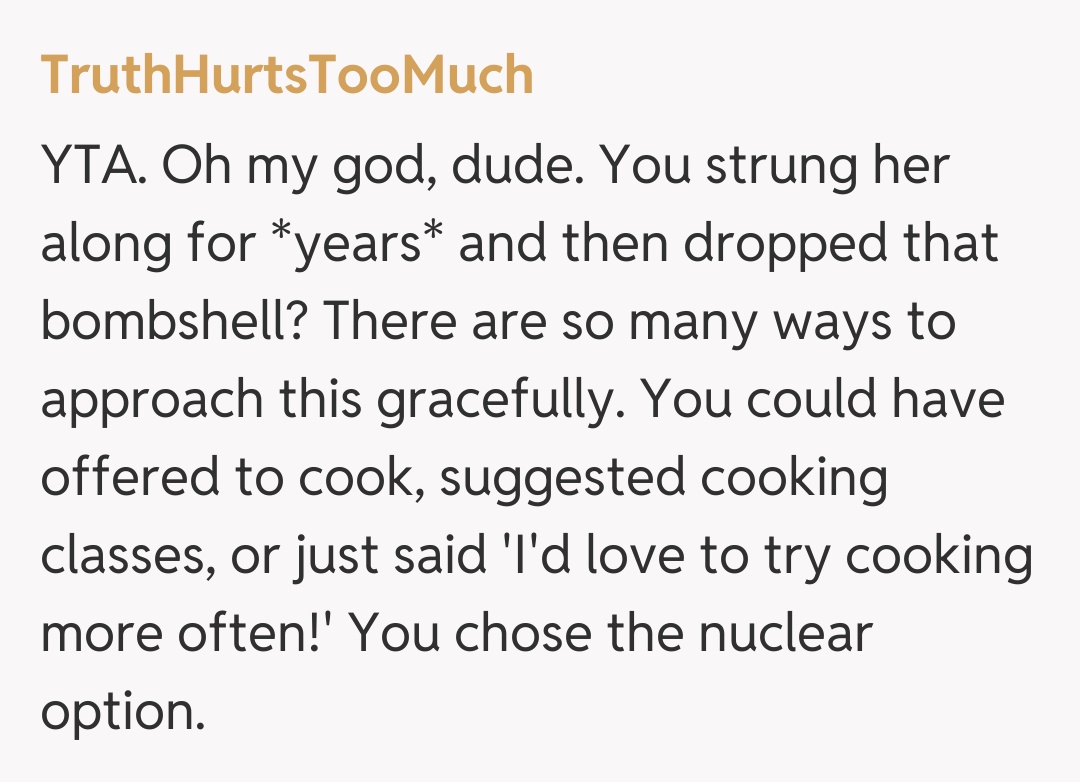
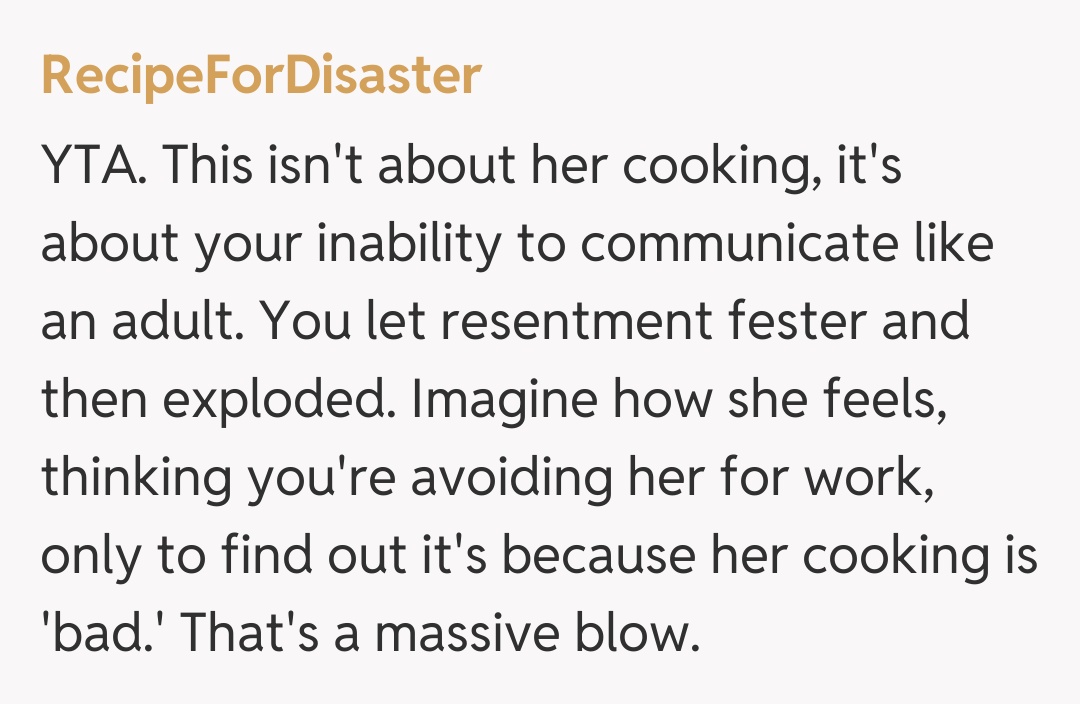
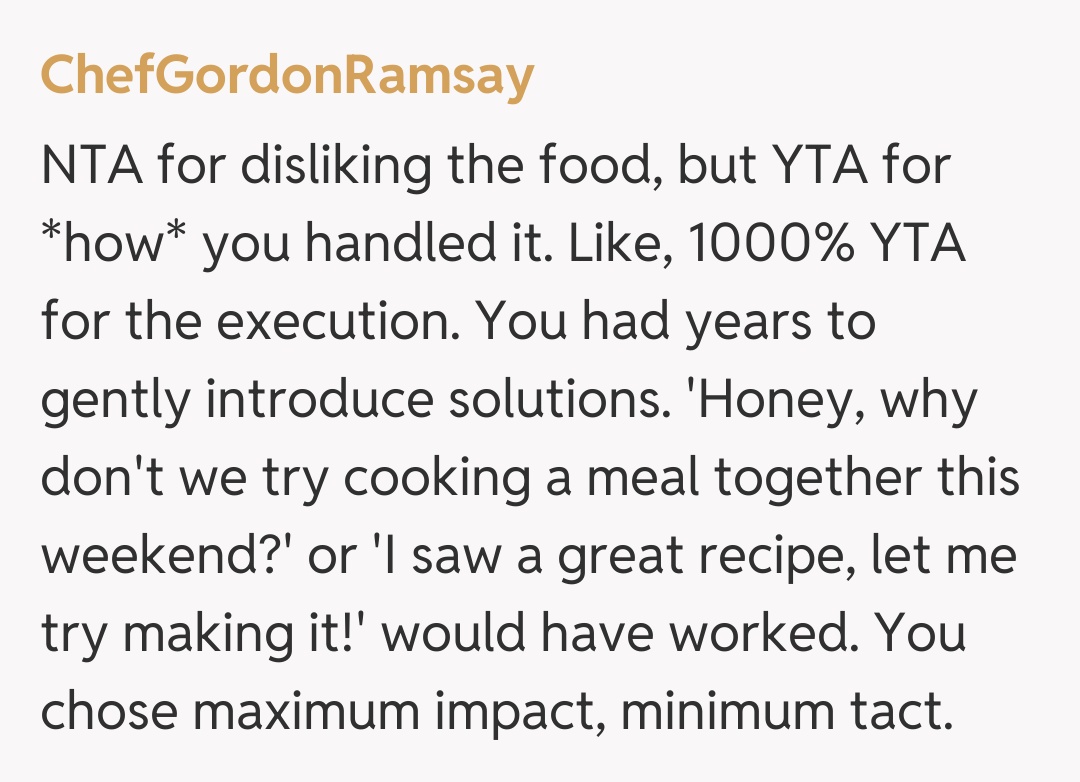
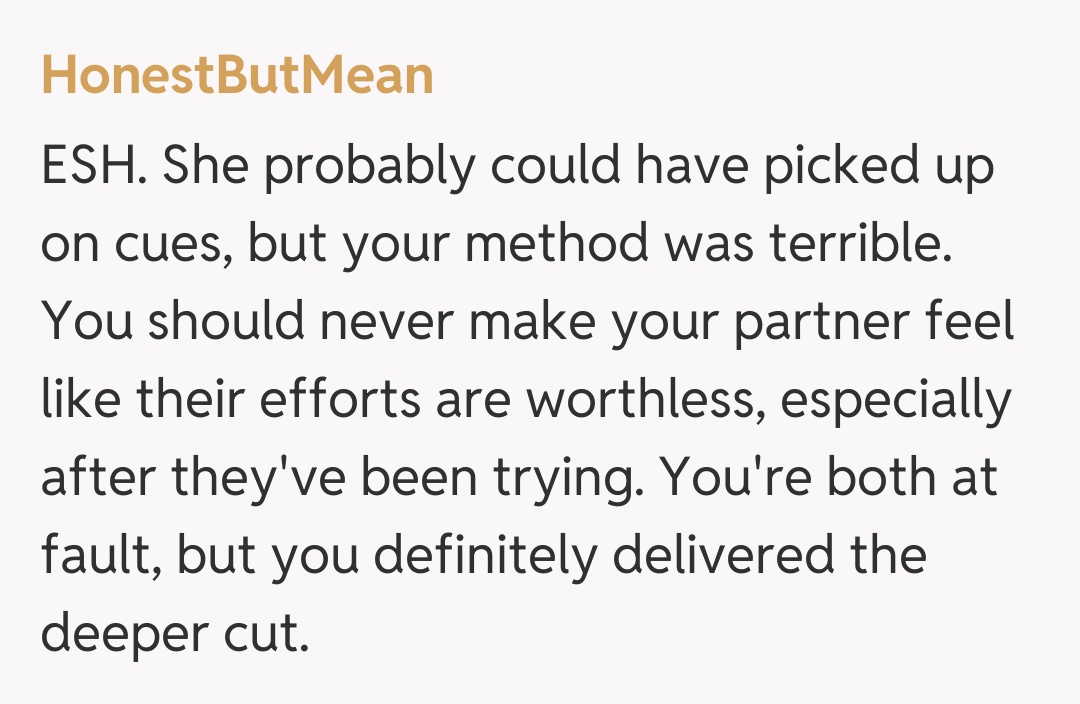
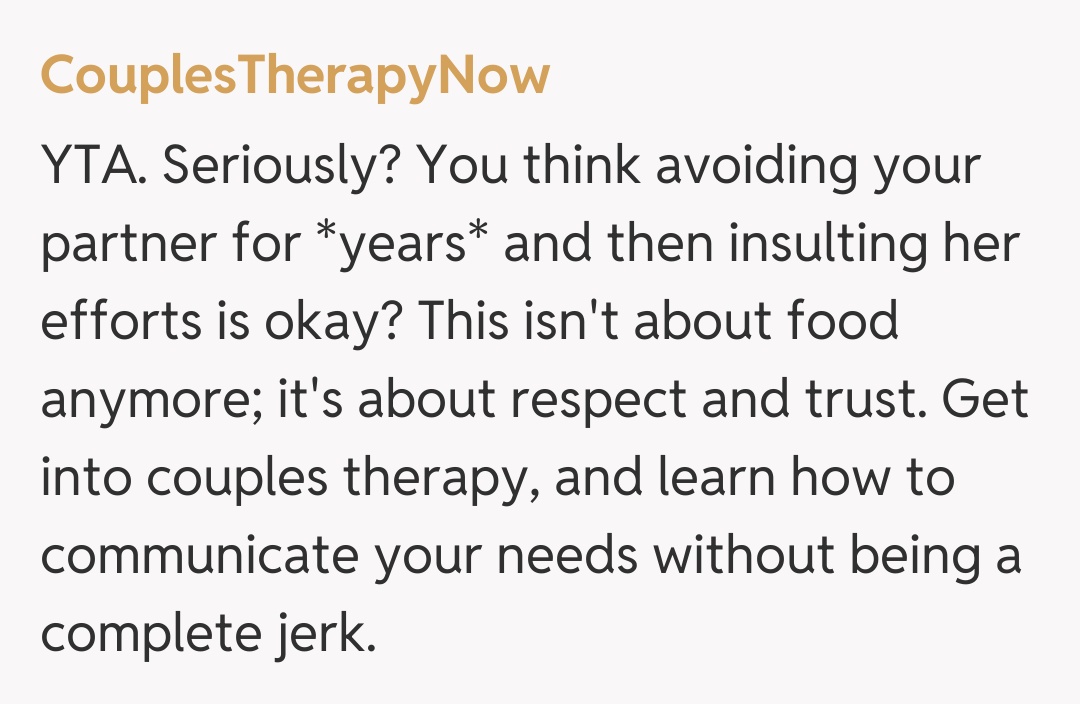
The comments section for this one exploded, and as expected, the jury is heavily leaning towards a particular judgment. Most users found the poster to be decidedly the A-hole, citing his years of deception and the utterly brutal delivery of his 'truth.' Many pointed out that his actions created a bigger problem than the initial one, damaging trust and self-esteem.
While a few sympathetic voices acknowledged that nobody should have to eat bad food, even those agreed that there were a hundred better ways to handle the situation. Suggestions ranged from offering to cook himself, taking cooking classes together, or simply saying he preferred to eat out without blaming her directly. The consensus is clear: honesty is good, but cruelty is not.
So, there you have it. While the anonymous poster might have felt justified in his eventual honesty, the court of public opinion (and our impartial analysis) has largely deemed him the A-hole. The consensus highlights that while direct communication is vital, it should never come at the expense of empathy and respect, especially in a long-term partnership. Avoiding conflict only escalates it, and when the truth finally comes out, the collateral damage can be far greater than the initial issue. Let this be a lesson to us all: communicate early, communicate often, and communicate kindly.