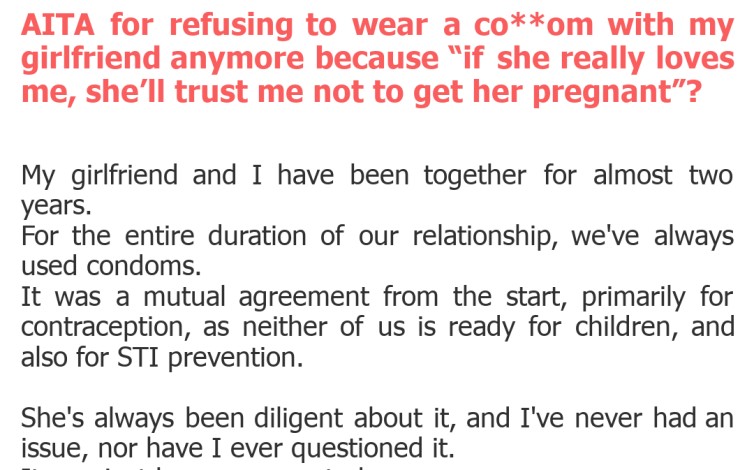
AITA for refusing to wear a co**om with my girlfriend anymore because “if she really loves me, she’ll trust me not to get her pregnant”?
Relationships are built on a complex web of trust, respect, and mutual understanding. Navigating intimacy within these bounds requires open communication and a shared commitment to each other's well-being and bodily autonomy. Sometimes, however, the very concept of trust can be weaponized, turning a conversation about safety into a test of loyalty.
Today's AITA story presents a deeply uncomfortable scenario where one partner attempts to redefine the terms of sexual intimacy, using emotional leverage to push for a significant change in their shared practices. It forces us to consider where the line lies between genuine trust and manipulative coercion, especially concerning reproductive health decisions.

"AITA for refusing to wear a co**om with my girlfriend anymore because “if she really loves me, she’ll trust me not to get her pregnant”?"
My girlfriend and I have been together for almost two years. For the entire duration of our relationship, we've always used condoms. It was a mutual agreement from the start, primarily for contraception, as neither of us is ready for children, and also for STI prevention. She's always been diligent about it, and I've never had an issue, nor have I ever questioned it. It was just how we operated.
Recently, I've started feeling like it puts a bit of a barrier between us. I've heard other guys talk about how much better it is without one, and I started thinking about the intimacy aspect. So, I brought it up with her. I suggested we stop using them. She looked shocked, then immediately said no, expressing concerns about pregnancy. I tried to reassure her, explaining that I would be careful, and pull out. She still wasn't convinced, citing the unreliability of that method. That's when I said something that really upset her.
I told her, "If you really love me, you'd trust me not to get you pregnant." I explained that I feel like she doesn't trust my judgment or my ability to be responsible if she insists on using condoms. I told her that if our love is truly strong, we should be able to move past such a small thing and embrace a deeper level of intimacy. I genuinely believe that if she trusts me completely, she wouldn't need a physical barrier between us.
She became very quiet, then started crying. She said I was being manipulative and that her bodily autonomy and fears about an unplanned pregnancy were not a test of my trustworthiness or her love. She refused to budge on the condom issue and said my comment was a massive red flag. Now she's barely speaking to me, and I feel like I'm being unfairly judged for wanting a more intimate connection based on trust. AITA?
The core of this conflict revolves around consent, bodily autonomy, and the definition of trust within an intimate relationship. One partner is attempting to unilaterally change an established agreement regarding safe sex, putting their personal preference above the other's comfort and very real concerns about reproductive health. This isn't a minor disagreement; it's a fundamental breach of respect for a partner's boundaries and agency.
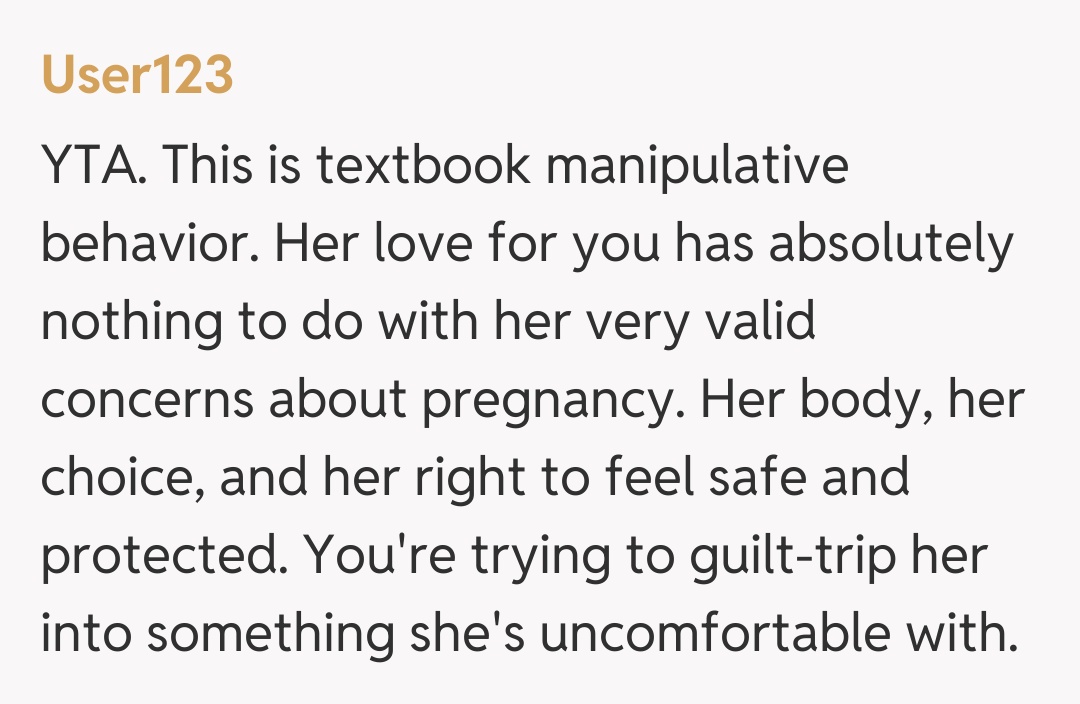
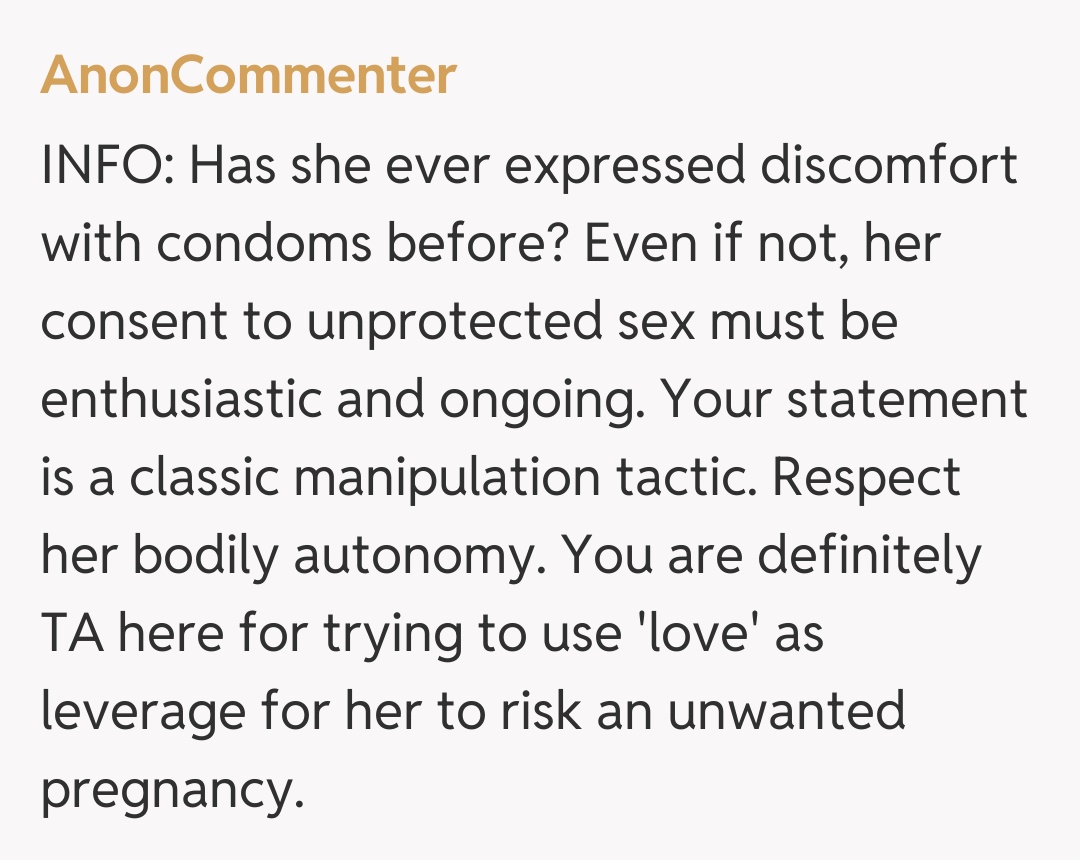
The statement, "if she really loves me, she’ll trust me not to get her pregnant," is a classic example of emotional manipulation. Love and trust are not bargaining chips to be used to circumvent a partner's right to make informed decisions about their own body and future. Trust, in a healthy relationship, means respecting a partner's choices and concerns, not pressuring them into a situation they're uncomfortable with under the guise of loyalty.
Furthermore, the idea that a partner's caution about unplanned pregnancy or STIs indicates a lack of trust in the other's judgment is a dangerous deflection. Contraception is a shared responsibility, and expecting one partner to bear all the risk based on the other's 'trust' is irresponsible and deeply unfair. It places an immense burden on the partner who would face the consequences of an unplanned pregnancy, physically, emotionally, and financially.
Ultimately, healthy relationships thrive on open, honest communication and mutual respect for boundaries. When one partner tries to coerce the other into a sexual act they are not fully comfortable with, especially concerning their reproductive health, it crosses a serious line. This situation highlights the importance of understanding consent as an ongoing, affirmative process, free from guilt or emotional blackmail.
The Internet Weighs In: Is Trust Really a Condom?
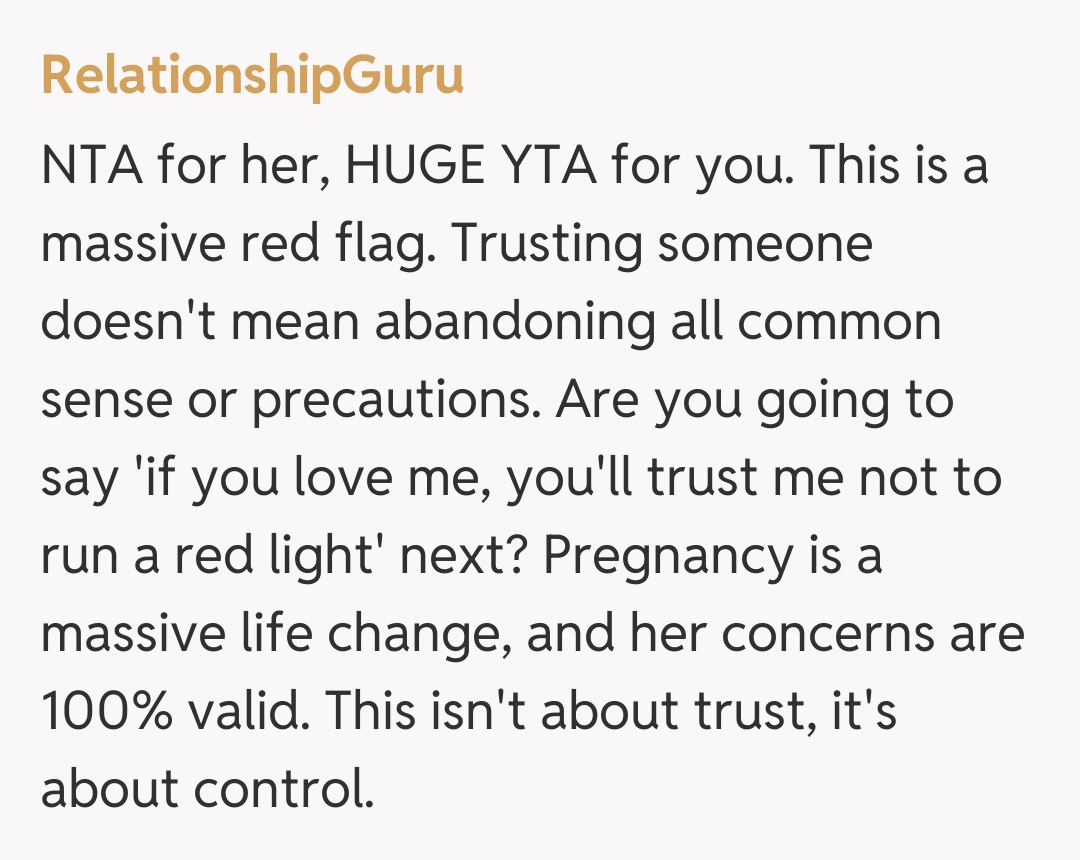
The comments section for this post was, as expected, a tidal wave of NTA for the girlfriend and a resounding YTA for the original poster. The overwhelming consensus was that the poster's statement was not only manipulative but also deeply disrespectful of their girlfriend's bodily autonomy and reproductive rights. Many users pointed out the severe 'red flag' in the poster's reasoning.
Several commenters highlighted the critical difference between trust and risk. They argued that trusting someone doesn't mean you abandon all sensible precautions, especially when the consequences are as life-altering as an unplanned pregnancy. The sheer number of comments condemning the poster's stance underscores a widespread understanding of healthy boundaries and consent in relationships.
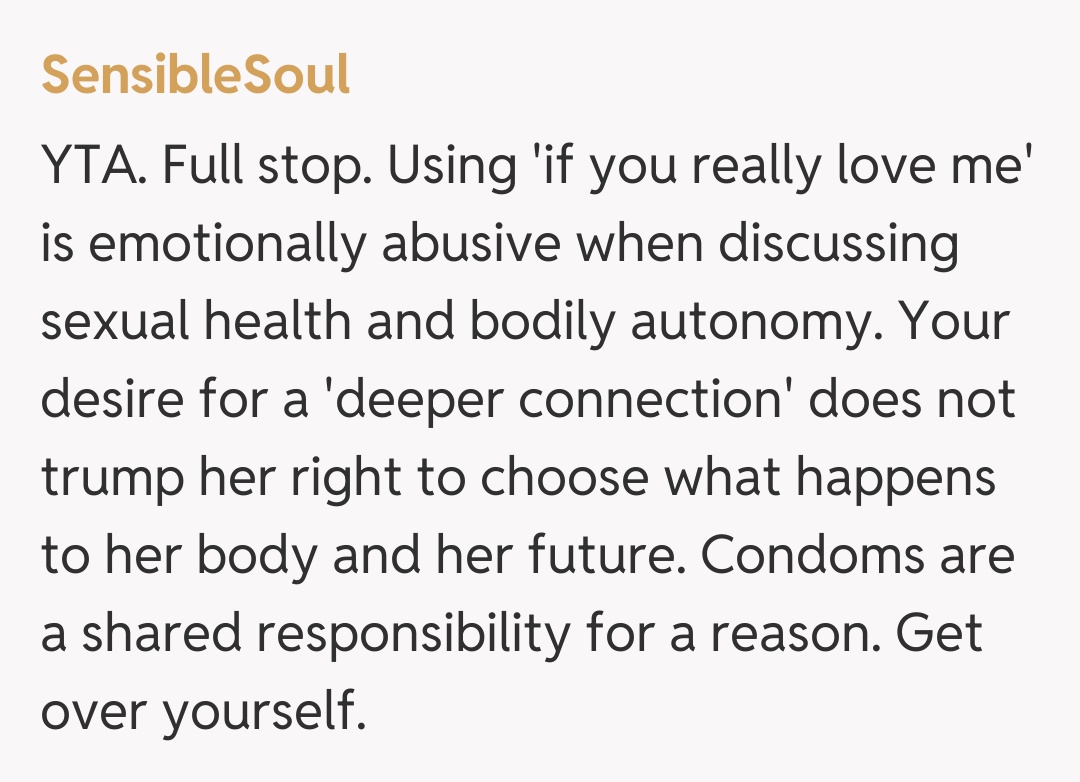
This AITA story serves as a stark reminder that true intimacy is built on respect, not coercion. When one partner attempts to leverage emotional connections to bypass another's boundaries, especially concerning their body and future, it's a serious breach of trust. The girlfriend's reaction was entirely justified, and the overwhelming online response confirms that using 'love' as a tool for manipulation in such sensitive matters is unacceptable. Relationships require mutual consent, understanding, and the unwavering respect for each other's autonomy above all else.