AITA for telling my black friend he got into Harvard only because of affirmative action and not because he’s actually smart?
Oh, folks, we've got a doozy for you today. This AITA post dives headfirst into sensitive territory, exploring the painful intersection of friendship, perceived meritocracy, and the incredibly complex topic of affirmative action. It's a stark reminder of how quickly words, even those spoken in what might be perceived as a moment of frustration or misguided honesty, can shatter long-standing bonds and expose deep-seated biases.
Our poster, let's call him OP, finds himself in hot water after a comment he made to a lifelong friend regarding his friend's acceptance into an Ivy League institution. The remark was sharp, personal, and unfortunately, steeped in assumptions that many in our society grapple with. This isn't just about whether OP was an 'A-hole'; it's about the broader implications of such statements and the profound hurt they can inflict.

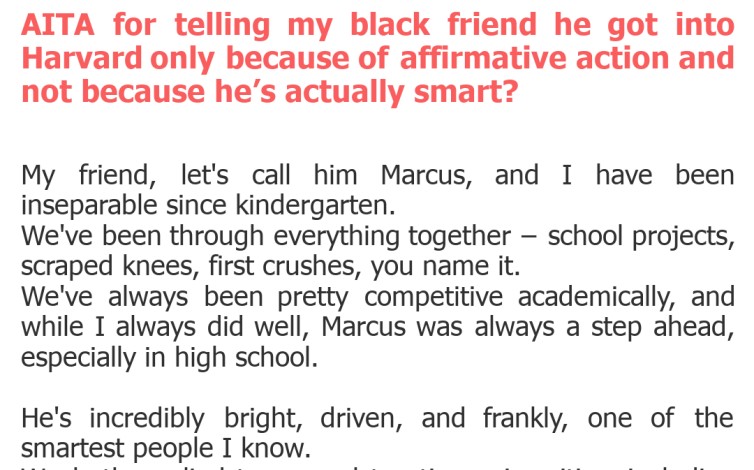
"AITA for telling my black friend he got into Harvard only because of affirmative action and not because he’s actually smart?"
My friend, let's call him Marcus, and I have been inseparable since kindergarten. We've been through everything together – school projects, scraped knees, first crushes, you name it. We've always been pretty competitive academically, and while I always did well, Marcus was always a step ahead, especially in high school. He's incredibly bright, driven, and frankly, one of the smartest people I know. We both applied to several top-tier universities, including Harvard, which has always been his dream. I got into a few good schools, but not Harvard. Marcus, however, received his acceptance letter a few weeks ago, and honestly, I was happy for him, truly. But there was also this nagging feeling, a bitter taste I couldn't shake.
We were out celebrating his acceptance, just the two of us, having a good time. The conversation drifted to college admissions, and I guess the alcohol loosened my tongue a bit, combined with months of simmering resentment. I heard someone else talking about affirmative action earlier that day, and it got into my head. I looked at Marcus, and without really thinking, or maybe thinking too much, I just blurted it out. I told him, "You know, you probably only got into Harvard because you're Black and they have those affirmative action quotas. It's not because you're actually smarter than everyone else, including me."
The look on his face was something I'll never forget. It was a mix of shock, betrayal, and deep, profound hurt. He went completely silent, put his glass down, and just stared at me. He didn't yell or argue. He just said, very quietly, "I thought you knew me better than that." Then he stood up, paid his half of the bill, and walked out without another word. I tried to call him, text him, even went to his house, but he won't respond. His mom just told me he's really upset and needs space.
I feel terrible now, but part of me still thinks I just said what everyone else secretly thinks, and that maybe it's the truth. I know it was a horrible thing to say, especially to him, my best friend. But I was just feeling competitive and a little jealous, and I truly believe he's smart. I just wonder if his race played a role, and if it did, doesn't that make my feelings somewhat valid, even if my delivery was awful? AITA for saying what I did?
This story plunges into a deeply fraught and sensitive area, specifically the intersection of personal ambition, racial identity, and merit. The OP's initial sentiment of happiness for his friend, Marcus, quickly devolved into a bitter accusation. It's crucial to acknowledge that feelings of jealousy or competitive disappointment, while unpleasant, are often human. However, the critical turning point is how those feelings were expressed and the underlying assumptions guiding the OP's hurtful statement.
The core of the conflict lies in the OP's assertion that Marcus's Harvard acceptance was solely due to affirmative action, rather than his intelligence. This comment is deeply problematic for several reasons. Firstly, it dismisses Marcus's years of hard work and proven academic excellence, reducing his significant achievement to a demographic checkbox. It undermines his capabilities and, by extension, his self-worth, which is a profound betrayal within a friendship.
Furthermore, the statement taps into a pervasive and harmful stereotype that Black students admitted to elite institutions are less qualified and only gain entry through
The Internet Weighs In: Can a Friendship Survive Such a Deep Cut?
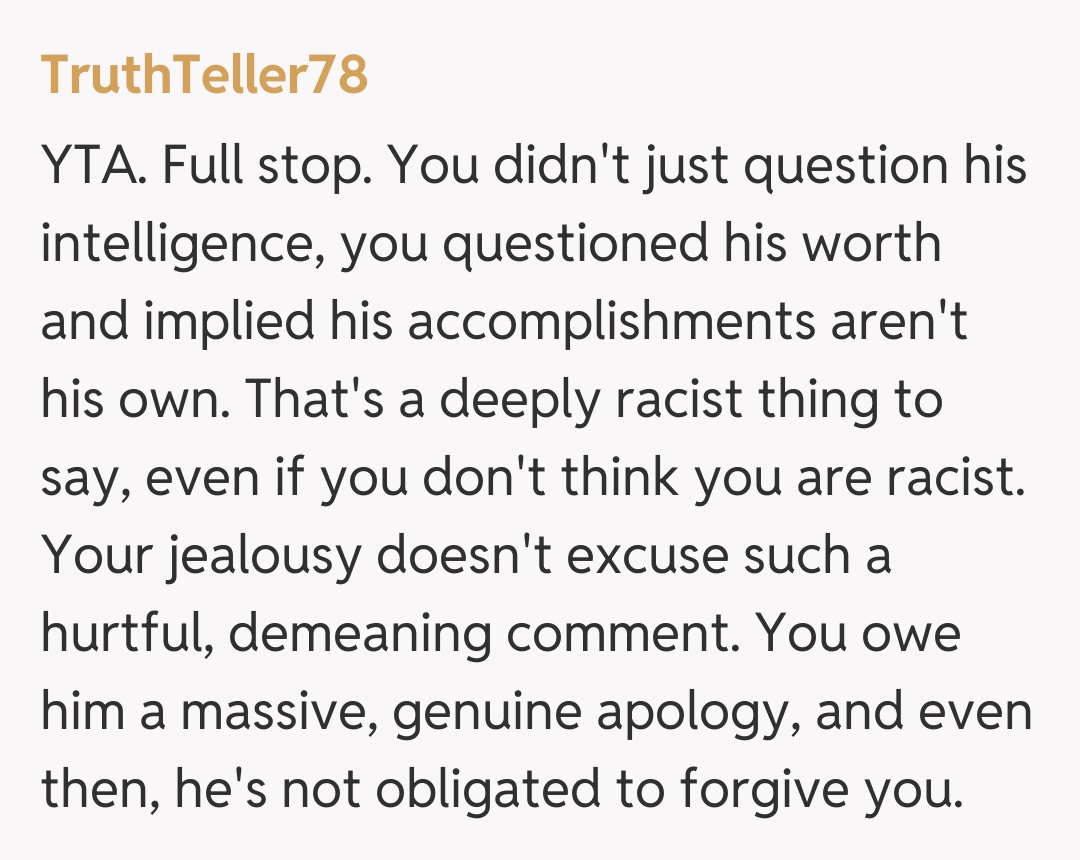
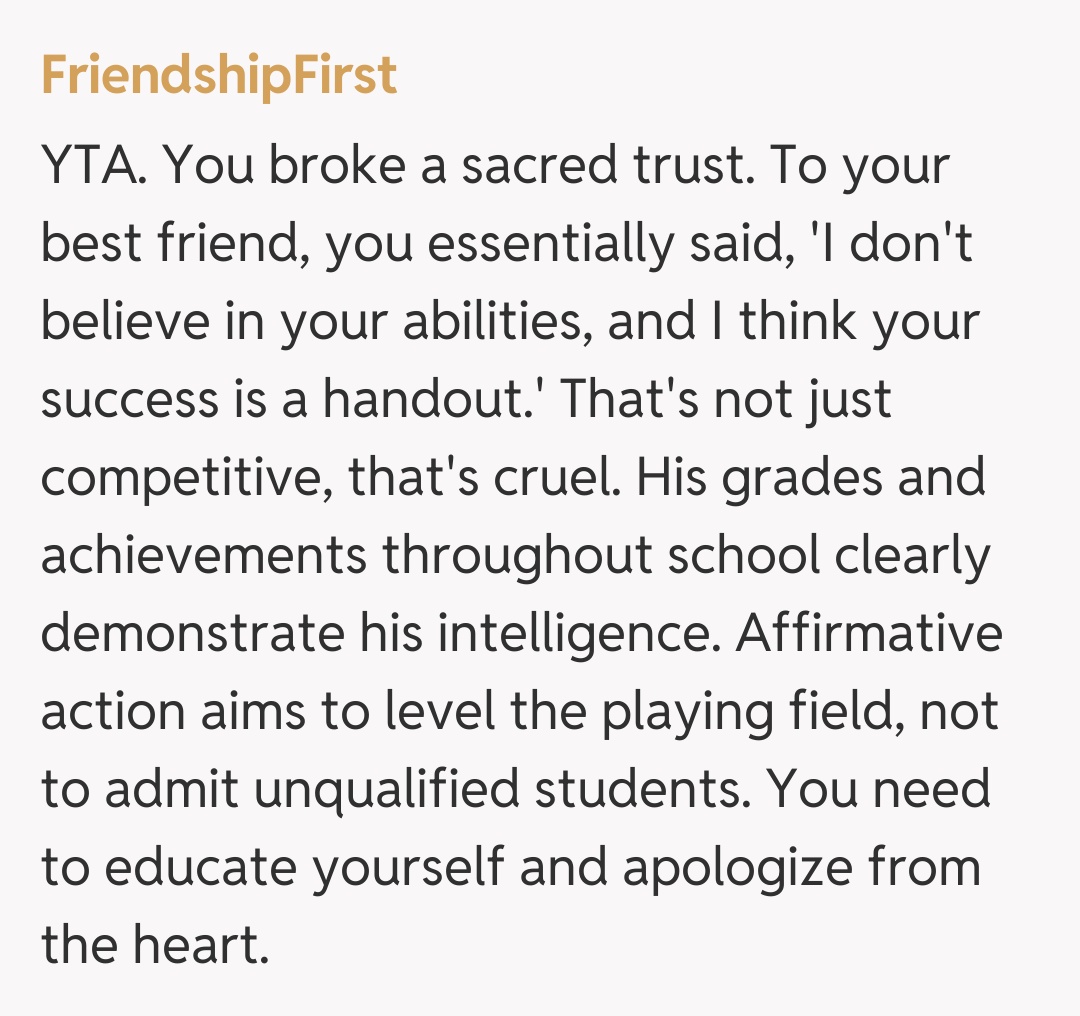
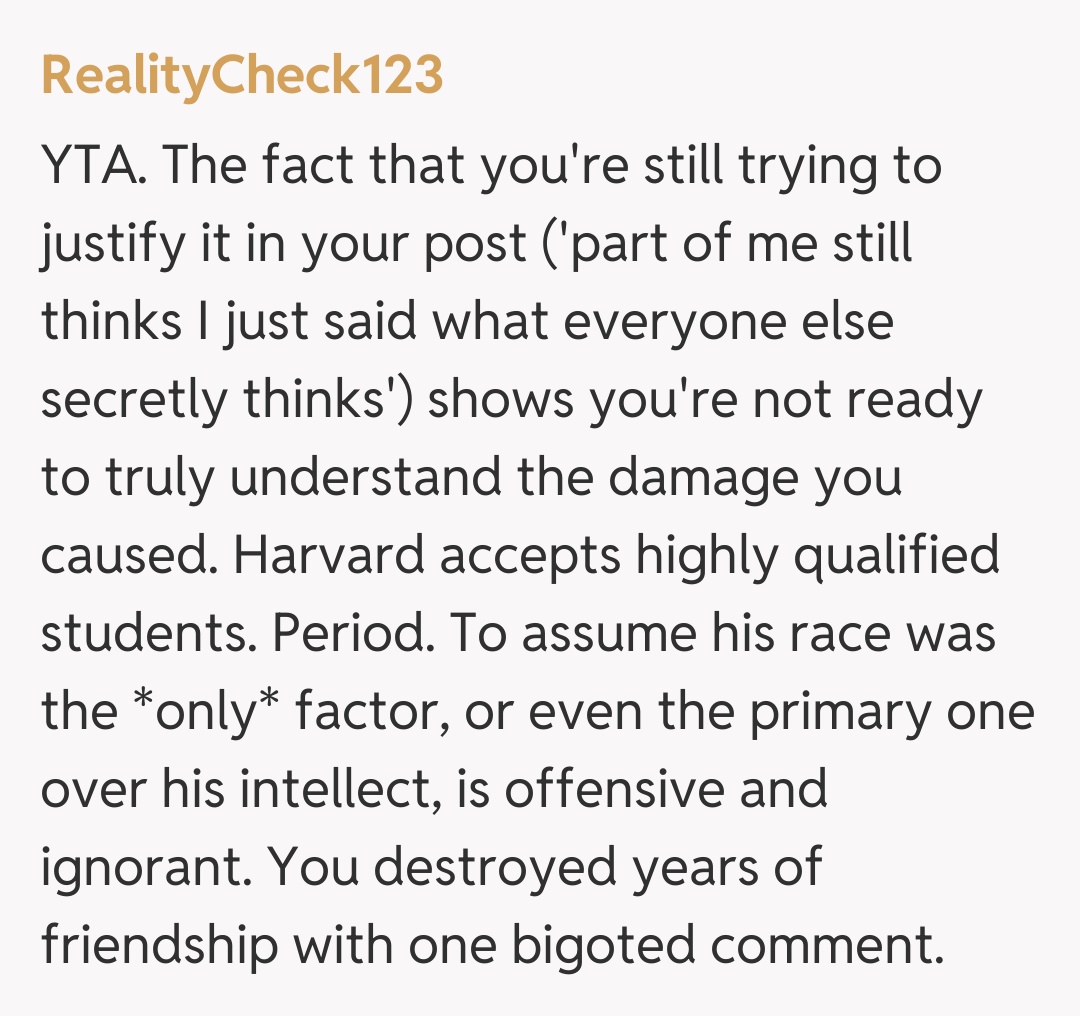
The comment section, as expected, was ablaze with strong opinions, overwhelmingly siding with Marcus. Many users immediately highlighted the racist undertones of OP's comment, pointing out that regardless of personal feelings, attributing a Black friend's success solely to affirmative action is a classic microaggression that devalues their achievements and intelligence. The consensus was clear: OP's comment was not just insensitive, but deeply prejudiced.
A recurring theme in the comments was the betrayal of trust. Users emphasized that a true friend would celebrate success without questioning its legitimacy based on race. Many also urged OP to reflect on his own biases and confront why he felt the need to diminish Marcus's accomplishment in such a hurtful way. The general sentiment was that OP has a lot of introspection and apologies ahead if he hopes to salvage this friendship.
This painful AITA story serves as a stark reminder of the immense power of our words and the deep-seated biases that can unfortunately surface, even within the closest friendships. While competitive feelings are normal, directing them through racially charged and dismissive comments is never acceptable. The OP's actions highlight the critical need for empathy, self-awareness, and a willingness to confront our own prejudices. True friendship demands respect and celebration of one another's successes, free from such demeaning accusations.