AITA for constantly reminding my husband that his receding hairline + belly make him undateable now, just like he reminds me about my stretch marks?
Welcome back, dear readers, to another dive into the complex world of relationships and the challenging scenarios that test even the strongest bonds. Today, we're dissecting a situation where communication has clearly gone awry, and what started as a seemingly harmless observation has spiraled into a tit-for-tat battle of insecurities. It's a stark reminder that words, once spoken, can inflict lasting wounds.
This week's AITA post highlights a common, yet deeply damaging, dynamic: body shaming within a marriage. When one partner initiates criticism about physical appearance, what's the appropriate response? Is it ever okay to fight fire with fire, or does that merely escalate the conflict into a toxic inferno? Our OP, Sarah, found herself in precisely this predicament, and the internet is buzzing with opinions.

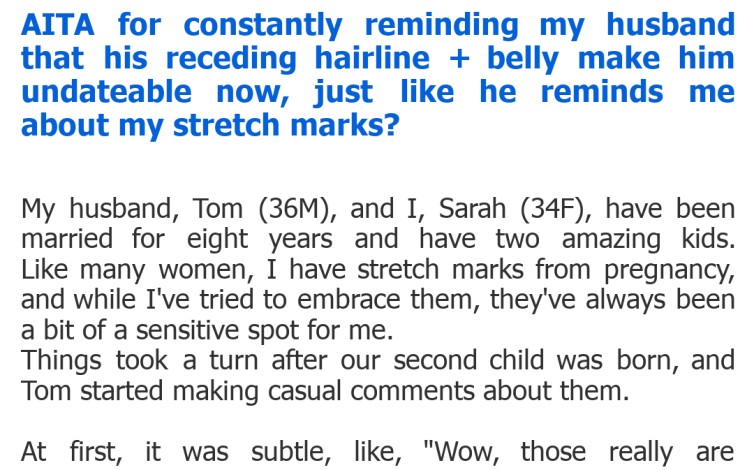
"AITA for constantly reminding my husband that his receding hairline + belly make him undateable now, just like he reminds me about my stretch marks?"
My husband, Tom (36M), and I, Sarah (34F), have been married for eight years and have two amazing kids. Like many women, I have stretch marks from pregnancy, and while I've tried to embrace them, they've always been a bit of a sensitive spot for me. Things took a turn after our second child was born, and Tom started making casual comments about them. At first, it was subtle, like, "Wow, those really are prominent now, aren't they?" or "Good thing you're married, huh?"
I told him multiple times that his comments hurt my feelings and made me self-conscious. I explained that it felt like he was no longer attracted to me because of them. He just brushed it off, saying I was being too sensitive and that he was "just being honest." He claimed he still loved me, but the comments continued, chipping away at my self-esteem.
After months of this, feeling completely unheard and disrespected, I decided I'd had enough. If he could be "honest" about my perceived flaws, I could be honest about his. Tom has started developing a noticeable receding hairline and a bit of a belly in the last year. He's also gained some weight. So, I started mirroring his behavior. When he'd make a comment about my stretch marks, I'd reply with something like, "Well, at least I don't have a bald spot the size of a frisbee" or "Who would want that gut now, Tom? Good thing you're married, huh?"
Initially, he was shocked. Then he became furious. He called me cruel and immature, asking how I could say such hurtful things. He said it's different because "men don't care about those things" and that I'm intentionally trying to sabotage his self-esteem, which he finds unforgivable. I countered that he did the same to me and ignored my pleas to stop. Now he's barely talking to me. My sister, Clara, says I went too far, but my friend, David, thinks Tom deserved it. So, AITA?
This post dives headfirst into the painful territory of body shaming within a relationship. It's vital to acknowledge the profound impact such comments can have on an individual's self-esteem and sense of worth, especially when they come from a spouse. Feeling loved and desired should be a cornerstone of marriage, and any words that erode that foundation are deeply problematic.
Tom's initial behavior, dismissing Sarah's feelings by labeling her "too sensitive" and claiming he was "just being honest," is a classic example of invalidation. Honesty should never be an excuse for cruelty or a justification for ignoring a partner's distress. His repeated comments about her stretch marks, despite her pleas, demonstrate a significant lack of empathy and respect for her boundaries.
Now, let's address Sarah's retaliation. While it's completely understandable to feel hurt and to want to give someone a taste of their own medicine, engaging in the same toxic behavior rarely resolves the underlying issue. Instead, it often escalates the conflict, creating a destructive cycle where both partners end up feeling attacked and unloved. Her comments, though provoked, are also designed to inflict pain.
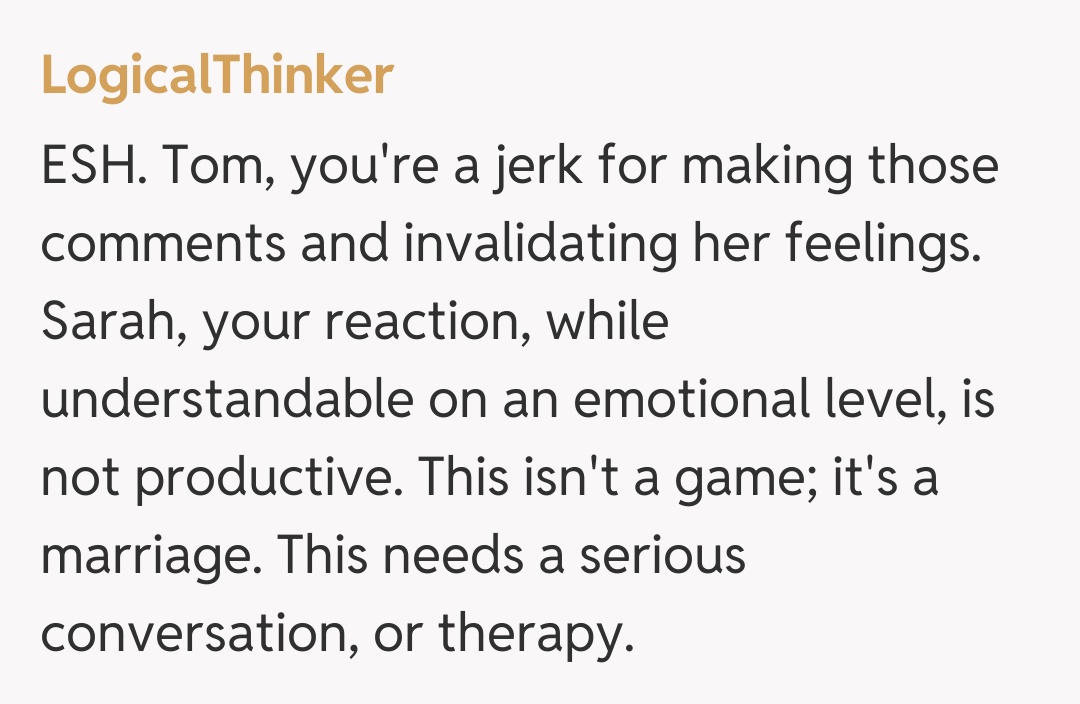
Ultimately, this situation reveals a serious breakdown in communication and mutual respect. Neither partner is currently acting in a way that fosters a healthy, loving environment. Instead of seeking to hurt each other, they need to address the deeper issues of insecurity, unmet needs, and destructive communication patterns. This isn't just about stretch marks or receding hairlines; it's about how they treat each other.
The Digital Jury Weighs In: A Storm of Opinions!
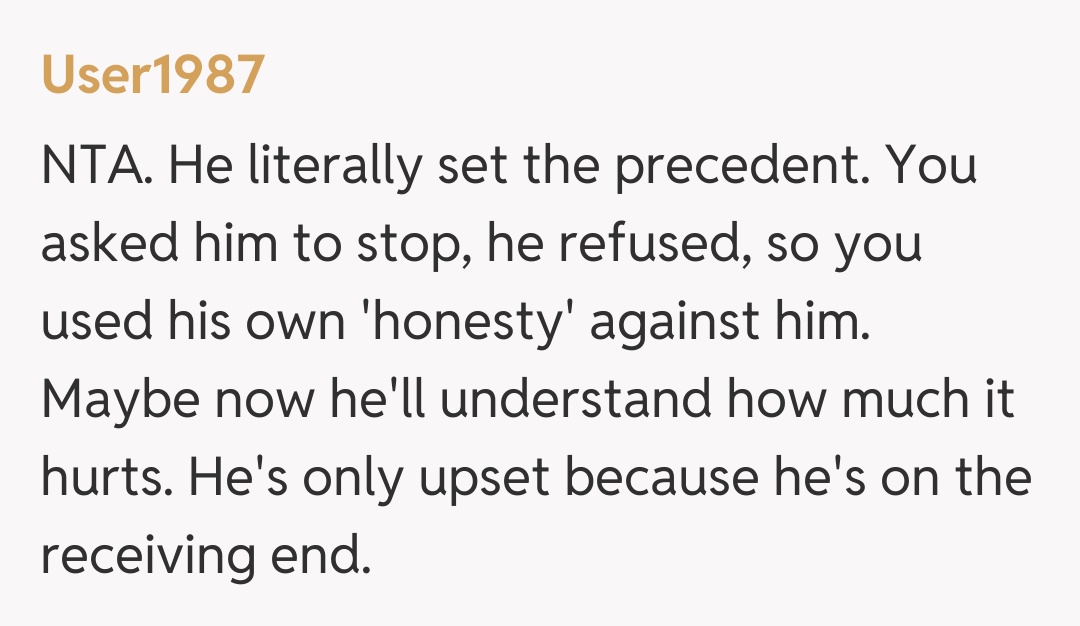
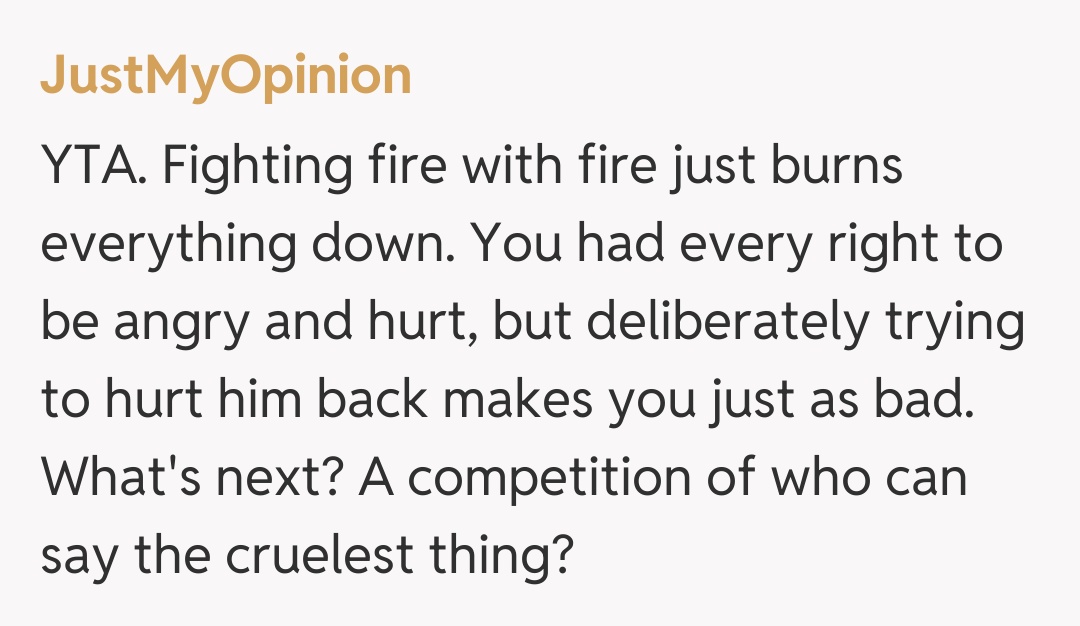
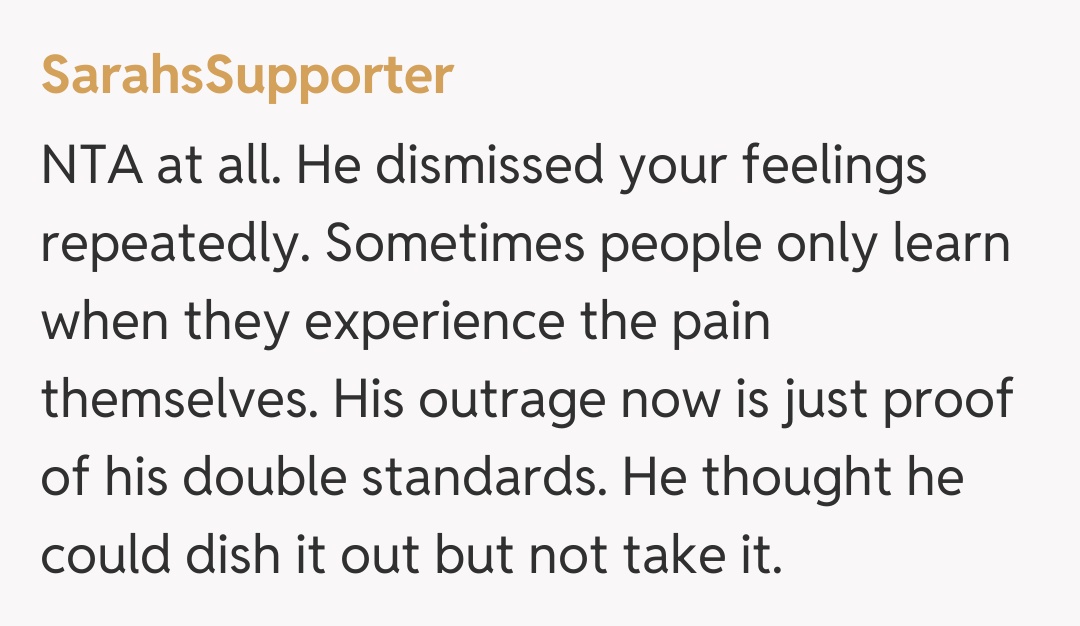
The comments section for this post was, predictably, a whirlwind! Many users sided with Sarah, emphasizing that Tom's hypocrisy was glaring. The sentiment 'he started it' and 'he deserved a taste of his own medicine' was a strong current throughout the discussion, highlighting the frustration people feel when partners refuse to acknowledge their own hurtful behavior.
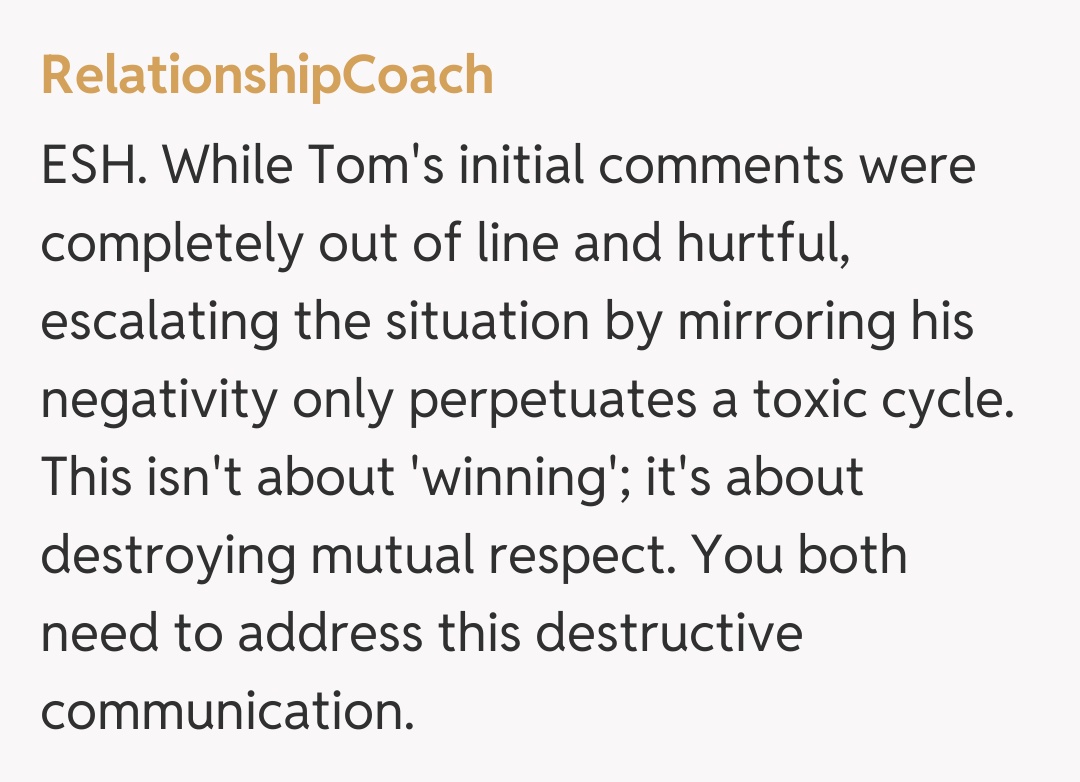
However, a significant portion of the comments also pointed out that while Sarah's feelings were valid, her method of retaliation might not be the most constructive. Users frequently brought up the 'two wrongs don't make a right' argument, suggesting that this tit-for-tat dynamic will only lead to further resentment and a more damaged relationship, rather than a resolution.
This AITA post serves as a poignant reminder that while personal insecurities are common, how we address them within our relationships is crucial. Tom's initial comments were disrespectful and damaging, and Sarah's retaliatory actions, while stemming from deep hurt, only perpetuated the cycle of negativity. Ultimately, a healthy relationship thrives on kindness, empathy, and open communication, not on keeping score or weaponizing vulnerabilities. For Sarah and Tom, a serious, perhaps professionally mediated, conversation is long overdue if they hope to salvage their marriage.