AITA for refusing couple photos or vacations until my wife gets a full makeover, telling her “I don’t want memories of you looking like this”?
Oh, boy. Today's AITA submission dives deep into the complexities of marriage, self-image, and arguably, some seriously misguided expectations. We're talking about a husband who has put a hard stop on couple photos and even future vacations until his wife undergoes a 'full makeover.' This isn't just about a preference; it's about a declaration that left his wife reeling, and us, the armchair judges, absolutely stunned.
This situation raises so many questions about what we owe our partners, how we communicate our feelings, and where the line is between constructive feedback and outright emotional damage. Is it ever okay to demand such a significant change from your spouse, especially when tied to shared experiences like memory-making and travel? Let's unpack this incredibly delicate and potentially hurtful scenario together.

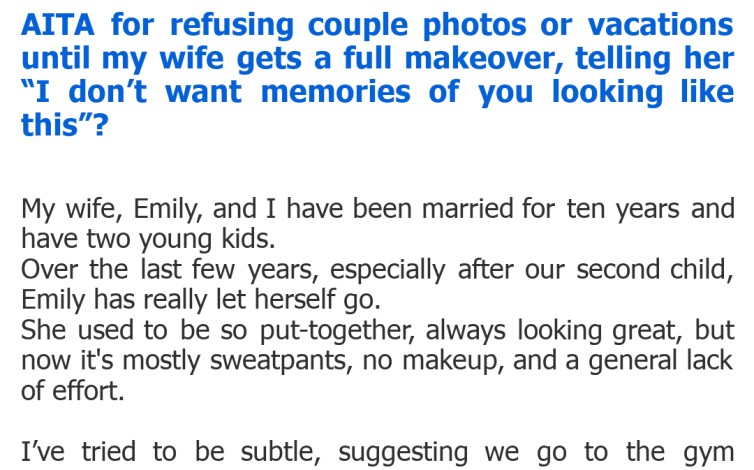
"AITA for refusing couple photos or vacations until my wife gets a full makeover, telling her “I don’t want memories of you looking like this”?"
My wife, Emily, and I have been married for ten years and have two young kids. Over the last few years, especially after our second child, Emily has really let herself go. She used to be so put-together, always looking great, but now it's mostly sweatpants, no makeup, and a general lack of effort. I’ve tried to be subtle, suggesting we go to the gym together, or buying her new clothes, but nothing sticks.
Recently, we were planning our summer vacation, and Emily brought up getting some professional couple photos taken while we're away, like we used to. That's when I finally snapped. I told her, straight up, that I wouldn't agree to any couple photos or even a vacation until she got a full makeover. I explained that I didn't want memories of her looking like this, that I missed the old Emily. She was absolutely devastated. She started crying and said I was cruel and superficial. I feel like I'm just being honest and trying to motivate her to be the woman I fell in love with, but her reaction makes me wonder if I went too far.
I just want my wife back. The one who cared about her appearance, who felt confident and energetic. I think a makeover, a new wardrobe, maybe a new hairstyle, would boost her confidence and get her back on track. It's not about being shallow; it's about wanting us to be our best selves, especially when we're creating lasting memories like vacation photos. Why would I want to look back at pictures where she looks unhappy or uncared for?
She's currently not speaking to me, staying with her sister, Sarah. Sarah called me, furious, saying I'd destroyed Emily's self-esteem. My best friend, Michael, said I was an idiot for how I phrased it, but understood wanting your partner to put in effort. I honestly thought I was being helpful, trying to push her to do something good for herself and for us. AITA for being honest about what I want in our shared memories?
This story immediately throws a spotlight on the often-unspoken pressures within long-term relationships regarding physical appearance. While it's understandable for individuals to desire their partner to feel good about themselves, the method of communication here appears to be a critical point of contention. The husband, David, expressed his feelings in a way that, while perhaps intended to be a wake-up call, landed with profound hurt and insult for Emily.
The framing of the ultimatum – no photos, no vacation – ties deeply into the idea of conditional love or acceptance. Vacations and photographs are often cherished activities that create shared joy and lasting memories. To withhold these based on physical appearance can feel incredibly punitive and dismissive of the partner's intrinsic worth beyond their looks. It implies that her current self is not worthy of being memorialized or celebrated.
It's also crucial to consider the wife's perspective. After having two children, many women experience significant physical and emotional changes. The demands of motherhood often mean personal care takes a backseat. Comments about 'letting herself go' can feel like an invalidation of her efforts as a mother and a partner, especially if she's struggling with postpartum body changes or mental load. Her reaction of devastation is entirely understandable given the circumstances.
While David might genuinely believe he's motivating Emily, his approach likely had the opposite effect, eroding trust and self-esteem. Open, empathetic communication about concerns is vital in a marriage. Instead of a demand for a 'makeover,' a conversation about shared well-being, support, and perhaps offering to help with childcare to allow her time for herself, might have yielded a far more positive and loving outcome.
The Internet Weighs In: Is Honesty Always the Best (or Kindest) Policy?
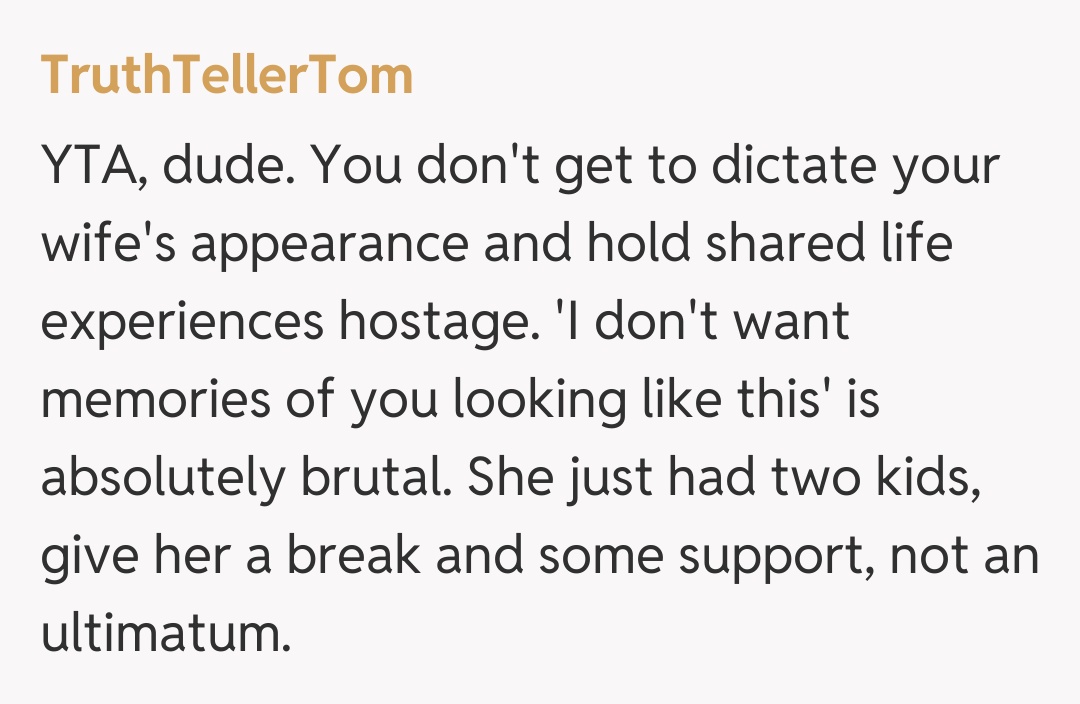
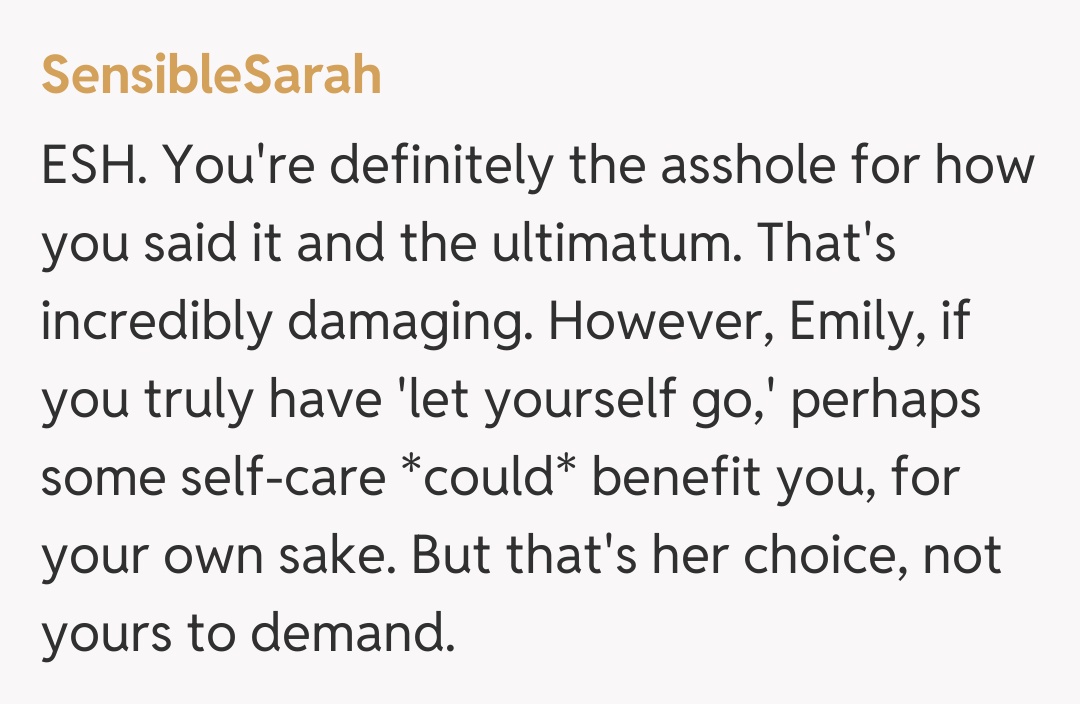
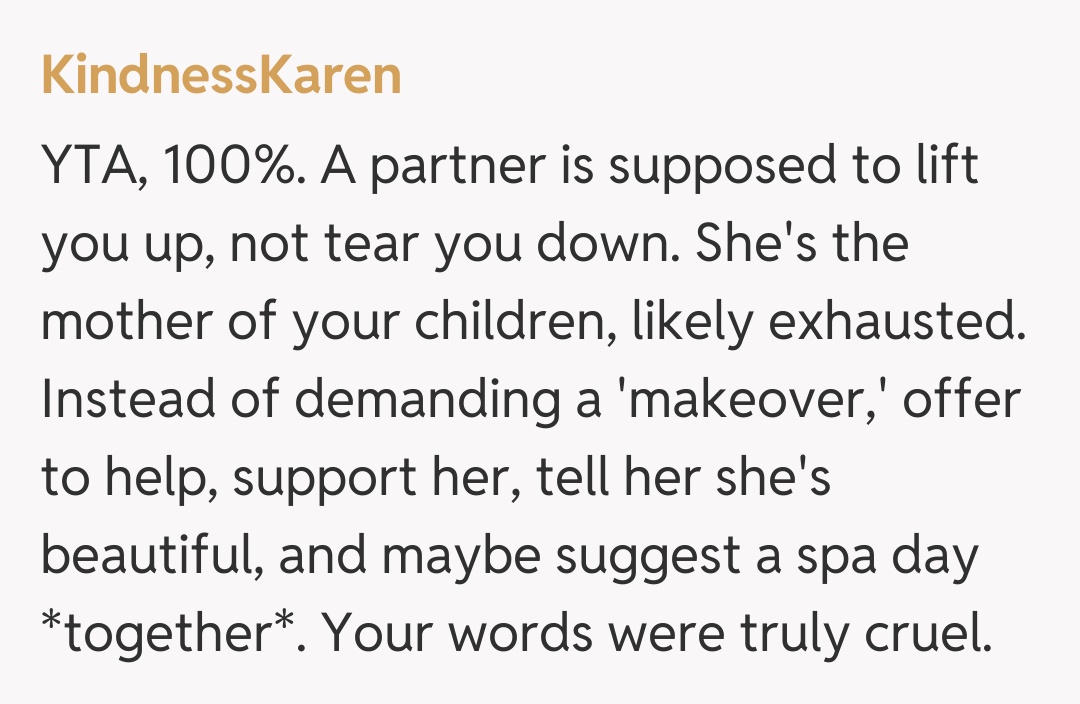
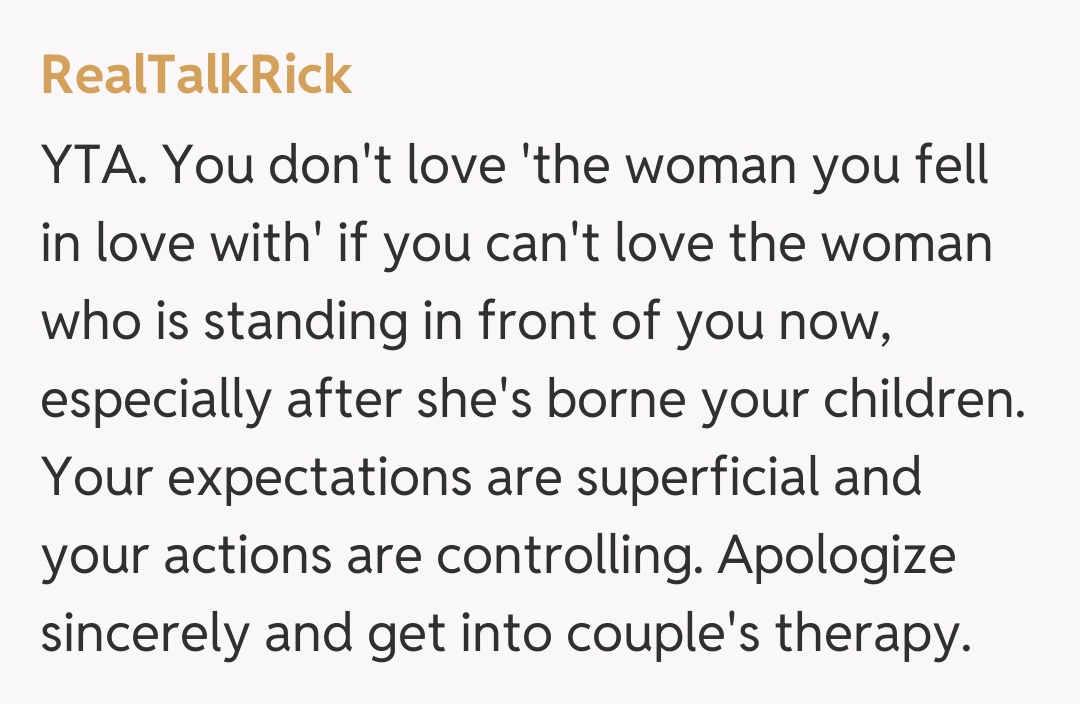
Well, folks, as expected, the internet has some STRONG opinions on this one! The overwhelming sentiment leans towards David being firmly in the 'You're The Asshole' camp. Many commenters are pointing out the deeply hurtful nature of his words, emphasizing that such an ultimatum can be incredibly damaging to a spouse's self-esteem and the foundation of trust in a marriage. The idea of withholding shared experiences until someone meets a physical standard is seen as manipulative.
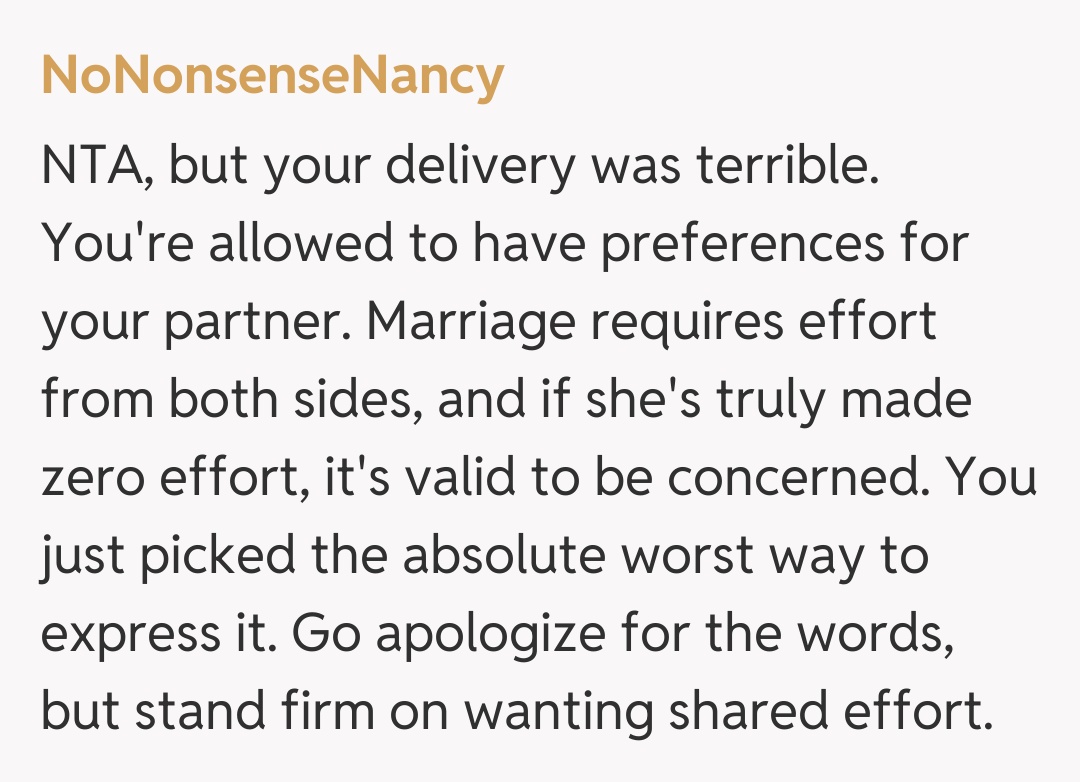
However, there's also a smaller, but vocal, contingent who, while perhaps not condoning David's delivery, understand his frustration. They argue that partners should make an effort for each other and that sometimes a harsh truth is necessary. Yet, even those sympathizing often qualify it by saying his approach was entirely wrong. It seems the consensus is less about *if* a partner should care for themselves, and more about *how* such concerns are communicated.
This AITA story is a stark reminder of the power of words in a relationship and the delicate balance between honesty and empathy. While a partner's changing appearance can be a point of concern, the way David chose to address it clearly caused immense pain and damage. It highlights the importance of fostering a supportive environment where partners can discuss vulnerabilities without fear of judgment or ultimatums. Ultimately, true partnership means cherishing each other through all phases of life, and finding constructive, loving ways to support one another's well-being, rather than resorting to demands that erode self-worth.