Am I Wrong for Wanting to ‘Rescue’ My Uncle’s Neighbor’s Neglected Show Horse?
Welcome back, animal lovers and moral compass navigators, to another installment of 'What Would You Do?' Today, we're diving into a heart-wrenching situation that pits good intentions against questionable animal care, all unfolding in a quiet rural neighborhood. It's a classic tale of a concerned individual witnessing what they perceive as neglect and struggling with how to intervene without overstepping.
Our featured poster, let's call them Alex, stumbled upon a sight that would make any horse enthusiast's blood boil. Their uncle's neighbor, Mr. Henderson, keeps a retired show horse, once a magnificent athlete, confined to a minuscule stall almost 24/7. The neighbor's excuse? 'He's too old to run around anyway.' But is age truly a sentence to solitary confinement for such a creature?

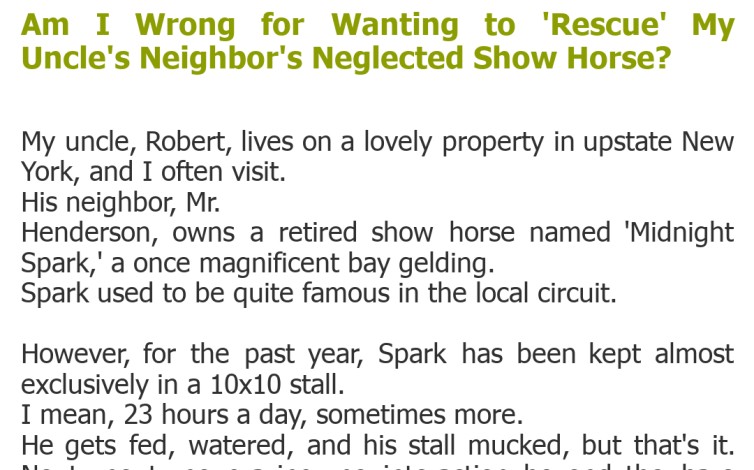
"Am I Wrong for Wanting to 'Rescue' My Uncle's Neighbor's Neglected Show Horse?"
This is a truly difficult situation, highlighting the delicate balance between property rights, animal welfare, and neighborly relations. On one hand, Alex's concern for Midnight Spark is completely understandable. Horses are highly social and active animals; prolonged confinement can indeed lead to both physical and psychological distress, regardless of age. The horse's visible sadness and dullness are strong indicators that its current living conditions are inadequate for its well-being.
However, the neighbor, Mr. Henderson, might genuinely believe he's protecting his aging horse. He might have been advised by a vet in the past about specific age-related vulnerabilities, or he might simply be misinformed about equine geriatric care. His defensive reactions could stem from a place of pride, believing he knows best, or perhaps a fear of judgment. This doesn't excuse the potential neglect, but it complicates the narrative, suggesting intent might not be maliciously cruel.
The intervention by Alex also raises questions about boundaries. While observing potential neglect, directly confronting a neighbor, especially one who is stubborn, can quickly sour relationships. Alex's uncle's reluctance to get involved underscores the social complexities. Calling animal welfare is a significant step that could lead to an official investigation, potentially severing ties with the neighbor and causing tension within the family.
Ultimately, the core of the issue lies in the horse's welfare. While Mr. Henderson might love Spark, his current care regimen appears to be detrimental. Alex is faced with a moral dilemma: respect the neighbor's autonomy at the expense of the horse's comfort, or advocate for the animal, potentially creating significant conflict. There are no easy answers when compassion collides with personal jurisdiction and differing interpretations of care.
The Stall's Out: Readers Weigh In on Midnight Spark's Plight!
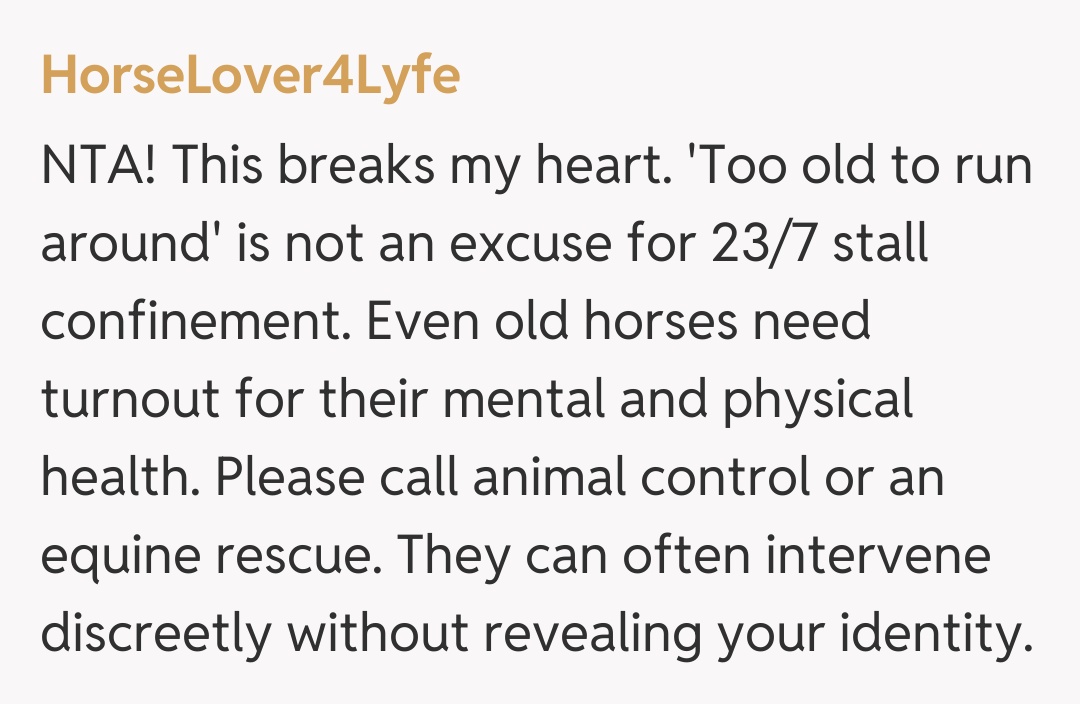
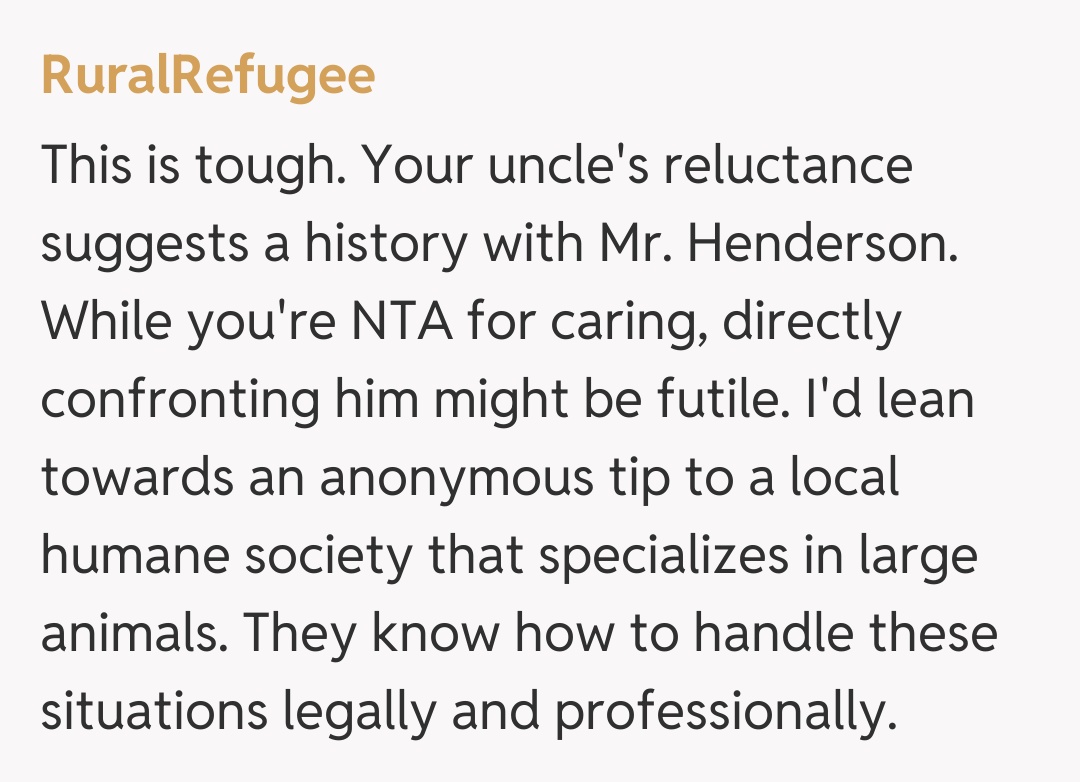
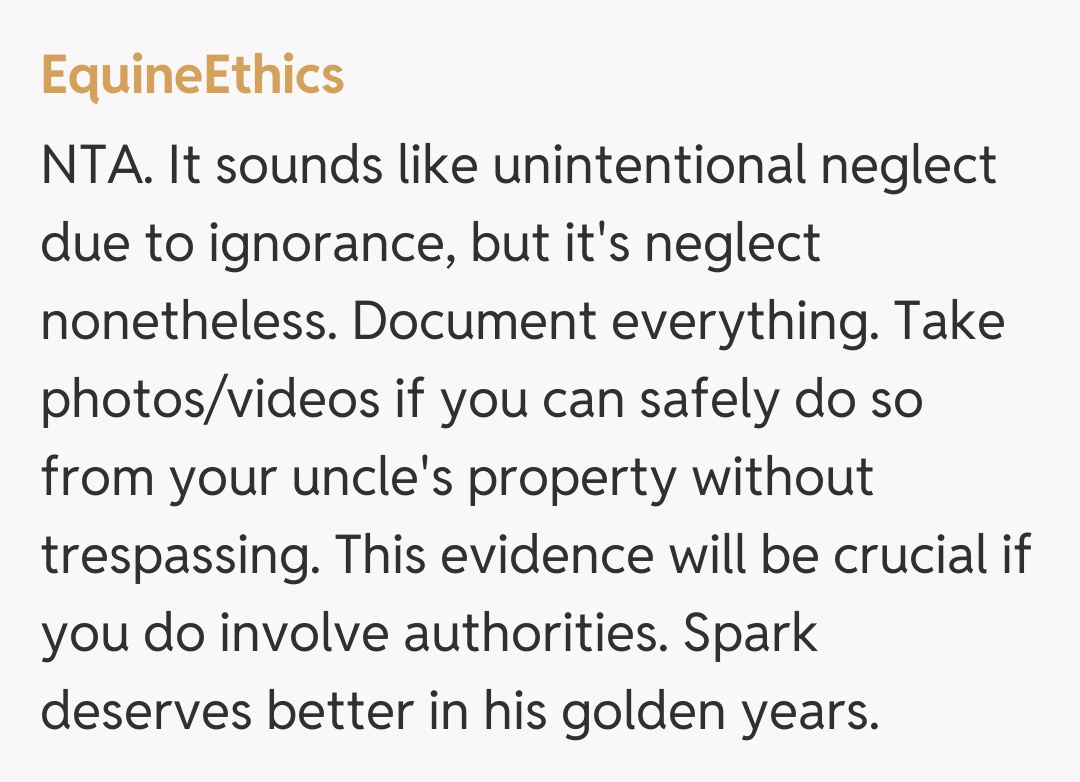
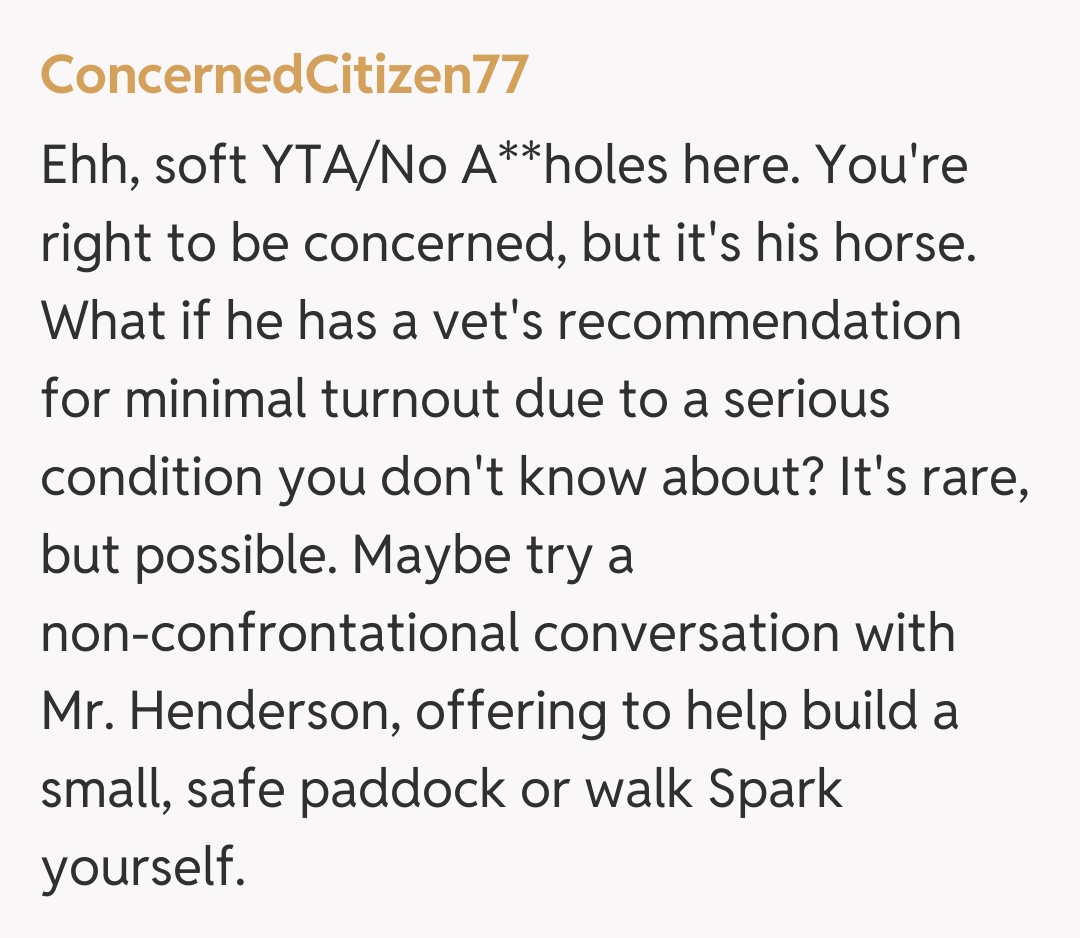
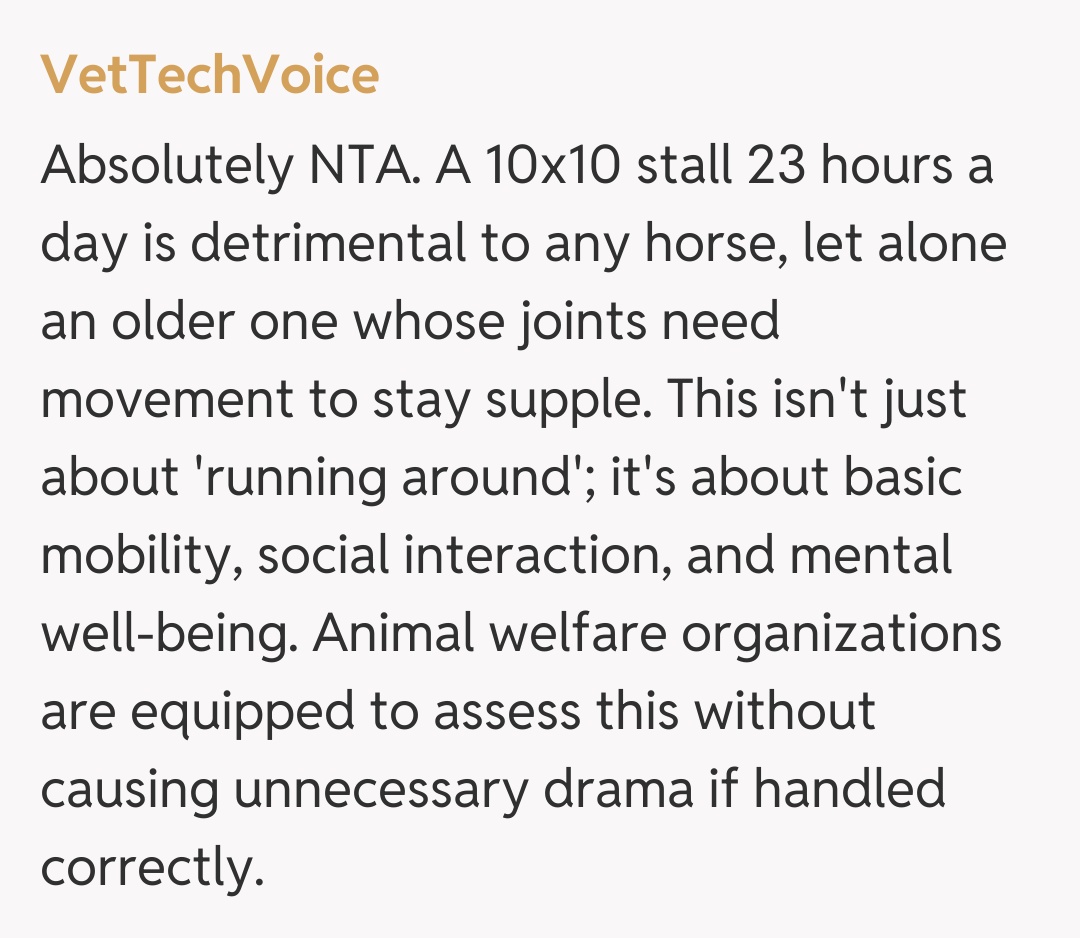
The response to Alex's dilemma was overwhelming, with a strong consensus leaning towards NTA (Not The A**hole). Many readers expressed outrage at Mr. Henderson's apparent neglect, emphasizing that an old horse still needs exercise and mental stimulation. Comments frequently cited the well-known health risks associated with prolonged stall rest, such as digestive issues and joint problems, validating Alex's concerns and research.
Several commenters urged Alex to document everything: dates, observations, and any communication attempts. Practical advice poured in, ranging from anonymously contacting local animal protective services or an equine rescue organization, to subtly providing educational materials to Mr. Henderson. The general sentiment was that while respecting boundaries is important, animal welfare often triumphs over neighborly politeness when clear suffering is involved.
Alex's story is a potent reminder that our responsibility to animals extends beyond simple feeding and watering. The consensus is clear: Spark deserves more than a perpetual stall sentence. While direct confrontation might be challenging, there are avenues for advocacy that prioritize the horse's welfare. This situation encourages us all to be observant, informed, and courageous when silent suffering is witnessed. Let's hope Midnight Spark finds the peace and freedom he deserves in his final years.