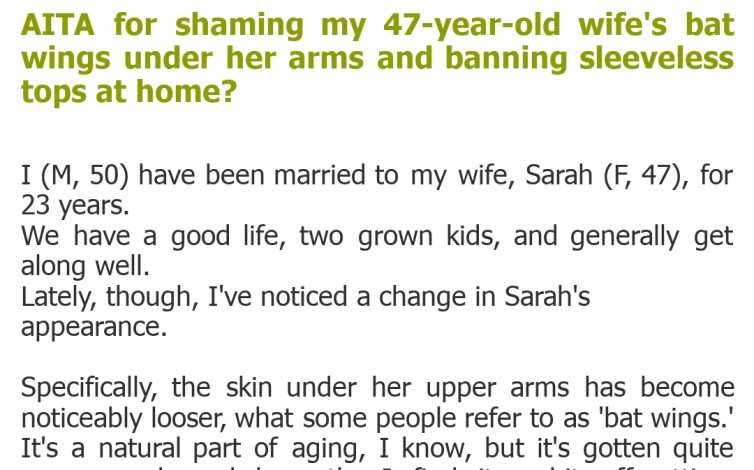
AITA for shaming my 47-year-old wife’s bat wings under her arms and banning sleeveless tops at home?
Oh, relationships. They're supposed to be our safe harbor, a place where we feel loved, accepted, and celebrated, flaws and all. But what happens when that harbor starts to feel less like a sanctuary and more like a battleground, especially when it comes to something as sensitive as our bodies? Today's AITA is a stark reminder of how words can cut deeper than any knife, particularly when spoken by the person who vowed to cherish you.
We've all had moments where we've felt a little less than perfect, but imagine having your insecurities not just acknowledged, but actively highlighted and shamed by your spouse. This story dives into a truly uncomfortable scenario where a husband takes it upon himself to 'manage' his wife's appearance, specifically her arms. Grab your tissues and your 'judgment' hats, because this one is likely to spark some serious debate about respect, love, and body autonomy within marriage.

"AITA for shaming my 47-year-old wife's bat wings under her arms and banning sleeveless tops at home?"
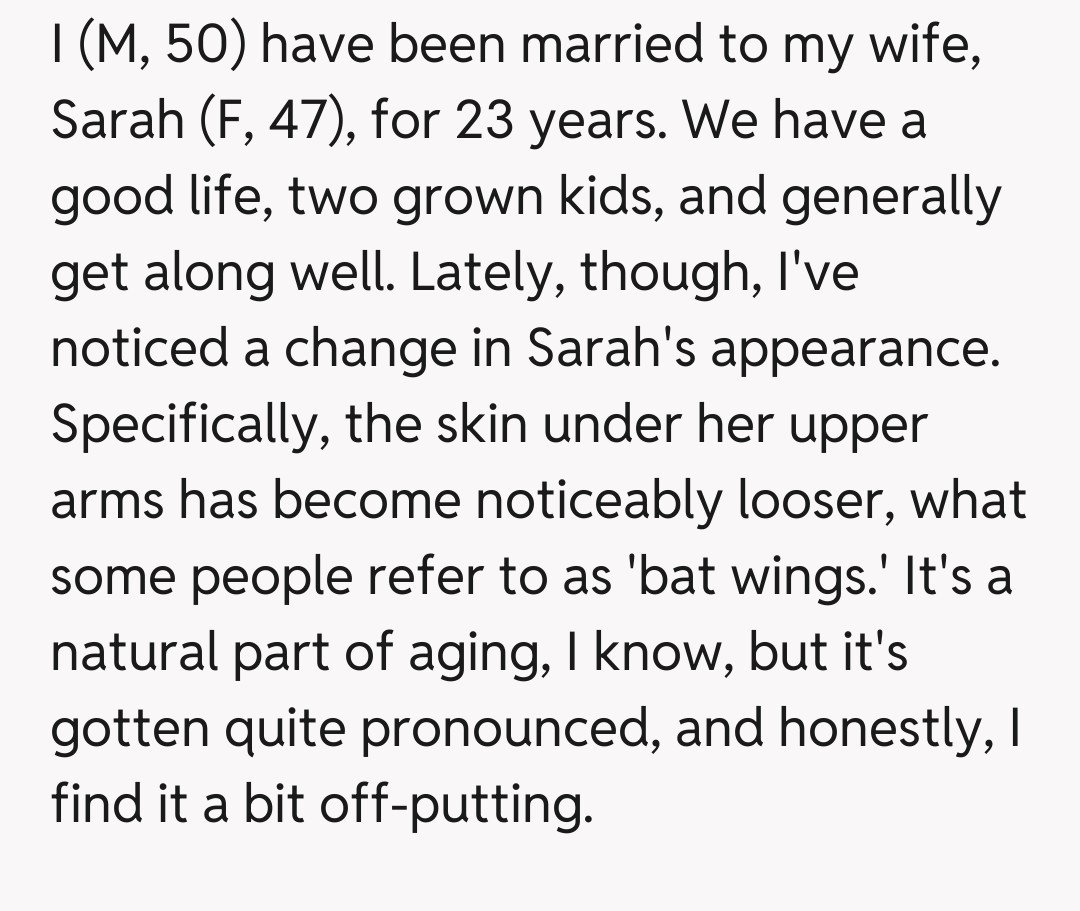
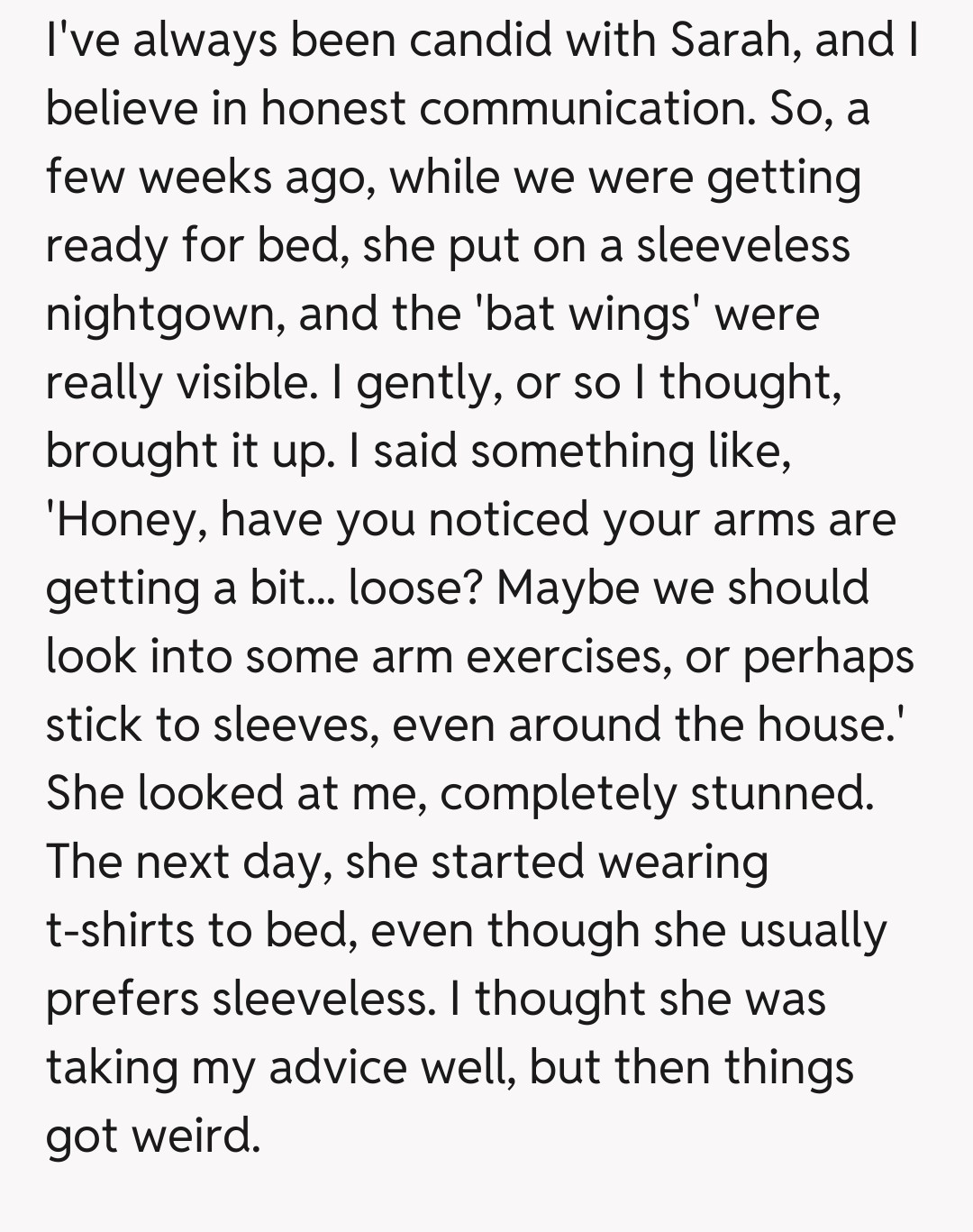
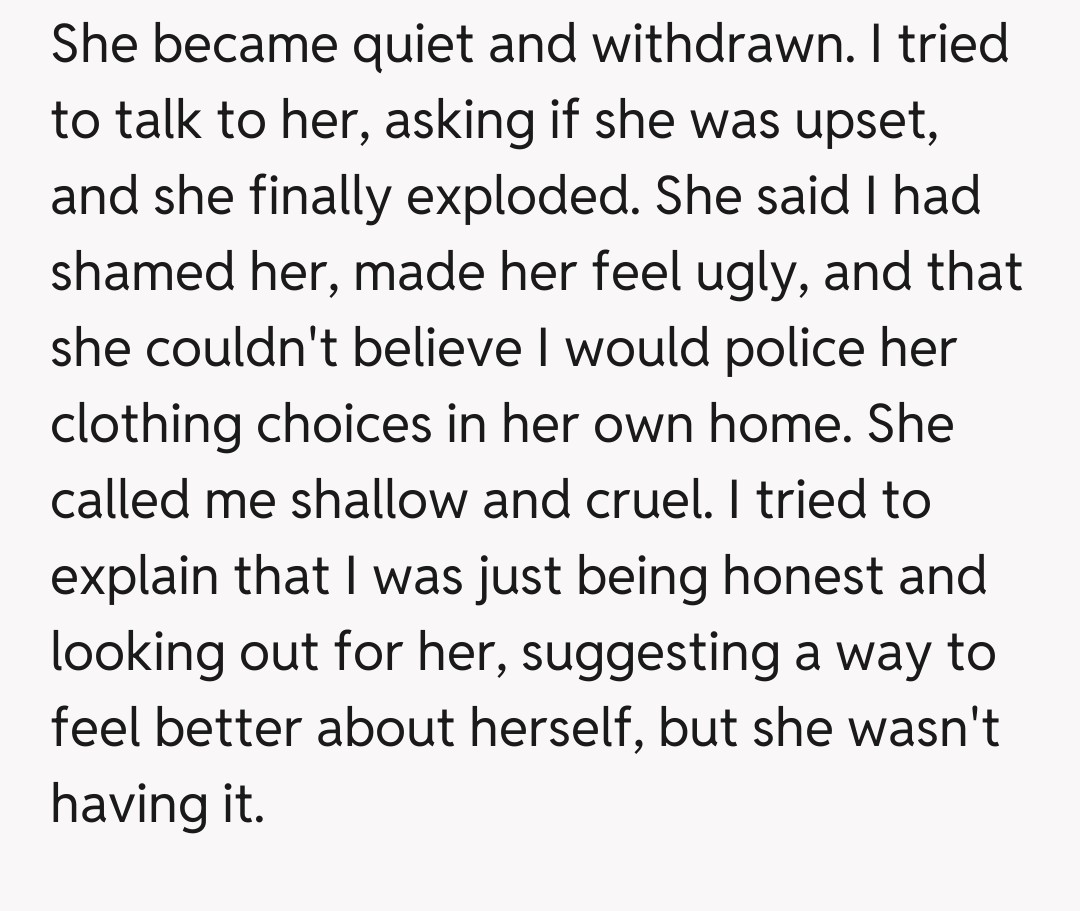
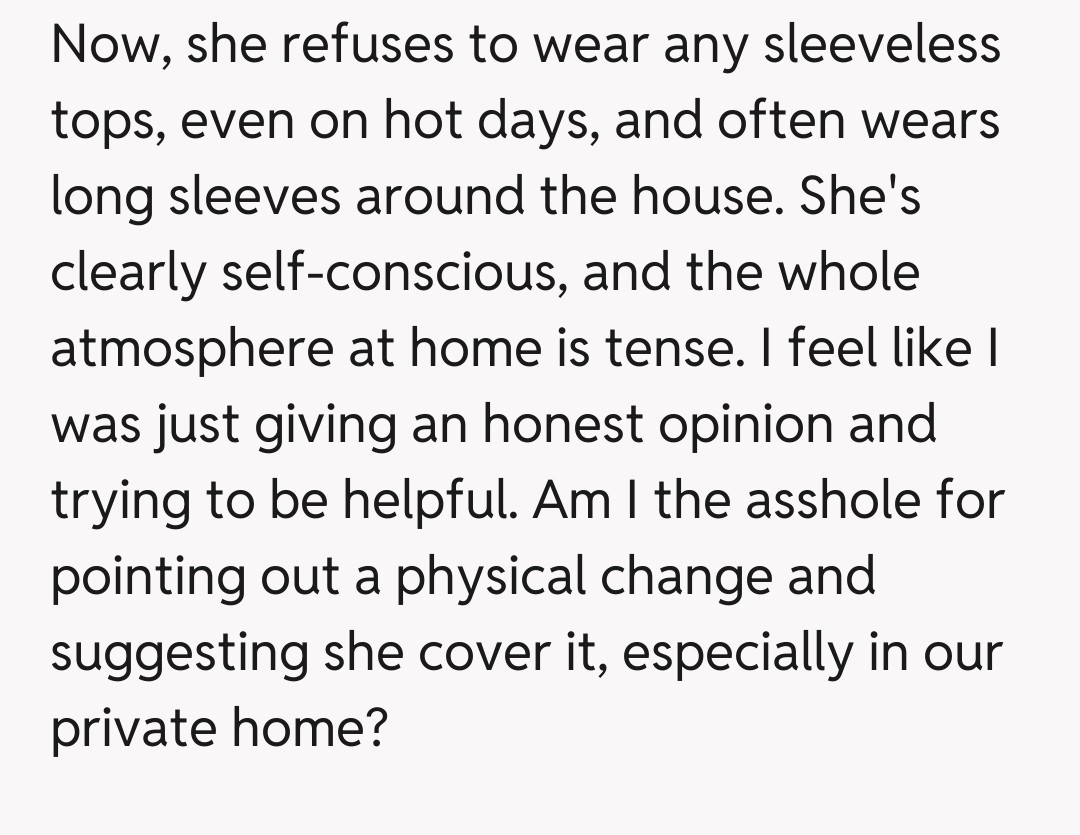
This post dives headfirst into one of the most fraught territories of a long-term relationship: body image and spousal criticism. While the original poster (OP) frames his comments as 'honest' and 'helpful,' the immediate and profound negative reaction from his wife, Sarah, tells a very different story. It highlights a critical distinction between constructive feedback and outright shaming, especially when it targets a sensitive, age-related physical change.
One of the cornerstones of a healthy marriage is unconditional acceptance and making your partner feel safe and loved for who they are, not just for how they look. By explicitly pointing out a perceived flaw and then suggesting a 'ban' on certain clothing, even in their own home, OP has fundamentally undermined Sarah's sense of security and self-worth within their relationship. This isn't about 'honesty'; it's about control and imposing his aesthetic preferences onto her.
There are countless ways to approach concerns about a partner's health or well-being that don't involve shaming their physical appearance. If OP was genuinely worried about Sarah's fitness, a supportive suggestion to join a gym together, or to try new activities, would have been far more loving and effective. Instead, he zeroed in on a superficial aspect and linked it directly to her clothing, making it about her inadequacy rather than shared well-being.
The impact of OP's words is clearly visible in Sarah's subsequent behavior. She has become self-conscious and withdrawn, actively changing her habits to avoid his disapproval. This isn't just about 'bat wings'; it's about the erosion of trust and intimacy, and the creation of an environment where Sarah no longer feels comfortable or accepted in her own skin, in her own home, with her own husband. That's a serious breach of marital respect.
The Internet Weighs In: Is He Helpful or Horrifically Cruel?
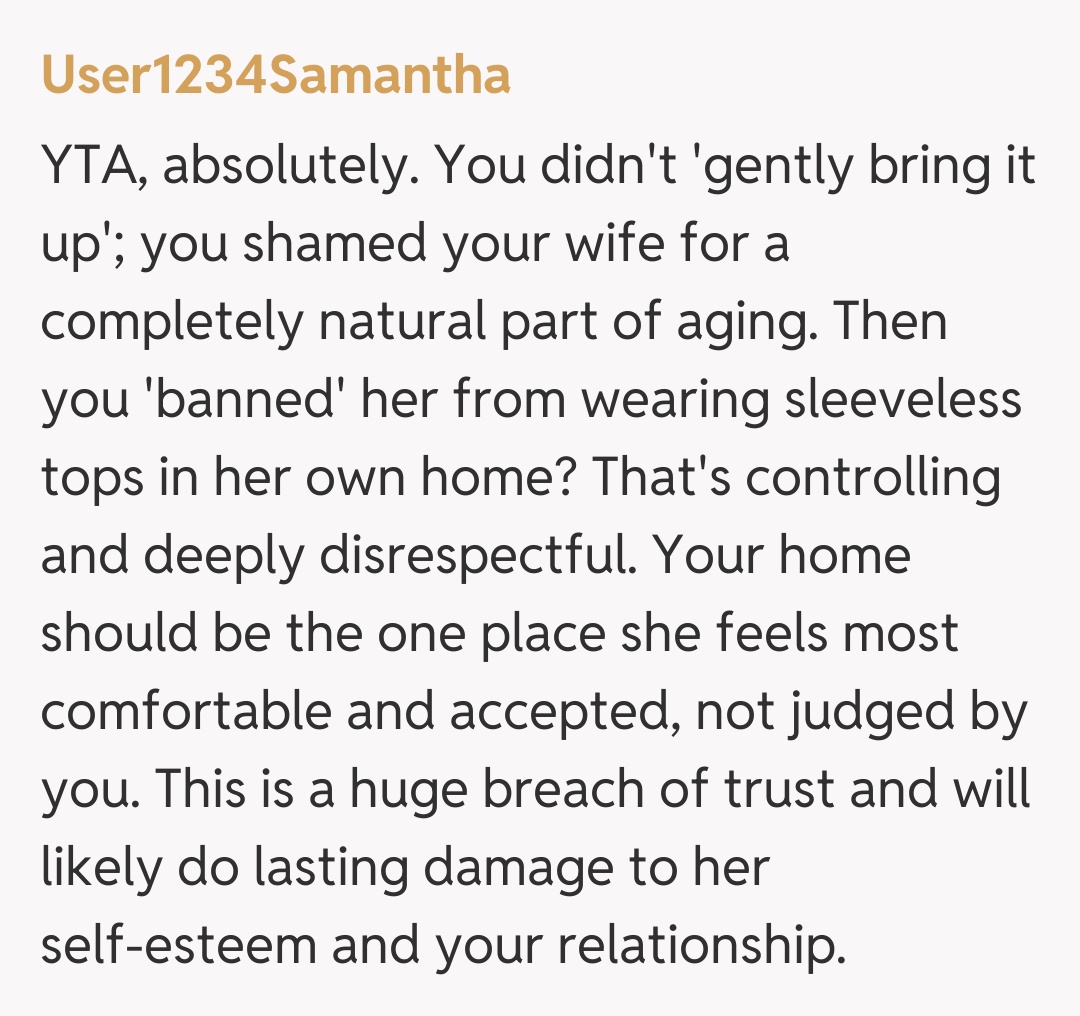
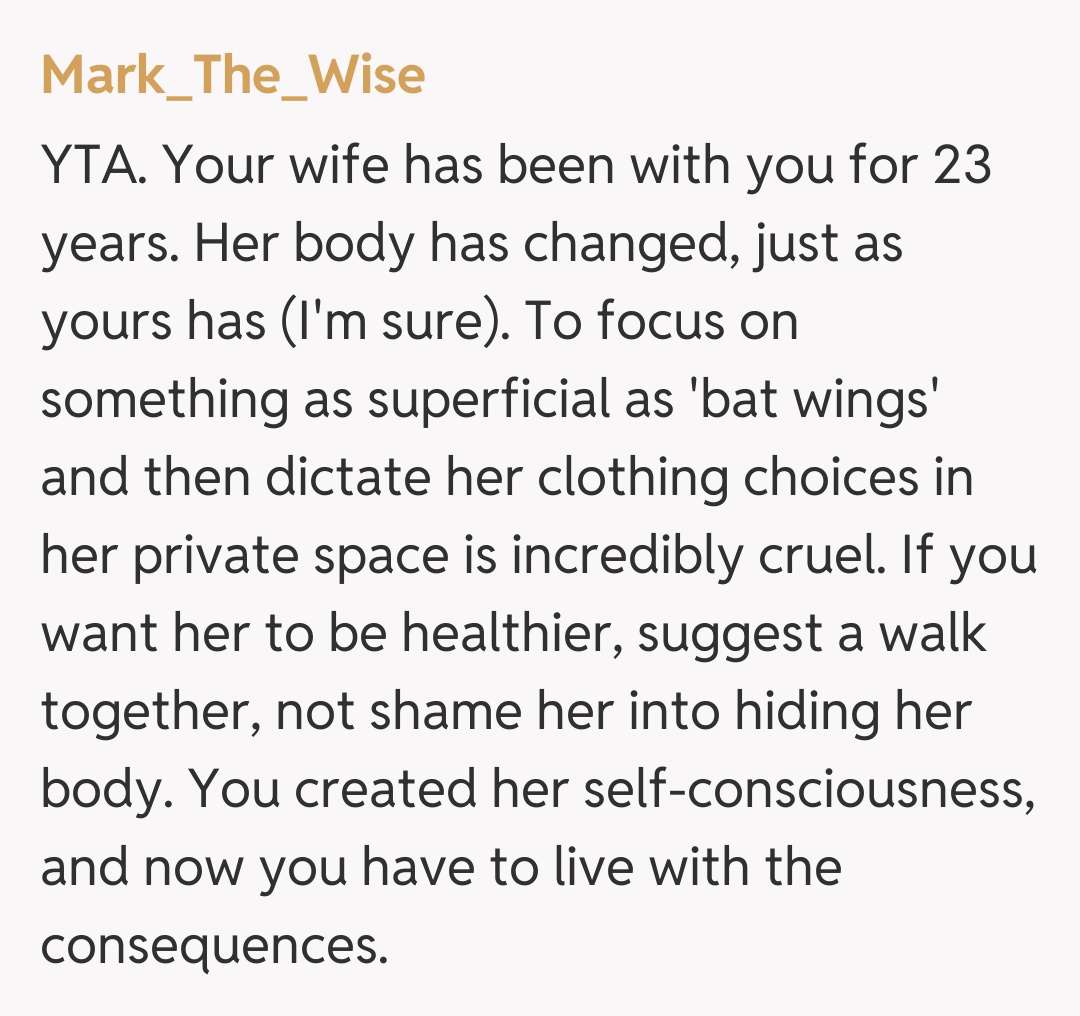
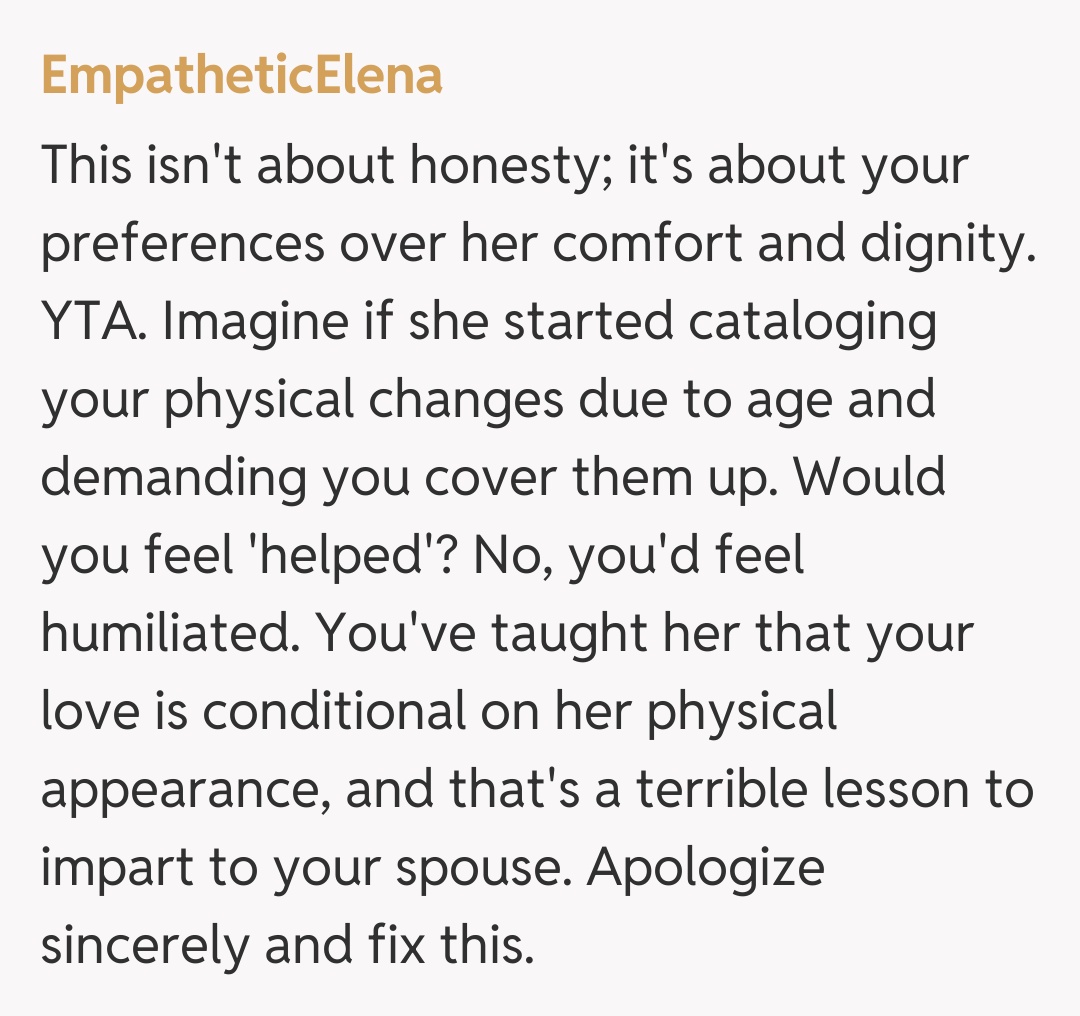
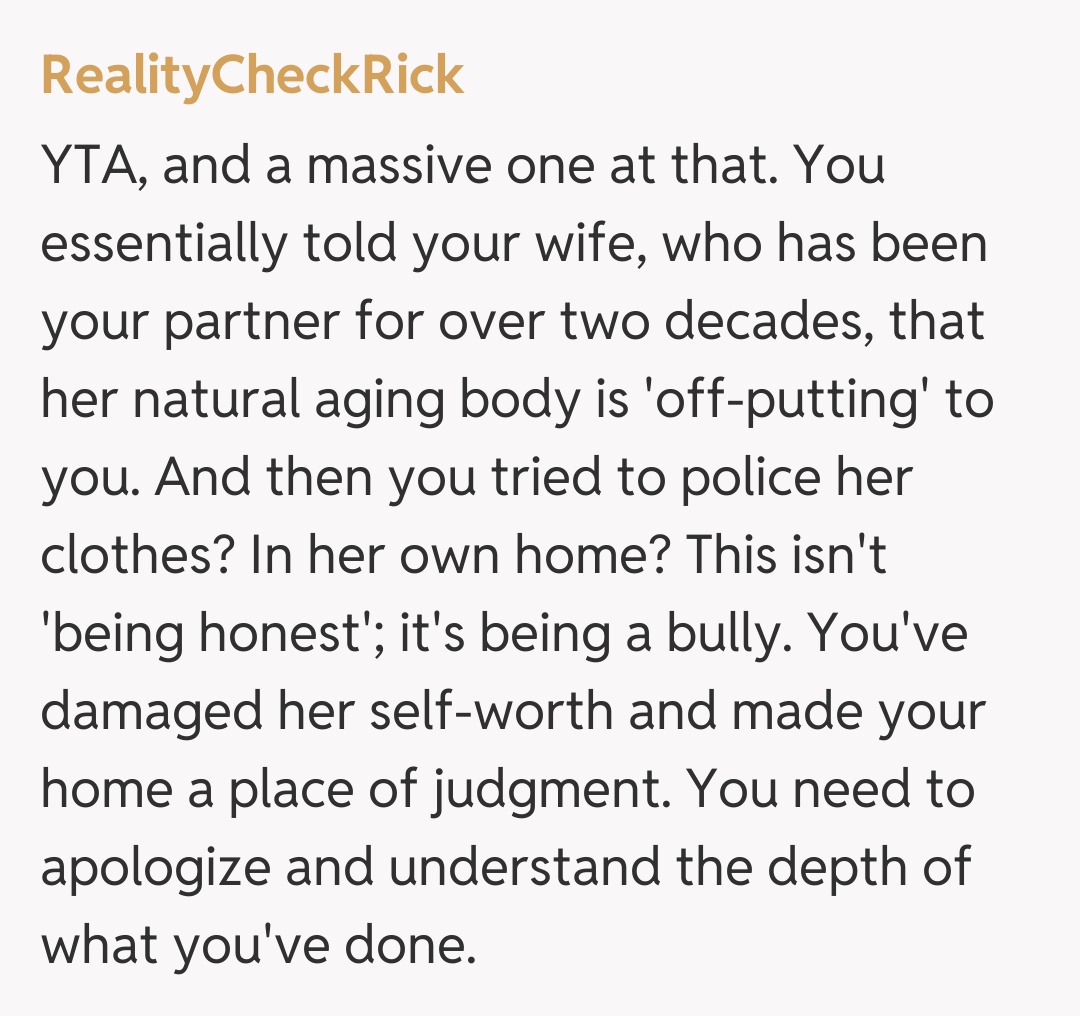
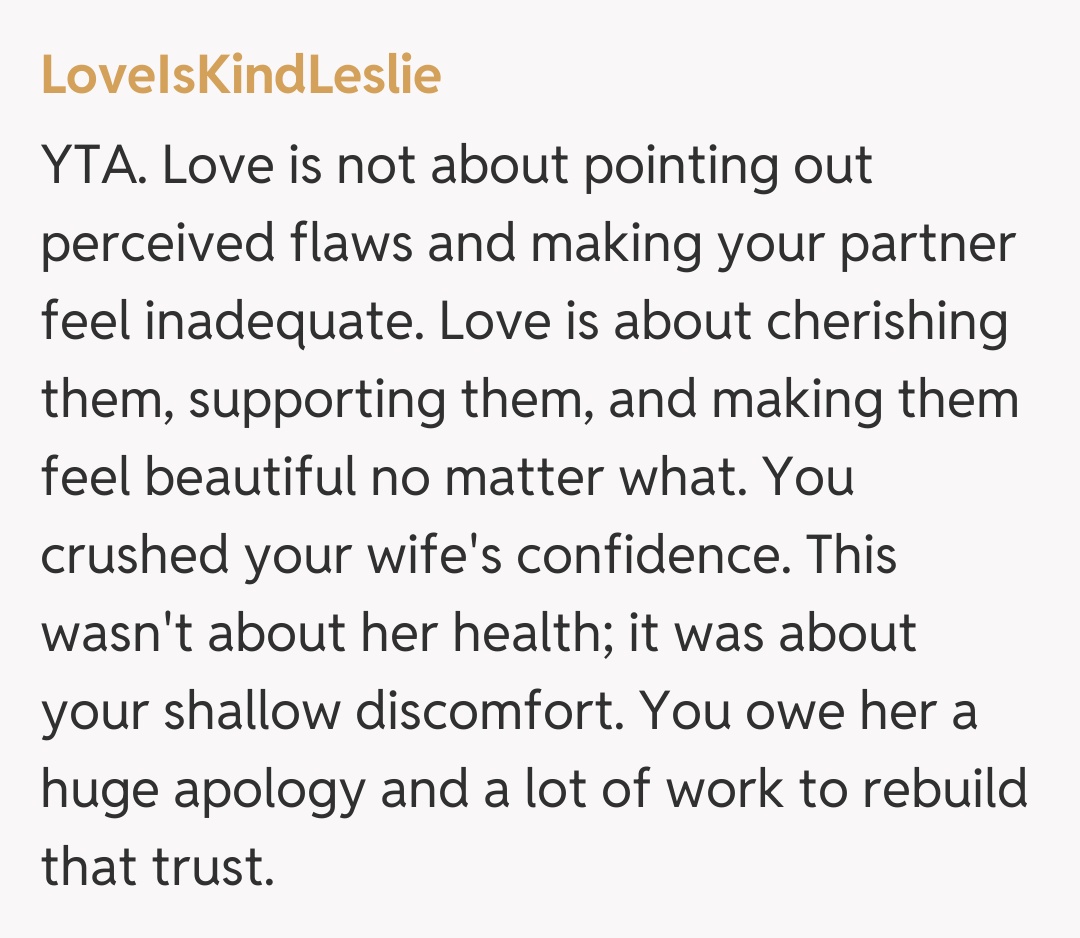
The comment section exploded, and as expected, the consensus was overwhelmingly clear. Readers didn't mince words, almost universally condemning the original poster for his insensitivity and blatant body shaming. Many pointed out that his actions were a profound betrayal of trust, especially coming from a partner of over two decades. The idea of 'banning' clothes in one's own home truly struck a nerve, highlighting a deep lack of respect and an attempt at control.
Several themes emerged, with many users emphasizing the sacredness of a home as a safe space and how OP violated that for his wife. The comments repeatedly stressed that his 'honesty' was merely thinly veiled cruelty, and that his focus on her appearance was shallow and damaging. The overwhelming sentiment was that he owes his wife a massive apology and needs to fundamentally rethink what it means to be a supportive and loving spouse.
This AITA story serves as a powerful cautionary tale about the immense impact of words, especially within the sanctity of a marriage. It underscores that honesty, when devoid of empathy and respect, can quickly transform into cruelty. The original poster's actions, though he may have framed them as helpful, caused significant emotional distress and created an atmosphere of judgment rather than acceptance. Ultimately, a loving relationship thrives on making your partner feel safe, valued, and beautiful, not on policing their appearance or dictating their clothing choices, even behind closed doors. This is a moment for deep reflection on what true partnership entails.