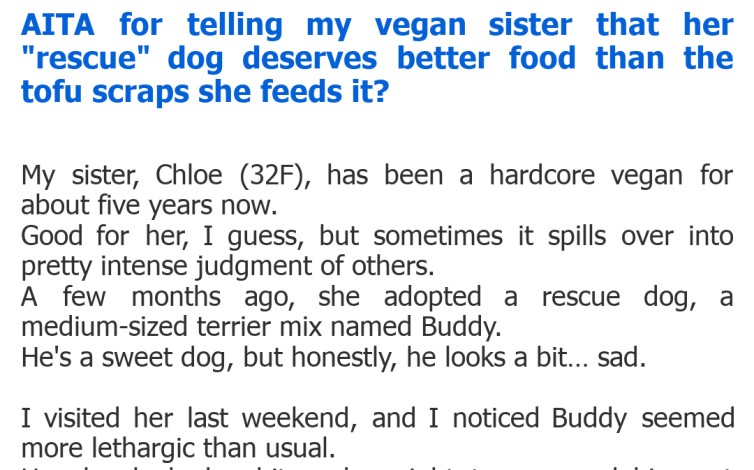
AITA for telling my vegan sister that her “rescue” dog deserves better food than the tofu scraps she feeds it?
Oh boy, do we have a meaty (or should I say, non-meaty?) debate brewing today! Our anonymous poster brings us a classic family conflict, but with a twist that's close to many pet owners' hearts. When personal ethics clash with perceived animal welfare, things can get pretty heated, especially when the animal in question is a beloved rescue dog.
This isn't just about food preferences; it delves into the core responsibilities of pet ownership and the often-complex dynamics within families. Is our original poster (OP) genuinely concerned for the dog's well-being, or are they overstepping boundaries and judging their sister's lifestyle choices? Let's dive into this tale of tofu, tails, and family tension!

"AITA for telling my vegan sister that her "rescue" dog deserves better food than the tofu scraps she feeds it?"
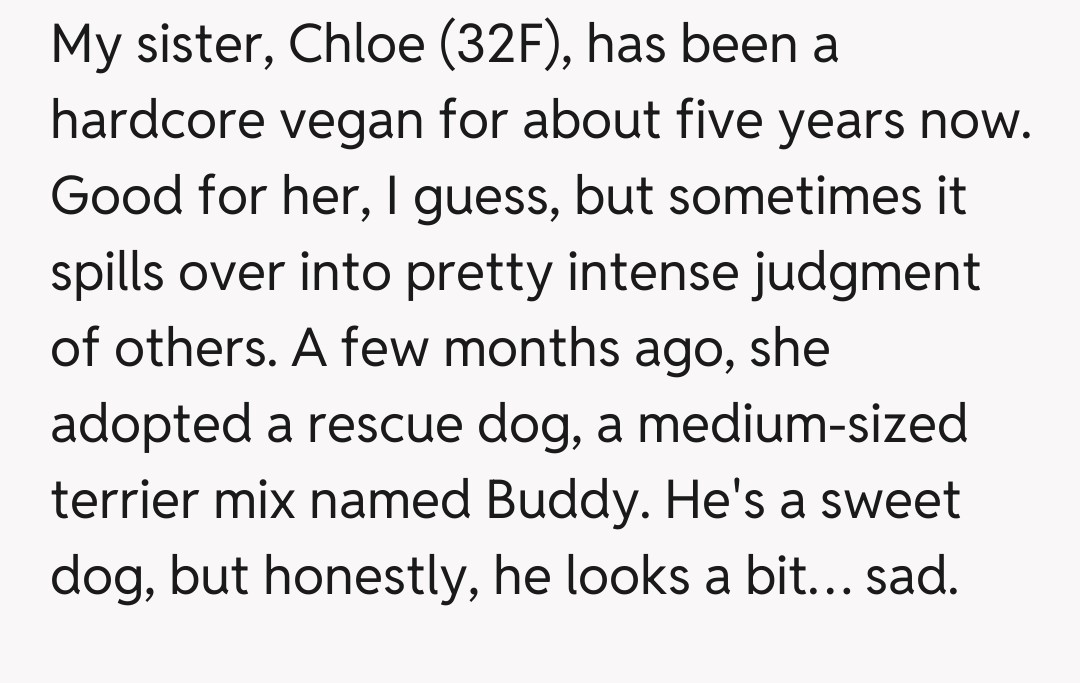
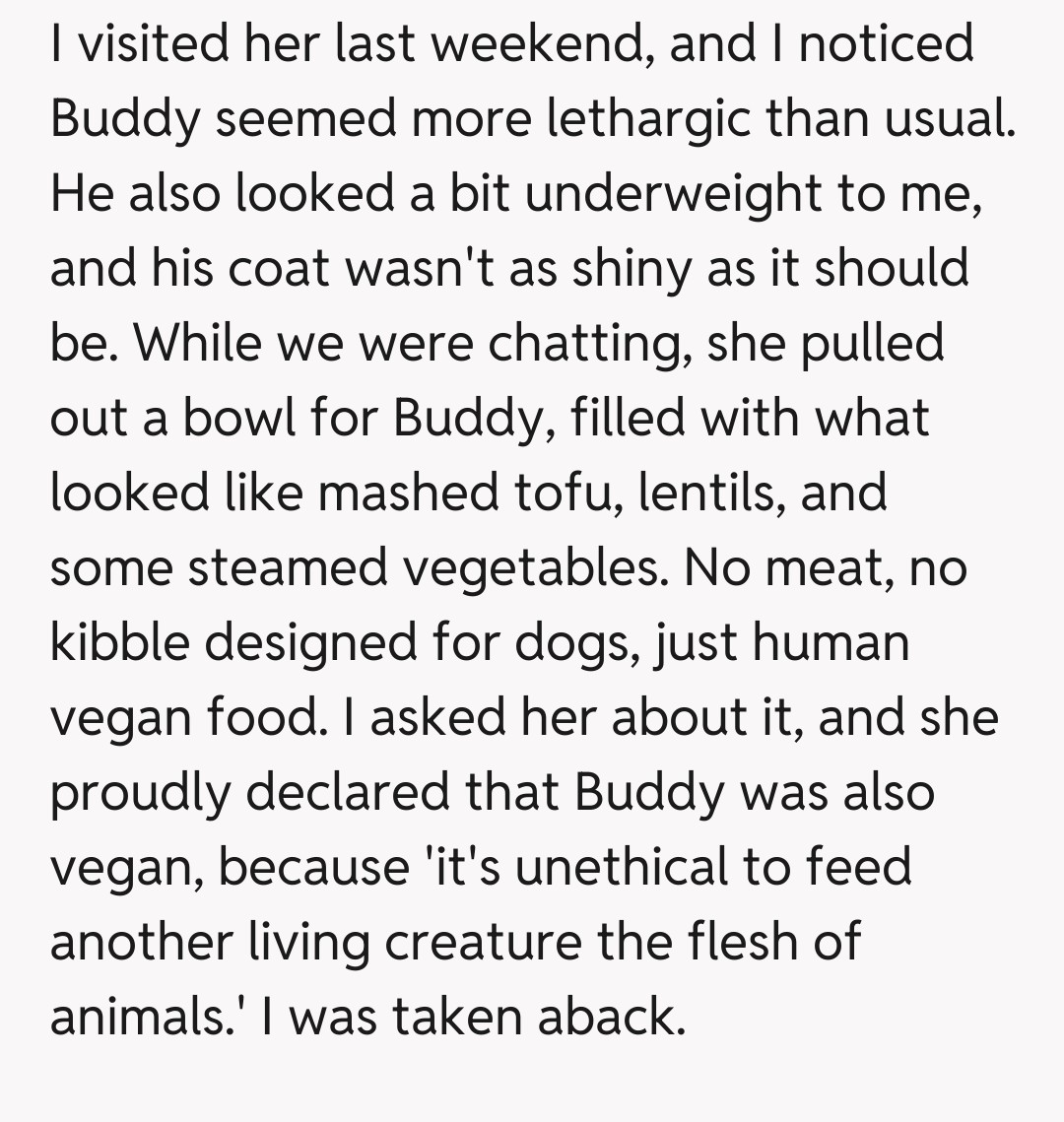
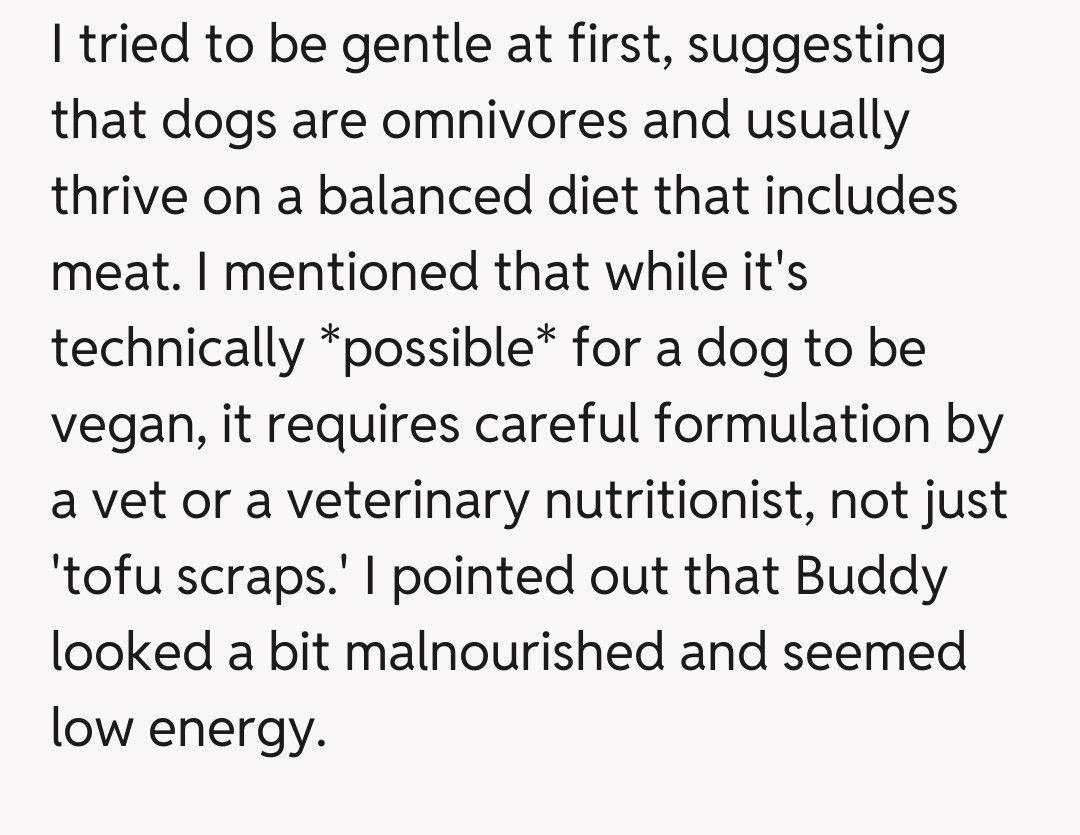
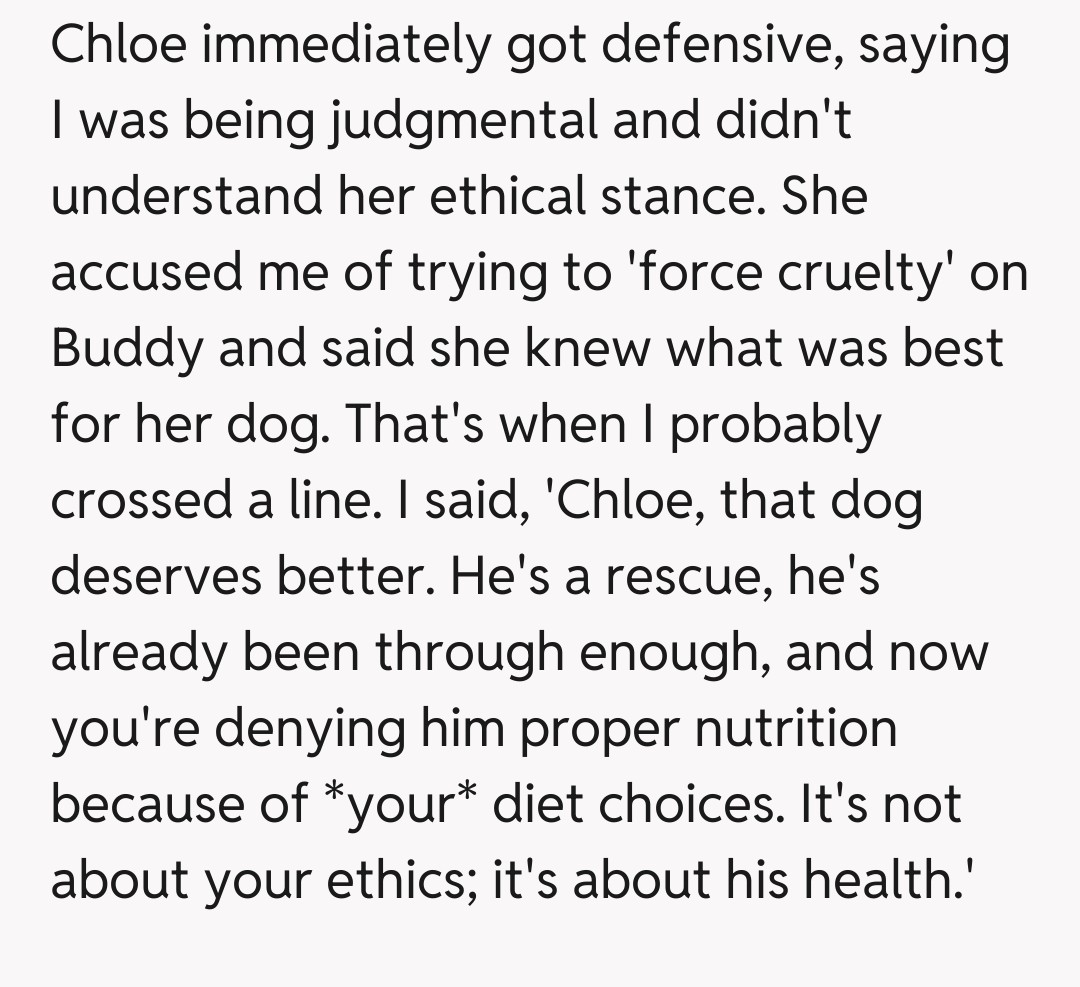
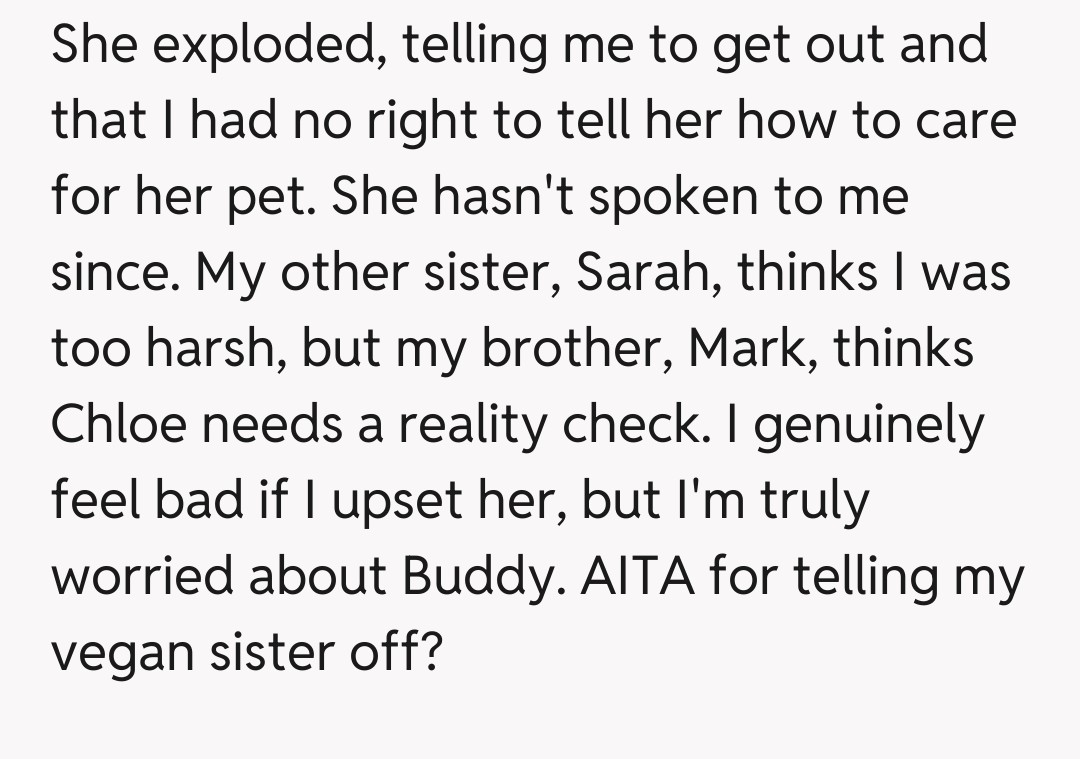
This situation highlights a common ethical dilemma where personal beliefs intersect with animal welfare. On one hand, Chloe's commitment to veganism is a deeply held ethical stance, extending to all creatures. It's understandable why she would want her dog to follow a similar diet, viewing it as consistent with her values and preventing harm to other animals.
However, the biological needs of a domestic dog are a critical factor. While dogs are omnivores, their evolutionary history and nutritional requirements often include animal proteins for optimal health. A vegan diet for a dog, while theoretically possible, demands meticulous planning and often supplementation, ideally under veterinary guidance, to ensure it's nutritionally complete and balanced.
OP's concern for Buddy's visible health issues – lethargy, thinness, dull coat – is valid. As a rescue, Buddy may have already faced challenges, and ensuring he receives appropriate nutrition is paramount to his recovery and long-term well-being. The concern isn't about shaming Chloe's veganism, but rather about the dog's specific needs.
The delivery of the message, however, is where the conflict escalated. While OP's intentions were good, the phrasing "deserves better food" and accusing Chloe of "denying him proper nutrition" likely came across as an attack rather than constructive advice. Finding a way to express concern without judgment can be incredibly difficult in emotionally charged family discussions.
What the internet had to say about Buddy's diet dilemma…
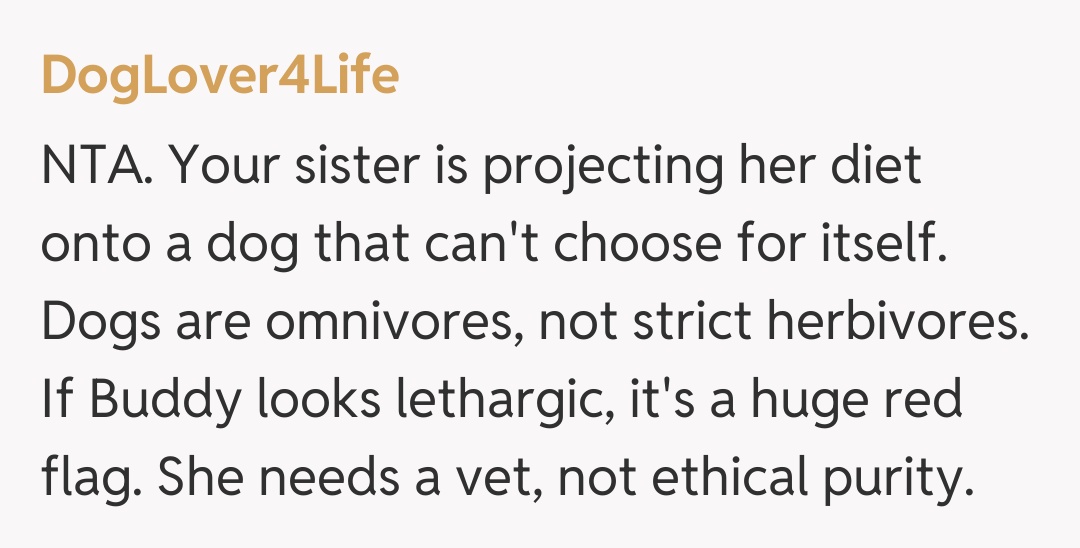
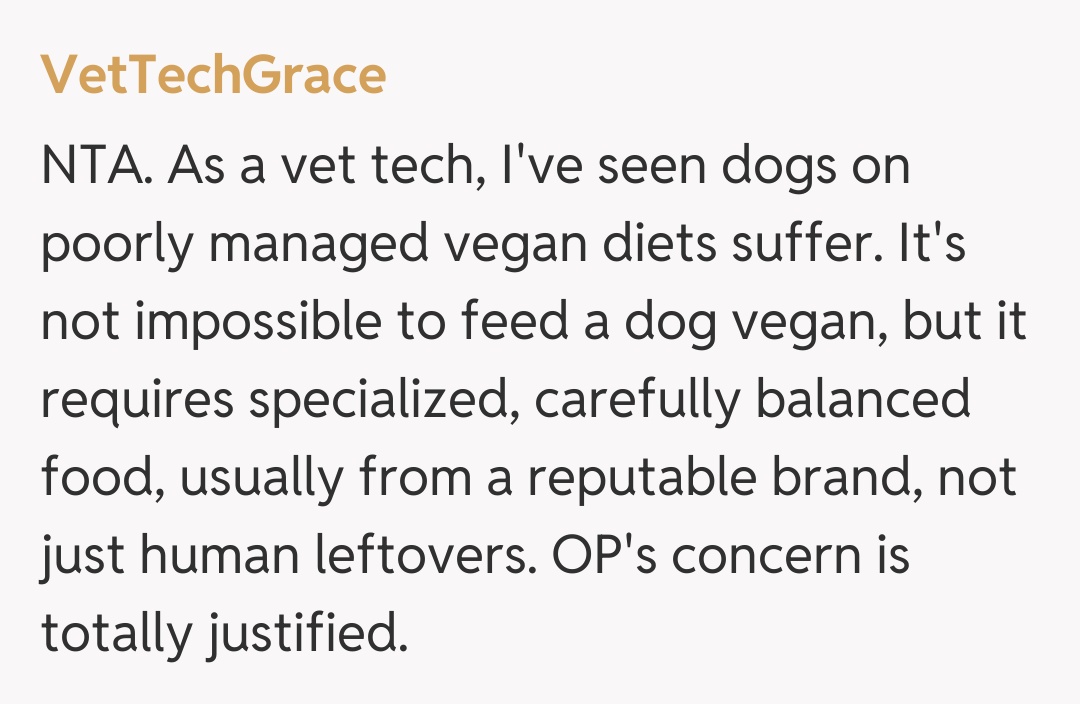
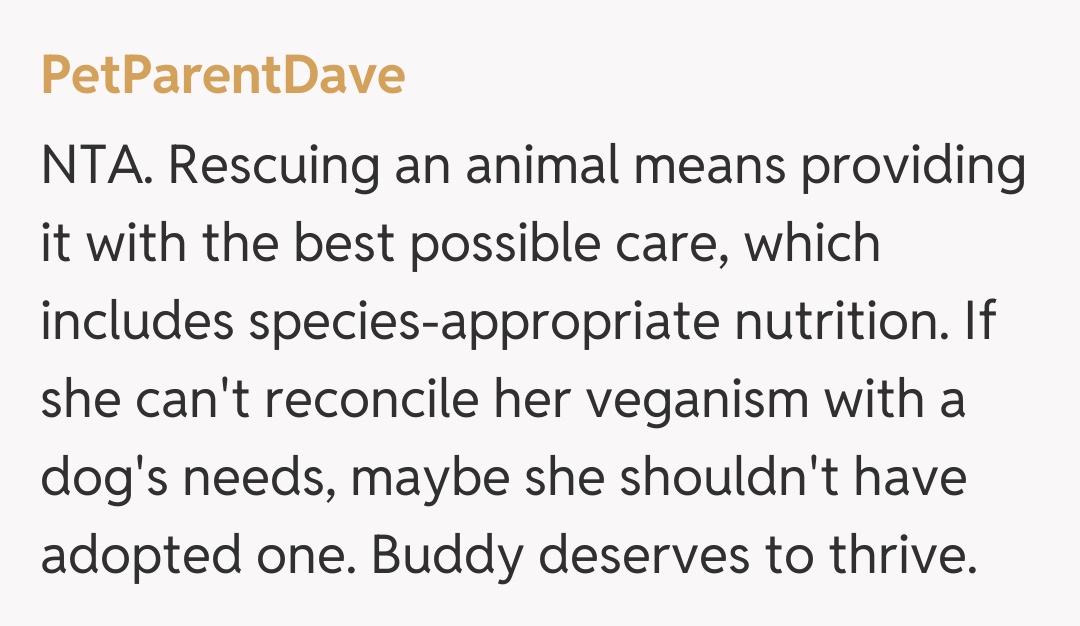
The comments section for this one was, predictably, a hotbed of passionate opinions! Many users sided firmly with OP, arguing that a pet owner's dietary choices should not supersede the animal's biological needs. There was a strong consensus that denying a dog a species-appropriate diet, especially if it's visibly unwell, borders on neglect. Concerns for Buddy's welfare were paramount.
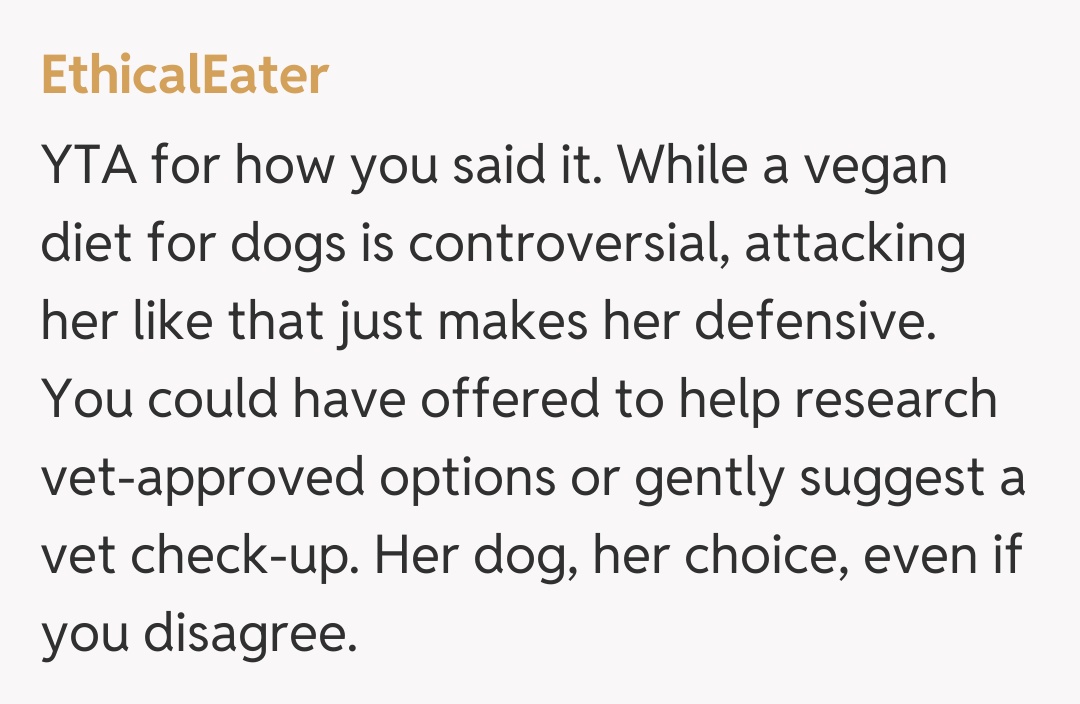
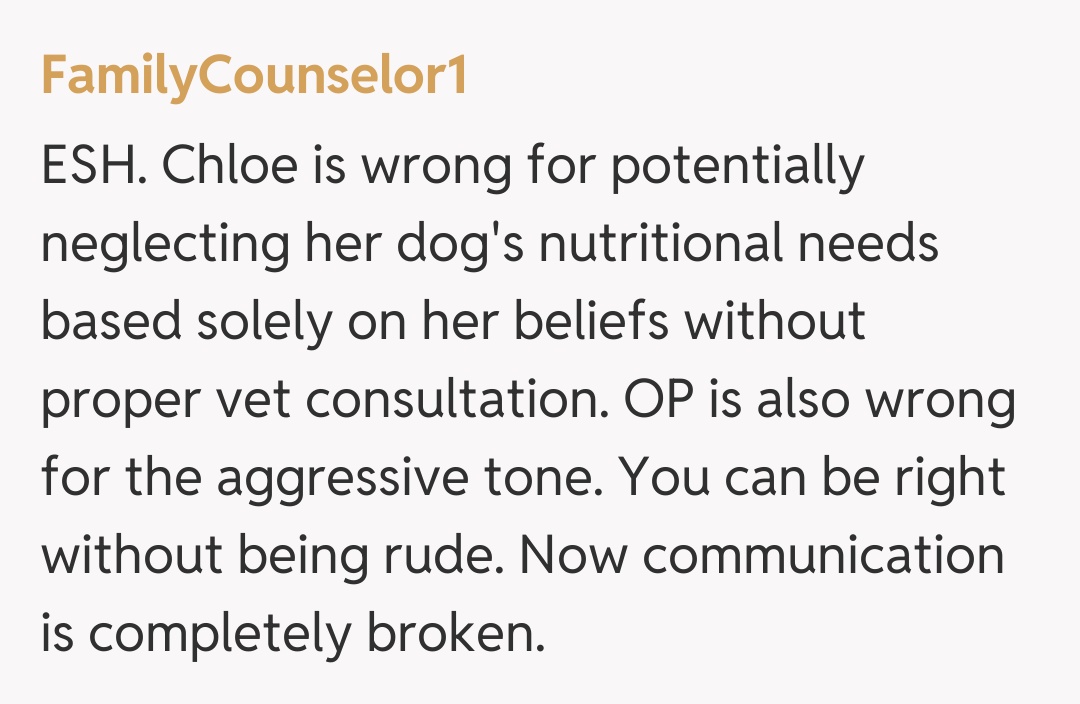
However, a significant number of commenters also pointed out OP's less-than-ideal communication style. While their concern was valid, the confrontational approach likely guaranteed Chloe would shut down. Some suggested a more tactful approach, like offering to pay for a vet visit or researching vet-approved vegan dog food options together. The consensus leaned towards NTA, but with a caveat about the delivery.
This story serves as a stark reminder that while our personal values are important, they must sometimes take a backseat to the explicit needs of those in our care, especially pets. While Chloe's intentions might stem from a place of compassion, a dog's biology isn't negotiable. The real victim here, if Buddy is truly suffering, is the dog. Open, respectful communication, perhaps with a veterinarian's expert input, is desperately needed for Buddy's sake. What's best for Buddy should be everyone's top priority.