AITA for telling my daughter she’ll never keep a man unless she gets implants because she’s completely flat?
Welcome back, dear readers, to another dive into the often-murky waters of family dynamics and unsolicited advice. Today's AITA gem comes from a mother whose intentions, while perhaps misguided, sparked a firestorm of debate. Get ready for a story that touches on body image, parental expectations, and the ever-present tension between love and perceived 'tough love'. It's a conversation starter, to say the least.
This one really hits home for many, highlighting how deeply ingrained societal beauty standards can influence even our most intimate relationships. It poses the difficult question: where does a parent's desire to 'help' their child cross the line into outright body shaming? Let's unpack this emotional rollercoaster and see if our OP, Carol, is indeed the A-hole.

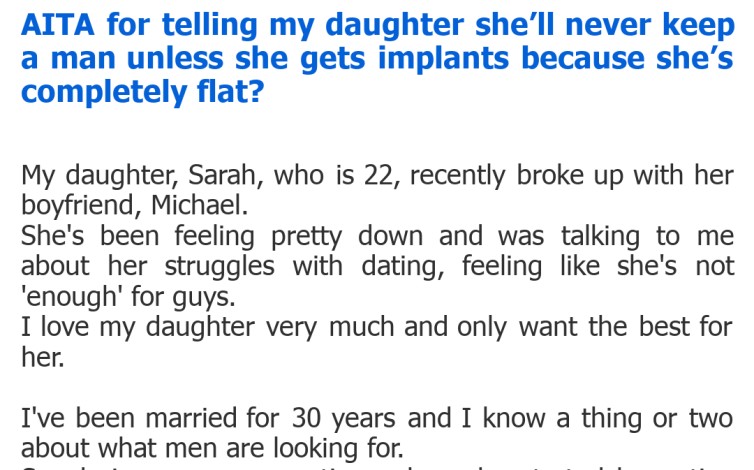
"AITA for telling my daughter she’ll never keep a man unless she gets implants because she’s completely flat?"
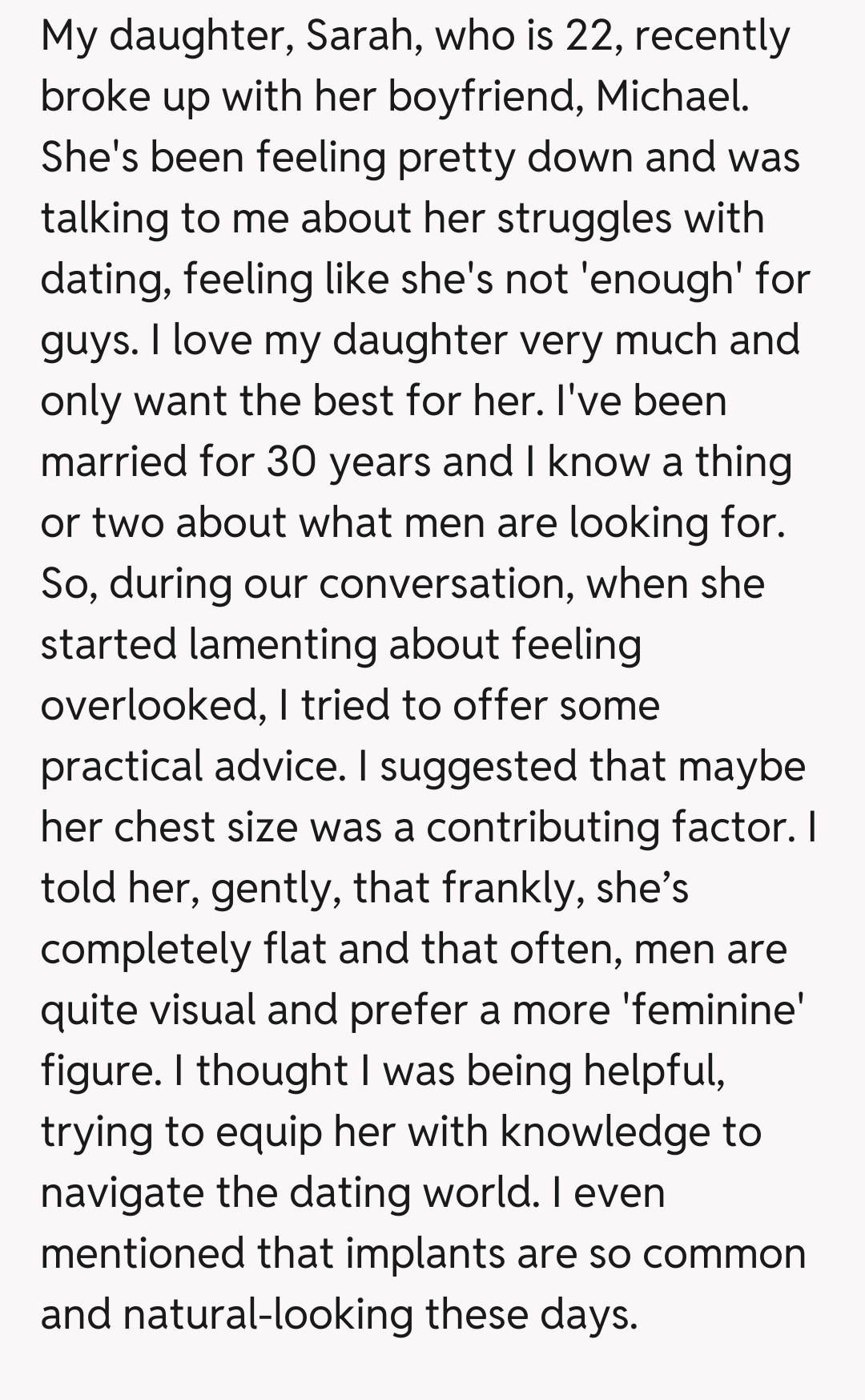
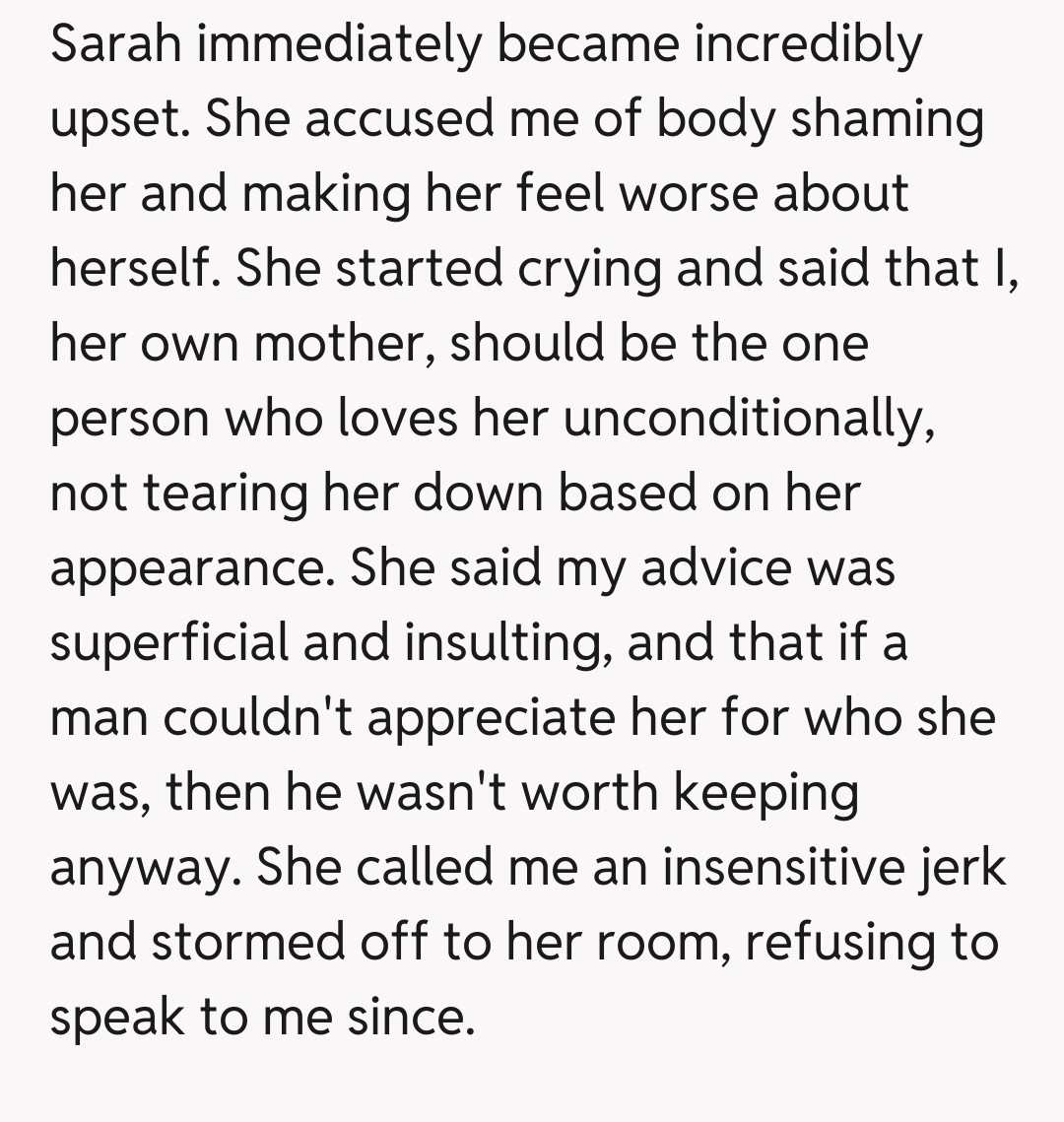
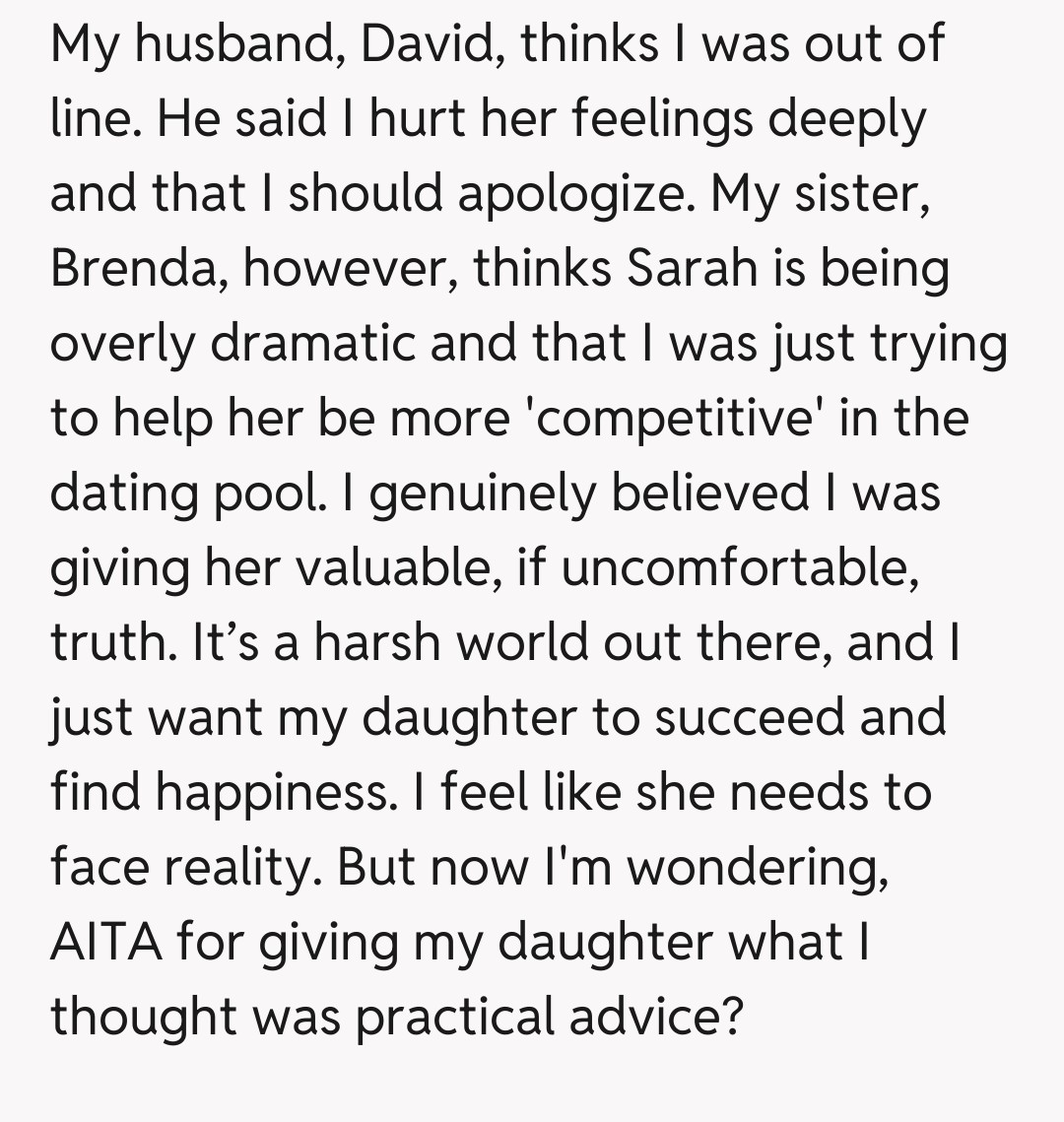
This post dives headfirst into one of the most contentious areas of parenting: where the line lies between giving honest advice and causing harm. On one hand, the mother, Carol, believes she's sharing 'valuable, if uncomfortable, truth' rooted in her experience. It's possible she genuinely thinks she's preparing her daughter, Sarah, for the perceived realities of the dating world, wanting her to be happy and successful.
However, the execution of this 'advice' is deeply problematic. Telling a daughter she '’ll never keep a man unless she gets implants because she’s completely flat' is not only body-shaming but also incredibly damaging to her self-esteem. It frames her body as a flaw that needs 'fixing' to be worthy of love, rather than celebrating her as she is. This kind of comment can leave deep psychological scars.
It's crucial to consider the impact of such words, especially from a parent. A parent's role should be to build up their child's confidence and self-worth, not to perpetuate societal pressures about physical appearance. The message sent here is that Sarah's worth, and her ability to find lasting love, is tied to her breast size, which is a dangerous and untrue narrative to internalize.
While Carol might feel she was being practical or even protective, her comments crossed a significant boundary. True support involves unconditional love and acceptance, helping a child build resilience, and fostering healthy self-perception, not suggesting cosmetic surgery as a prerequisite for a relationship. The intention might have been misguided, but the impact was undoubtedly hurtful.
The Internet Weighs In: Is 'Tough Love' Just Cruelty?
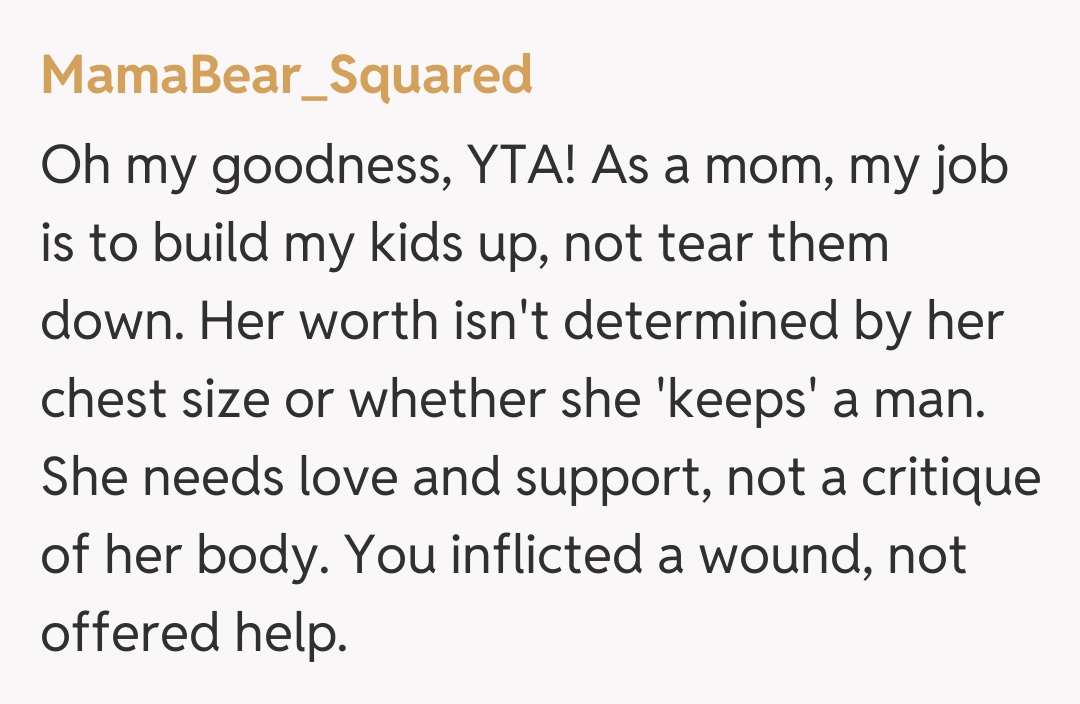
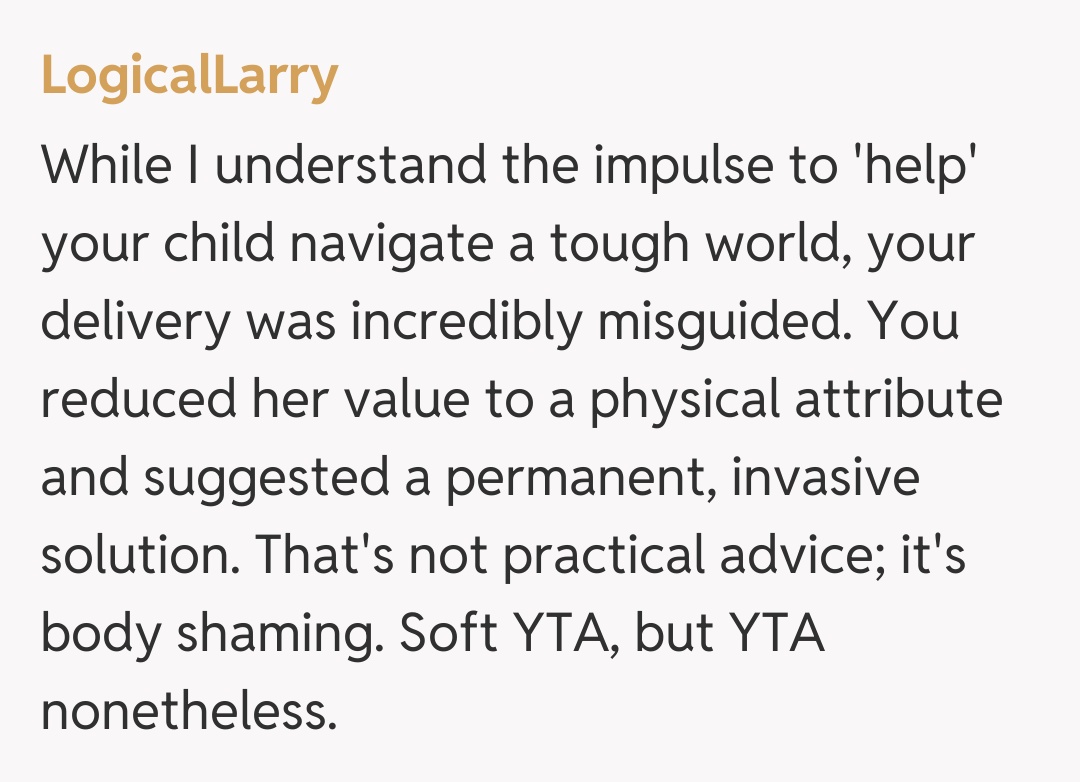
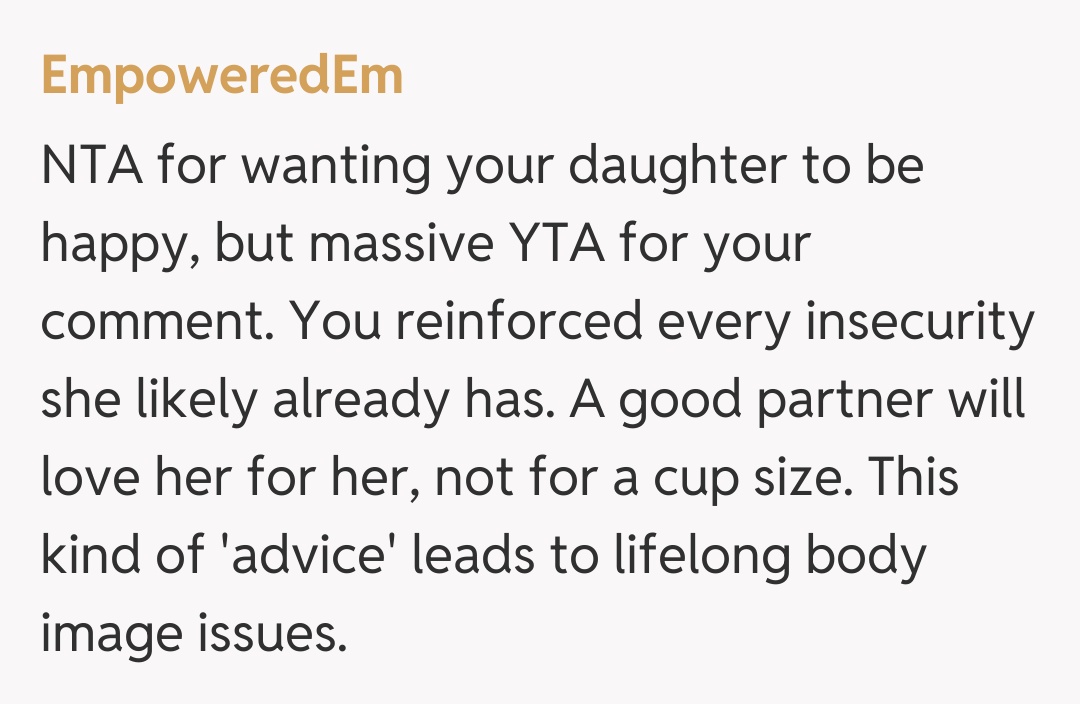
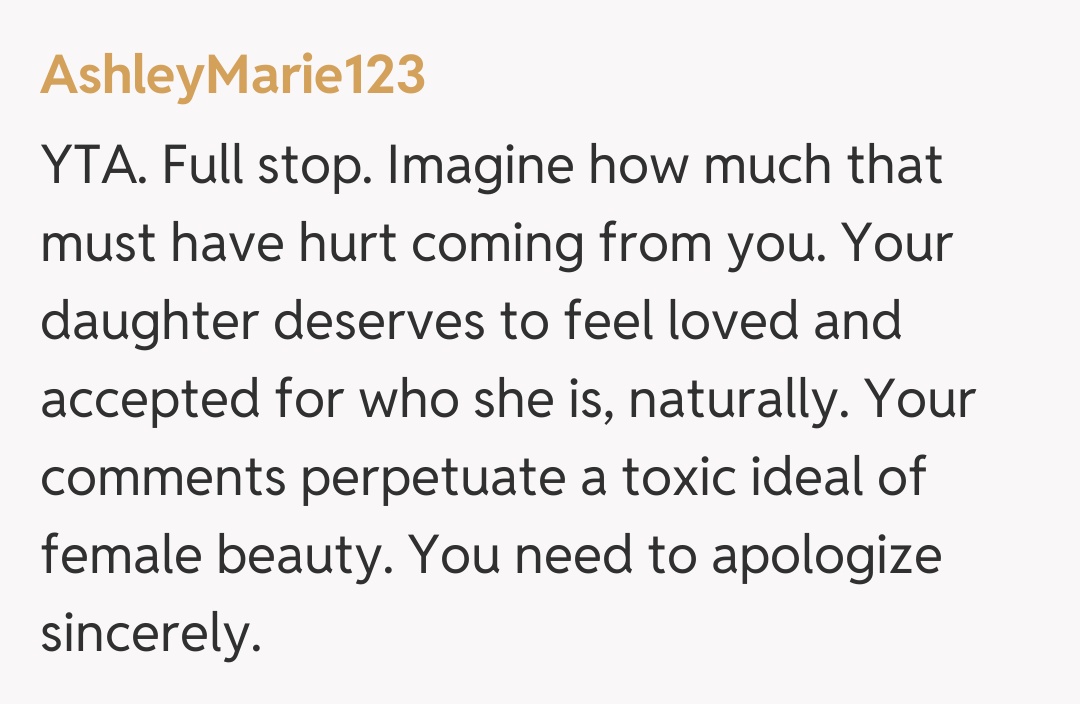
The internet, as expected, did not hold back on this one! The consensus was overwhelmingly clear: Carol was firmly in the wrong. Many commenters expressed profound shock and sadness that a mother could utter such words to her own daughter, especially when she was already feeling vulnerable after a breakup. The sentiment was strong that parents should be a source of unconditional support, not additional criticism.
Several threads delved into the long-term psychological impact of such comments, with users sharing personal anecdotes of similar experiences that shaped their body image negatively for years. The idea that a woman's worth is tied to her physical attributes, particularly breast size, was widely condemned as outdated and misogynistic. The comments highlighted a collective understanding of the need for empathy and constructive communication in parent-child relationships.
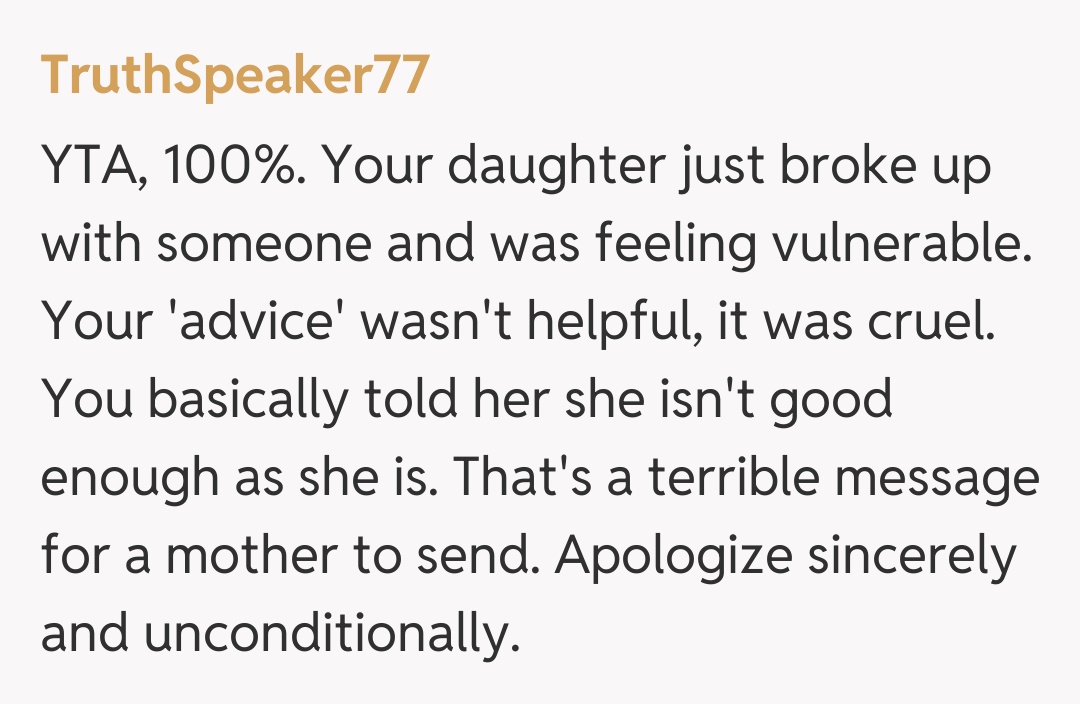
This story serves as a stark reminder of the power of our words, especially within the family unit. While a parent's intentions might sometimes come from a place of love or perceived wisdom, the impact of body-shaming comments can be devastating. True love and support mean accepting our children for who they are, encouraging self-love, and fostering an environment where they feel safe and cherished, not judged on superficial attributes. Let's strive to lift each other up, rather than inadvertently tearing down the very people we care about most. What do you think, readers? Where do we go from here?