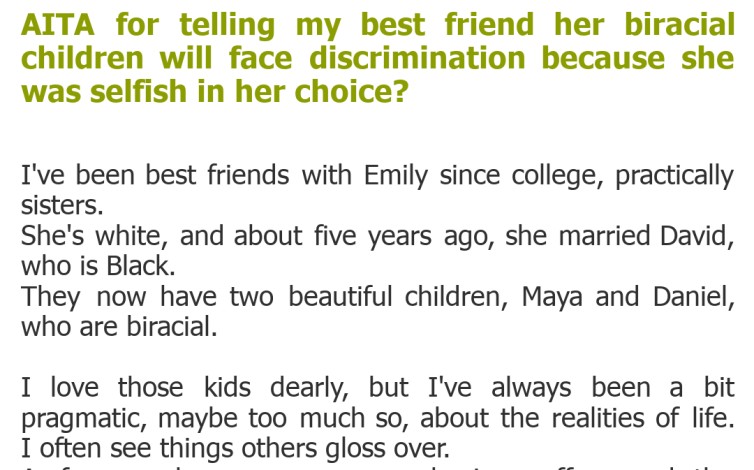
AITA for telling my best friend her biracial children will face discrimination because she was selfish in her choice?
Today's AITA post dives into the murky waters of friendship, parental choices, and deeply uncomfortable truths. Our OP, 'Sarah,' found herself in a heated exchange with her best friend, 'Emily,' after offering some unsolicited 'advice' about Emily's biracial children. It's a conversation that highlights how even well-meaning intentions can go terribly awry when not handled with sensitivity and respect. The lines between concern and judgment often blur, leading to significant emotional fallout.
This story touches on themes that are incredibly raw and personal for many: the realities of racial identity, the challenges parents face, and the unwavering desire to protect one's children. Sarah's perspective, while she might genuinely believe it's a 'truth bomb,' has ignited a firestorm of debate online. Was she truly looking out for her friend, or did her words cross a line into inappropriate, perhaps even prejudiced, territory? Let's unpack this complex situation.

"AITA for telling my best friend her biracial children will face discrimination because she was selfish in her choice?"
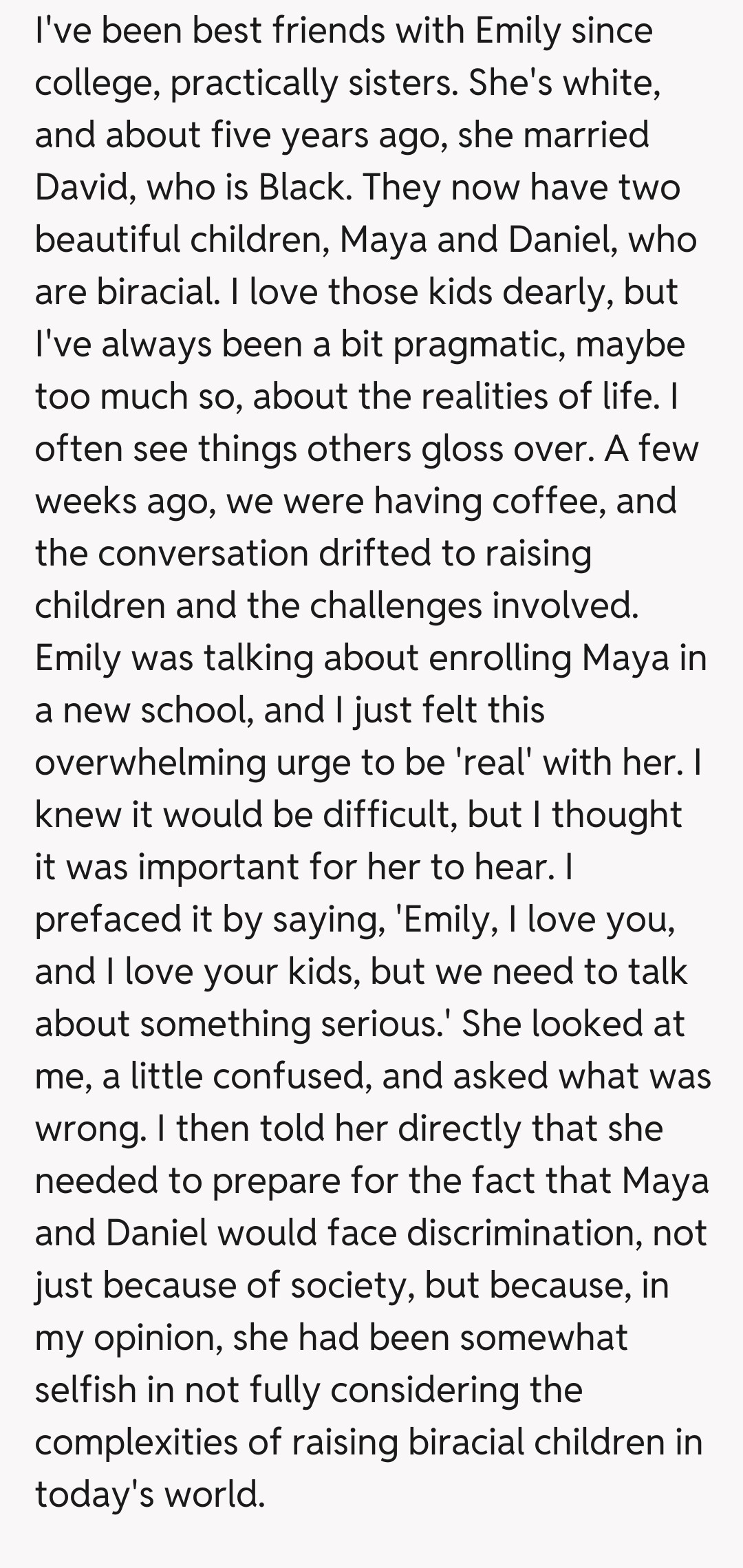
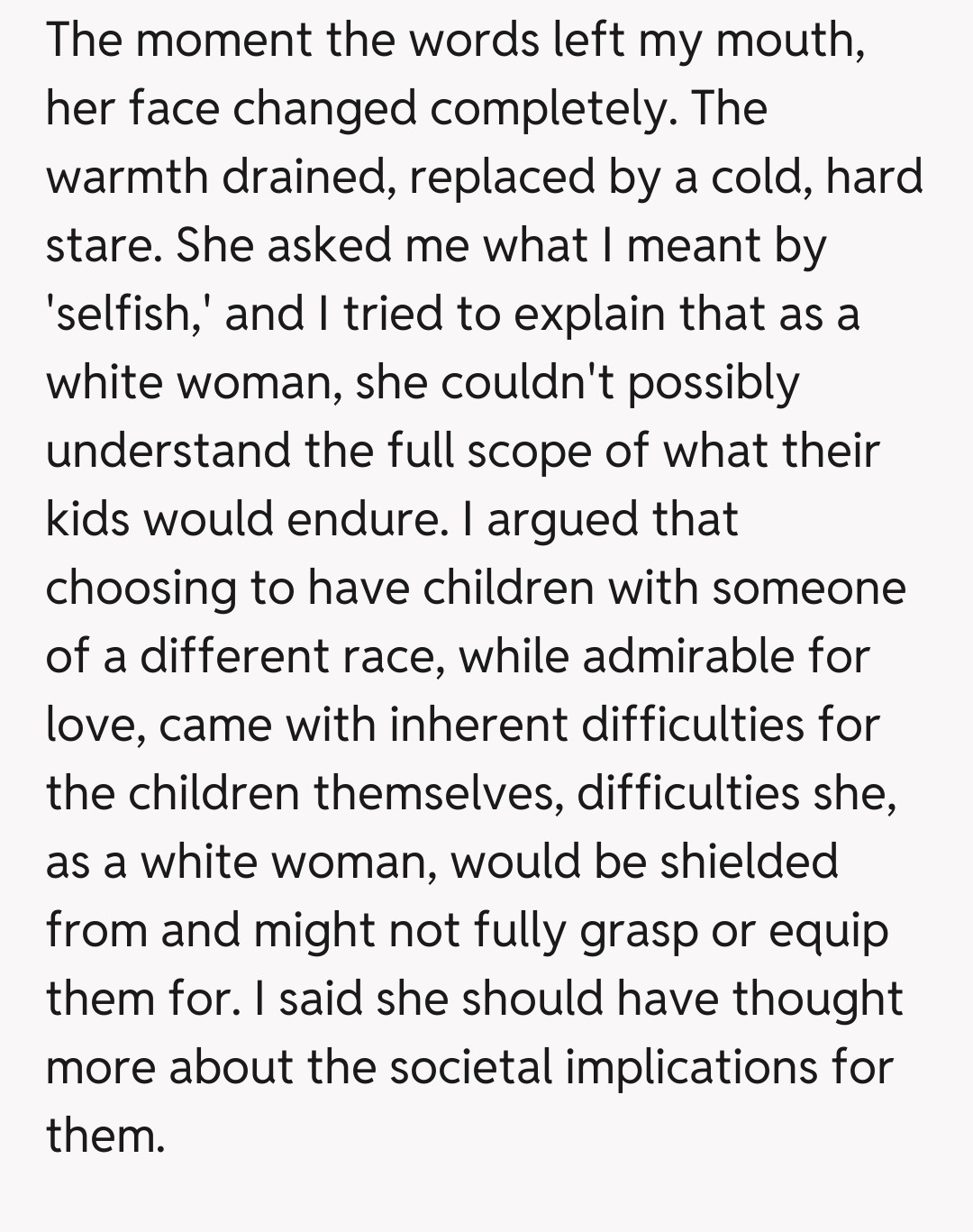


Sarah's intentions, however misguided, likely stemmed from a place of concern for her friend's children. It's undeniable that biracial individuals, like all people of color, often navigate a world fraught with discrimination and complex identity issues. This is a very real challenge that parents of biracial children actively prepare for. The fundamental truth Sarah tried to convey, that discrimination exists, is not in question here.
However, the *way* Sarah delivered this message and the specific language she used are where she veered dramatically into problematic territory. Labeling Emily's choice to have biracial children as 'selfish' is incredibly hurtful and judgmental. It implies that Emily deliberately put her children in harm's way or was oblivious, which trivializes her and David's loving decision to build a family together.
Furthermore, Sarah, as a white woman, attempting to lecture her white friend (married to a Black man) about the complexities of raising biracial children comes across as deeply presumptuous and out of touch. While empathy is crucial, assuming one knows better than the parents actually living the experience, especially when dealing with racial identity, is rarely productive and often offensive.
A true friend would offer support, listen, and inquire about how they can assist, not drop a 'truth bomb' that blames the parents for societal issues. The children's identities are a beautiful part of them, not a burden caused by a 'selfish choice.' Sarah's words undermined Emily's agency, insulted her parenting, and arguably exhibited a lack of understanding that transcended mere pragmatism.
The Internet Weighs In: Was Sarah a Concerned Friend or Way Out of Line?
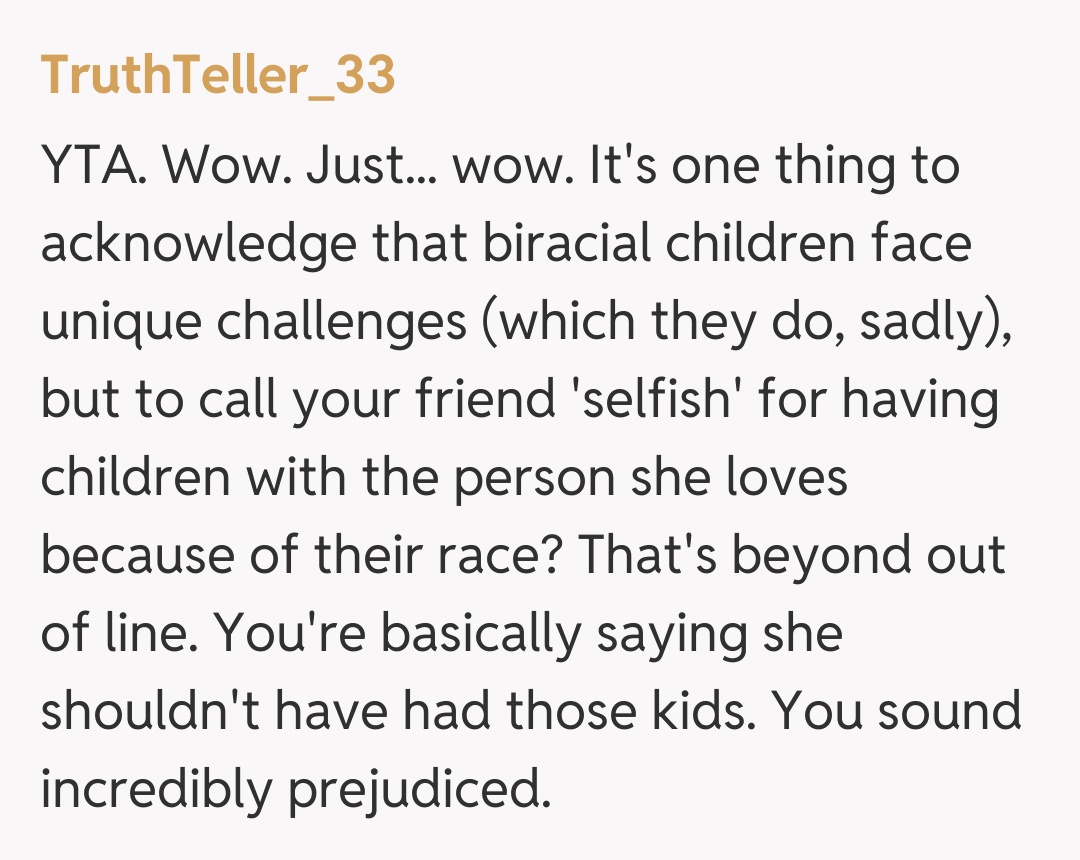
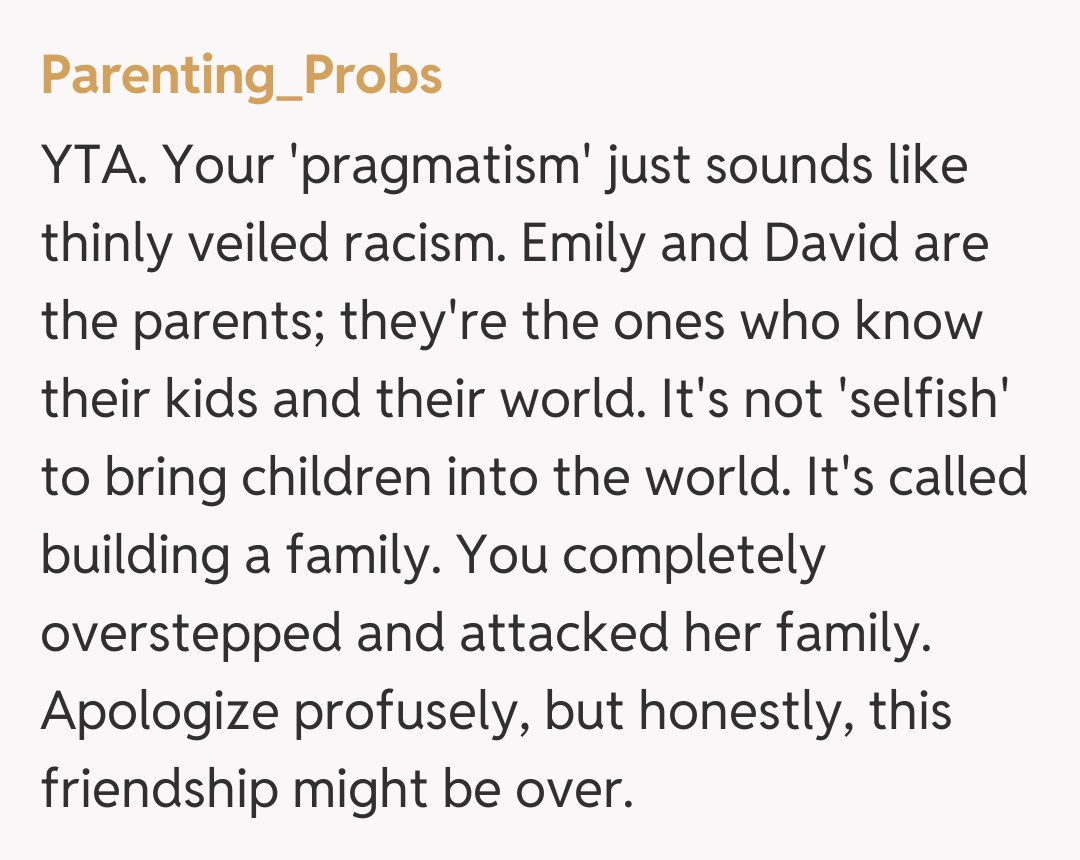
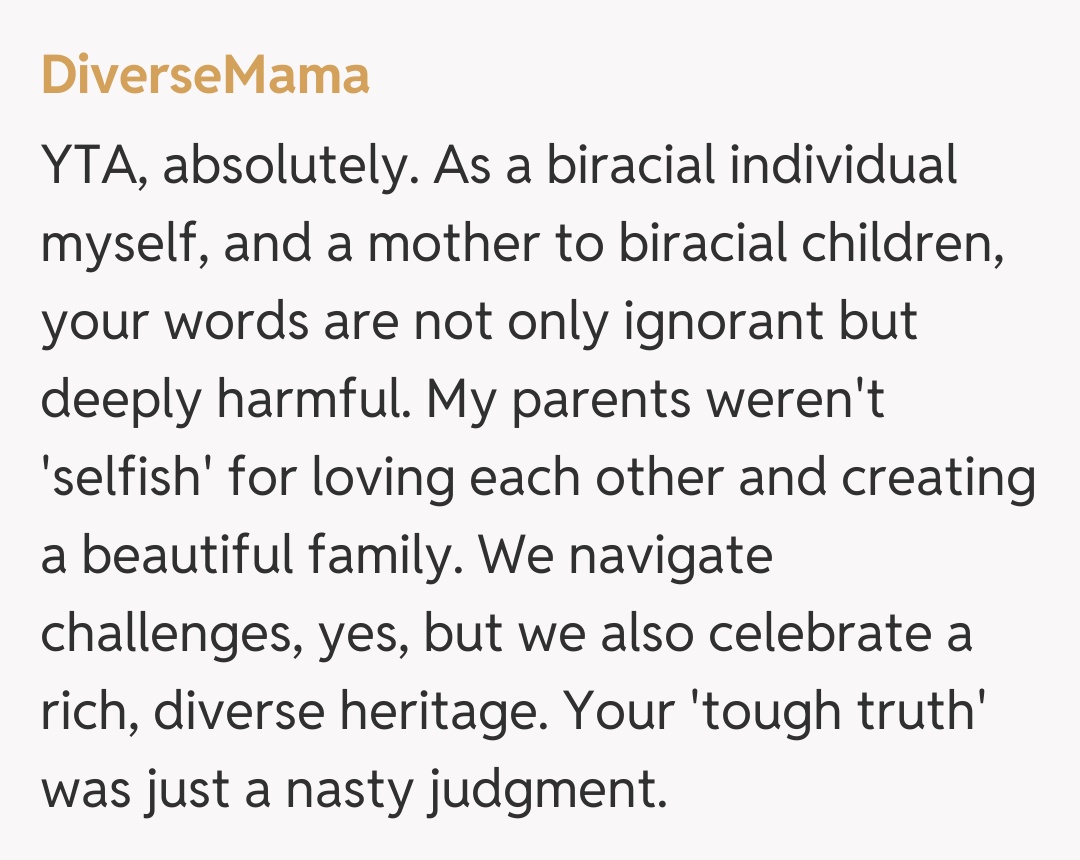
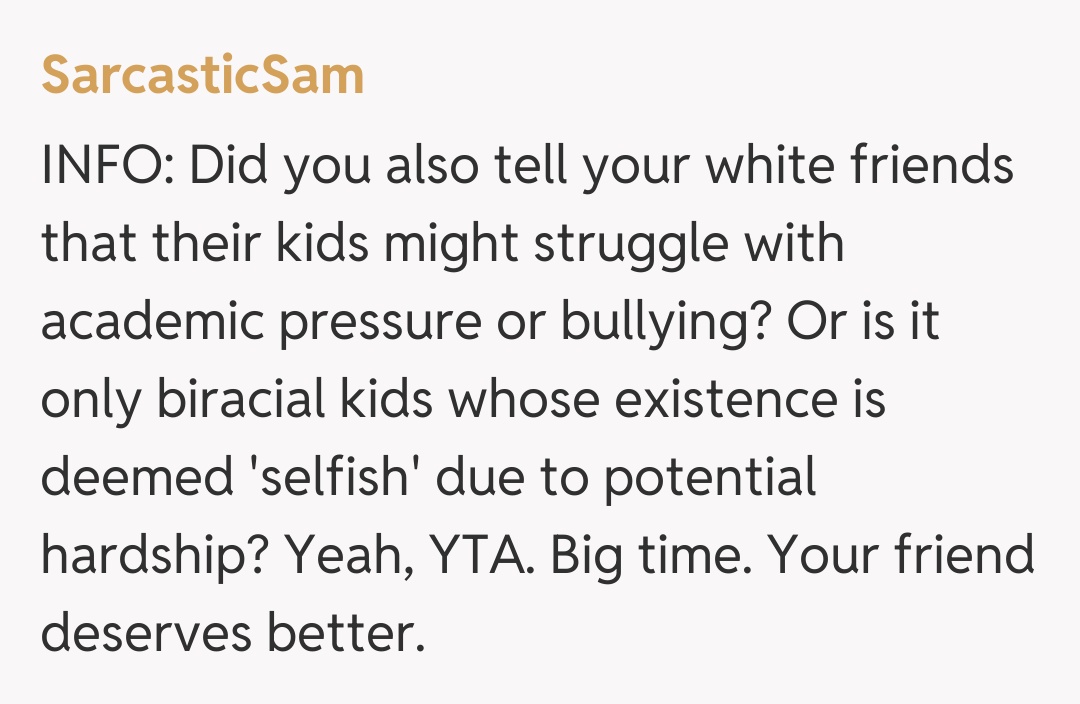
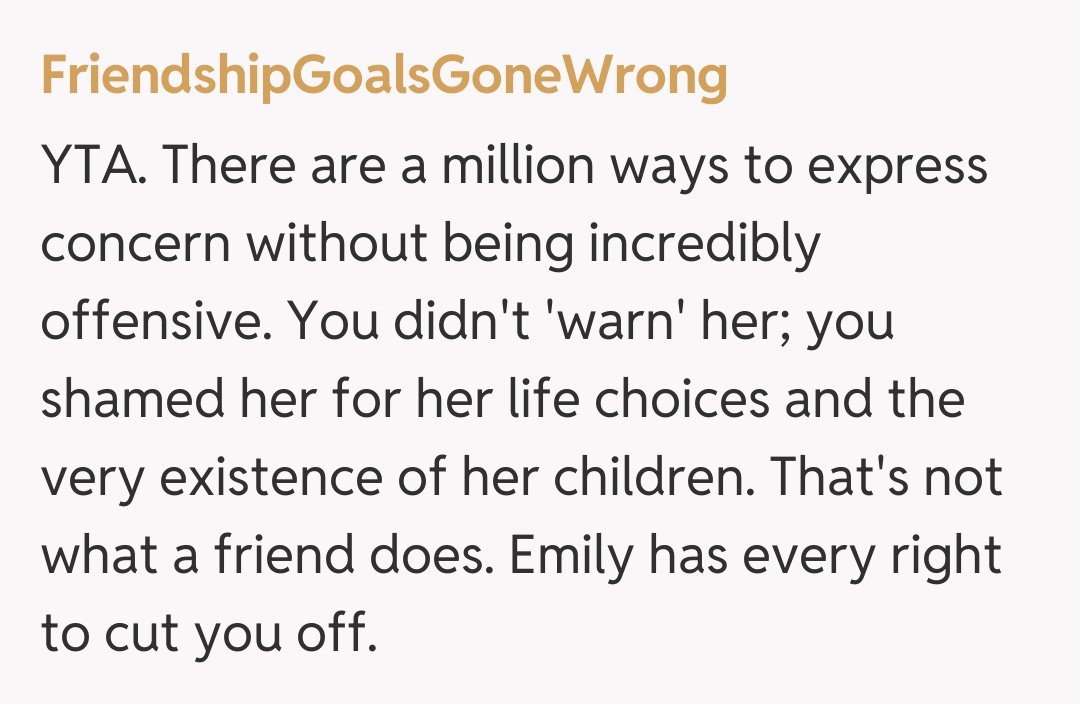
The comment section, as expected, did not hold back. The overwhelming consensus leaned heavily towards YTA, with many users expressing shock at Sarah's insensitivity. Common themes included the idea that while discrimination is real, blaming parents for choosing to have children with the person they love, regardless of race, is deeply misguided and offensive. Many pointed out that children of *all* backgrounds face challenges, and singling out biracial children in this manner was prejudiced.
Several commenters highlighted the irony of a white woman 'educating' another white woman (married to a Black man) about the struggles of biracial children, suggesting it showed a profound lack of awareness on Sarah's part. The phrase 'selfish choice' was particularly condemned, seen as an attack on Emily's family and the children's very existence. The community largely agreed that genuine concern is expressed through support, not judgment and accusation.
This story is a stark reminder that even with the best intentions (or what we perceive as best intentions), words hold immense power. While it's important to acknowledge societal realities, how we communicate those realities, especially within the context of deeply personal choices like family and identity, matters profoundly. Sarah's misstep highlights the need for empathy, respectful dialogue, and an understanding that some 'truths' are not ours to deliver, especially when they come wrapped in judgment. Ultimately, supporting friends means respecting their choices and their journey, not dictating it.