AITA for telling my husband I regret every year spent with him because he’s become boring and unattractive?

Oh boy, do we have a doozy for you today! The complexities of marriage and long-term relationships are often a minefield of unspoken expectations and simmering resentments. It’s easy to fall into a rut, to stop seeing the person you fell in love with, and to feel like you're drifting apart. But what happens when those feelings boil over into a truly brutal confession?
Today's AITA post dives headfirst into that uncomfortable territory, featuring a spouse who delivered a truth bomb so devastating, it sent shockwaves through the entire relationship. We're talking about words that, once said, can never truly be taken back. Grab your emotional first-aid kits, because this one is going to sting.

"AITA for telling my husband I regret every year spent with him because he's become boring and unattractive?"

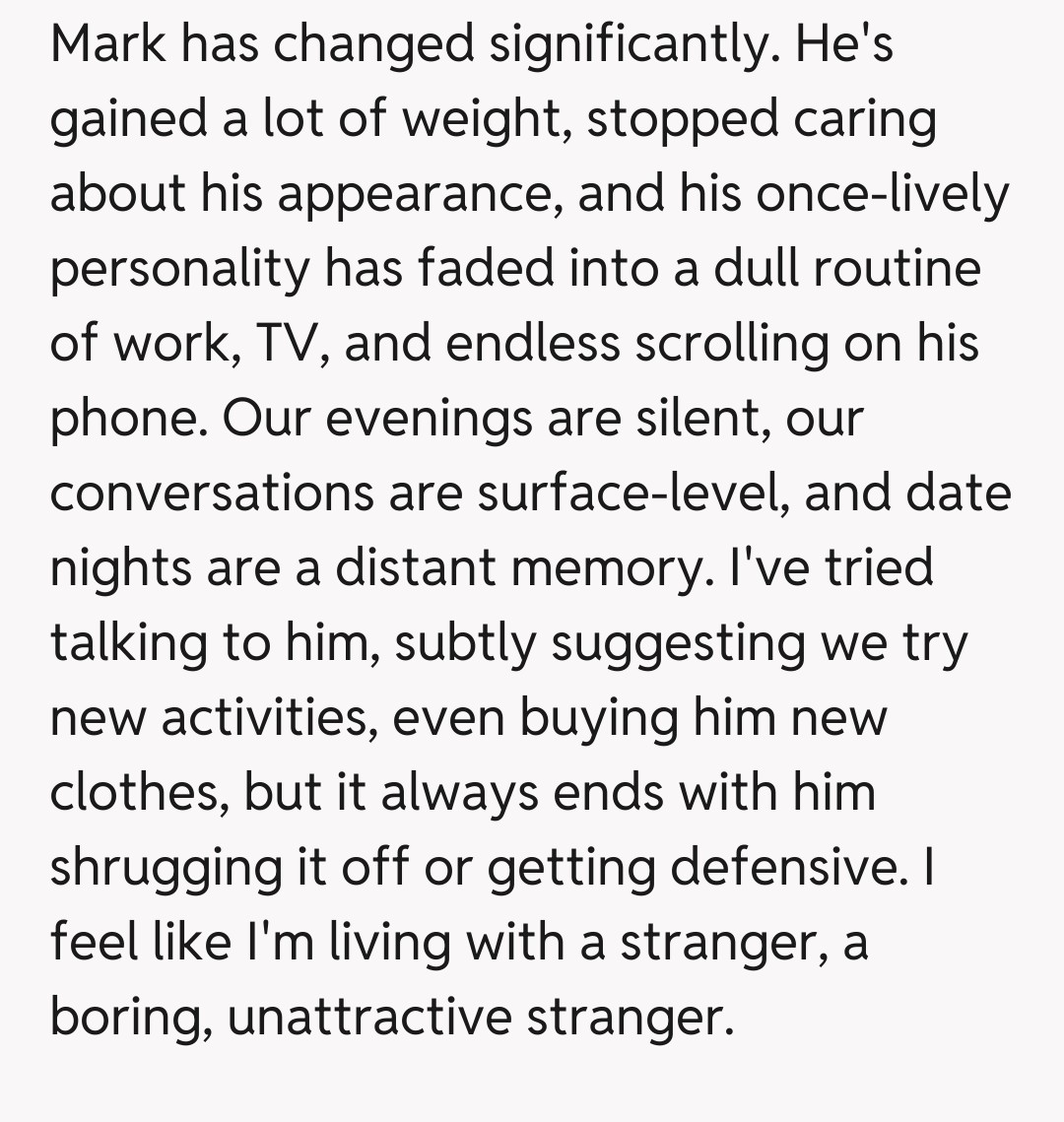
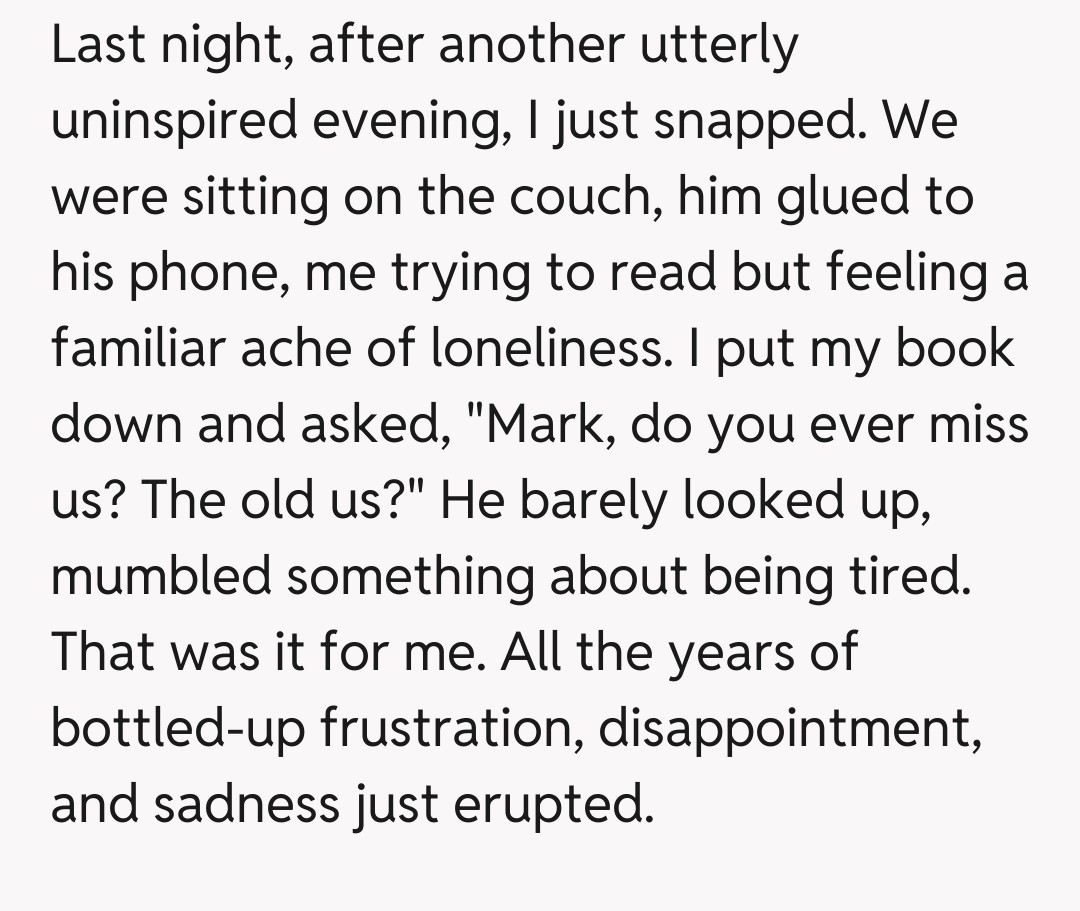
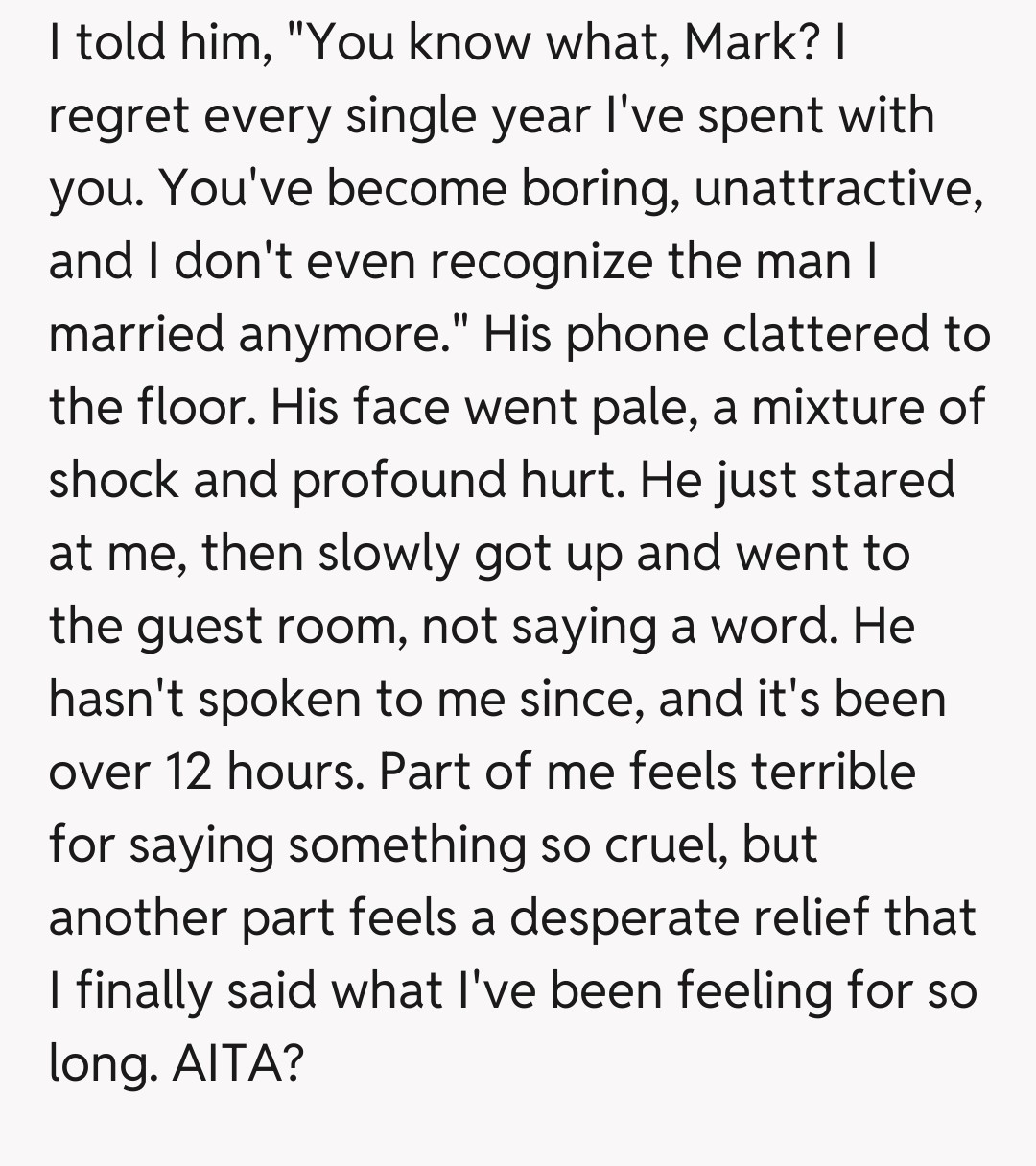
This post hits hard, peeling back the layers of a relationship in deep distress. It's clear that OP, let's call her Sarah, has been harboring immense frustration and disappointment for years. Feeling like your partner has changed so drastically that you no longer recognize them is a profoundly painful experience, and it's understandable that these emotions would eventually reach a breaking point. The feeling of regret, when your reality falls so far short of your expectations, is a heavy burden.
However, the delivery of these feelings is where the core conflict lies. While Sarah's feelings of being unheard and neglected are valid, telling her husband, Mark, that she regrets every year spent with him and finds him 'boring and unattractive' is a deeply hurtful and potentially irreparable blow. These are words that cut to the very core of a person's self-worth and could permanently damage any chance of reconciliation or healthy communication going forward.
It seems there's been a significant communication breakdown over an extended period. Sarah mentions trying to talk to Mark and his defensiveness, but the escalation to such a devastating outburst indicates that earlier attempts either weren't direct enough, weren't heard, or perhaps weren't followed through with professional help. Relationships evolve, and partners change, but navigating those changes requires persistent, empathetic, and often difficult conversations.
So, while Sarah's feelings are valid, her method of expression was extremely damaging. The question isn't whether she's entitled to feel what she feels, but whether she was the *a-hole* for how she expressed it. There's a fine line between honest communication and emotional cruelty. This situation clearly needed intervention long before it reached this explosive point, perhaps through couples' counseling to address the underlying issues in a more constructive manner.
The Harsh Truth: Readers Weigh In on Sarah's Brutal Confession!
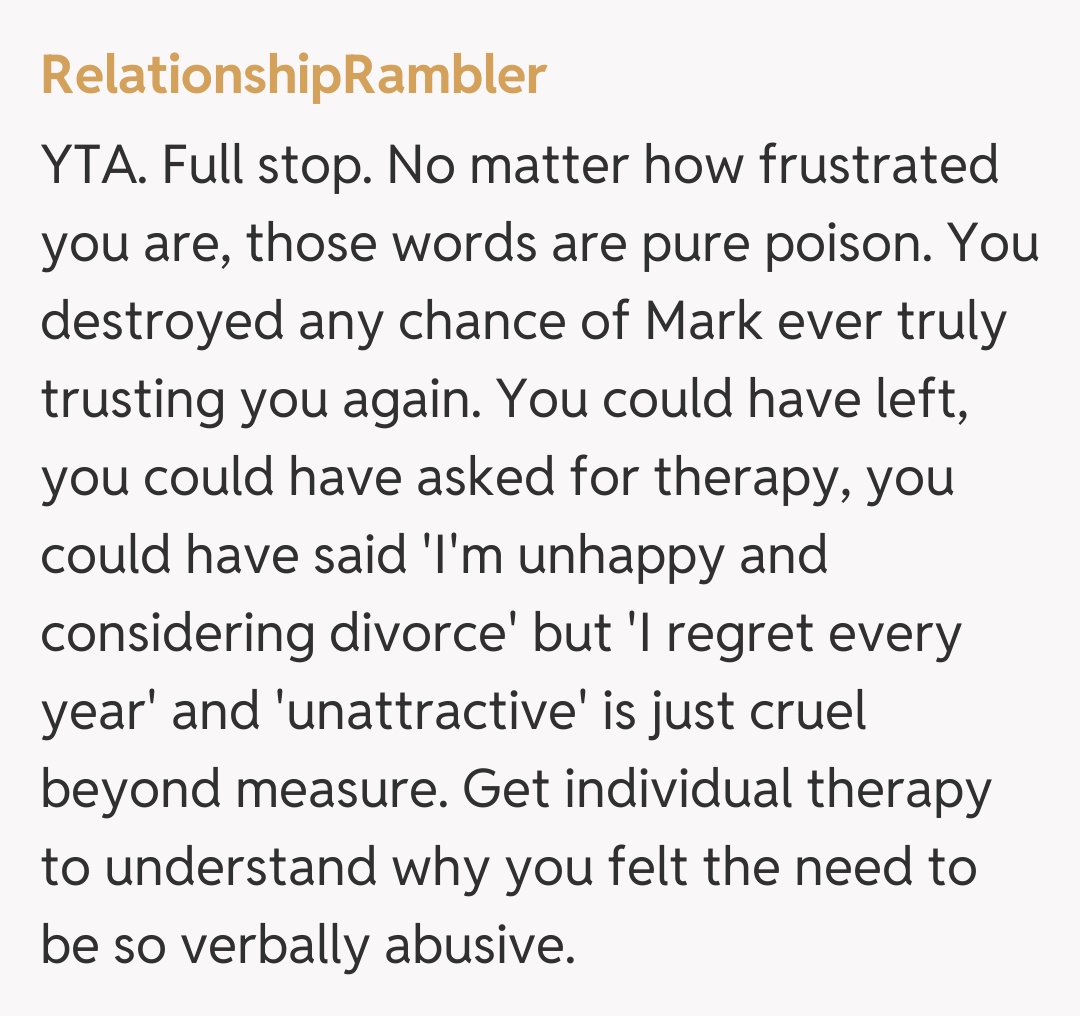
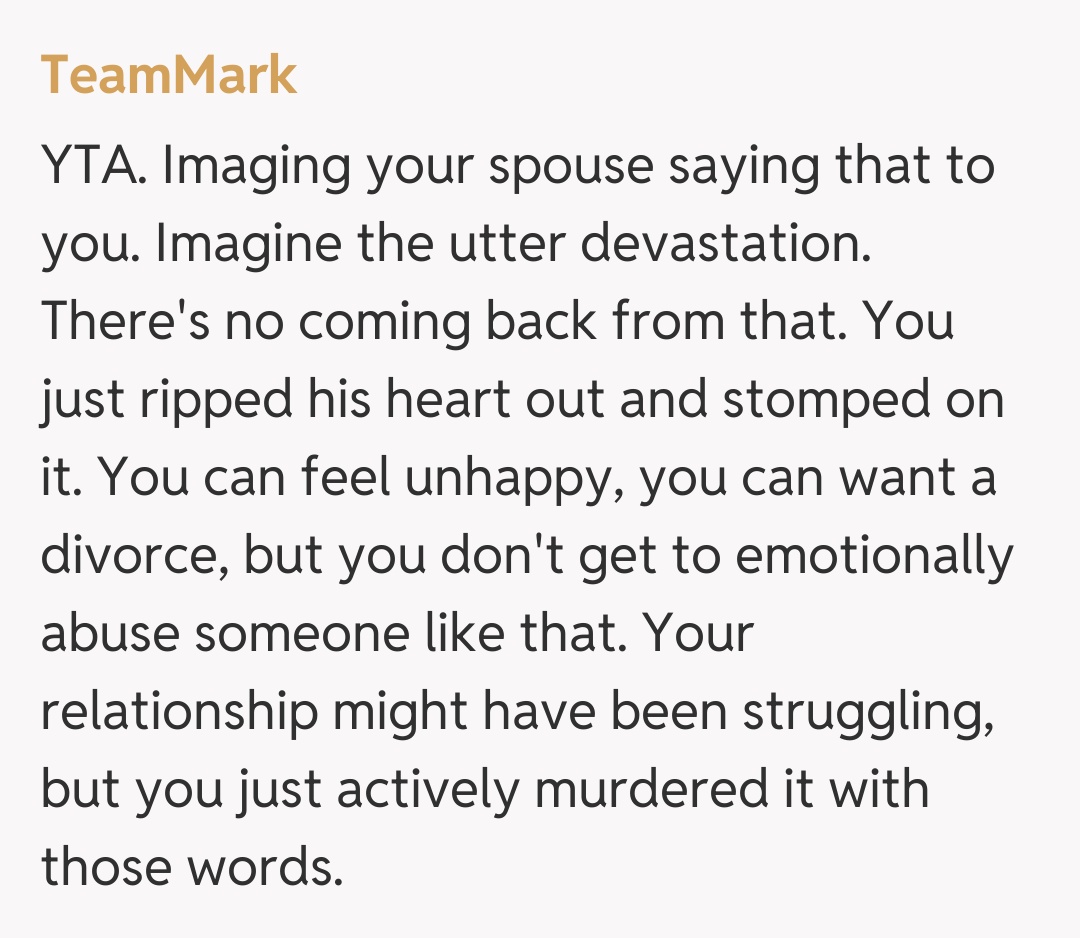
The comment section for this post was, predictably, a whirlwind of strong opinions. Many commenters, like 'TherapyNowPlease' and 'EmpathyForMark,' leaned heavily into YTA, emphasizing that while Sarah's feelings might be valid, the cruelty of her words was unforgivable. They highlighted the devastating impact such statements have on a person's self-esteem and the potential for irreversible damage to the marriage. The consensus here was that there are better, more constructive ways to communicate dissatisfaction, even in a deeply troubled relationship.
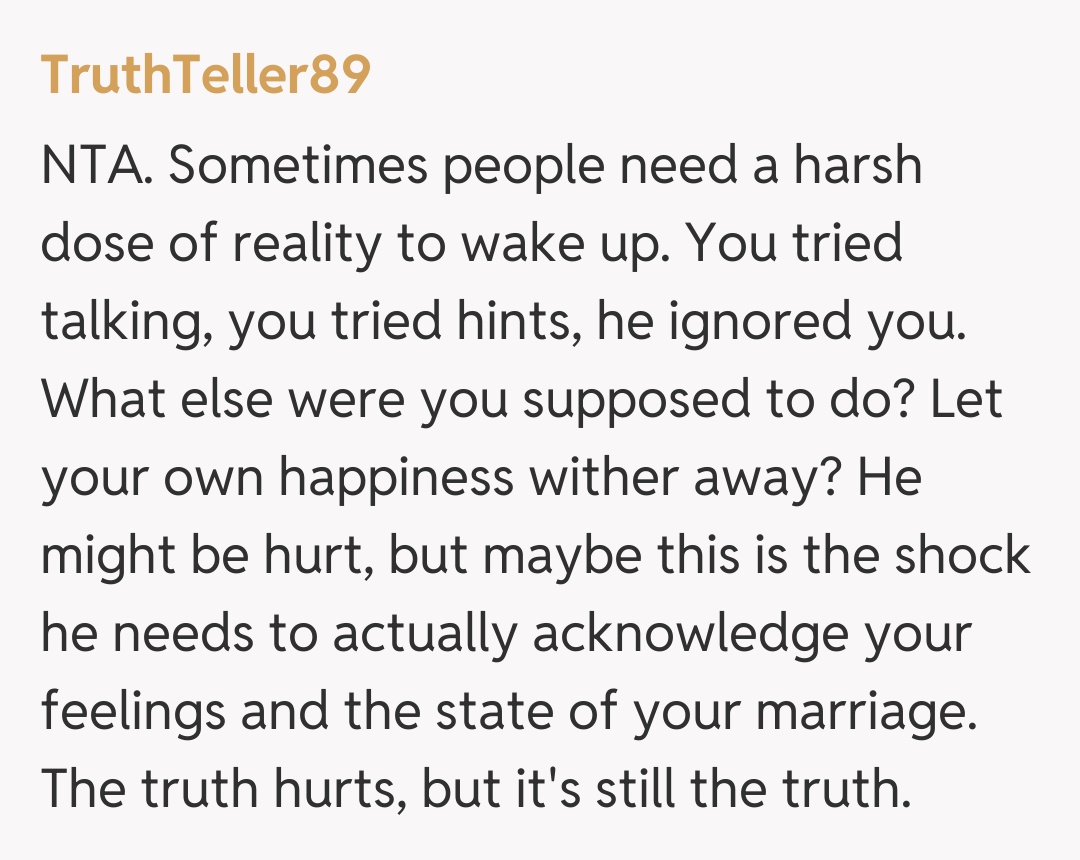
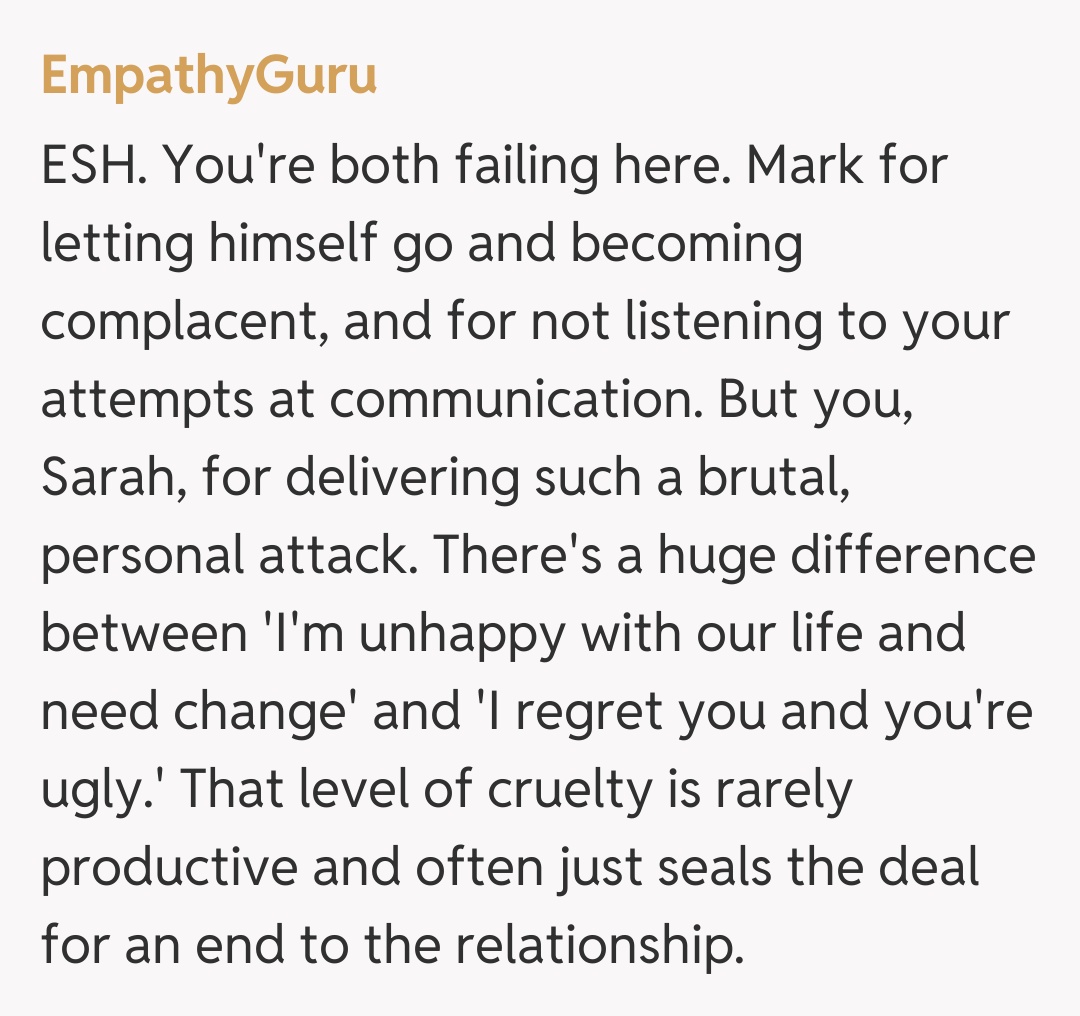
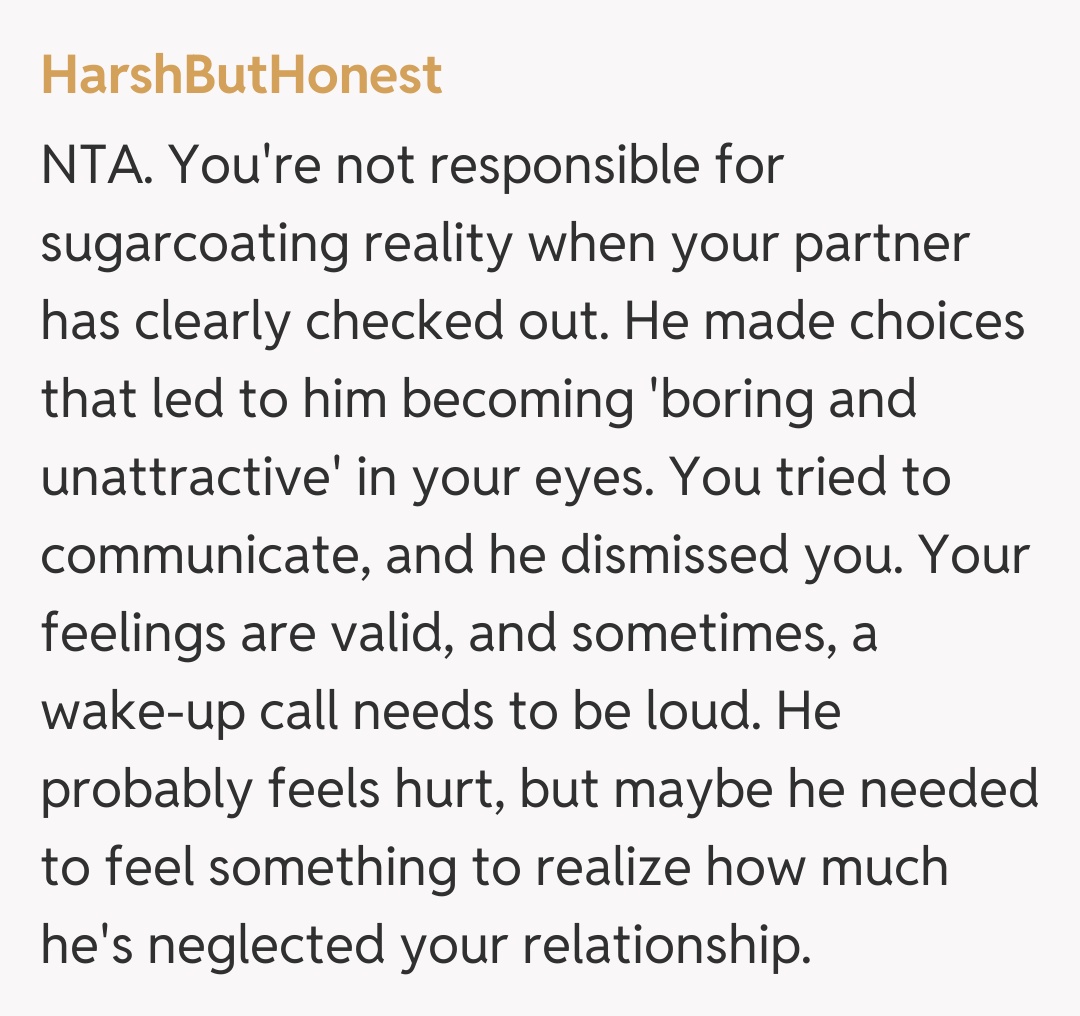
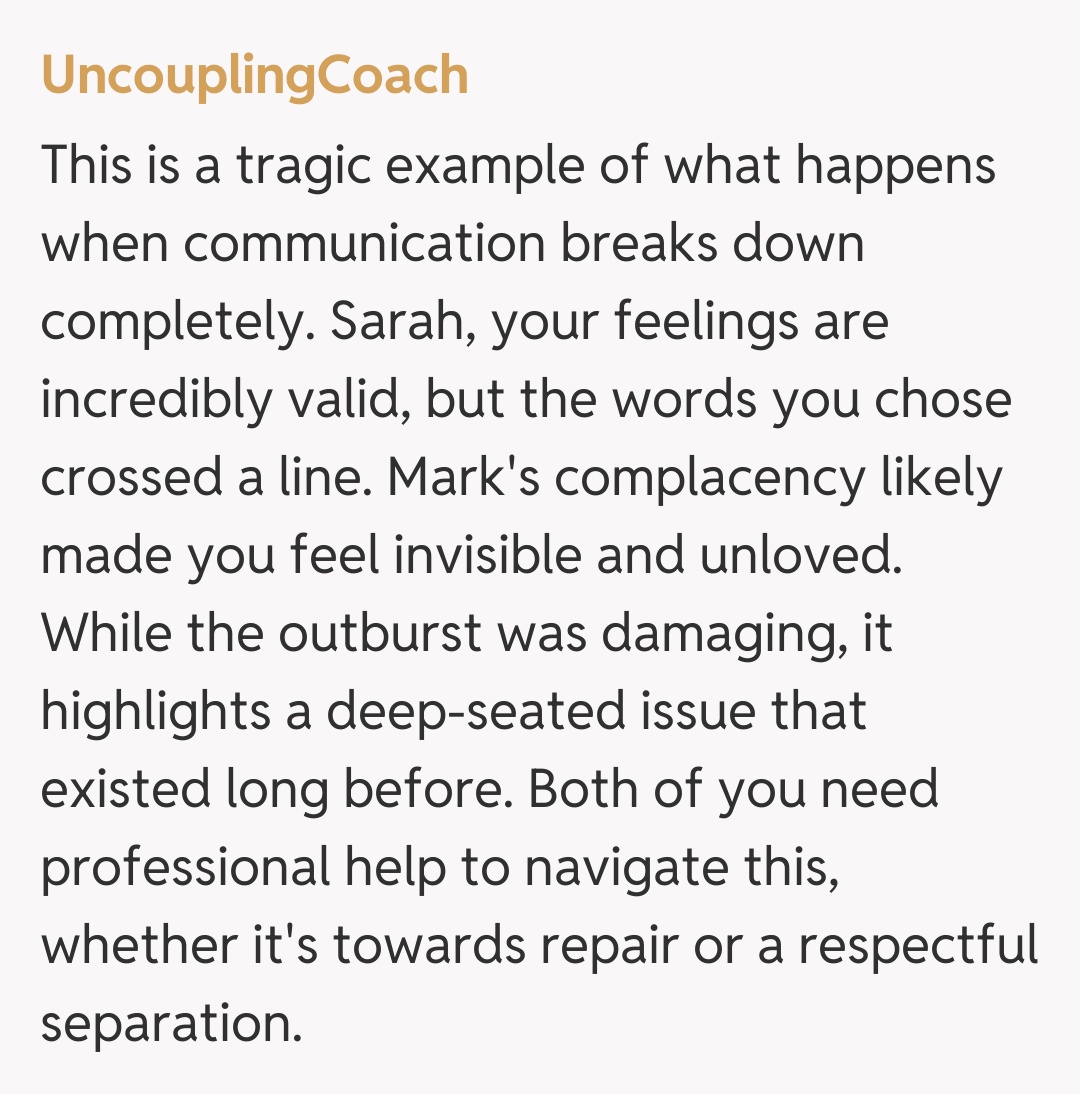
On the other hand, a significant number of users, including 'FedUpWife' and 'UnheardNoMore,' sided with NTA or ESH, acknowledging the extreme pain Sarah must have been in to utter such a statement. They argued that Mark's complacency and refusal to address Sarah's concerns pushed her to a breaking point, and sometimes, a harsh truth is the only way to get through. These comments often reflected a shared frustration with partners who check out emotionally and physically, leaving their spouse feeling alone and unheard.
This AITA post serves as a stark reminder of the fragile balance within long-term relationships. While it's crucial to acknowledge and address personal dissatisfaction, the manner of communication can either bridge or widen the gap. Sarah's raw honesty came at a significant cost, and it highlights the urgent need for direct, yet empathetic, conversations long before resentment reaches a boiling point. Ultimately, whether it's for reconciliation or a healthy separation, both partners here will need to engage in some serious introspection and perhaps seek professional guidance to heal from this painful experience.