AITA for telling my autistic daughter she should be grateful we didn’t institutionalize her when she was young?
Oh boy, folks, we've got a heavy one today. The title alone sent shivers down my spine and immediately flagged this as a story that's going to ignite some serious debate. This isn't just about a disagreement; it touches on the raw, often unspoken struggles within families dealing with significant challenges. Parenting is tough, incredibly tough, but some words, once spoken, can leave scars that never truly heal.\nOur submitter today, Brenda, seems to be at a crossroads with her adult daughter, Amelia. It's a tale of perceived sacrifice, unexpressed gratitude, and a moment where a parent's frustration boiled over into a comment that many will find profoundly shocking. Let's delve into Brenda's story and see if we can unpack the layers of emotion, history, and the deeply complex dynamics at play here. This one's going to be a tough call.

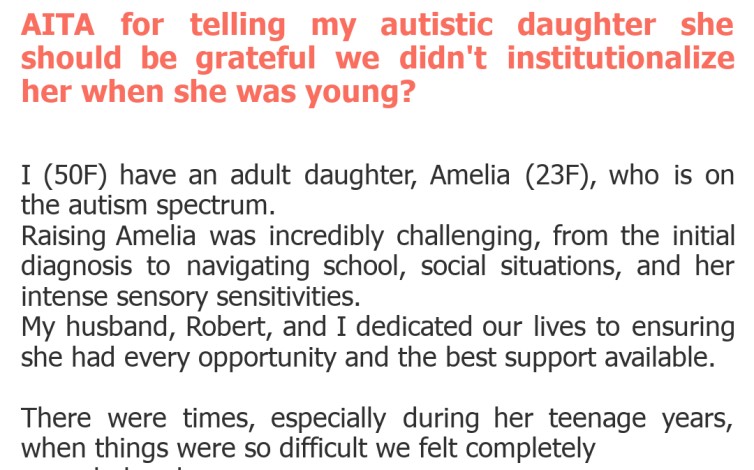
"AITA for telling my autistic daughter she should be grateful we didn't institutionalize her when she was young?"
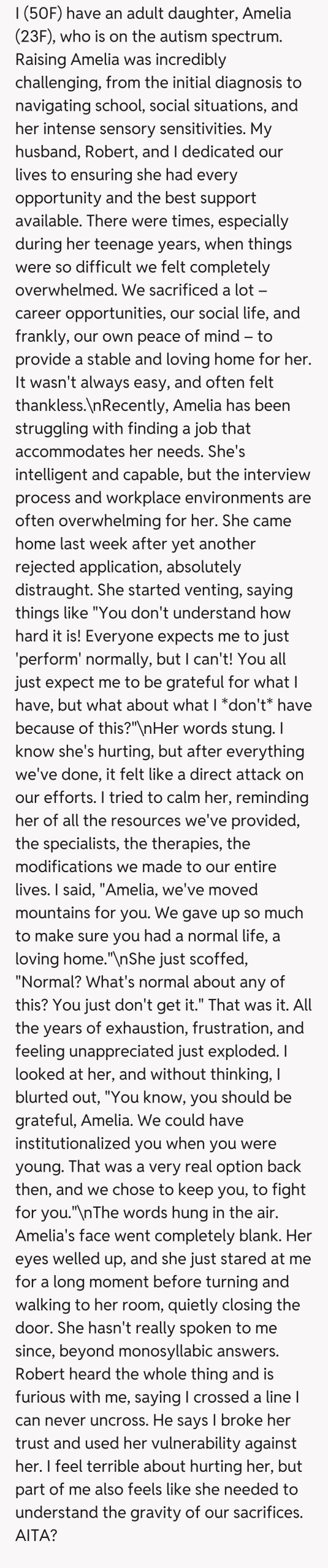
Brenda's story hits hard, revealing the immense pressures and heartaches that can accumulate when raising a child with significant needs. There's no doubt that she and Robert faced monumental challenges and made profound sacrifices to ensure Amelia received the best possible care and opportunities. The exhaustion, the financial strain, and the emotional toll of constant advocacy are very real, and it's understandable that a parent might feel unappreciated or misunderstood when their efforts seem to be disregarded.\nHowever, the specific choice of words Brenda used – bringing up the possibility of institutionalization – is deeply problematic. While it may have been a stark reality in the past, wielding it as a weapon in a moment of anger, especially against a vulnerable adult daughter, serves as emotional blackmail. It shifts the burden of a parent's choice onto the child, suggesting their very presence is a burden from which they were 'spared,' rather than a natural part of a family unit.\nFrom Amelia's perspective, this comment likely feels like a profound betrayal. It invalidates her current struggles by reminding her of a 'worse' alternative she had no control over. It suggests that her existence itself was a debate, rather than an unconditional love. For someone on the autism spectrum, who may already struggle with self-worth and social understanding, such a statement can be devastating, planting seeds of guilt and insecurity that are incredibly difficult to overcome.\nUltimately, this situation highlights a tragic communication breakdown. Both Brenda and Amelia are expressing deep pain and frustration, but neither is truly hearing the other. Brenda feels her sacrifices are unacknowledged, while Amelia feels her current pain is dismissed. The comment about institutionalization, while perhaps intended to convey the depth of Brenda's love and commitment, instead created a chasm, turning a potential moment for empathy into one of profound emotional injury.
The Verdict Is In: Was Brenda Justified, or Did She Go Too Far?
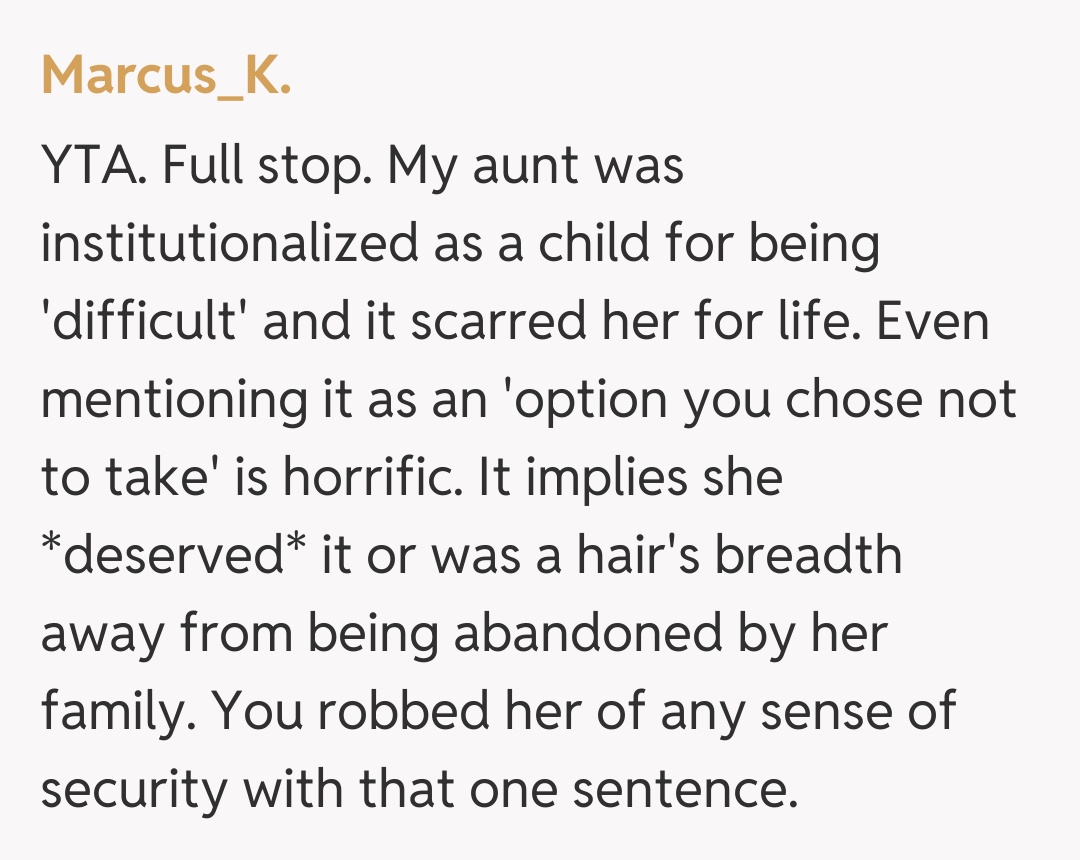
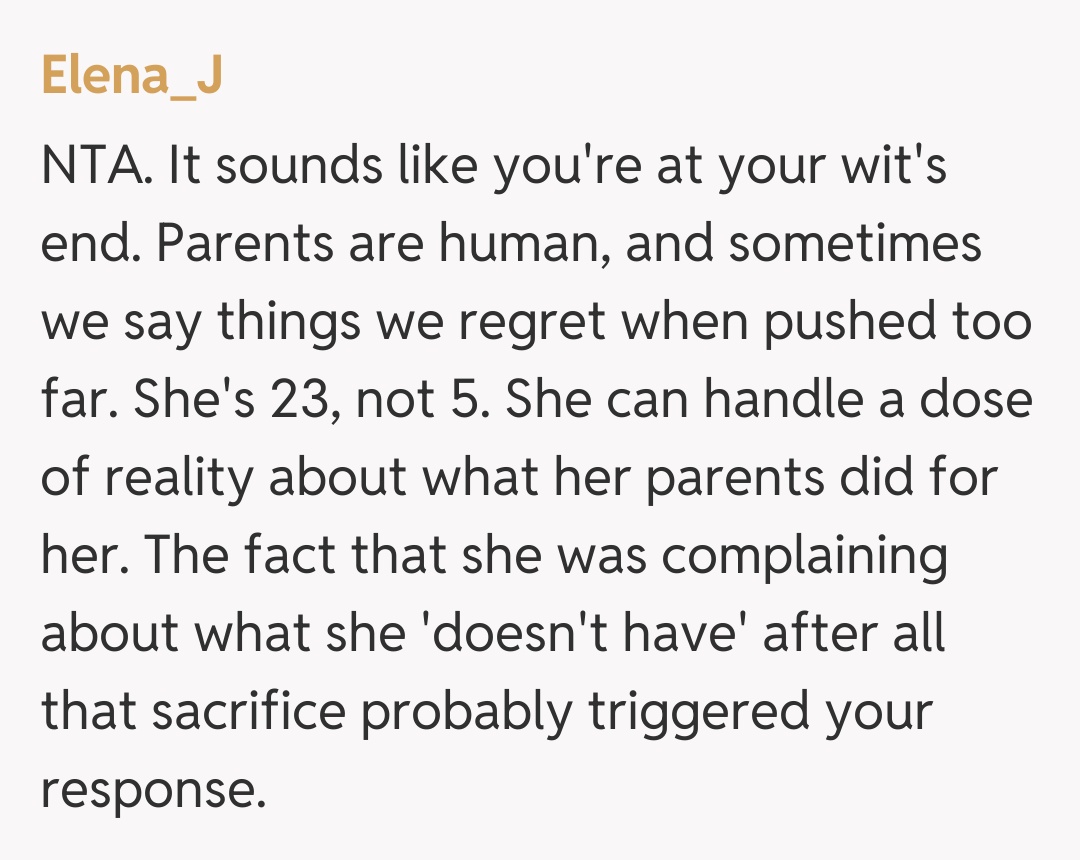
The comments section on this post was, predictably, a firestorm. Many users immediately condemned Brenda's words, labeling them as emotional abuse and manipulative. There was a strong consensus that regardless of a parent's struggles, threatening a child with past 'options' like institutionalization is a line that should never be crossed, especially to an autistic individual who might already feel like a burden or 'different.'\nHowever, a significant number of commenters also expressed empathy for Brenda, acknowledging the unique and overwhelming challenges of raising a child with autism. They understood the feeling of being unappreciated after years of relentless effort and sacrifice. While not necessarily condoning the exact phrasing, they sympathized with the exhaustion and desperation that could lead a parent to say something deeply regrettable in a moment of extreme frustration. It truly illuminated the complexity of parental burnout.
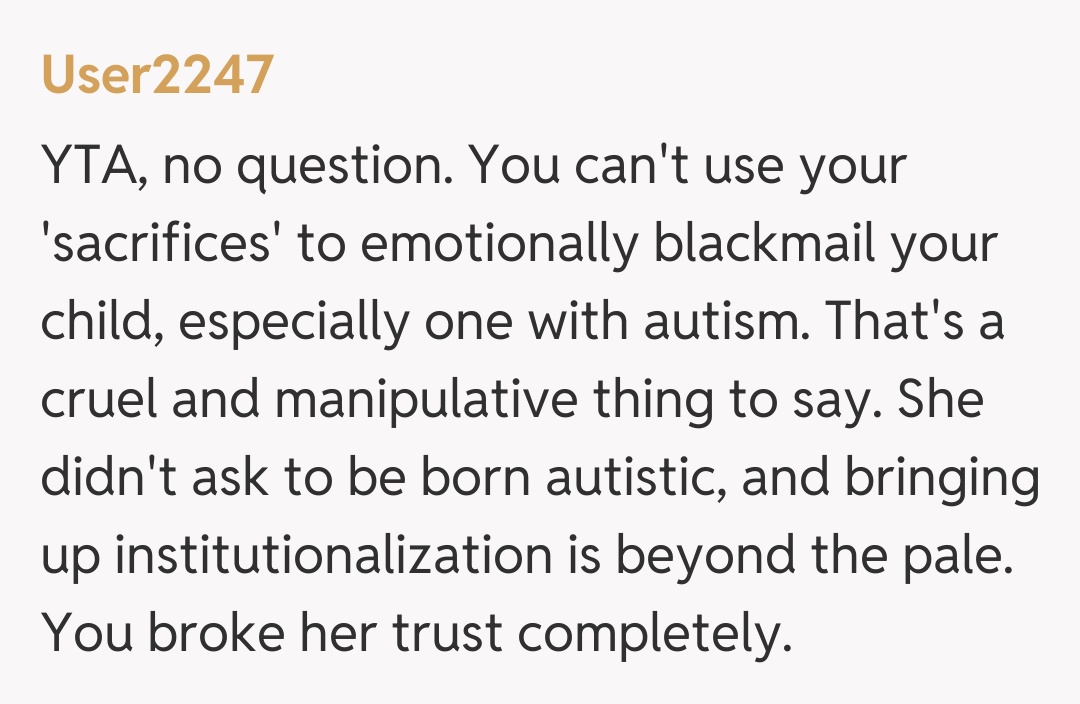
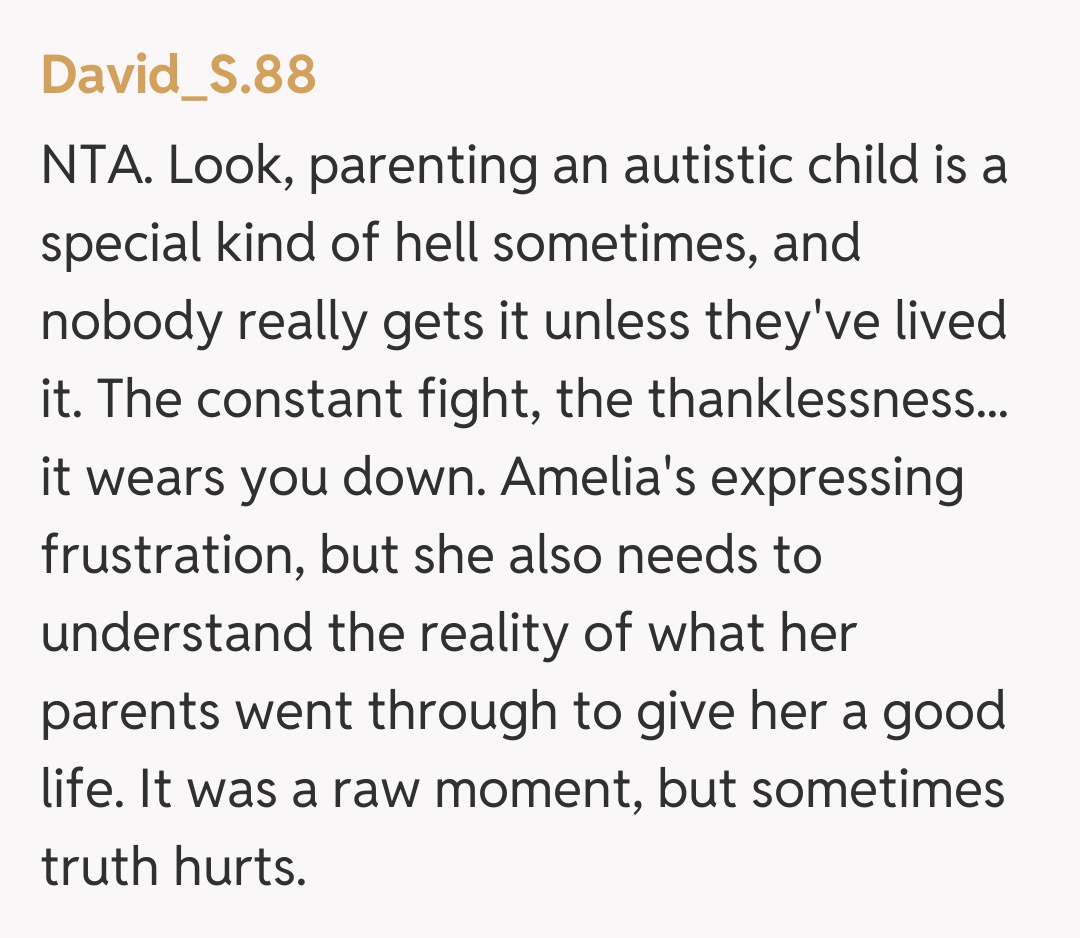
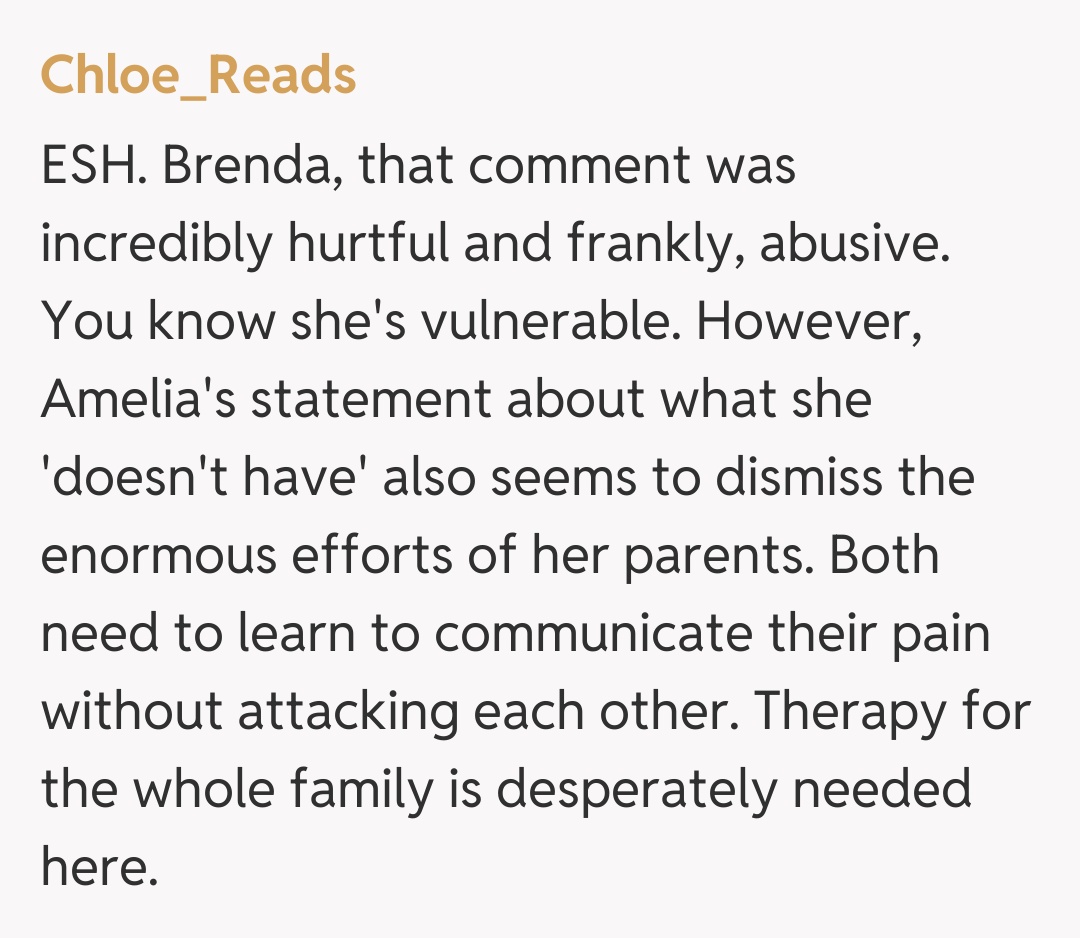
This story serves as a stark reminder of the fragile balance between parental sacrifice and a child's inherent right to unconditional love and support. While Brenda's exhaustion and pain are undeniably real, the impact of her words on Amelia highlights the crucial need for empathy and careful communication, especially in families navigating unique challenges like autism. Healing this rift will require immense effort, understanding, and perhaps professional help to bridge the chasm that has opened between mother and daughter. What do you think, readers? Can words like these ever truly be forgiven?