AITA for telling my autistic son he should accept he’ll never have friends and stop trying to be normal?
Oh, parenting. It's a journey filled with incredible highs and profound lows, and sometimes, in the darkest moments, we say things we instantly regret. Today's AITA story brings us face-to-face with one of those gut-wrenching situations, a mother at her absolute wit's end, grappling with the unique challenges of raising a neurodivergent child. The exhaustion, the heartbreak, the constant worry – it's a heavy burden that can push even the most loving parents to their limits.\nThis particular post ignited a firestorm of debate, as it touches upon a highly sensitive topic: a parent's brutal honesty (or perceived cruelty) towards their child's social struggles. When does protecting a child from inevitable pain cross into crushing their spirit? Our OP, a mother of an autistic son, describes a moment of profound frustration that led to words many found unforgivable. Let's dive into her story and see why the internet is so divided.

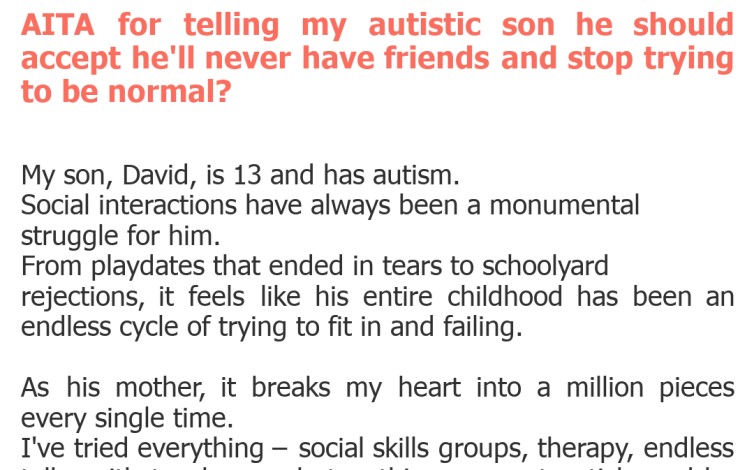
"AITA for telling my autistic son he should accept he'll never have friends and stop trying to be normal?"
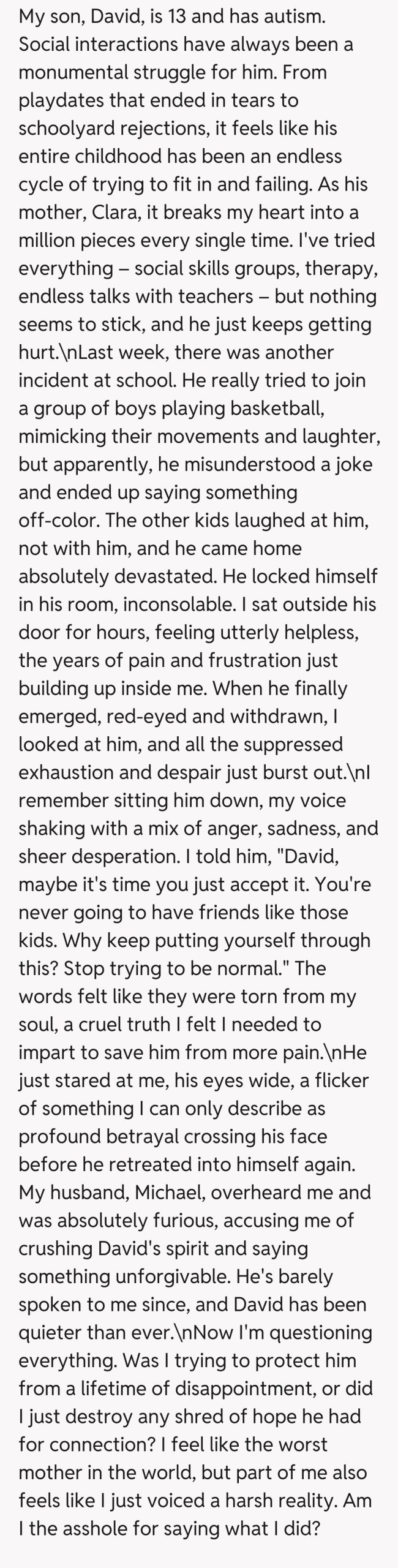
This AITA post presents an incredibly difficult scenario that elicits strong emotions from all sides. On one hand, we have a mother, Clara, who is clearly at the end of her rope. Parenting a child with significant social challenges, especially autism, involves immense emotional labor, constant advocacy, and often, witnessing your child's repeated heartbreak. Her outburst, while regrettable, stems from a place of deep pain and exhaustion, a desperate attempt to shield her son from further suffering.\nHowever, the impact of those specific words on a 13-year-old autistic child cannot be overstated. Telling someone, especially your child, to "accept you'll never have friends" and "stop trying to be normal" is profoundly damaging. It's a message that can strip away self-worth, extinguish hope, and lead to deep-seated feelings of inadequacy and isolation. For a child already struggling with their identity and place in the world, such a statement from a primary caregiver can be devastating.\nThere's a fine line between helping a child develop realistic expectations and utterly crushing their spirit. While Clara's intention might have been to prevent future pain, her delivery likely caused immediate and lasting trauma. It's a reflection of her own overwhelmed state, but it doesn't excuse the harm caused. Children, especially neurodivergent ones, need unwavering support and belief in their potential, even when the path is difficult and unconventional.\nUltimately, this situation highlights the critical need for support systems for parents of neurodivergent children. Burnout is real, and it can lead to moments of desperation. While Clara's words were hurtful, her underlying pain is understandable. The focus should be on finding healthier ways to manage parental stress and communicate with a child, reinforcing their value and potential for meaningful connections, even if those connections look different from neurotypical friendships.
The Internet Weighs In: Tough Love or Cruel Blow?
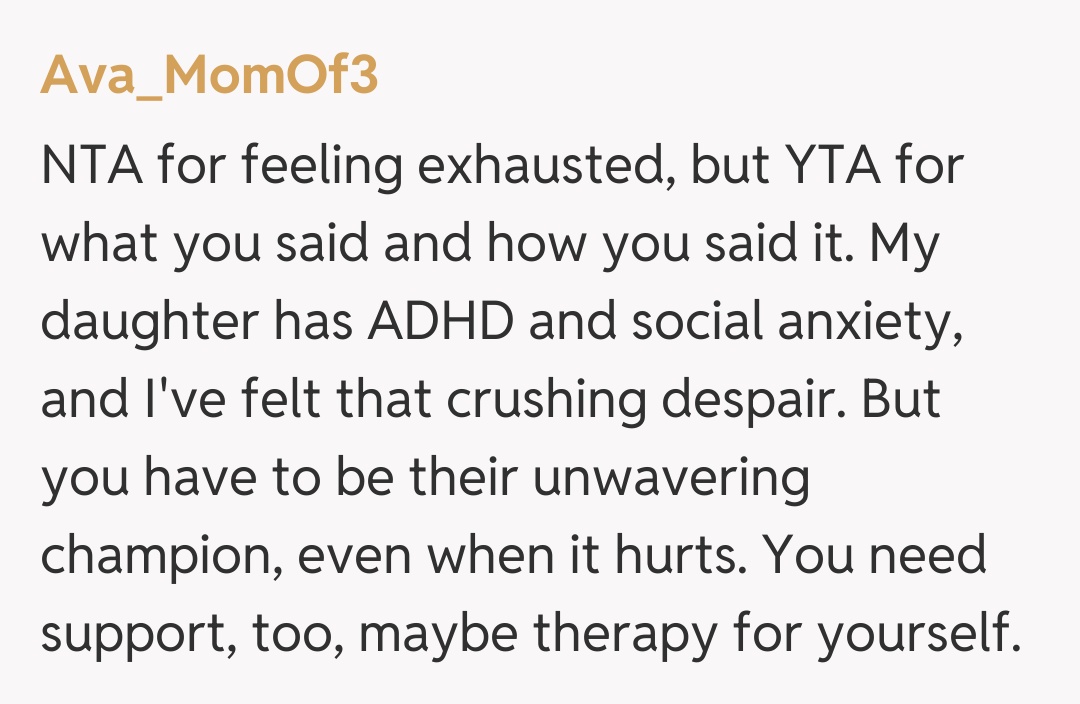
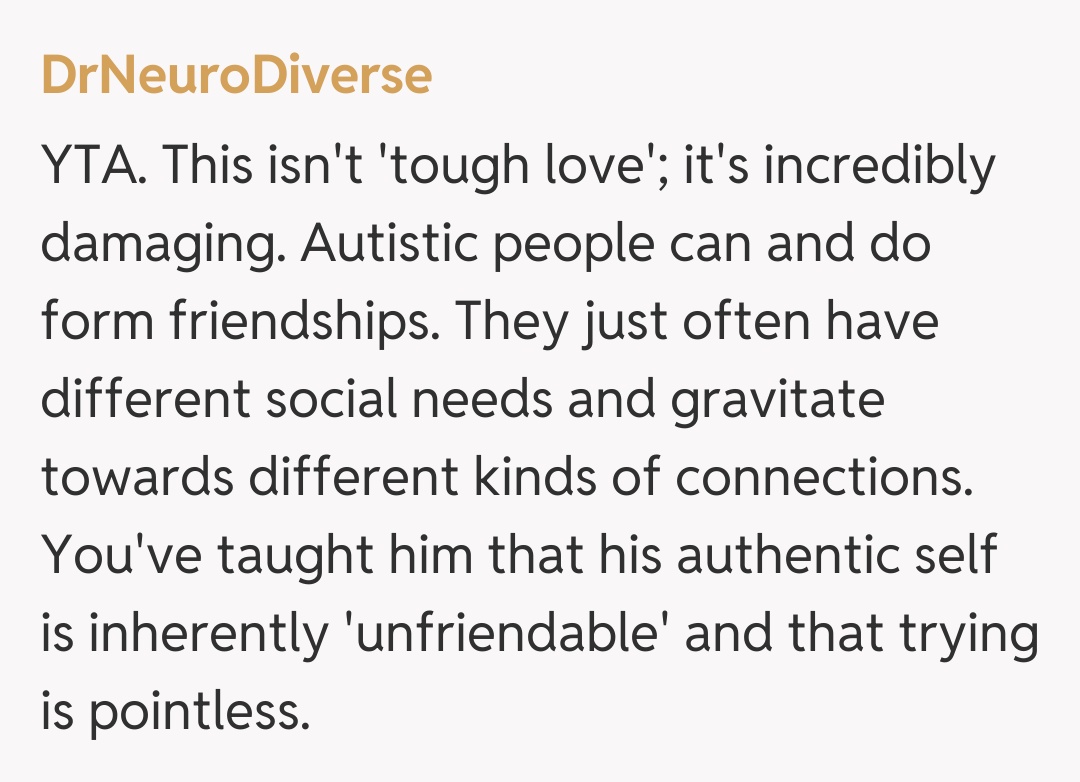
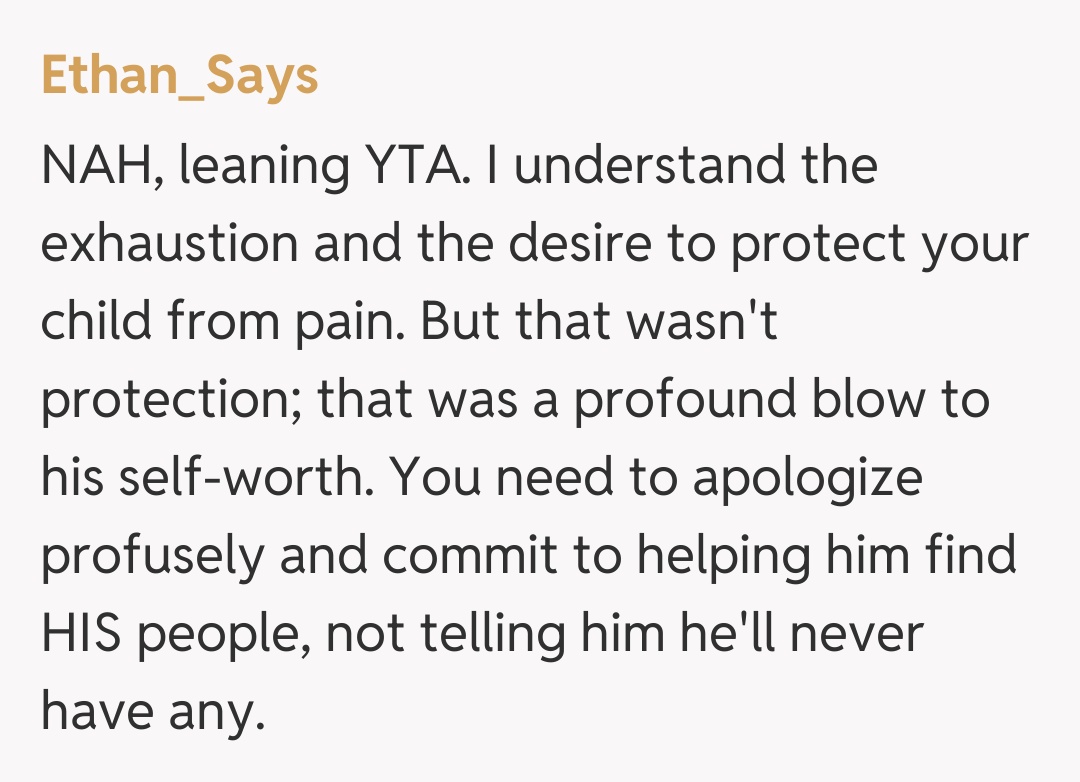
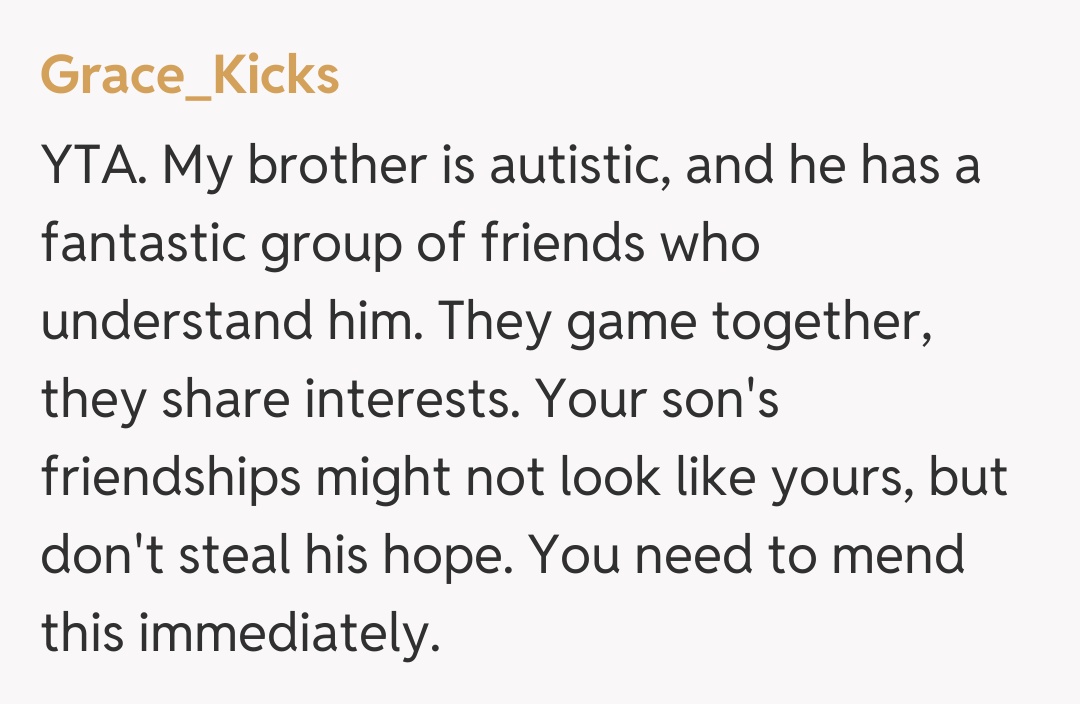
The comment section exploded with a mix of empathy and outrage, though the overwhelming sentiment leaned towards calling the OP the asshole, or at least, acknowledging the profound harm of her words. Many users, particularly those who are autistic or have autistic family members, highlighted the lasting damage such statements can inflict, underscoring that autistic individuals *can* and *do* form meaningful friendships, even if their social styles differ.\nWhile few defended the *words* themselves, a significant number of commenters expressed deep sympathy for the OP's exhaustion and frustration. They acknowledged the immense challenges of parenting a child with social difficulties and recognized that her outburst likely came from a place of desperation and pain, not malice. However, this understanding didn't negate the severity of the statement's impact on her son's self-esteem.
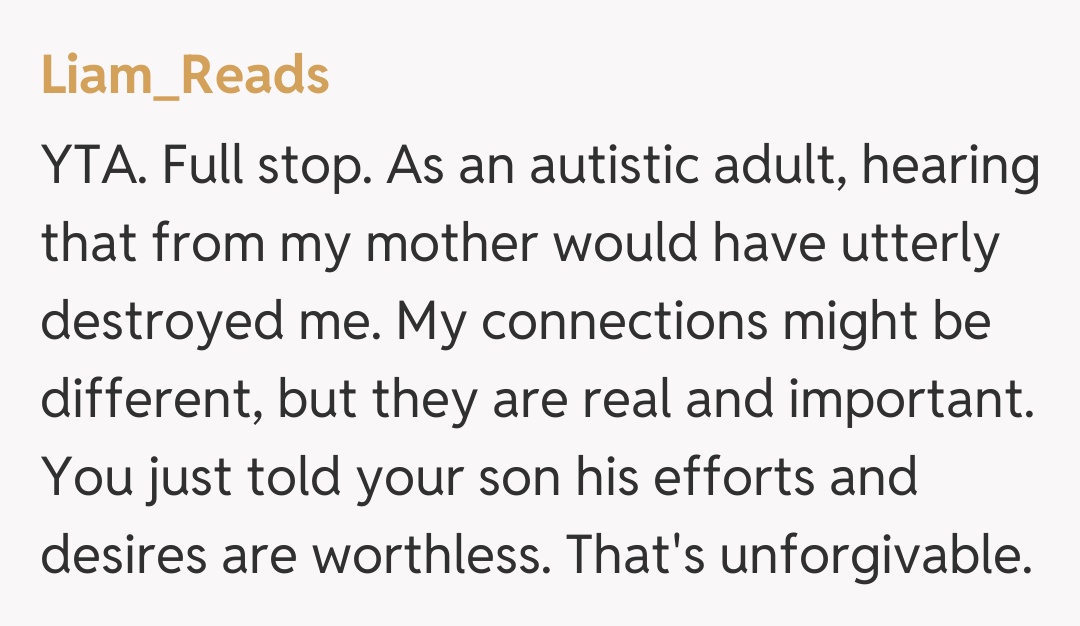
This heartbreaking story serves as a stark reminder of the immense pressures parents face, particularly those navigating the complexities of raising neurodivergent children. While the outpouring of comments clearly condemned the mother's words, there was also an underlying current of empathy for her pain. It's a powerful lesson in the lasting impact of our words, especially on vulnerable children, and the critical importance of seeking support for ourselves when we feel overwhelmed. Perhaps the greatest takeaway is that even in our darkest moments, our children need our unwavering belief, even if the path to 'normalcy' isn't their journey.