AITA for refusing to forgive my mother for favoring my sibling my entire childhood, even though she’s crying about it now?
Parental favoritism is a wound that can fester for decades, leaving deep scars on those who feel perpetually overlooked. Today's AITA story brings to light the raw, enduring pain of a childhood marked by unequal affection and attention. It’s a narrative many can unfortunately relate to, where one child feels like a constant runner-up, forever trying to earn a love that seems effortlessly bestowed upon a sibling.
The question isn't just about whether our Original Poster (OP) is an a-hole for holding onto resentment; it's about the very nature of forgiveness itself. Is it a right we're owed, or a personal journey we undertake for our own peace? When the very person who caused the hurt finally acknowledges it, but only years later, how do we reconcile the past with the present, especially when the emotional well is dry?

"AITA for refusing to forgive my mother for favoring my sibling my entire childhood, even though she's crying about it now?"
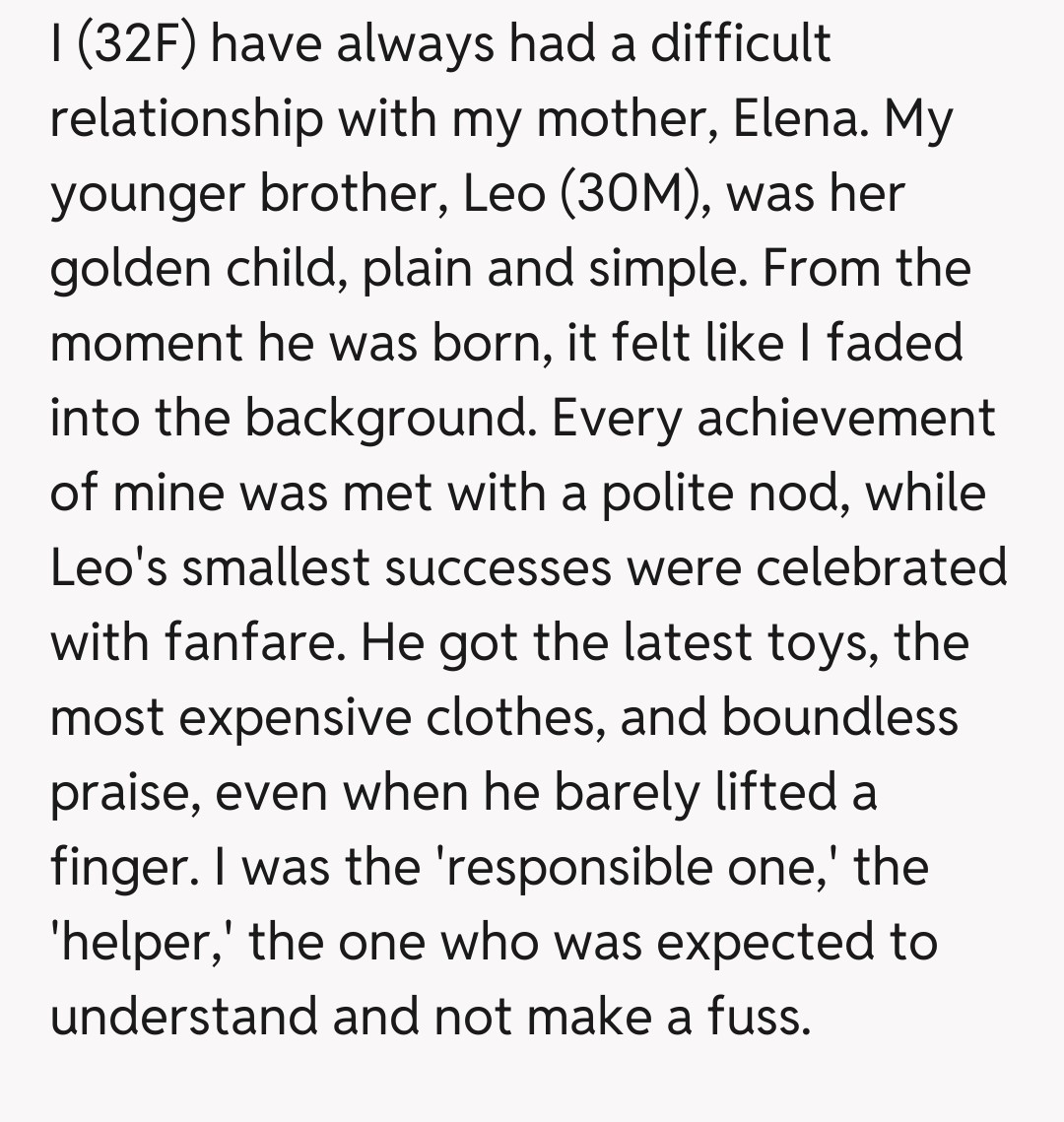
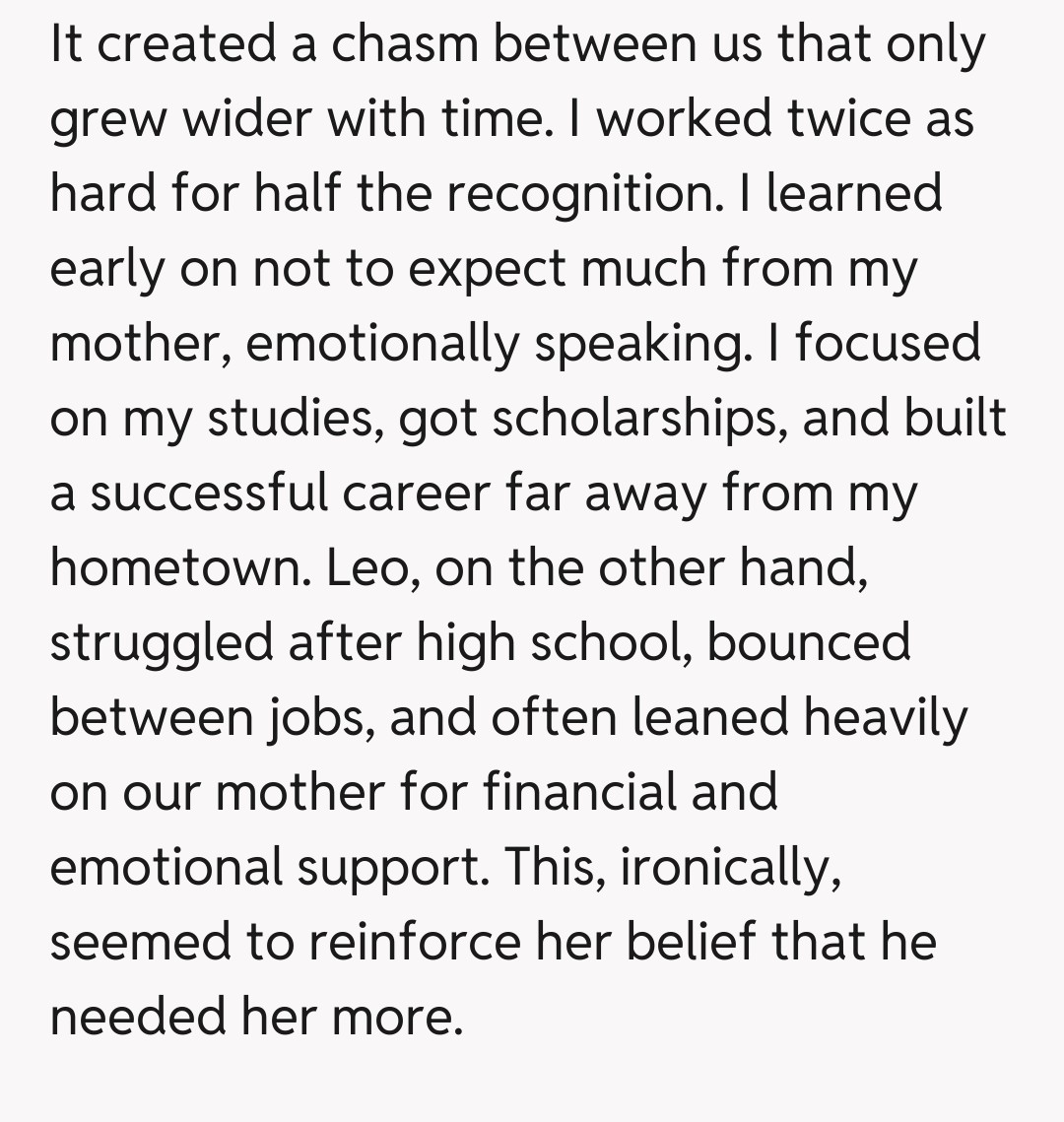
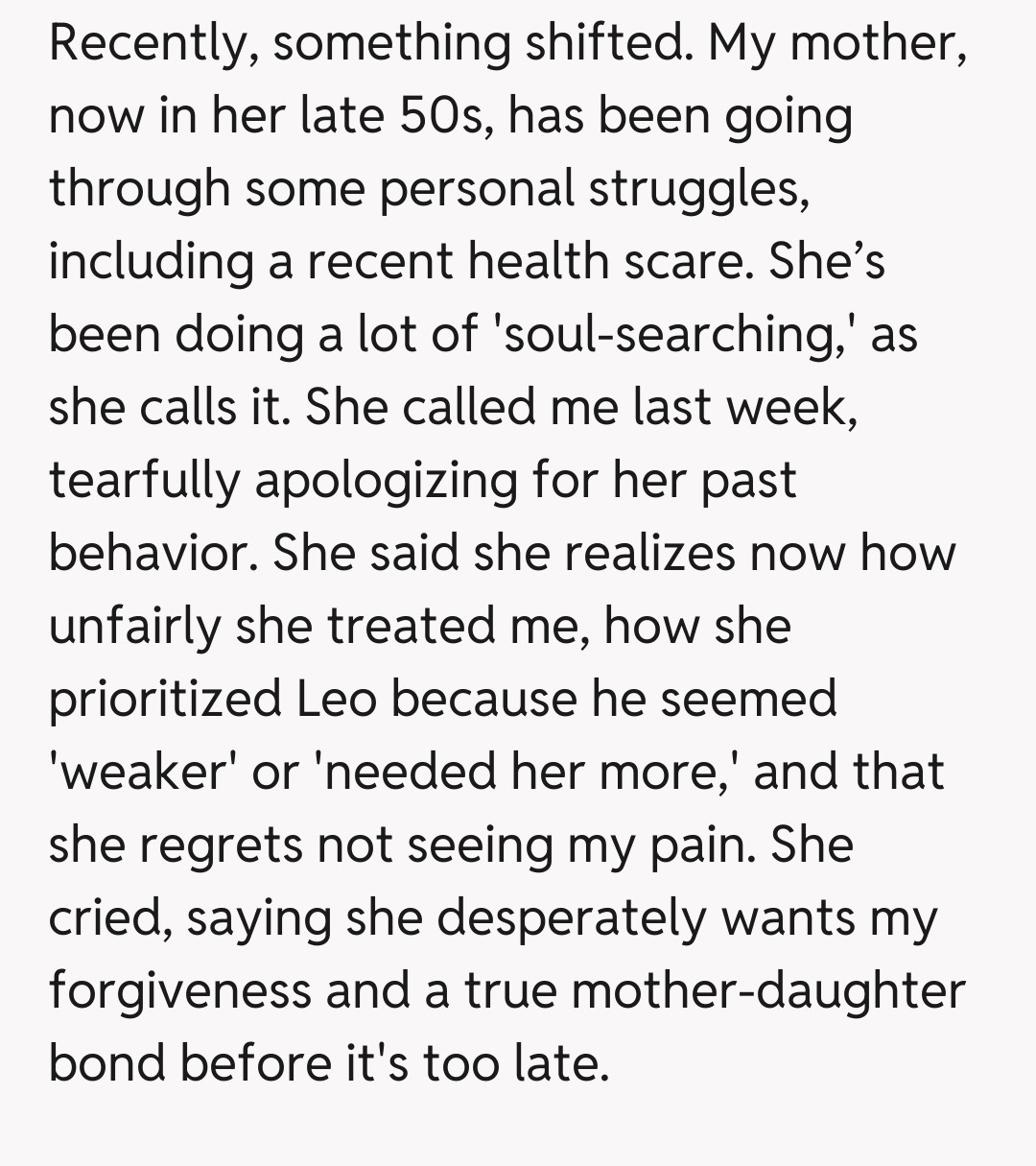
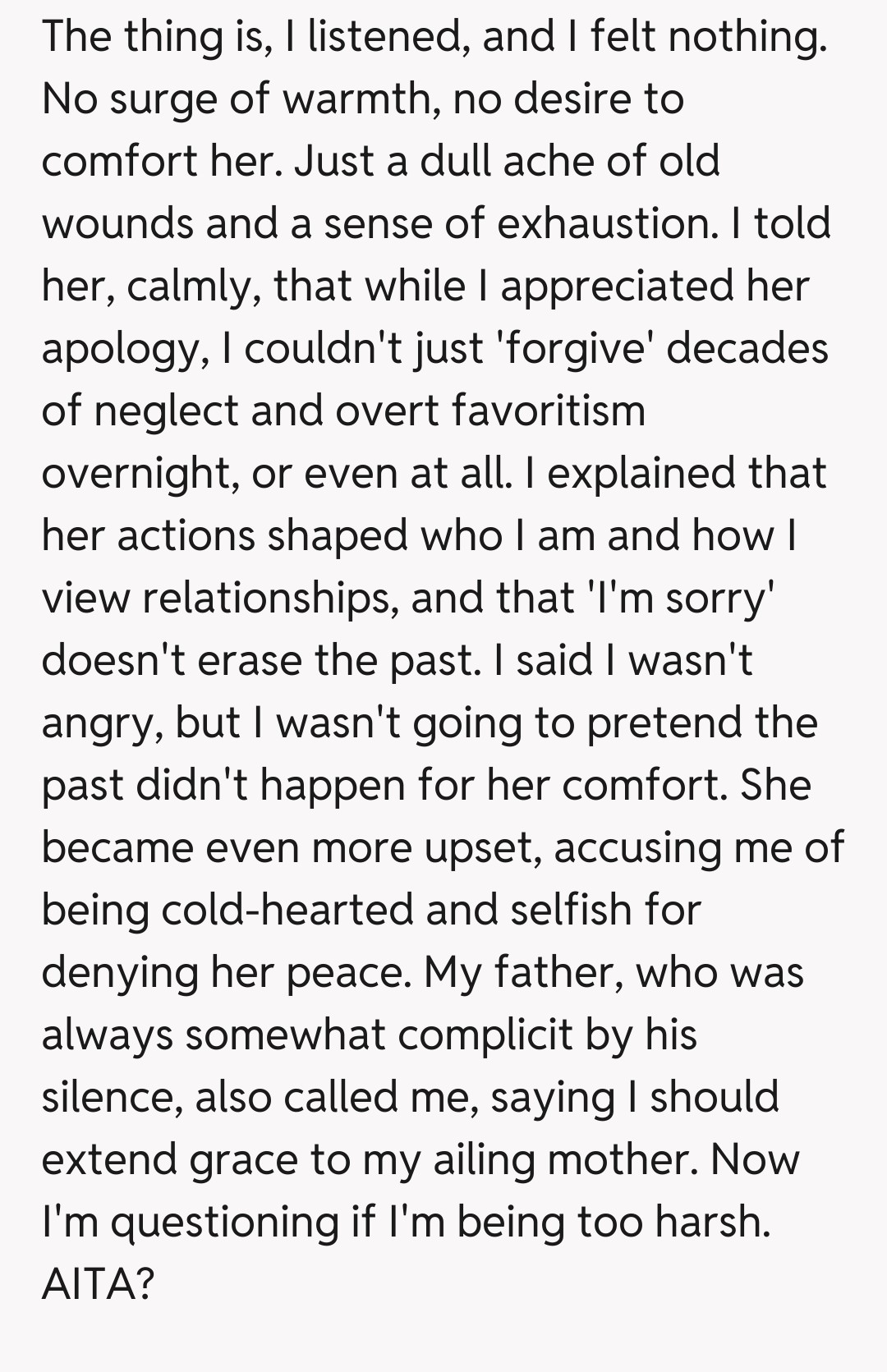
This story highlights the enduring and often devastating impact of parental favoritism. The Original Poster, Maya, clearly experienced a childhood where her emotional needs were consistently secondary to her brother Leo's. This kind of experience doesn't just fade; it shapes an individual's self-worth, their ability to trust, and their relationship patterns for years, if not decades. The mother's current apology, while seemingly genuine, comes at a time when she herself is vulnerable, raising questions about its timing and underlying motivations.
From the mother's perspective, it's possible her apology is truly born of regret and a desire for reconciliation. People do gain perspective as they age, especially during difficult times. She might genuinely be grappling with guilt and the fear of losing a relationship with her daughter. However, a parent's realization of past mistakes, while a first step, doesn't automatically entitle them to immediate forgiveness or a renewed relationship on their terms. Forgiveness is a deeply personal and voluntary act, not a transactional one.
Maya's response, though seemingly cold to her mother, is entirely understandable. She's not denying her mother's feelings, but she's prioritizing her own emotional well-being and acknowledging the depth of the hurt. Demanding forgiveness simply to alleviate one's own guilt places an unfair burden on the victim. It suggests that the mother's comfort is still more important than Maya's healing, echoing the very dynamic that caused the initial pain. Maya's feelings of emotional detachment are a natural defense mechanism developed over years.
Ultimately, Maya has every right to choose how she processes her past. Forgiveness is not about condoning the behavior; it's often about releasing oneself from the burden of anger. However, that journey is hers alone to undertake, and it cannot be rushed or coerced. Her mother needs to understand that genuine reconciliation requires more than just an apology; it requires sustained effort, empathy, and respect for Maya's boundaries and emotional timeline. Pushing her to forgive only risks deepening the rift.
The Weight of Childhood Wounds: What Our Readers Said
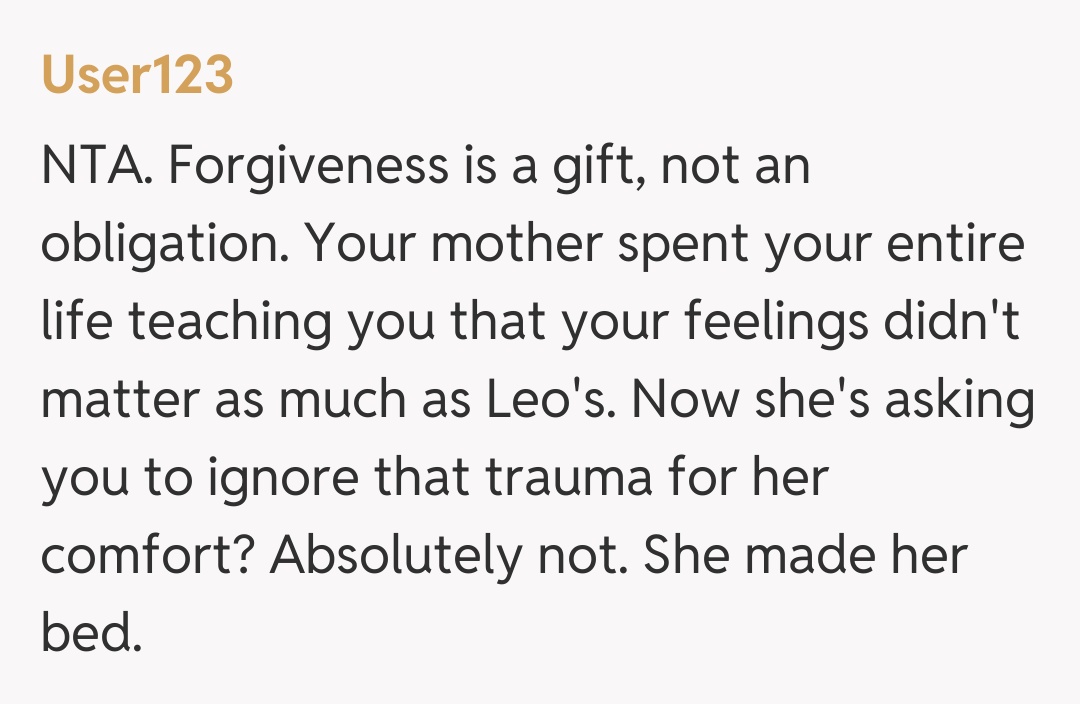
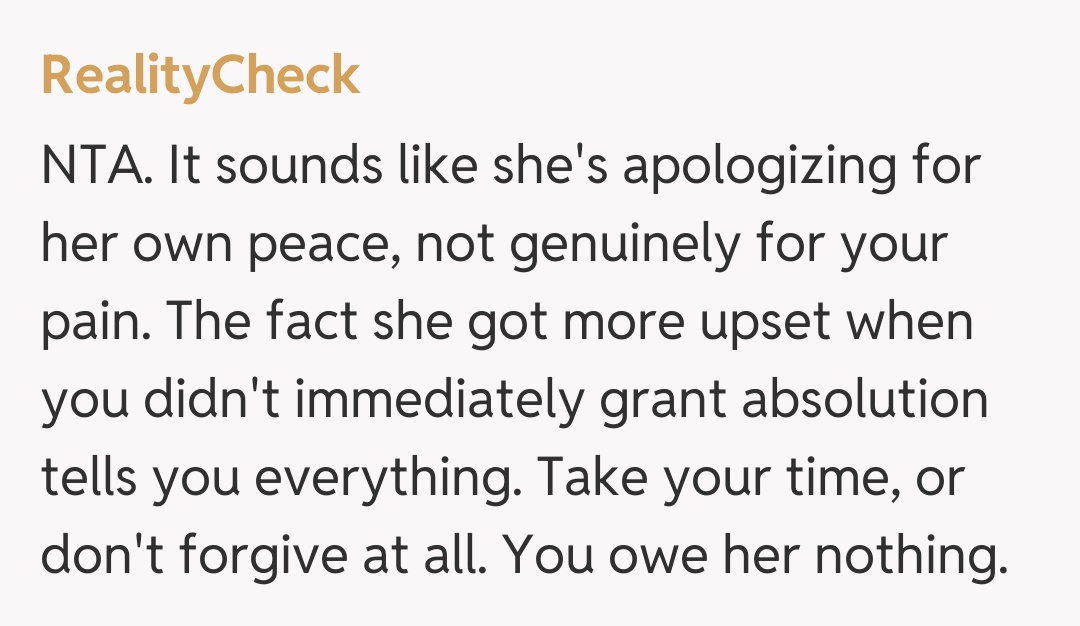
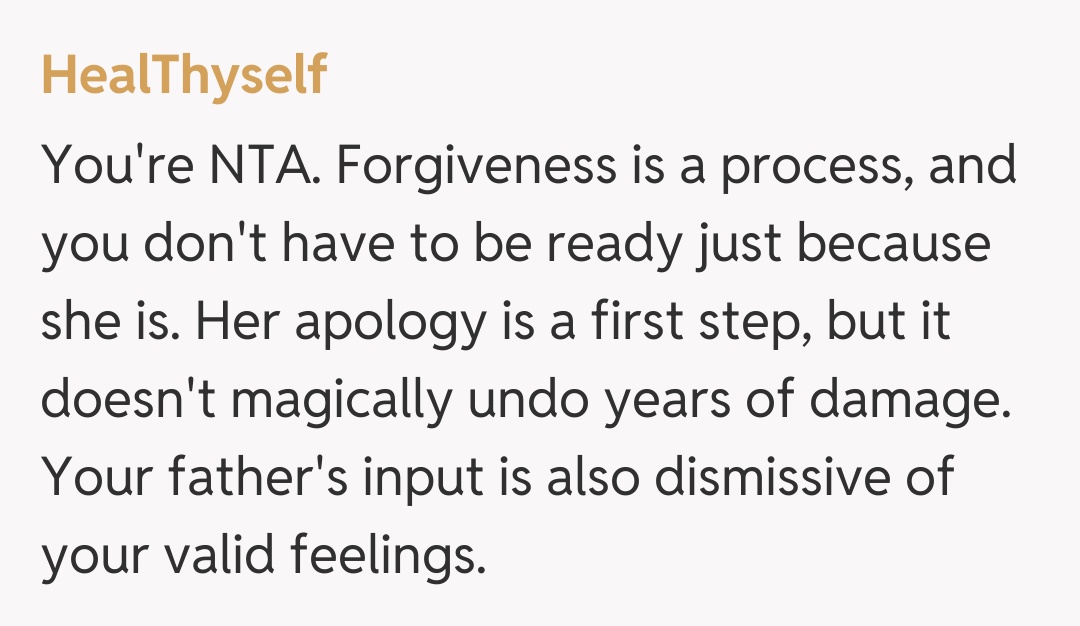
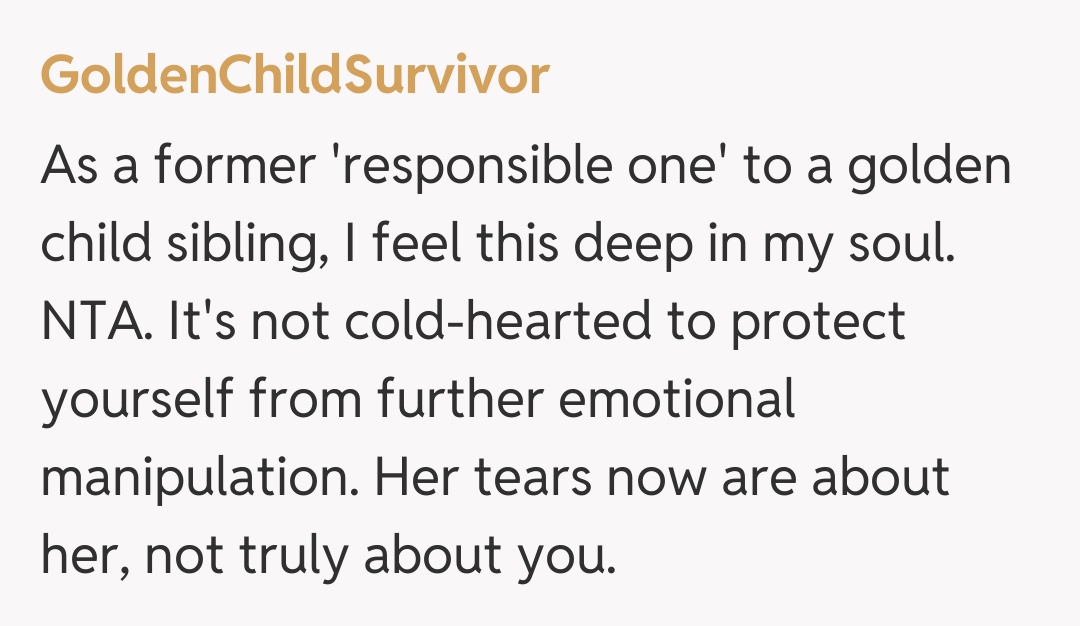
The comment section on this post was, predictably, a resounding chorus of support for Maya. Many readers empathized deeply with her experience of being the 'forgotten child,' sharing their own stories of parental favoritism. There was a strong consensus that forgiveness is a personal journey and not something that can be demanded, especially when the apology feels belated or self-serving, coming only when the parent needs something.
While a few users suggested that Maya should eventually try to find peace for her own sake, the overwhelming sentiment was that she is absolutely NTA. Commenters highlighted that the mother’s tears now do not erase decades of pain and that Maya is entitled to protect her own emotional space. The idea that Maya should 'extend grace' for her mother's 'peace' was widely rejected as a perpetuation of the original favoritism dynamic.
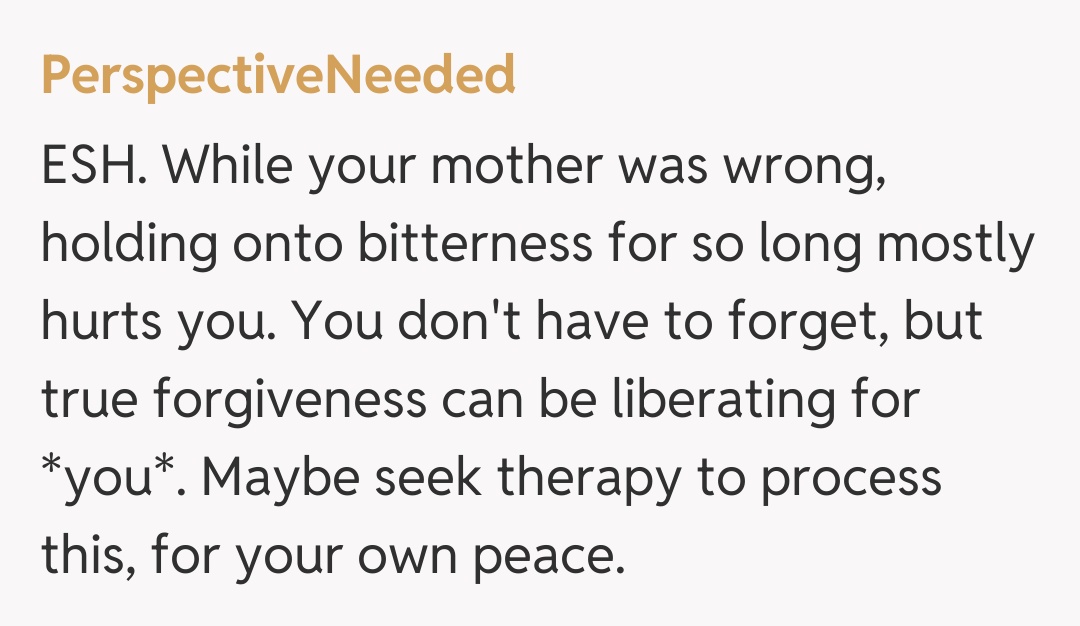
This story serves as a powerful reminder that childhood wounds run deep, and healing is rarely linear or immediate. While forgiveness can be a profound act of self-liberation, it is not a debt owed or a switch to be flipped. Maya's journey is her own, and her refusal to offer immediate forgiveness, especially when it feels coerced, is a testament to her right to protect her emotional boundaries. Ultimately, genuine reconciliation requires a sustained effort from the offending party to understand the depth of the hurt they caused, without demanding a specific outcome.