AITA for telling my overweight son he’s not allowed to bring friends home because they would judge our family?
Oh, the teenage years! A delicate tightrope walk between seeking independence and desperately needing parental approval. Add in the relentless pressure of social acceptance and the scrutiny of peers, and you have a recipe for emotional turmoil. It’s a time when a child's self-esteem is incredibly fragile, and a parent's words can either build them up or, tragically, tear them down with lasting consequences.
This week's AITA post delves into precisely such a fraught situation, where a parent’s attempt to 'protect' their child from perceived external judgment might just be doing more harm than good. The story highlights the complex interplay of parental anxieties, a child’s blossoming social life, and the painful lessons learned when good intentions go awry. Let's dive in.

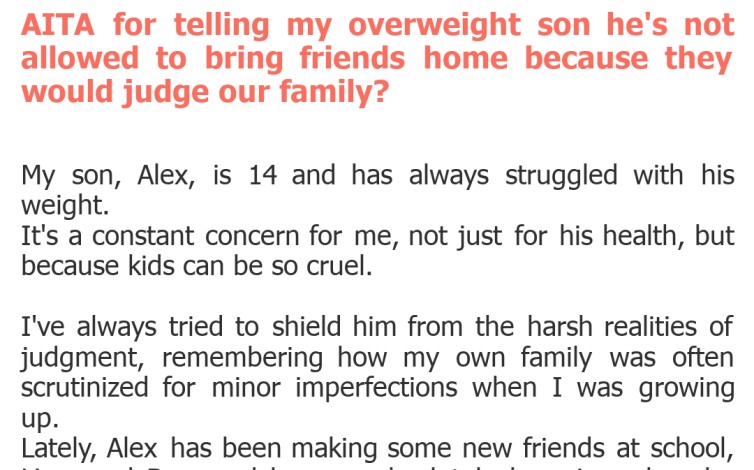
"AITA for telling my overweight son he's not allowed to bring friends home because they would judge our family?"
It's completely understandable for a parent to want to shield their child from the pain of judgment. Many of us carry our own past wounds and project those fears onto our children, hoping to spare them similar experiences. Your desire to protect Alex from a world that can be unkind is rooted in a natural parental instinct, and recalling your own history of being judged adds a crucial layer of context to your decision-making process here.
However, the way this protection was enacted may have inadvertently caused more harm than the perceived external threat. For a 14-year-old, social connection and the ability to bring friends home are incredibly significant milestones. Being told he cannot share this part of his life due to fear of judgment from his own parent sends a devastating message about his worth and belonging.
This decision risks teaching Alex that his home isn't a safe space for his friendships, and worse, that there's something inherently wrong or shameful about him or his family that needs to be hidden. It could significantly damage his self-esteem, making him more withdrawn and insecure. The long-term implications for his mental well-being and his relationship with you are substantial and concerning.
Instead of preventing friends from coming over, a more supportive approach might involve addressing the root causes of your anxieties. Focus on fostering a loving, accepting environment for Alex, working together on healthy habits if weight is a concern, and building his confidence so he feels secure enough to face the world, not hide from it. Your home should be a sanctuary, not a barrier, for his developing social life.
The Internet Weighs In: Was This Mom's 'Protection' Just Plain Cruelty?
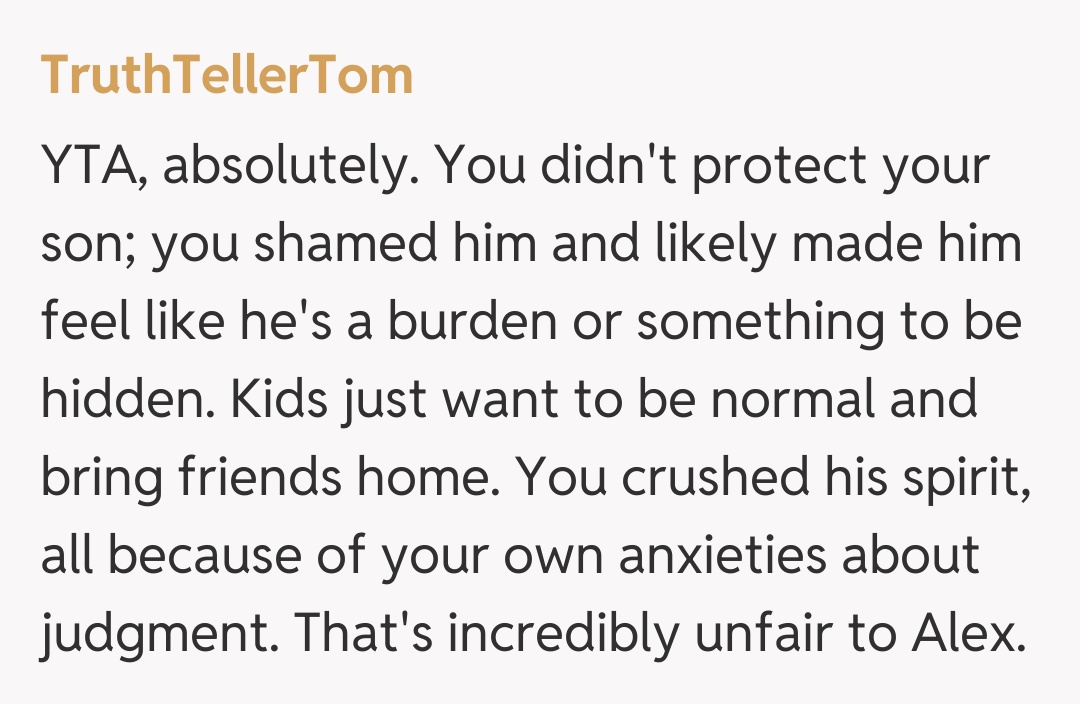
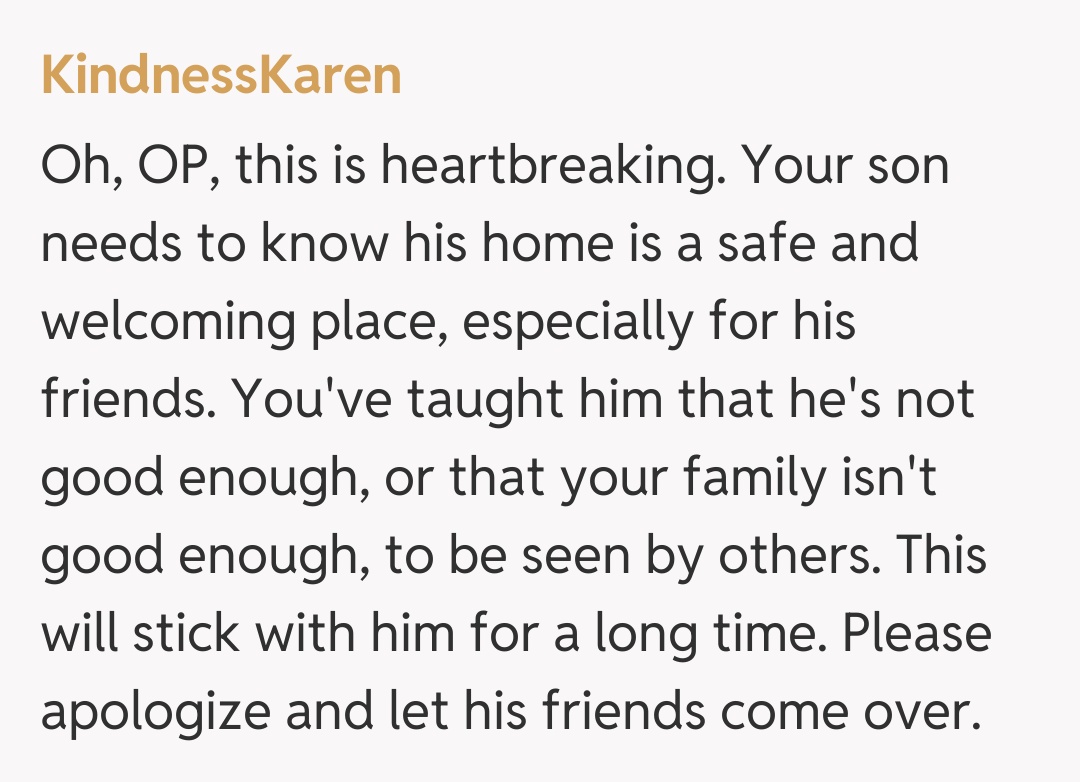
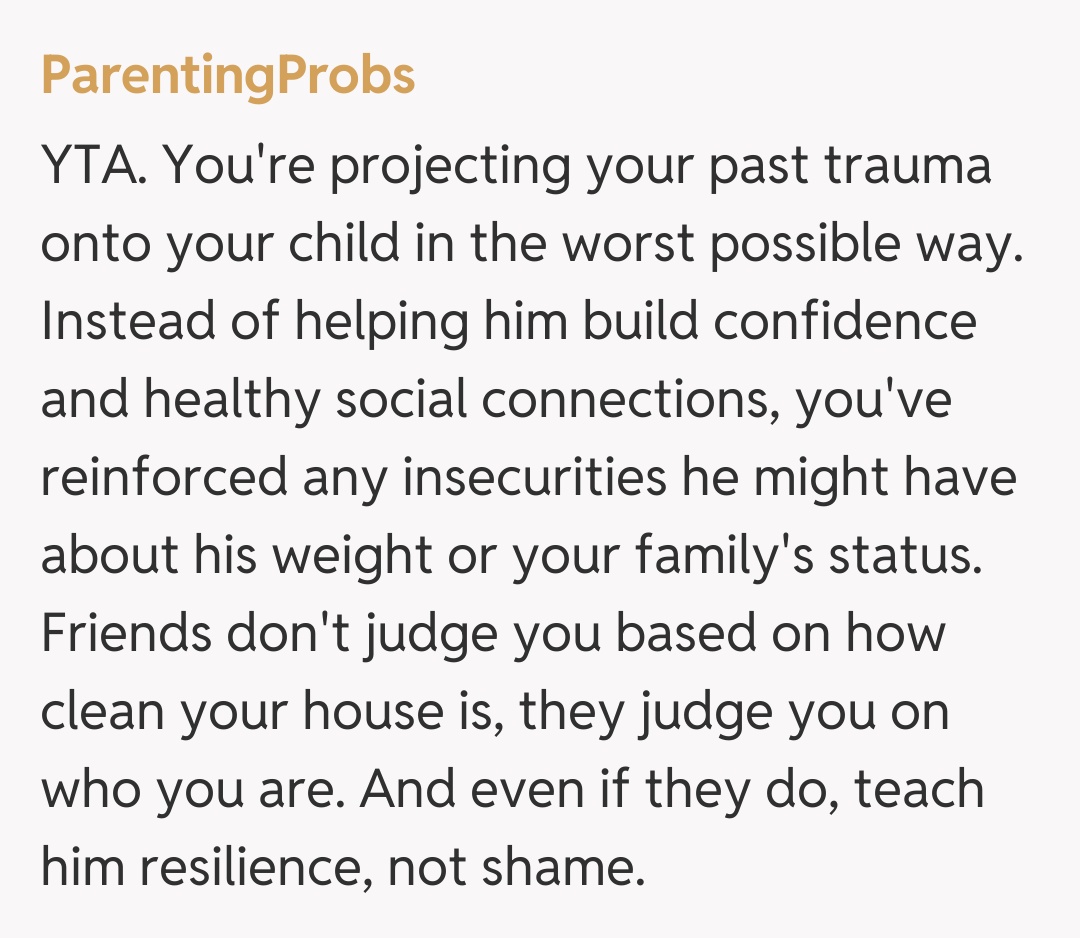
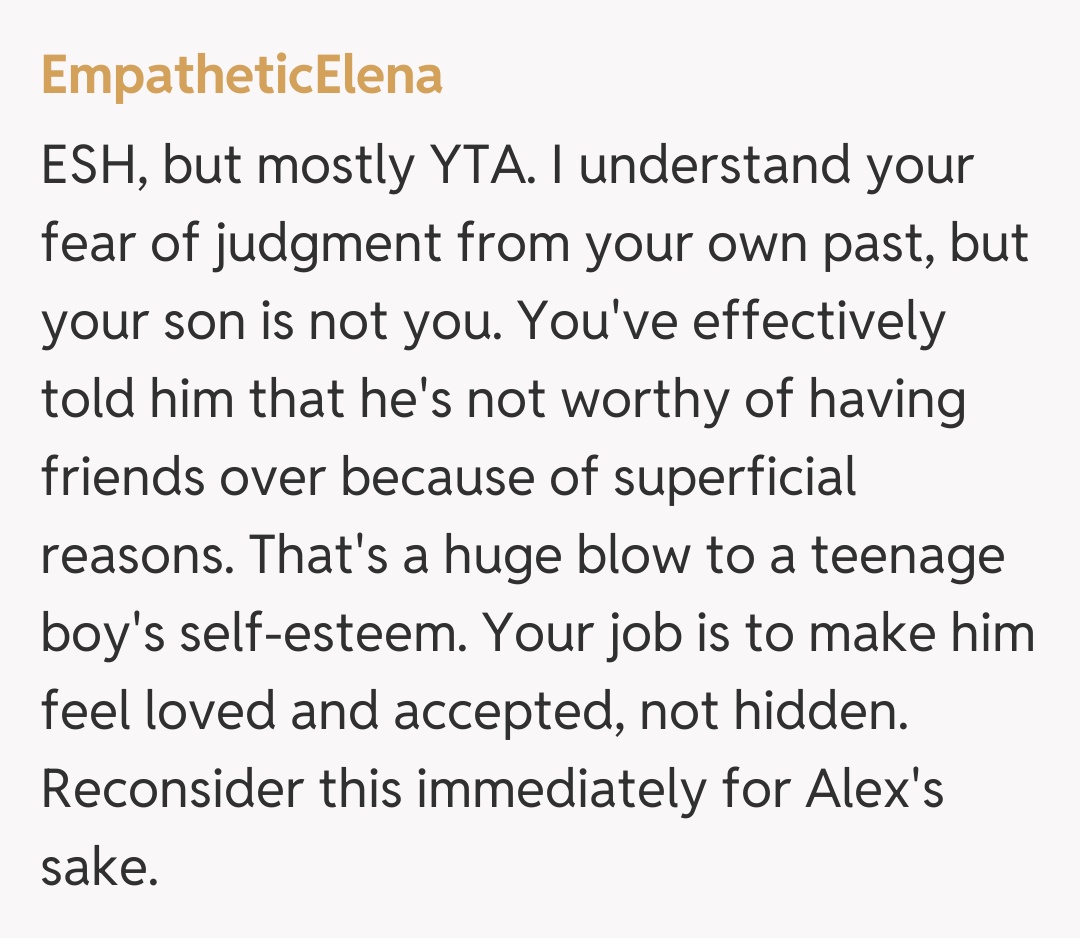
The comments section for this post was, as expected, a whirlwind of strong opinions, with the vast majority leaning towards a definitive 'YTA' for the original poster. Users were quick to point out the heartbreaking impact of such a decision on a vulnerable teenager, emphasizing that a child's home should be their safest haven, not a source of shame or exclusion. Many felt the mother was projecting her own insecurities.
A recurring theme in the feedback was the idea that true parental protection involves equipping children with resilience and confidence, rather than sheltering them to the point of isolation. Commenters highlighted the irony of preventing external judgment by delivering a deeply internal, parental judgment that could scar Alex far more profoundly than any schoolyard taunt. The need for open communication and support was a constant refrain.
This difficult story serves as a poignant reminder that while parental intentions often stem from love, their execution can sometimes inflict unintended pain. Our children look to us for acceptance and security, and denying them basic social experiences out of our own fears can deeply wound their burgeoning self-esteem. The overwhelming sentiment from the community is clear: prioritizing a child's emotional well-being and social development by fostering an open, accepting home environment is paramount, even when it means confronting our own anxieties about external judgment. Let's hope this parent reflects and mends things with Alex.