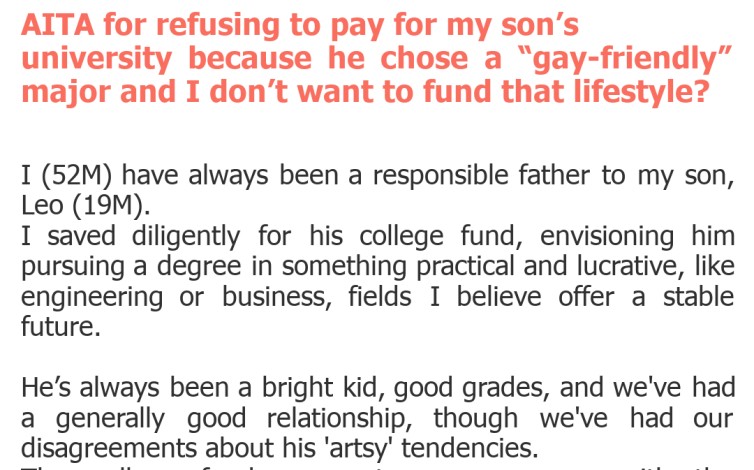
AITA for refusing to pay for my son’s university because he chose a “gay-friendly” major and I don’t want to fund that lifestyle?
Oh boy, do we have a doozy for you today! This story dives deep into the thorny subject of parental expectations, financial support, and a son's life choices. Our original poster, a parent of a young man, is grappling with a decision that has sparked a fierce family conflict, and honestly, it’s one that many families might find themselves navigating, albeit perhaps with different underlying tensions. It's truly a tale that makes you ponder where the line between guidance and control truly lies.
Today's submission isn't just about university tuition; it's about values, acceptance, and the sometimes painful reality that children grow into individuals with their own paths. The parent believes they are acting within their rights, but their son feels betrayed. This particular scenario touches upon sensitive social issues, making it ripe for a heated debate in the comments section. So, grab your coffee, settle in, and let's dissect this emotional rollercoaster of a family dilemma.

"AITA for refusing to pay for my son’s university because he chose a “gay-friendly” major and I don’t want to fund that lifestyle?"
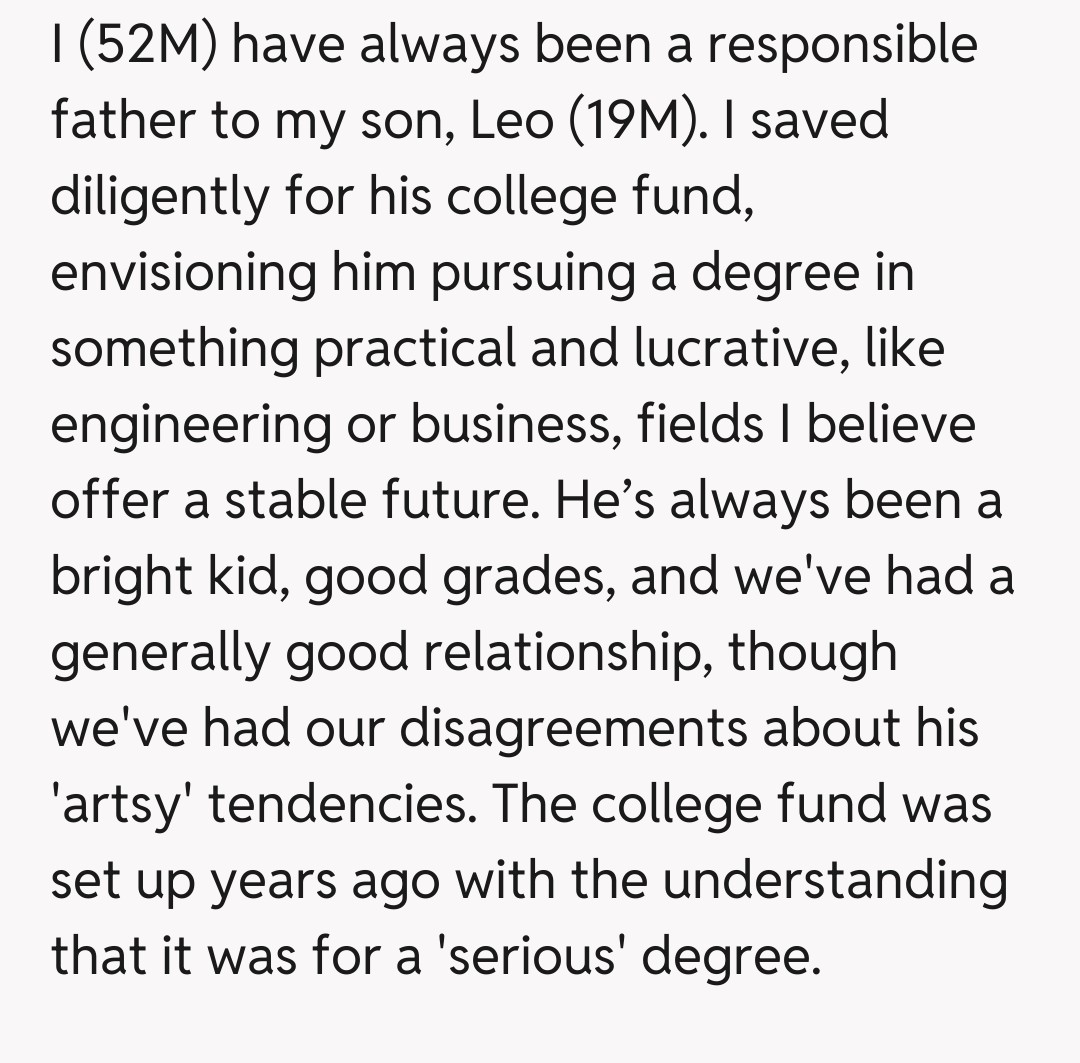
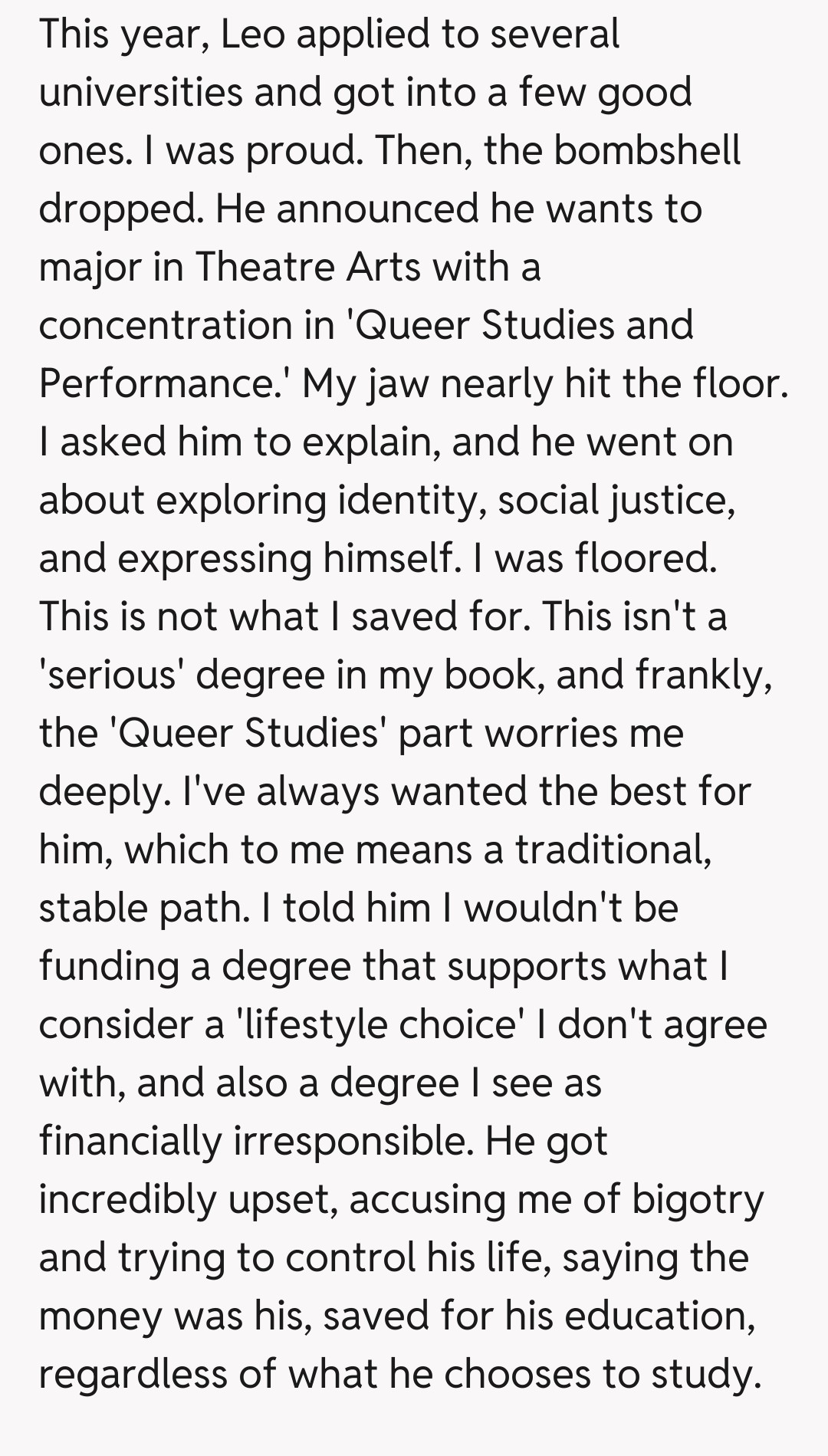
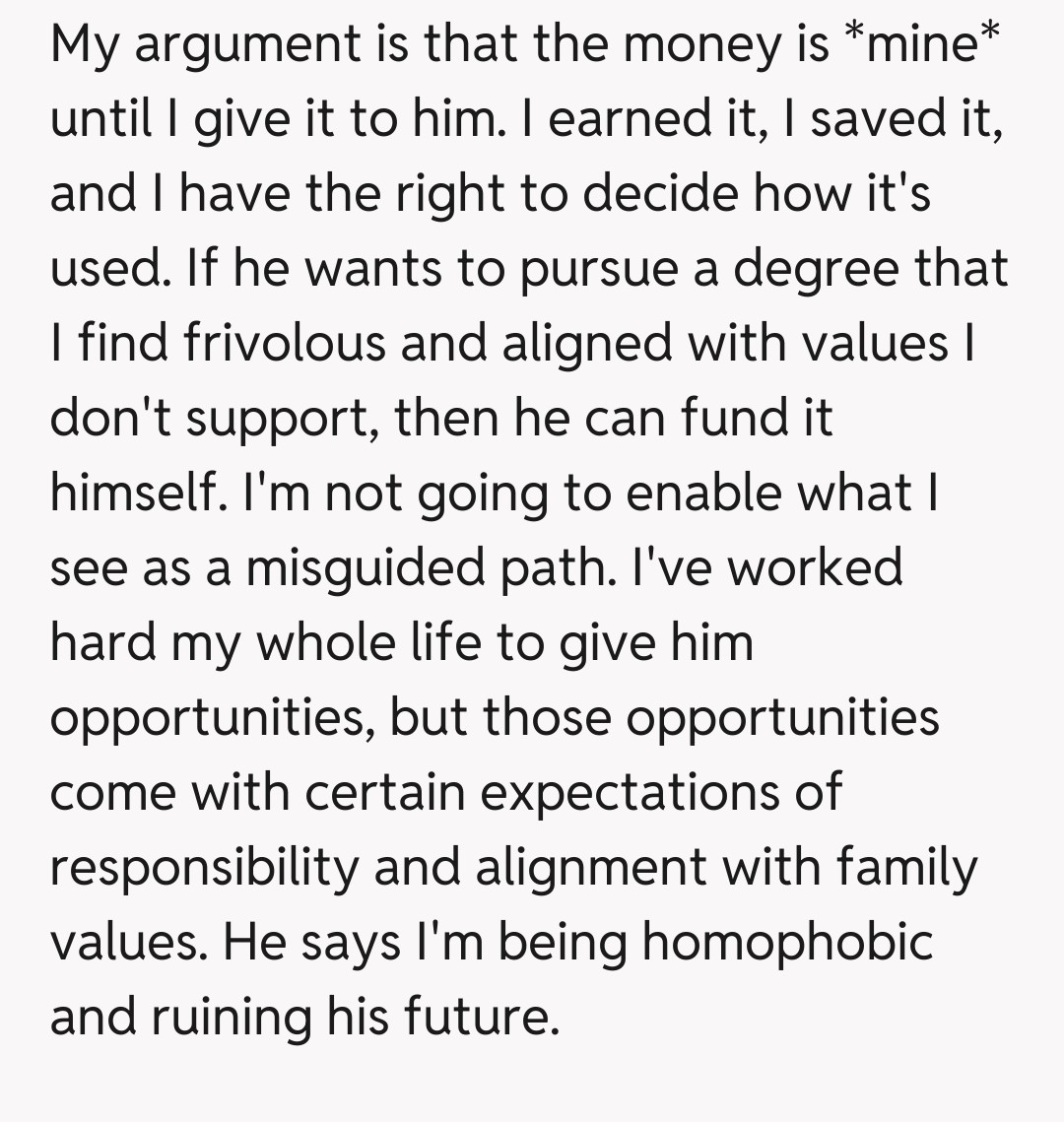

This AITA post presents a classic conflict between parental control and a child's autonomy, amplified by deeply personal values and financial leverage. The original poster (OP) has a clear vision for their son's future, rooted in what they perceive as practical and stable. They view their hard-earned money as a tool to guide their son toward this vision, believing they have the right to dictate its use, especially when it comes to supporting a major they deem both financially unwise and morally objectionable based on their personal beliefs.
From the son's perspective, this situation is likely perceived as a betrayal. He sees a fund earmarked for his education being withheld due to his personal choices regarding his academic path and potentially his identity. The 'Queer Studies' aspect adds a layer of discrimination, as he feels judged not just on the practicality of his major, but on its perceived alignment with a 'lifestyle' his father disapproves of. This feels less about financial prudence and more about conditional love and acceptance.
The core of the conflict lies in who 'owns' the college fund and, more broadly, the son's future. While the OP legally controls the money, the ethical implications of using it as a lever for control over an adult child's life choices are significant. Is the money a gift with strings attached, or an investment in the child's development, regardless of the specific path? The son believes it's the latter, an unconditional means to an education.
Ultimately, both parties feel justified in their stance. The father believes he's protecting his son from a 'mistake' and upholding his values. The son feels he's asserting his independence and right to choose his own life, free from prejudice. The wife's mediation attempts highlight the family division. This scenario forces us to consider the boundaries of parental responsibility versus a young adult's right to self-determination, especially when financial support becomes a point of contention.
The Verdict Is In: Readers Weigh In On Parental Control Vs. Son's Choices!
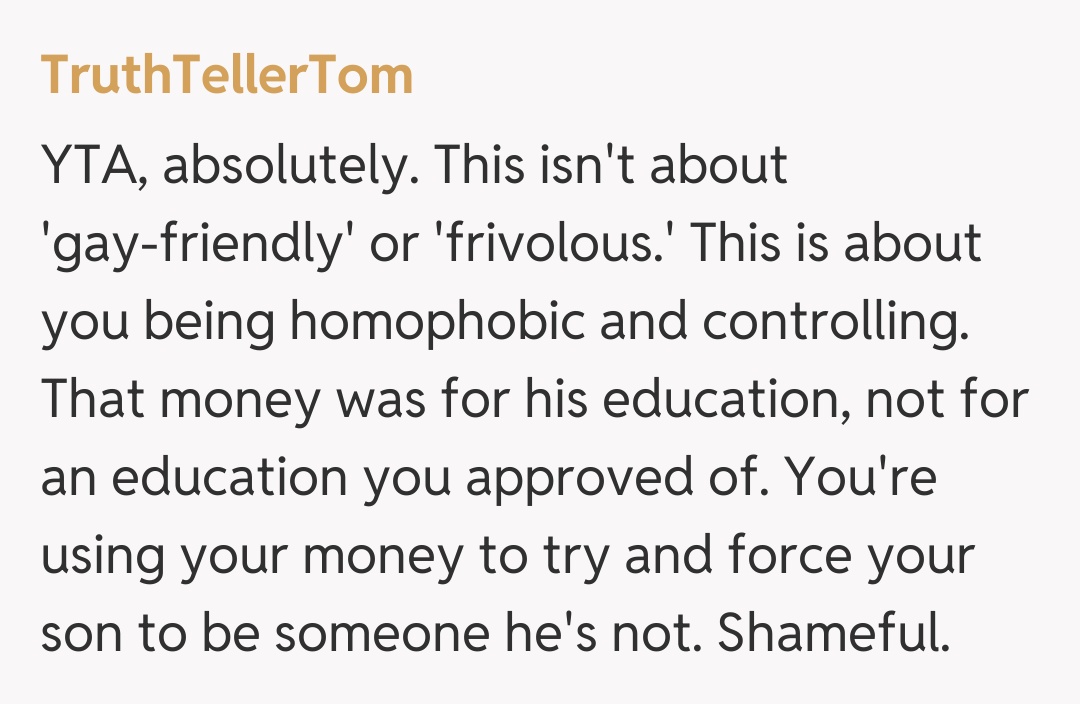
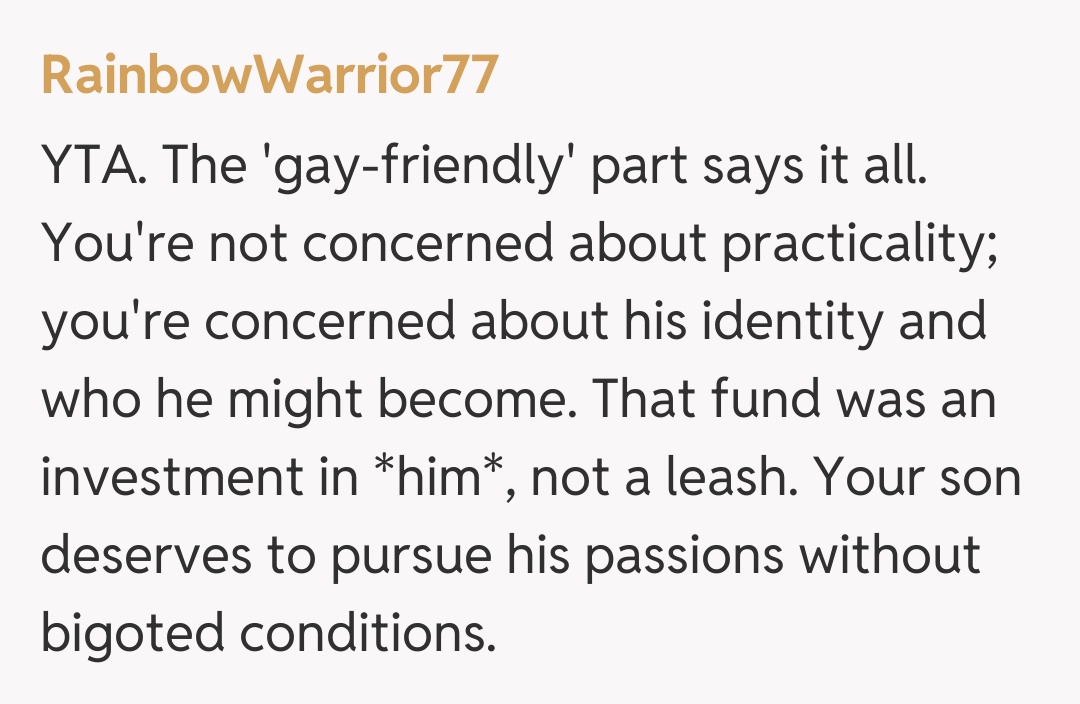
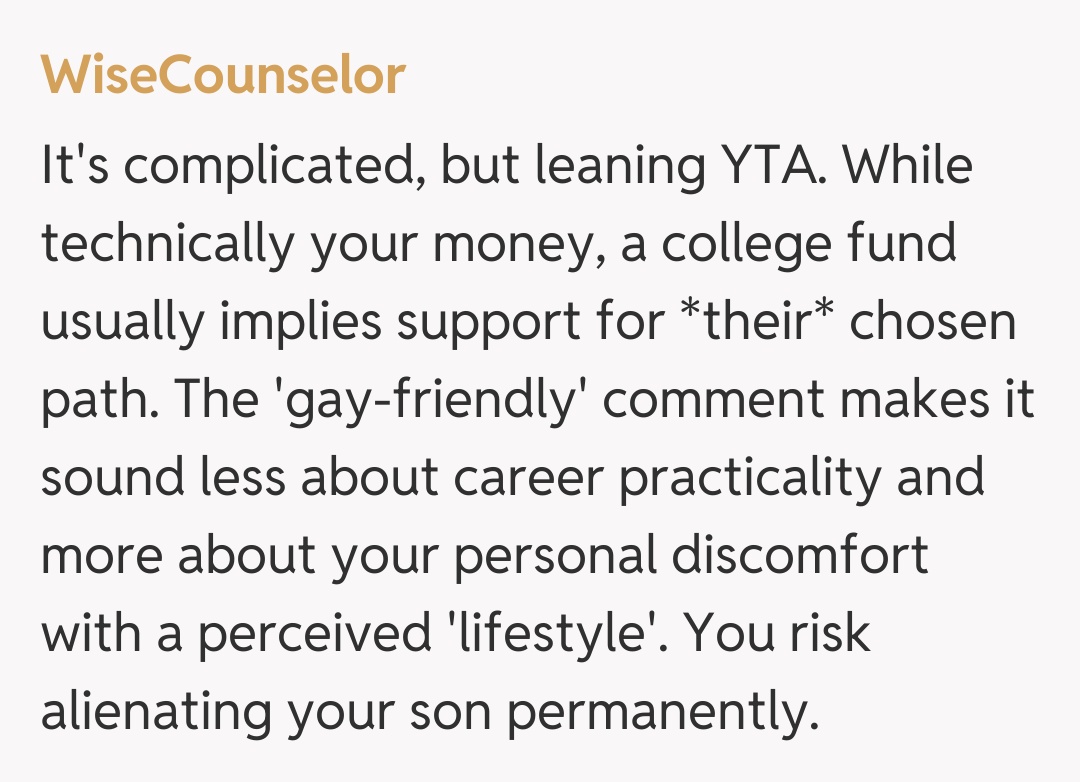
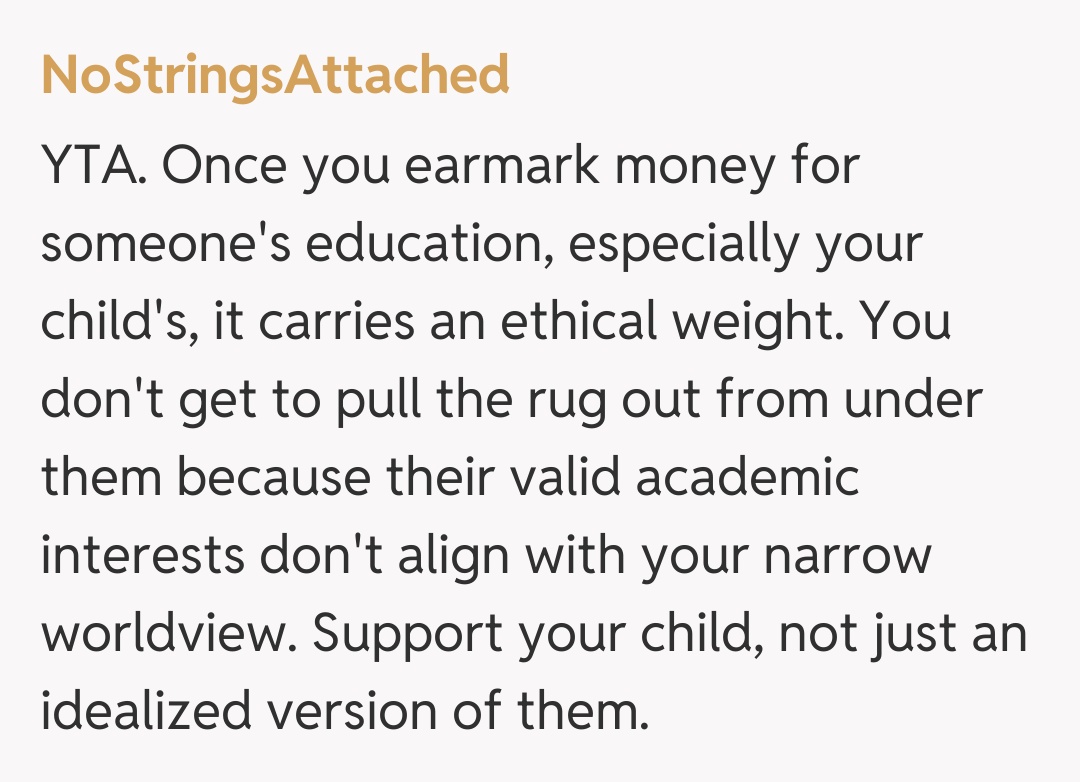
The comments section on this story was, as expected, a wildfire! The overwhelming sentiment leaned towards calling the father out for his perceived homophobia and using financial control as a weapon. Many readers pointed out that a college fund, once established, should ideally be for the child's education, not a tool for parental manipulation. The phrase 'strings attached' came up repeatedly, with users arguing that such conditions undermine the very idea of supporting a child's growth and independence.
However, a smaller but vocal minority defended the father's right to control his own money. They argued that parents are not obligated to fund degrees they deem impractical or against their values, especially if the money is still in their name. This side emphasized the financial responsibility of parents to guide their children towards stable futures, even if it means tough love. The debate truly highlighted the differing views on what constitutes appropriate parental support in adulthood.

This intense AITA story leaves us with much to ponder about family dynamics, financial power, and the complex journey of parental acceptance. While the legal ownership of the college fund might rest with the father, the moral implications of his decision are undeniable. It's a stark reminder that children are individuals, and their paths may diverge significantly from parental expectations. The outcome of this particular family drama remains to be seen, but it's clear that trust has been deeply fractured. We hope both father and son can find a way forward, perhaps with an understanding that true support often means allowing our loved ones the space to be themselves.