AITA for telling my husband I regret having children with him because they all inherited his ugly genes?
Oh boy, do we have a doozy for you today. This submission landed in our inbox and immediately sparked a heated debate amongst the team. It touches on one of the most sensitive topics imaginable within a marriage and parenthood: the physical appearance of one's children and, even more controversially, the regret associated with it. Prepare yourselves for a truly uncomfortable read.
This AITA post isn't just about a simple disagreement; it delves into the deeply personal and potentially devastating impact of words spoken in anger, or perhaps, genuine frustration. The poster's candor, while shocking, does provide a raw glimpse into a very specific kind of marital discord. Let's dive in and see what the internet has to say about this incredibly thorny situation.

"AITA for telling my husband I regret having children with him because they all inherited his ugly genes?"
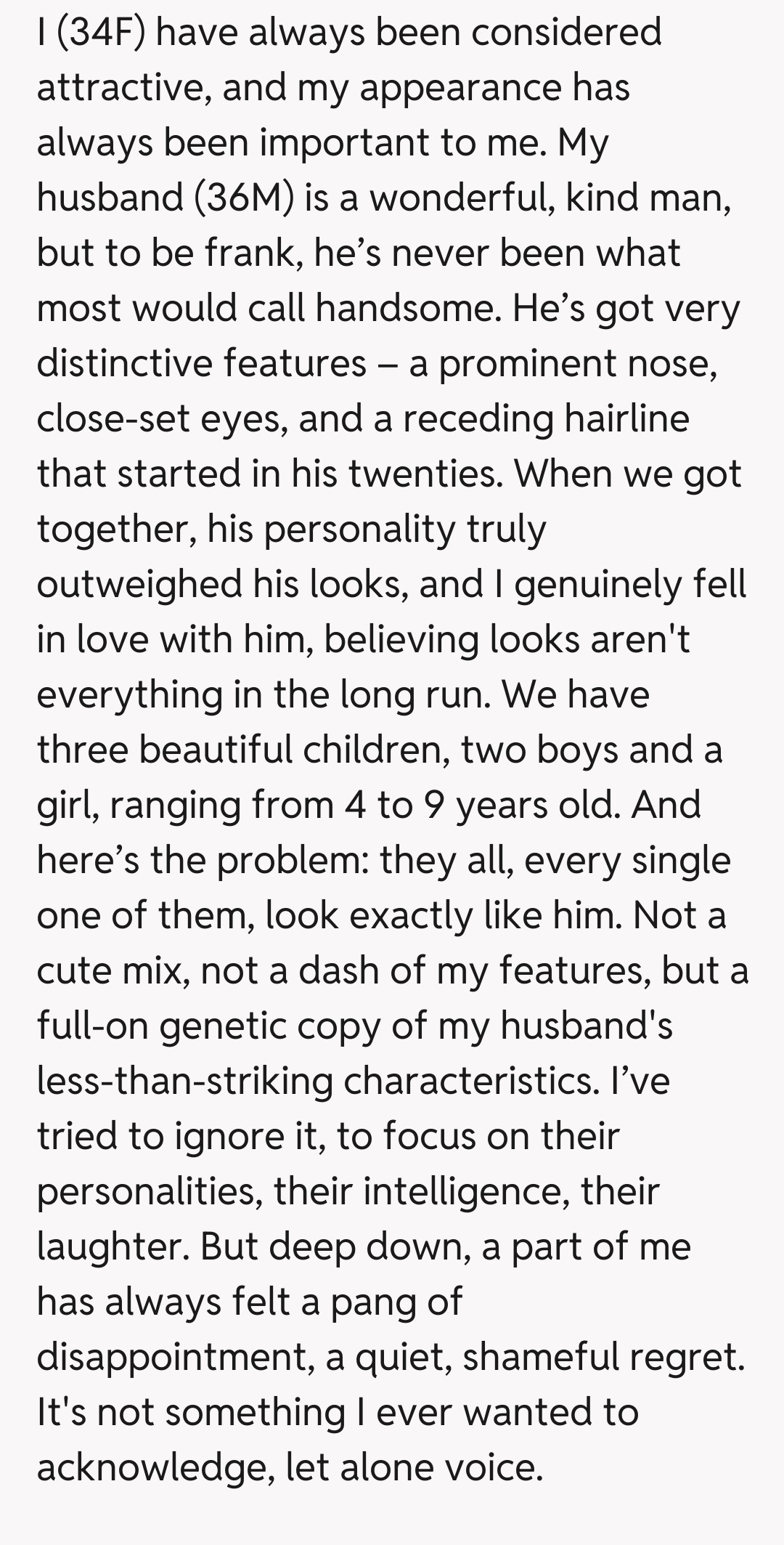
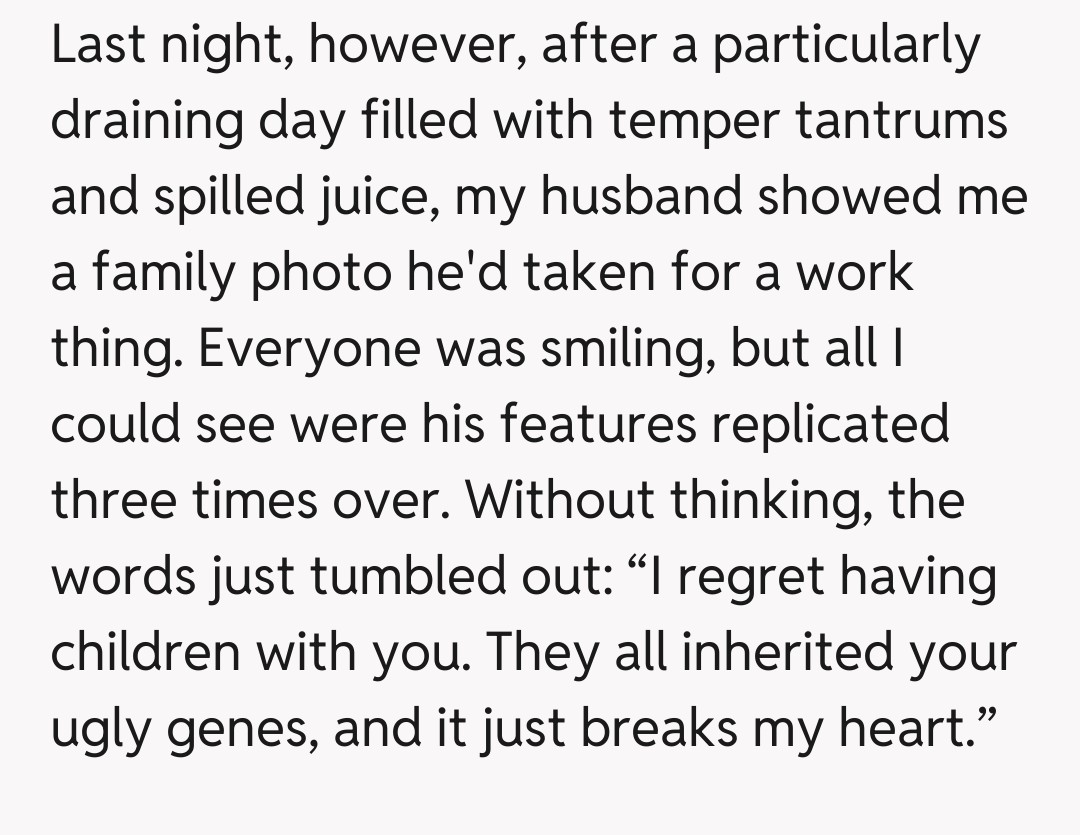
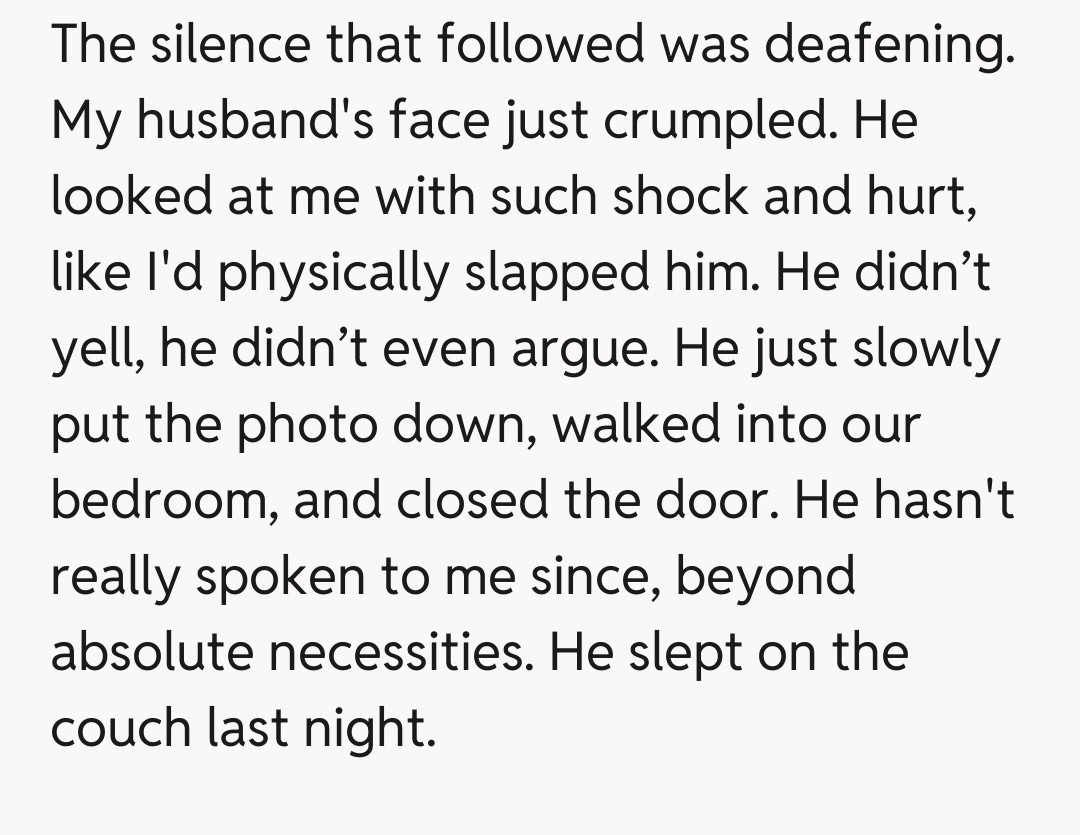
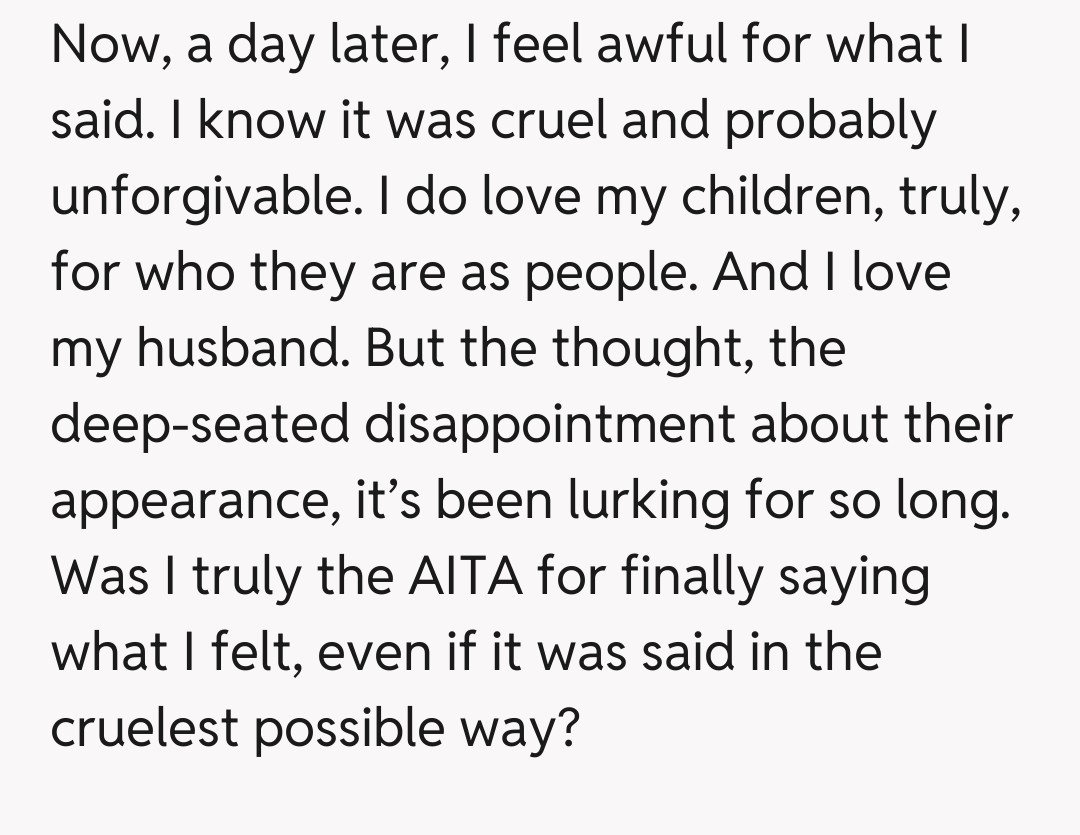
This AITA post presents a truly difficult and emotionally charged scenario. The original poster's words, "I regret having children with you. They all inherited your ugly genes," are undeniably harsh and deeply hurtful. Such a statement cuts to the core of a person's identity and their role as a parent. It implies a devaluing of both the husband and, by extension, the children themselves, based purely on physical appearance. The immediate impact on the husband is clearly devastating.
It's important to consider the potential long-term damage this kind of comment can inflict. Not only does it create a massive rift in the marital relationship, eroding trust and affection, but there's also the horrifying possibility that the children might someday overhear or learn of their mother's sentiments. Imagine the psychological impact on a child discovering their own parent views them as "ugly" or a source of "regret" because of how they look. This is a burden no child should ever have to bear.
While the poster expresses remorse for *how* she said it, her underlying sentiment about their children's appearance seems to persist. This suggests a deeper, unresolved issue within the poster herself. Perhaps it's an ingrained insecurity about her own worth tied to beauty, or an unrealistic expectation of how her family "should" look. Attributing the children's features solely to her husband's "ugly genes" is also a way to deflect any perceived responsibility from herself.
Ultimately, while everyone is entitled to their private thoughts and feelings, voicing them in such a destructive and cruel manner, especially to a spouse about their shared children, crosses a significant line. This isn't just a misstep; it's an act that can shatter a family's foundation. The poster needs to seriously reflect on her values and seek professional help to address these underlying feelings before more irreparable harm is done to her family.
The Internet Reacts: A New Low?
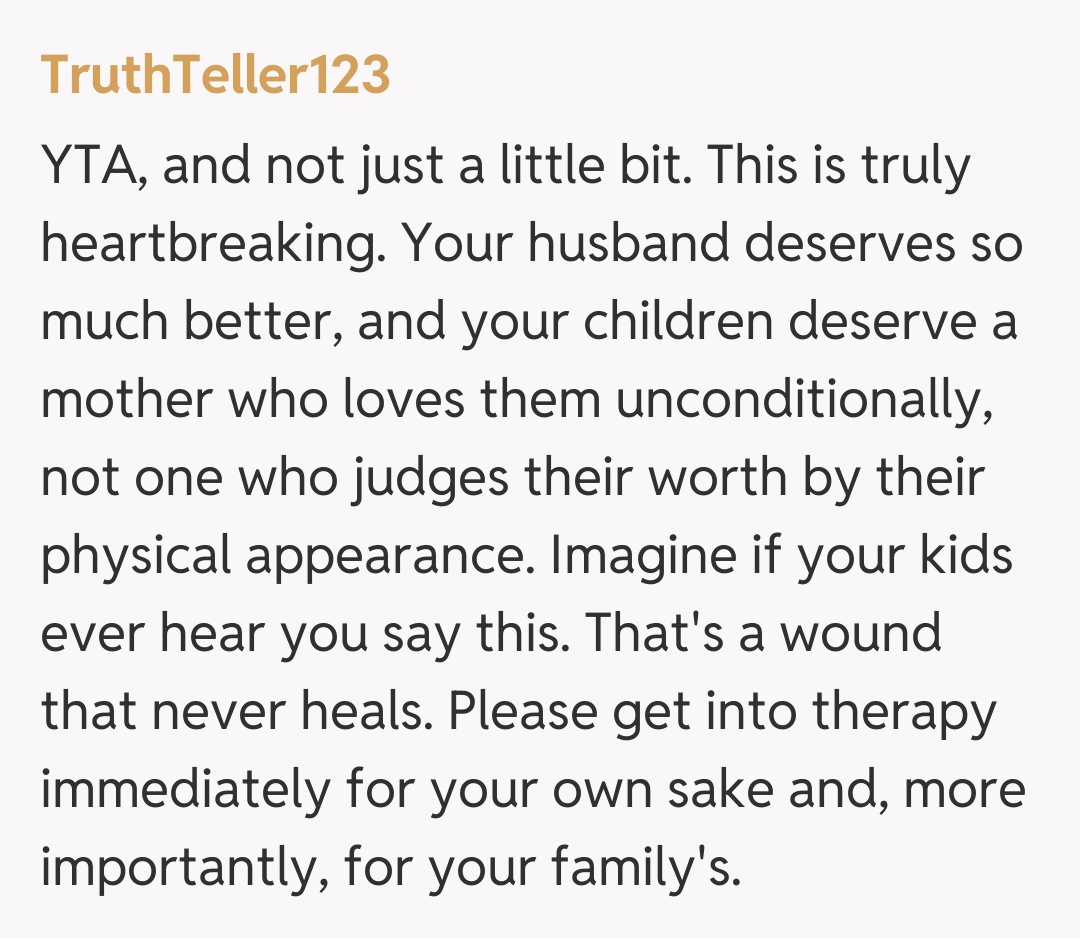
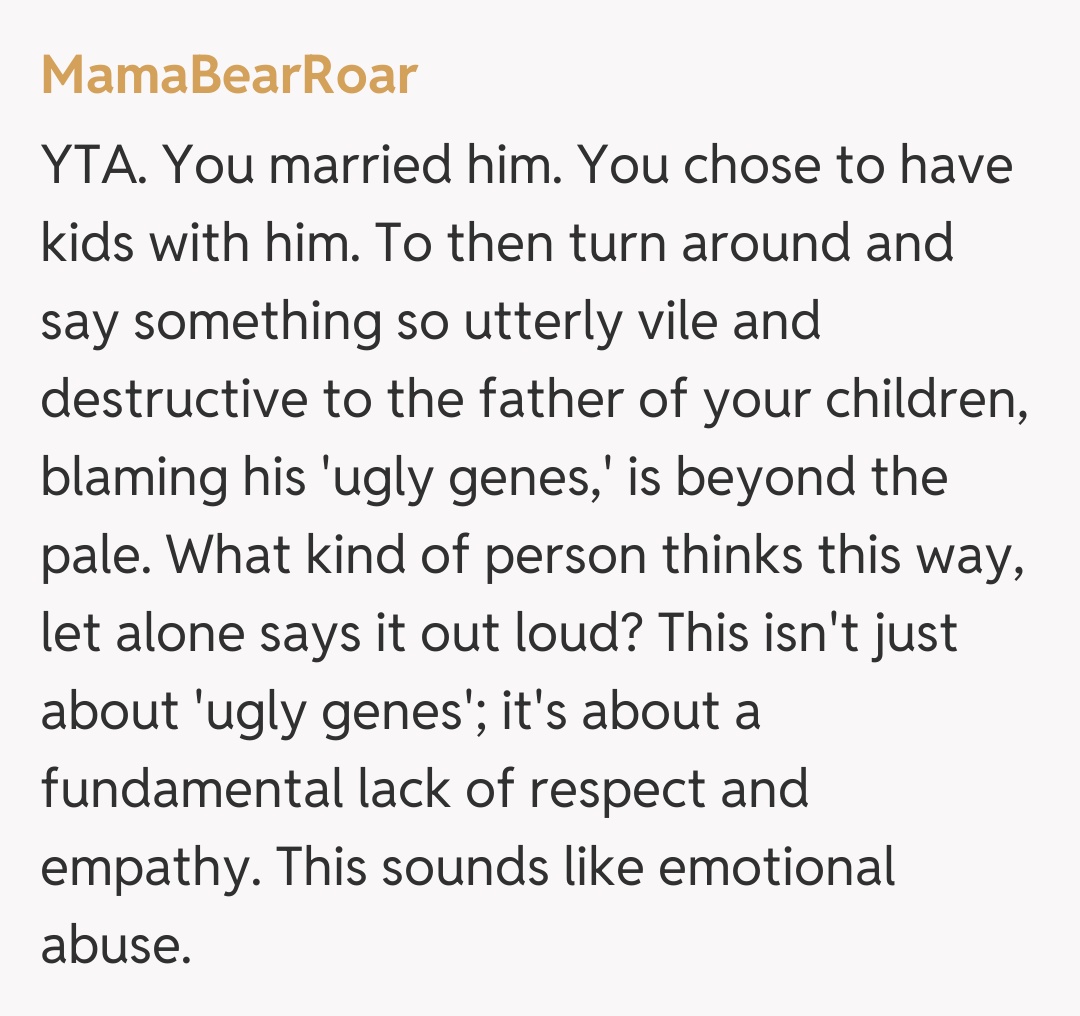
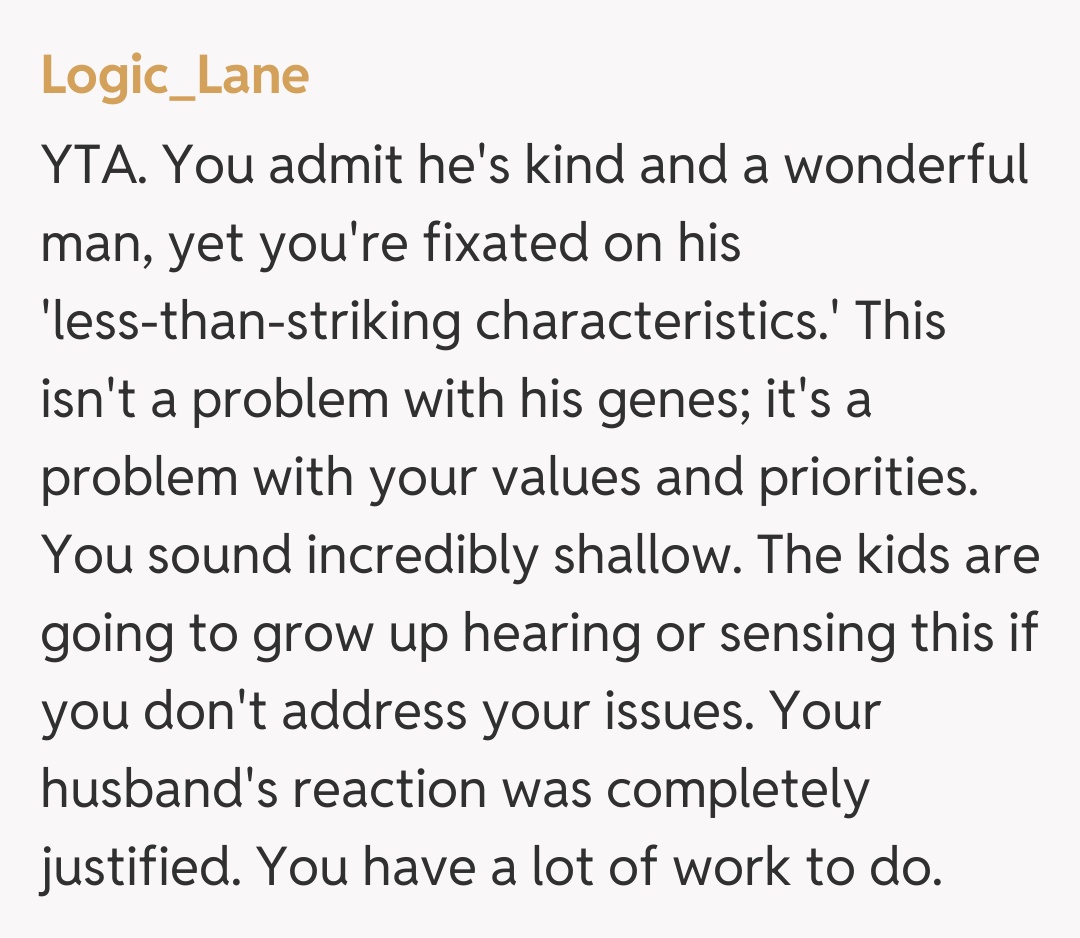
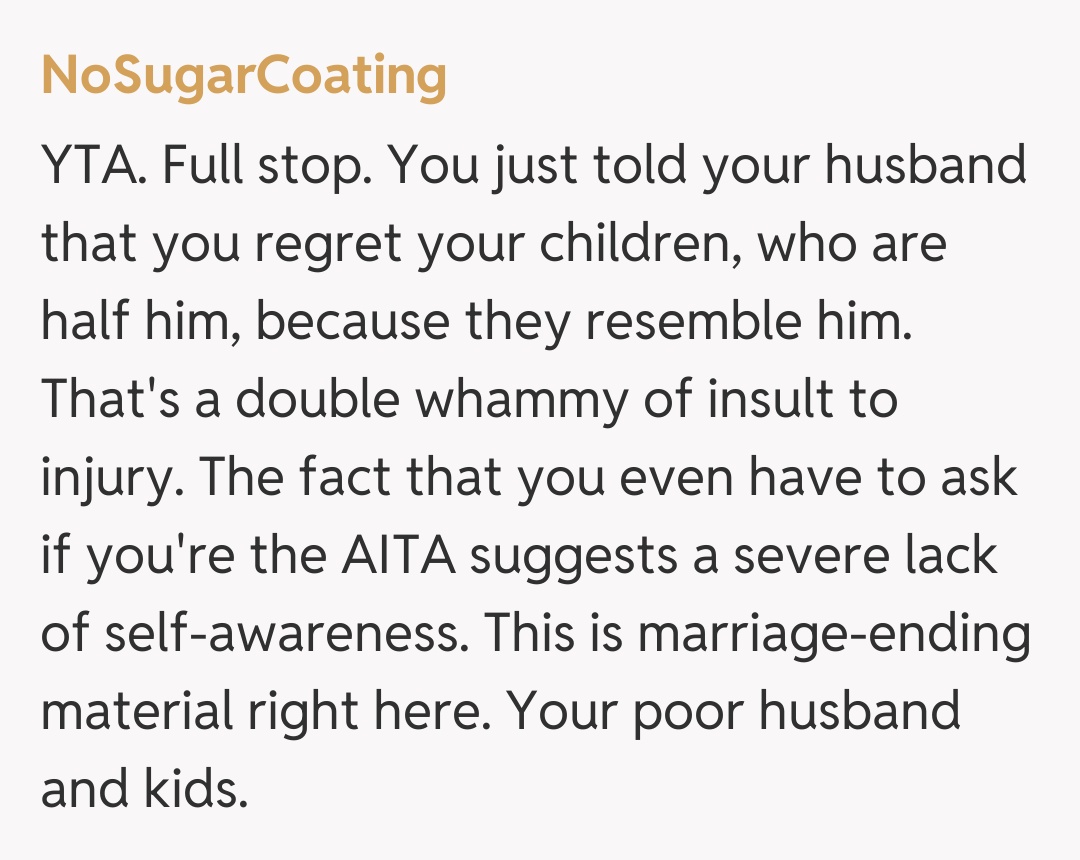
The comment section exploded with a resounding 'YTA' for this post, and it's not hard to see why. The overwhelming sentiment was one of shock and disgust at the poster's cruel words. Many users highlighted the profound emotional damage such a statement could inflict not only on the husband but, more importantly, on the innocent children involved. The consensus was clear: valuing physical appearance above kindness, character, and familial love is a deeply problematic stance.
Several commenters questioned the poster's motivations for marrying her husband in the first place, given her apparent preoccupation with looks. Others stressed the importance of therapy for the poster, suggesting that her issues run deeper than simple regret and border on emotional abuse. The community collectively expressed deep sympathy for the husband and sincere worry for the children's well-being, should they ever discover their mother's true feelings about their appearance.
This AITA story serves as a stark reminder of the immense power of our words and the profound impact they can have on those we claim to love. While feelings of disappointment or regret can be complex, expressing them in such a destructive manner, especially concerning one's own children, is incredibly damaging. This situation highlights the critical need for open communication, empathy, and sometimes, professional intervention to navigate deep-seated personal insecurities within a family unit. The road to repairing this relationship, if possible, will undoubtedly be long and arduous.