AITA for telling my overweight son he’s not allowed at family photos until he loses weight?
Oh, family photos. They're supposed to be a joyous occasion, a snapshot of love and togetherness, aren't they? But sometimes, these seemingly innocent events can become a crucible for underlying family tensions, exposing insecurities and creating unexpected drama. This week, we're diving into a situation where a mother's desire for a 'perfect' family picture clashes head-on with her son's body image and sense of belonging. Brace yourselves, because this one hits close to home for many.
Today's AITA post explores the incredibly sensitive topic of weight, health, and familial acceptance. The original poster (OP) made a decision that sparked immediate outrage and a heated debate across the internet, revolving around whether a parent's concern for their child's well-being justifies a rather drastic measure. Let's unpack the story and see if we can navigate these choppy waters with a bit of empathy and a whole lot of common sense.

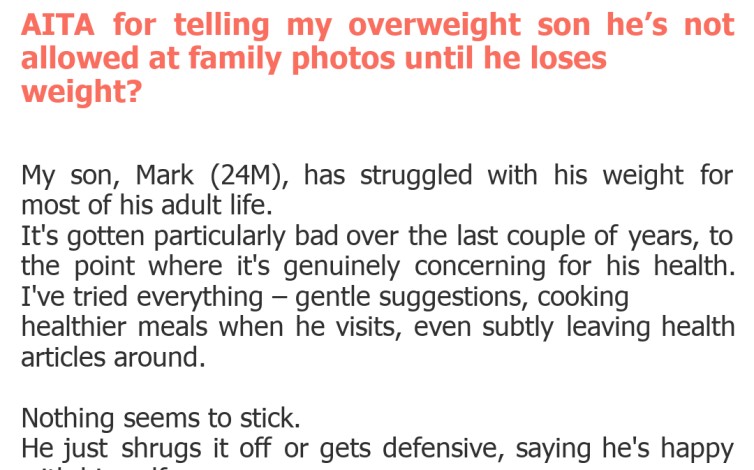
"AITA for telling my overweight son he’s not allowed at family photos until he loses weight?"
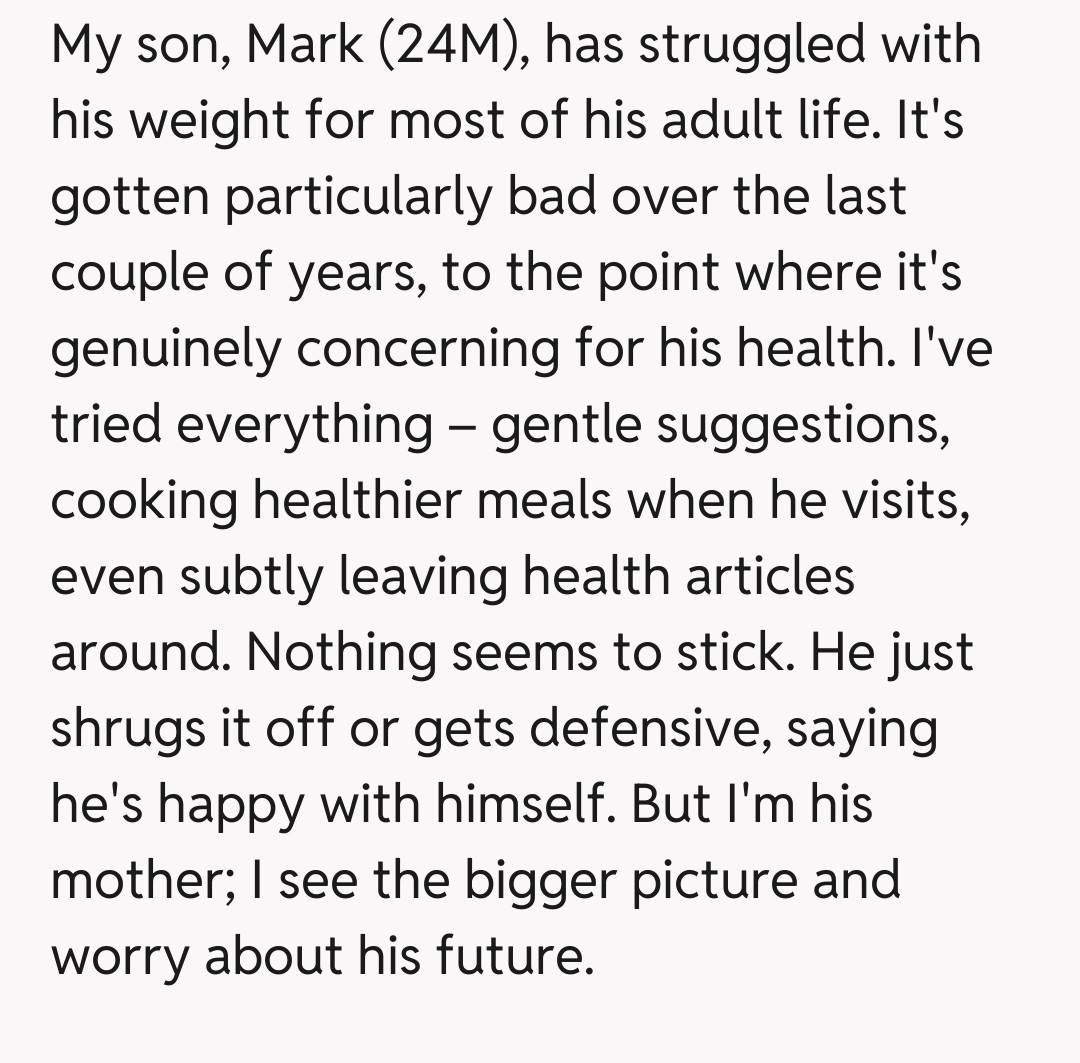

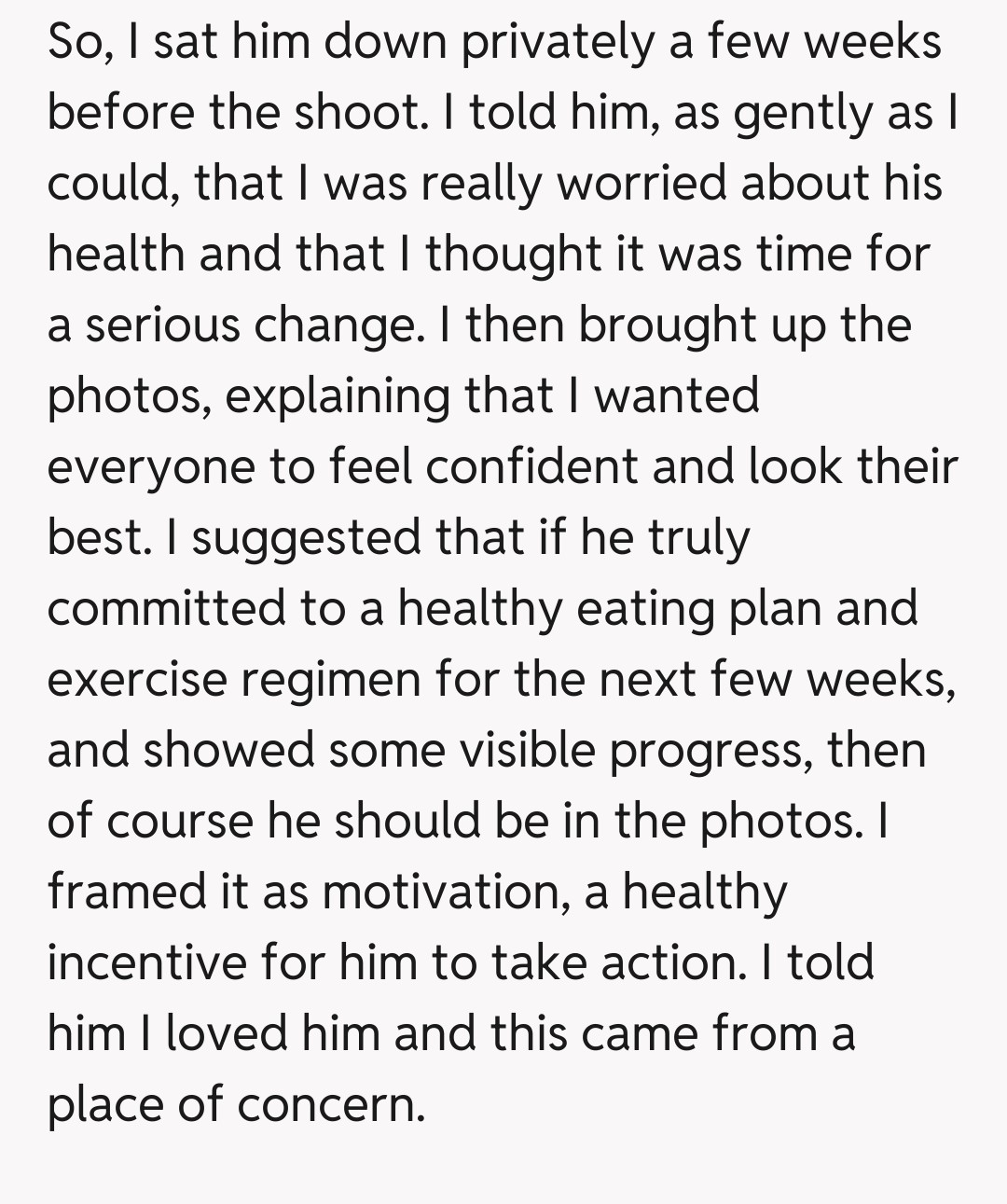
The original poster's intentions, at least from her perspective, seem to stem from a place of maternal concern for her son's health. It's natural for a parent to worry about their child, especially when they perceive a health risk. The desire for a child to live a long, healthy life is universal. However, the method chosen here, linking his participation in a cherished family event to his physical appearance, immediately raises red flags regarding its effectiveness and its impact on his emotional well-being.
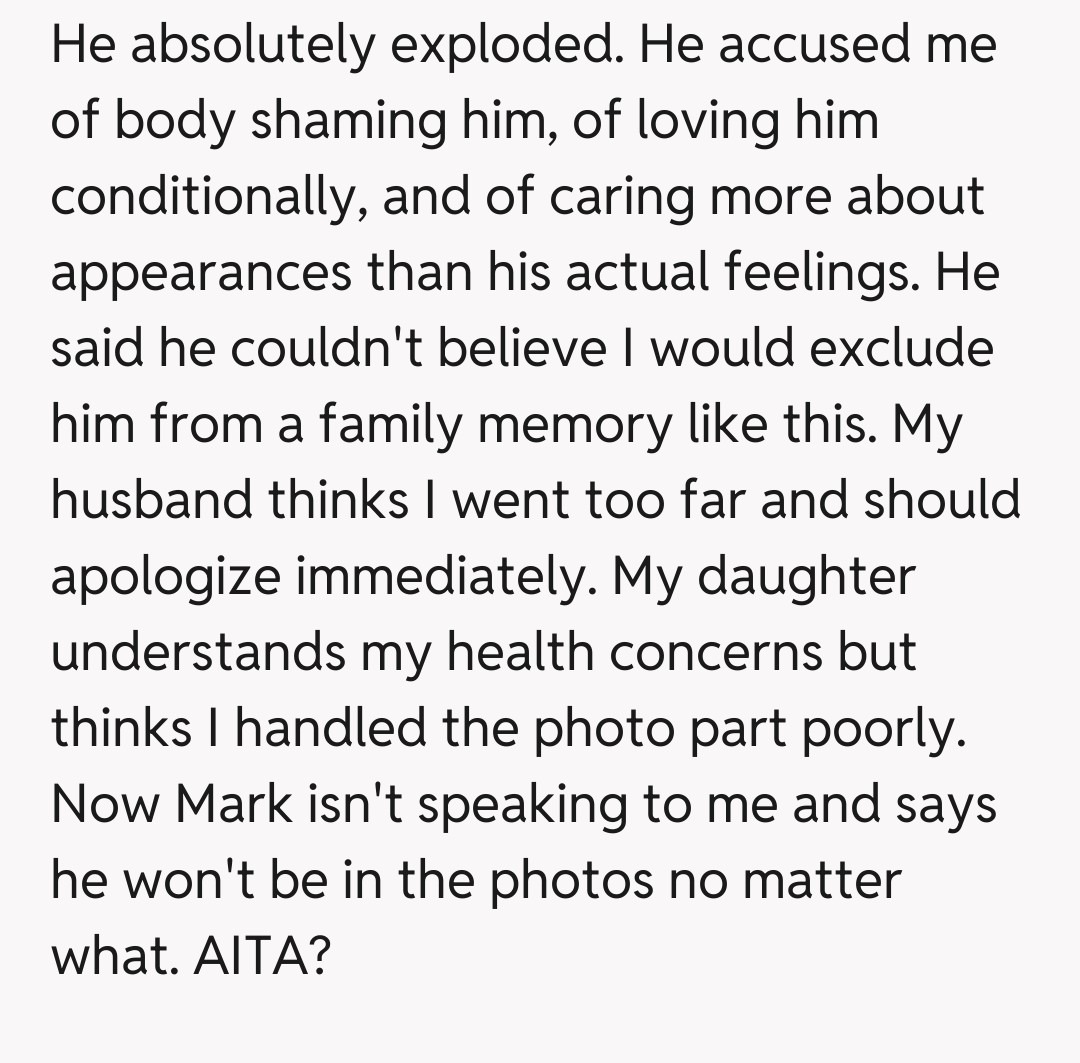
From Mark's perspective, this situation is likely deeply hurtful and feels like an act of conditional love and outright body shaming. Being told you're not 'good enough' to be included in a family portrait unless you change your physical form can be incredibly damaging to one's self-esteem and sense of belonging. Family photos are meant to be inclusive, celebrating everyone as they are, especially when a loved one is moving away, making this moment even more significant.
Furthermore, the idea of using a family photo as 'motivation' for weight loss is highly problematic. True, sustainable health changes usually come from intrinsic motivation and a supportive environment, not from public pressure or exclusion. This approach can easily backfire, leading to resentment, secret eating, or even a complete rejection of any health advice, simply because it's tied to an ultimatum rather than genuine, unconditional support.
While a parent has a right to express concerns about a child's health, the delivery and context are paramount. There are numerous ways to encourage healthier habits that don't involve shaming or ostracizing a loved one. Open, empathetic conversations, offering practical support (like joint exercise or cooking classes), or even seeking professional guidance are often more constructive than setting conditions for participation in family milestones.
The Verdict Is In: Was Mom Out of Line?
The comments section for this story was, as expected, a wildfire of opinions. A vast majority of users sided with Mark, condemning the original poster's actions as deeply hurtful and a prime example of body shaming. Many shared personal anecdotes of similar experiences, highlighting the long-lasting psychological damage that conditional acceptance from parents can inflict. The overarching sentiment was that family photos should be about love and inclusion, not a display of 'perfection.'
However, a smaller contingent did attempt to understand the OP's viewpoint, suggesting that perhaps it was a desperate attempt at 'tough love' born of genuine concern for her son's health. These commenters often emphasized the health risks associated with obesity and believed that sometimes, people need a blunt wake-up call. Still, even among those who sympathized with the health concerns, most agreed that the chosen method was insensitive and likely counterproductive.
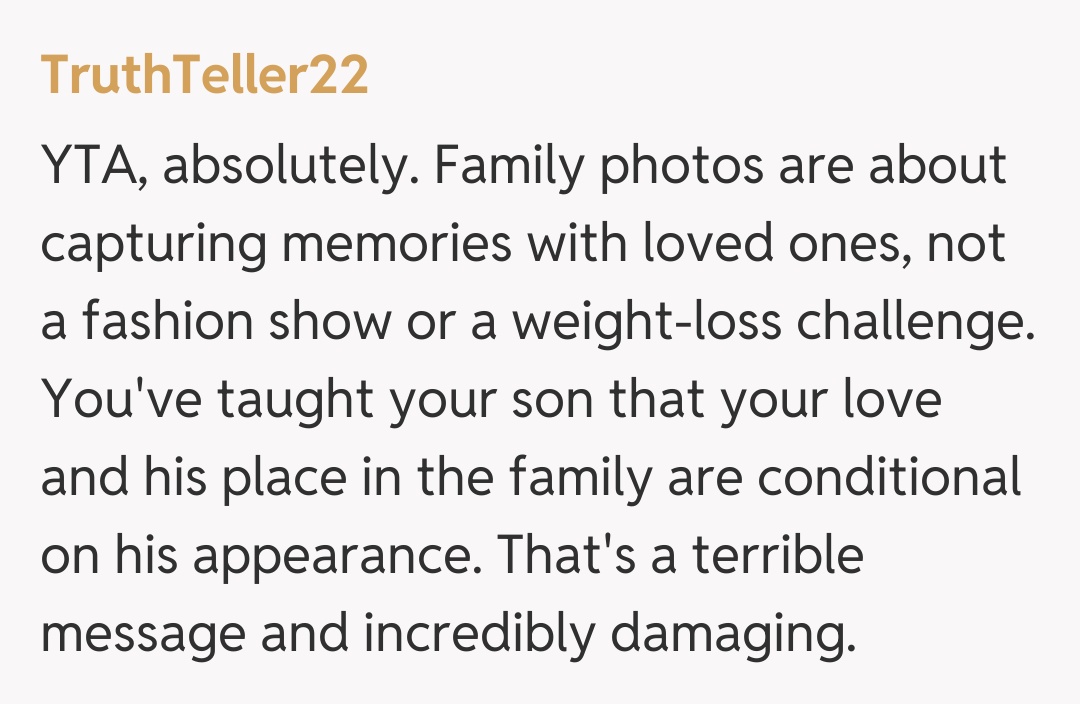
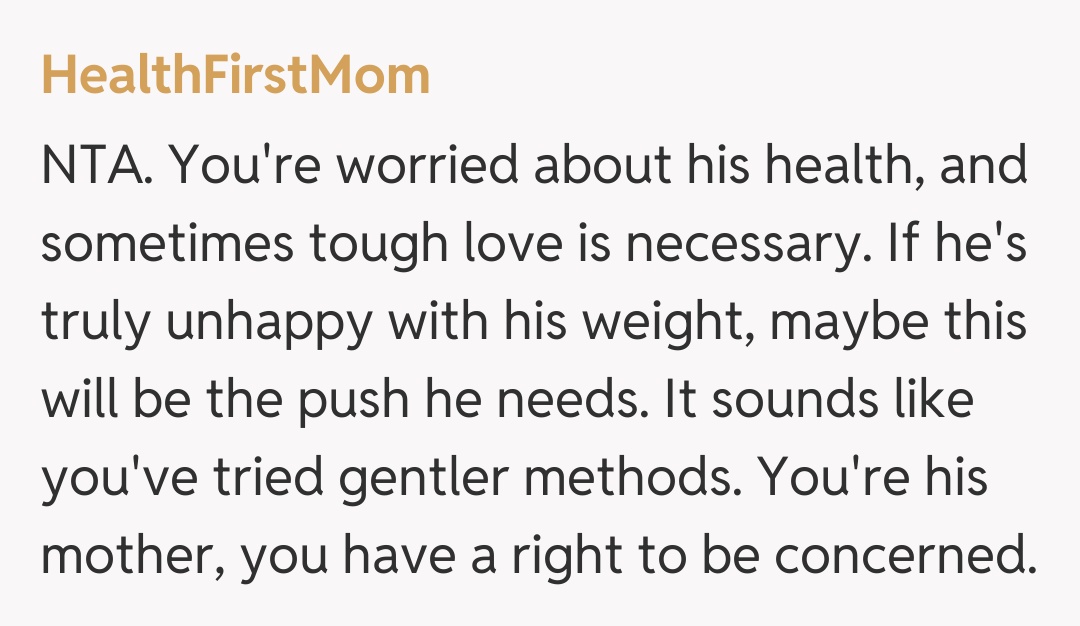


This story serves as a stark reminder of the delicate balance between parental concern and respecting a child's autonomy and self-worth. While a parent's worries about a child's health are valid, the way those concerns are communicated can either build bridges or burn them down. Ultimately, unconditional love and acceptance are the bedrock of strong family bonds. Prioritizing aesthetics over a family member's emotional well-being often leads to far more pain than any perceived 'perfect' picture is worth. Let this be a lesson in choosing empathy over ultimatums.