AITA for refusing to let my daughter study abroad because “women shouldn’t travel alone”?
Oh, the classic parent-child dilemma, but with a twist that's hitting headlines and homes everywhere: a clash between traditional values and modern aspirations. Our latest AITA submission comes from a father grappling with his daughter's desire for independence, specifically her dream of studying abroad. This isn't just about finances or grades; it's about deeply ingrained beliefs on gender roles and perceived safety.\nThis story opens up a wider conversation about parental responsibility versus allowing children, especially young women, to forge their own paths. The tension is palpable, the arguments are familiar, and the potential for a broken relationship hangs heavy in the air. Let's dive into this complex situation and see if our community can offer some much-needed perspective on who's truly the AITA here.

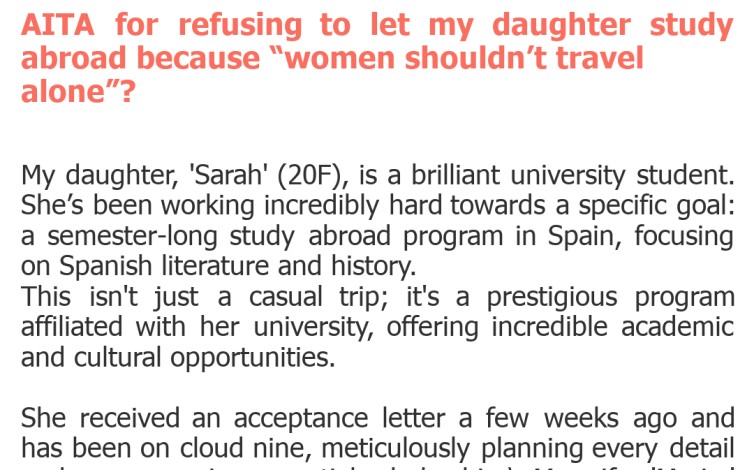
"AITA for refusing to let my daughter study abroad because “women shouldn’t travel alone”?"

Parental concern for a child's safety is a deeply rooted and understandable emotion. It's natural for any parent to worry when their child plans to embark on a significant journey, especially one that takes them far from home and into an unfamiliar environment. The world can indeed be a dangerous place, and a father's instinct to protect his daughter is, on its surface, not an inherently negative one. The core of this story, however, delves deeper than mere safety concerns.\nThe significant issue arises when this concern is explicitly tied to gender and traditional societal expectations. The statement "women shouldn't travel alone" directly implicates a belief system that limits a woman's autonomy and potential experiences based solely on her gender. This shifts the focus from universal safety precautions to a gender-specific restriction, implying that women are inherently less capable or more vulnerable than men in the same situations, or that their reputation is more fragile.\nFrom the daughter's perspective, this isn't just about missing a study abroad program; it's about a denial of opportunity and a dismissal of her capabilities and maturity. At 20 years old, she's an adult with academic ambitions and the desire for independence. Such a refusal can be perceived as infantilizing and deeply disrespectful, potentially leading to resentment and a damaged relationship, rather than fostering trust and open communication.\nMoreover, denying a scholarship-backed academic opportunity based on outdated gender norms could have long-term consequences for Sarah's educational and career path. It undermines her efforts, her university's program, and her vision for her future. While parents have a right to guide their children, the crucial question here is whether the guidance is empowering or unduly restrictive, especially when it stems from a place of gender bias rather than universal concern.
The internet weighs in: Is 'protection' really just control?
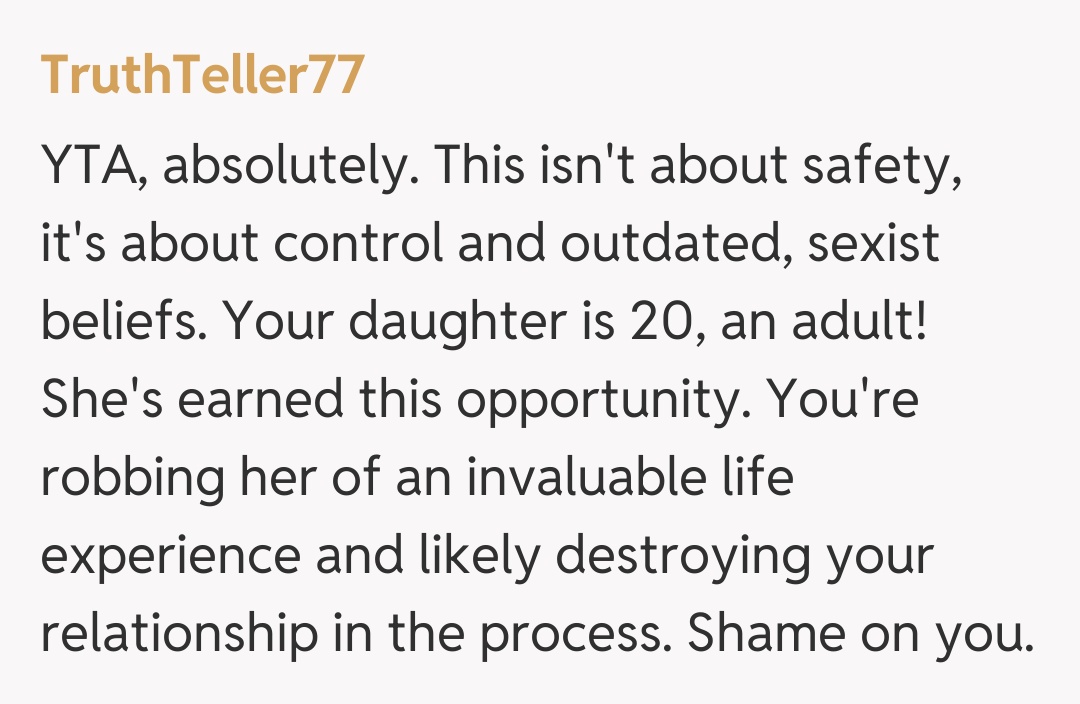
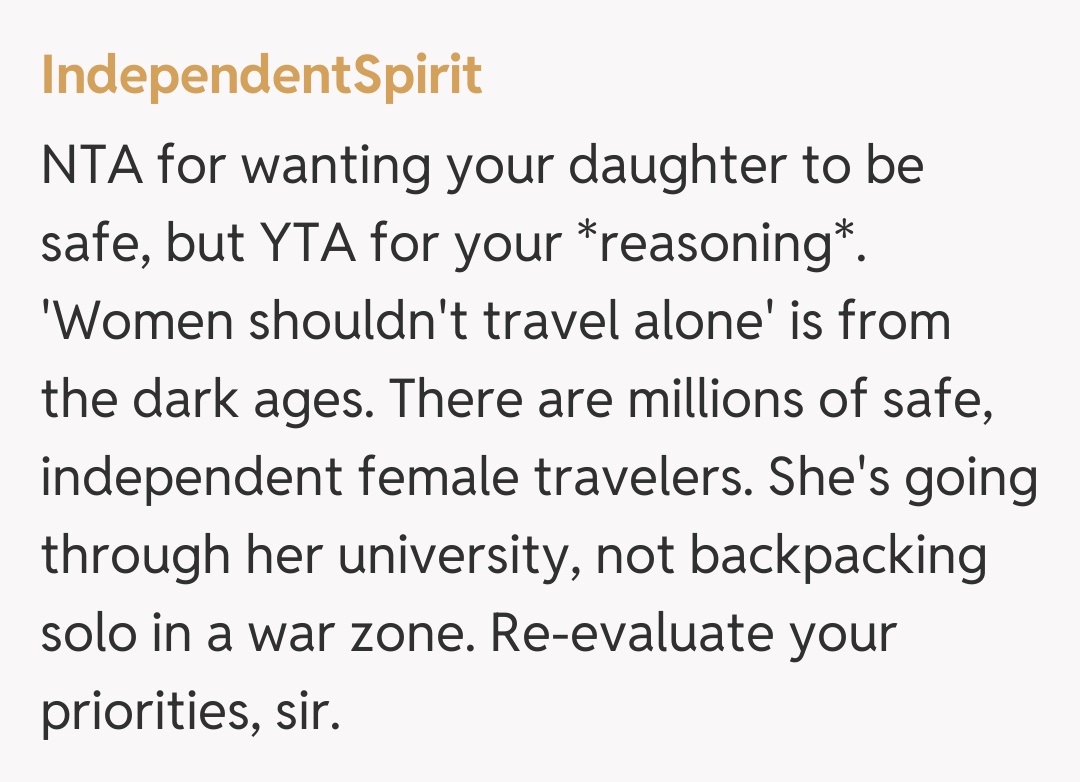
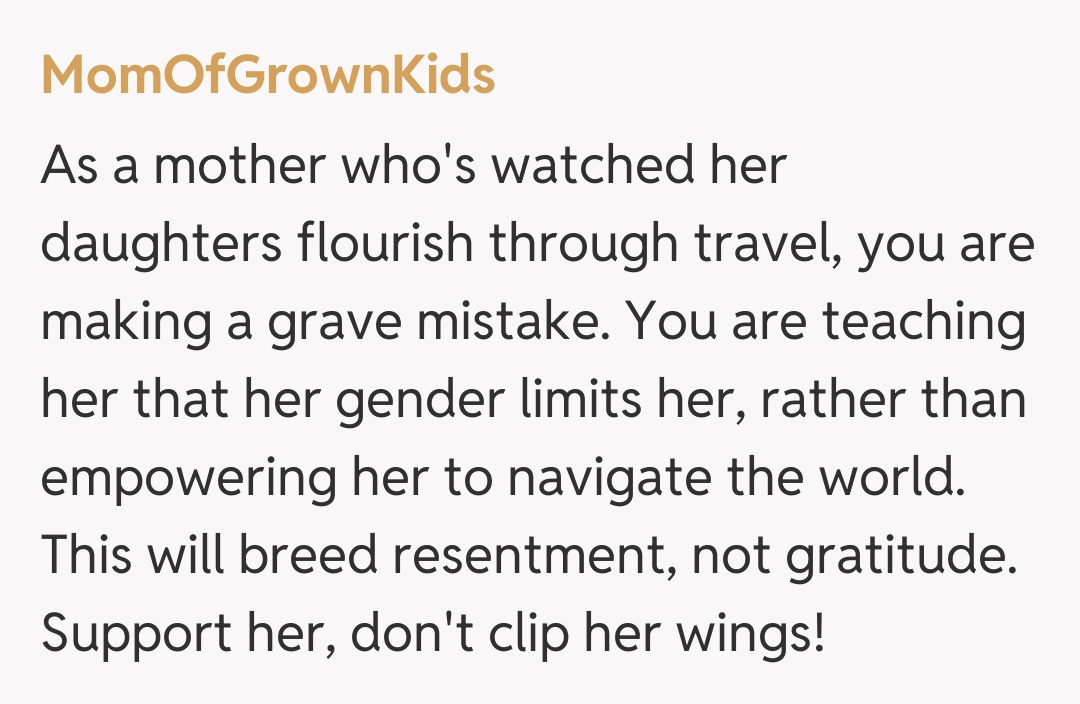
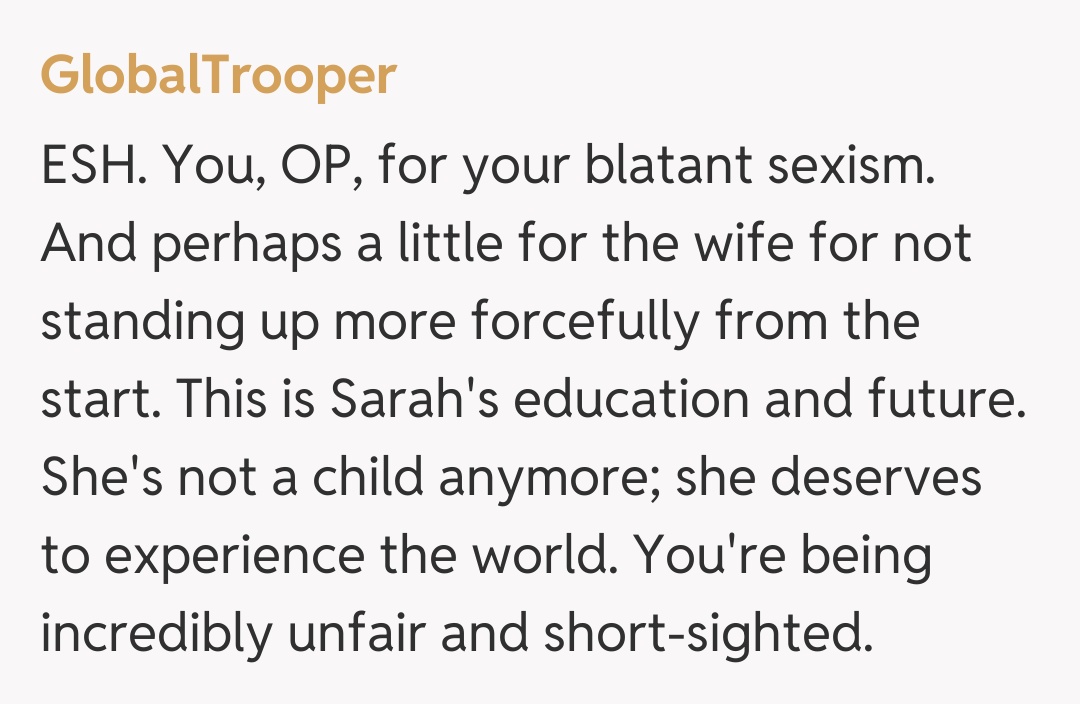
The comments section for this story quickly ignited, and the consensus was overwhelmingly clear: our OP, the father, is firmly in the 'You're The AITA' camp. Many users highlighted the blatant gender bias in his reasoning, pointing out that safety concerns, while valid, should apply to all travelers, not just young women. The phrase "women shouldn't travel alone" drew significant criticism, being labeled as outdated, sexist, and damaging to a daughter's self-esteem and independence.\nBeyond the gender issue, many commenters expressed deep sympathy for Sarah, acknowledging the incredible academic opportunity she's being denied. They emphasized that at 20, she's an adult capable of making her own decisions and navigating the world with appropriate precautions. The father's actions were frequently characterized as overbearing control disguised as protection, suggesting that such restrictions could severely harm his relationship with his daughter and stifle her personal growth.
This AITA story serves as a stark reminder of the ongoing tension between traditional parental views and the desire for modern independence, particularly for young women. While parental love often manifests as protection, it's crucial to distinguish between genuine concern and restrictive beliefs based on outdated gender stereotypes. Sarah's story underscores the importance of fostering autonomy and providing opportunities for growth, even when it means stepping outside our comfort zones as parents. Ultimately, the goal should be to empower our children, not to limit them, especially when they've diligently earned their way.