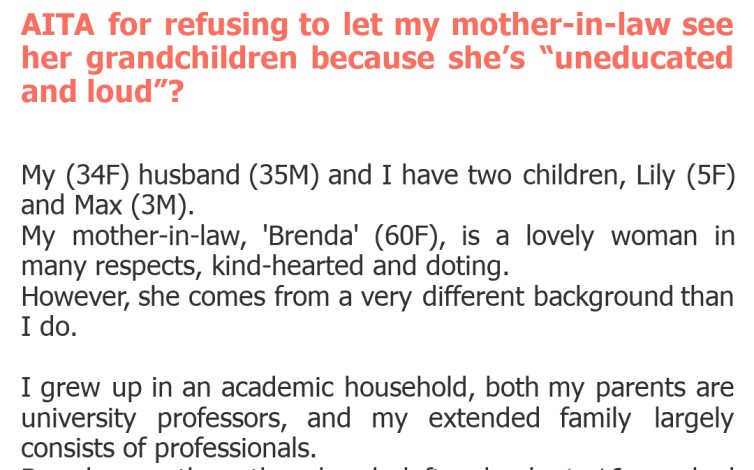
AITA for refusing to let my mother-in-law see her grandchildren because she’s “uneducated and loud”?
Oh boy, do we have a doozy for you today! The age-old family drama, but with a twist that's sure to ignite some fiery debate in the comments section. We're diving into a situation where a parent is drawing a hard line with their mother-in-law, not over classic issues like overstepping boundaries or childcare disagreements, but over something far more subjective: her perceived 'uneducated and loud' nature. \nIs it ever okay to gatekeep grandparents based on their personality or educational background? This one touches on class differences, family loyalty, and what we believe constitutes a 'good' influence on our children. Get ready to weigh in, because opinions are going to be strong on both sides of this divide. Let's dig in!

"AITA for refusing to let my mother-in-law see her grandchildren because she’s “uneducated and loud”?"
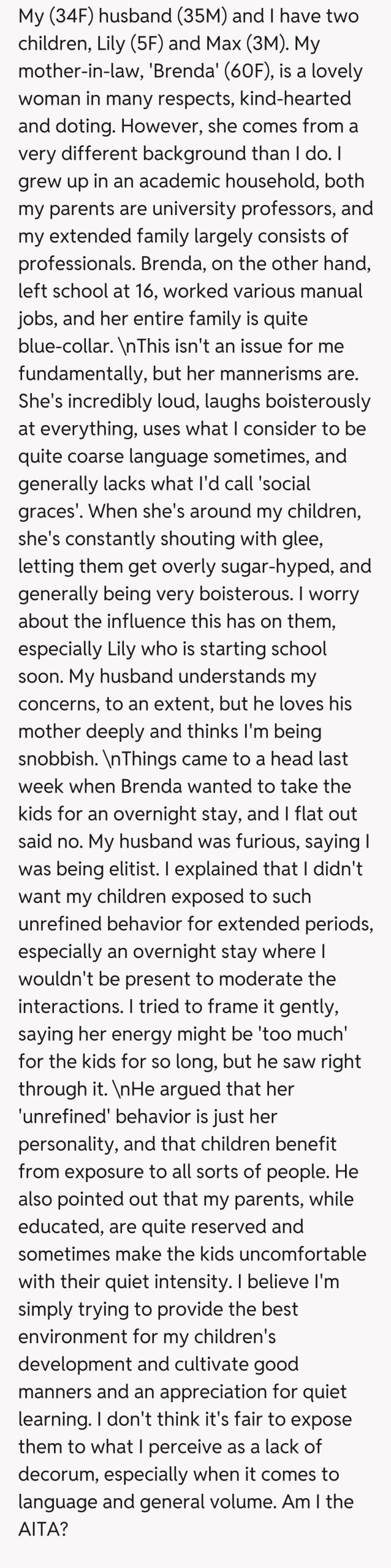
This post really taps into a deeply personal and often uncomfortable area: judging family members based on their perceived social standing or intellectual background. The OP clearly values a particular kind of upbringing for her children, one that aligns with her own academic and 'refined' background. Her concerns, while perhaps coming from a place of wanting the best for her kids, are framed in a way that risks alienating her husband and, more importantly, her mother-in-law. It's a delicate balance between parental preference and family inclusion. \nThe core of the conflict lies in the definition of 'good influence.' OP sees Brenda's loudness and lack of 'social graces' as detrimental, potentially hindering her children's development of manners. However, many would argue that warmth, affection, and genuine love, which Brenda seems to provide in abundance, are equally, if not more, important for a child's emotional well-being. It raises the question: what kind of grandparental relationship is truly beneficial for children? \nOn the other hand, the husband's perspective is crucial here. He views his mother's behavior as simply her personality, a part of who she is, and not something to be 'moderated' or judged as 'unrefined.' His accusation of elitism, while harsh, might stem from feeling that his family and background are being disrespected. For him, denying his mother access to her grandchildren based on these subjective criteria could be a profound betrayal, creating a rift that will be difficult to heal. \nUltimately, this isn't a black-and-white situation. There's a valid argument to be made for wanting children to be exposed to different types of people and personalities, fostering adaptability and empathy. But there's also the parental instinct to protect and guide. The challenge here is finding common ground and defining boundaries that protect the children without condemning a loving family member based on classist or snobbish perceptions.
The internet weighs in: Is 'unrefined' a valid reason for grandkid gatekeeping?
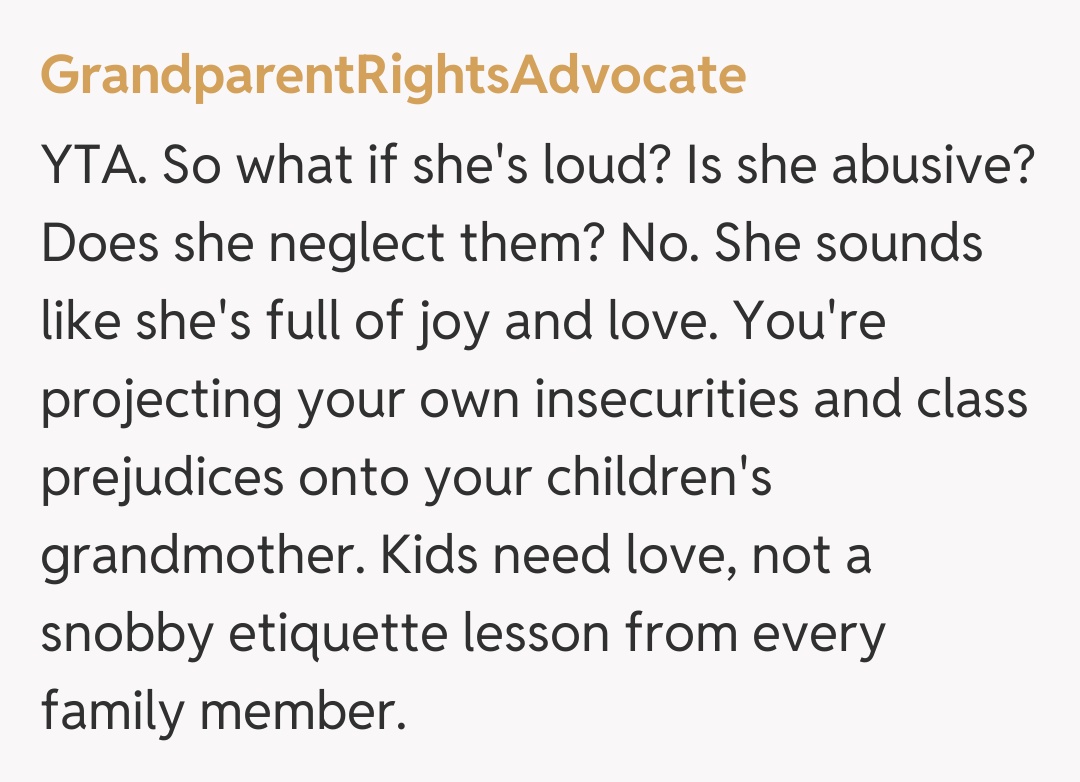
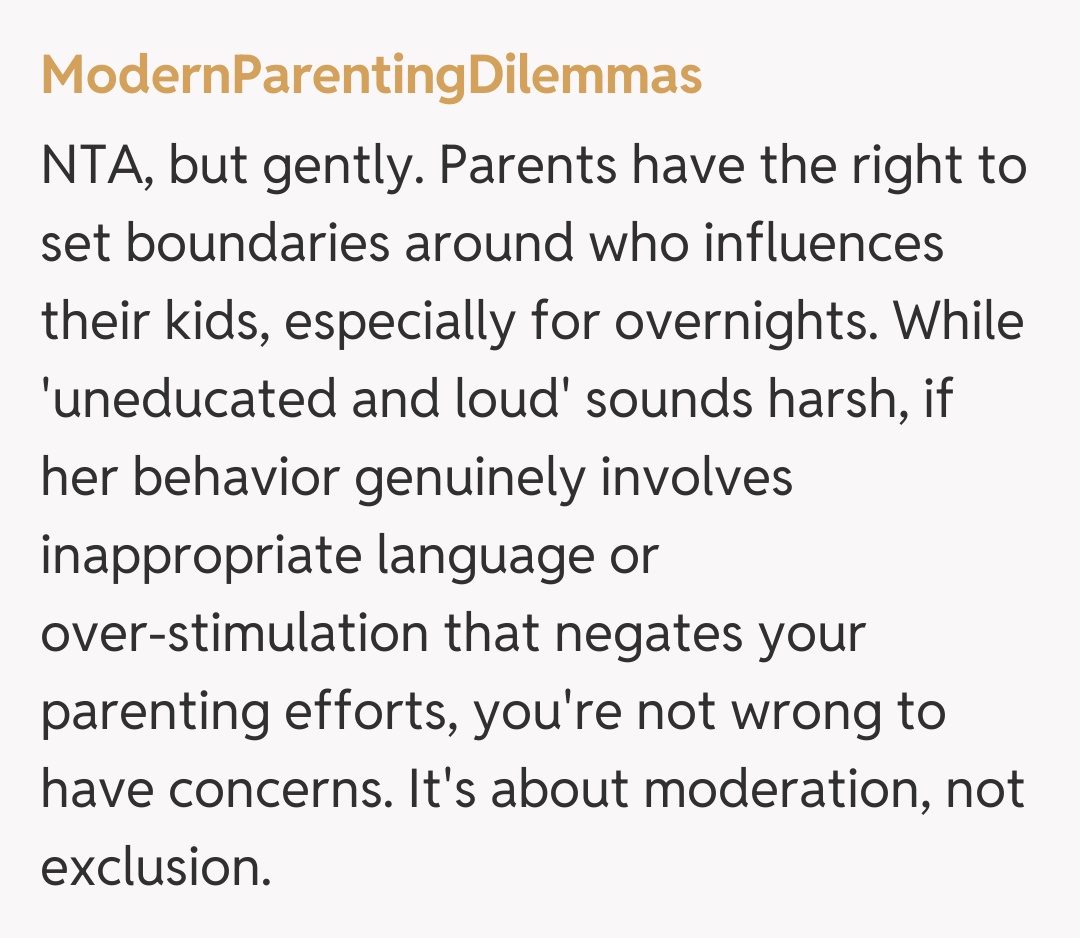
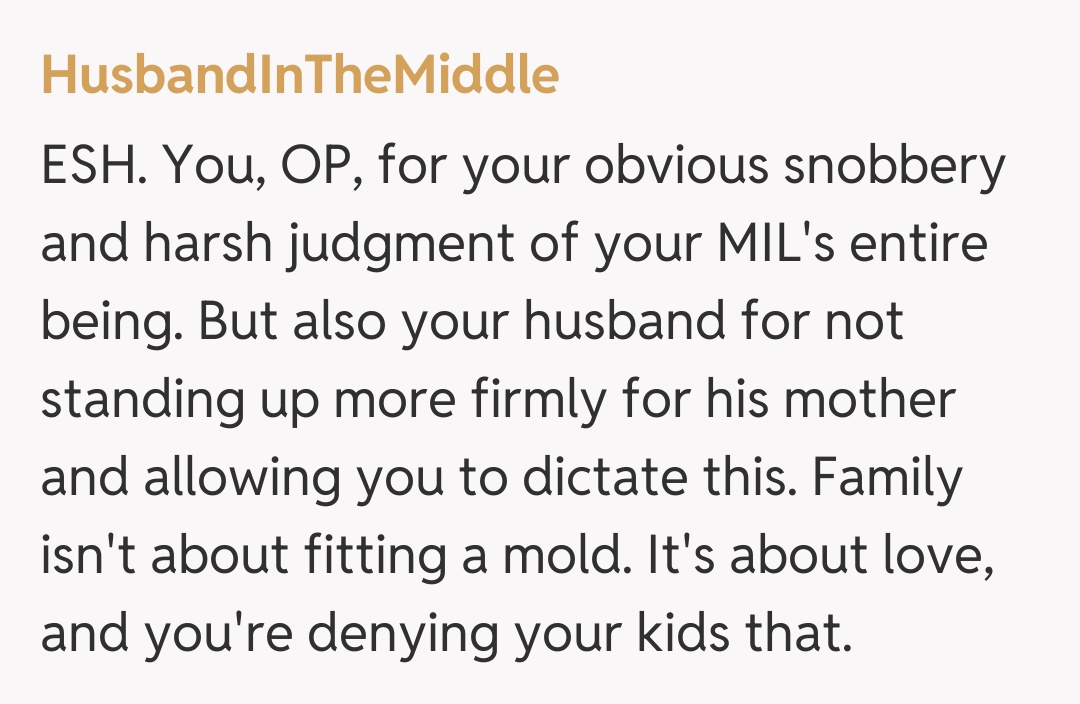
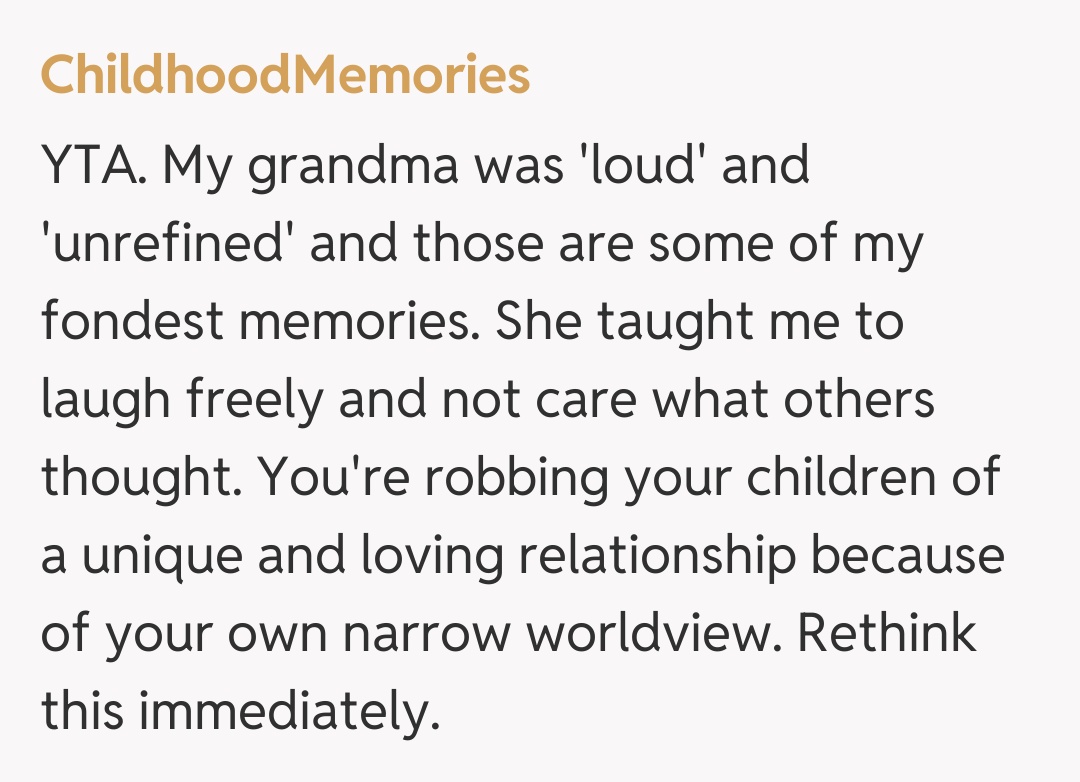
Wow, the comments section for this one exploded, as predicted! It seems many readers felt strongly that OP was definitely the AITA. A significant number of users called out what they perceived as snobbery and elitism, emphasizing that love and warmth are far more valuable than 'social graces' in a grandparent. There was a strong sentiment that denying a grandparent access based on such subjective criteria is a cruel punishment. \nHowever, a smaller but vocal contingent empathized with OP, suggesting that parents do have a right to choose influences for their children, and that overly loud or uninhibited behavior could indeed be jarring or lead to behavioral issues. These users focused on the 'too much sugar' and 'coarse language' aspects, arguing that specific behaviors, rather than just 'loudness,' could be a legitimate concern. This story really highlighted the divide between different parenting philosophies.
This AITA post truly served as a mirror, reflecting our own societal biases and personal values regarding family, class, and parenting. While the original poster's desire to raise well-mannered children is understandable, the approach of labeling a loving grandparent as 'uneducated and loud' sparked considerable debate. It reminds us that family dynamics are complex and rarely fit into neat boxes. Ultimately, finding a balance between protecting our children and fostering inclusive, loving family relationships is a challenge we all face. What's clear is that open communication, empathy, and perhaps a little less judgment, go a long way in these situations.