AITA for telling my son his gaming friends are losers and he should find better people?
Oh boy, here we go! Today's AITA gem dives into the ever-tricky waters of teenage friendships and parental intervention. It's a tale as old as time, but with a modern twist: online gaming buddies. Many parents grapple with how much screen time is too much, and even more so, who exactly are their kids spending all that virtual time with? It's a minefield of good intentions and potential missteps.
This story specifically brings to light the delicate balance between guiding your child towards what you perceive as 'better' choices, and respecting their autonomy and chosen social circle. When is a parent's concern justified, and when does it cross the line into judgmental territory? Our OP certainly has strong feelings about his son's gaming crew, leading to a rather explosive confrontation. Let's dig in and see what the internet thinks!

"AITA for telling my son his gaming friends are losers and he should find better people?"
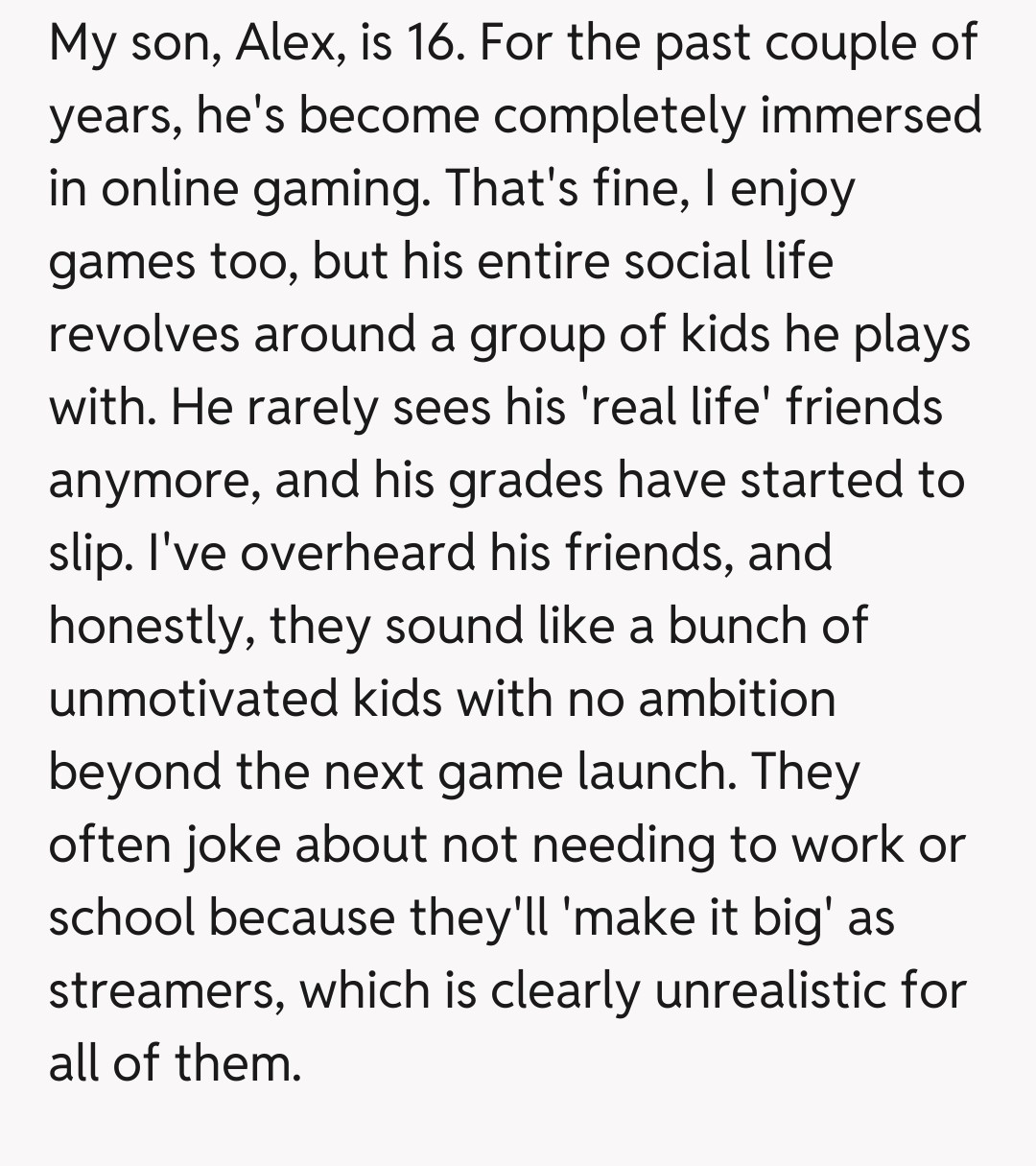
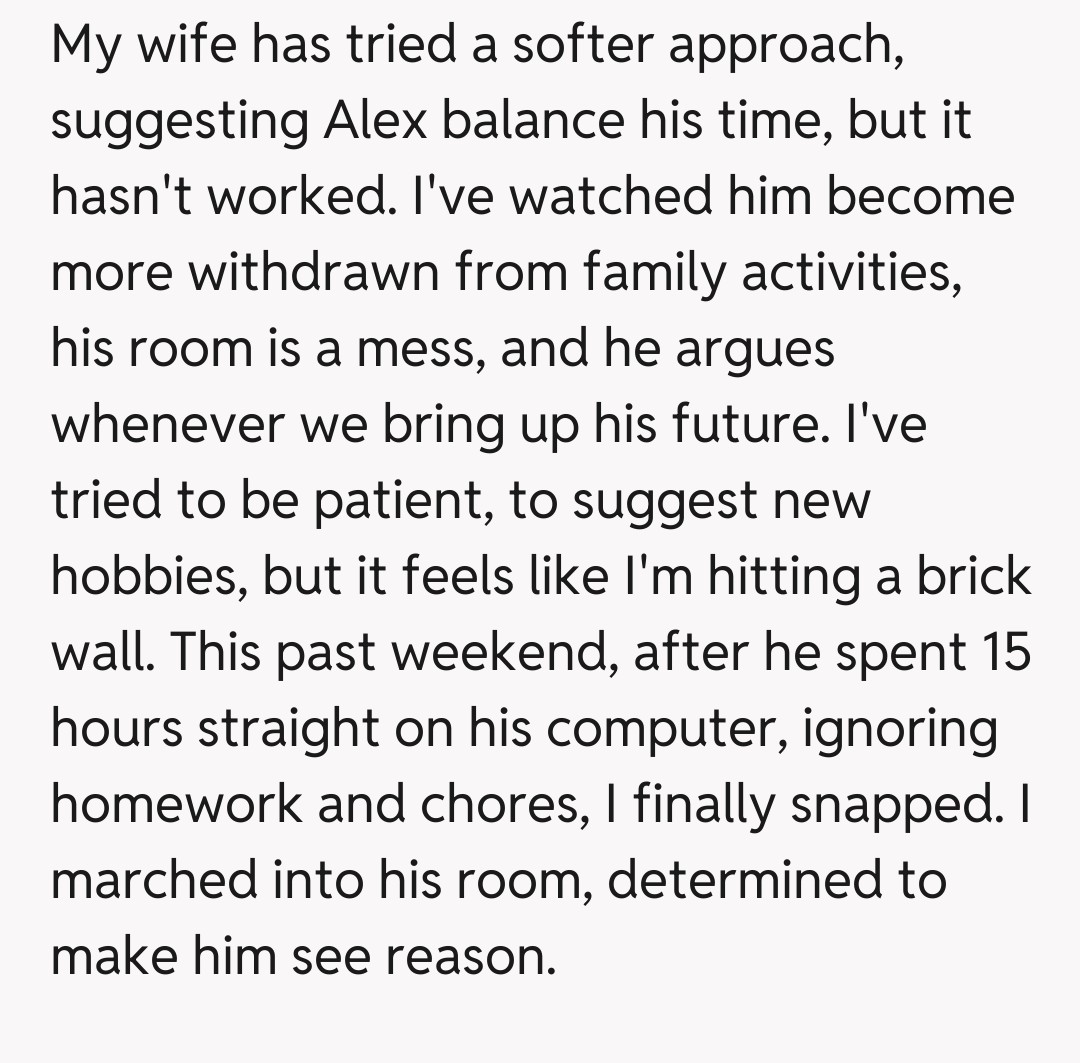
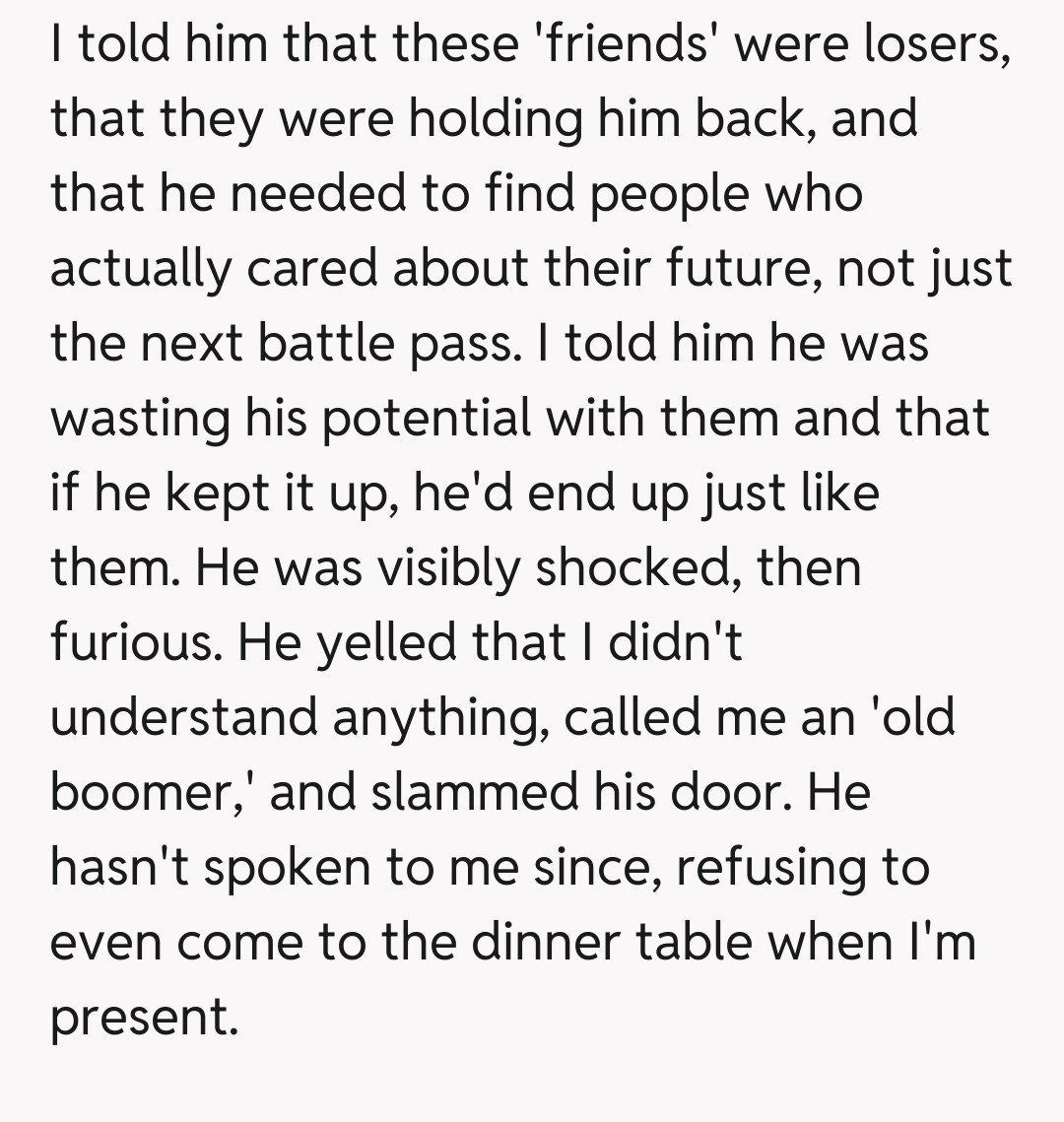
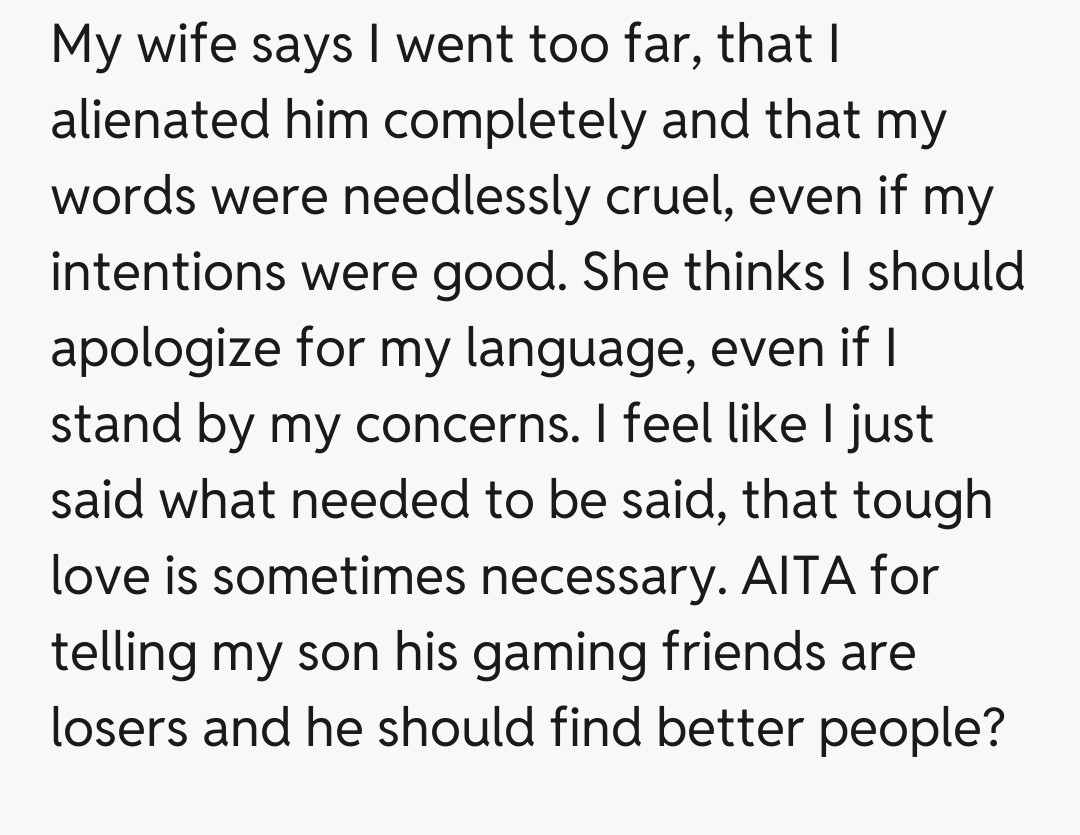
Parental concern for a child's social circle is absolutely valid, especially when a child appears to be neglecting other aspects of their life, like academics or real-world interactions. It's natural for a parent to want their child to associate with peers who uplift them and encourage ambition, rather than those who might reinforce less productive habits. The OP's fear that his son's online friends are a negative influence, potentially hindering his development, is an understandable worry many parents face today.
However, the delivery of this concern is where the line often blurs. Calling a teenager's friends 'losers' and telling him he needs 'better people' is almost guaranteed to backfire. At 16, a child is developing their own identity and a sense of loyalty to their peers. Such a harsh, judgmental statement often pushes a teen further away, making them defensive and less likely to listen to any underlying, valid points the parent might be trying to make.
The OP's frustration is palpable, having tried softer approaches that seemingly yielded no results. This can lead to a breaking point where a parent feels the only option left is bluntness or 'tough love.' While the intention might be to shock the child into awareness, the emotional cost of such an approach can be high, potentially damaging the parent-child relationship and making future communication incredibly difficult.
Perhaps a different strategy, focusing on Alex's actions and their consequences rather than directly attacking his friends, might have been more effective. For example, discussing the impact of late-night gaming on his grades or personal responsibilities, and setting boundaries around those, could lead to a more constructive dialogue. The goal should be to foster self-awareness and personal responsibility, not to alienate him from his support system, however flawed it might seem.
The Verdict Is In: Tough Love or Just Tough?
The comments section on this one is buzzing with strong opinions, reflecting the age-old debate between parental control and teenage independence. Many users are quick to empathize with the OP's concern, pointing out that unchecked gaming and a lack of real-world ambition in friends can indeed be detrimental. They argue that sometimes, a wake-up call, however harsh, is necessary to steer a child back on track before it's too late.
However, an equally vocal contingent is criticizing the OP's choice of words, emphasizing the damage done by calling Alex's friends 'losers.' They highlight that such language will only make Alex resentful and push him closer to the very friends his father disparages. The consensus seems to lean towards acknowledging the father's valid worries but strongly disapproving of his approach. The impact on the father-son relationship is a major talking point.
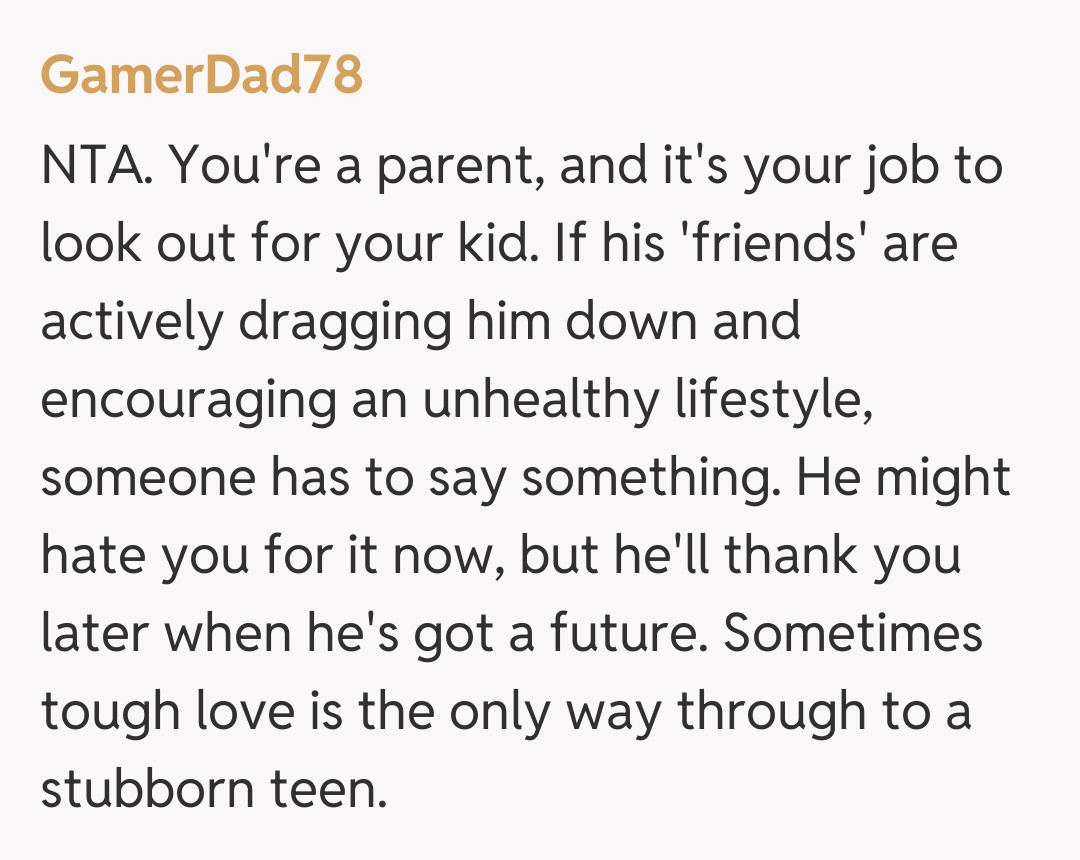
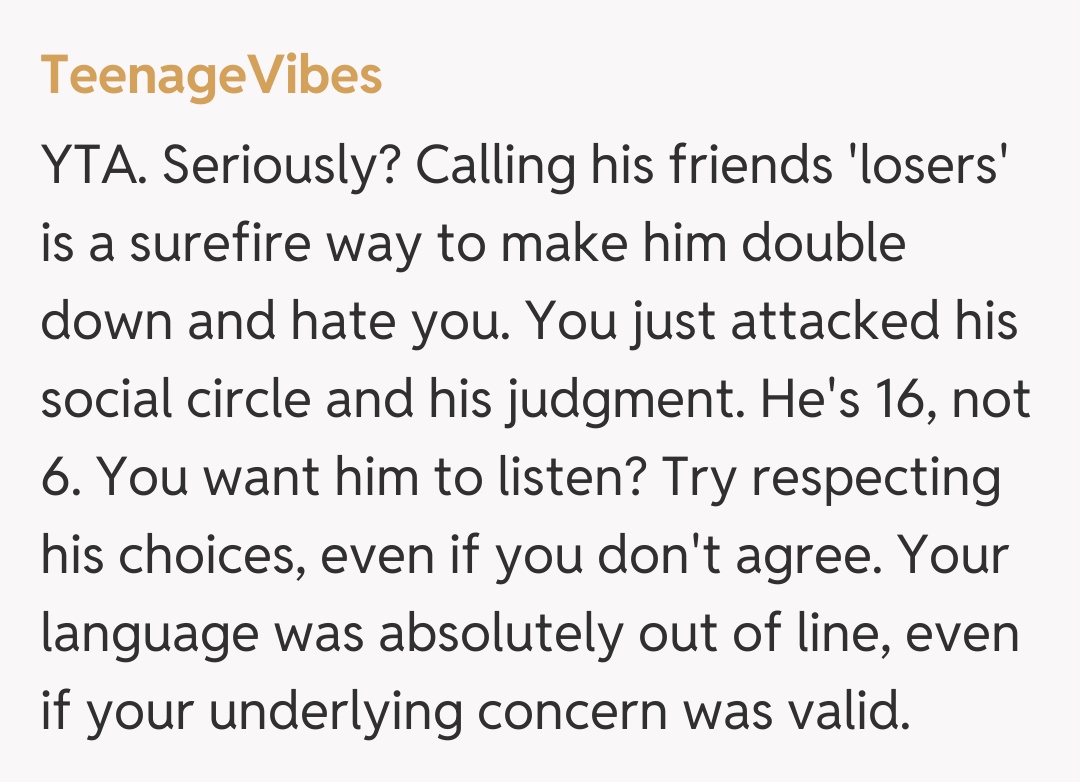
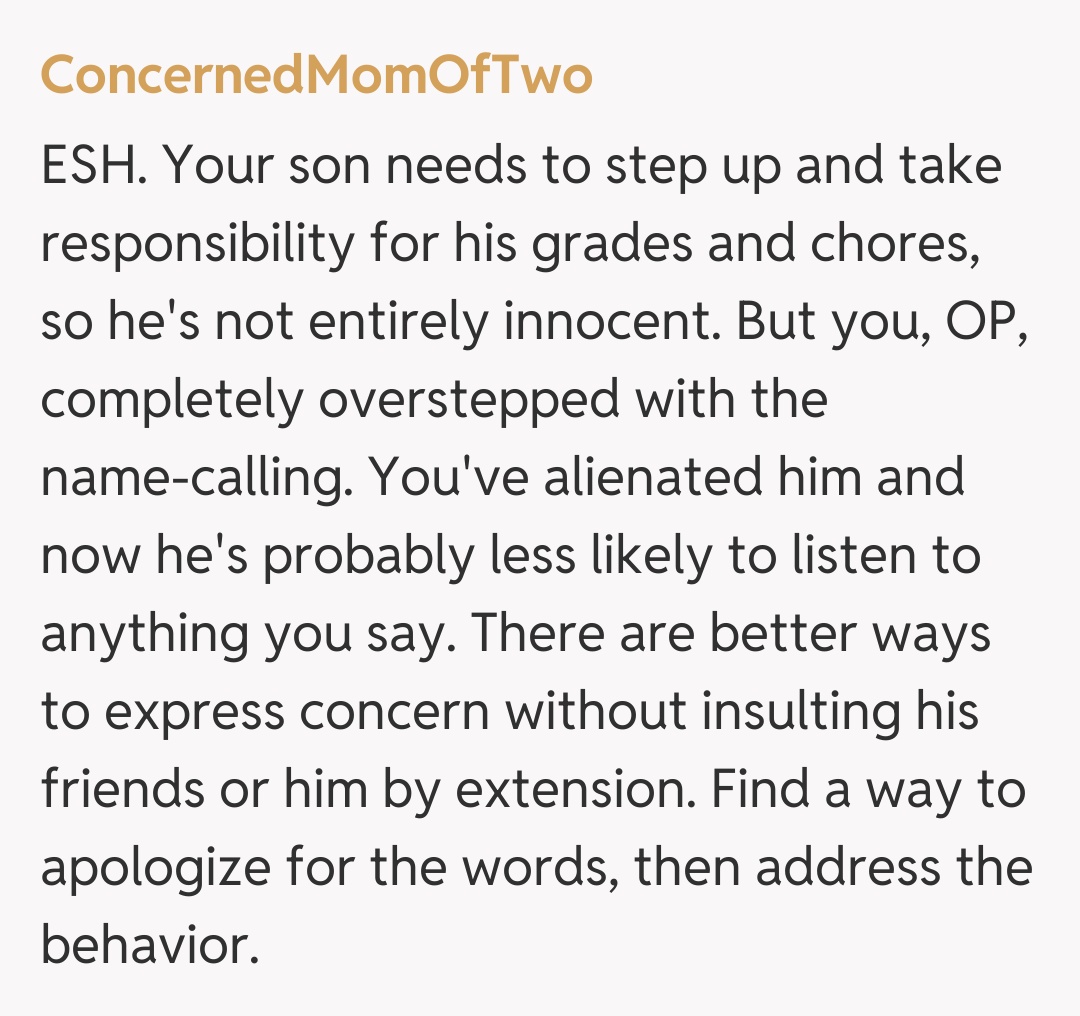
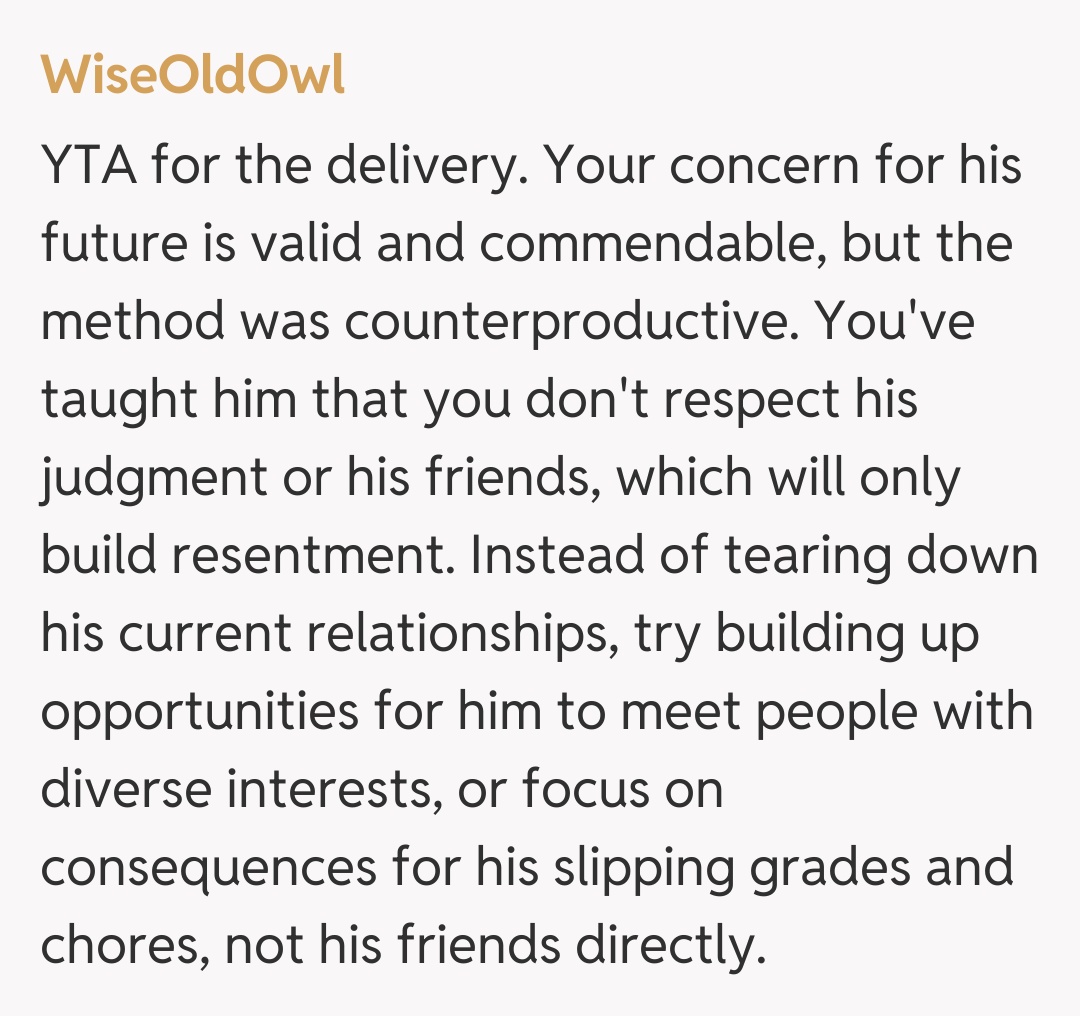
This AITA post really underscores the challenges parents face in a rapidly changing social landscape. While a parent's desire to guide their child towards positive influences is natural and important, the method of intervention can make all the difference. Resorting to harsh, judgmental language often creates a wider chasm between parent and child, making constructive dialogue impossible. Ultimately, fostering an environment of open communication and mutual respect, even when disagreeing, remains the most effective long-term strategy for navigating these tricky teenage years. Let's hope this family can bridge the gap.