
AITA for refusing to let my girlfriend decorate our apartment because her style is “cheap and tacky”?
Oh boy, here we go again with the classic cohabitation conundrum: merging two distinct personal styles into one harmonious living space. It's a tale as old as time, or at least as old as interior design magazines. Our Original Poster (OP) has stumbled into a decorating dilemma that has many of us nodding in understanding, or perhaps cringing in sympathy for one party.
Today's AITA story brings us a man who's put his foot down about his girlfriend's decorating choices, specifically labeling her style as 'cheap and tacky.' This isn't just about paint colors or sofa fabric; it's about deeply ingrained aesthetic preferences clashing head-on. When one person's comfort object is another's eyesore, what's a couple to do? Let's dive into the messy, yet always relatable, world of shared spaces and differing tastes.

"AITA for refusing to let my girlfriend decorate our apartment because her style is "cheap and tacky"?"
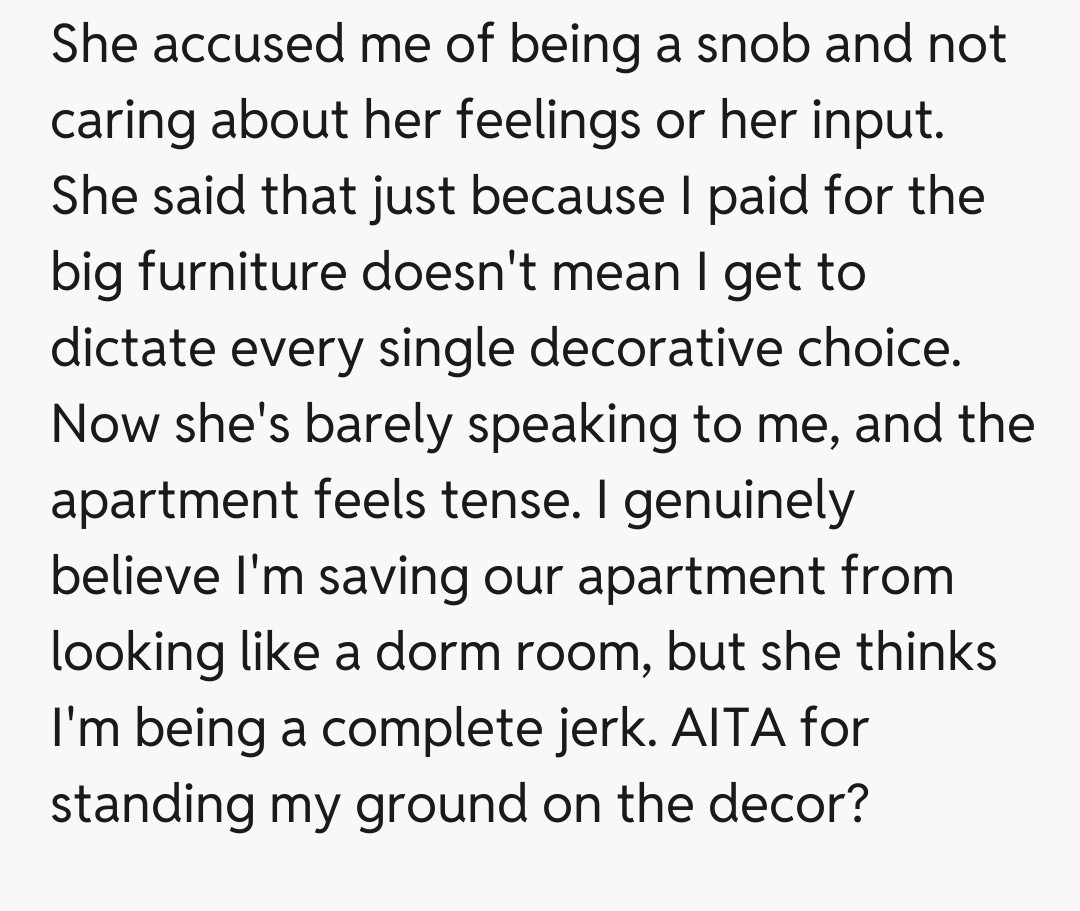
This AITA post highlights a common friction point in many relationships: the delicate balance between individual expression and shared space. On one hand, OP has invested significantly in creating a particular aesthetic, which he finds sophisticated and calming. It's understandable that he wants to protect that vision, especially when he views his girlfriend's preferred style as clashing rather than complementing it. His perception of her decor as 'cheap and tacky' indicates a fundamental incompatibility in taste.
However, labeling someone's personal style as 'cheap and tacky' is inherently dismissive and can feel deeply disrespectful. A home should be a sanctuary for both inhabitants, reflecting both their personalities. By outright rejecting her contributions and dictating control over the main living areas, OP risks making his girlfriend feel like a guest in her own home, which can erode trust and partnership in a shared living situation. Her feelings of being invalidated are legitimate.
The core issue here seems to be a lack of clear communication and compromise from the outset. While OP may have chosen the major furniture, there wasn't a stated agreement on the overall decorative theme or how individual preferences would be integrated. Moving in together requires both partners to blend their lives, which includes their physical surroundings. It's not just about one person's vision or one person's investment, but about creating a space that feels comfortable and representative for both.
Moving forward, the couple needs to engage in a more constructive conversation. Perhaps exploring designated 'zones' for each person's style, or finding a compromise where a few of her beloved 'quirky' items can be integrated thoughtfully, without overwhelming the main aesthetic. A professional decorator, or even Pinterest mood boards, could help bridge the gap. Respecting each other's individuality, even when tastes diverge, is crucial for a healthy cohabiting relationship.
The internet weighs in: Is 'my house, my rules' fair in a shared space?
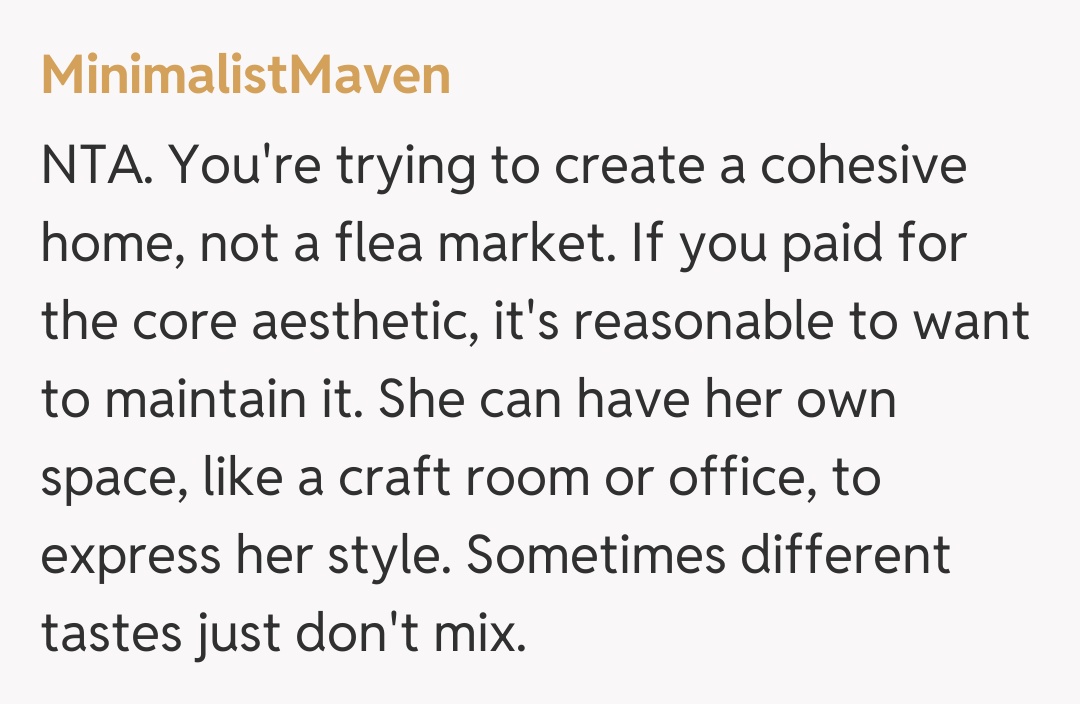
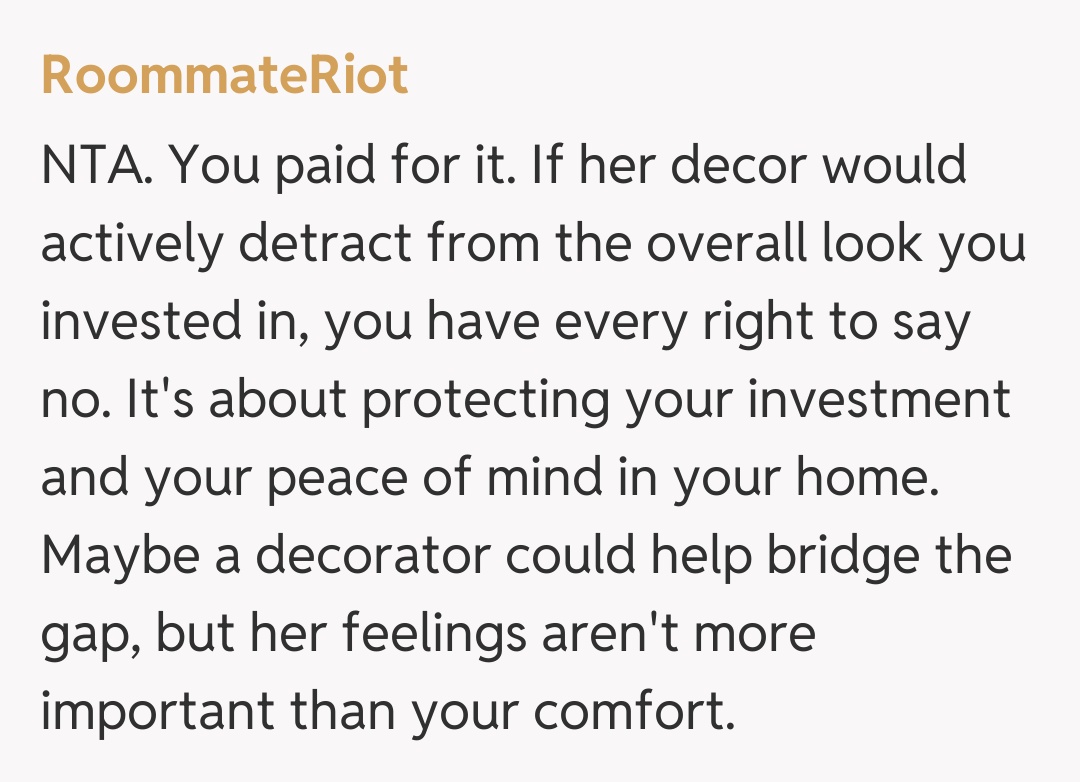
The comments section for this one was, predictably, a lively battleground of opinions! Many users sided with OP, emphasizing that if he paid for the foundational pieces and has a clear vision, he shouldn't have to sacrifice his entire aesthetic to accommodate mismatched items. They argued that taste is subjective, but a shared space requires some level of cohesion, and calling something 'tacky' is a matter of personal discernment, not a universal truth.
On the other side, a significant number of commenters called OP out for his dismissive language and controlling behavior. They highlighted that a home is for two people, and invalidating a partner's taste creates an unwelcome environment. Many suggested compromise, like having specific areas for her decor or finding a way to blend styles rather than outright rejecting one. The consensus leaned towards needing better communication and mutual respect.


This AITA post serves as a stark reminder that cohabitation involves far more than just sharing bills; it's about sharing a vision, a life, and crucially, a home. While aesthetic differences are natural, the way they are communicated and resolved truly defines a relationship's strength. Learning to respect a partner's individuality while also advocating for your own needs is a delicate dance. Ultimately, finding a compromise where both partners feel represented and comfortable in their shared space is the goal, even if it means stepping outside one's aesthetic comfort zone just a little.