
AITA for refusing to let my wife buy new clothes because “you already have enough and you don’t need more”?
Oh, the classic couple's conundrum: spending habits! It's a tale as old as time, or at least as old as credit cards. One partner views spending as a necessity or a joy, while the other sees it as a slippery slope to financial doom. Today's AITA post dives headfirst into this often-contentious territory, asking us to weigh in on a husband's stance on his wife's wardrobe.
This isn't just about clothes, folks; it's about control, respect, and differing financial philosophies within a marriage. Our original poster, 'ClosetController,' has put a pretty firm foot down regarding his wife's shopping habits, specifically her desire for new apparel. Is he being fiscally responsible, or has he crossed a line into overly controlling behavior? Let's unpack this closet full of drama.

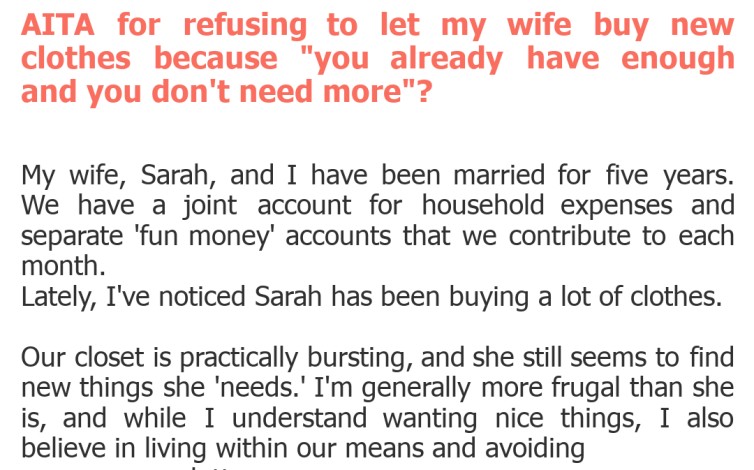
"AITA for refusing to let my wife buy new clothes because "you already have enough and you don't need more"?"

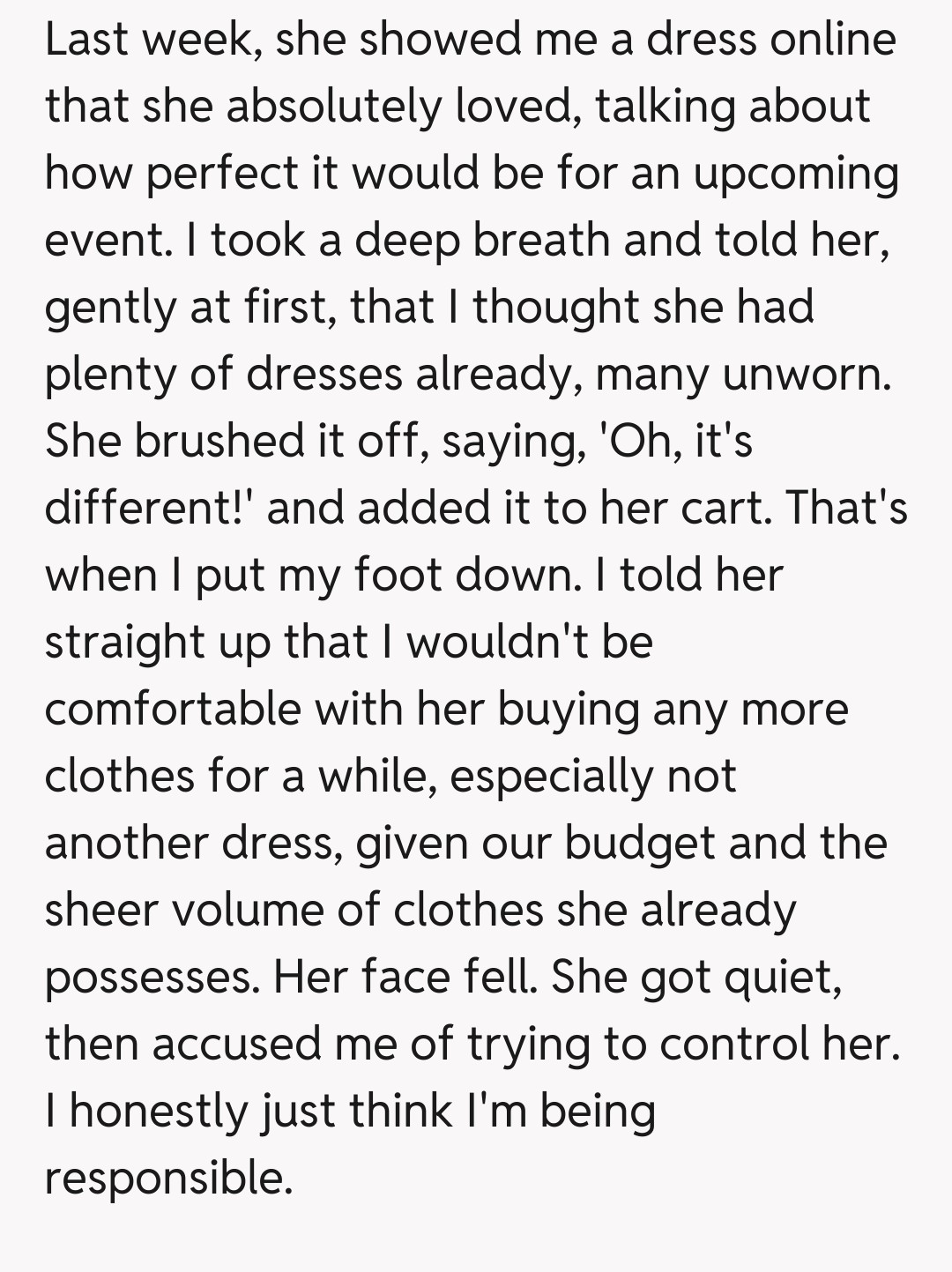
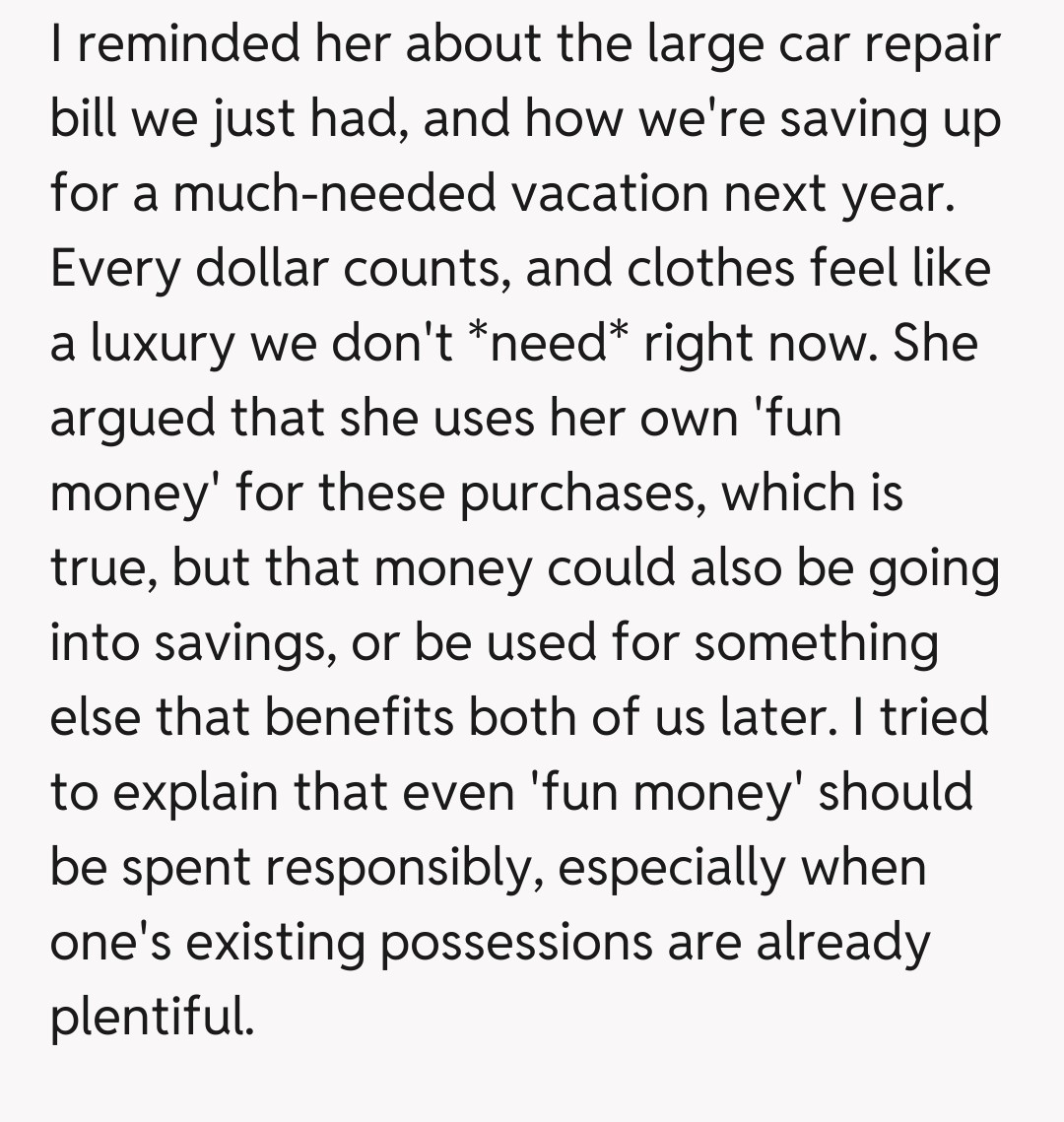
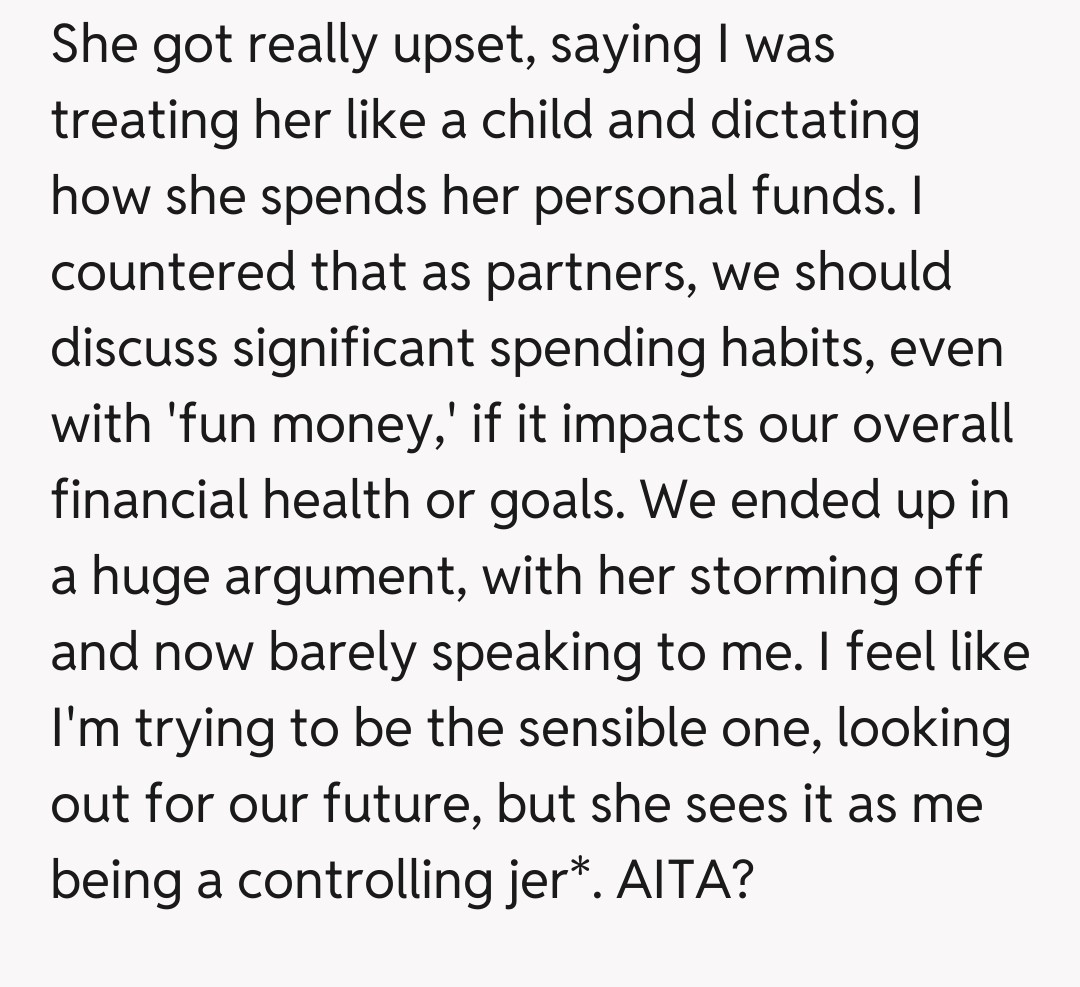
This post really taps into a common fault line in many relationships: financial differences. On one hand, the original poster (OP) seems genuinely concerned about budgeting and future financial goals. Saving for a vacation and dealing with unexpected expenses like car repairs are legitimate reasons to be mindful of spending. From his perspective, he's being the responsible partner, trying to steer their shared financial ship towards calmer waters, and perhaps feels his wife's 'fun money' spending is excessive.
However, the language used here – "refusing to let my wife buy new clothes" and "I wouldn't be comfortable with her buying any more clothes" – immediately flags a potential issue. While financial transparency and shared goals are crucial in a partnership, dictating how a partner spends their *designated* 'fun money' can quickly cross into controlling territory. This 'fun money' is typically set aside precisely for individual discretionary spending without needing approval.
The core of the conflict might not be just the clothes, but the communication around money and autonomy. Instead of an outright ban, a discussion about shared financial priorities and individual spending boundaries would have been more constructive. Did they agree on what 'fun money' entails? Is there an unspoken expectation that 'fun money' should also be subject to joint approval if it reaches a certain threshold or goes towards specific items?
Ultimately, a healthy relationship balances individual autonomy with shared responsibility. While the OP's intentions might be rooted in financial prudence, his approach could be perceived as undermining his wife's agency. A nuanced conversation about shared financial vision, perhaps even a "no-spend" challenge together, rather than a unilateral declaration, might have yielded a far more positive outcome and avoided the current marital tension.
What the internet had to say about the closet conflict…
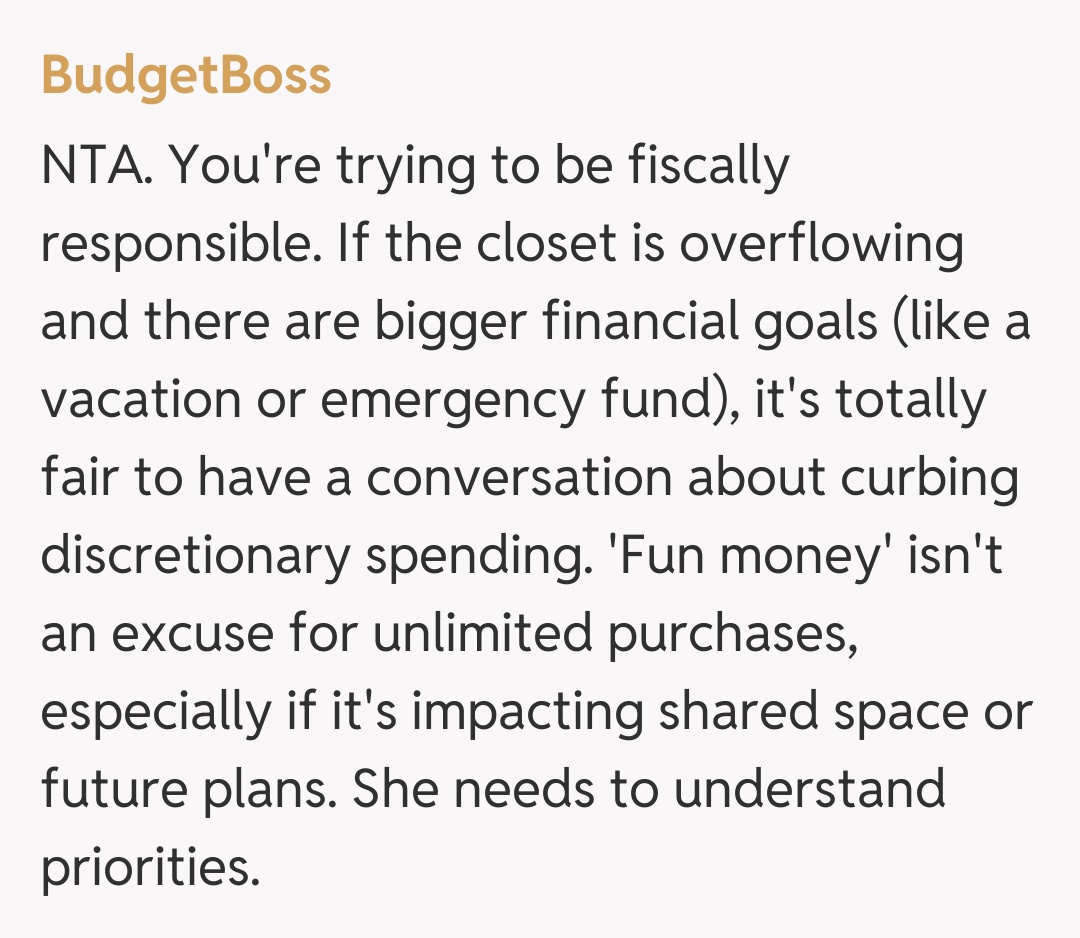
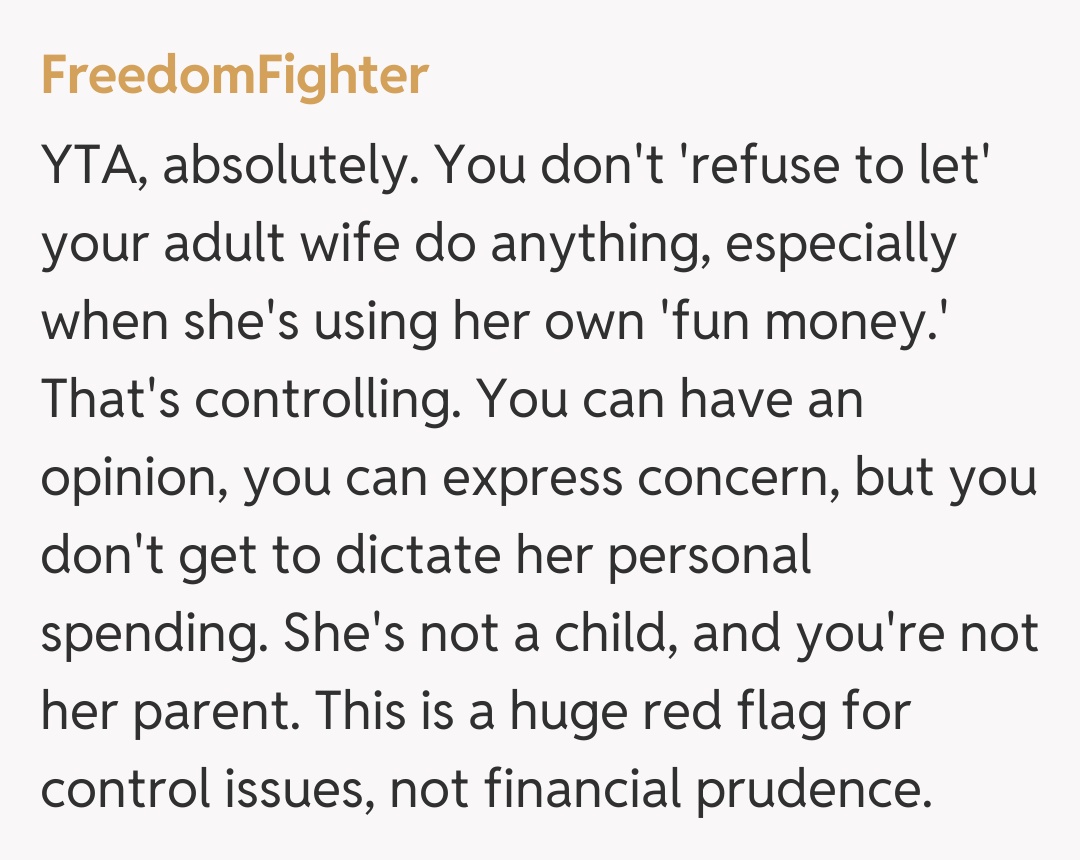
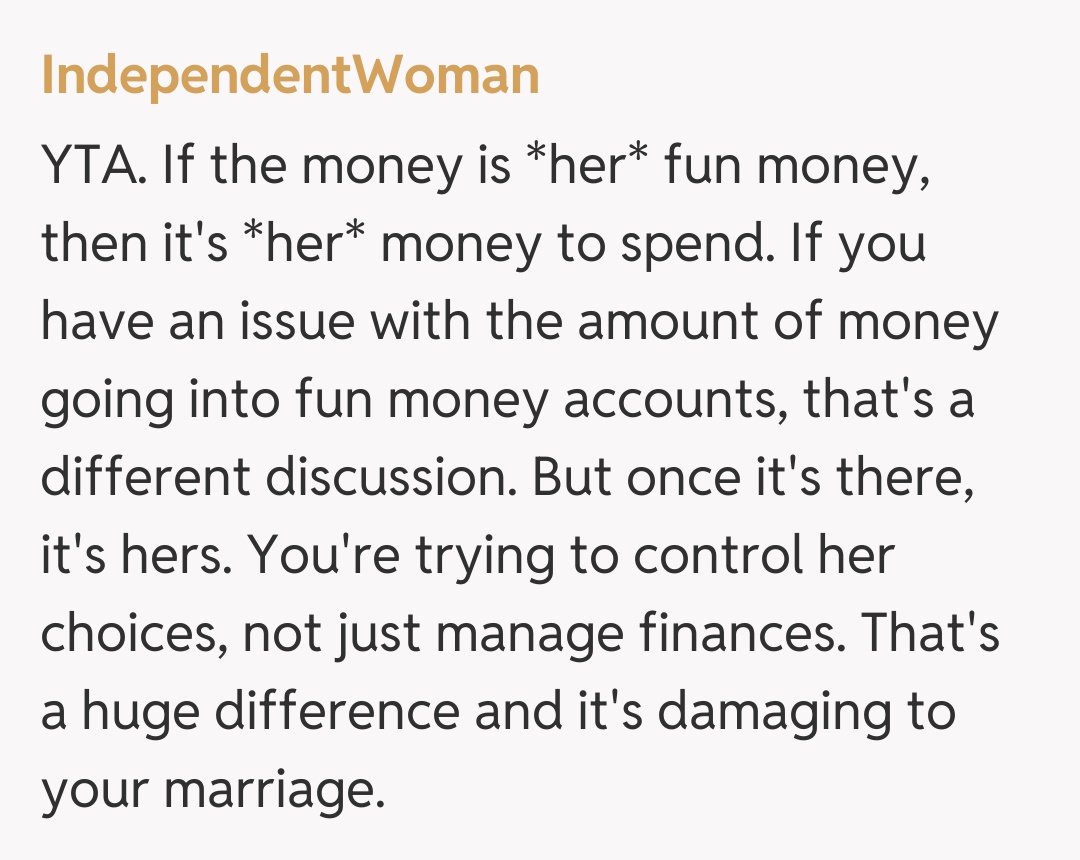
The comments section for this one was, predictably, a lively debate! Many users leaned towards 'YTA' (You're The A**hole), focusing heavily on the OP's choice of words like 'refusing to let' and the implication of controlling his wife's personal 'fun money.' They highlighted that as an adult, she has the right to spend her allocated funds as she sees fit, even if it's on items her partner deems unnecessary. The consensus was that communication, not control, is key.
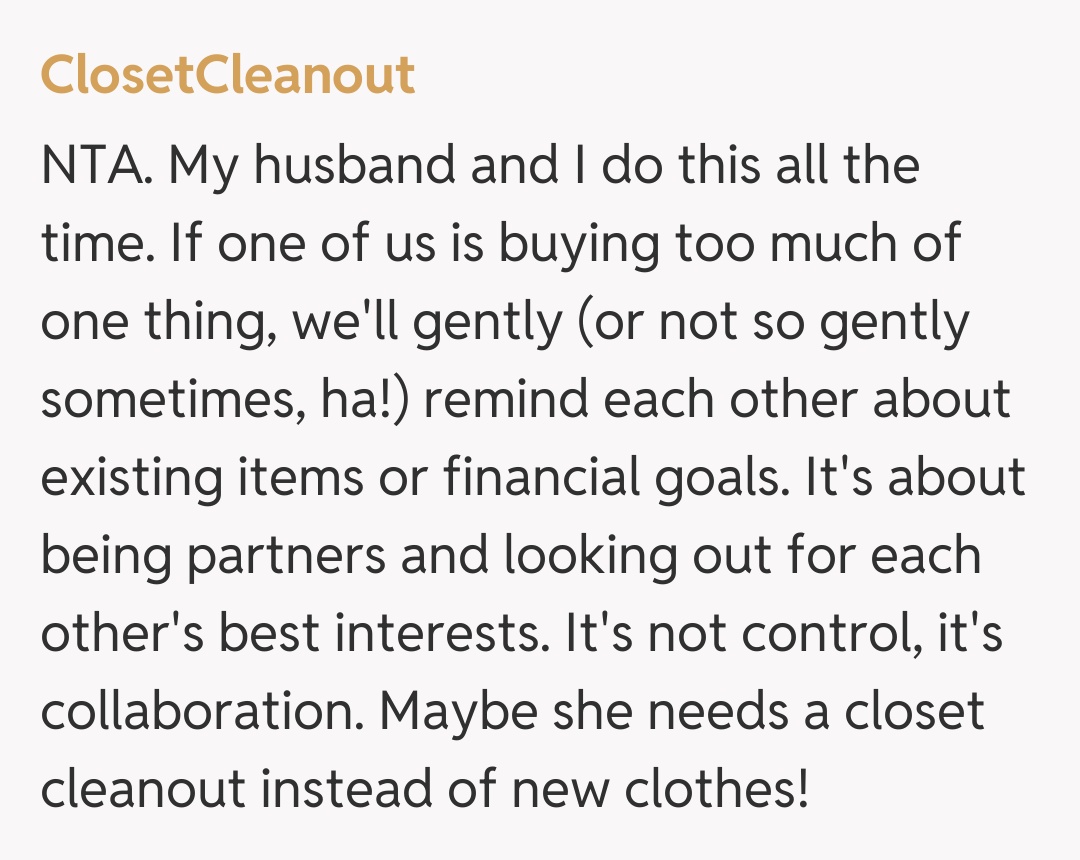
However, there was also a significant contingent who sided with 'NTA' or 'ESH' (Everyone Sucks Here), arguing that while OP's delivery might have been poor, his underlying concern for financial responsibility was valid. They pointed out that even 'fun money' contributes to overall household finances and that excessive spending, even from personal funds, can impact shared goals. Many suggested that the couple needs a deeper conversation about their financial values and boundaries.

This AITA story serves as a potent reminder that money talks, but how we talk about money speaks volumes. While financial responsibility is vital in any partnership, the manner in which concerns are raised can make all the difference between a productive conversation and a marital standoff. Ultimately, open, respectful communication and a willingness to find common ground are the cornerstones of navigating these tricky financial waters. Here's hoping OP and Sarah can find a path to compromise and mutual understanding soon!