AITA for refusing to let my autistic son sit at the dinner table because his eating sounds make me want to vomit?
Oh boy, do we have a challenging one today! This story dives deep into the often-misunderstood world of sensory sensitivities, not just for children, but for parents too. Our submitter, who we'll call 'Parental_Distress,' is grappling with an intensely personal struggle that many might dismiss, but for those who experience it, it's a very real and debilitating issue. It's a clash of needs that feels impossible to resolve without someone getting hurt.
This particular AITA post touches on one of the most fundamental family rituals: the shared dinner. What happens when that sacred time becomes a source of extreme discomfort for a primary caregiver? And how does that discomfort impact a child, especially one with special needs? It's a truly heartbreaking situation that pits a parent's mental health against their child's sense of belonging, making for a truly divisive debate. Let's dive in.

"AITA for refusing to let my autistic son sit at the dinner table because his eating sounds make me want to vomit?"
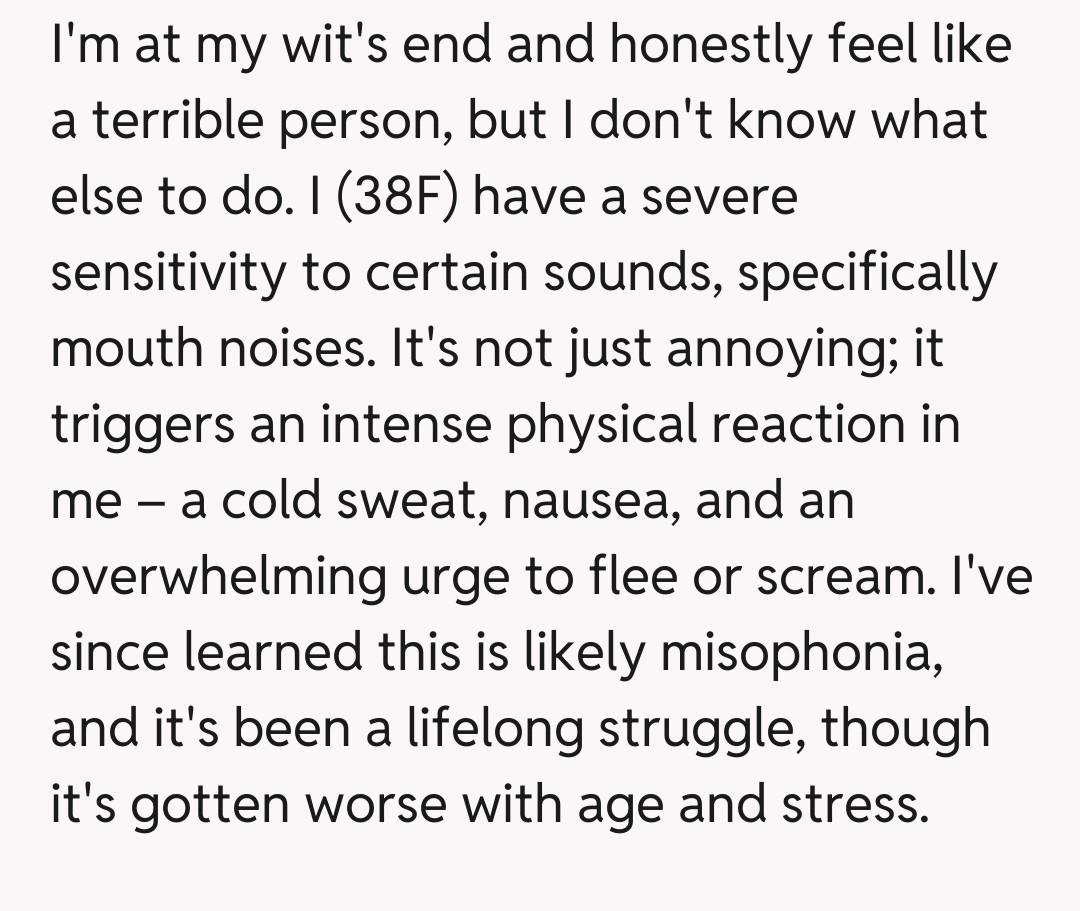
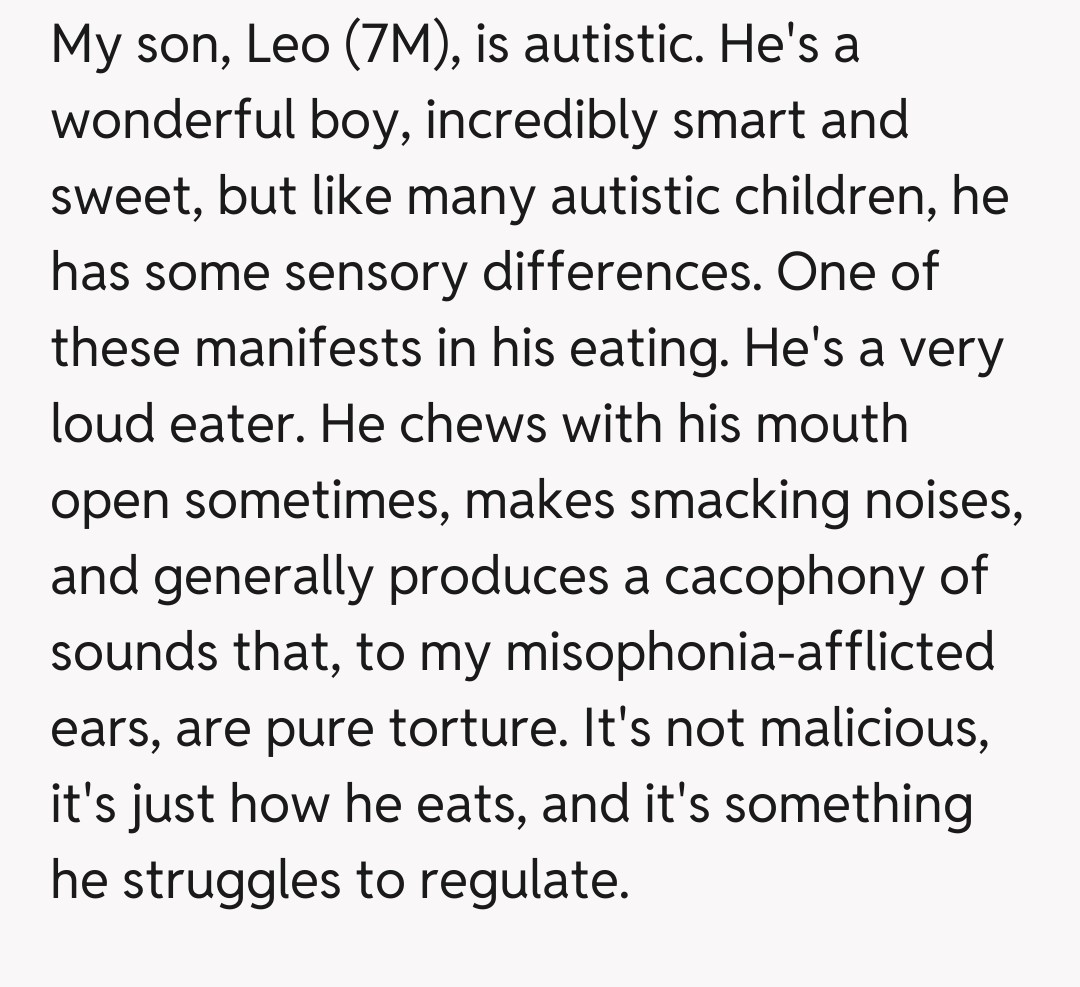

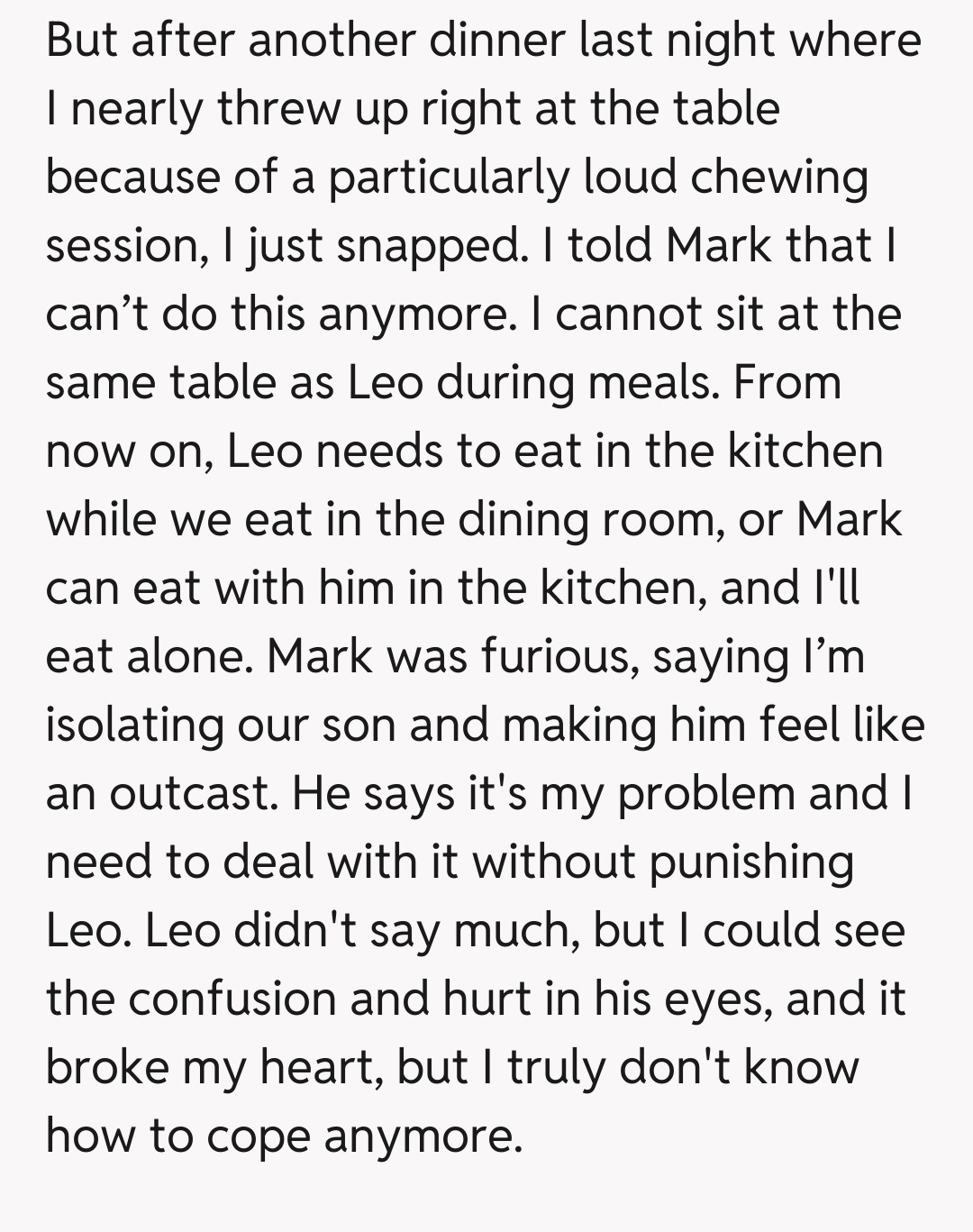
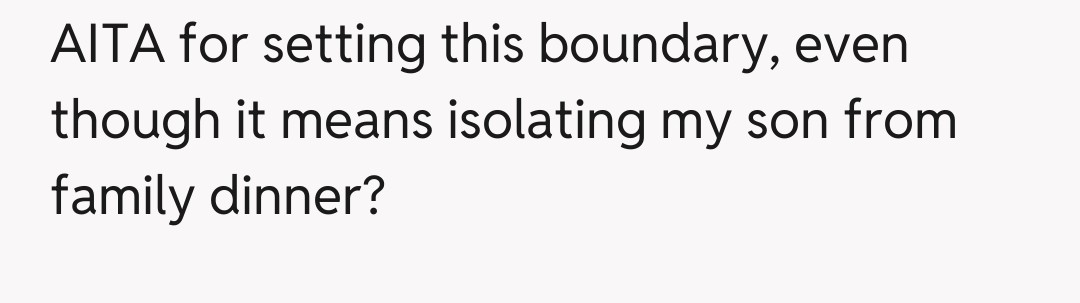
This is truly a heartbreaking situation for everyone involved, highlighting the immense complexities when mental health conditions intersect with neurodiversity within a family unit. The OP's struggle with misophonia is not a trivial aversion; it's a recognized neurological disorder where specific sounds trigger intense, often debilitating, emotional and physiological responses. The visceral reaction of wanting to vomit is a clear indicator of the severe distress the OP experiences, making communal meals a genuine source of agony.
However, the proposed 'solution' of segregating a seven-year-old autistic child from the family dinner table presents a significant ethical and emotional dilemma. For a child, especially one with autism, routine and inclusion are incredibly important. Being told to eat separately could be deeply confusing and hurtful, potentially leading to feelings of rejection, shame, and isolation, regardless of the parent's underlying struggle. It might be interpreted as punishment for something he can't fully control.
It's crucial to consider the long-term impact on Leo's emotional well-being and his relationship with his mother. While the mother's pain is valid, the child's need for belonging and understanding is equally vital. The husband's reaction, while perhaps harsh, stems from a protective instinct for his son's emotional health. This isn't just about 'dealing with it'; it's about finding a solution that supports everyone's needs as much as possible.
Perhaps this situation calls for more intensive professional intervention for both the OP's misophonia and strategies for Leo's sensory regulation at meals. Could noise-canceling headphones for the OP, a white noise machine at the table, or structured behavioral therapy for Leo be explored further? The current boundary, while stemming from genuine distress, seems to place the burden disproportionately on the child, potentially causing more harm than good in the long run.
The internet weighs in: Empathy vs. Exclusion at the Dinner Table
The comments section for this post was, predictably, a whirlwind of strong opinions. Many commenters expressed deep empathy for the OP's misophonia, understanding that it's a real and debilitating condition, not just an annoyance. They shared personal experiences with similar sensory issues, validating the OP's visceral reactions and suggesting that living with constant nausea or panic during a basic daily activity like eating is an unbearable burden.
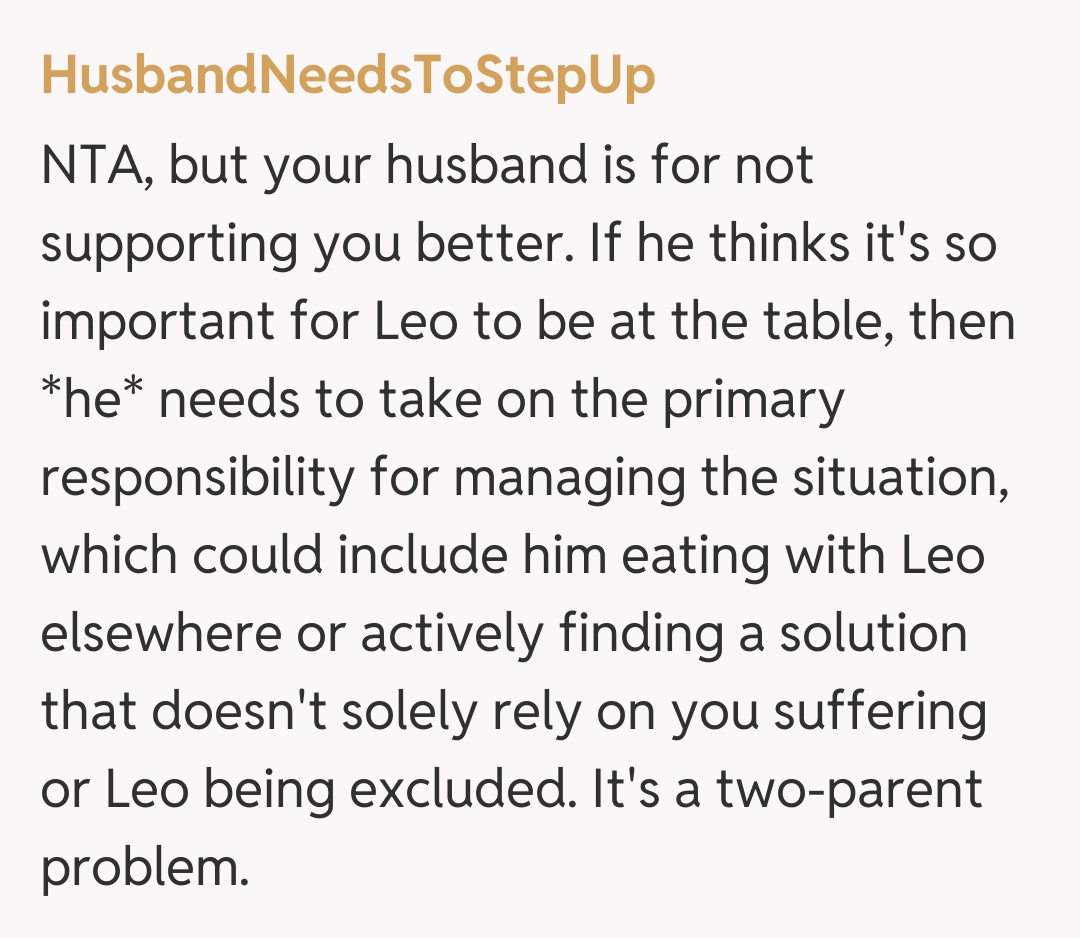
However, a significant portion of the comments leaned towards YTA or ESH, emphasizing the devastating emotional impact on Leo. Readers highlighted that isolating an autistic child from family meals could lead to profound feelings of rejection and misunderstanding, potentially scarring him emotionally. Many suggested that the solution shouldn't be to remove the child, but for the mother to find more effective coping mechanisms or for the husband to take on more of the mealtime responsibility, especially given the son's neurodiversity.
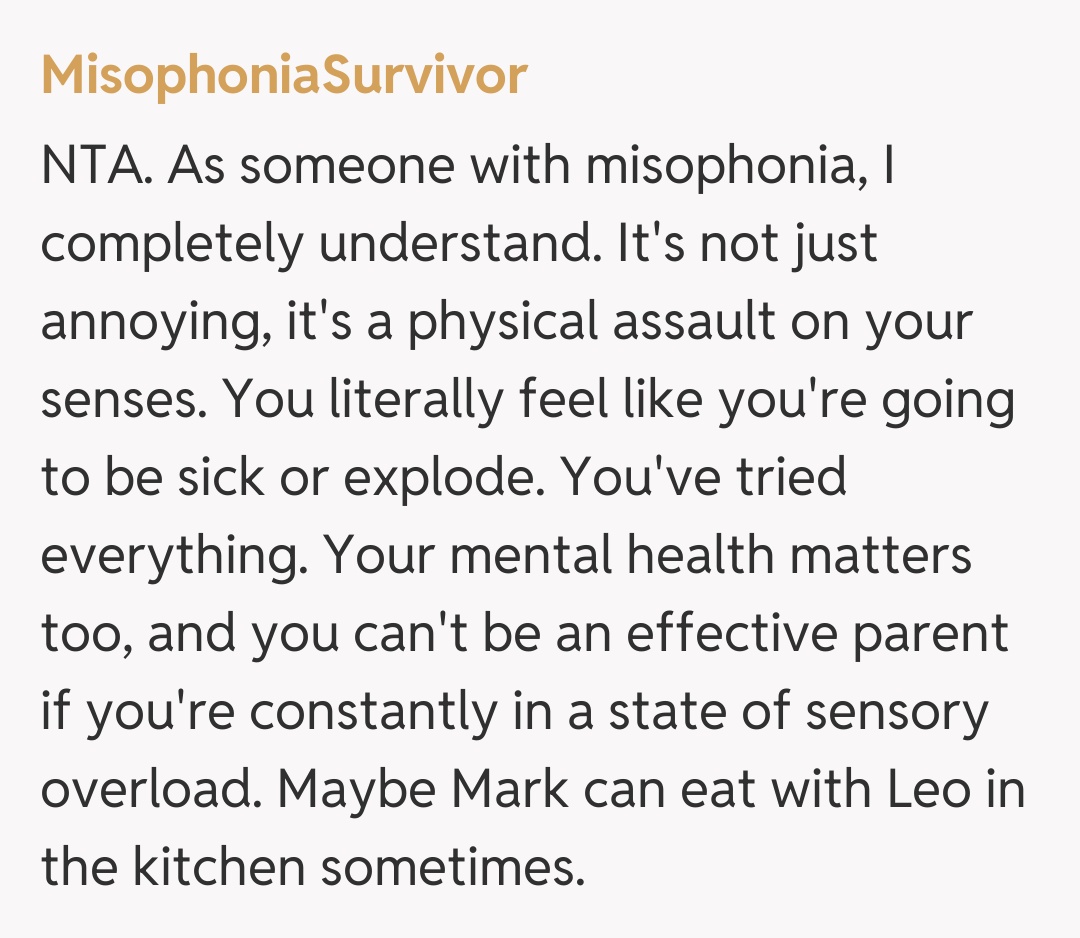
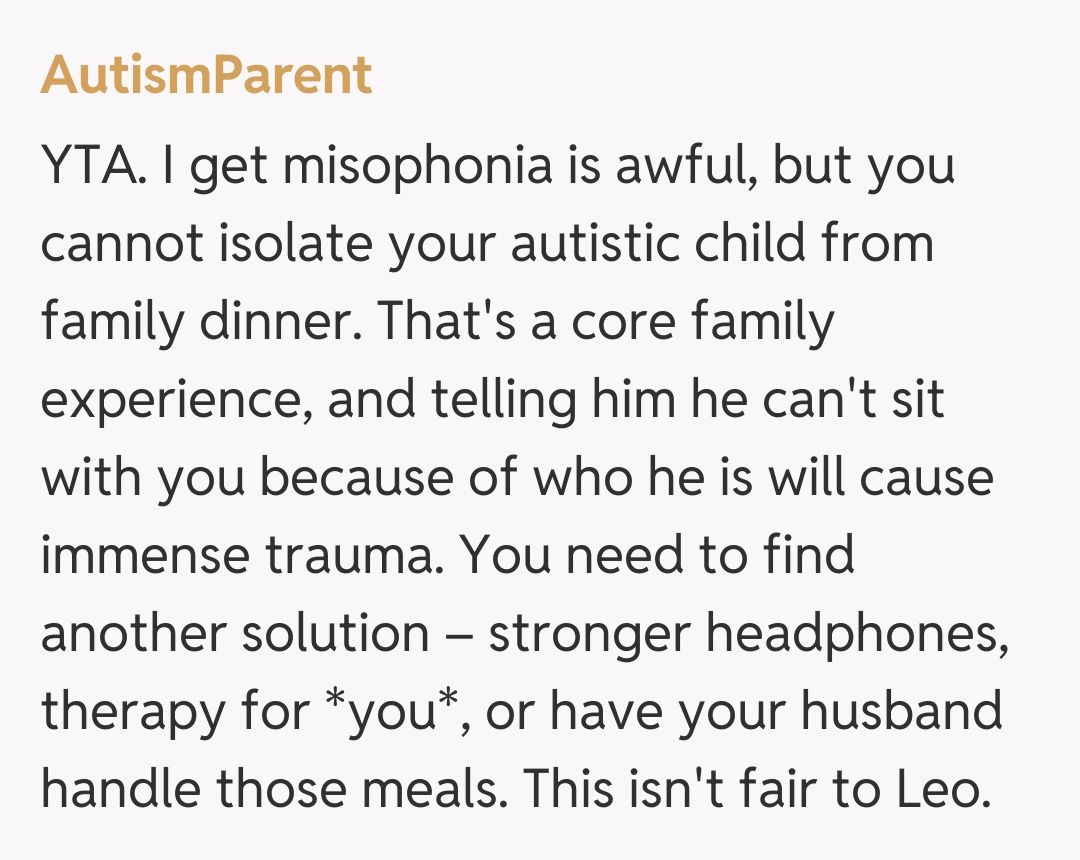
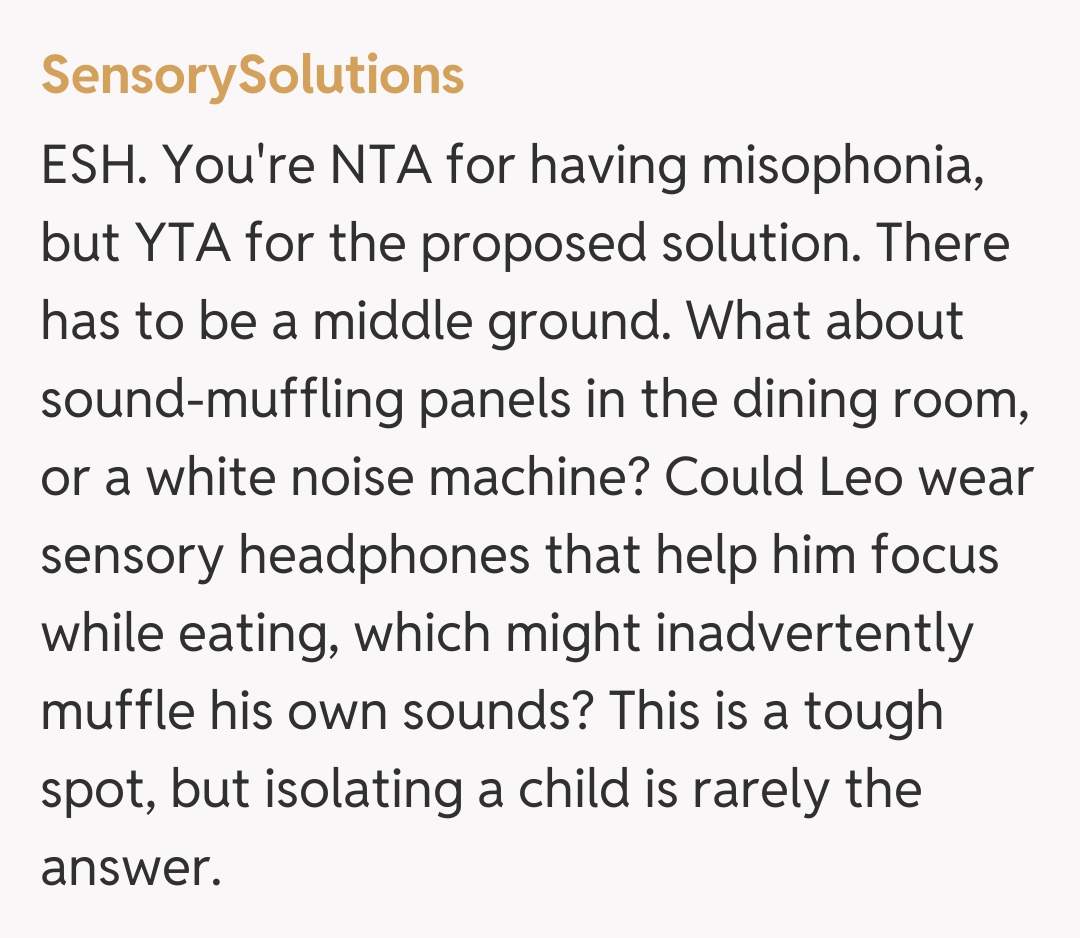
This AITA post serves as a stark reminder that sometimes there are no easy answers, only a navigation of difficult choices between competing, valid needs. While the OP's misophonia is undeniably real and distressing, the impact of exclusion on an autistic child is also profound. The conversation highlights the critical importance of seeking comprehensive professional support for both parents and children when complex challenges like these arise. Ultimately, finding a path forward requires immense empathy, creativity, and a willingness to explore every possible alternative to ensure every family member feels valued and supported.