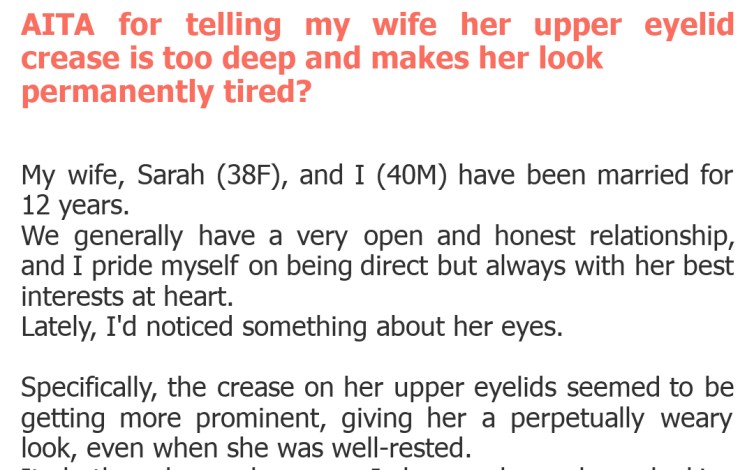
AITA for telling my wife her upper eyelid crease is too deep and makes her look permanently tired?
Oh boy, here we go again with a classic relationship conundrum. When it comes to our partners, we often walk a tightrope between being honest and being kind. What happens when your 'truth' unintentionally lands a direct hit on your loved one's self-esteem? Today's AITA story dives headfirst into that delicate balance, leaving us all to ponder the consequences of unfiltered observations.
This particular situation involves a husband, his wife, and a seemingly innocent comment about her appearance. But as we all know, matters of personal looks can be incredibly sensitive, especially when coming from the person who is supposed to love us unconditionally. Let's unpack this sticky wicket and see if our OP is truly the villain of this tale.

"AITA for telling my wife her upper eyelid crease is too deep and makes her look permanently tired?"
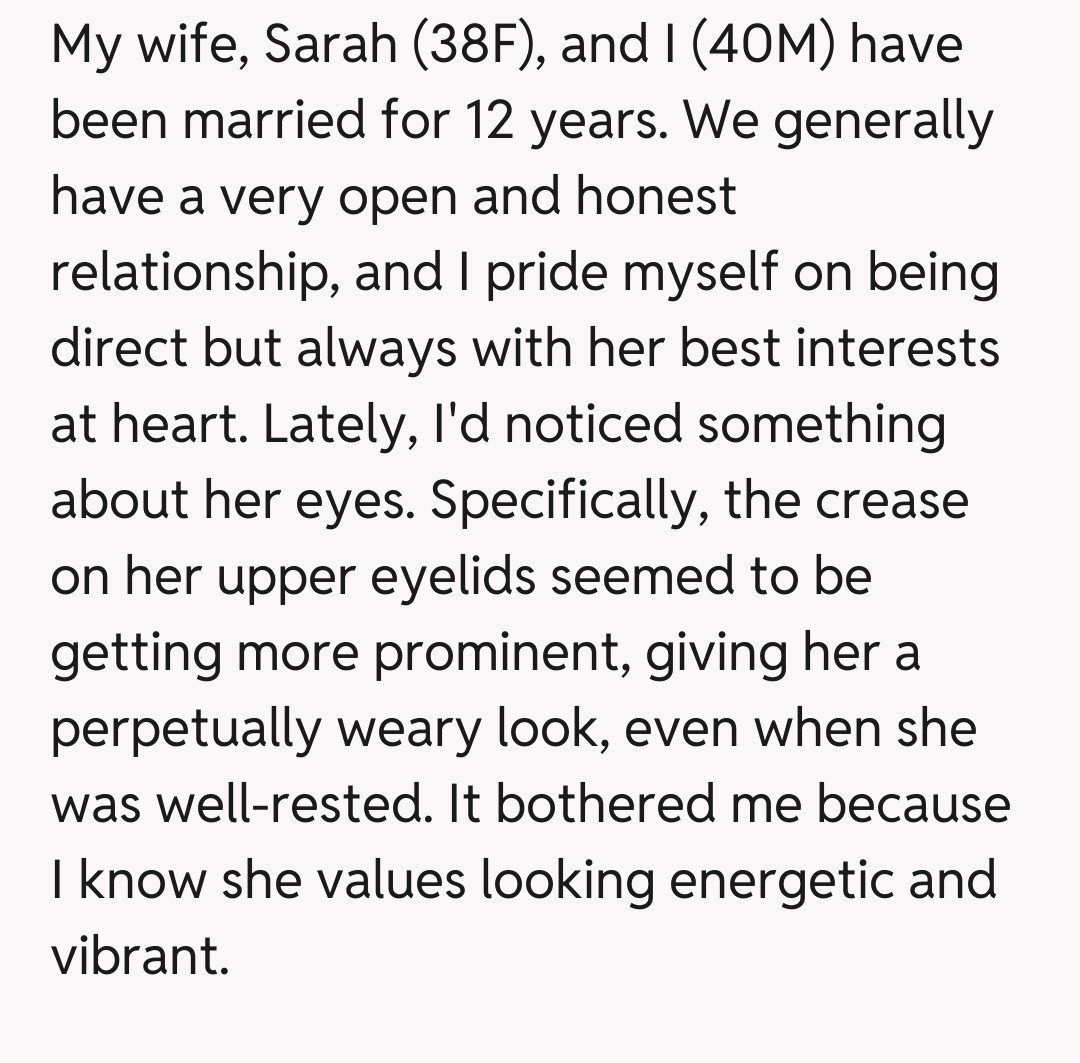
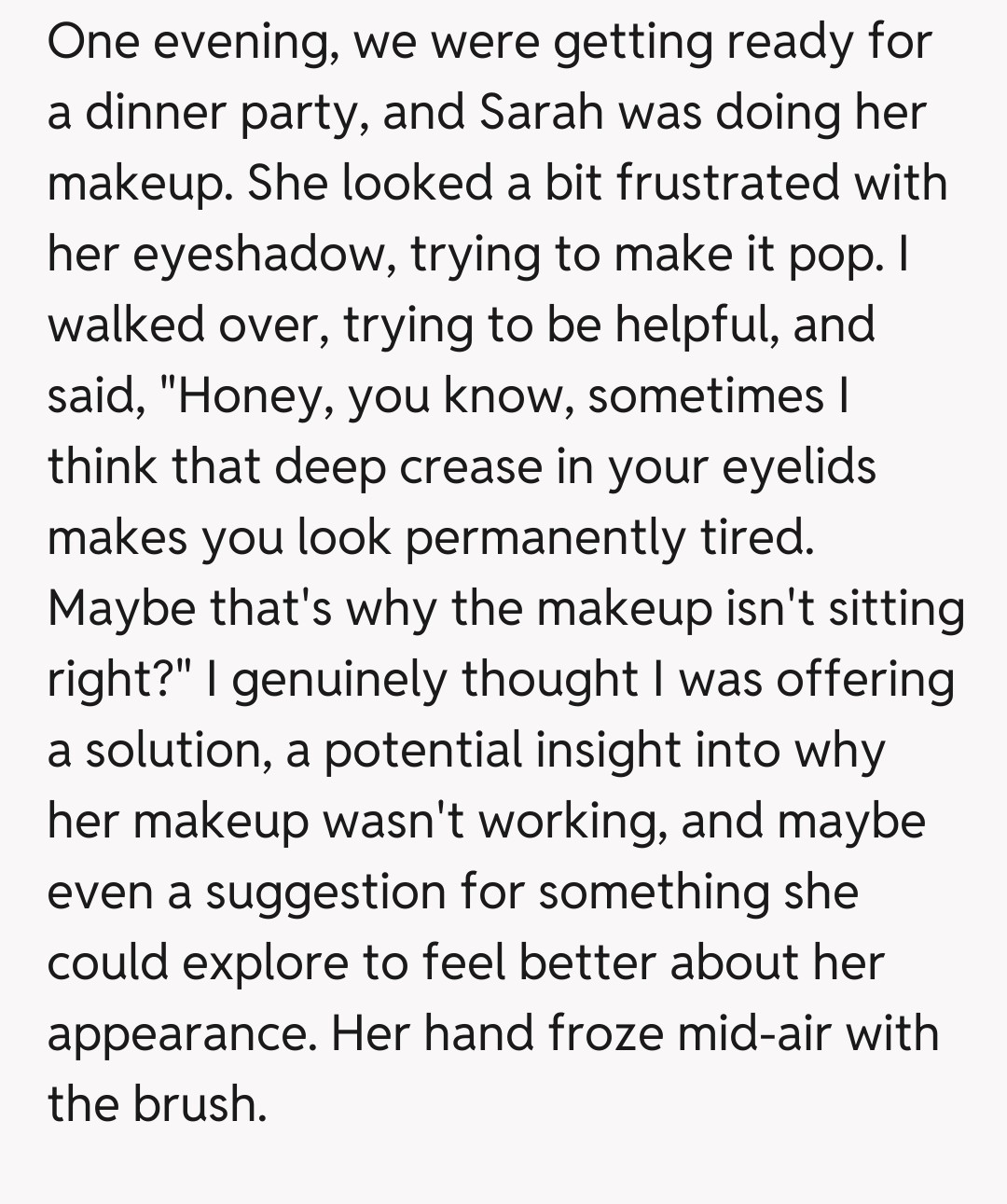

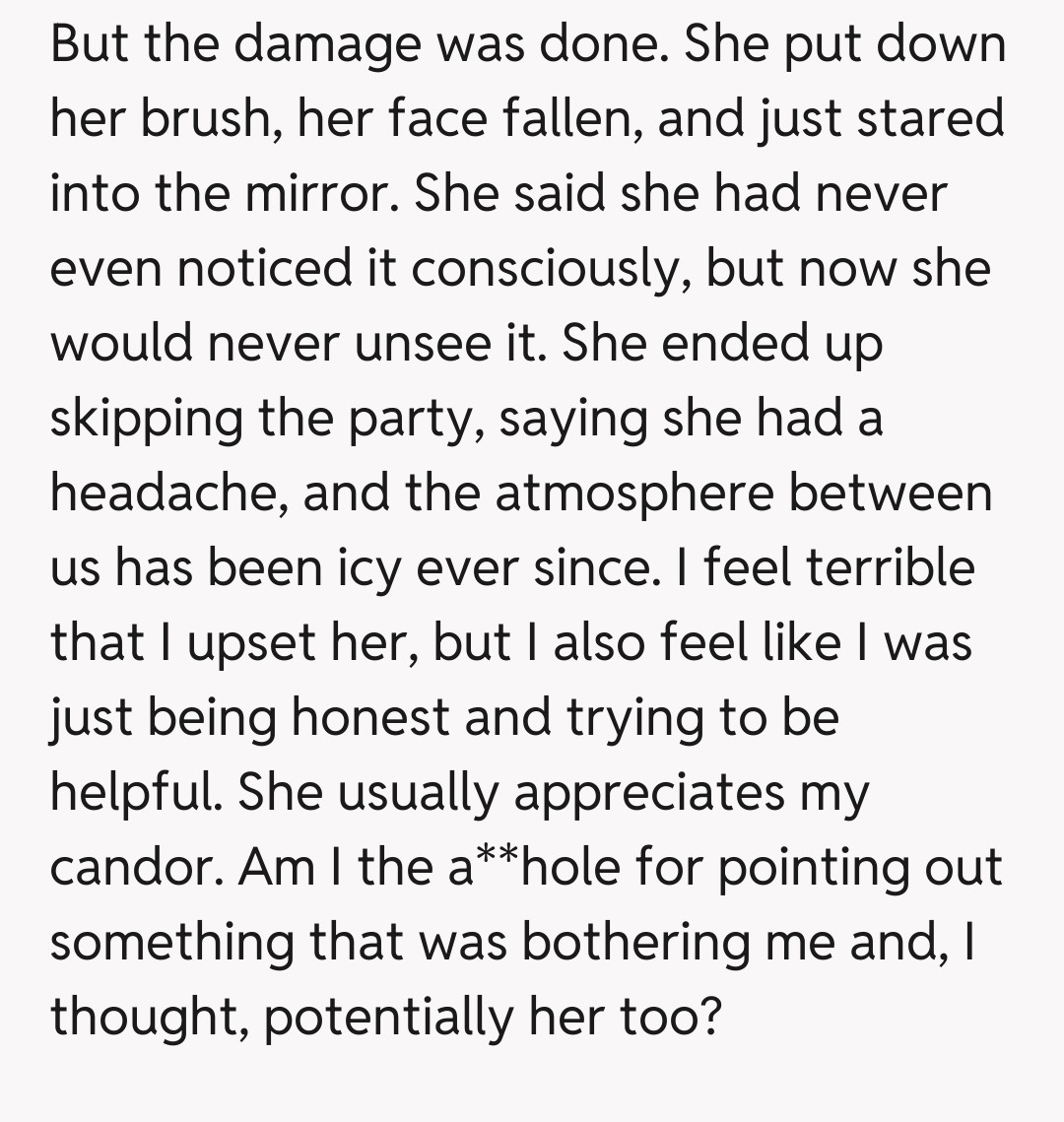
This story is a textbook example of how good intentions can pave the road to an unintended relational disaster. On one hand, the husband believes he was merely being observant and helpful, offering an insight that could potentially alleviate his wife's perceived frustration with her makeup. His desire for an 'open and honest relationship' might have led him to believe such a comment was acceptable and even beneficial.
However, the impact of his words clearly outweighed his benign intentions. Comments about physical appearance, especially from a spouse, carry significant emotional weight. What might seem like a small, objective observation to one person can be perceived as a profound criticism or flaw by another, particularly when it concerns something they hadn't even consciously considered a problem before.
The wife's reaction—freezing, quiet hurt, and then opting out of a social event—speaks volumes. It indicates that the comment struck a very deep nerve, likely tapping into insecurities she may or may not have known she had. To be told by your partner that a part of your face makes you look 'permanently tired' can feel like a direct assault on your perceived vitality and attractiveness.
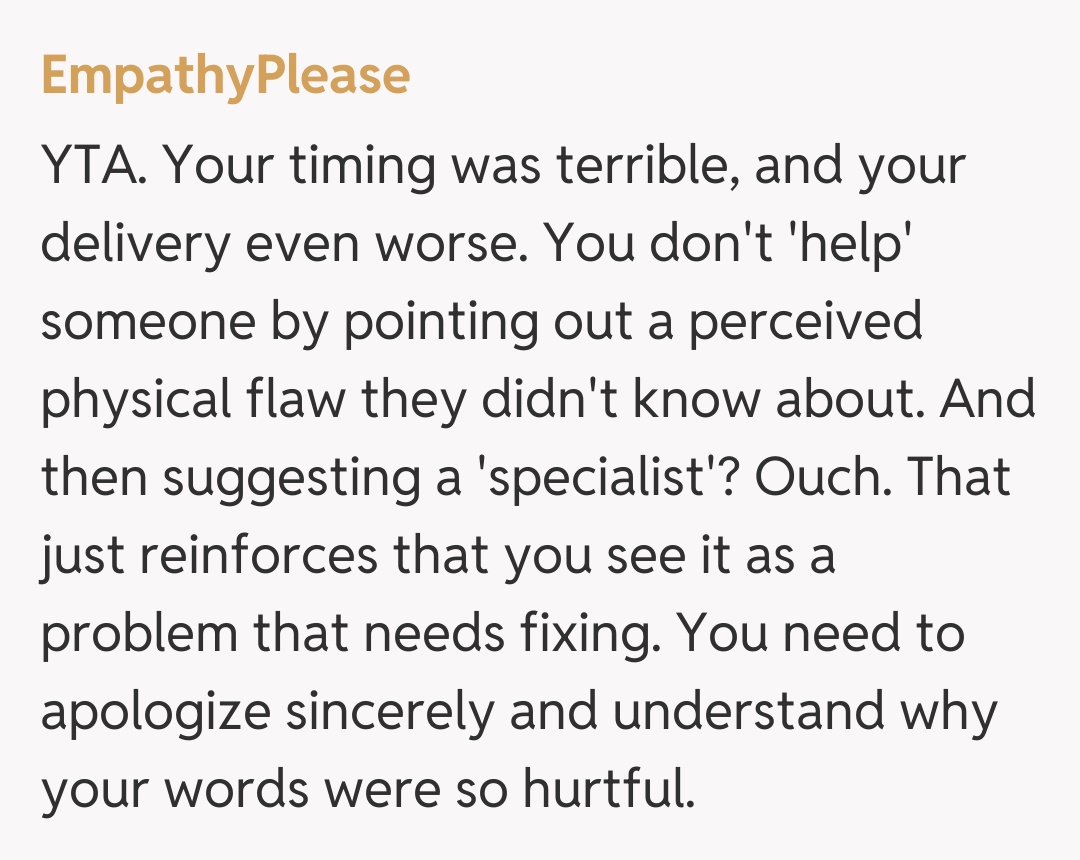
The husband's attempt to backtrack by suggesting cosmetic solutions or specialists, while perhaps coming from a place of continued 'helpfulness,' likely only amplified her feeling of being critiqued. It cemented the idea that this was indeed a 'problem' he wanted her to 'fix.' Navigating these conversations requires immense empathy and careful phrasing, prioritizing the partner's feelings over one's own perceived truths.
The Internet Weighs In: Is Honesty Always the Best Policy, or Just Plain Hurtful?
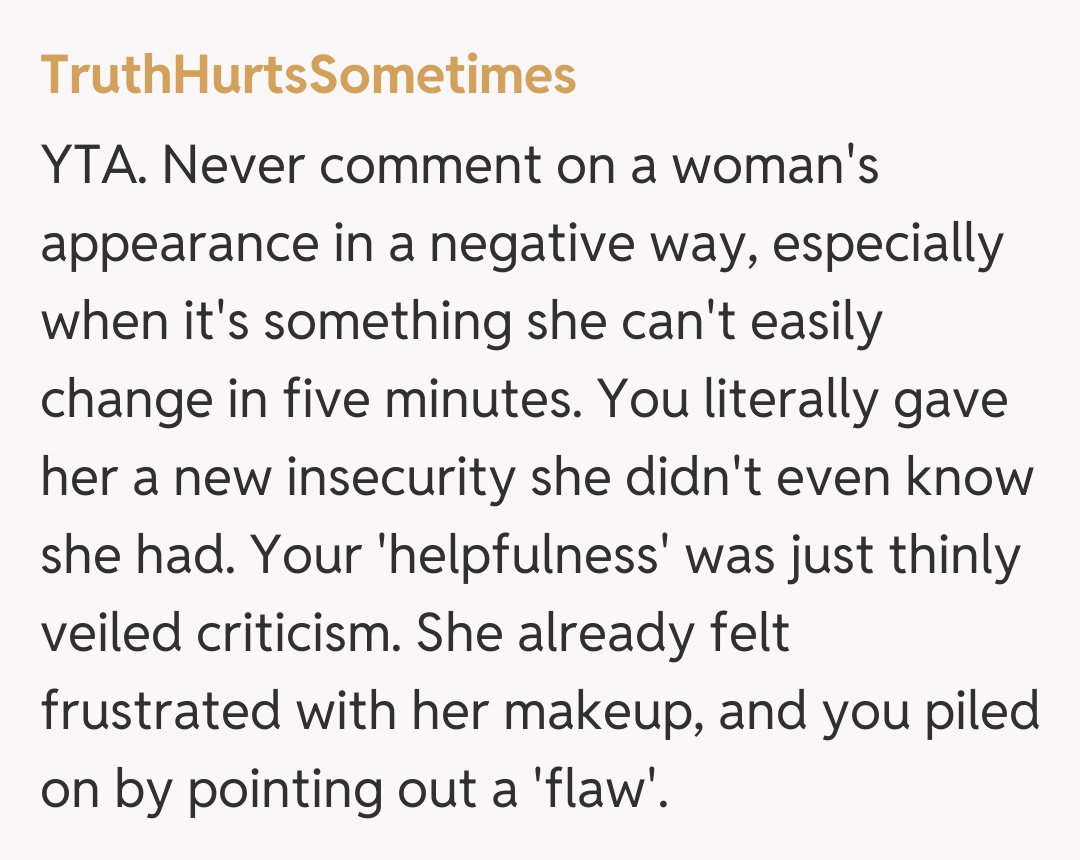
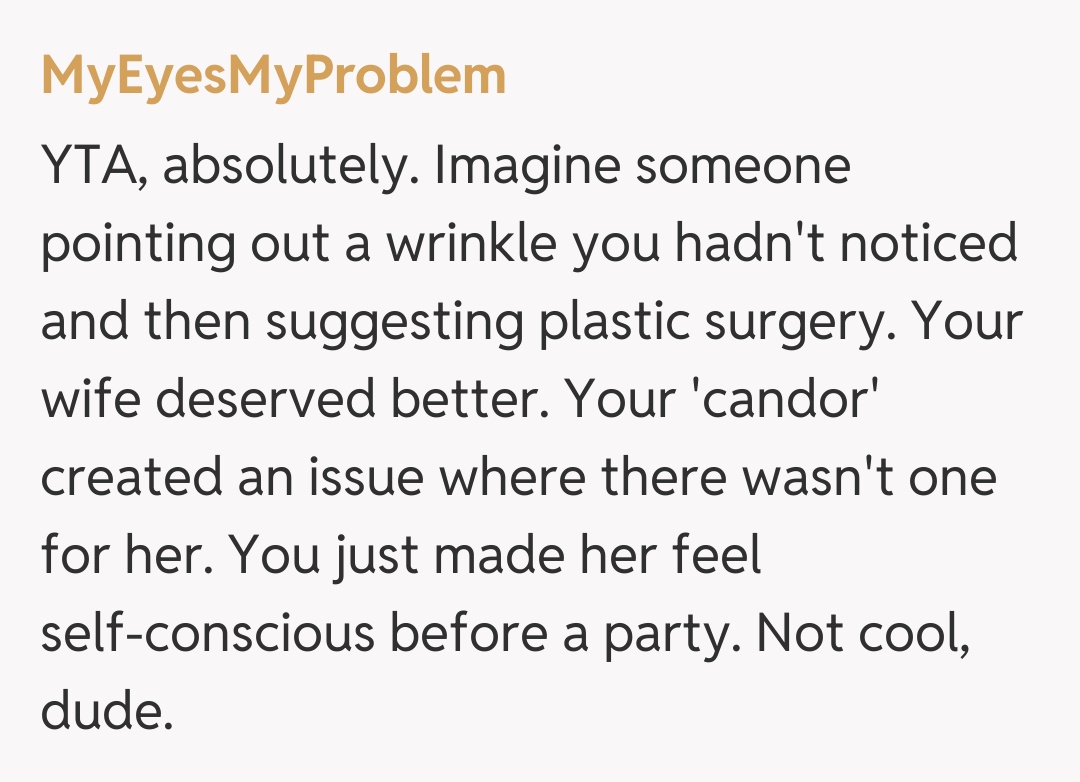
The comments section on this one was, predictably, a mixed bag, though a strong consensus leaned towards the husband being in the wrong. Many users highlighted the crucial difference between intent and impact, arguing that even if the OP meant well, the effect of his words on his wife was undeniably damaging. It's a powerful reminder that what we say often matters less than how it makes the other person feel.
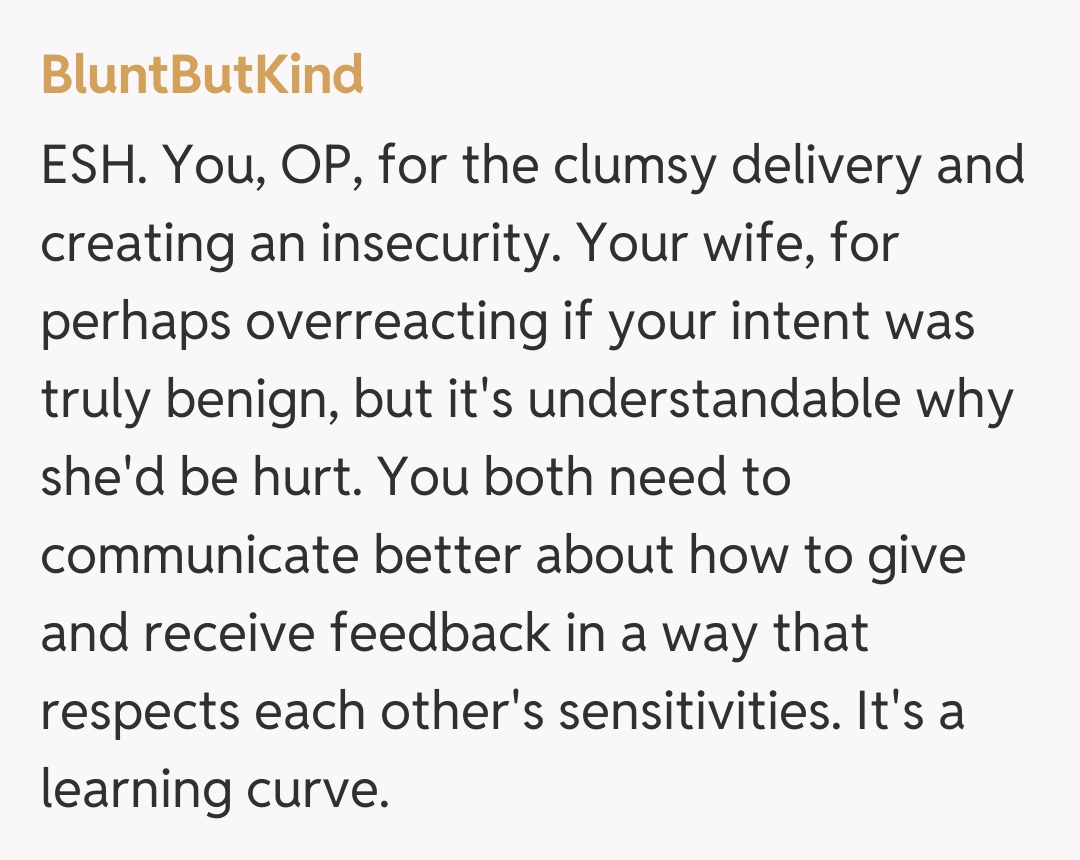
However, a vocal minority did defend the husband, emphasizing his long-standing 'honest' communication style and arguing that the wife's reaction might be an overreaction. They suggested that perhaps she could learn to accept constructive criticism, even about appearance. This divide truly showcases the complexity of relationship dynamics and the fine line between helpful feedback and hurtful remarks.

This AITA story serves as a poignant reminder that while honesty is often lauded, it must always be tempered with empathy and careful consideration, especially within intimate relationships. The impact of our words can resonate deeply, sometimes creating lasting insecurities we never intended. Moving forward, the husband needs to prioritize rebuilding trust and understanding his wife's emotional landscape, recognizing that some truths are better left unsaid, or at least handled with the utmost delicacy. It's a tough lesson, but an essential one for any partnership.