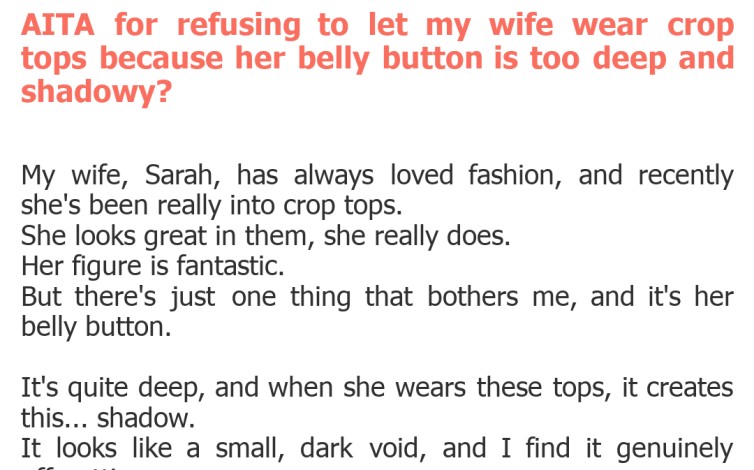
AITA for refusing to let my wife wear crop tops because her belly button is too deep and shadowy?
Welcome back, dear readers, to another edition of 'Am I the A**hole'! Today's submission is a truly head-scratching one that delves into body image, personal preferences, and how far a partner's opinions should extend into another's wardrobe choices. Our letter comes from a husband who has a rather peculiar aesthetic hang-up about his wife's belly button, sparking a significant marital disagreement. This one is bound to get the comment section buzzing!\nIt's a tale as old as time: one partner expressing a desire for the other to dress a certain way. But when that desire stems from something as specific and, dare I say, unique as a 'deep and shadowy belly button,' it raises questions about control, self-esteem, and mutual respect. Let's dive into the details of this truly unexpected dilemma and see if our OP is out of line, or if there's a kernel of understanding to be found in his unusual stance.

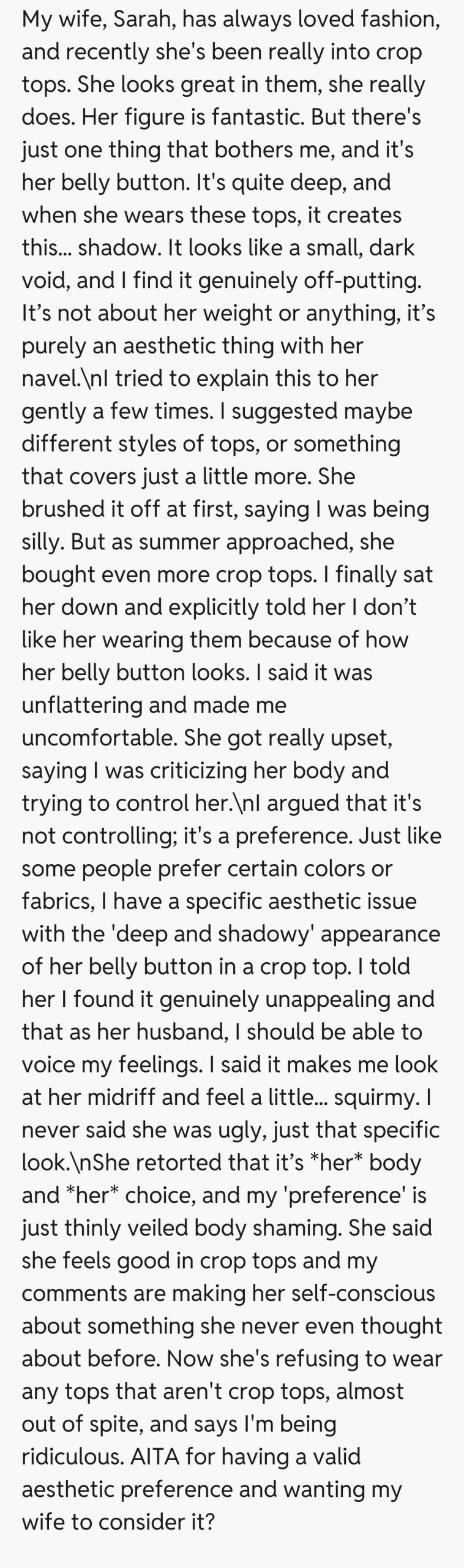
"AITA for refusing to let my wife wear crop tops because her belly button is too deep and shadowy?"
This situation truly highlights the delicate balance between personal preferences and respecting a partner's autonomy and body image. On one hand, everyone is entitled to their aesthetic preferences, and it's natural for partners to communicate desires regarding appearance. However, the line becomes incredibly blurred when those preferences are projected onto another person's inherent physical characteristics, especially when it dictates their clothing choices.\nThe husband's specific issue with his wife's 'deep and shadowy' belly button is certainly unique. While he frames it as a pure aesthetic preference, the impact on his wife is significant. Being told that a natural part of one's body is 'unflattering' or 'squirmy' can be deeply damaging to self-esteem, regardless of the intention. It places an external judgment on something she previously felt confident about.\nFrom the wife's perspective, her husband's comments likely feel less like a preference and more like body shaming and an attempt at control. Her body is hers alone, and her clothing choices should primarily be dictated by her comfort and style. The idea that she should alter her wardrobe due to a partner's specific and unusual hang-up about a belly button is a difficult pill to swallow, especially when she feels good in those clothes.\nUltimately, healthy relationships thrive on mutual respect and open communication. While expressing a preference is okay, demanding a change based on a superficial judgment of a natural body part can cross into territory that undermines a partner's confidence and autonomy. The core issue here isn't just a belly button; it's about whose comfort and feelings take precedence, and whether one partner's arbitrary hang-up should dictate the other's self-expression.
The Navel-Gazing Debate: What the Internet Has to Say!
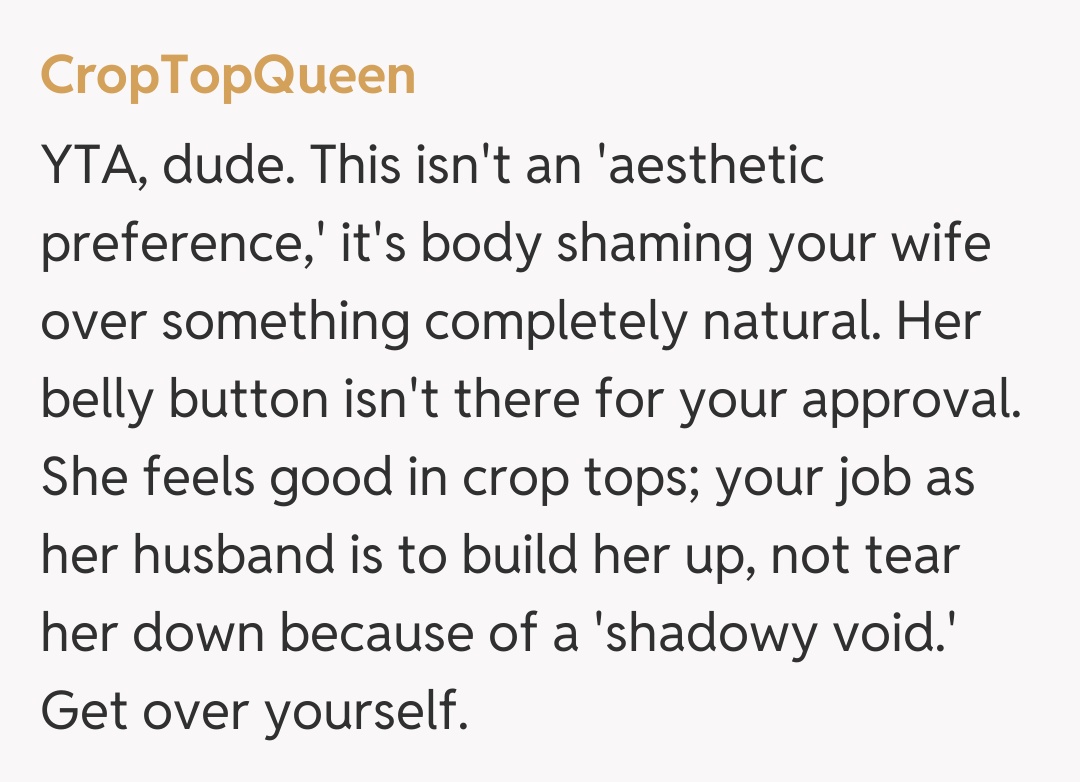
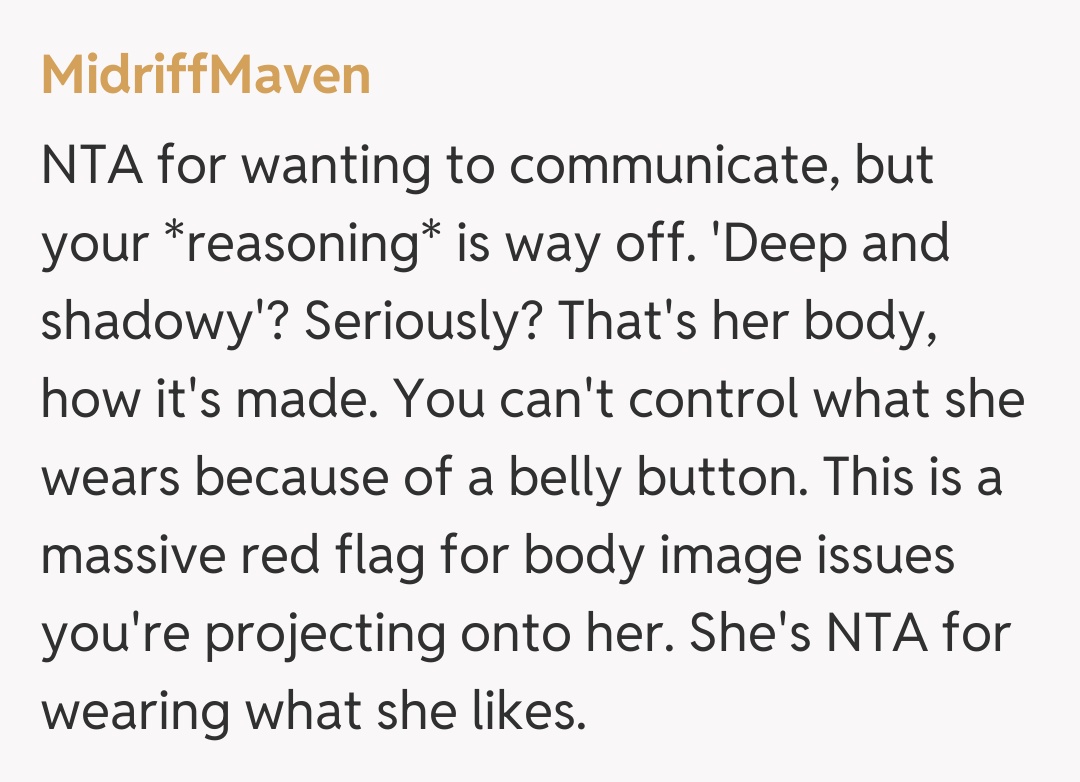
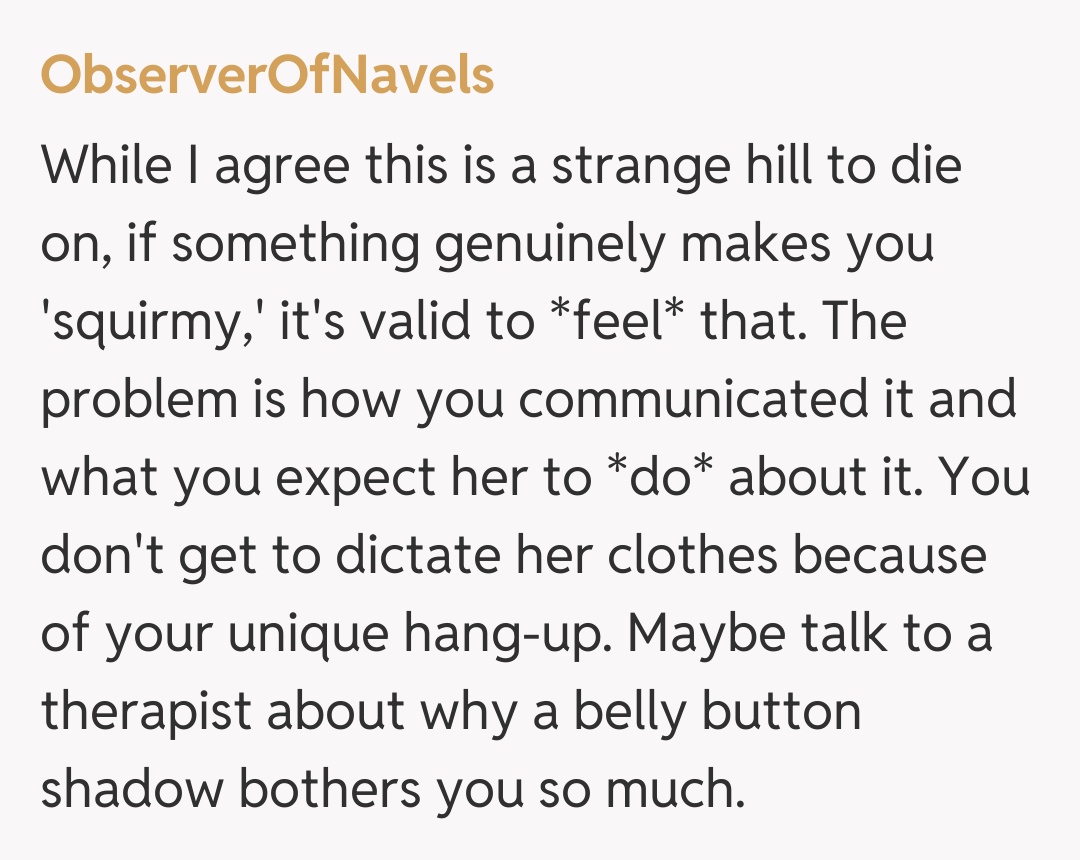
As expected, the comment section exploded with strong opinions on this one! The overwhelming sentiment leans towards the wife's side, with many users expressing shock at the husband's specific and seemingly bizarre reason for disliking crop tops. 'Her body, her choice' was a recurring theme, emphasizing that a partner's preferences shouldn't override personal autonomy, especially concerning a natural body feature. Many found his reasoning to be a thinly veiled excuse for control.\nHowever, a smaller contingent tried to understand the husband's perspective, acknowledging that everyone has unique aesthetic triggers. They questioned if there was a way to communicate this more kindly, or if perhaps therapy could help him address his 'squirmy' feelings. The general consensus, though, was that even if he has a preference, he's the one who needs to manage his discomfort, not demand his wife change her wardrobe. His approach was largely deemed insensitive.
This story is a stark reminder that while communication is vital in a relationship, the content and intent of that communication truly matter. While OP claimed 'aesthetic preference,' the impact on his wife was clearly negative, bordering on body shaming and control. The overwhelming sentiment is that a partner's comfort in their own skin and their right to choose their clothing should always take precedence over an unusual, arbitrary aesthetic hang-up. Let's hope this couple can find a way to navigate this sensitive issue with more understanding and respect for individual autonomy going forward.