AITA for telling my terminally ill father that I hope he dies quickly so I can stop pretending to care?

Oh boy, do we have a heavy one for you today. This AITA post dives deep into the murky waters of family obligations, long-standing resentment, and the incredibly difficult emotions that arise when a terminally ill parent is involved. It's a scenario that many can relate to in some form, where the weight of past hurts clashes with societal expectations of compassion, leading to an explosive and heartbreaking declaration. Prepare yourselves, because this one isn't easy to unpack.
The original poster's words are stark, raw, and undeniably shocking, prompting an immediate visceral reaction from anyone who reads them. We're talking about a statement that cuts to the core of human empathy, or perhaps, the lack thereof when pushed to the absolute limit. It raises critical questions about what we owe our parents, especially those who may have caused us pain, and when the burden of 'pretending' becomes too heavy to bear. Let's delve into the story and see if we can navigate this complex emotional landscape.

"AITA for telling my terminally ill father that I hope he dies quickly so I can stop pretending to care?"
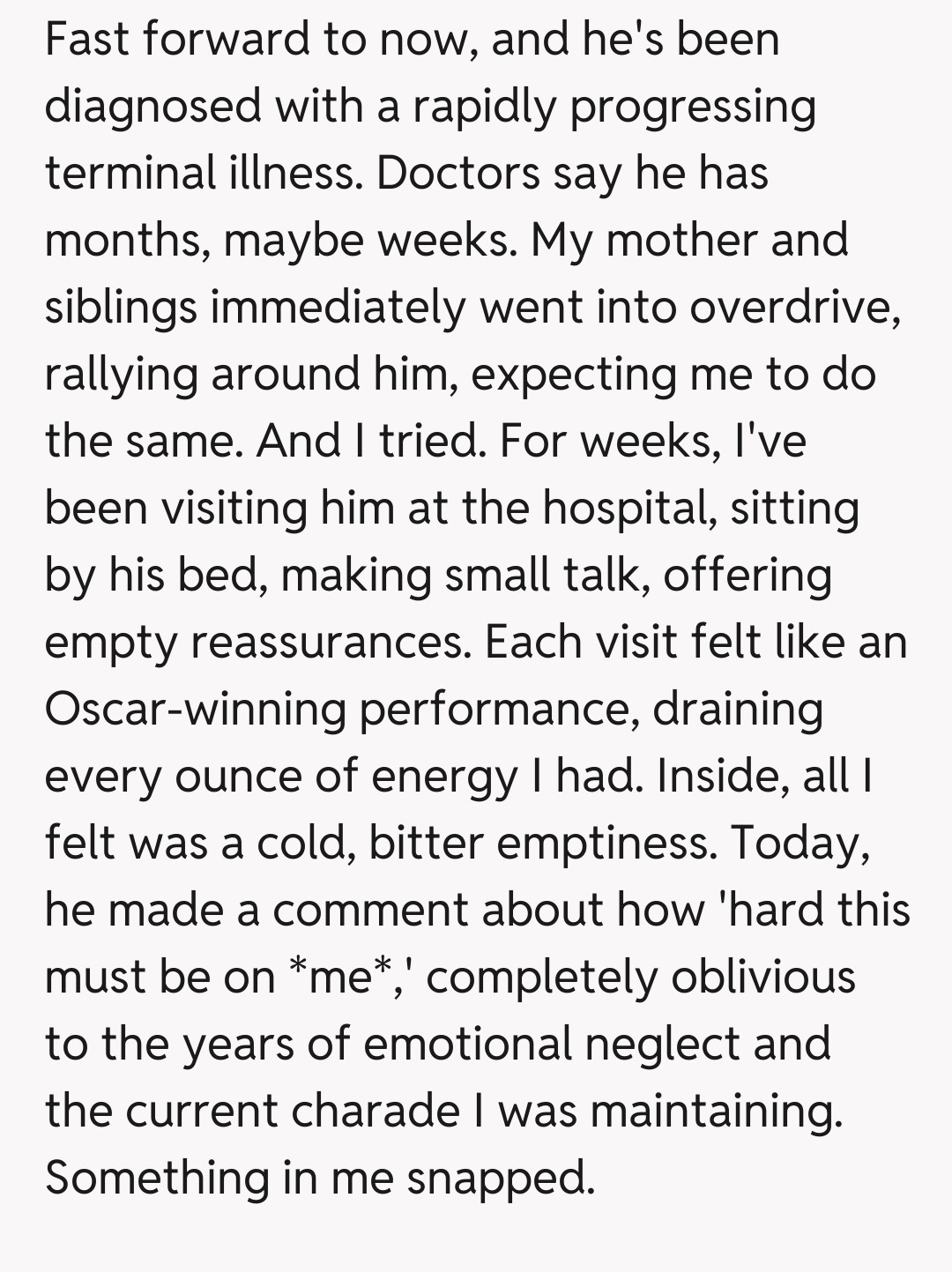
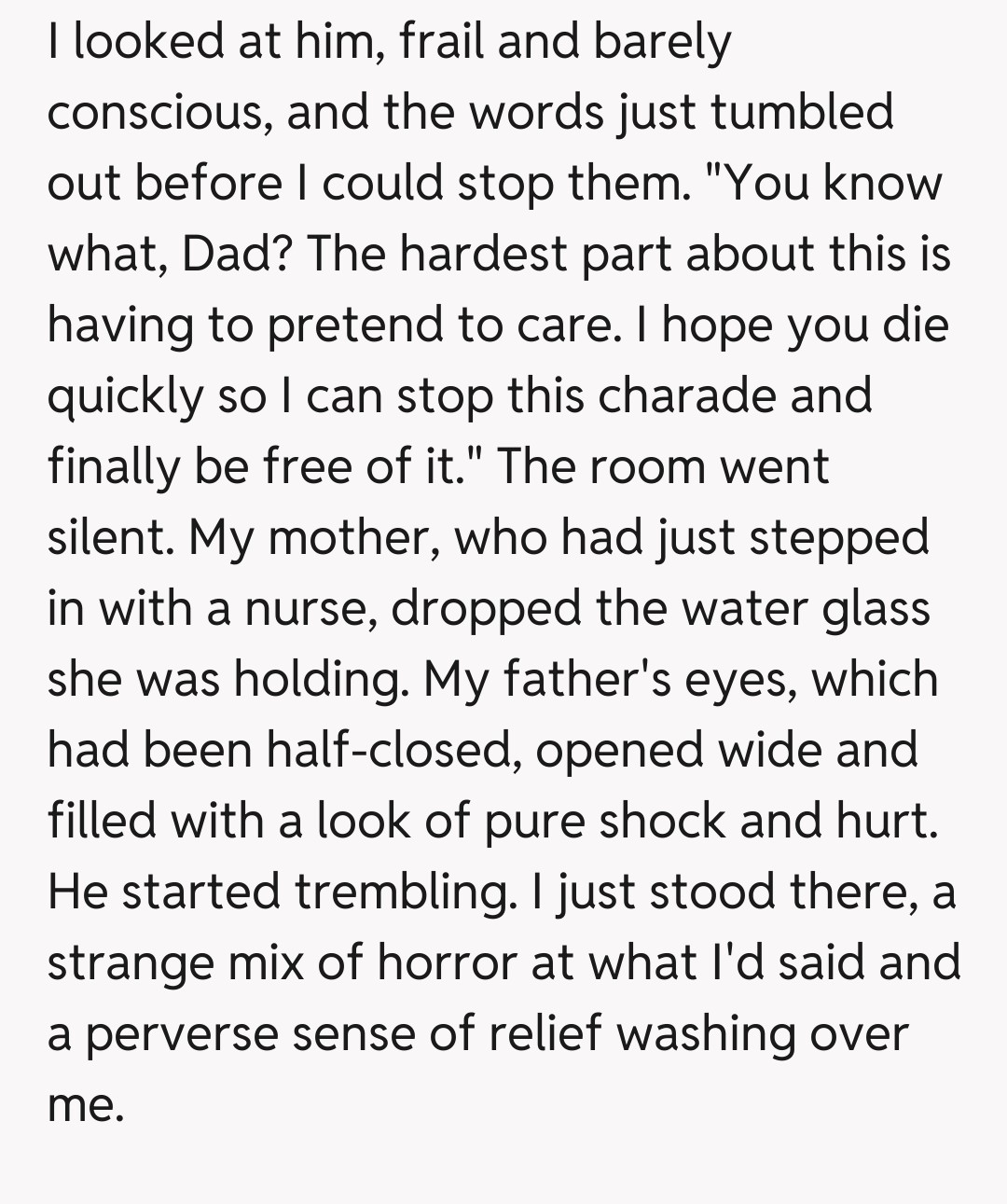
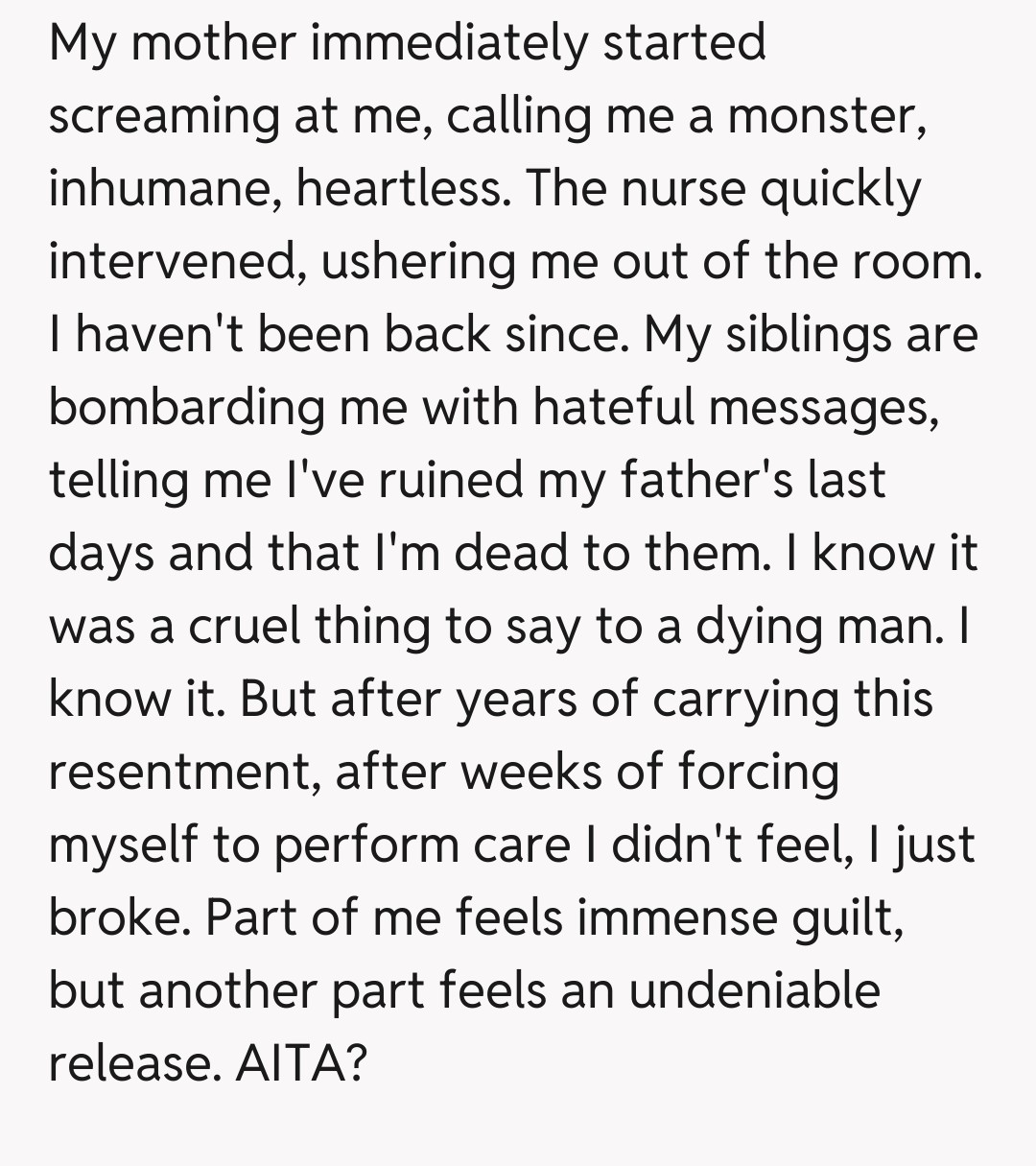
This is undoubtedly one of the most polarizing AITA scenarios we've encountered, touching on the rawest edges of human emotion. On one hand, the poster's statement is undeniably harsh and delivered to a person at their most vulnerable. The immediate impact on a terminally ill individual, regardless of their past actions, is likely to be profoundly devastating, casting a dark shadow over their final moments. This makes it difficult for many to overlook the perceived cruelty of the words themselves.
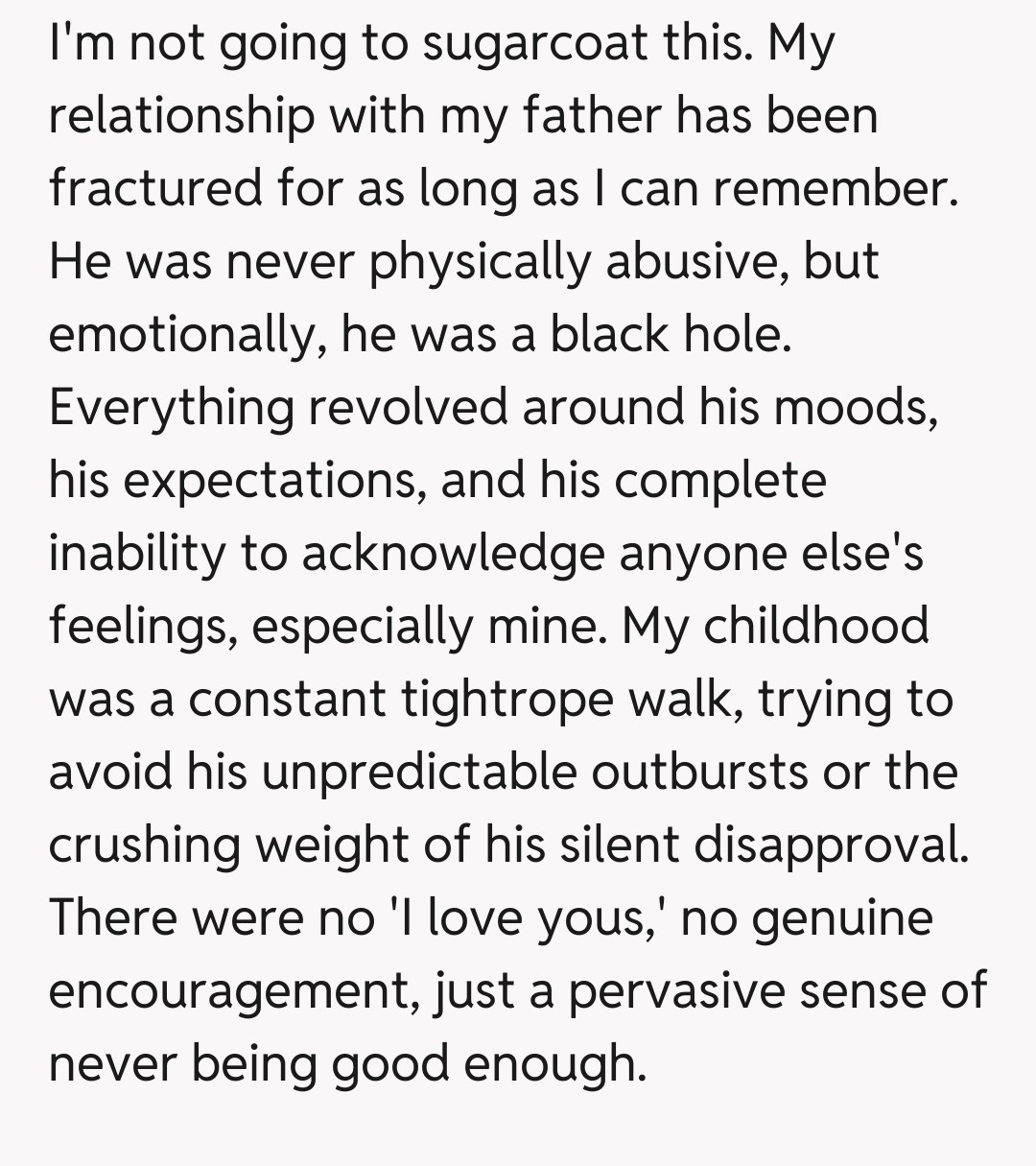
However, it's crucial to acknowledge the deep well of pain and resentment from which the original poster's outburst sprang. A lifetime of emotional neglect and perceived abuse can leave scars that never truly heal. The expectation to suddenly perform love and compassion for a parent who never offered it, especially under the intense pressure of their impending death, can be an overwhelming burden. The 'pretending to care' describes an emotional exhaustion that many adult children of difficult parents understand.
The poster's breaking point, triggered by the father's seemingly innocuous comment, highlights the profound disconnect and lack of recognition that likely defined their relationship. It wasn't just the words, but the years of unaddressed trauma that fueled the outburst. While the delivery was catastrophic, the underlying sentiment of wanting release from a lifelong emotional burden is a valid, albeit painful, human experience. This doesn't excuse the cruelty, but it offers context for the extremity of the reaction.
Ultimately, this situation is a tragic testament to the destructive power of unresolved family conflict. It's a moment where a lifetime of unacknowledged pain erupted in the most inopportune and hurtful way possible. The question isn't just about whether the poster was an *******, but about the long, complex journey that led them to utter such devastating words. It forces us to confront the limits of forgiveness and the genuine cost of maintaining a facade.
The internet weighs in: Heartless or Hurt Beyond Repair?
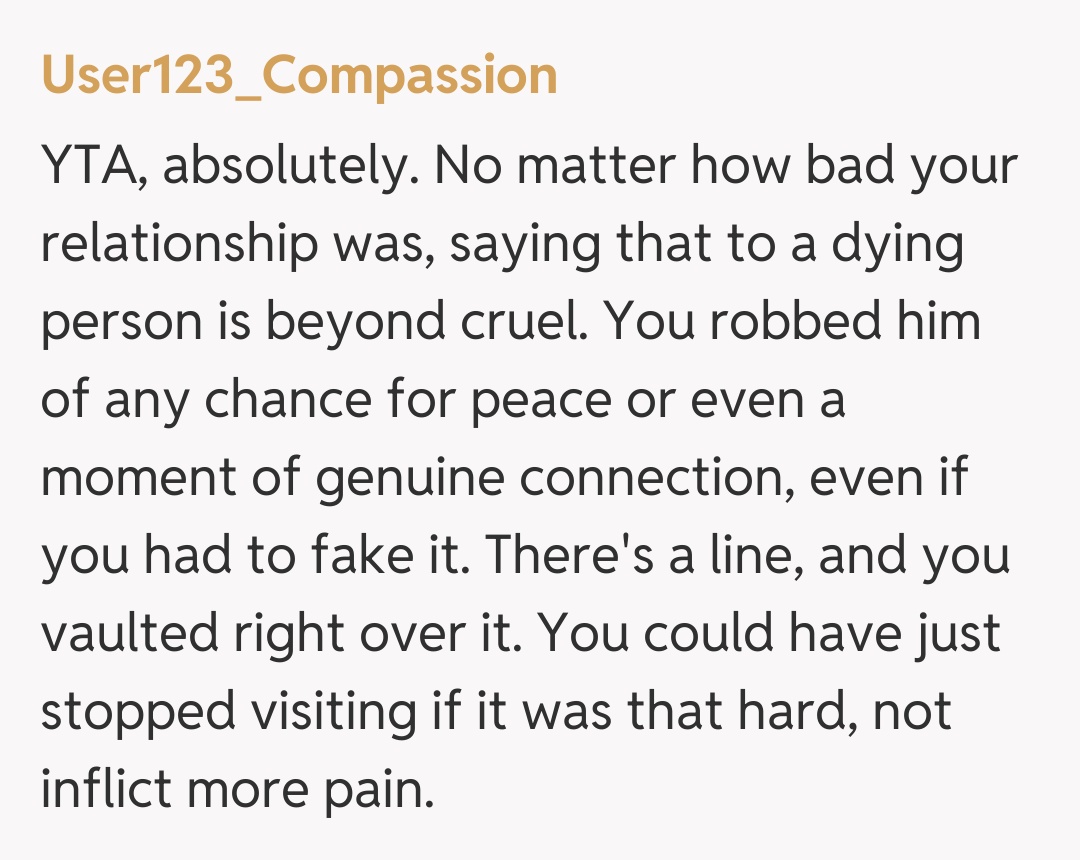
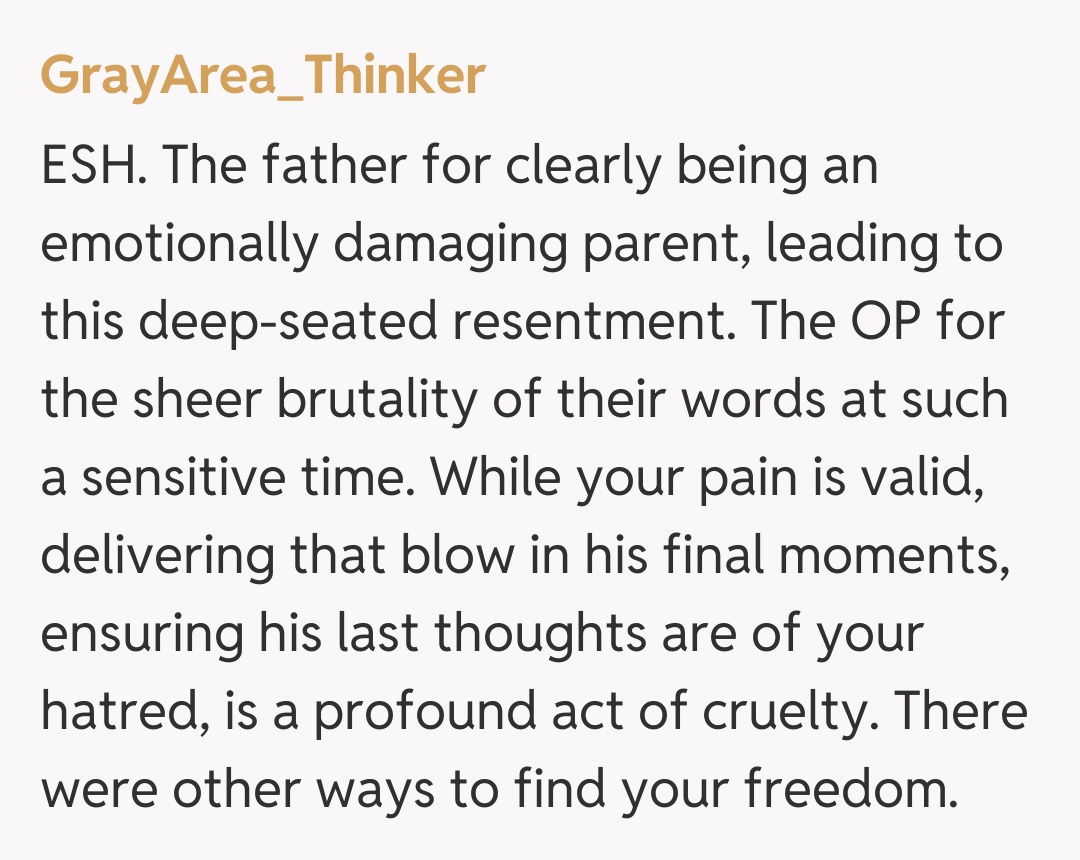
The comments section for this post was, as expected, a whirlwind of strong opinions. Many users immediately condemned the original poster, branding them as absolutely the *******. The consensus among these commenters was that regardless of past grievances, uttering such cruel words to a dying man crosses an unforgivable line, robbing him of any dignity or peace in his final moments. Empathy for the father, even if flawed, was a significant theme.
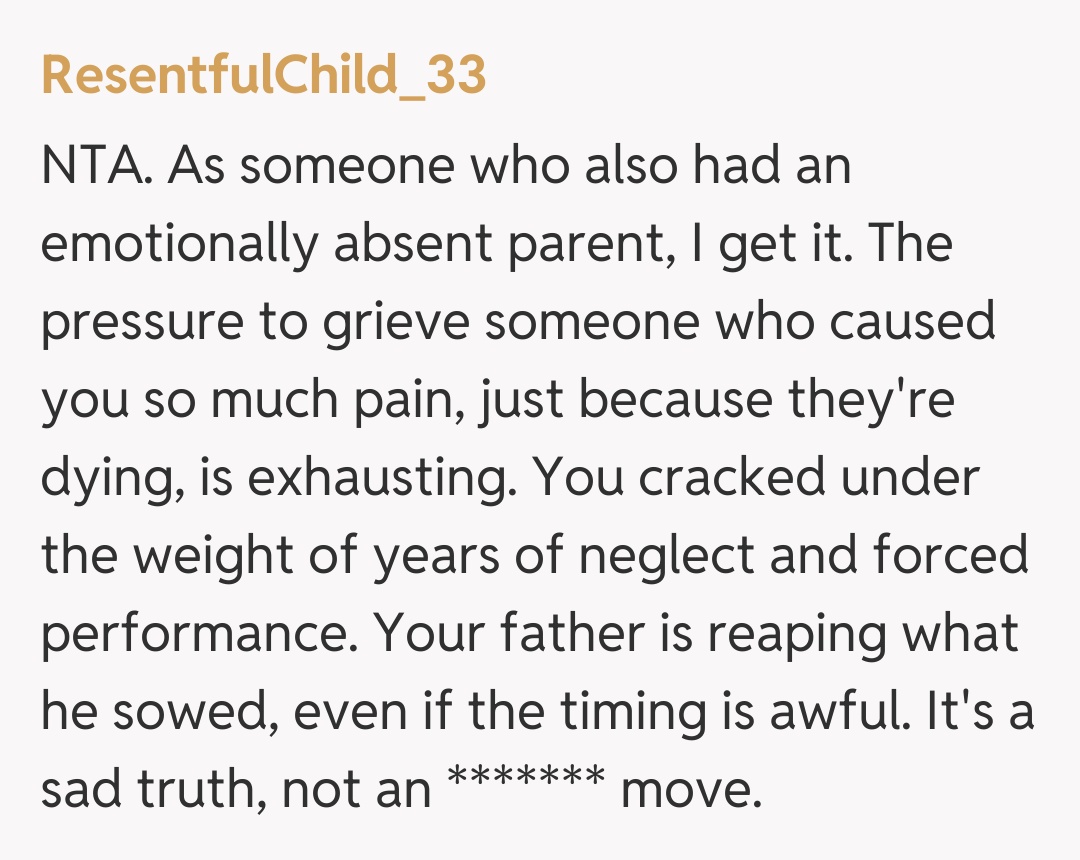
Conversely, a substantial number of readers rallied behind the original poster, declaring them 'Not the *******.' These comments often highlighted their own experiences with emotionally neglectful or abusive parents, resonating deeply with the poster's exhaustion and resentment. They argued that the poster was simply expressing raw truth after years of suffering, and that the father's 'hurt' was a consequence of his own actions, albeit at a tragic time.
This AITA story serves as a stark reminder of the long-lasting impact of childhood trauma and the immense pressure placed on individuals to conform to societal expectations, even at their own emotional expense. There's no easy answer here, as both the act and the underlying pain are profoundly complex. It highlights that sometimes, the most honest truths are the most painful to hear, especially when delivered at a time of extreme vulnerability. It leaves us to ponder the true cost of unaddressed family wounds and the desperate search for emotional freedom.