AITA for telling my depressed best friend to “get over it” because everyone has bad days?
Oh, the complexities of friendship, especially when mental health enters the picture! Today we're diving into a classic AITA scenario that many of us have likely encountered, either as the OP, the friend, or an observer. It's a tightrope walk trying to support someone while also managing your own emotional bandwidth. Sometimes, empathy wears thin, and even the most well-intentioned people can say things they might regret, or perhaps genuinely believe they were right to say.
This story highlights the delicate balance between offering support and feeling overwhelmed, where boundaries blur and frustration can boil over. It asks us to consider not only the impact of our words but also the underlying reasons for them. Is there ever a right way to tell someone struggling with depression that you're at your limit? Let's unpack this thorny situation together and see where the court of public opinion lands.

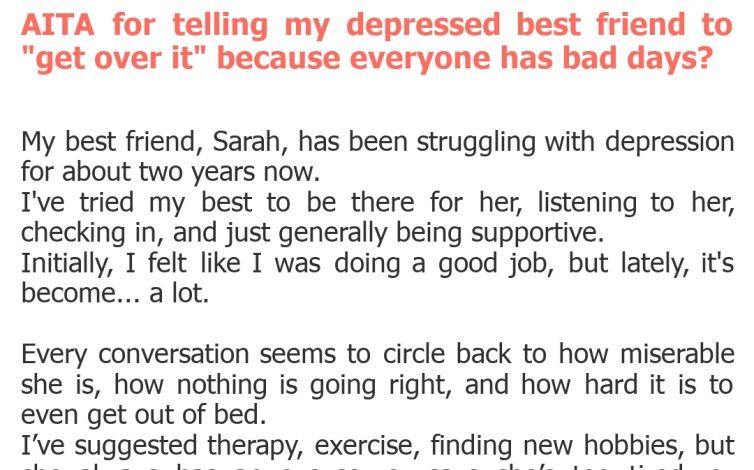
"AITA for telling my depressed best friend to "get over it" because everyone has bad days?"
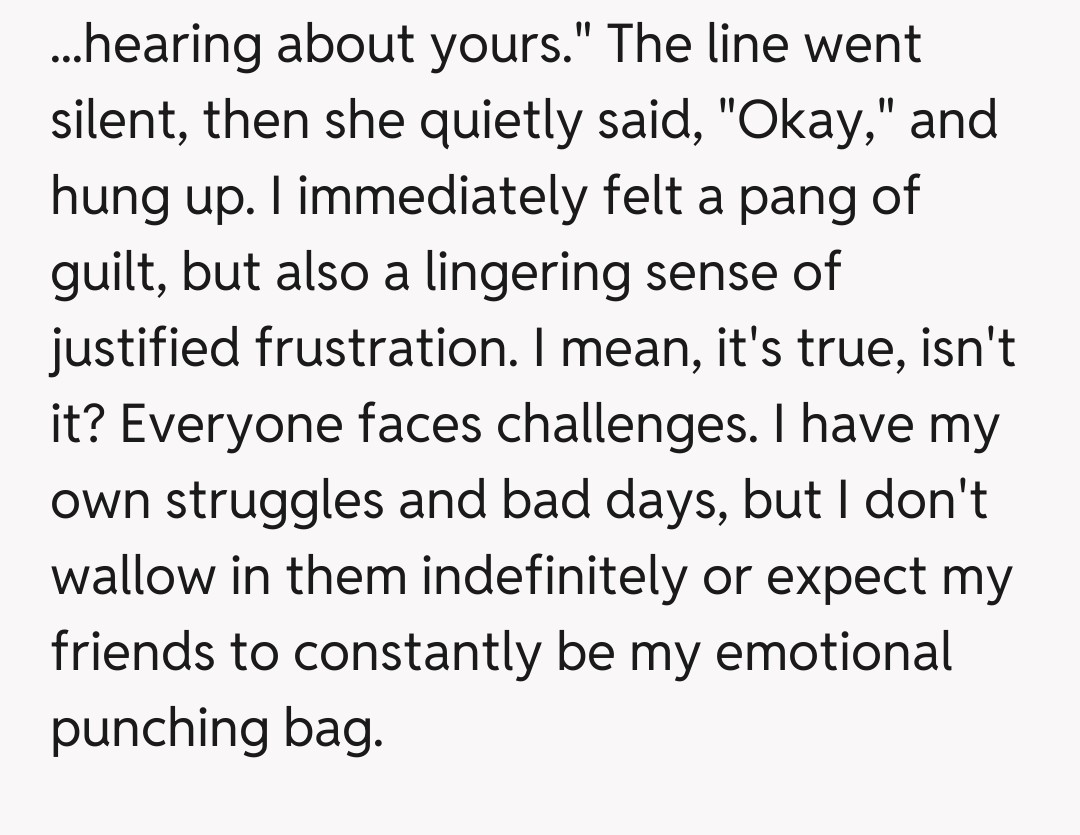
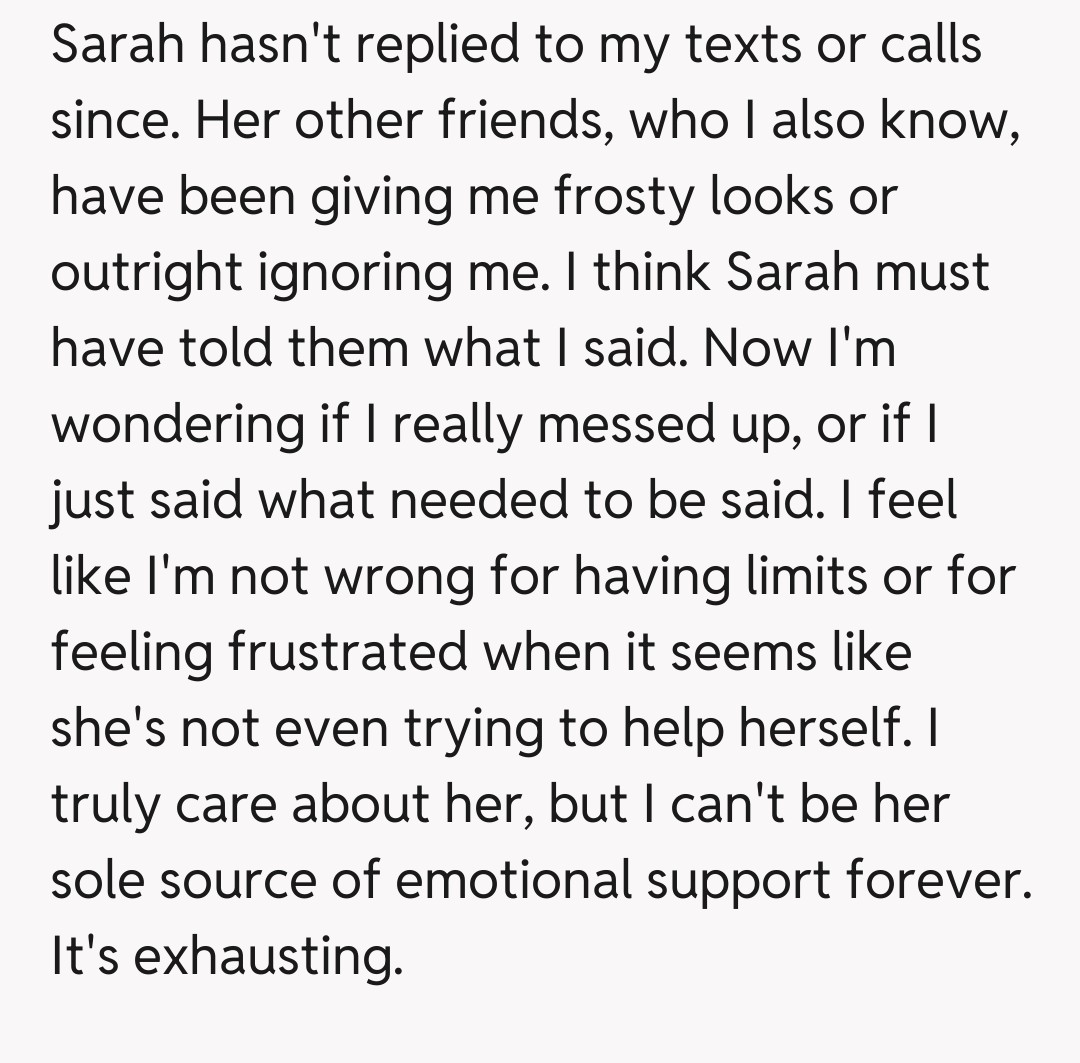
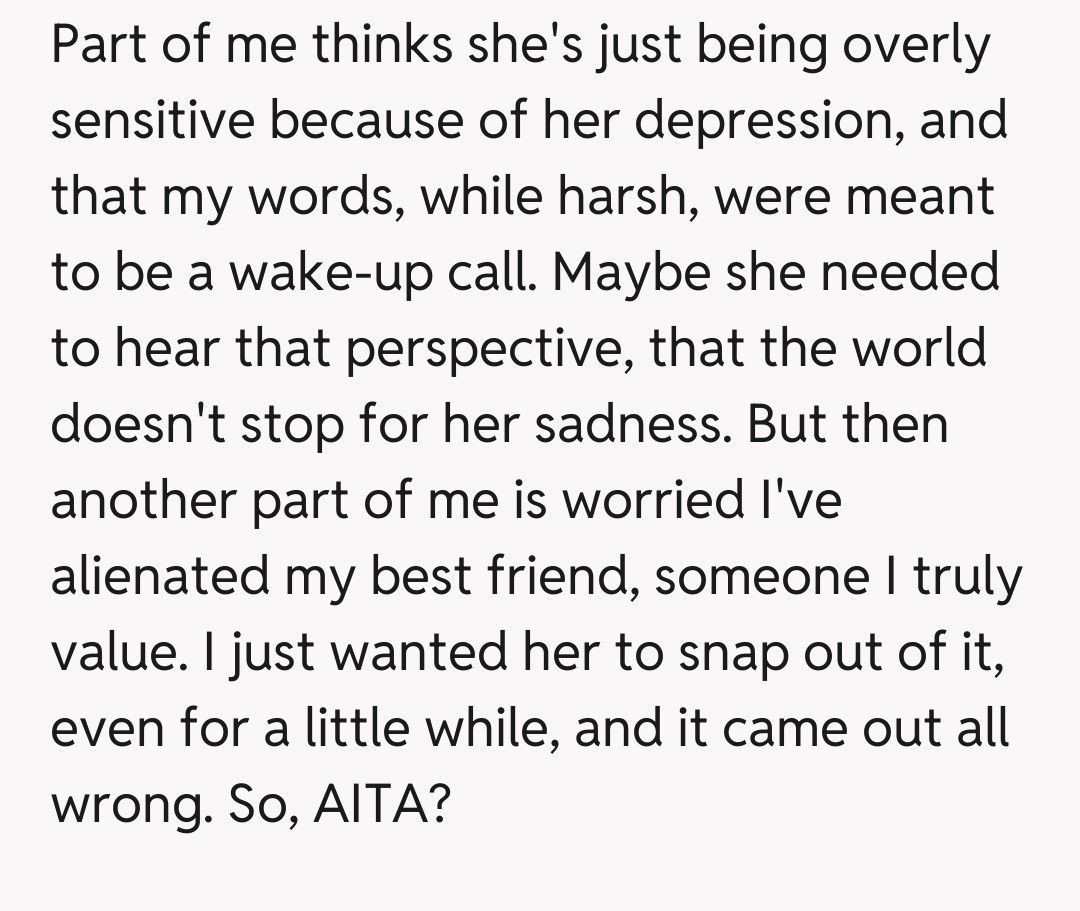
This situation is incredibly tough, hitting right at the intersection of empathy, personal limits, and the harsh realities of mental illness. On one hand, the OP's frustration is understandable. Supporting someone with chronic depression can be immensely draining, leading to caregiver fatigue. It's natural to feel overwhelmed and even resentful when you perceive a lack of effort or progress, especially when your own emotional well-being is at stake. Everyone has a finite capacity for emotional support, and hitting that wall is a common experience.
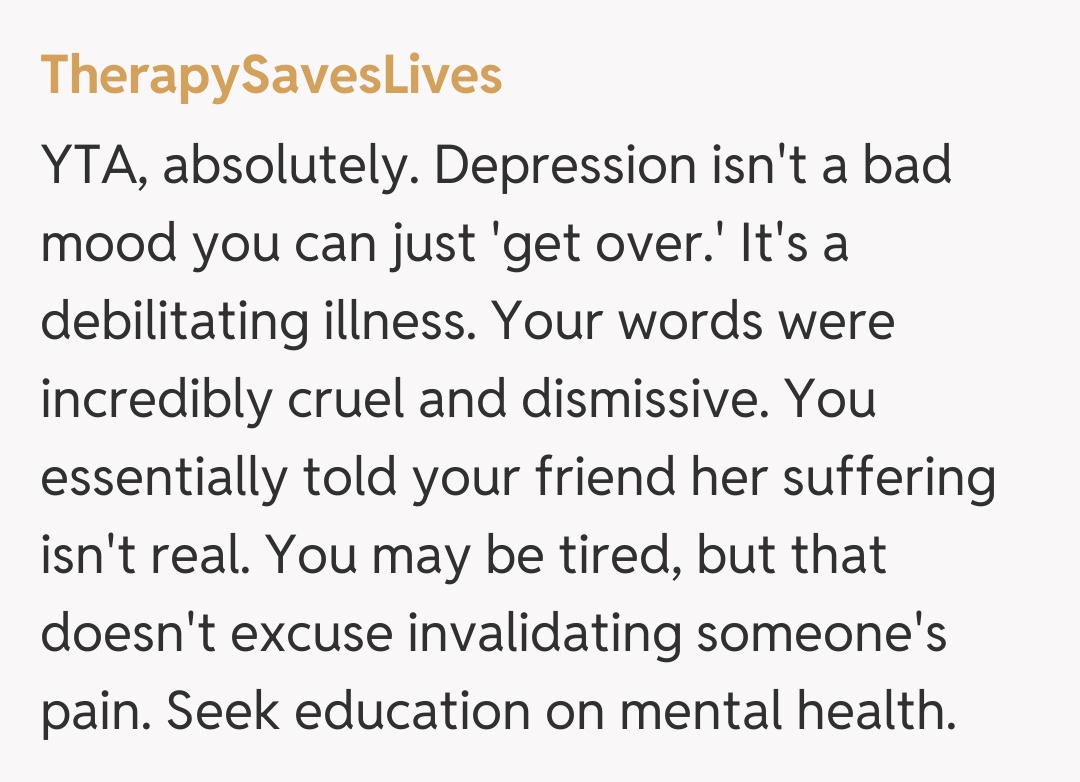
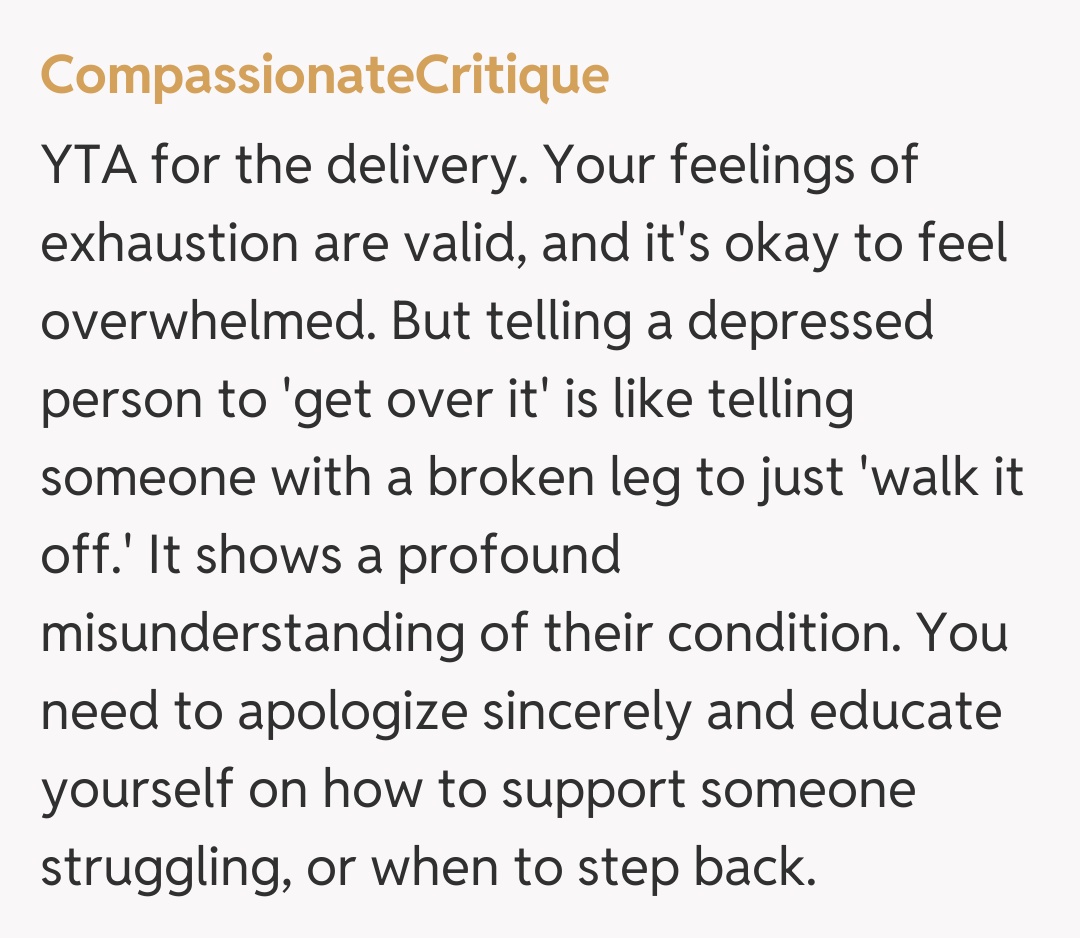
However, the delivery of that frustration is where the major issue lies. Telling someone with clinical depression to "get over it" is deeply invalidating and harmful. Depression isn't a choice or a temporary bad mood; it's a serious medical condition that often prevents individuals from simply "snapping out of it" regardless of how much they might want to. Such a comment dismisses their very real struggle and implies a lack of understanding or compassion.
The friend's reaction, shutting down and possibly telling others, is a direct consequence of feeling hurt and misunderstood. When someone is already vulnerable due to depression, a harsh comment from a trusted friend can feel like a profound betrayal and reinforce feelings of worthlessness. It breaks trust and can push them further into isolation, making it even harder for them to seek help or confide in anyone.
While the OP's feelings of exhaustion are valid and should be acknowledged, there's a significant difference between setting healthy boundaries and delivering a cruel, unhelpful ultimatum. The intent might have been to motivate, but the impact was likely devastating. This scenario really highlights the importance of learning how to communicate limits constructively, especially when dealing with the delicate nature of mental health.
The Internet Weighs In: "Get Over It" or "Get a Clue"?
The comments section on this one exploded, as expected, with a very clear divide. Many users immediately jumped to YTA, emphasizing that clinical depression isn't something you can just "get over." They highlighted how incredibly damaging and dismissive such a statement is, especially coming from a best friend. Several commenters shared their own experiences with depression, explaining how those words only deepen feelings of isolation and shame, making recovery even harder for the individual.
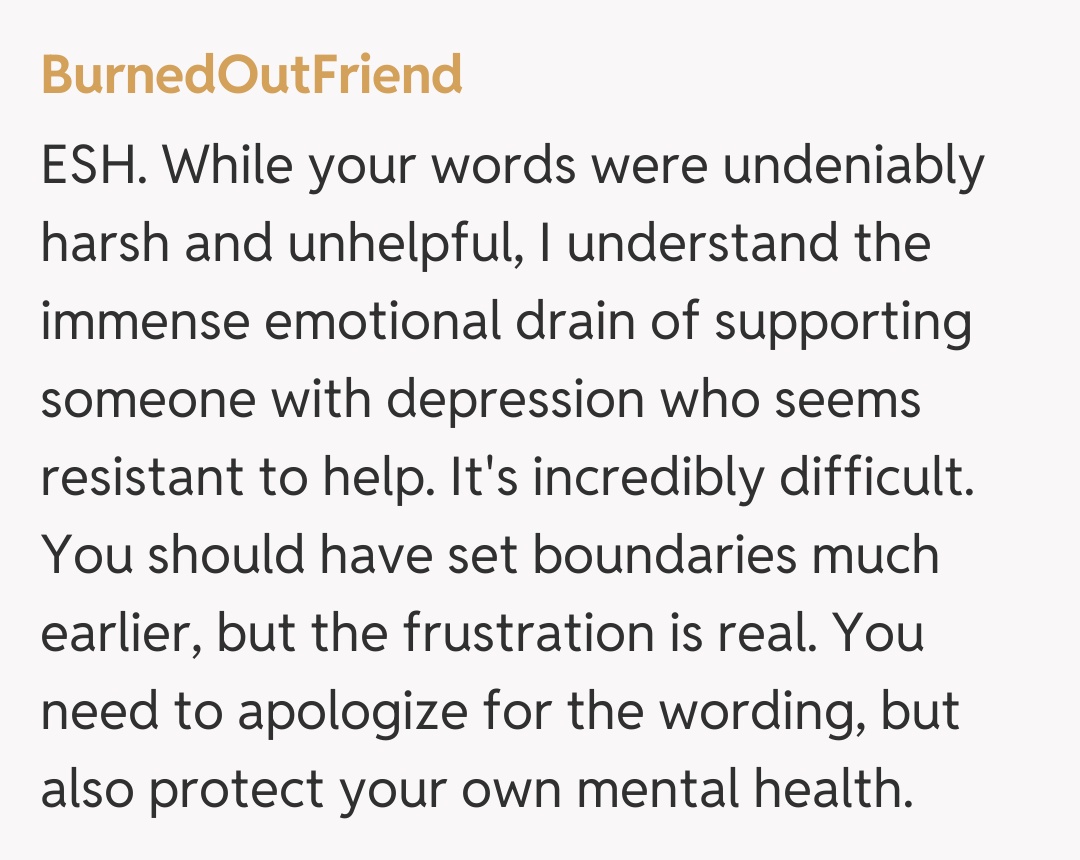
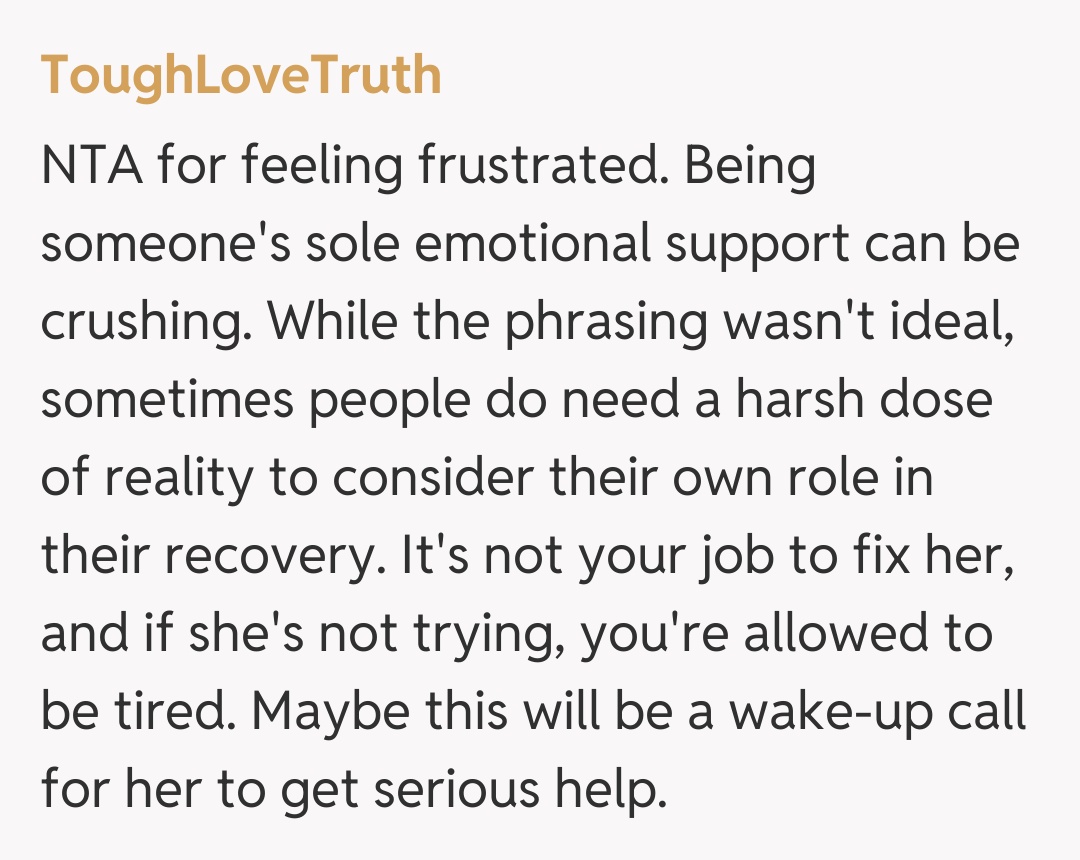
On the flip side, a notable contingent acknowledged the OP's frustration, often giving a softer NTA or ESH verdict. These users empathized with the exhaustion of being a constant caregiver and the desire for a friend to take some agency. They pointed out that while the words were wrong, the underlying feeling of being overwhelmed is valid. Some even suggested that the OP needs to learn how to set boundaries without resorting to hurtful language.
This post serves as a potent reminder of the complexities inherent in supporting loved ones with mental health challenges. While it's crucial to extend empathy and understanding, it's equally important to recognize and articulate our own emotional limits. The takeaway here isn't to stop caring, but to learn how to care sustainably, setting clear boundaries with compassion, and encouraging professional help rather than offering unhelpful platitudes. Hopefully, both the OP and their friend can find a path forward, perhaps with a sincere apology and a renewed commitment to open, honest, and *informed* communication.