AITA for telling my overweight kid they’ll never succeed in life unless they stop eating like a pig?
Oh boy, here we go again. The topic of parental discipline, especially when it comes to a child's health and future, is always a minefield. Parents often feel a deep responsibility to guide their children, sometimes to the point where their concern overrides their delivery. This particular AITA submission touches on a very sensitive area: a child's weight and a parent's harsh words.
It's easy to judge from the sidelines, but when you're in the thick of parenting, emotions can run high and sometimes things are said that are instantly regretted. Or, perhaps, the parent truly believes they are doing what's best, regardless of the immediate pain caused. Let's delve into this story and try to unpack the layers of intent, impact, and the age-old question: does tough love truly work?

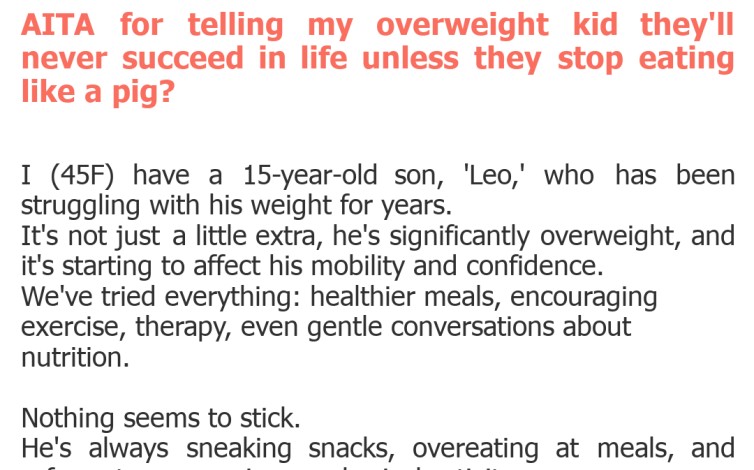
"AITA for telling my overweight kid they'll never succeed in life unless they stop eating like a pig?"
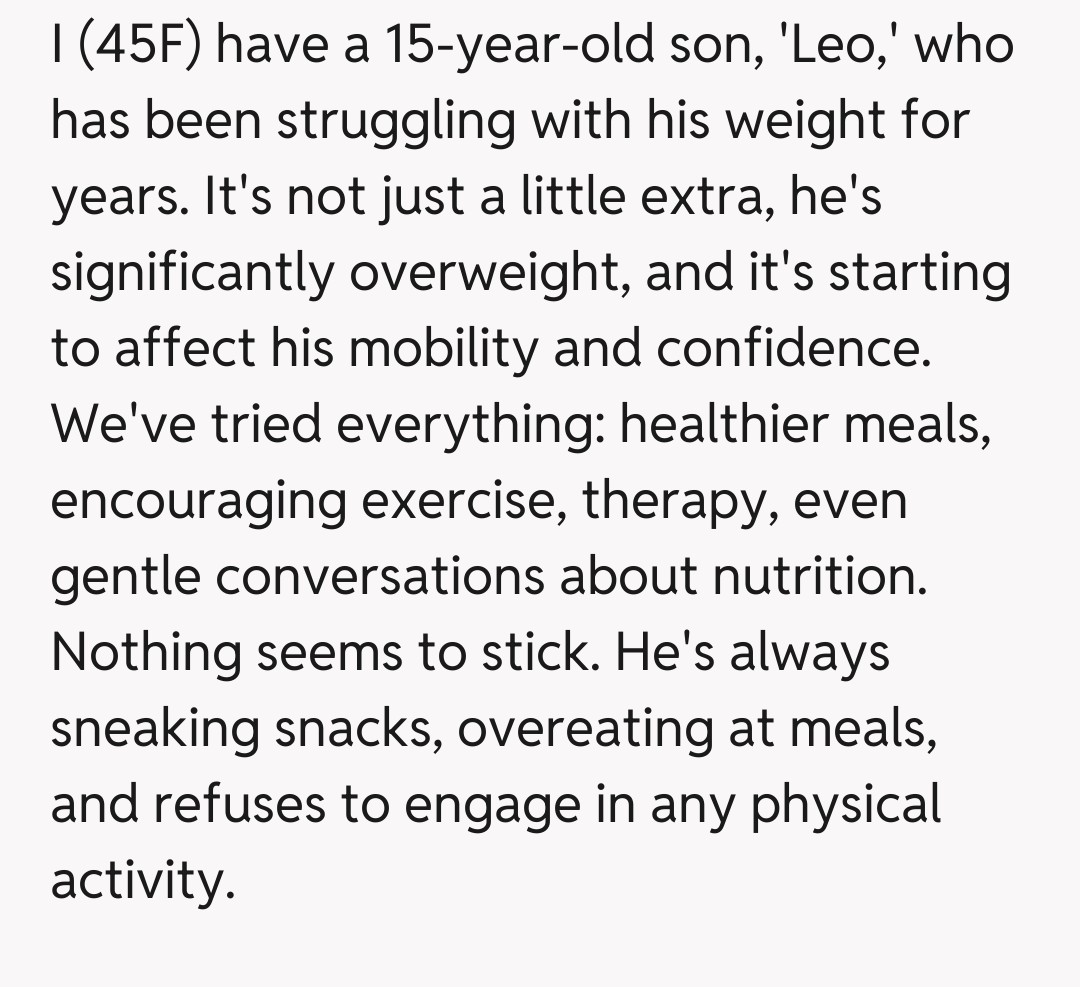
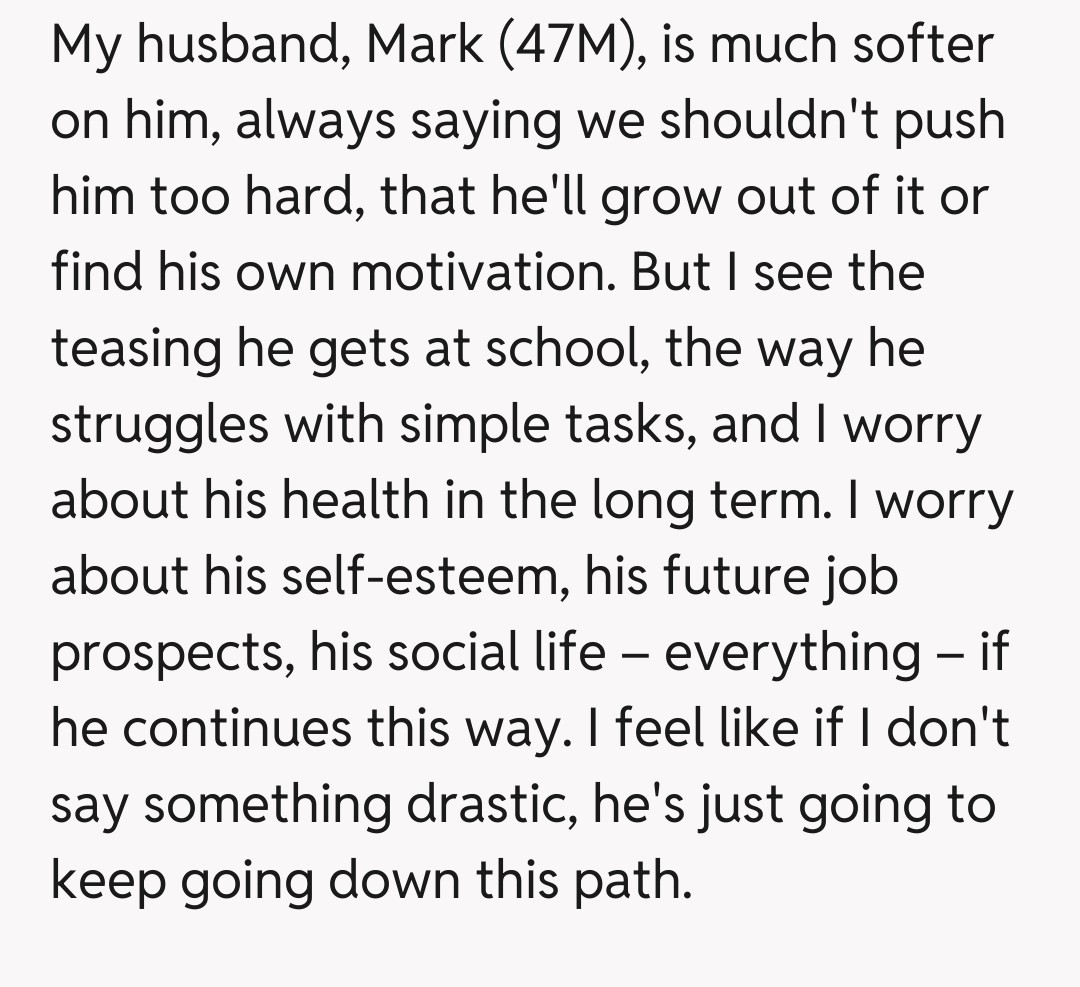
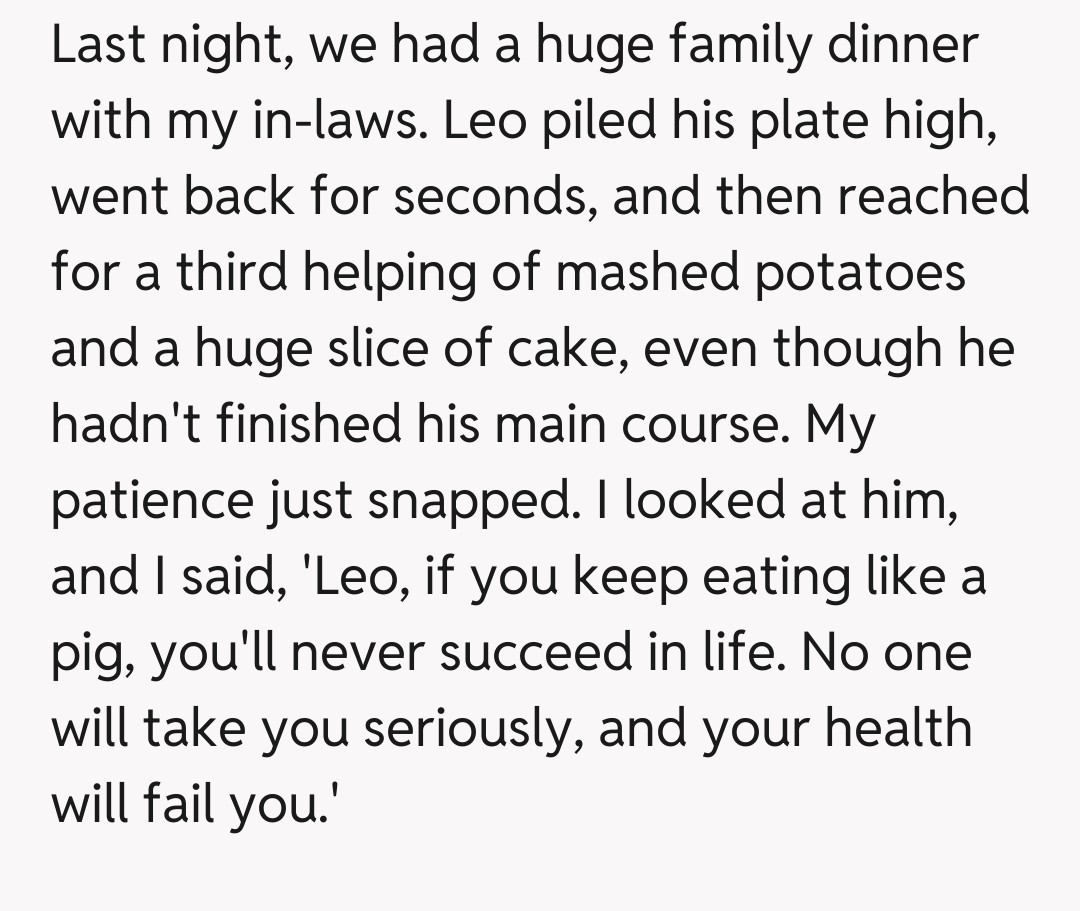
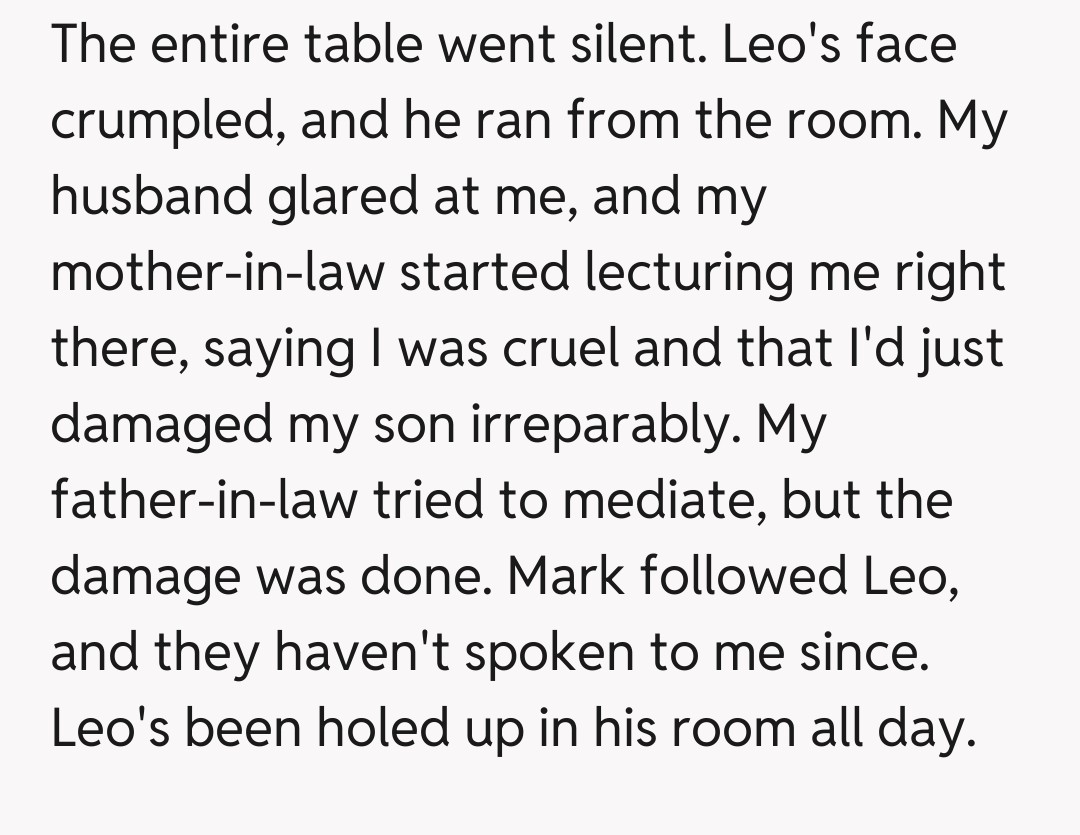

This is a truly heartbreaking situation, illustrating the complex dance between parental concern and a child's fragile self-esteem. On one hand, it's undeniable that parents want the best for their children, and seeing a child struggle with health issues can evoke deep-seated fear and frustration. The poster's worries about Leo's long-term health, social acceptance, and future opportunities are legitimate parental anxieties that many can relate to. The intent, at its core, was likely rooted in love and a desperate desire for change.
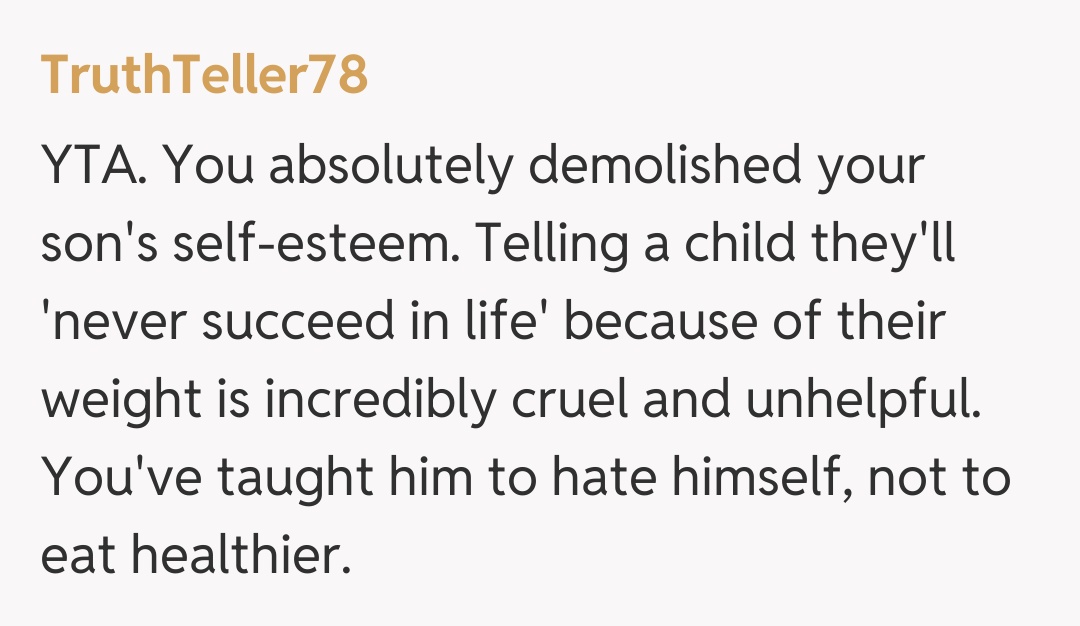
However, the manner in which this concern was expressed is where the critical issues arise. Labeling a child's eating habits as 'eating like a pig' and directly linking their physical appearance to their entire life's success is profoundly damaging. Such statements can shatter a child's self-worth, leading to deep emotional scars, body image issues, and potentially exacerbating the very behaviors the parent wishes to change. Humiliation, especially in front of family, is rarely an effective motivator for sustainable change.
Furthermore, the idea that a child 'won't succeed in life' based solely on their weight or eating habits is a harmful generalization. Success is multifaceted and is not solely dictated by physical appearance or dietary choices. While health certainly plays a role in well-being, this type of definitive, negative prediction can lead to feelings of hopelessness and resentment rather than empowerment or motivation. It creates an environment of fear and judgment, which is counterproductive to fostering a healthy relationship with food and self.
Ultimately, while the parent's concern is understandable, the chosen approach was likely detrimental. Addressing weight and health requires empathy, patience, and a focus on positive lifestyle changes, not shame or public shaming. Open communication, professional support, and a non-judgmental environment are typically more effective paths to helping a child develop a healthier relationship with their body and food, and build a strong foundation for their future.
The Internet Weighs In: Was Her Tough Love Too Much?
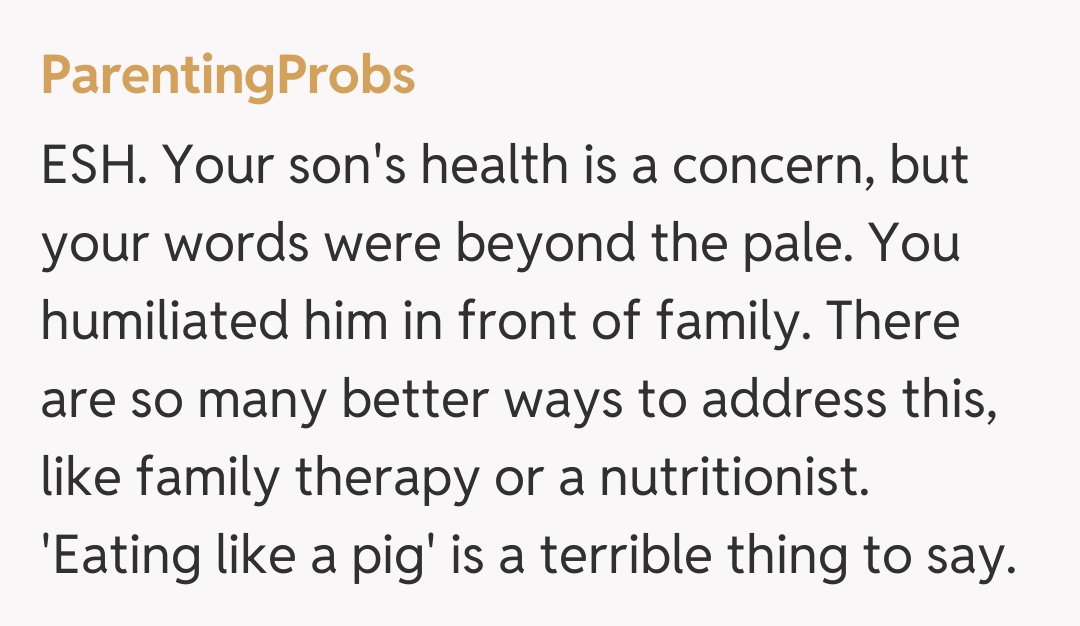
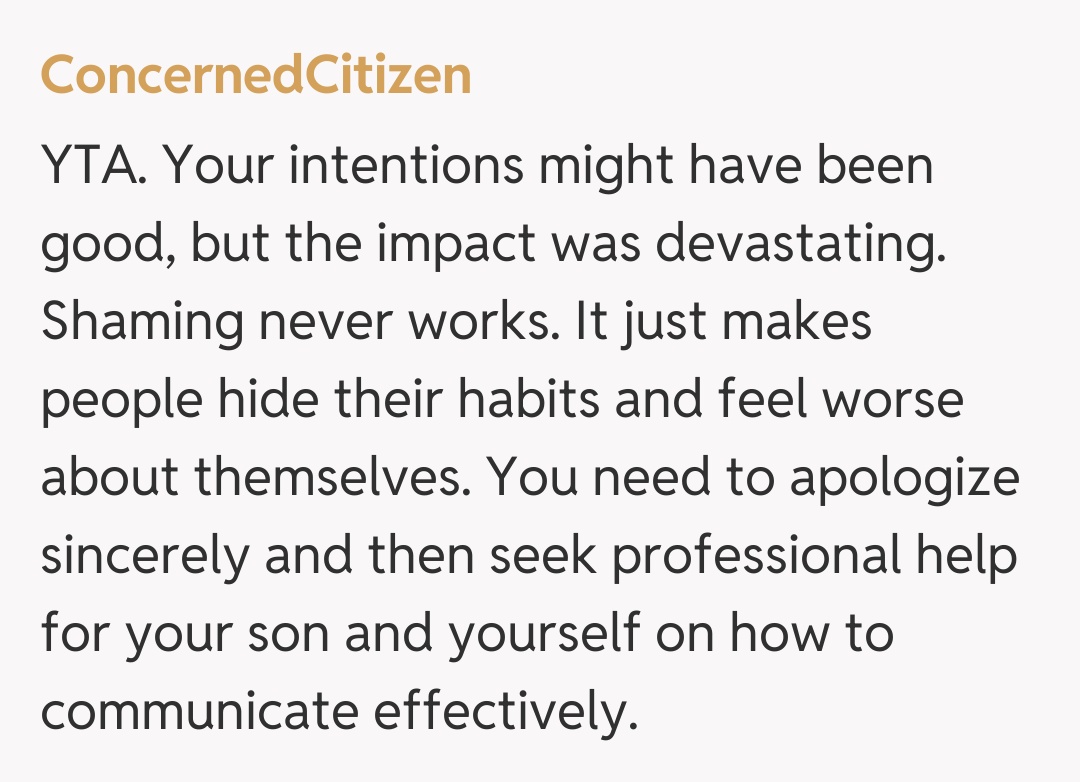
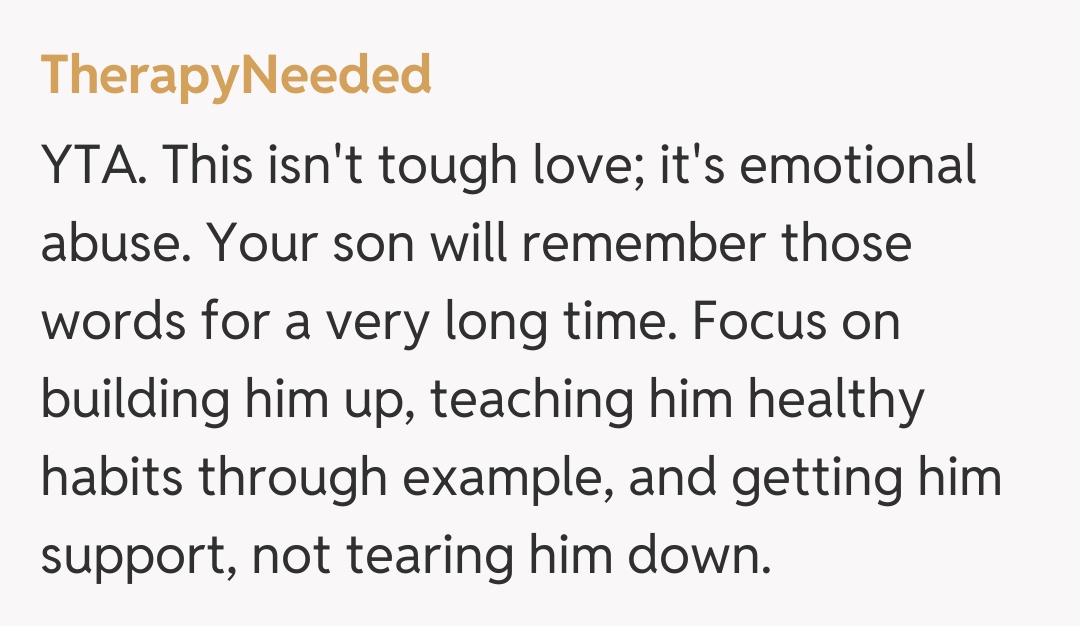
The comments section for this post was absolutely flooded, as expected. The overwhelming consensus leans towards YTA, with many users condemning the mother's choice of words and the public nature of her outburst. People repeatedly pointed out that shaming a child, especially about their weight, almost always backfires and can lead to severe psychological damage and disordered eating behaviors.
While most agreed the delivery was wrong, a small but vocal minority did acknowledge the mother's underlying frustration and concern. They argued that sometimes parents reach their breaking point and that the son's health is indeed a serious issue. However, even these commenters often suggested that the 'how' was far more important than the 'what' in this situation, emphasizing the need for professional help and a more compassionate approach.

This AITA post serves as a stark reminder of the immense power our words hold, especially when spoken to our children. While parental concern for a child's health and future is admirable, the method of delivery can make all the difference. Shaming and public humiliation rarely yield positive, lasting results; more often, they inflict wounds that take years to heal. This situation calls for a profound apology, a commitment to understanding the child's perspective, and a shift towards compassionate, constructive support to help Leo on his journey towards better health and self-acceptance.