AITA for telling my girlfriend her posture slumps like she’s carrying the weight of the world and it’s unattractive?
Oh boy, here we go again with the classic relationship tightrope walk: giving your partner 'honest' feedback. It's a delicate dance, isn't it? One wrong step, and you're not just tripping, you're potentially falling into a chasm of hurt feelings and misunderstandings. Today's AITA post delves right into this tricky territory, focusing on physical appearance and unsolicited advice. \nOur protagonist observed something about his girlfriend's posture and decided it was his duty to point it out. But was his delivery, or even the comment itself, justified? We're about to dive into a situation that many couples might find themselves in, albeit perhaps with less bluntness. Let's see if our OP is an angel of truth or a devil of insensitivity.

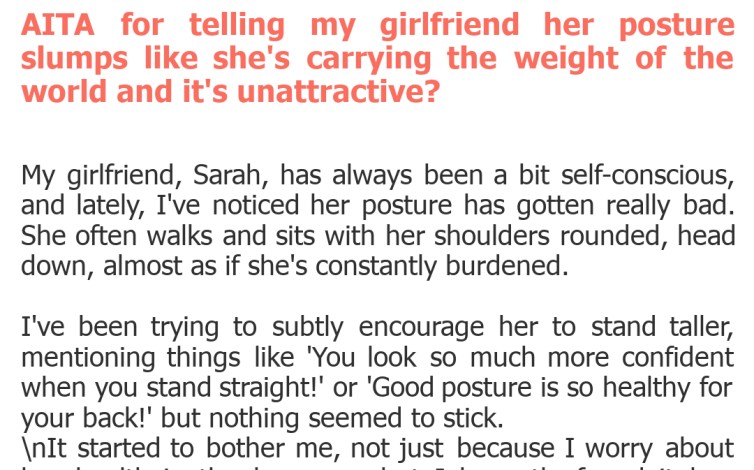
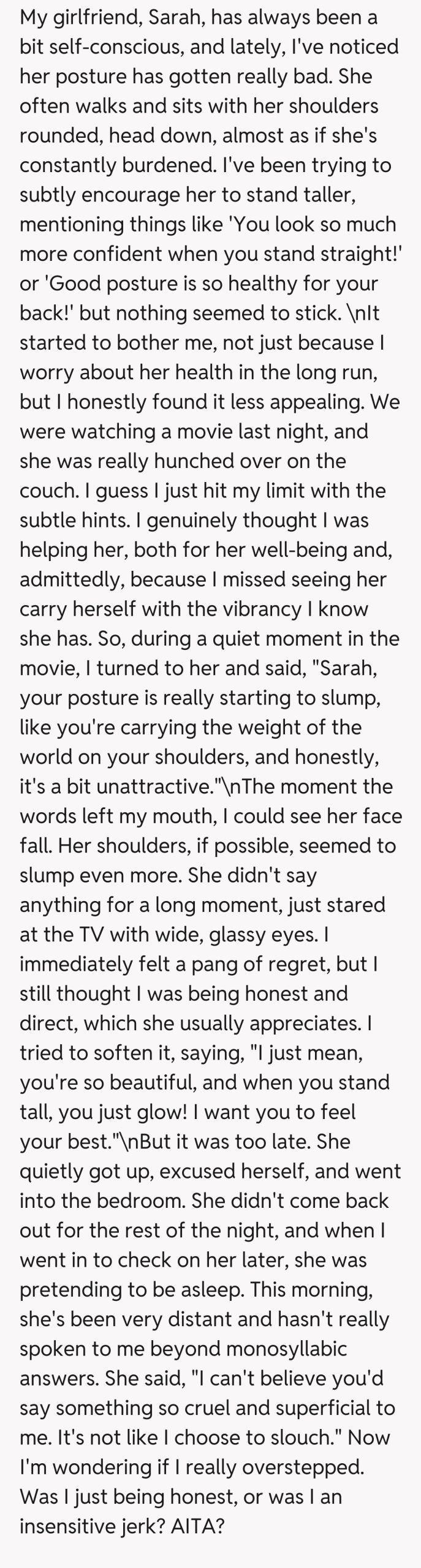
"AITA for telling my girlfriend her posture slumps like she's carrying the weight of the world and it's unattractive?"
This post dives headfirst into the minefield of unsolicited appearance advice within a relationship. On one hand, the OP states he was concerned for his girlfriend's long-term health, which can be a genuine motivation. Partners often care deeply about each other's well-being and sometimes feel a responsibility to point out potential issues, even if they are sensitive. His previous 'subtle hints' suggest a history of trying to approach the topic gently. \nHowever, the ultimate delivery of his feedback was incredibly harsh and likely counterproductive. Framing someone's posture as 'unattractive' goes beyond health concerns and directly attacks their physical appeal. For someone who is already self-conscious, as the OP admits his girlfriend is, this kind of comment can be deeply wounding and feel like a betrayal from a partner who is supposed to find them attractive regardless. \nIt's crucial to consider the impact of our words, regardless of our intentions. Even if the OP genuinely thought he was helping, telling someone a physical trait is 'unattractive' often serves to shame rather than motivate. Good communication in a relationship involves empathy and understanding how our words might land, especially on sensitive subjects. There's a fine line between constructive criticism and just being hurtful. \nUltimately, while the OP might have had an underlying concern for health, the choice of words about attractiveness transformed his message into something far more damaging. There are ways to encourage better habits without resorting to comments that diminish a partner's self-esteem or make them feel less desirable. This situation clearly illustrates that sometimes, even well-intentioned advice, if poorly phrased, can do more harm than good.
The Verdict Is In: Was He 'Just Honest' Or A Total 'Posture Police'?
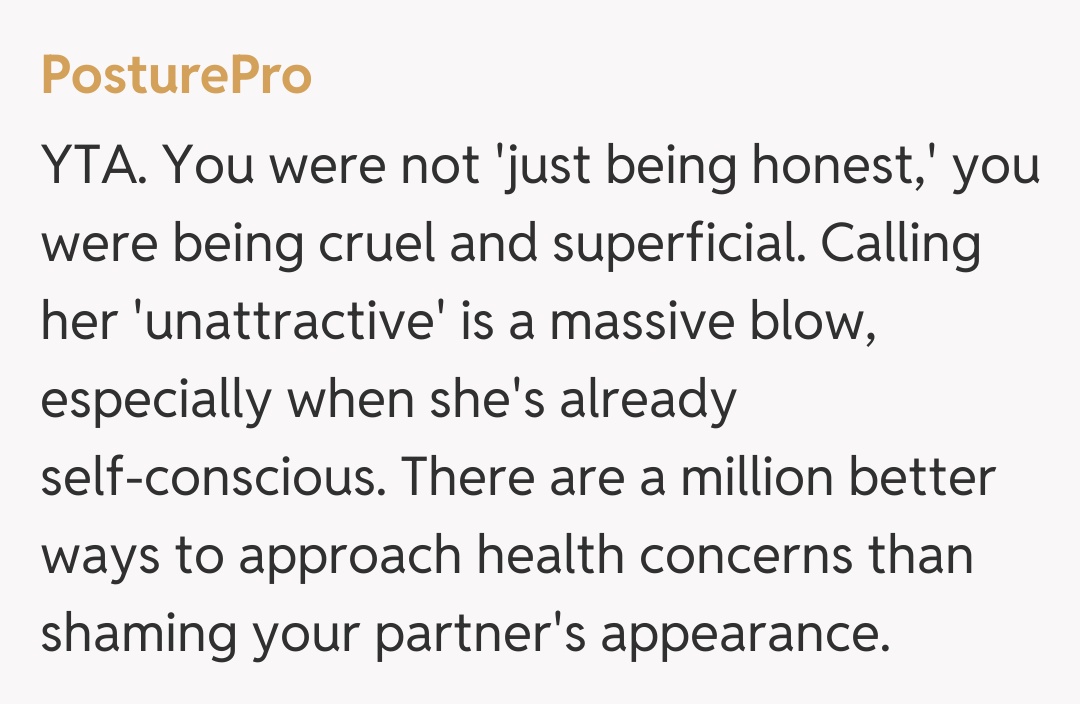
The comments section for this one is, unsurprisingly, ablaze with strong opinions! Many users are quickly pointing out that while intent might have been present, the impact of calling someone 'unattractive' is immense and rarely helpful. There's a clear consensus that focusing on health is one thing, but bringing attractiveness into it, especially unprompted, crosses a major line. \nSeveral comments emphasize that partners should be a source of comfort and acceptance, not a constant critic of physical appearance. The argument is made that if a partner has a genuine health concern, there are far more compassionate and effective ways to address it, perhaps by suggesting activities together rather than direct, shaming criticisms. The OP's girlfriend's reaction, withdrawing and feeling hurt, is seen by most as completely justified.
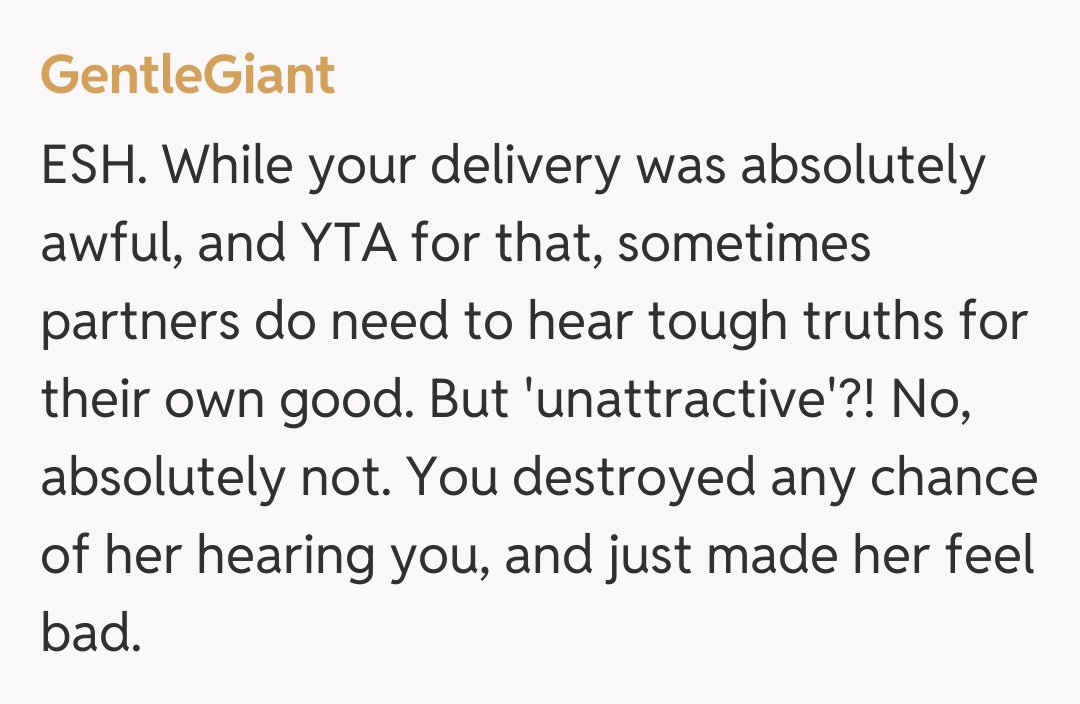
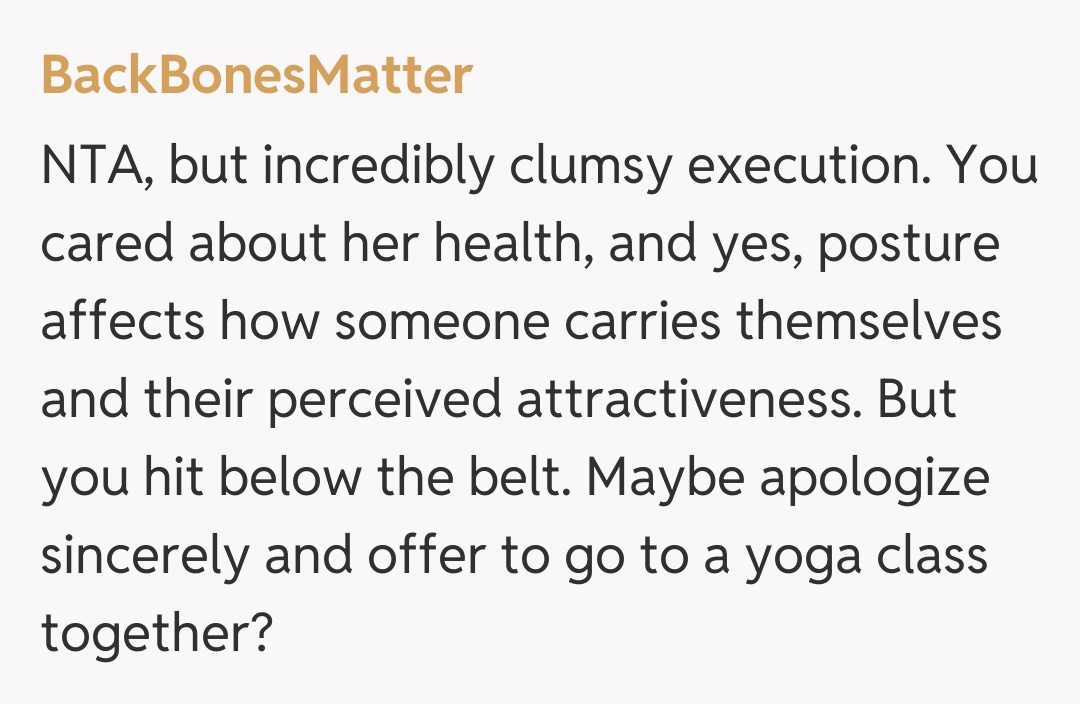
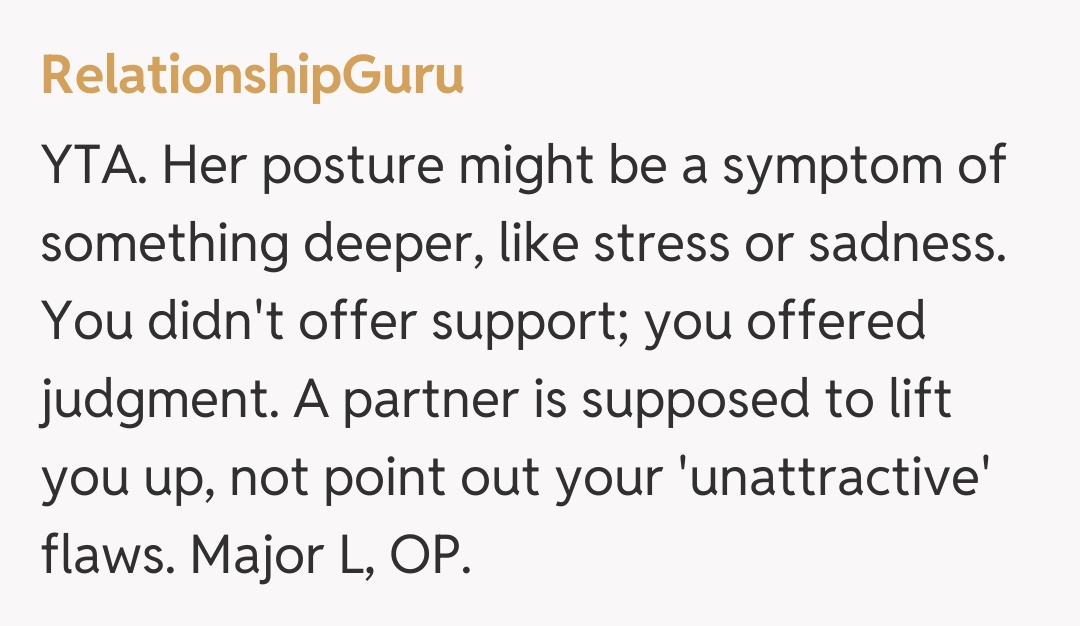
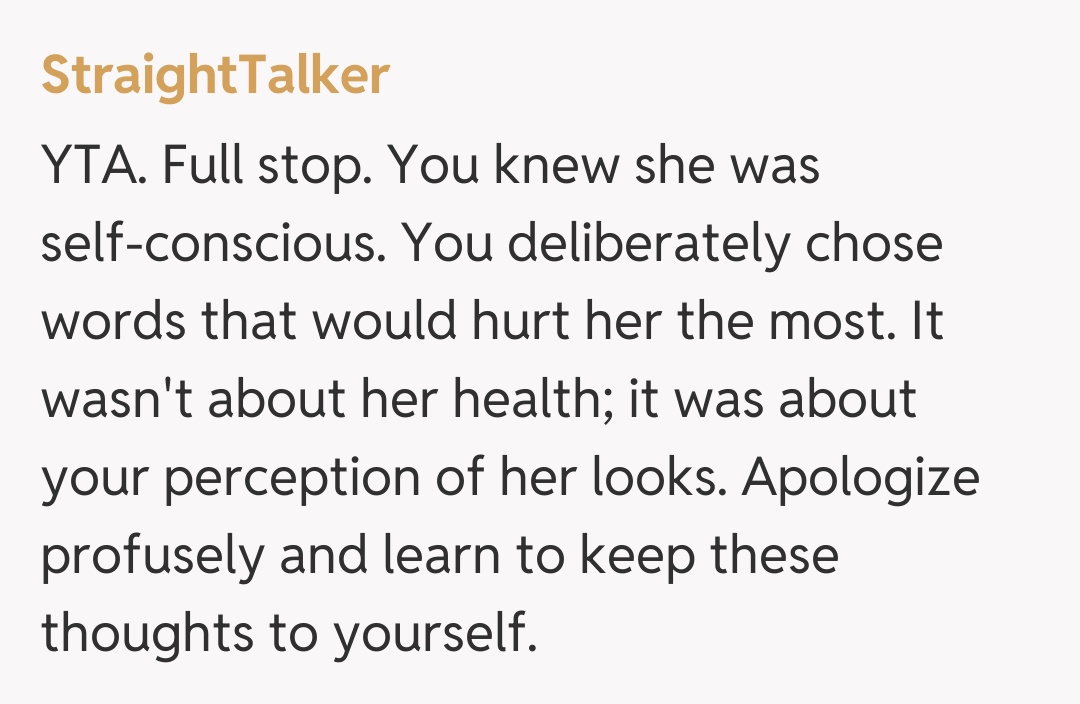
This AITA post serves as a stark reminder that while honesty is important in a relationship, kindness and empathy are equally, if not more, vital. Calling your partner 'unattractive' crosses a line that's hard to uncross, often causing deep-seated hurt that lingers long after the words are spoken. Moving forward, the OP needs to reflect on his motivations and communication style. A sincere apology, focusing on the impact of his words rather than just his intent, is crucial, followed by demonstrating genuine support without criticism. Relationships thrive on mutual respect and making each other feel valued, not judged.